How to resolve AdBlock issue?
News
The National Weather Service issued a winter storm warning for Lake County’s northern mountains. It’s in effect through 10 a.m. Sunday.
Portions of Lake County, mostly along the Northshore, also are under a winter weather advisory through 6 p.m. Monday.
Forecasters also are reporting that there is the possibility of an atmospheric river that could impact Northern California beginning on Thursday, bringing with it heavy precipitation, strong winds and continued cool temperatures.
On Saturday, rain – accompanied by high winds – fell steadily across Lake County.
The heavy rain and wind, plus snow in higher elevations, caused traffic issues throughout the day.
The California Highway Patrol reported snow on parts of Highway 175 in Cobb and at Soda Creek and Elk Mountain Road in Upper Lake.
There also were reports of rock and mudslides along Highway 20, particularly near Blue Lakes.
The day’s major traffic incident was a fatal head-on crash involving two vehicles on Highway 20 near the Oasis east of Clearlake Oaks.
The resulting highway closure backed up traffic for miles in both directions, according to reports from the scene. It was not immediately clear what caused the wreck.
In addition to impacting safety on the roads, the weather conditions appeared to have caused a number of small power outages around Lake County, based on Pacific Gas and Electric’s online outage map.
The National Weather Service reported the following 24-hour rain totals as of 2:30 a.m. Sunday based on its network of observation stations in Lake County. Amounts are in inches:
– Bartlett Springs: 0.71;
– Hidden Valley Lake: 2.05;
– Indian Valley Reservoir: 0.72;
– Kelseyville: 0.84;
– Knoxville Creek: 1.22;
– Lakeport: 0.68;
– Lower Lake: 1.21;
– Lyons Valley: 0.67;
– Soda Creek: 0.73;
– Whispering Pines: 1.32.
The specific Lake County forecast anticipates rain through Monday night, with lesser chances of precipitation on Tuesday and Wednesday. Rain is likely on Thursday and Friday, but the local forecast so far only says there’s only a chance of rain on Saturday.
Daytime temperatures will range into the lower 50s, while nighttime temperatures are expected to drop into the high 30s.
Email Elizabeth Larson at
LAKE COUNTY, Calif. – After the recent rains, on a blessedly damp and shiver-inducing gray day the landscape's colors and textures, painted by the grandest environmental designer of all, take on a different look.
We are always cognizant of the texture, or tactile quality of everyday objects with which we are in contact, even if it is at the periphery of our senses – the smooth sheets of a bed, soft fleece of a well-loved sweater, or the comforting and creamy texture of a bowl of hot oatmeal.
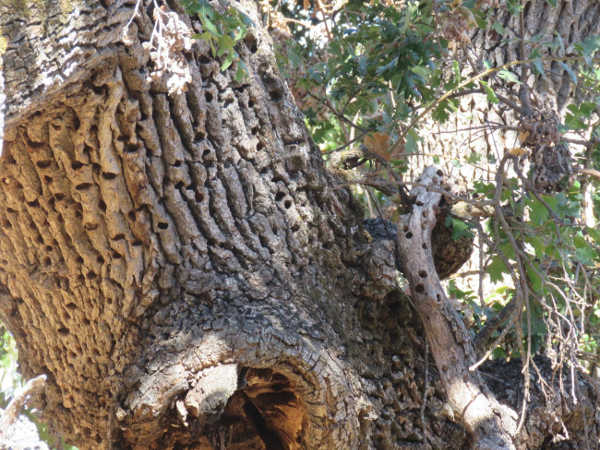
Looking out the window the layers of texture in the just-fallen leaves and the tree's gnarly bark can be seen.
Taking a walk along Cache Creek the waterscape of the creekbed appears to take on a newly-textured look, since the recent rain has rearranged it.
The demure pools in the creek soon become outrageous after the rain's redesign. The harmonizing of water's abundant flow now creates a new story to “read” in nature, and is enhanced by these forces in the natural world.
Next to the creek, where I stroll, is a level trail that consists of soil's organic material, that of decayed plants and animals, chipped rock and mineral fragments that formed over the millennia. Now this trail demonstrates a new and slightly different topography with a range of textures.
If you consider just one small square of soil, maybe just outside your door, it is almost mind-boggling to think about the layers that lie beneath our feet.
From the organic or humus layer of a plants remnants derived from a tree – fall's leaves and twigs – then next, the relatively thin layer, possibly 5 inches deep, down to the subsoil beneath that, with its iron, clay and additional organic matter. Then, delving deeper, the “parent layer” of hefty rocks, and on down several feet to the bedrock beneath our feet – that huge heap of rock can be found.
That is a lot of texture-inducing material.
Nature's landscape design – in its leaves and bark and waving grasses – does on a large scale what a good landscape designer tries to achieve on a smaller scale around a home or in a garden.
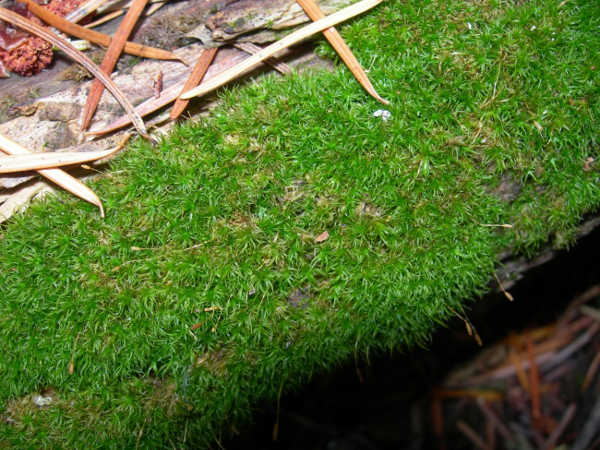
Textural contrasts play a part in both, as you perceive leaves of differing sizes, shapes and surface feel. The contrast of coarse tree bark overlaid with cotton-soft mosses seem to be tricks to elevate our awareness of what we are viewing.
The varying textural contrasts relate to both how a plant feels, i.e., smooth, abrasive, or rough, or it can refer to how plants look as they are juxtaposed in the wild.
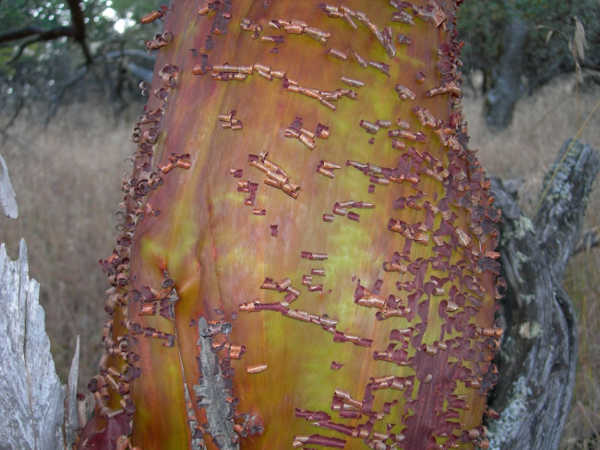
In other words, sometimes we are drawn to these contrasts in texture because of the objects' properties of color, or its size. The plants' wispy foliage or its coarse leaves create other nuances of texture.
To delve further into nature's nuances we might consider the plant's scent as part of its textural makeup.
The fine fragrance of pine may initially draw you in, then on closer observation you note the subtle changes which have occurred since it grew new and feathery soft needles.
Looking closer you see the bark has so many hues that combine to make up the trunk's unique grainy covering.
You might ascertain the proximity of a California bay laurel tree by its sharp, fresh scent and again at further notice, as it draws you nearer you ascertain the miniscule spheres of its fruit, the olive-colored bay balls.
Take a texture walk and consider all of the surfaces around you, using your eye to sense color and grain of the scenery nearby.
You may want to write about them, sketch some or simply wander and enjoy!
Kathleen Scavone, M.A., is a retired educator, potter, freelance writer and author of “Anderson Marsh State Historic Park: A Walking History, Prehistory, Flora, and Fauna Tour of a California State Park” and “Native Americans of Lake County.”
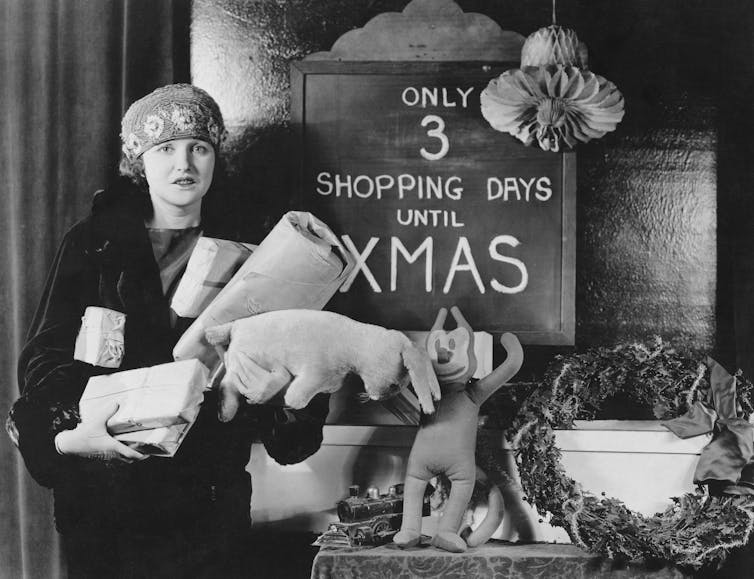
Gift giving is a big deal this time of year.
To find the “perfect” gift, Americans will spend about 15 hours shopping. Women will do about twice as much as men. And they’ll shell out about US$1 trillion on gifts.
While retailers relish the holiday shopping season as a time when consumers open their purses or wallets, for many consumers – especially those who do not like shopping – these days are filled with dread. They mark moments when shoppers clog malls, websites become overloaded and delivery trucks block streets. The entire process generates untold amounts of stress and anxiety.
One source of stress is just how much to spend on gifts. Spending too much can put you in financial distress. Spending too little may make you look cheap.
How do you decide what’s the “right” amount to spend on gifts?
As an economist, I study holidays and gift giving because a large fraction of retail shopping is driven by seasonal events like Black Friday, Cyber Monday and Super Saturday – also and more appropriately known as Panic Saturday – which is the last Saturday before Christmas.
‘Dead weight loss’
Gift giving is stressful because nobody wants to buy what they think is a perfect gift only to discover it is a dud.
The long lines of people returning items after the holidays seem evidence enough for that.
This has led some economists to argue there’s a “dead weight loss” to Christmas presents that “destroys” as much as a third of their actual value. A 2018 study estimated Americans spend $13 billion a year on unwanted gifts.
Other economists, however, have resisted this Scrooge-like view of gift giving and point to evidence that a present can actually have more value to the recipient than the price the giver paid. In other words, a gift, even when technically unwanted, could have more value simply because someone else bought it for you.

Setting a budget
So if you’re dead set on buying some gifts, how much should you budget for it?
Since gifting is a social act, it makes sense to consider how much other people typically spend.
There are a number of surveys run each year that ask people during the fall to estimate what they plan on spending for holiday gifts. The National Retail Federation’s annual survey of holiday spending estimates the typical American will spend $659 on gifts for family, friends and co-workers in 2019. On the high end, Gallup puts the average at $942, with more than a third of respondents expecting to spend over $1,000 on gifts.
But these figures aren’t that helpful for an individual since $659 means something different to someone making $40,000 a year versus $200,000.
That’s where the Consumer Expenditure Survey comes in. It’s a large survey run by the Bureau of Labor Statistics that tracks the spending habits of 12,000 to 15,000 families each year. The government uses the survey to determine the cost of living and inflation rates for the typical family.
The survey follows gift giving very precisely. It has categories for common holiday presents like electronics, books and clothes, as well as gifts that typically aren’t associated with the season such as housing and transportation.
After removing these non-holiday gifts, the typical U.S. family spends about 1% of its annual take-home pay on gifts. So whatever you earn, you could multiply it by 1% to get a figure that is in the ballpark of what the average American spends – but won’t break the bank.
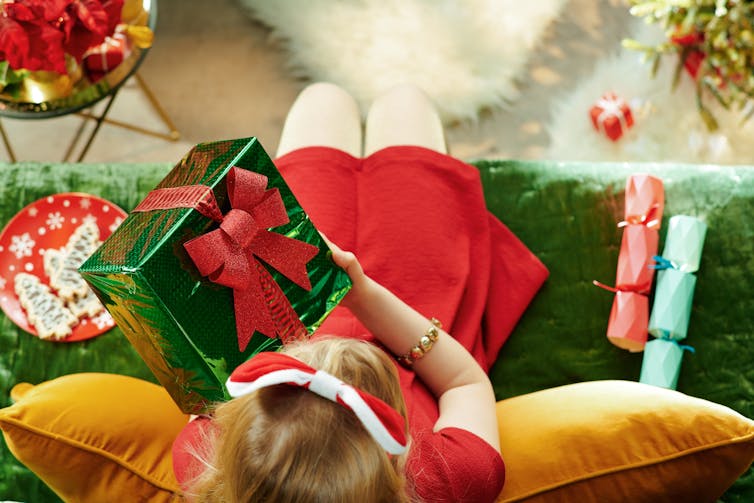
Making the holidays memorable
While calculating a gift budget is one way to take the stress out of how much to spend on gifts, my family has another: Only give gifts to children.
Adults get wrapped boxes filled with paper. After the real gifts are opened and the young children are safely moved out of the way, we crumple up the paper and throw it at each other in our annual paper fight.
That keeps the cost down while making the kids feel special. It also ensures the kids don’t feel left out when their friends talk about the gifts they received. Other families follow their own methods for controlling expenses, such as secret Santa gifts or by focusing attention more on togetherness than on the stuff received.
Whether you have a paper fight or follow another family tradition, my main message is that it doesn’t take very much money to make the winter holidays memorable.

Jay L. Zagorsky, Senior Lecturer, Questrom School of Business, Boston University
This article is republished from The Conversation under a Creative Commons license. Read the original article.
Dogs available for adoption this week include mixes of Australian Shepherd,
bluetick coonhound, cattle dog, Chihuahua, corgi, Doberman Pinscher, Great Pyrenees, McNab, Patterdale terrier/Fell terrier, pit bull, shepherd, treeing walker coonhound and wirehaired terrier.
Dogs that are adopted from Lake County Animal Care and Control are either neutered or spayed, microchipped and, if old enough, given a rabies shot and county license before being released to their new owner. License fees do not apply to residents of the cities of Lakeport or Clearlake.
If you're looking for a new companion, visit the shelter. There are many great pets hoping you'll choose them.
The following dogs at the Lake County Animal Care and Control shelter have been cleared for adoption (additional dogs on the animal control Web site not listed are still “on hold”).
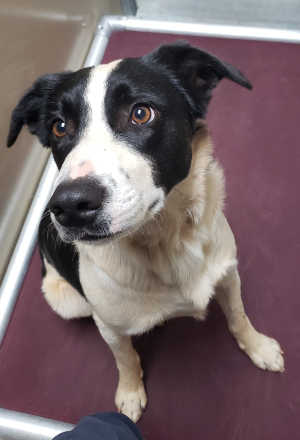
‘Freckles’
“Freckles” is a male McNab-border collie mix with a medium-length black and white coat.
He is in kennel No. 12, ID No. 13299.

Male Doberman Pinscher
This male Doberman Pinscher has a short black and brown coat.
He’s in kennel No. 18, ID No. 13284.
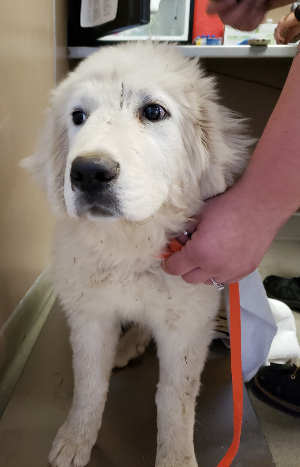
Female Great Pyrenees
This female Great Pyrenees has a long white coat.
She is in kennel No. 19, ID No. 13285.
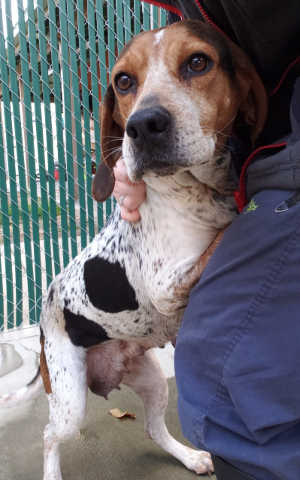
‘Patsy’
“Patsy” is a female treeing walker coonhound/bluetick coonhound mix with a short tricolor coat.
She is in kennel No. 20, ID No. 13290.
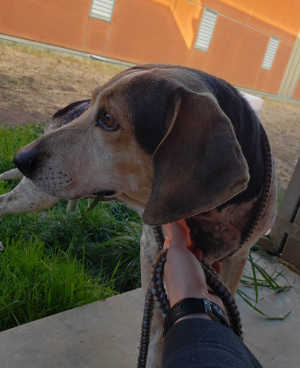
‘Daisey’
“Daisey” is a female treeing walker coonhound/bluetick coonhound mix with a short tricolor coat.
She is in kennel No. 21, ID No. 13291.
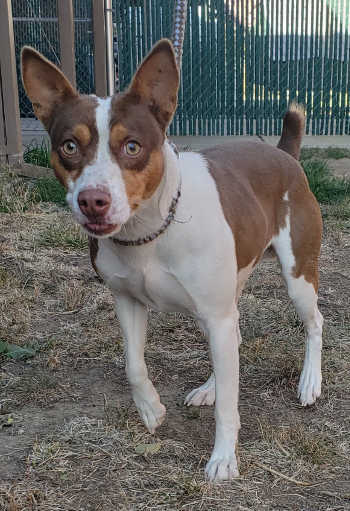
Patterdale terrier/Fell terrier
This male Patteradle or Fell terrier has a short brown and white coat.
He is in kennel No. 23, ID No. 13194.
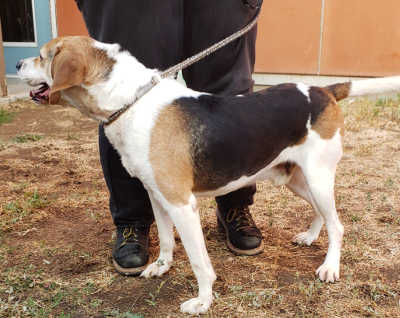
‘Max’
“Max” is a male treeing walker coonhound/bluetick coonhound mix with a short tricolor coat.
He is in kennel No. 25, ID No. 13289.
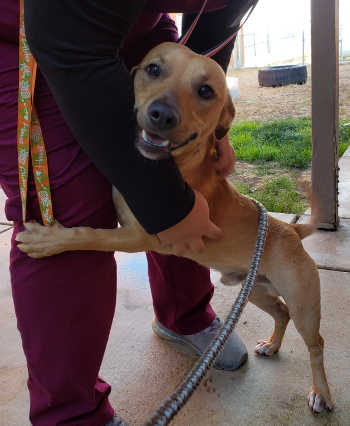
Chihuahua-corgi mix
This male Chihuahua-corgi mix has a short brown coat.
He is in kennel No. 26, ID No. 13274.
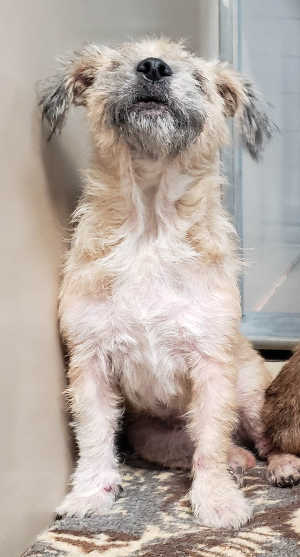
‘Scrappy’
“Scrappy” is a female wirehaired terrier with a coarse tan coat.
She is in kennel No. 27a, ID No. 13174.
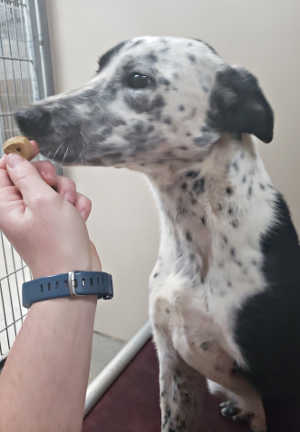
Male Australian Shepherd
This male Australian Shepherd has a long black and white coat.
He is in kennel No. 28, ID No. 13250.
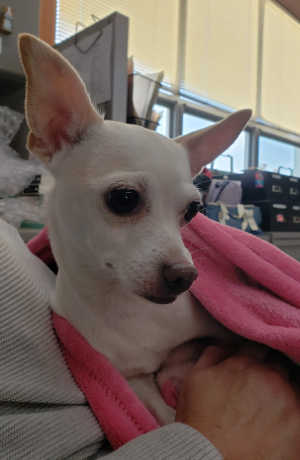
‘Pessie May’
“Pessie May” is a female Chihuahua with a short white and tan coat.
She has been spayed.
She is in kennel No. 29, ID No. 13225.
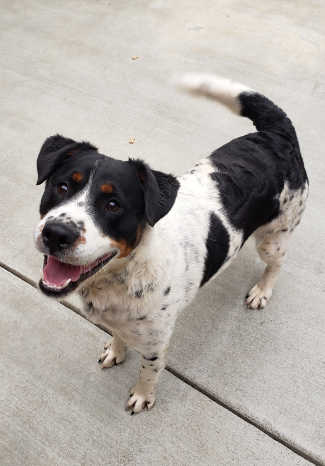
‘Hazel’
“Hazel” is a female cattle dog with a medium-length tricolor coat.
She has been spayed.
She’s in kennel No. 33, ID No. 13255.
Lake County Animal Care and Control is located at 4949 Helbush in Lakeport, next to the Hill Road Correctional Facility.
Office hours are Monday through Friday, 11 a.m. to 5 p.m., and 11 a.m. to 3 p.m., Saturday. The shelter is open from 11 a.m. to 4 p.m., Monday through Friday and on Saturday from 11 a.m. to 3 p.m.
Visit the shelter online at http://www.co.lake.ca.us/Government/Directory/Animal_Care_And_Control.htm.
For more information call Lake County Animal Care and Control at 707-263-0278.
Email Elizabeth Larson at
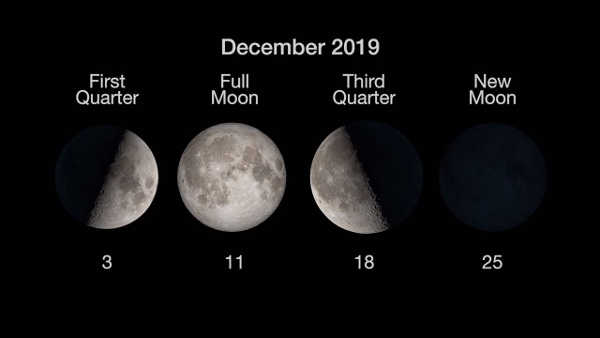
What's up for December? Venus, Saturn, the crescent Moon and Mars make close passes at dusk and dawn throughout the month.
December starts off with a lovely string of pearls — with Jupiter, Venus, Saturn and the crescent Moon forming a lineup at dusk on Dec. 1.
You'll need a pretty clear view toward the horizon to see Jupiter, which is setting soon after the Sun these days. Look for an unobscured view toward the southwest about half an hour after sunset.
In the middle of December, watch each evening from Dec. 9 through 13, as Venus and Saturn just skim past each other, with brilliant, cloud-swaddled planet Venus rising higher in the sky each day.
Early risers can catch a glimpse of the Red Planet being visited by the slim crescent of the Moon on Dec. 22 and 23. To see them, look toward the southeast about 45 minutes before sunrise. You'll see the Moon above Mars on Dec. 22. By Dec. 23, it's moved below Mars and a bit toward the east.
At the end of December, you won't want to miss a dazzling pair-up of Venus and the crescent Moon.
On Dec. 28, look low in the southwest sky at dusk to find Venus hovering in twilight just above a slim lunar crescent.
NASA's space missions explore the Moon and the planets of our solar system to answer fundamental science questions about where we come from, where we're going and whether we're alone.
Preston Dyches works for NASA's Jet Propulsion Laboratory.
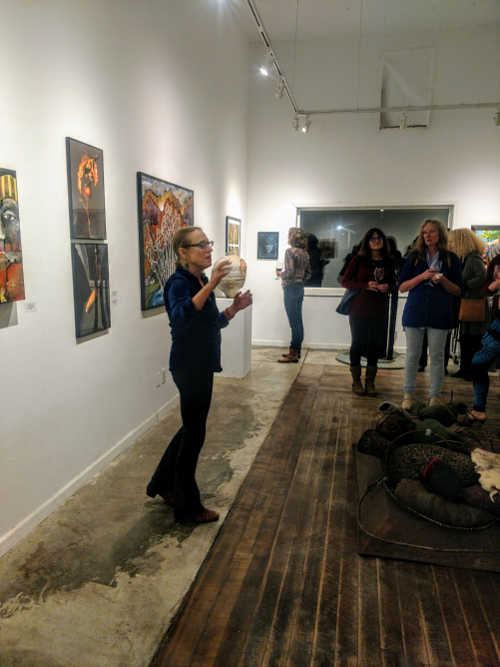
MIDDLETOWN, Calif. – On the evening of Friday, Nov. 15, lights at the Middletown Art Center beckoned warmly on an otherwise dark street.
Inside, bottles from the Shannon Ridge Family of Wines lined a tasting table and the work of local artists graced the exhibit space.
Visitors sipped wine, mingled and wandered reflectively among the pieces.
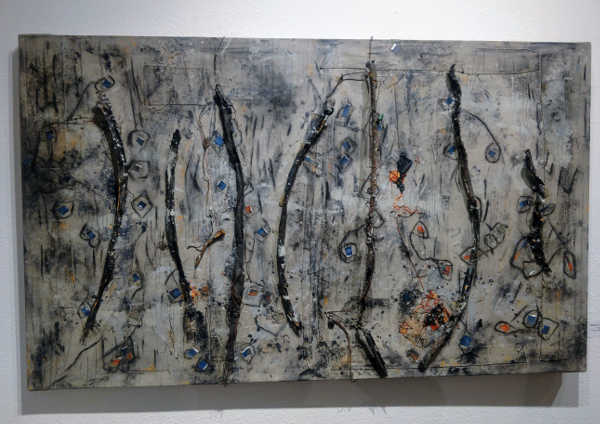
The exhibit, “All That Is Now: The Fourth Anniversary Fire Show,” featured work created in response to the Valley fire of September 2015, as well as more recent fires. The event was also the closing reception of the show.
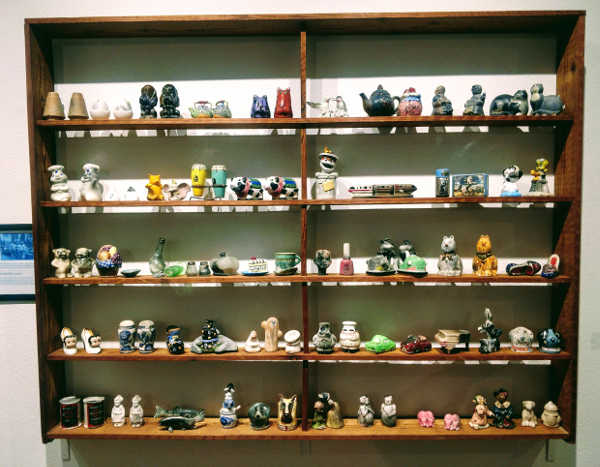
The artwork, done in various media and often using objects changed by fire, showcased the varied ways artistic creativity can express reaction to traumatic experience.
The pieces, from sculptures to photographs to fiber art to paintings, reflected both the poignancy of surviving fire and the resilience needed to be present now, four years after the event.
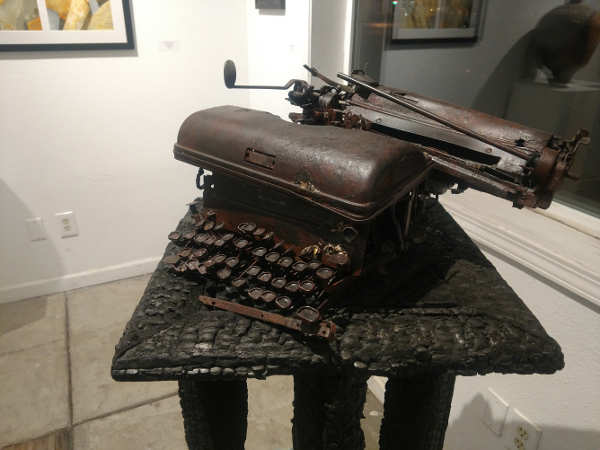
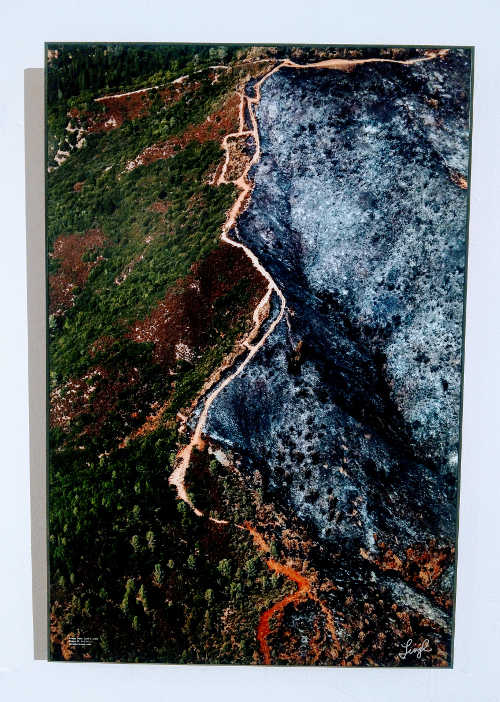
A “documentation room” featured photographs of area fires since 2015. This was in a space separate from the main exhibit to respect those who might be triggered by scenes of fire.
As artist and Middletown Art Center Director Lisa Kaplan welcomed visitors and presented information on many of the exhibited pieces, a multi-faceted story unfolded, one of individual experiences forming a communal whole.
Two of the participating artists, Alana Clearlake, fiber artist, and Terry Church, sculptor, spoke in more detail about their work.
During her presentation on wines, Joy Merrilees, Shannon Ridge director of winemaking and production, compared winemaking to art with yeast as the medium. With a background in landscape design, her prior focus on plant science and art has easily translated to winemaking.
Merrilees, a Lake County native, fell in love with the wine industry while traveling in New Zealand. It was there she embraced a career in wine, beginning as a migrant worker in the vineyards and eventually becoming a winemaker. Her experience was literally from the ground up.
Shannon Ridge vineyards lie in three of Lake County’s seven wine appellations: Red Hills, Big Valley and High Valley. Each growing area creates unique flavor qualities, whether from red volcanic soil or the heavy black earth of an old lakebed.
This is the winemaking palette from which Merrilees and her associate winemaker, also a woman, craft the wide variety of wines offered by Shannon Ridge.
Events such as Palette to Palate help support the programs of Middletown Art Center. To find out more about events, exhibits, classes, volunteer opportunities and membership, please visit their website at www.middletownartcenter.org.
As Kaplan said in her closing comments, “MAC is weaving the arts into the fabric of our community. We hope you’ll be part of our threading.”
To learn more about the Shannon Ridge Family of Wines, visit https://www.shannonridge.com.
Esther Oertel is a writer and passionate home cook from a family of chefs. She lives in Middletown, Calif.