How to resolve AdBlock issue?
News
LAKE COUNTY, Calif. – Recent rains and cooler temperatures across the region have lowered the threat of wildfires, allowing Cal Fire’s Sonoma-Lake-Napa Unit to transition out of peak fire season effective Monday, Dec. 9, at 8 a.m. in Sonoma, Lake, Napa, Solano, Yolo and Colusa counties.
Cal Fire will continue to maintain staffing to meet any potential threat, as well as maintaining the ability to strategically move resources to areas that remain at a higher threat level.
Cal fire also will continue to monitor weather conditions closely and still has the ability to increase staffing should weather conditions change or if there is a need to support wildfires or other emergencies in other areas of the state.
Statewide, CAL FIRE and firefighters from many local agencies responded to more than 5,641 wildfires within the State Responsibility Area that burned nearly 128,831 acres.
In the Sonoma-Lake-Napa Unit, Cal Fire responded to 177 wildfires that charred 80,916 acres.
During the cooler winter months, Cal Fire will continue to actively focus efforts on fire prevention and fuels treatment activities as guided by the state’s strategic fire plan and localized unit fire plans. These will be done through public education, prescribed burns and various types of fuel reduction.
These activities are aimed at reducing the impacts of large, damaging wildfires and improving overall forest health.
Cal Fire Sonoma-Lake-Napa Unit Chief Shana Jones reminds residents to still take precautions outdoors in order to prevent sparking a wildfire.
Before you burn, ensure it is a permissive burn day by contacting your local air quality district and then make sure you have any and all required burn permits.
During burning, make sure that piles of landscape debris are no larger than four feet in diameter, provide a 10-foot clearance down to bare mineral soil around the burn pile and ensure that a responsible adult is in attendance at all times with a water source and a shovel.
Cal Fire will continue to maintain staffing to meet any potential threat, as well as maintaining the ability to strategically move resources to areas that remain at a higher threat level.
Cal fire also will continue to monitor weather conditions closely and still has the ability to increase staffing should weather conditions change or if there is a need to support wildfires or other emergencies in other areas of the state.
Statewide, CAL FIRE and firefighters from many local agencies responded to more than 5,641 wildfires within the State Responsibility Area that burned nearly 128,831 acres.
In the Sonoma-Lake-Napa Unit, Cal Fire responded to 177 wildfires that charred 80,916 acres.
During the cooler winter months, Cal Fire will continue to actively focus efforts on fire prevention and fuels treatment activities as guided by the state’s strategic fire plan and localized unit fire plans. These will be done through public education, prescribed burns and various types of fuel reduction.
These activities are aimed at reducing the impacts of large, damaging wildfires and improving overall forest health.
Cal Fire Sonoma-Lake-Napa Unit Chief Shana Jones reminds residents to still take precautions outdoors in order to prevent sparking a wildfire.
Before you burn, ensure it is a permissive burn day by contacting your local air quality district and then make sure you have any and all required burn permits.
During burning, make sure that piles of landscape debris are no larger than four feet in diameter, provide a 10-foot clearance down to bare mineral soil around the burn pile and ensure that a responsible adult is in attendance at all times with a water source and a shovel.
With flu reaching levels typically seen later in the season, including widespread influenza activity throughout California, the California Department of Public Health is reminding people that now is the time to get a flu shot.
Since Sept. 29, when the flu season started, there have been 16 influenza-coded deaths identified on death certificates.
In addition, two influenza-associated deaths in children under the age of 18 have been reported to CDPH.
Measures of influenza activity monitored by CDPH are showing flu season has started earlier in California than in recent years.
Getting vaccinated is the best defense against the flu. It takes a couple of weeks after vaccination for the body to build immunity, so don’t delay getting a shot.
“Flu activity is starting earlier than usual in California this season,” said Dr. Sonia Angell, state public health officer and CDPH director. “The flu shot protects you and those around you by making it less likely you’ll get sick if you’re exposed to the virus, and if you do get ill, you’ll tend to have fewer days of symptoms and they’ll be less severe.”
Besides getting immunized, you can also take some other simple steps:
– Stay away from people who are sick and stay home when you or your child are sick.
– Cover coughs or sneezes with your sleeve or disposable tissue.
– Wash hands frequently and thoroughly with soap and warm water, or use an alcohol-based hand sanitizer.
– Avoid touching your eyes, nose and mouth.
CDPH recommends the annual flu vaccination for everyone six months of age and older. While anyone can get the flu, pregnant women, adults 65 years of age and older, and people with chronic conditions such as heart disease, lung disease, diabetes and asthma are particularly at risk for flu-related complications.
Children 5 years old and younger, especially those under 2, and all children with long-term health conditions such as asthma, diabetes, and disorders of the brain or nervous system are at risk of serious complications if they get the flu.
It is important that parents speak with their doctor as soon as possible if their child develops flu symptoms, particularly children with a higher risk for flu complications.
Parents of any child with flu symptoms should make sure their child is well-hydrated and gets plenty of rest.
“The flu isn’t merely a winter cold: it is a serious, and very contagious virus that can be deadly. The flu is preventable, but a vaccination is needed every year to maintain the greatest protection,” said Dr. Angell.
Across the U.S. and in California, we currently have an outbreak of acute lung disease associated with vaping.
The early symptoms can be similar to those associated with influenza or other respiratory conditions.
If you vape or use e-cigarettes, it’s particularly important that you get your flu shot this year. If you visit your health care provider for symptoms you think might be influenza, be sure to tell your provider about your use of e-cigarettes or vaping.
For more information about the flu, visit CDPH’s website. For the flu vaccine location nearest you, visit www.flu.gov .
Since Sept. 29, when the flu season started, there have been 16 influenza-coded deaths identified on death certificates.
In addition, two influenza-associated deaths in children under the age of 18 have been reported to CDPH.
Measures of influenza activity monitored by CDPH are showing flu season has started earlier in California than in recent years.
Getting vaccinated is the best defense against the flu. It takes a couple of weeks after vaccination for the body to build immunity, so don’t delay getting a shot.
“Flu activity is starting earlier than usual in California this season,” said Dr. Sonia Angell, state public health officer and CDPH director. “The flu shot protects you and those around you by making it less likely you’ll get sick if you’re exposed to the virus, and if you do get ill, you’ll tend to have fewer days of symptoms and they’ll be less severe.”
Besides getting immunized, you can also take some other simple steps:
– Stay away from people who are sick and stay home when you or your child are sick.
– Cover coughs or sneezes with your sleeve or disposable tissue.
– Wash hands frequently and thoroughly with soap and warm water, or use an alcohol-based hand sanitizer.
– Avoid touching your eyes, nose and mouth.
CDPH recommends the annual flu vaccination for everyone six months of age and older. While anyone can get the flu, pregnant women, adults 65 years of age and older, and people with chronic conditions such as heart disease, lung disease, diabetes and asthma are particularly at risk for flu-related complications.
Children 5 years old and younger, especially those under 2, and all children with long-term health conditions such as asthma, diabetes, and disorders of the brain or nervous system are at risk of serious complications if they get the flu.
It is important that parents speak with their doctor as soon as possible if their child develops flu symptoms, particularly children with a higher risk for flu complications.
Parents of any child with flu symptoms should make sure their child is well-hydrated and gets plenty of rest.
“The flu isn’t merely a winter cold: it is a serious, and very contagious virus that can be deadly. The flu is preventable, but a vaccination is needed every year to maintain the greatest protection,” said Dr. Angell.
Across the U.S. and in California, we currently have an outbreak of acute lung disease associated with vaping.
The early symptoms can be similar to those associated with influenza or other respiratory conditions.
If you vape or use e-cigarettes, it’s particularly important that you get your flu shot this year. If you visit your health care provider for symptoms you think might be influenza, be sure to tell your provider about your use of e-cigarettes or vaping.
For more information about the flu, visit CDPH’s website. For the flu vaccine location nearest you, visit www.flu.gov .

What happens when a beneficiary of a deceased person’s probate estate or living trust dies during an ongoing administration and before receiving the full distribution of their inheritance?
The death of a beneficiary scenario can arise in settling either a probate estate or a trust administration.
The beneficiary’s death affects both the administration of the first decedent’s probate estate or trust and the administration of the beneficiary’s own estate.
Consider an ongoing probate administration of a deceased mother’s estate where a son dies prior to receiving his inheritance.
The deceased son’s estate can claim his undistributed inheritance; which it will in turn distribute to the beneficiaries or heirs of the son’s estate, as relevant.
This, however, may unfortunately require probating the deceased child’s estate.
Whether a probate is required depends both on the gross value of the son’s own probate estate, which is increased by the amount of the son’s unreceived inheritance, and also whether some or all of the son’s estate passes to his surviving spouse or registered domestic partner, as relevant.
When is a probate required? In California, probate is required when the gross value of a decedent’s estate exceeds $150,000 and passes to someone other than the decedent’s surviving spouse or registered domestic partner.
No probate is required to transfer assets to a decedent’s surviving spouse or registered domestic partner.
A surviving spouse or domestic partner is entitled to use a spousal property court petition to transfer title to real property and other assets held in the name of the deceased spouse into the surviving spouse or the registered domestic partner’s name, as relevant.
Small estates under $150,000 also do not require probate and can usually be settled by affidavits or, when the estate includes real property worth more than $50,000, a small estate petition to confirm title to real and to personal property.
Sometimes a probate of a small estate is necessary due to issues related to the decedent’s debts or determining who is entitled to receive a portion of the estate.
Holding assets in a living trust avoids going to court: It avoids probate, spousal property petitions, and small estate petitions. Thus anytime real property worth more than $50,000 is involved it usually makes sense for the owner to hold title in his trust.
Who inherits from the deceased son’s estate?
If the son had a last will and testament then it controls. If the son had a living trust then the son almost always has an accompanying “pour over will.” It, as its name implies, leaves, i.e., “pours,” everything in the son’s estate to his revocable living trust.
Either way the son’s will might need to be probated, discussed above. Without a will, the son’s heirs inherit under the laws of intestate succession. The decedent’s surviving spouse, or registered domestic partner and children are always the heirs if they survive.
Settling an intestate estate, like settling a testate estate, i.e., where the decedent has a will, can involve probate, a spousal property petition, small estate affidavits or small estate court petitions to confirm title to real and personal property, discussed above.
Next, instead consider a trust beneficiary who dies during an ongoing administration of a decedent’s trust.
Sometimes, the trust may provide that any undistributed inheritance not received by a beneficiary because the beneficiary dies during trust administration passes directly to specified alternative beneficiaries.
That greatly simplifies matters and also better ensures that the deceased settlor’s assets go to intended beneficiaries.
Anyone confronting any of these legal issues should consult a licensed attorney and not reach any legal conclusions from the above general discussion.
Dennis A. Fordham, attorney, is a State Bar-Certified Specialist in estate planning, probate and trust law. His office is at 870 S. Main St., Lakeport, Calif. He can be reached at
The International Space Station is Earth’s only orbiting laboratory.
That’s important because it not only allows us to conduct research that benefits all of us on Earth, it also provides the only microgravity environment in which we can test technologies critical to our deep-space exploration in the near and far-term future.
Here, engineering models can be validated, and new technologies and systems for future missions can be demonstrated, without risk to crew members.
Historically, the Mercury program enabled the Gemini program which, in turn, enabled the Apollo program through technology and systems advancements.
Today, the space station is giving us a similar experience in long-duration spacecraft operations, and serving as a test bed for new technologies and upgraded vehicle systems, which are enabling future missions.
Dave Hornyak is NASA’s ISS Technology Demonstration Research Portfolio Manager. He noted: “The ISS lets us demonstrate that a technology works as intended in a spacecraft environment. Demonstrations on the space station inform operators and flight crews how the system operates, proves interoperability with other systems and demonstrates system safety and reliability.”
There are many technologies and capabilities that need to be developed as we move forward to the Moon and on to Mars.
For example, researchers have recently tested a new design of solar array that will be used on the first module for the Deep Space Gateway – our future space station that will serve as a home base for astronaut expeditions to the Moon.
Solar arrays in operation right now need to unfold before becoming active. But new designs allow future solar arrays to roll out, and also retract. They were tested for strength and durability on the ISS, and were designed to be more compact than current rigid panels.
NASA’s Orion Multi-purpose Crew Vehicle is a four-person exploration craft designed to take astronauts farther in space than anyone has gone before. Its backup navigation system uses a new technology that is optically based.
It captures images of the Moon or Earth, and based on their size and angle, an algorithm determines Orion’s location.
These optics can’t be tested on Earth because our atmosphere would distort the images enough to make the algorithm inaccurate.
Aboard the ISS however, the algorithm was confirmed to work properly. A secondary benefit is the system was tested at spacecraft speed, making for a realistic navigation scenario.
As people travel deeper into space, they’ll need solutions to a variety of safety challenges. For instance, if a fire breaks out, how fast can it grow and spread in a micro-gravity environment?
NASA’s Spacecraft Fire Safety, or SAFFIRE, program has already conducted a series of experiments on 3 ISS cargo vehicles to measure flame growth, oxygen use and combustion products.
Results are helping to improve spacecraft fire detection, response and extinguishment, and crew protection.
“Ultimately,” said Hornyak, “Technology and operations demonstrations occurring on the ISS today are guiding our planning, reducing risk, and providing capabilities to enable future exploration missions.”
For more inside information about the tech being tested aboard the station, visit www.nasa.gov/iss-science.
For more on the science of space exploration, visit http://science.nasa.gov.
On Thursday, California Insurance Commissioner Ricardo Lara issued a mandatory one-year moratorium on insurance companies non-renewing policyholders – helping at least 800,000 homes in wildfire disaster areas in Northern and Southern California.
The commissioner’s action is the result of Senate Bill 824 – authored last year by Lara while serving as state senator – in order to give temporary relief from non-renewals to residents living near a declared wildfire disaster.
This is the first time the department has invoked the new law, which took effect in January.
Because the homeowner insurance crisis extends beyond the wildfire perimeters and impacts residents statewide, Commissioner Lara went a step further and called on insurance companies to voluntarily cease all non-renewals related to wildfire risk statewide until Dec. 5, 2020, in the wake of Gov. Gavin Newsom’s declaration of statewide emergency due to fires and extreme weather conditions.
A statewide moratorium would provide all California homeowners, renters and businesses peace of mind, and allow time for stakeholders to come together to work on lasting solutions, help reduce wildfire risk, and stabilize the insurance market, Lara’s office reported.
“This wildfire insurance crisis has been years in the making, but it is an emergency we must deal with now if we are going to keep the California dream of home ownership from becoming the California nightmare, as an increasing number of homeowners struggle to find coverage,” said Commissioner Lara. “I am calling on insurance companies to push the pause button on issuing non-renewals for one year to give breathing room to communities and homeowners while they adapt and mitigate risks, give the Legislature time to work on additional lasting solutions, and allow California’s insurance market to stabilize.”
In response to the announcement, Rex Frazier, president of the Personal Insurance Federation of California, said, “As climate change accelerates, we are facing more and growing wildfires in California, and we must adapt to that reality and factor climate change into coverage and rates to ensure availability of insurance for all homeowners. Year-over-year losses that the industry has seen are not sustainable for companies or good for homeowners. We look forward to working with the insurance commissioner to anticipate and prepare for these impacts on the insurance market to ensure that homeowners have access to coverage.”
The federation reported that insurers paid out more than they took in during 2017 and 2018. In 2017, they paid out over $2 for every $1 in premiums and in 2018 they paid out $1.70 for every $1 premium.
When setting rates, the federation said insurers cannot consider the future impacts of climate change, the immediate and total cost of catastrophic fires, or the newest modeling and technology data.
Insurance challenges impact Lake County residents
Insurance cancellations over the past several years have had a major impact on Lake County residents due to the county’s wildland fires.
Lake County News has been contacted by numerous residents reporting that their home insurance policies were canceled with little or no reason or explanation, even in cases where they never filed any fire-related claims, or any claims at all.
The result is that many have been forced to pursue much more expensive insurance policies or attempt to get coverage through the FAIR Plan.
Commissioner Lara announced the action at a home in Oakland alongside local leaders from affected areas and consumer advocates, following months of meetings across the state with county officials, community leaders, and more than 2,000 homeowners who have been non-renewed and struggled to find new coverage.
“As communities across California continue to recover from wildfires and natural disasters, insurance companies are critical partners in helping our communities rise up,” said Sonoma County Supervisor James Gore, who serves as second vice president of the California State Association of Counties. “The inability to obtain insurance after disaster strikes impacts home values and tax revenues for emergency services that help ensure the integrity of California communities. On behalf of Sonoma County and every county statewide navigating the rebuilding and recovery process, we call on our insurance partners to help us move toward a more resilient future.”
The mandatory one-year moratorium covers more than 800,000 residential policies in ZIP codes adjacent to recent wildfire disasters under the newly enacted Senate Bill 824 (Lara, Chapter 616, Statutes of 2018), also known as the Wildfire Safety and Recovery Act.
Included in the moratorium are areas near the following 16 wildfire disasters affected by Governor Newsom’s emergency declarations: 46 Fire, Eagle, Easy, Getty, Glen Cove, Hill, Hillside, Kincade, Maria, Reche, Saddle Ridge, Sandalwood, Sky, Tick, Water and Wolf fires.
For the Kincade fire, which began in Sonoma County and burned into southern Lake County in September, the Lake County communities of Hidden Valley Lake, Kelseyville, Lower Lake and Middletown are included in the moratorium.
The following ZIP codes are included in Lara’s moratorium: 95403, 95404, 95492, 95448, 95425, 94515, 95461, 95441, 94928, 95401, 95409, 95407, 95405, 95451, 94574, 95446, 95436, 95467, 95457, 95442, 94951, 95445, 95421, 94508, 95449, 95452, 95439, 94567 and 94576.
While existing law prevents non-renewals for those who suffer a total loss, the new law established protection for those living adjacent to a declared wildfire emergency who did not suffer a total loss – recognizing for the first time in law the disruption that non-renewals cause in communities following wildfire disasters.
“Home insurance is not a luxury – it's a necessity. Yet for hundreds of thousands of Californians it's become almost impossible to find and afford. This puts people between a rock and a hard place, and communities up and down the state are hurting,” said Amy Bach, executive director of United Policyholders. “At United Policyholders we are doing all we can to help consumers deal with this situation and we thank Commissioner Lara for authoring the moratorium bill and agreeing to take further action with a statewide voluntary moratorium.”
Following Gov. Newsom’s emergency declarations in October, the Department of Insurance partnered with Cal Fire and the Governor’s Office of Emergency Services to identify wildfire perimeters and adjacent ZIP codes within the mandatory moratorium area.
Thursday’s bulletin includes seven of the 16 wildfires within state-declared emergency areas, and Cal Fire is working to identify perimeters for the remaining nine fires, which the Department of Insurance will announce in a separate bulletin.
Moratorium the latest in a series of actions on wildfire impacts
Commissioner Lara’s action comes amid growing evidence that homeowner insurance has become more difficult for Californians to obtain from traditional markets, forcing them into more expensive, less comprehensive options such as the FAIR Plan that do not offer the same level of coverage or protections.
In August, the Department of Insurance released data revealing insurance companies are dropping an increasing number of residents in areas with high wildfire risk.
The number of non-renewals rose by more than 10 percent last year in seven counties from San Diego to Sierra – a direct response to California’s recent devastating wildfires.
The number of consumers covered by the FAIR Plan – California’s insurer of last resort – has surged in areas with high wildfire risk.
According to the U.S. Forest Service, more than 3.6 million California households are located in the wildland urban interface where wildfires are most likely to occur.
Thursday’s action builds on Commissioner Lara’s order last month to modernize the FAIR Plan and strengthens the insurance safety net.
No later than June 1, 2020, the FAIR Plan will expand its coverage to offer a full homeowners policy in addition to its current limited fire-only policy.
By April 1, 2020, the FAIR Plan will increase the dwelling fire combined policy limit from $1.5 million to $3 million, in recognition of higher home values.
By Feb. 1, 2020, the FAIR Plan will offer a monthly payment plan without fees and allow people to pay by credit card or electronic funds transfer without fees.
The commissioner’s action is the result of Senate Bill 824 – authored last year by Lara while serving as state senator – in order to give temporary relief from non-renewals to residents living near a declared wildfire disaster.
This is the first time the department has invoked the new law, which took effect in January.
Because the homeowner insurance crisis extends beyond the wildfire perimeters and impacts residents statewide, Commissioner Lara went a step further and called on insurance companies to voluntarily cease all non-renewals related to wildfire risk statewide until Dec. 5, 2020, in the wake of Gov. Gavin Newsom’s declaration of statewide emergency due to fires and extreme weather conditions.
A statewide moratorium would provide all California homeowners, renters and businesses peace of mind, and allow time for stakeholders to come together to work on lasting solutions, help reduce wildfire risk, and stabilize the insurance market, Lara’s office reported.
“This wildfire insurance crisis has been years in the making, but it is an emergency we must deal with now if we are going to keep the California dream of home ownership from becoming the California nightmare, as an increasing number of homeowners struggle to find coverage,” said Commissioner Lara. “I am calling on insurance companies to push the pause button on issuing non-renewals for one year to give breathing room to communities and homeowners while they adapt and mitigate risks, give the Legislature time to work on additional lasting solutions, and allow California’s insurance market to stabilize.”
In response to the announcement, Rex Frazier, president of the Personal Insurance Federation of California, said, “As climate change accelerates, we are facing more and growing wildfires in California, and we must adapt to that reality and factor climate change into coverage and rates to ensure availability of insurance for all homeowners. Year-over-year losses that the industry has seen are not sustainable for companies or good for homeowners. We look forward to working with the insurance commissioner to anticipate and prepare for these impacts on the insurance market to ensure that homeowners have access to coverage.”
The federation reported that insurers paid out more than they took in during 2017 and 2018. In 2017, they paid out over $2 for every $1 in premiums and in 2018 they paid out $1.70 for every $1 premium.
When setting rates, the federation said insurers cannot consider the future impacts of climate change, the immediate and total cost of catastrophic fires, or the newest modeling and technology data.
Insurance challenges impact Lake County residents
Insurance cancellations over the past several years have had a major impact on Lake County residents due to the county’s wildland fires.
Lake County News has been contacted by numerous residents reporting that their home insurance policies were canceled with little or no reason or explanation, even in cases where they never filed any fire-related claims, or any claims at all.
The result is that many have been forced to pursue much more expensive insurance policies or attempt to get coverage through the FAIR Plan.
Commissioner Lara announced the action at a home in Oakland alongside local leaders from affected areas and consumer advocates, following months of meetings across the state with county officials, community leaders, and more than 2,000 homeowners who have been non-renewed and struggled to find new coverage.
“As communities across California continue to recover from wildfires and natural disasters, insurance companies are critical partners in helping our communities rise up,” said Sonoma County Supervisor James Gore, who serves as second vice president of the California State Association of Counties. “The inability to obtain insurance after disaster strikes impacts home values and tax revenues for emergency services that help ensure the integrity of California communities. On behalf of Sonoma County and every county statewide navigating the rebuilding and recovery process, we call on our insurance partners to help us move toward a more resilient future.”
The mandatory one-year moratorium covers more than 800,000 residential policies in ZIP codes adjacent to recent wildfire disasters under the newly enacted Senate Bill 824 (Lara, Chapter 616, Statutes of 2018), also known as the Wildfire Safety and Recovery Act.
Included in the moratorium are areas near the following 16 wildfire disasters affected by Governor Newsom’s emergency declarations: 46 Fire, Eagle, Easy, Getty, Glen Cove, Hill, Hillside, Kincade, Maria, Reche, Saddle Ridge, Sandalwood, Sky, Tick, Water and Wolf fires.
For the Kincade fire, which began in Sonoma County and burned into southern Lake County in September, the Lake County communities of Hidden Valley Lake, Kelseyville, Lower Lake and Middletown are included in the moratorium.
The following ZIP codes are included in Lara’s moratorium: 95403, 95404, 95492, 95448, 95425, 94515, 95461, 95441, 94928, 95401, 95409, 95407, 95405, 95451, 94574, 95446, 95436, 95467, 95457, 95442, 94951, 95445, 95421, 94508, 95449, 95452, 95439, 94567 and 94576.
While existing law prevents non-renewals for those who suffer a total loss, the new law established protection for those living adjacent to a declared wildfire emergency who did not suffer a total loss – recognizing for the first time in law the disruption that non-renewals cause in communities following wildfire disasters.
“Home insurance is not a luxury – it's a necessity. Yet for hundreds of thousands of Californians it's become almost impossible to find and afford. This puts people between a rock and a hard place, and communities up and down the state are hurting,” said Amy Bach, executive director of United Policyholders. “At United Policyholders we are doing all we can to help consumers deal with this situation and we thank Commissioner Lara for authoring the moratorium bill and agreeing to take further action with a statewide voluntary moratorium.”
Following Gov. Newsom’s emergency declarations in October, the Department of Insurance partnered with Cal Fire and the Governor’s Office of Emergency Services to identify wildfire perimeters and adjacent ZIP codes within the mandatory moratorium area.
Thursday’s bulletin includes seven of the 16 wildfires within state-declared emergency areas, and Cal Fire is working to identify perimeters for the remaining nine fires, which the Department of Insurance will announce in a separate bulletin.
Moratorium the latest in a series of actions on wildfire impacts
Commissioner Lara’s action comes amid growing evidence that homeowner insurance has become more difficult for Californians to obtain from traditional markets, forcing them into more expensive, less comprehensive options such as the FAIR Plan that do not offer the same level of coverage or protections.
In August, the Department of Insurance released data revealing insurance companies are dropping an increasing number of residents in areas with high wildfire risk.
The number of non-renewals rose by more than 10 percent last year in seven counties from San Diego to Sierra – a direct response to California’s recent devastating wildfires.
The number of consumers covered by the FAIR Plan – California’s insurer of last resort – has surged in areas with high wildfire risk.
According to the U.S. Forest Service, more than 3.6 million California households are located in the wildland urban interface where wildfires are most likely to occur.
Thursday’s action builds on Commissioner Lara’s order last month to modernize the FAIR Plan and strengthens the insurance safety net.
No later than June 1, 2020, the FAIR Plan will expand its coverage to offer a full homeowners policy in addition to its current limited fire-only policy.
By April 1, 2020, the FAIR Plan will increase the dwelling fire combined policy limit from $1.5 million to $3 million, in recognition of higher home values.
By Feb. 1, 2020, the FAIR Plan will offer a monthly payment plan without fees and allow people to pay by credit card or electronic funds transfer without fees.
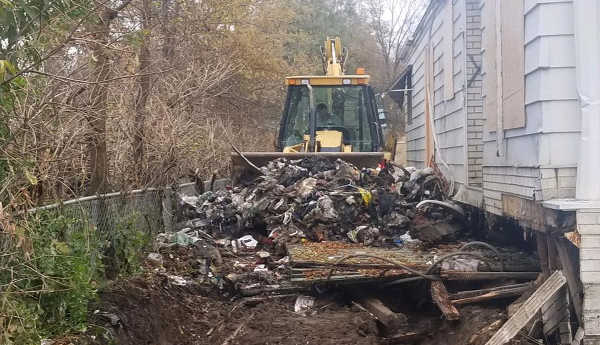
CLEARLAKE, Calif. – The city of Clearlake reported this week that it is continuing its efforts to clean up nuisance properties.
Thanks to a break in the weather, the Clearlake Police Department’s Code Enforcement Bureau was able to continue with the cleanup and boarding up of a nuisance property on Redwood Street.
It was discovered that the property owner had passed away several years ago and squatters and trespassers have since been entering the property, police reported.
Police said the Redwood Street property is an example of the obstacles Code Enforcement deals with on a daily basis.
Abandoned properties can become inviting to squatters and trespassers, which can result in a wide variety of violations such as living without heat or hot and cold running water, theft of utilities, trespassing and damaging another subject’s property, police said.
In addition, police said many of the subjects who take advantage of these types of properties are involved in criminal activities or illegal drug use.
This latest action marks the fifth nuisance property the Code Enforcement Bureau has cleaned and boarded up since the middle of October, the police department said. These abatements are being completed in-house by Code Enforcement officers due to the exhaustion of the CalRecycle grant.
Code Enforcement has approximately 10 properties remaining on their list to abate. Due to weather conditions, these will be completed between storms, the police department said.
If you see or suspect someone is illegally entering a vacant or abandoned dwelling, you should immediately contact the Clearlake Police Department at 707-994-8251. Reporting this immediately assists police in identifying and arresting persons performing these types of illegal actions.
For all questions regarding Code Enforcement, call 707-994-8251, Extension 309.