 How to resolve AdBlock issue?
News
- Details
- Written by: NATIONAL AERONAUTICS AND SPACE ADMINISTRATION
NASA has captured an extremely crisp infrared image of the center of our Milky Way galaxy. NASA has captured an extremely crisp infrared image of the center of our Milky Way galaxy.
Spanning a distance of more than 600 light-years, this panorama reveals details within the dense swirls of gas and dust in high resolution, opening the door to future research into how massive stars are forming and what’s feeding the supermassive black hole at our galaxy’s core.
Among the features coming into focus are the jutting curves of the Arches Cluster containing the densest concentration of stars in our galaxy, as well as the Quintuplet Cluster with stars a million times brighter than our Sun. Our galaxy’s black hole takes shape with a glimpse of the fiery-looking ring of gas surrounding it.
The new view was made possible by the world’s largest airborne telescope, the Stratospheric Observatory for Infrared Astronomy, or SOFIA. Flying high in the atmosphere, this modified Boeing 747 pointed its infrared camera called FORCAST – the Faint Object Infrared Camera for the SOFIA Telescope – to observe warm, galactic material emitting at wavelengths of light that other telescopes could not detect.
The image combines SOFIA’s new perspective of warm regions with previous data exposing very hot and cold material from NASA’s Spitzer Space Telescope and the European Space Agency’s Herschel Space Observatory.
An overview paper highlighting initial results has been submitted for publication to the Astrophysical Journal. The image was presented for the first time at the American Astronomical Society annual meeting this week in 2020 in Honolulu.
“It’s incredible to see our galactic center in detail we’ve never seen before,” said James Radomski, a Universities Space Research Association scientist at the SOFIA Science Center at NASA’s Ames Research Center in California’s Silicon Valley. “Studying this area has been like trying to assemble a puzzle with missing pieces. The SOFIA data fills in some of the holes, putting us significantly closer to having a complete picture.”
Birth of stars
The Milky Way’s central regions have significantly more of the dense gas and dust that are the building blocks for new stars compared to other parts of the galaxy. Yet, there are 10 times fewer massive stars born here than expected.
Understanding why this discrepancy exists has been difficult because of all the dust between Earth and the galactic core getting in the way – but observing with infrared light offers a closer look at the situation.
The new infrared data illuminates structures indicative of star birth near the Quintuplet Cluster and warm material near the Arches Cluster that could be the seeds for new stars. Seeing these warm features in high resolution may help scientists explain how some of the most massive stars in our entire galaxy managed to form so close to each other, in a relatively small region, despite the low birthrate in the surrounding areas.
“Understanding how massive star birth happens at the center of our own galaxy gives us information that can help us learn about other, more distant galaxies,” said Matthew Hankins, a postdoctoral scholar at the California Institute of Technology in Pasadena, California and principal investigator of the project. “Using multiple telescopes gives us clues we need to understand these processes, and there’s still more to be uncovered.”
Ring around the black hole
Scientists can also more clearly see the material that may be feeding the ring around our galaxy’s central supermassive black hole. The ring is about 10 lightyears in diameter and plays a key role in bringing matter closer to the black hole, where it may eventually be devoured.
The origin of this ring has long been a puzzle for scientists because it may be depleted over time, but the SOFIA data reveal several structures which could represent material being incorporated into it.
The data were taken in July 2019 during SOFIA’s annual deployment to Christchurch, New Zealand, where scientists study the skies over the Southern Hemisphere. The full, calibrated dataset is currently available to astronomers worldwide for further research via the SOFIA Legacy Program.
The Spitzer Space Telescope will be decommissioned on Jan. 30 after operating for more than 16 years. SOFIA continues exploring the infrared universe by studying wavelengths of mid- and far-infrared light with high resolution light that are not accessible to other telescopes, and helping scientists understand star and planet formation, the role magnetic fields play in shaping our universe, and the chemical evolution of galaxies.
Some of the very faint points and dark regions revealed in SOFIA’s image can help plan targets for the telescopes of the future, like the James Webb Space Telescope.
SOFIA, the Stratospheric Observatory for Infrared Astronomy, is a Boeing 747SP jetliner modified to carry a 106-inch diameter telescope.
It is a joint project of NASA and the German Aerospace Center, DLR. NASA’s Ames Research Center in California’s Silicon Valley manages the SOFIA program, science and mission operations in cooperation with the Universities Space Research Association headquartered in Columbia, Maryland, and the German SOFIA Institute at the University of Stuttgart. The aircraft is maintained and operated from NASA’s Armstrong Flight Research Center Building 703, in Palmdale, California.
- Details
- Written by: Elizabeth Larson
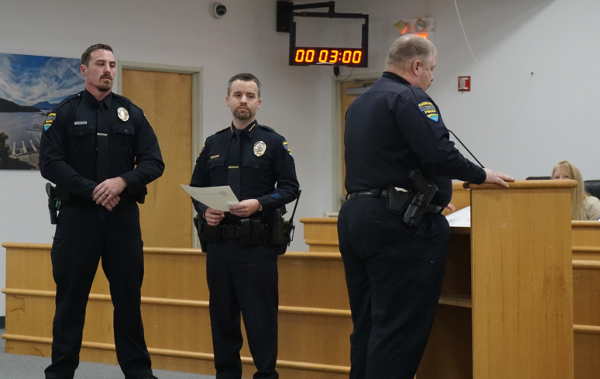
CLEARLAKE, Calif. – At Thursday night’s Clearlake City Council meeting, a Clearlake Police officer was honored for saving a man’s life.
Officer Chris Kelleher received a certificate and a life-saving award medal that he’s entitled to wear on his uniform to signify his efforts.
Presenting the award to Kelleher was Capt. Tim Celli and Chief Andrew White.
“Every once in a while we're at the right place at the right time, but this officer's actions went above and beyond,” said Celli.
On Dec. 2, Kelleher was on patrol on Walnut Avenue when he saw two suspicious subjects entering a property, Celli said.
Celli said Kelleher then saw a male subject on the ground. Kelleher found the man was not breathing and had no pulse, with his condition the result of a possible drug overdose.
Kelleher advised dispatch that he needed an emergency medical response and conducted cardiopulmonary resuscitation on the man until he developed a pulse, according to Celli.
Medical personnel then arrived on scene and found the man had a pulse and was breathing, Celli said.
Celli said the man was taken to the hospital for treatment, and he’s since been seen walking around town by other officers.
Based on the totality of the circumstances, Celli said they believe Kelleher’s actions saved the man’s life.
As a result, Celli recommended Kelleher for the life-saving award, which White presented to Kelleher.
Kelleher has been with the department for about four years.
Chief White told Lake County News that it was Celli, while serving as the department’s interim police chief, who instituted the life-saving award.
Previous recipients include Sgt. Travis Lenz, who saved a woman who had been held hostage at gunpoint in October 2015, and Officer Trevor Franklin, who in March 2016 saved an elderly couple from a house fire.
Email Elizabeth Larson at
- Details
- Written by: Elizabeth Larson
Among the decisions the board opened the year with at its Tuesday meeting was the selection of Moke Simon as chair for 2020.
Supervisor Bruno Sabatier nominated Simon, with EJ Crandell seconding and the board voting unanimously.
Simon, in turn, nominated Sabatier for vice chair, a motion Crandell also seconded and the board voted 5-0 to confirm.
Outgoing Board Chair Tina Scott then switched seats with Simon, who led the rest of the meeting.
In separate motions, Scott nominated Simon and Sabatier as chair and vice chair, respectively, for the Lake County Board of Equalization, motions the board unanimously adopted.
The board also elected Simon as chair and Sabatier as vice chair, respectively, of the Lake County In-Home Supportive Services Board of Directors in 4-0 votes. Supervisor Rob Brown recused himself from the votes due to a declared conflict of interest.
Also on Tuesday, the board approved numerous committee assignments which Simon had sent out to the supervisors ahead of the meeting for review.
Among the key appointments are the following:
– Airport Land and Use Commission: Rob Brown, Tina Scott.
– Area Agency on Aging Governing Board: EJ Crandell, Tina Scott as alternate.
– Area Planning Council/Transit Authority: Moke Simon, Bruno Sabatier, Tina Scott as alternate.
– Abandoned Vehicle Abatement Commission: Moke Simon, Bruno Sabatier, Tina Scott as alternate.
– Blue Ribbon Committee: EJ Crandell, Moke Simon.
– Lake Local Agency Formation Commission: Bruno Sabatier, Moke Simon, Tina Scott as alternate.
The full list is below.
Email Elizabeth Larson at
010720 Lake County Board of Supervisors 2020 committee assignments by LakeCoNews on Scribd
- Details
- Written by: Lake County News reports
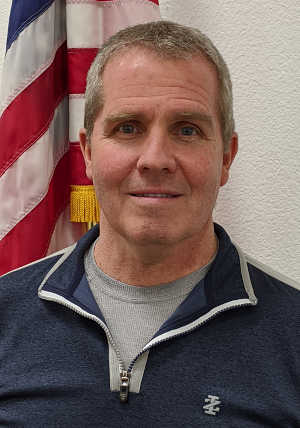
CLEARLAKE, Calif. – The city of Clearlake announced that it has hired a new Public Works director.
Joining the city is Dale Goodman, who was introduced to the Clearlake City Council on Thursday evening when he attended his first council meeting.
Goodman has extensive public service experience, serving as director of Public Works for the city of American Fork in Utah; Willows, California; and St. Helens, Oregon.
Goodman also worked for the city of Rialto, California as public works maintenance superintendent and as a project manager, planning and managing the Rialto Metrolink Downtown Pedestrian Improvement Project.
“We are very excited about the hiring of Dale Goodman. His expertise and experience as an innovative problem solver and leader make him the perfect fit for the many public infrastructure improvements we are making and the transformation that is underway in Clearlake,” said City Manager Alan Flora.
Goodman has spearheaded many valuable projects, including flood recovery, capital improvement and regulatory compliance programs, for jurisdictions in several states.
Additionally, Goodman brings civic governance experience with him, having served as planning commissioner and council member for the city of Vineyard, Utah.
Goodman served in the U.S. Army and National Security Agency as an intelligence analyst. He has a Master’s of Business Administration degree from the University of Phoenix and a Bachelor of Science from the University of the State of New York at Albany.
“I’m excited to be here and look forward to making a positive impact in the lives of the citizens of Clearlake,” Goodman said. “I am already very impressed with the quality and professionalism of the public works staff and in fact all the other staff members with whom I’ve come in contact. My wife and I are looking forward to actively participating in the activities of the community, and enjoying all that Clearlake has to offer.”