 How to resolve AdBlock issue?
News
- Details
- Written by: Kathleen Scavone
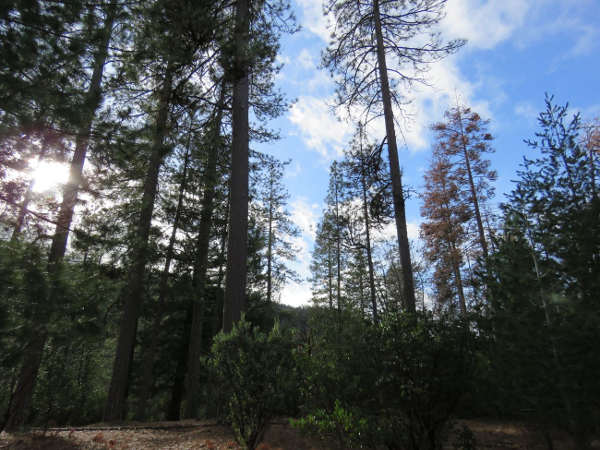
COBB, Calif. – Taking a walk in still-beautiful Boggs Ridge Nature Trail located behind Cobb Elementary School is like music to my soul.
Although it will never be the same after the 2015 Valley fire, there is still grandeur among the pines, oaks and other flora with thrilling panoramas to take in.
This quiet corner of Lake County – about 50 acres – resides in the Cache and Putah Creek watersheds. Our amazing watershed, a hydrologic system, in due course, arrives at the Pacific Ocean!
According to the park's Nature Trail interpretive panel:
"Water from the north side of Cobb and Highway 175 drains into Kelsey Creek which in turn drains into Clear Lake ... Clear Lake's only outlet is Cache Creek at the southern end of the Lake, which borders Anderson Marsh State Historic Park. From there, Cache Creek winds its way south passing through Cache Creek Dam and then entering the Capay Valley. As the Creek leaves Capay Valley it enters the northern Central Valley. The Creek becomes smaller and smaller as farms along its banks remove water for irrigation of crops. The Creek eventually enters a settling basin east of Woodland with excess water flowing through a flood control canal into the Sacramento River. Water from the south side of Cobb and Highway 175 drains into Putah Creek which flows into Lake Berryessa. That water is used by local cities with some of the excess water continuing to flow down Putah Creek below the Lake and eventually enters the Sacramento River. The Sacramento River drains into the Sacramento-San Joaquin River Delta, which in turn drains into the San Pablo Bay. The same water that falls as rain where you are standing turns into runoff and travels hundreds of miles through creeks, lakes, and bays and then enters the San Francisco Bay and its final destination the Pacific Ocean."
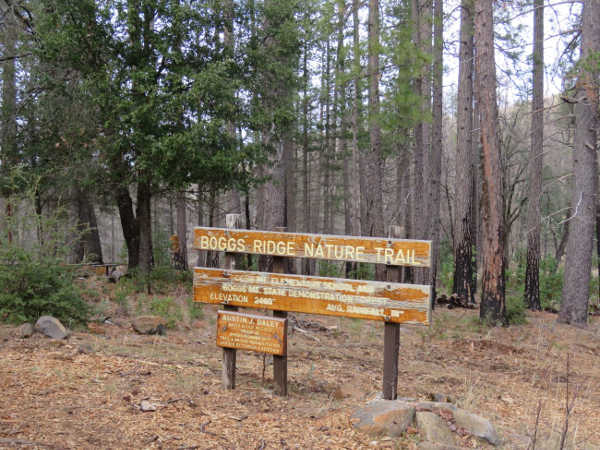
The interpretive panel, one of numerous and informative signs along the trail, goes on to describe how watersheds make up a large natural habitat that is home to important species of plants and animals.
It describes the importance of maintaining our watersheds through keeping them clean, beginning with the tippy-top of our creeks, to the ground-stores, or aquifers deep below the ground through monitoring the use of cleaning products, fertilizers, etc.
What a boon this park is to the lucky Cobb Elementary students!
Plants that thrive up on Boggs include white fir, Douglas fir, California fescue, California bay laurel, coffeeberry, sugar pine, Pacific madrone, mountain dogwood, canyon live oak, California black oak and much more.
Animals that call Boggs home include dusky-footed wood rat, gray fox, black bear, striped skunk, mountain lion, western gray squirrel, Sonoma chipmunk, black-tailed jackrabbit, black-tailed deer, raccoon and other forest-dwellers.
Boggs Mountain obtained its name from Henry Boggs, who hailed from Missouri, and landed in Lake County in 1864, making his arrival over a decade after John Cobb.
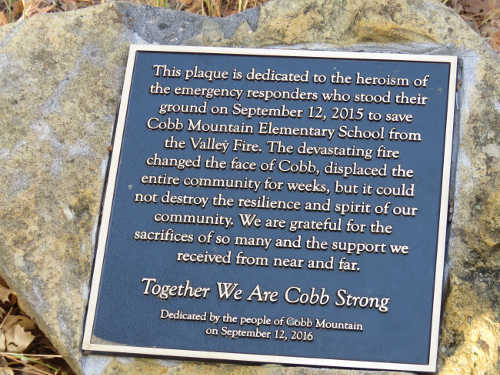
Boggs was an industrious fellow who controlled ventures such as a gristmill, a steam-powered sawmill as well as a wood planer on what is now the east portion of Boggs Mountain Demonstration State Forest. Boggs purchased and logged most of the area by 1884. After his time, Boggs was clear-cut by subsequent owners all of the way up to 1949.
Next, the California Division of Forestry, now known as Cal Fire, acquired 3,433 acres for their demonstration forest.
You don't have to peer closely to locate Boggs’ beauty of another “genre.” There is some interesting geology at Boggs Ridge Nature Trail.
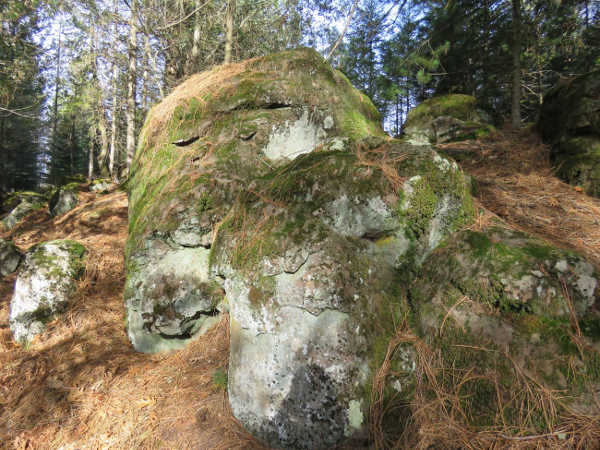
Along the trail amazing Boggs Mountain andesite boulders proliferate. Andesite is an igneous volcanic rock that started out in a sweltering fluid state.
Since, according to the interpretive display, Boggs Mountain State Forest is located on a lava cap roughly 1 mile wide, by 3 1/2 miles long andesite is exposed over large areas of the forest.
These flows, known as originating from a Clear Lake volcanic lava flow, are one to two million years old!
Kathleen Scavone, M.A., is a retired educator, potter, freelance writer and author of “Anderson Marsh State Historic Park: A Walking History, Prehistory, Flora, and Fauna Tour of a California State Park” and “Native Americans of Lake County.”
- Details
- Written by: Libby Richards, Purdue University

A new year typically brings new resolutions. While making resolutions is easy, sticking with them is not. Exercise-related resolutions consistently make the top 10 list, but up to 80% of resolutions to be healthier, including promises to exercise more, are tossed aside by February.
You know physical activity is good for you. But, that isn’t always enough to get or keep you moving. You’re not alone. Fewer than half of American adults are as active as they should be.
How active should you be? The Centers for Disease Control and Prevention recommend that adults get at least 150 minutes of moderate-intensity physical activity every week.
So, let’s think about physical activity in a different way. As a nurse who researches exercise, I can tell you that it is likely the closest thing to a fountain of youth or a magic pill that you will have in your lifetime.

Benefits to all parts of your body
Research shows that every single system in the body benefits when you are more active. You sleep better. You have more energy. You find yourself in a better mood. You think more clearly and remember better. Your bones become stronger. Your body also responds better to insulin, which lowers your risk of diabetes. And you significantly reduce your risk for many cancers. All of that is in addition to the better known weight and heart benefits of physical activity.
Bottom line: If you want to live a long and healthy life, you need to be active.
But “that’s easier said than done,” you might be saying to yourself. In fact, increasing your physical activity is probably easier than you think. You don’t need to buy expensive equipment or join a gym. And you will begin to reap the rewards of physical activity almost as soon as you start. Adding small amounts of movement to your daily routine goes a long way.
Brisk walking, at a pace of at least a 20-minute mile, provides health benefits similar to running, and probably more social benefits. Plus, your risk of injury is much lower. And you can walk – for free with nothing more than comfortable shoes – from almost anywhere: your neighborhood, your office, or in lieu of waiting behind the wheel of your car in the pickup line at your kid’s school. A 22-minute walk every day, or two 11-minute ones, would put you just over 150 minutes every week.
It isn’t cheating to break your 150 minutes a week into small increments. In fact, even for people who are physically fit and exercise every day, breaking up periods of sitting is critically important. Even if you are getting enough exercise, sitting for the rest of the day can undo the health benefits of your workout. If you aren’t yet ready to aim for 2.5 hours of brisk walking each week, reducing the time you spend sitting would be a great starting goal.
Setting other goals
Many experts who work with clients or patients to set goals use the acronym SMART (specific, measurable, attainable, realistic and time-based) to guide goal-setting. This simple method could help you achieve a goal to sit less and move more in the new year:
-
Be specific. Rather than just “sit less, move more,” include when you will start and how will you do it. Specify what actions you will take to meet your goal. For example, make a list of how you can get more steps in each day by doing specific things, like taking the stairs instead of the elevator.
-
Make it measurable. Again, “less” and “more” are hard to measure. Instead, try “Walk for 5 minutes after every hour of sitting.” Without a way to measure your goal, it becomes hard to know when you have achieved it.
-
Make it attainable. If you currently don’t exercise at all, 150 minutes a week may not be realistic. How about three 20-minute walks per week? You can slowly increase after you achieve that first goal. And choose an activity you might enjoy. If you already know you hate running, a goal to do it every day would be less attainable.
-
Set realistic goals. Your new activity goal should work for you and fit within your lifestyle. It’s great to challenge yourself, but break up challenging goals into smaller, more realistic, goals to help keep on track.
-
Set a time by which you will meet your goal. For example, will you take a certain number of steps by noon each day? Or, will you build up to 150 minutes a week by mid-April? You’re more likely to achieve short-term goals that lead into a long-term one.
One of the best ways to keep up with your efforts is to track your progress. You can do it with pen and paper, in a journal, or in one of many smartphone apps. As you see yourself making progress, it can be easier to keep up the routine.

Expand your view of exercise
Another thing to keep in mind is that you don’t have to go a gym to get moving. There are ways to make exercise part of your lifestyle, without too much inconvenience.
-
Get the family involved. Play tag, go on a scavenger hunt at a local park, or walk to your favorite hangout.
-
Park farther away from your workplace, the store, the library, etc.
-
Walk during your breaks at work and over your lunch period.
-
Instead of having coffee with friends, take a walk with them.
-
Whenever you are on the phone, stand up and walk around.
-
If you are at your kid’s or grandkid’s sporting event, walk the sidelines instead of sitting on the bleachers.
-
Try to find ways to make walking more meaningful. For example, try walking your own dog or a shelter dog. Dogs make great exercise companions that will never turn down an opportunity to walk.
As you undertake the big change from being inactive to becoming active, understand that setbacks happen. Don’t let one slip-up derail your whole goal. When possible, have a backup plan to deal with barriers like weather or time constraints. And celebrate the small victories you make toward reaching longer-term goals.
Looking for more tips on how to get started? Check out this guide.
[ Like what you’ve read? Want more? Sign up for The Conversation’s daily newsletter. ]
Libby Richards, Associate Professor of Nursing, Purdue University
This article is republished from The Conversation under a Creative Commons license. Read the original article.
- Details
- Written by: Elizabeth Larson
Dogs available for adoption this week include mixes of bluetick coonhound, pit bull, Rhodesian Ridgeback, shepherd and treeing walker coonhound.
Dogs that are adopted from Lake County Animal Care and Control are either neutered or spayed, microchipped and, if old enough, given a rabies shot and county license before being released to their new owner. License fees do not apply to residents of the cities of Lakeport or Clearlake.
If you're looking for a new companion, visit the shelter. There are many great pets hoping you'll choose them.
The following dogs at the Lake County Animal Care and Control shelter have been cleared for adoption (additional dogs on the animal control Web site not listed are still “on hold”).

‘Bruno’
“Bruno” is a male shepherd mix with a medium-length tricolor coat.
He is in kennel No. 18, ID No. 13432.
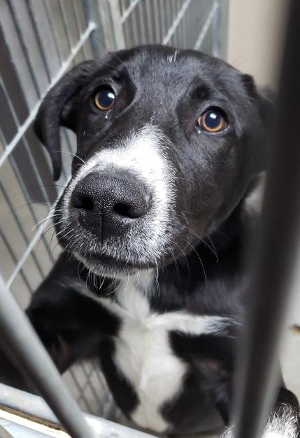
Male Labrador Retriever mix
This male Labrador Retriever mix puppy has a short black and white coat.
He is in kennel No. 21, ID No. 13427.

Female pit bull terrier
This female pit bull terrier has a short brown coat.
She is in kennel No. 23, ID No. 13428.

Female pit bull terrier
This female pit bull terrier has a short blue coat.
She is in kennel No. 24, ID No. 13429.
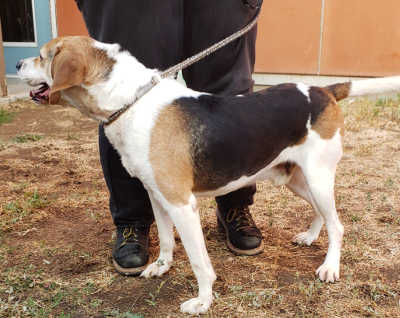
‘Max’
“Max” is a male bluetick coonhound-treeing walker coonhound with a short tricolor coat.
He is in kennel No. 25, ID No. 13289.

‘Blanca’
“Blanca” is a female pit bull terrier with a short white coat and black markings.
She has been spayed.
She is in kennel No. 26, ID No. 13406.

‘Oso’
“Oso” is a male shepherd mix with a long black and tan coat.
He has been neutered.
He’s in kennel No. 27, ID No. 3173.

Male Labrador Retriever
This male Labrador Retriever has a long tan coat.
He has been neutered.
He is in kennel No. 28, ID No. 13408.
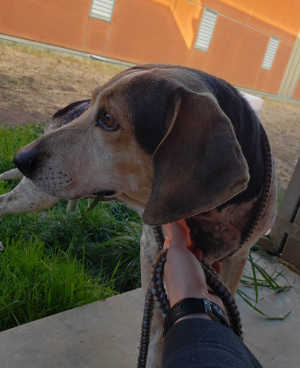
‘Daisey’
“Daisey” is a female treeing walker coonhound/bluetick coonhound mix with a short tricolor coat.
She is in kennel No. 29, ID No. 13291.
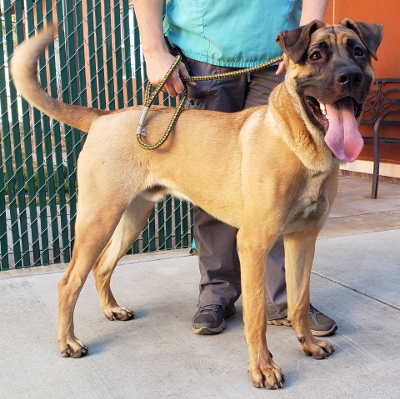
‘Goofy’
“Goofy” is a young male Rhodesian Ridgeback with a short tan and black coat.
Shelter staff said this boy is great with other dogs, although he is high energy and would benefit from obedience training. He would love to go jogging every day, he is very food motivated and willing to learn new things.
Goofy has been at the shelter since Nov. 5. He was originally taken from someone in Upper Lake and found on the highway in Clearlake. If anyone has any information on his owner please contact the shelter.
He’s in kennel No. 33, ID No. 13210.
Lake County Animal Care and Control is located at 4949 Helbush in Lakeport, next to the Hill Road Correctional Facility.
Office hours are Monday through Friday, 11 a.m. to 5 p.m., and 11 a.m. to 3 p.m., Saturday. The shelter is open from 11 a.m. to 4 p.m., Monday through Friday and on Saturday from 11 a.m. to 3 p.m.
Visit the shelter online at http://www.co.lake.ca.us/Government/Directory/Animal_Care_And_Control.htm.
For more information call Lake County Animal Care and Control at 707-263-0278.
Email Elizabeth Larson at
- Details
- Written by: Francis Reddy
Astronomers using data from NASA’s Transiting Exoplanet Survey Satellite, or TESS, have shown that Alpha Draconis, a well-studied star visible to the naked eye, and its fainter companion star regularly eclipse each other. While astronomers previously knew this was a binary system, the mutual eclipses came as a complete surprise.
“The first question that comes to mind is ‘how did we miss this?’” said Angela Kochoska, a postdoctoral researcher at Villanova University in Pennsylvania who presented the findings at the 235th meeting of the American Astronomical Society in Honolulu on Jan. 6. “The eclipses are brief, lasting only six hours, so ground-based observations can easily miss them. And because the star is so bright, it would have quickly saturated detectors on NASA’s Kepler observatory, which would also mask the eclipses.”
The system ranks among the brightest-known eclipsing binaries where the two stars are widely separated, or detached, and only interact gravitationally. Such systems are important because astronomers can measure the masses and sizes of both stars with unrivaled accuracy.
Alpha Draconis, also known as Thuban, lies about 270 light-years away in the northern constellation Draco. Despite its “alpha” designation, it shines as Draco’s fourth-brightest star. Thuban’s fame arises from a historical role it played some 4,700 years ago, back when the earliest pyramids were being built in Egypt.
At that time, it appeared as the North Star, the one closest to the northern pole of Earth’s spin axis, the point around which all of the other stars appear to turn in their nightly motion.
Today, this role is played by Polaris, a brighter star in the constellation Ursa Minor. The change happened because Earth’s spin axis performs a cyclic 26,000-year wobble, called precession, that slowly alters the sky position of the rotational pole.
TESS monitors large swaths of the sky, called sectors, for 27 days at a time. This long stare allows the satellite to track changes in stellar brightness. While NASA’s newest planet hunter mainly seeks dimmings caused by planets crossing in front of their stars, TESS data can be used to study many other phenomena as well.
A 2004 report suggested that Thuban displayed small brightness changes that cycled over about an hour, suggesting the possibility that the system’s brightest star was pulsating.
To check this, Timothy Bedding, Daniel Hey, and Simon Murphy at the University of Sydney, Australia, and Aarhus University, Denmark, turned to TESS measurements. In October, they published a paper that described the discovery of eclipses by both stars and ruling out the existence of pulsations over periods less than eight hours.
Now Kochoska is working with Hey to understand the system in greater detail.
“I've been collaborating with Daniel to model the eclipses and advising on how to bring together more data to better constrain our model.” Kochoska explained. “The two of us took different approaches to modeling the system, and we hope our efforts will result in its full characterization.”
As known from earlier studies, the stars orbit every 51.4 days at an average distance of about 38 million miles (61 million kilometers), slightly more than Mercury’s distance from the Sun. The current preliminary model shows that we view the system about three degrees above the stars’ orbital plane, which means neither star completely covers the other during the eclipses.
The primary star is 4.3 times bigger than the Sun and has a surface temperature around 17,500 degrees Fahrenheit (9,700 C), making it 70 percent hotter than our Sun. Its companion, which is five times fainter, is most likely half the primary’s size and 40 percent hotter than the Sun.
Kochoska says she is planning ground-based follow-up observations and anticipating additional eclipses in future TESS sectors.
“Discovering eclipses in a well-known, bright, historically important star highlights how TESS impacts the broader astronomical community,” said Padi Boyd, the TESS project scientist at NASA’s Goddard Space Flight Center in Greenbelt, Maryland. “In this case, the high precision, uninterrupted TESS data can be used to help constrain fundamental stellar parameters at a level we’ve never before achieved.”
TESS is a NASA Astrophysics Explorer mission led and operated by MIT in Cambridge, Massachusetts, and managed by NASA's Goddard Space Flight Center. Additional partners include Northrop Grumman, based in Falls Church, Virginia; NASA’s Ames Research Center in California’s Silicon Valley; the Harvard-Smithsonian Center for Astrophysics in Cambridge, Massachusetts; MIT’s Lincoln Laboratory; and the Space Telescope Science Institute in Baltimore. More than a dozen universities, research institutes and observatories worldwide are participants in the mission.
Francis Reddy works for NASA’s Goddard Space Flight Center in Greenbelt, Maryland.