How to resolve AdBlock issue?
News
- Details
- Written by: Elizabeth Larson
Dogs available for adoption this week include mixes of Doberman Pinscher, Labrador Retriever, pit bull, Rhodesian Ridgeback, shepherd and terrier.
Dogs that are adopted from Lake County Animal Care and Control are either neutered or spayed, microchipped and, if old enough, given a rabies shot and county license before being released to their new owner. License fees do not apply to residents of the cities of Lakeport or Clearlake.
If you're looking for a new companion, visit the shelter. There are many great pets hoping you'll choose them.
The following dogs at the Lake County Animal Care and Control shelter have been cleared for adoption (additional dogs on the animal control Web site not listed are still “on hold”).

Male Doberman Pinscher
This male Doberman Pinscher has a short red and brown coat.
He is in kennel No. 22, ID No. 13459.

Female terrier
This female terrier has a short brown and white coat.
She is in kennel No. 24, ID No. 13456.

Male Labrador Retriever
This male Labrador Retriever has a short chocolate coat.
He is in kennel No. 25, ID No. 13465.

‘Oso’
“Oso” is a male shepherd mix with a long black and tan coat.
He has been neutered.
He’s in kennel No. 27, ID No. 3173.

Male pit bull terrier
This male pit bull terrier has a short blue and white coat.
He is in kennel No. 30, ID No. 13448.

‘Goofy’
“Goofy” is a young male Rhodesian Ridgeback with a short tan and black coat.
Shelter staff said this boy is great with other dogs, although he is high energy and would benefit from obedience training. He would love to go jogging every day, he is very food motivated and willing to learn new things.
Goofy has been at the shelter since Nov. 5. He was originally taken from someone in Upper Lake and found on the highway in Clearlake. If anyone has any information on his owner please contact the shelter.
He’s in kennel No. 33, ID No. 13210.
Lake County Animal Care and Control is located at 4949 Helbush in Lakeport, next to the Hill Road Correctional Facility.
Office hours are Monday through Friday, 11 a.m. to 5 p.m., and 11 a.m. to 3 p.m., Saturday. The shelter is open from 11 a.m. to 4 p.m., Monday through Friday and on Saturday from 11 a.m. to 3 p.m.
Visit the shelter online at http://www.co.lake.ca.us/Government/Directory/Animal_Care_And_Control.htm.
For more information call Lake County Animal Care and Control at 707-263-0278.
Email Elizabeth Larson at
- Details
- Written by: Gina Solomon, University of California, San Francisco

Editor’s note: California, the top U.S. food-producing state, is ending use of chlorpyrifos, a pesticide associated with neurodevelopmental problems and impaired brain function in children. Gina Solomon, a principal investigator at the Public Health Institute, clinical professor at the University of California San Francisco and former deputy secretary at the California Environmental Protection Agency, explains the scientific evidence that led California to act.
1. What is chlorpyrifos and how is it used?
Chlorpyrifos is an inexpensive and effective pesticide that has been on the market since 1965. Farmers across the U.S. use millions of pounds of it each year on a wide range of crops, including many different vegetables, corn, soybeans, cotton and fruit and nut trees.
Like other organophosphate insecticides, chlorpyrifos is designed to kill insects by blocking an enzyme called acetylcholinesterase. This enzyme normally breaks down acetylcholine, a chemical that the body uses to transmit nerve impulses. Blocking the enzyme causes insects to have convulsions and die. All organophosphate insecticides are also toxic and potentially lethal to humans.
Until 2000, chlorpyrifos was also used in homes for pest control. It was banned for indoor use after passage of the 1996 Food Quality Protection Act, which required additional protection of children’s health. Residues left after indoor use were quite high, and toddlers who crawled on the floor and put their hands in their mouth were found to be at risk of poisoning.
Despite the ban on household use and the fact that chlorpyrifos doesn’t linger in the body, over 75% of people in the U.S. still have traces of chlorpyrifos in their bodies, mostly due to residues on food. Higher exposures have been documented in farm workers and people who live or work near agricultural fields.
2. What’s the evidence that chlorpyrifos is harmful?
Researchers published the first study linking chlorpyrifos to potential developmental harm in children in 2003. They found that higher levels of a chlorpyrifos metabolite – a substance that’s produced when the body breaks down the pesticide – in umbilical cord blood were significantly associated with smaller infant birth weight and length.
Subsequent studies published between 2006 and 2014 showed that those same infants had developmental delays that persisted into childhood, with lower scores on standard tests of development and changes that researchers could see on MRI scans of the children’s brains. Scientists also discovered that a genetic subtype of a common metabolic enzyme in pregnant women increased the likelihood that their children would experience neurodevelopmental delays.
These findings touched off a battle to protect children from chlorpyrifos. Some scientists were skeptical of results from epidemiological studies that followed the children of pregnant women with greater or lesser levels of chlorpyrifos in their urine or cord blood and looked for adverse effects.
Epidemiological studies can provide powerful evidence that something is harmful, but results can also be muddled by gaps in information about the timing and level of exposures. They also can be complicated by exposures to other substances through diet, personal habits, homes, communities and workplaces.

3. Why did it take so long to reach a conclusion?
As evidence accumulated that low levels of chlorpyrifos were probably toxic in humans, regulatory scientists at the U.S. EPA and in California reviewed it – but they took very different paths.
At first, both groups focused on the established toxicity mechanism: acetylcholinesterase inhibition. They reasoned that preventing significant disruption of this key enzyme would protect people from other neurological effects.
Scientists working under contract for Dow Chemical, which manufactured chlorpyrifos, published a complex model in 2014 that could estimate how much of the pesticide a person would have to consume or inhale to trigger acetylcholinesterase inhibition. But some of their equations were based on data from as few as six healthy adults who had swallowed capsules of chlorpyrifos during experiments in the 1970s and early 1980s – a method that now would be considered unethical.
California scientists questioned whether risk assessments based on the Dow-funded model adequately accounted for uncertainty and human variability. They also wondered whether acetylcholinesterase inhibition was really the most sensitive biological effect.
In 2016 the U.S. EPA released a reassessment of chlorpyrifos’s potential health effects that took a different approach. It focused on epidemiological studies published from 2003 through 2014 at Columbia University that found developmental impacts in children exposed to chlorpyrifos. The Columbia researchers analyzed chlorpyrifos levels in the mothers’ cord blood at birth, and the EPA attempted to back-calculate how much chlorpyrifos they might have been exposed to throughout pregnancy.
On the basis of this analysis, the Obama administration concluded that chlorpyrifos could not be safely used and should be banned. However, the Trump administration reversed this decision in 2017, arguing that the science was not resolved and more study was needed.

For their part, California regulators struggled to reconcile these disparate results. As they saw it, the epidemiological studies and the acetylcholinesterase model pointed in different directions, and both had significant challenges.
4. What convinced California to impose a ban?
Three new papers on prenatal exposures to chlorpyrifos, published in 2017 and 2018, broke the logjam. These were independent studies, conducted in rats, that evaluated subtle effects on learning and development.
The results were consistent and clear: Chlorpyrifos caused decreased learning, hyperactivity and anxiety in rat pups at doses lower than those that affected acetylcholinesterase. And these studies clearly quantified doses to the rats, so there was no uncertainty about their exposure levels during pregnancy. The results were eerily similar to effects seen in human epidemiological studies, vindicating health concerns about chlorpyrifos.
California reassessed chlorpyrifos using these new studies. Regulators concluded that the pesticide posed significant risks that could not be mitigated – especially among people who lived near agricultural fields where it was used. In October 2019, the state announced that under an enforceable agreement with manufacturers, all sales of chlorpyrifos to California growers would end by Feb. 6, 2020, and growers would not be allowed to possess or use it after Dec. 31, 2020.
Hawaii has already banned chlorpyrifos, and New York state is phasing it out. Other states are also considering action.
5. What’s the U.S. EPA’s view?
In a July 2019 statement, the EPA asserted that “claims regarding neurodevelopmental toxicity must be denied because they are not supported by valid, complete, and reliable evidence.” The agency indicated that it would continue to review the evidence and planned to make a decision by 2021.
EPA did not mention the animal studies published in 2017 and 2018, but it legally must include them in its new assessment. When it does so, I believe EPA leaders will have great difficulty making a case that chlorpyrifos is safe.
In my view, we have consistent scientific evidence that chlorpyrifos threatens children’s neurological development. We know what this pesticide does to people, and it is time to move to safer alternatives.
[ You’re too busy to read everything. We get it. That’s why we’ve got a weekly newsletter. Sign up for good Sunday reading. ]
Gina Solomon, Clinical Professor of Medicine, University of California, San Francisco
This article is republished from The Conversation under a Creative Commons license. Read the original article.
- Details
- Written by: National Aeronautics and Space Administration
NASA is celebrating the legacy of one of its Great Observatories, the Spitzer Space Telescope, which has studied the universe in infrared light for more than 16 years.
The Spitzer mission will come to a close on Jan. 30.
Launched in 2003, Spitzer revealed previously hidden features of known cosmic objects and led to discoveries and insights spanning from our own solar system to nearly the edge of the universe.
"Spitzer taught us how important infrared light is to understanding our universe, both in our own cosmic neighborhood and as far away as the most distant galaxies," said Paul Hertz, director of astrophysics at NASA Headquarters. "The advances we make across many areas in astrophysics in the future will be because of Spitzer's extraordinary legacy."
Spitzer was designed to study "the cold, the old and the dusty," three things astronomers can observe particularly well in infrared light. Infrared light refers to a range of wavelengths on the infrared spectrum, from those measuring about 700 nanometers (too small to see with the naked eye) to about 1 millimeter (about the size of the head of a pin).
Different infrared wavelengths can reveal different features of the universe. For example, Spitzer can see things too cold to emit much visible light, including exoplanets (planets outside our solar system), brown dwarfs and cold matter found in the space between stars.
As for "the old," Spitzer has studied some of the most distant galaxies ever detected. The light from some of them has traveled for billions of years to reach us, enabling scientists to see those objects as they were long, long ago.
In fact, working together, Spitzer and the Hubble Space Telescope (which observes primarily in visible light and at shorter infrared wavelengths than those detected by Spitzer) identified and studied the most distant galaxy observed to date. The light we see from that galaxy was emitted 13.4 billion years ago, when the universe was less than 5 percent of its current age.
Among other things, the two observatories found that such early galaxies are heavier than scientists expected. And by studying galaxies closer to us, Spitzer has deepened our understanding of how galaxy formation has evolved during the universe's lifetime.
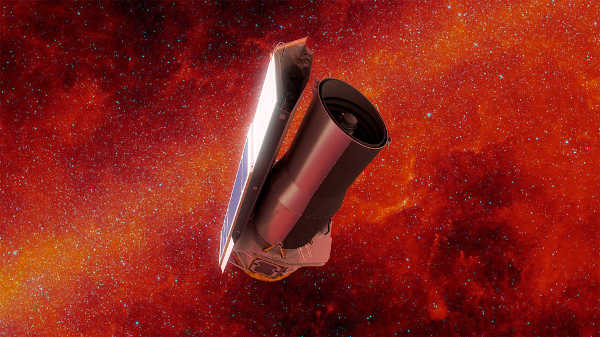
Spitzer also has a keen eye for interstellar dust, which is prevalent throughout most galaxies. Mixed with gas in massive clouds, it can condense to form stars, and the remains can give birth to planets. With a technique called spectroscopy, Spitzer can analyze the chemical composition of dust to learn about the ingredients that form planets and stars.
In 2005, after NASA's Deep Impact mission intentionally slammed into Comet Tempel 1, the telescope analyzed the dust that was kicked up, providing a list of materials that would have been present in the early solar system. What's more, Spitzer found a previously undetected ring around Saturn, composed of sparse dust particles that visible-light observatories can't see.
In addition, some infrared wavelengths of light can penetrate dust when visible light cannot, allowing Spitzer to reveal regions that would otherwise remain obscured from view.
"It's quite amazing when you lay out everything that Spitzer has done in its lifetime, from detecting asteroids in our solar system no larger than a stretch limousine to learning about some of the most distant galaxies we know of," said Michael Werner, Spitzer's project scientist.
To deepen their scientific insights, Spitzer scientists have frequently combined their findings with those of many other observatories, including two of NASA's other Great Observatories, Hubble and the Chandra X-ray Observatory.
Some of Spitzer's greatest scientific discoveries, including those regarding exoplanets, weren't part of the mission's original science goals. The team used a technique called the transit method, which looks for a dip in a star's light that results when a planet passes in front of it, to confirm the presence of two Earth-size planets in the TRAPPIST-1 system.
Then Spitzer discovered another five Earth-size planets in the same system — and provided crucial information about their densities — amounting to the largest batch of terrestrial exoplanets ever discovered around a single star.
One of the first observatories to distinguish the light coming directly from an exoplanet, Spitzer harnessed the same capability for another first: detecting molecules in the atmosphere of an exoplanet. (Previous studies had revealed individual chemical elements in exoplanet atmospheres.) And it provided the first measurements of temperature variations and wind in an exoplanet atmosphere as well.
"When Spitzer was being designed, scientists had not yet found a single transiting exoplanet, and by the time Spitzer launched, we still knew about only a handful," said Sean Carey, manager of the Spitzer Science Center at IPAC at Caltech in Pasadena, California. "The fact that Spitzer became such a powerful exoplanet tool, when that wasn't something the original planners could have possibly prepared for, is really profound. And we generated some results that absolutely knocked our socks off."
One of Spitzer's major strengths is its sensitivity — that is, its ability to detect very faint sources of infrared light. Earth is a major source of infrared radiation, and trying to see faint infrared sources from the ground is like trying to observe stars while the Sun is up. That's a major reason why Spitzer's designers made it the first astrophysics observatory in an Earth-trailing orbit: Far from our planet's heat, Spitzer's detectors wouldn't have to contend with our planet's own infrared radiation.
Different infrared wavelengths can reveal different features of the universe. Some ground telescopes can observe in certain infrared wavelengths and provide valuable scientific insights, but Spitzer can achieve greater sensitivity than even much larger ground telescopes and see much fainter sources, such as extremely distant galaxies.
What's more, it was designed to detect some infrared wavelengths that Earth's atmosphere entirely blocks, rendering those wavelengths beyond the reach of ground-based observatories.

What is infrared light and how do we use it to study the universe? Infrared radiation, or infrared light, is a type of energy that we humans can't see but can feel as heat.
All objects in the universe emit some level of infrared radiation, whether hot or cold, making an infrared telescope like NASA's Spitzer Space Telescope very useful in detecting objects that might seem invisible.
Spacecraft can generate infrared heat too, so Spitzer was designed to stay cool, operating at temperatures as low as minus 450 degrees Fahrenheit (minus 267 degrees Celsius).
In 2009, Spitzer exhausted its supply of helium coolant, marking the end of its "cold mission." But Spitzer's great distance from Earth has helped keep it from warming up too much — it still operates at about minus 408 degrees Fahrenheit (or minus 244 degrees Celsius) — and mission team members found they could continue observing in two infrared wavelengths. Spitzer's "warm mission" has lasted for over a decade, nearly twice as long as its cold mission.
The original mission planners didn't expect Spitzer to operate for 16-plus years. This extended lifetime has led to some of Spitzer's most profound science results but has also posed challenges as the spacecraft drifts farther from Earth.
"It wasn't in the plan to have Spitzer operating so far away from Earth, so the team has had to adapt year after year to keep the spacecraft operating," said Joseph Hunt, Spitzer project manager. "But I think overcoming that challenge has given people a great sense of pride in the mission. This mission stays with you."
On Jan. 30, 2020, engineers will decommission the Spitzer spacecraft and cease science operations. During the 2016 NASA Senior Review process, the agency made a decision to close out the Spitzer mission.
The closeout was initially planned for 2018 in anticipation of the launch of the James Webb Space Telescope, which will also conduct infrared astronomy.
When Webb's launch was postponed, the Spitzer mission was granted its fifth and final extension. These mission extensions have given Spitzer additional time to continue producing transformative science including pathfinding work for Webb.
JPL manages and conducts mission operations for the Spitzer mission for NASA's Science Mission Directorate in Washington. Science operations are conducted at the Spitzer Science Center at IPAC at Caltech. Spacecraft operations are based at Lockheed Martin Space in Littleton, Colorado. Data are archived at the Infrared Science Archive housed at IPAC at Caltech. Caltech manages JPL for NASA.
More information about Spitzer is available at https://www.nasa.gov/mission_pages/spitzer/main/index.html and https://go.nasa.gov/SpitzerToolkit.

- Details
- Written by: Elizabeth Larson

LUCERNE, Calif. – The Northshore Fire Protection District officially welcomed two new members to its team of first responders and marked the promotion of another at a special ceremony held Friday afternoon at the district’s Lucerne headquarters.
Daniel Blair and Ralph Mattice, who joined the district late last year, and Randy Newell, a four-year veteran of the district, were celebrated at the event at Lucerne Station 80.
Blair is a firefighter/EMT who came from the Marin County Fire Department and Mattice is a paramedic/firefighter who previously worked for AMR in Contra Costa County, while Newell moved up in the Northshore Fire ranks from firefighter/paramedic to engineer, according to Chief Mike Ciancio.
The three men were joined by their families, colleagues and district board members Jim Burton, John Barnette and Lynn Ringuette.
“This is a special occasion for these guys, to get badged,” Ciancio told the group, adding he hoped all of them will enjoy long careers in the fire service.
“These guys spend a lot of time away from home,” said Ciancio.
Ciancio, who started the introduced the ceremonies, made sure to welcome the families, explaining they are now part of the larger Northshore Fire family.
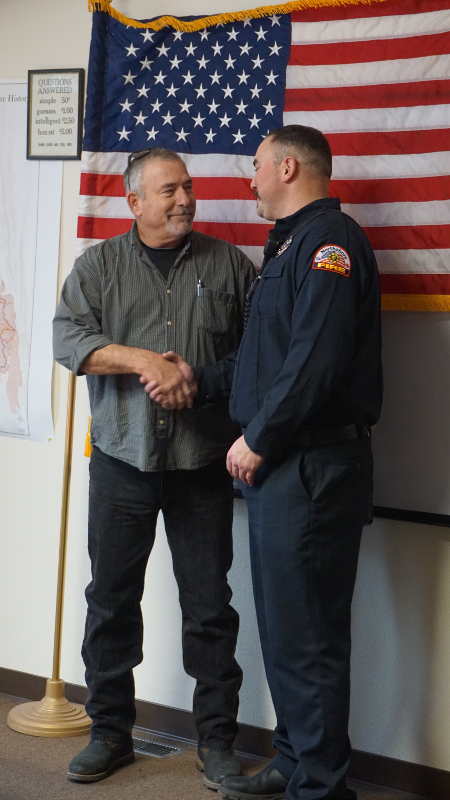
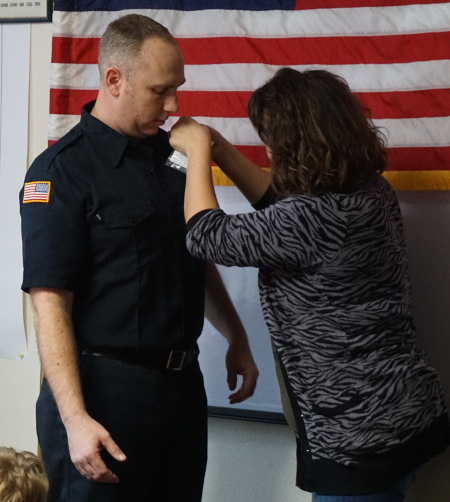
Ciancio then administered the oath to the three men, after which their family members took turns pinning on their badges.
Mattice’s wife, Bessie, pinned on his badge as their two small children, Jack and Pepper, watched nearby.
Daniel Blair’s father, Kevin, pinned on his badge, then shook his son’s hand.
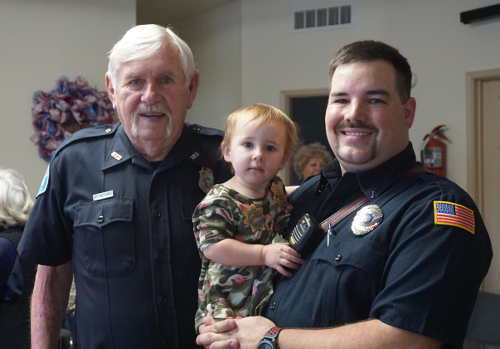
Newell’s wife Casey, herself a volunteer firefighter, pinned on his badge as Ciancio held their small daughter, Ember.
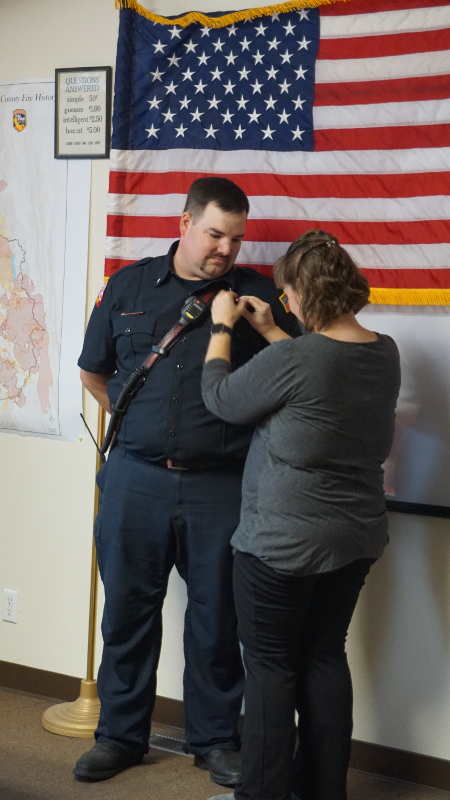
For Newell, firefighting is a profession for more than one generation of his family. His grandfather, Bill Merriman, who worked for Kelseyville Fire for 32 years as an engineer, was on hand to celebrate the next step in his grandson’s career.
Ciancio told Lake County News that staffing for the district – one of the largest in the state as far as coverage area – includes a total of 19 full-time firefighter positions, one of which is open but is in the process of being filled, along with two battalion chiefs, two officer personnel and Ciancio himself.
In addition, Ciancio said there are about 12 volunteers on the district’s books.
Email Elizabeth Larson at