 How to resolve AdBlock issue?
News
- Details
- Written by: Anjana Susarla, Michigan State University
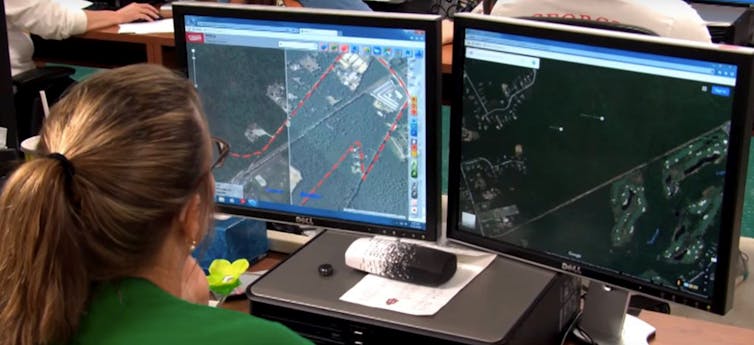
The U.S. Census Bureau is hoping that most people who live in the U.S. will use the internet to answer census questions, rather than filling out a paper form or providing those answers to a census taker in person, at their home.
That would be cheaper – a plus for a budget-strapped Census Bureau – and could help ensure maximum turnout and accuracy of the count. For instance, databases could keep track of which homes have not yet responded to the survey, allowing census officials to target mailings and in-person visits to those locations, without needing to spend time chasing households that have already responded.
However, as some of my own work on digital platforms and electronic commerce shows, collecting data online carries some significant risks that are new to the census and may undermine the accuracy of the count and the public’s trust in the process.
Cybersecurity risks
If everyone responds digitally, the census online system will have to handle nearly 130 million responses – one for each household in the country. Many of them may be using computers or smartphones that have been hacked or have malicious software installed.
One potential problem this raises is that someone trying to respond to the census may find themself instead submitting their information to some other group, one that seeks to illegitimately harvest their personal data for profit.
Another possibility is that a person might be submitting their information to the actual census website, but the software running secretly on their computer could modify the data before it’s recorded. That could result in inaccurate reporting – making it seem like more people live in a home than actually do, or fewer.
Because census data is used to determine congressional representation and calculate who gets how much federal money, those changes could affect a community’s political power and government services.

Bridging the digital divide
Of course, not everyone will complete their census survey online. In addition to people who don’t have computers and smartphones, many homes aren’t connected to the internet. Even in New York City, what appears to be a pinnacle of an interconnected urban area, about 29% of households don’t have high-speed internet access.
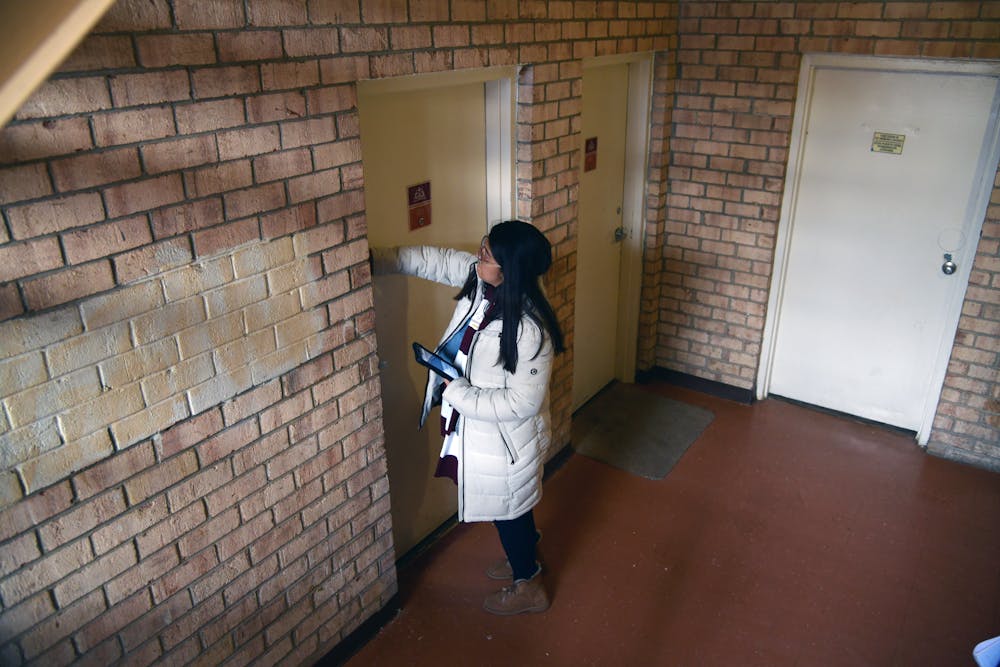
To reach those people, and those in more suburban and rural areas who also don’t have internet access, the Census Bureau will need to rely on phone and mail responses, along with the traditional method of visits by door-to-door census takers.
The data collection effort underway for the 2020 U.S. Census may end up disadvantaging the households without access to broadband internet access. Groups that are more likely to use the internet on their mobile phones – as opposed to a computer – may find it too hard to use their phones to respond to the online questionnaire. That could end up disproportionately reducing the response from African Americans, Latinos, younger adults, low-income earners and people without a high school diploma.
The U.S. Census Bureau is aware of those concerns and is working to identify communities where a lower online response is likely. The agency says it will send paper questionnaires and even human census takers to households in those areas at particular risk.
There is an opportunity for civic technology and citizen data science to help address people’s difficulties using online surveys, too. For instance, the Hard to Count map tracks households with poor internet access, and neighborhoods that are home to racial or ethnic minorities and people with lower income or education levels. Nonprofit organizations and community groups are using the map to target efforts to encourage people to participate in the census.
Privacy concerns
Since the early days of the census, privacy has been a concern. In the 1850 census, the U.S. marshals assigned to collect data were instructed to consider all the responses to be confidential. By 1880, census workers – now trained survey-takers rather than law enforcement workers – were subject to fines for violating their oaths of secrecy.
Over the decades, the Census Bureau has updated standards to keep up with changes in technology and societal expectations about privacy protection. The most recent set of concerns involves the potential for people to use computers to match up census data with other data available publicly online. The U.S. Census Bureau’s researchers found they could combine the 2010 census results with the contents of commercial databases and determine the real identities of 52 million Americans. That could reveal private information, and violates the Census Bureau’s obligation to protect respondents’ identities.
In an attempt to prevent that from happening with the results of the 2020 census, the Census Bureau has adopted a statistical method called “differential privacy” in hopes of obscuring sensitive personal information. The mathematics underlying technique are complicated, but in general the idea is that state-level counts will be accurate, but more detailed measurements – of populations of counties, towns and neighborhoods – will be altered to avoid revealing specific data that could be used to identify actual people.
However, researchers have voiced concerns that the data may not accurately represent the nation’s population, and that more specific details about the numbers of residents of states and towns may be misleading. Critics fear the effort to protect Americans’ privacy may end up complicating planning that factors in population numbers, like disaster preparedness efforts.
Anjana Susarla, Associate Professor of Information Systems, Michigan State University
This article is republished from The Conversation under a Creative Commons license. Read the original article.
- Details
- Written by: Elizabeth Larson
Ashley Pulawa, 26, died in the incident on Saturday at around 6:30 p.m., according to the California Highway Patrol’s Clear Lake Area office.
Originally, witnesses had reported a vehicle crash involving a pedestrian, as Lake County News has reported.
However, the CHP’s Monday report indicated that Pulawa wasn’t a pedestrian but had been riding in a 2000 Nissan pickup driven by her partner, 24-year-old Tyler Hunter, also of Redwood Valley.
The CHP said Hunter was driving his pickup northbound on Highway 29, south of Kelseyville, at between 45 and 50 miles per hour.
Pulawa was seated in the right front passenger seat and their two children were seated in the rear, the CHP said.
For reasons still under investigation, the CHP said Pulawa departed the vehicle through the right front door.
The CHP said Hunter immediately brought the vehicle to a stop on the right shoulder, called 911 and began trying to render medical aid.
Pulawa sustained fatal injuries as a result of the incident, the CHP said.
The use of drugs or alcohol is still being investigated to determine if they were factors in the case, the CHP said.
Email Elizabeth Larson at
- Details
- Written by: Lake County News reports
Many Lake County homeowners have faced rough times over the past few years as the county has been home to several deadly and destructive wildfires.
A lot of recent attention in the region is focused on protecting fire survivors from unlicensed contractors.
But that doesn’t mean area residents not impacted by the wildfires should forget to “check the license” before hiring licensed contractors for home improvement projects.
The recent Contractors State License Board undercover sting in Clearlake Oaks found 11 alleged unlicensed contractors, with one suspect making a $10,000 bid.
The highest bid of the Feb. 12 to 13 operation was to install fencing and was well over the legal limit for contracting without a license.
In California, it's illegal for an unlicensed person to bid for or perform any home improvement valued at $500 or more in combined labor and material costs.
The alleged unlicensed contractors gave bids for home improvement jobs, including landscaping, carpentry, tree service and painting.
They will be referred to the Lake County District Attorney’s Office for contracting without a license (Business and Professions Code (BPC) §7028). First-conviction penalties include up to six months in jail and/or up to $5,000 in fines.
CSLB partnered with the Lake County District Attorney’s Office to conduct the undercover operation.
Members of the CSLB Statewide Investigative Fraud Team, or SWIFT, posed as owners of a mobile home community clubhouse and invited alleged unlicensed contractors to place bids on renovation work.
One repeat offender was among those caught in the operation.
Ronald Dean Ridley was cited for illegal advertising in January 2016 and paid a $400 civil penalty.
In October 2018, Ridley was cited for contracting without a license at a prior sting in Lake County. That case is still pending with the Lake County District Attorney’s Office.
A conviction on that charge could subject Ridley to a more severe second conviction penalty, which could result in a mandatory 90 days in jail, and a fine of 20 percent of the contract price or $5,000, whichever is greater, according to Business and Professions Code Section 7028(c)).
Among those cited for illegal contracting, four were planning on providing tree services for the sting location.
“Tree trimming and removing is a highly skilled trade that could result in serious injury,” said CSLB Registrar David Fogt. “Illegal tree work can lead to property damage for consumers and could be potentially fatal for those who are not properly licensed.”
Besides holding a CSLB license, workers must also be covered with workers’ compensation insurance. Without it, a homeowner may be liable if for medical bills if someone gets hurt on their property. Since they weren’t legally licensed to do the work, a homeowner’s insurance policy might not apply.
A licensed contractor’s workers' compensation insurance information can easily be found on CSLB’s website using the “Instant License Check” feature.
Consumers can check a contractor’s license by searching their license number, name, or business name. Besides workers’ comp information, the search results also reveal whether the contractor’s license is active and in good standing. The contractor’s individual page also lists bond information, and if CSLB has taken any actions against the contractor’s license.
Seven individuals also could face a misdemeanor charge for illegal advertising. Unlicensed contractors must state in all ads that they do not have a license. The penalty for violating the advertising rules for unlicensed contractors is a fine of $700 to $1,000.
When hiring a contractor, consumers should also remember:
– Watch your down payment. The legal limit for a down payment is 10 percent of the contract price or $1,000, whichever is lower.
– You should always get three bids from licensed contractors before hiring anyone to perform home improvement work.
– Homeowners can use CSLB's “Find My Licensed Contractor” feature to build and download a list of qualified licensed contractors in their area.
– Those interested in getting a contractor license are encouraged to attend one of our licensing workshops.
All of the subjects were ordered to appear at the Lake County Superior Court on March 24 at 8:15 a.m.
The subjects and the violations alleged against them are listed below.
CLEARLAKE OAKS, DAY 1: Feb. 12, 2020
– Tommy Bruce Chisam, Clearlake Oaks; contracting without a license, landscaping.
– Ronald Dean Ridley Sr., Clearlake Oaks; illegal advertising, contracting without a license, carpentry.
– Jose Samuel Gamez-Meza, Clearlake; illegal advertising, contracting without a license, tree service.
– Servando Juarez Flores dba Pimentel's Yard Service, Clearlake; Illegal advertising, contracting without a license, fencing.
– Keith Walter Holmgren, Santa Rosa; illegal advertising, contracting without a license, tree service.
CLEARLAKE OAKS, DAY 2: Feb. 13, 2020
– Jeffrey Scott Wilder, Upper Lake; illegal advertising, contracting without a license, painting.
– Kristy Ann Buettner, Lakeport; contracting without a license, painting.
– Edilberto Lopez Perez, Kelseyville; illegal advertising, contracting without a license, carpentry.
– Rodney Jerome Gehlen Jr., Clearlake; contracting without a license, painting.
– Eric Michael Hamlin, Santa Rosa; illegal advertising, contracting without a license, tree service.
– Robert Lloyd Fouche, Santa Rosa; contracting without a license, tree service.
- Details
- Written by: Elizabeth Larson
The council will meet beginning at 6 p.m.Tuesday, March 3, in the council chambers at Lakeport City Hall, 225 Park St.
On Tuesday, the council’s main item of business is the coronavirus update from Public Health Officer Dr. Gary Pace, MD, MPH.
So far, there have been no reported cases of coronavirus in Lake County, and Pace has reported that the risk locally is low.
He also is due to give an update at a coronavirus town hall meeting in Kelseyville at 6:30 p.m. Monday at Grace Church.
On the consent agenda – items considered noncontroversial and usually accepted as a slate on one vote – are ordinances; minutes of the regular council meeting on Feb. 18 and the special meeting on Feb. 24; confirmation of the continuing existence of a local emergency for the Mendocino Complex fire; confirmation of the continuing existence of a local emergency for the February 2019 storms; confirmation of the continuing existence of a local emergency for the October 2019 public safety power shutoff; approval of Application 2020-005, with staff recommendations, for the 2020 Memorial Day Parade to be held on Main Street; approval of Application 2020-006, with staff recommendations, for the 2020 July Fourth Arts & Crafts Fair event on Park Street and Library Park; approval of Application 2020-007, with staff recommendations, for the 2020 Taste of Lake County event on Main Street; approval of Application 2020-008, with staff recommendations, for the 2020 Pumpkin and Dia de Los Muertos event on Main Street; approval of Application 2020-009, with staff recommendations, for the 2020 Trick or Treat Main Street event; approval of Application 2020-010, with staff recommendations, for the 2020 Dickens Faire event on Main Street; adoption of a
resolution amending and adopting an updated conflict of interest code; adoption of the proposed resolution adopting a records retention schedule and authorizing destruction of certain City records and rescinding Resolution No. 2712 (2019); authorization of out-of-state travel for two staff members from the Utilities Division to attend the California Rural Water Association Expo in Lake Tahoe, Nevada.
Email Elizabeth Larson at
030320 Lakeport City Council agenda packet by LakeCoNews on Scribd