 How to resolve AdBlock issue?
News
- Details
- Written by: Elizabeth Larson
Interim Registrar of Voters Diane Fridley also reported that she doesn’t yet have a preliminary vote count in the Lake County Superior Court judicial race.
“The votes have not been tabulated yet,” Fridley said of the judicial race.
That race is unusual in that both candidates, incumbent J. David Markham and challenger Lisa Proffitt-O’Brien, are write-ins.
Fridley said Thursday that she had an overall preliminary count of ballots for the primary remaining to be tallied that she had to report to the Secretary of State’s Office by noon.
In that initial preliminary estimate, she reported that 9,945 ballots are not counted, a number she guaranteed will grow.
That number isn’t just vote-by-mail – or absentee – ballots that are still coming in, but also includes provisional and conditional ballots voted at the polls at the Registrar of Voters Office in the courthouse in Lakeport, Fridley said.
Having thousands of ballots still to count after election night is common. Although the Registrar of Voters Office issues preliminary counts, the election results aren’t final and certified until after the monthlong canvass.
Over the past decade, more voters in Lake County have turned to absentee voting. While many absentee ballots are mailed or delivered to the Registrar of Voters Office ahead of the election or on election day, it can be days after the election before all of them arrive in the mail.
Fridley said she received 366 ballots in the mail on Wednesday, had another whole tray that had arrived on Thursday and hadn’t yet been counted, plus more are expected to arrive on Friday, the last day ballots can arrive by mail and be counted under state elections law. Ballots had to have been postmarked by Tuesday.
New equipment, new processes
This is the first major election during which the Registrar of Voters Office has used the new voting equipment it purchased last year from Hart InterCivic. The equipment was first used in May’s special election for the Lakeport Fire Protection District’s fire tax measure.
Fridley said the new equipment requires additional steps, including adjudicating the scanning system.
Ballots are scanned into a scanner, and then that information is placed on a flash drive and loaded into a different machine, the tabulation unit. Fridley said the new protocols they have to follow require that the two machines cannot talk to each other.
In counting and reviewing ballots, Fridley said elections staff has to look for undervotes – places where the voters didn’t fill in the rectangle next to a name or didn’t vote in a category.
In the judicial race, “We did go through the ballots on election night. That’s one of the steps,” she said.
The Superior Court race had no candidates’ names printed on the ballot. Instead, voters had to write in the name of one of the two qualified candidates for their vote to count and check the box next to the name.
Fridley said that if the voter marked the box, elections staff made sure the candidate whose name was written in was qualified and then moved on. However, state election code allows for the vote to be counted even if the box next to the name is not checked.
Fridley said each of the ballots with a write-in candidate needed to be reviewed. “That’s why it took longer election night,” she said.
She said the write-in judicial race slowed down the adjudication process on election night. “We had to be very careful.”
Fridley added, “We don’t count all the writes-ins on election night. You’d never get results out.”
As it was, she issued the last report on the preliminary count just before 2:30 a.m. Wednesday and then had to fax it to the Secretary of State’s Office, which had trouble reading the report until she emailed it. Fridley said she didn’t leave the office to go home until just before 5 a.m. that day.
Fridley said she will issue an update soon on how many ballots remain to be counted.
California counties have until April 3 to complete and certify their vote count as part of the official canvass, according to the Secretary of State’s Office.
Email Elizabeth Larson at
- Details
- Written by: LAKE COUNTY NEWS REPORTS
Every hospital, or collaboration of health organizations, is federally required by the Affordable Care Act to complete a community health needs assessment, or CHNA, every three years.
Hope Rising Lake County, convening 19 agencies, hospitals, health agencies, community-based organizations, county of Lake government and community members, worked with Conduent Healthy Communities Institute to conduct the 2019 CHNA.
Multiple data sources are researched, and community members are consulted to reach reasonable conclusions.
The results are a transparent and collaborative approach to understanding the needs, vulnerable populations, and unmet health needs or gaps in services in order to find means of addressing the most pressing issues.
Hope Rising hosted focus groups and key informant interviews with tribal leaders, tribal members, youth, seniors, neighbors experiencing homelessness and multiple county collaboratives and coalitions.
More than twice the amount of community input surveys was received to inform the 2019 CHNA than compared to previous years.
Findings from the 2019 CHNA will be used by Hope Rising, as well as all Lake County health care agencies, to identify, develop, and target strategies for the next three years to connect residents with services to improve health outcomes and the quality of life of residents in Lake County.
Following a prioritization toolkit, participants scored identified health problems to create a significant health needs list.
From that list, the four prioritized areas selected are homelessness and housing, substance misuse, cancer screening and prevention, and community engagement and outreach.
Hope Rising is continuing the groundbreaking work of the collective with SafeRx Lake County addressing Substance Misuse; Hope Center addressing Housing and Homelessness; and all four priorities collectively through multi-pronged initiatives that include over fourteen agencies in the Hope Rising collaborative.
“Collectively, our combined resources can spread wider and reach deeper into the areas where meaningful change can occur,” said Allison Panella, Hope Rising executive director. “Our goals are simple. Meet each person, where they are with the resources they need.”
The county health needs assessments can be found at the following websites:
– Hope Rising Lake County;
– Sutter Lakeside Hospital;
– Adventist Health Clear Lake Hospital.
Hope Rising serves as a neutral convener to bring together leaders in our county to identify issues, develop innovative solutions, and implement agreed-upon actions with accountability and measurable outcomes. Hope Rising acts to raise, manage and disburse funds.
Additionally, Hope Rising provides facilitation and project management support to drive the work forward and keep projects on track, ensuring active engagement of stakeholders and a focus on outcomes.
Learn more about Hope Rising at http://www.hoperisinglc.org/ .
- Details
- Written by: Elizabeth Larson
The kennels also have many dogs that need to be reunited with their owners. To find the lost/found pet section, click here.
The following dogs are ready for adoption.
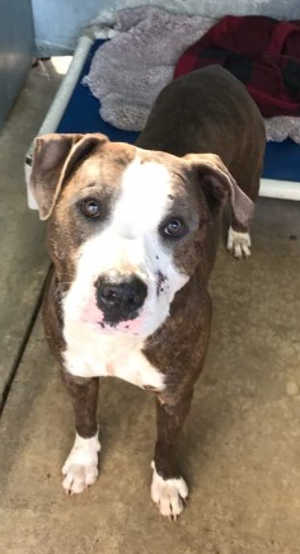
‘Blue’
“Blue” is a male pit bull terrier mix with a short white and brindle coat.
He has been neutered.
He is dog No. 3539.
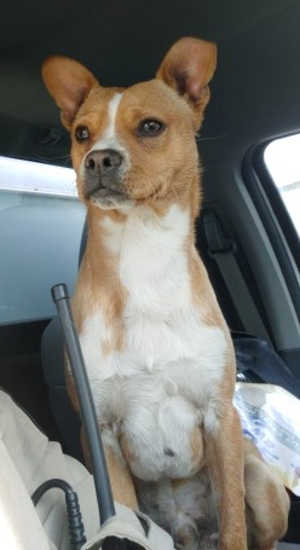
‘Cha-Chi’
“Cha-Chi” is a male Chihuahua with a short gold and white coat.
He is dog No. 3661.

‘Duchess’
“Duchess” is a female Chihuahua puppy with a short tan coat.
She is dog No. 3618.

‘Garrett’
“Garrett” is a male German Shepherd mix with a medium tan and black coat.
He has been neutered.
He is dog No. 3580.

‘Missy’
“Missy” is a female Chihuahua puppy with a short tan coat.
She is dog No. 3663.
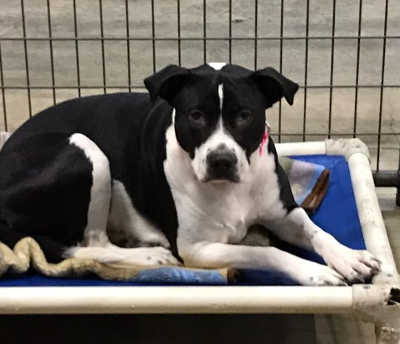
‘Phoebe’
“Phoebe” is a female American Pit Bull Terrier mix with a short black and white coat.
She is dog No. 3483.

‘Princess’
“Princess” is a female German Shepherd with a black and tan coat.
She has been spayed.
Princess is young and energetic. She previously lived around a smaller dog and has been around the office cat. She will benefit from training and attention.
She is dog No. 3669.

‘Roxy’
“Roxy” is a female German Shepherd mix with a medium-length tan and black coat.
She has been spayed.
She is dog No. 3545.
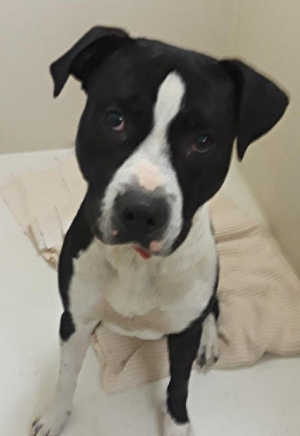
‘Woodrow’
“Woodrow” is a male Staffordshire Bull Terrier with a black and white coat.
He is dog No. 3281.
Clearlake Animal Control’s shelter is located at 6820 Old Highway 53, off Airport Road.
Hours of operation are noon to 4 p.m. Tuesday through Saturday. The shelter is closed Sundays, Mondays and major holidays; the shelter offers appointments on the days it’s closed to accommodate people.
Call the Clearlake Animal Control shelter at 707-273-9440, or email
Visit Clearlake Animal Control on Facebook or at the city’s Web site.
Email Elizabeth Larson at
- Details
- Written by: Lake County News reports
This includes waiving cost-sharing for emergency room, urgent care or provider office visits when the purpose of the visit is to be screened and tested for COVID-19.
The need for COVID-19 testing is based on medical necessity, a clinical determination made on a case by case basis by medical professionals.
"Californians shouldn't have to fear a big medical bill just because they took a test for COVID-19," said Gov. Newsom. "This action means that Californians who fit the testing requirements can receive the test at no cost. We're all in this together, and I'm grateful to those health providers who have already stepped up and heeded our call."
“This action will ensure that Californians who need a test will receive one at no cost,” said Dr. Mark Ghaly, secretary of the California Health and Human Services Agency. “This doesn’t mean every Californian should be seeking a test. If you are experiencing symptoms of COVID-19 and may have had contact with a person with COVID-19 or recently traveled to countries with apparent community spread, call your health care provider or local public health department first before seeking medical care.”
The California Department of Insurance on Thursday issued a similar direction providing cost-free medically necessary testing for an additional 2 million Californians. Combined these announcements ensure that 24 million more Californians are eligible to receive testing, should their health care provider deem it medically necessary.
The Department of Managed Health Care also directed health plans to increase the capacity to screen and treat COVID-19 as needed to minimize further transmission by encouraging health plans to expand telehealth services and to take steps to ensure patients receive medically necessary medication if there is a shortage of a particular drug.
These orders from the Department of Managed Health Care and the Department of Insurance do not apply to individuals in self-insured health coverage products.
Support now available for employers and workers impacted by COVID-19
Also on Thursday, the California Employee Development Department announced support services to individuals affected by COVID-19 in California. For faster and more convenient access to those services, the use of online options is encouraged.
Individuals who are unable to work due to having or being exposed to COVID-19 (certified by a medical professional) can file a Disability Insurance claim.
Disability Insurance provides short-term benefit payments to eligible workers who have full or partial loss of wages due to a non-work-related illness, injury, or pregnancy. Benefit amounts are approximately 60 to 70 percent of wages (depending on income) and range from $50 to $1,300 a week.
Californians who are unable to work because they are caring for an ill or quarantined family member with COVID-19 (certified by a medical professional) can file a paid family leave claim.
Paid family leave provides up to six weeks of benefit payments to eligible workers who have a full or partial loss of wages because they need time off work to care for a seriously ill family member or to bond with a new child. Benefit amounts are approximately 60 to 70 percent of wages (depending on income) and range from $50 to $1,300 a week.
Employers experiencing a slowdown in their businesses or services as a result of the Coronavirus impact on the economy may apply for the Unemployment Insurance Work Sharing Program. This program allows employers to seek an alternative to layoffs – retaining their trained employees by reducing their hours and wages that can be partially offset with UI benefits.
Workers of employers who are approved to participate in the Work Sharing Program receive the percentage of their weekly Unemployment Insurance benefit amount based on the percentage of hours and wages reduced, not to exceed 60 percent.
Visit the Work Sharing Program to learn more about its benefits for employers and employees, and how to apply.
Governor proclaimed a state of emergency
Gov. Newsom on Wednesday declared a state of emergency to make additional resources available, formalize emergency actions already underway across multiple state agencies and departments, and help the state prepare for a broader spread of COVID-19. The proclamation comes as the number of positive California cases rises and following one official COVID-19 death.
The emergency proclamation includes provisions that protect consumers against price gouging, allow for health care workers to come from out of state to assist at health care facilities, and give health care facilities the flexibility to plan and adapt to accommodate incoming patients.
COVID-19 in California by the numbers on March 5
60 – Positive cases
1 – Death
24 – Cases of positive tests related to federal repatriation flights
36 – Cases not related to repatriation flights
18 – Travel-related
10 – Person to person
4 – Community transmission
4 – Currently under investigation
9,400+ – Number of people self-monitoring who returned to the U.S. through SFO or LAX
49 – Number of local health jurisdictions involved in self-monitoring
15 – Labs with test kits