 How to resolve AdBlock issue?
News
- Details
- Written by: Elizabeth Larson
The following cats at the shelter have been cleared for adoption.
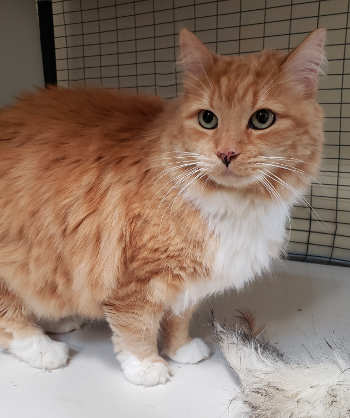
‘Shelby’
“Shelby” is a male orange tabby with a long coat and green eyes.
He has been neutered.
He is in cat room kennel No. 108, ID No. 13565.
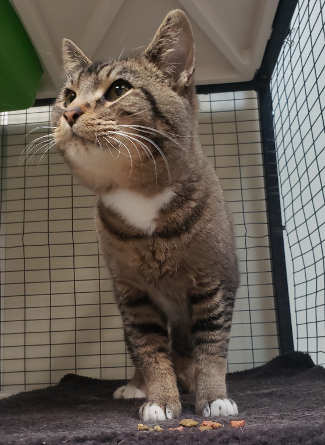
Male domestic short hair
This male domestic short hair cat has a brown tabby and white coat and gold eyes.
He is in cat room kennel No. 134, ID No. 13591.
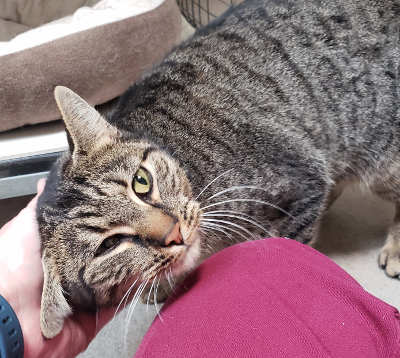
Female domestic short hair
This female domestic short hair cat has a gray tabby coat and gold eyes.
She is in cat room kennel No. 138, ID No. 13560.
Lake County Animal Care and Control is located at 4949 Helbush in Lakeport, next to the Hill Road Correctional Facility.
Office hours are Monday through Friday, 11 a.m. to 5 p.m., and 11 a.m. to 3 p.m., Saturday. The shelter is open from 11 a.m. to 4 p.m. Monday through Friday and on Saturday from 11 a.m. to 3 p.m.
Visit the shelter online at http://www.co.lake.ca.us/Government/Directory/Animal_Care_And_Control.htm .
For more information call Lake County Animal Care and Control at 707-263-0278.
Email Elizabeth Larson at
- Details
- Written by: Kathleen Scavone
LAKE COUNTY, Calif. – As the daylight hours lengthen and plants drink in the critical rays of sunlight, it's easy to become almost transfixed by the contrast evident around us.
Spidery, bare limbs of flora are just now awakening to the gentleness of greenery that is set in motion.
Shoots, buds and vegetation have all taken in the light changes, with their incessant interactions.
On a balmy morning in southern Lake County I was observing all of this quiet frenzy while strolling and sneaking looks under rocks and downed limbs of bay and oak trees to see what I can see.
Leaf litter is also working its magic by undergoing the constant effort of the nutrient cycle, recycling and decomposing away, via light, heat and biological action, into tiny molecules that are free for use by any organism in the ecosystem.
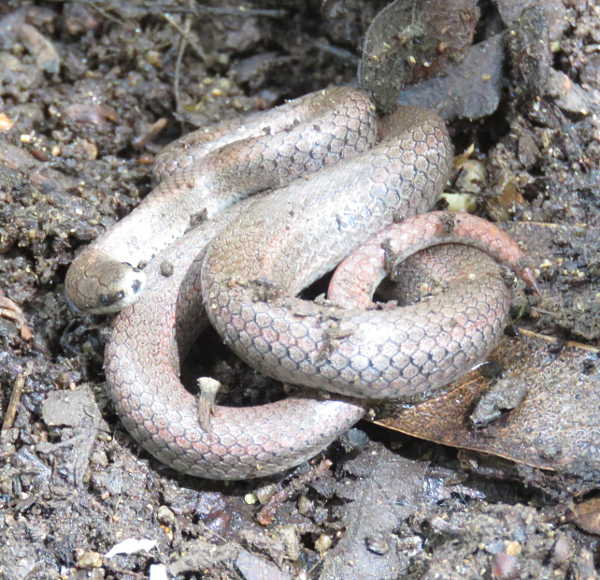
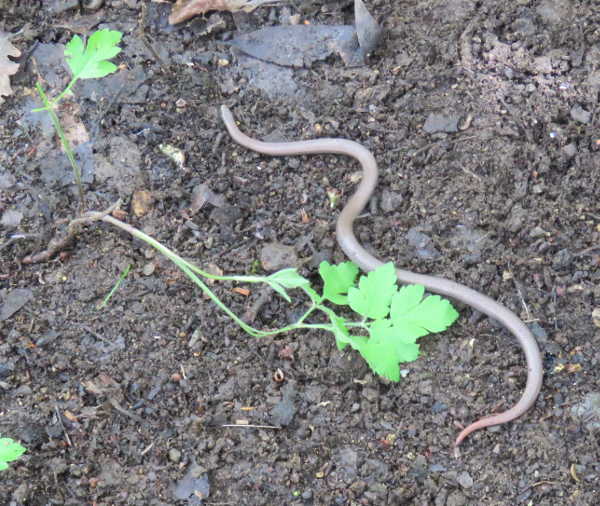
Amidst the profusion of "action" I almost missed a quiet resident – the forest sharp-tailed snake.
This secretive, slim snake is non-poisonous and can be found in damp, forested areas throughout Northern California, southern Oregon, and as far north as British Columbia, mainly along the North Coast areas.
To identify this species and differentiate it from its cousin, the common sharp-tailed snake, www.CaliforniaHerps.com says it is helpful to view the caudal scales and length of the tail. The caudal scales are found on its tail, behind the cloaca.
The common sharp-tailed snake has between 24 and 43 caudal scales, while the forest sharp-tailed snake holds 43 to 58 scales and is around 20 percent of the snake's length.
Considered a small species of snake, the forest sharp-tailed snake averages 11 inches long. Their hatchlings average about 3 inches in length.
The snakes make use of their lengthy teeth to grip and consume a diet of fat slugs, slug eggs and tiny salamanders.
They prefer to come out of their leaf-litter or damp burrow-homes when the air temperature is at around 50 degrees, as well as after a nice rain.
According to a 2018 draft paper written by Christopher J. Evelyn and Samuel S. Sweet at the Institute for Computational and Earth System Science at the University of California Santa Barbara for the USDA Forest Service, Pacific Southwest Region these snakes seem to be slow-growing as well as long-lived.
In one of their studies which took place in British Columbia, it was estimated that the snakes took five to six years to mature.
Like most small critters, these snakes have many predators, including birds, mammals and both amphibians and reptiles such as ring-necked snakes.
To deter predators these wily snakes can coil and 'musk' or emit a nasty-smelling liquid that is sure to make the enemy run for cover!
With the profusion of snake species in Lake County, this slithering serpent, or his relatives may just show themselves to you on a mild end-of-winter or early spring day.
Kathleen Scavone, M.A., is a retired educator, potter, freelance writer and author of “Anderson Marsh State Historic Park: A Walking History, Prehistory, Flora, and Fauna Tour of a California State Park” and “Native Americans of Lake County.”
- Details
- Written by: Julian Avery, Pennsylvania State University
Millions of Americans enjoy feeding and watching backyard birds. Many people make a point of putting food out in winter, when birds needs extra energy, and spring, when many species build nests and raise young.
As a wildlife ecologist and a birder, I know it’s important to understand how humans influence bird populations, whether feeding poses risks to wild birds, and how to engage with birds in sustainable ways.
There is still much to learn about the risks and benefits of feeding birds, particularly through large integrated national citizen science networks like Project FeederWatch. But we now have enough information to promote healthy interactions that can inspire future generations to care about conservation.
A long-term relationship
Birds have been taking advantage of human civilization for thousands of years, congregating where grains and waste are abundant. This means that people have been influencing the abundance and distribution of species for a very long time.
Studies show that providing food has myriad effects on birds’ decisions, behaviors and reproduction. One significant finding is that winter bird feeding increases individual survival rates, can encourage birds to lay eggs earlier in the year, and can also improve nestling survival.
All of these factors alter species’ future reproductive performance and can increase total bird abundance in later years. It’s not always clear how increased abundance of feeder birds impacts other species through competition, but rarer and smaller species can be excluded.
This interactive diagram, based on citizen science data, shows how North America’s top 13 feeder species fare when they compete at feeders. Credit: Cornell Lab of Ornithology
Supplemental food has also led to reduced reproductive success in a few species. This may happen because it improves survival odds for less healthy birds that otherwise would be unlikely to survive and reproduce, or because it leads birds to eat fewer types of natural foods, making their diets less nourishing.
Changing bird behavior
Research also shows that birds are extremely promiscuous. One review examined 342 species and found that in approximately 75%, birds had one or more side partners in addition to their nest mate.
It’s not always clear why birds cheat, but several studies have found that supplemental feeding can reduce the amount of infidelity in certain species, including house sparrows. This hints that feeding birds might alter their behavior and have an effect on genetic variation in urban populations.
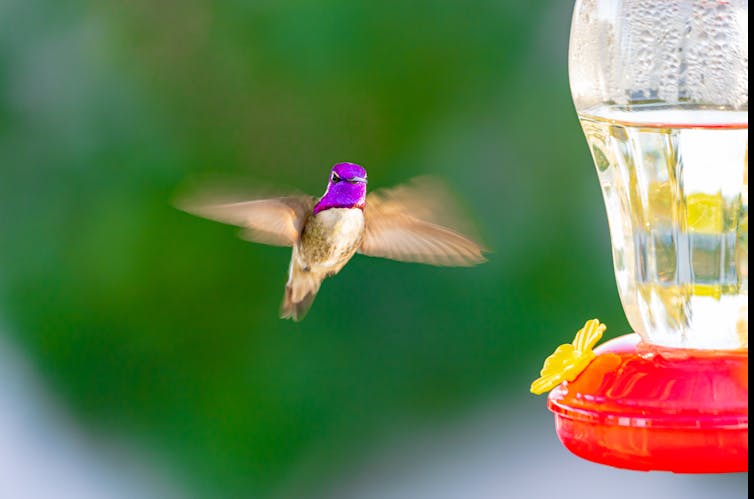
For birds that provide pollinating services, like hummingbirds and lorikeets, there is some evidence that providing them with sugar water – which mimics the nectar they collect from plants – can reduce their visits to native plants. This means they will transfer less pollen. Since much bird feeding happens in densely populated urban areas, it’s unclear how much impact this might have.
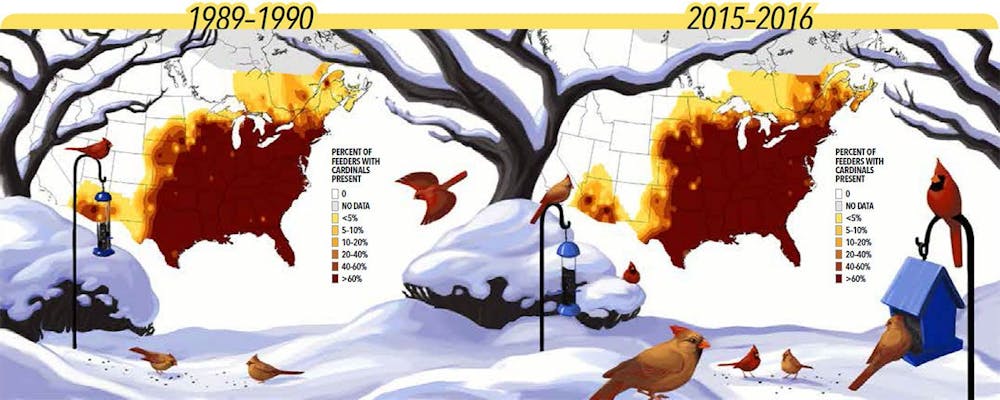
Some bird populations depend completely on feeding and would collapse over the winter without it. For example, Anna’s hummingbirds in British Columbia rely on heated feeders. Other species, such as hummingbirds in the southwest U.S., have become more locally abundant. Northern cardinals and American goldfinches have shifted and expanded their ranges northward with the availability of food.
In one incredible instance, garden feeders seem to have played a role in establishing a new wintering population of migratory blackcaps in the United Kingdom. This group is now genetically distinct from the rest of the population, which migrates further south to Mediterranean wintering grounds.
Don’t feed the predators
Scientists still know little about how bird feeding affects transmission of pathogens and parasites among birds. It is not uncommon for birds at feeders to carry more pathogens than populations away from feeders. Some well-documented outbreaks in the U.S. and U.K. have shown that feeding birds can increase problems associated with disease – evidence that was collected through feeder watch citizen science projects.
Because we still have a poor understanding of pathogen transmission and prevalence in urban areas, it is extremely important to follow hygiene guidelines for feeding and be alert for new recommendations.
Feeding can also attract predators. Domestic cats kill an estimated 1.3 to 4 billion birds in the U.S. every year. Feeders should not be placed in settings where cats are present, and pet cats should be kept indoors.
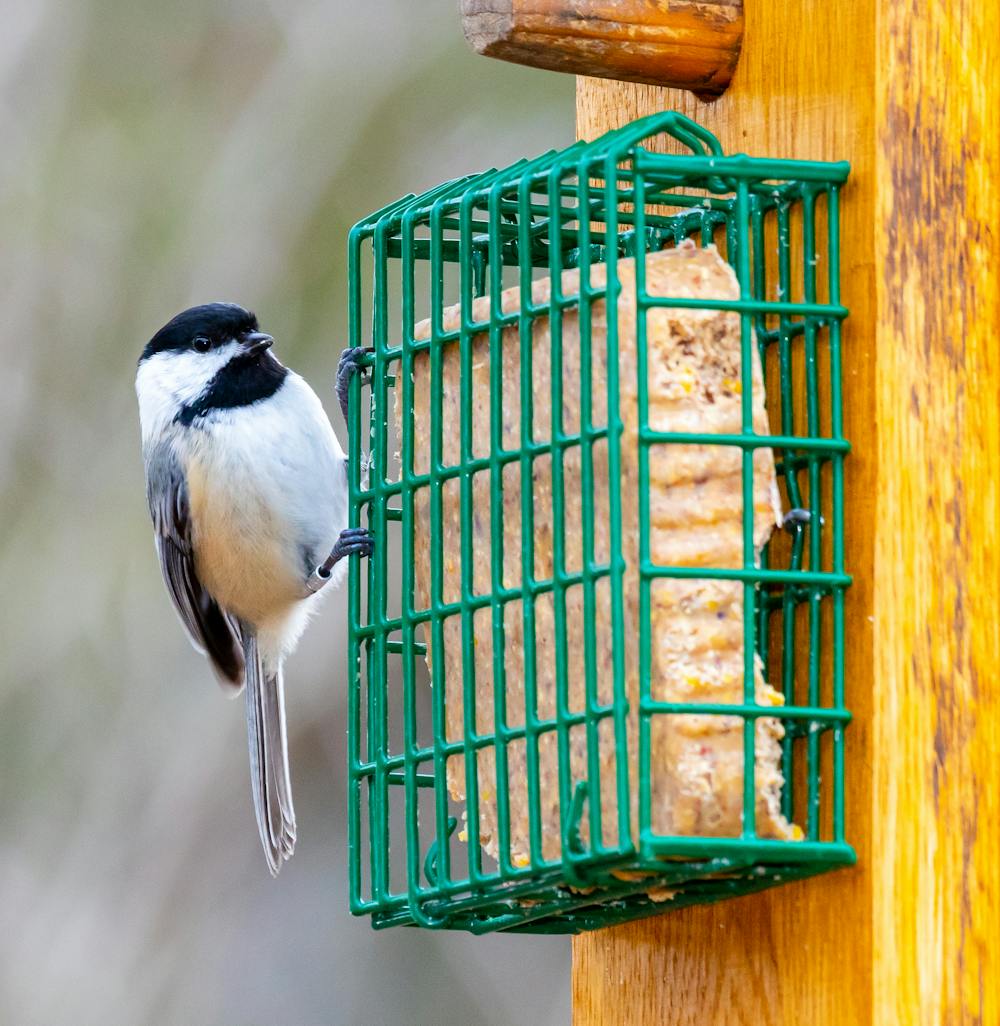
Feeders can also support both native and introduced birds that outcompete local species. One study found that feeders attracted high numbers of crows, which prey on other birds’ chicks, with the result that less than 1% of nearby American robin nests fledged young. In New Zealand, bird feeding largely benefits seed-eating introduced species at the expense of native birds.
Clean feeders and diverse diets
The good news is that studies do not show birds becoming dependent on supplemental food. Once started, though, it is important to maintain a steady food supply during harsh weather.
Birds also need access to native plants, which provide them with habitat, food and insect prey that can both supplement diets and support species that don’t eat seeds at feeders. Diverse food resources can counteract some of the negative findings I’ve mentioned related to competition between species and impacts on bird diets.
Good maintenance, placement and cleaning can help minimize the likelihood of promoting pathogens at feeders. Initiatives like Project FeederWatch have recommendations about feeder design and practices to avoid. For example, platform feeders, where birds wade through the food, are associated with higher mortality, possibly through mixing of waste and food.
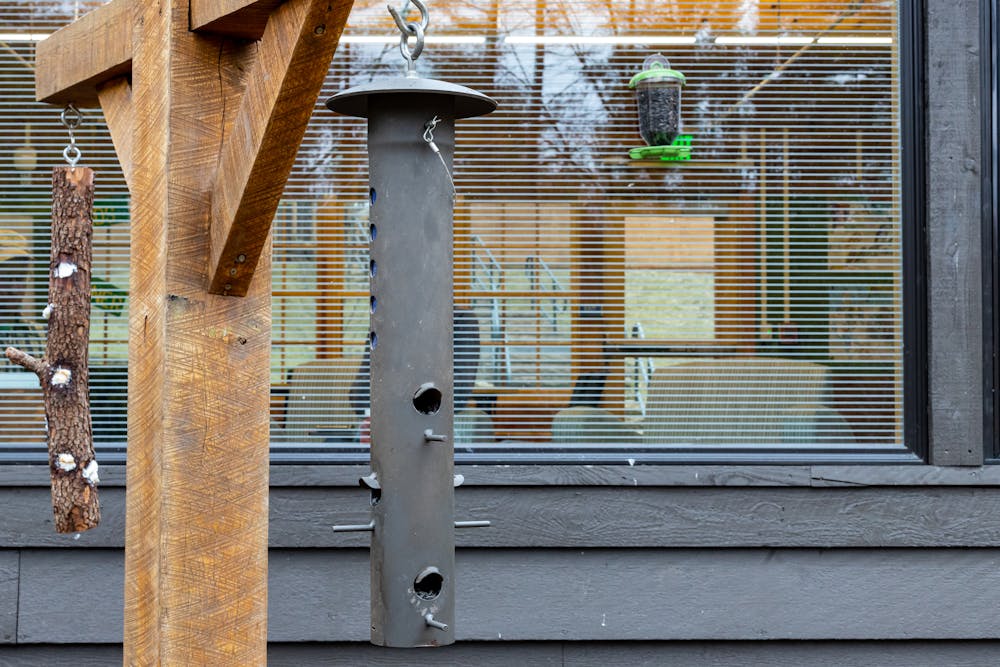
It’s also important to manage the area around feeders. Be sure to place feeders in ways that minimize the likelihood that birds will fly into windows. For instance, avoid providing a sight line through a house, which birds may perceive as a corridor, and break up window reflections with decals.
There are lots of great reasons to bring birds into your life. Evidence is growing that interacting with nature is good for our mental health and builds public support for conserving plants and wildlife. In my view, these benefits outweigh many of the potential negatives of bird feeding. And if you get involved in a citizen science project, you can help scientists track the health and behavior of your wild guests.
[You’re smart and curious about the world. So are The Conversation’s authors and editors. You can get our highlights each weekend.]
Julian Avery, Assistant Research Professor of Wildlife Ecology and Conservation, Pennsylvania State University
This article is republished from The Conversation under a Creative Commons license. Read the original article.
- Details
- Written by: Lake County News Reports
Dogs available for adoption this week include mixes of American Staffordshire Terrier, border collie, dachshund, German Shepherd, hound, husky, Jack Russell Terrier, Labrador Retriever and pit bull.
Dogs that are adopted from Lake County Animal Care and Control are either neutered or spayed, microchipped and, if old enough, given a rabies shot and county license before being released to their new owner. License fees do not apply to residents of the cities of Lakeport or Clearlake.
If you're looking for a new companion, visit the shelter. There are many great pets hoping you'll choose them.
The following dogs at the Lake County Animal Care and Control shelter have been cleared for adoption (additional dogs on the animal control Web site not listed are still “on hold”).

‘Smokey’
“Smokey” is a male dachshund mix with a short black and brown coat.
He already has been neutered.
He is in kennel No. 6, ID No. 11555.

‘Ava’
“Ava” is a female American Staffordshire Terrier with a short black and tan coat.
She is in kennel No. 19, ID No. 13606.

‘Tyson’
“Tyson” is a male German Shepherd with a medium-length tan and black coat and brown eyes.
He is in kennel No. 20, ID No. 11202.

Female pit bull terrier
This female pit bull terrier has a short tan and white coat.
She is in kennel No. 22, ID No. 13604.

‘Nook’
“Nook” is a female hound mix with a short tricolor coat and brown eyes.
She has already been spayed.
She is in kennel No. 23, ID No. 11790.
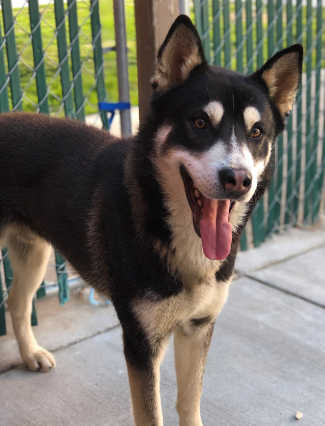
Male husky
This male husky has a medium-length black and white coat and brown eyes.
He is in kennel No. 24, ID No. 13585.

Female border collie-shepherd mix
This young female border collie-shepherd mix has a short black and white coat.
She has been spayed.
She is in kennel No. 29, ID No. 13612.

‘Sheriff’
“Sheriff” is a male German Shepherd with a medium-length black and tan coat.
He is in kennel No. 30, ID No. 13618.

Male pit bull terrier
This male pit bull terrier has a short brindle coat.
He is in kennel No. 31, ID No. 13507.
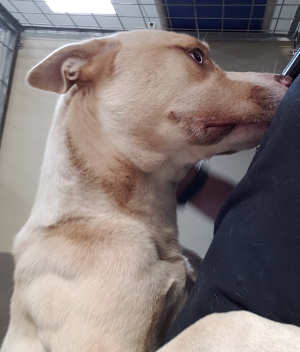
‘Chase’
“Chase” is a male husky-pit bull terrier mix with a short tan coat and blue eyes.
He is in kennel No. 32, ID No. 13541.

Male pit bull terrier
This male pit bull terrier has a short red and white coat and brown eyes.
He is in kennel No. 33, ID No. 13549.
Lake County Animal Care and Control is located at 4949 Helbush in Lakeport, next to the Hill Road Correctional Facility.
Office hours are Monday through Friday, 11 a.m. to 5 p.m., and 11 a.m. to 3 p.m., Saturday. The shelter is open from 11 a.m. to 4 p.m., Monday through Friday and on Saturday from 11 a.m. to 3 p.m.
Visit the shelter online at http://www.co.lake.ca.us/Government/Directory/Animal_Care_And_Control.htm .
For more information call Lake County Animal Care and Control at 707-263-0278.
Email Elizabeth Larson at