 How to resolve AdBlock issue?
News
- Details
- Written by: LAKE COUNTY NEWS REPORTS
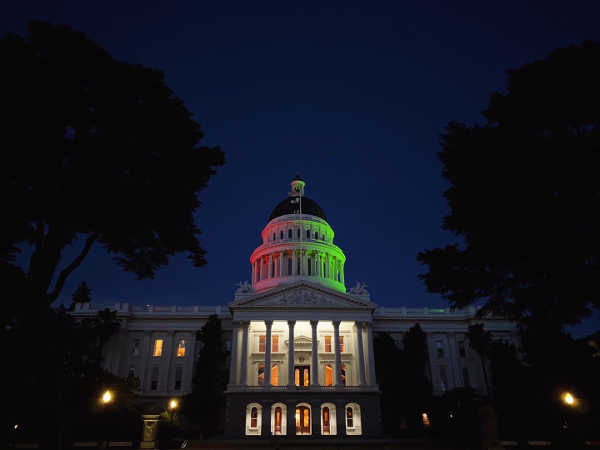
Gov. Gavin Newsom issued a proclamation Friday commemorating June 20 as Juneteenth in California.
He stood in support of the California Legislative Black Caucus’ call to light up the Capitol Dome in red, black and green, which took place on Friday night. These pan-African colors represent the African diaspora to enslavement in the New World.
“As we celebrate Juneteenth, we must redouble our efforts to achieve justice and take on systemic racism and its devastating consequences for Black Americans,” said Gov. Newsom. “Recent demonstrations, fueling important reforms throughout the United States, are the latest contributions to building a more perfect union – where liberty and justice are indeed ‘for all.’ We remember those who have lived and died in this pursuit, and their memory inspires us to make that promise real.”
In the proclamation, Gov. Newsom detailed the history of Juneteenth and its present-day celebration.
On June 19, 1865, Union General Gordon Granger led troops into Galveston, Texas, to announce the end of the Civil War and the insidious institution of slavery.
Thousands of enslaved people in Texas – among the last to learn of their liberation – tasted hard-won freedom for the first time.
The joyous commemorations that began in Texas spread around the nation, with cities and communities in California joining in celebration of this milestone in the American journey to freedom for all.
Since 2003, the state of California has celebrated Juneteenth as a day to honor and reflect on the significant contributions of Black Americans to our nation.
“Juneteenth is Freedom Day and a cause for celebration,” said Assemblymember Shirley N. Weber, Ph.D., chair of the California Legislative Black Caucus. “What is encouraging is the renewed interest in Juneteenth by young people. I think it is this moment where they recognize their power to make change. The message of Juneteenth is especially salient in the context of the current protests over ongoing and persistent brutality and inequity in the lives of Black Americans. American ideals promise equality, but have yet to fulfill that promise. By lighting the State Capitol in red, black and green, the California Legislative Black Caucus demonstrates its commitment to making that promise a reality in California.”
California State Senate President pro Tempore Toni G. Atkins called Juneteenth “one of the most significant moments in the history of the United States— the day enslaved people learned of their freedom.”
Atkins added, “Juneteenth to me marks a day of hope and the dawn of America.”
“Juneteenth was made possible by abolitionists who stood up against racism and oppression,” said California State Assembly Speaker Anthony Rendon. “Over 100 years later, Juneteenth 2020 takes place at a time when activists are still fighting for equality. The current uprisings around the country give me hope that we will celebrate Juneteenth 2021 having used our actions to further racial equality and this holiday's promise of freedom for all. Black Lives Matter.”
- Details
- Written by: Lake County News reports
Organizers had postponed the event from its originally scheduled dates of May 15 to 17, resetting it for Aug. 21 to 23.
“When COVID-19 shelter in place orders were issued in March, we postponed the event to August,” said event chairman, Dennis Locke. “At the time we hoped that by late summer things would be back to normal. We now understand that events drawing large crowds of the size we get for the derby are not likely to be approved any time soon. We had to let applicants know one way or the other.”
Additionally, the Derby Planning Committee had to make other decisions related to issuing refunds, returning advertising income, and deciding how to deal with various upfront costs associated with hosting the large event.
“It was a tough call, we had done a lot of upfront work, but the writing was on the wall,” Locke said.
The planning committee, including several members of the Clearlake Oaks-Glenhaven Business Association – which sponsors the derby each year – agreed that canceling was the only logical decision.
Camille Gouldberg, president of the business association, explained that the annual Catfish Derby is the signature fund-raising event of the association, with all proceeds going right back into the community.
“These sad circumstances have a ripple effect. We won’t have as much money to support our local school activities, our senior center, and other worthy activities we traditionally support. We’re disappointed, but not deterred,” Gouldberg said.
The Catfish Derby supports the local economy in a number of ways, from boosting sales at bait and tackle shops to coffee houses, restaurants, hotels, resorts, casinos, wine tasting rooms and more.
Known as the biggest Catfish Derby west of the Mississippi, this year’s derby would have marked 37 years.
For many – locals and out of towners – the event has become a highly anticipated and cherished family tradition. Last year, despite heavy rains, the event drew a crowd of more than 1,000 people.
“The derby energizes our little town and draws volunteers from all over Lake County to both join in on the festivities and make sure we put on the best Derby experience possible,” Locke said. “It’s a family affair and we will definitely miss our friends from near and far.”
“It’s important to thank everyone that helped get ready for this year, especially Dennis Locke, who, as in previous years, has poured his heart and soul into organizing the event,” Gouldberg said.
As for Locke, he said canceling the derby was the right thing to do. “The uncertainty in the county’s COVID-19 reopening progress for large events and our continuing concern for the health and safety of derby participants and county residents made our decision for us,” he said. “Not to worry, we’ll be back.”
The 2021 Catfish Derby has been scheduled for May 14 to 16. Pre-registered derby contestants, sponsors and advertisers have been notified of the cancelation.
To stay informed about Derby planning for 2021, visit www.clearlakeoaks.org/derby or call 707-596-0248.
- Details
- Written by: Julian Agyeman, Tufts University and Kofi Boone, North Carolina State University
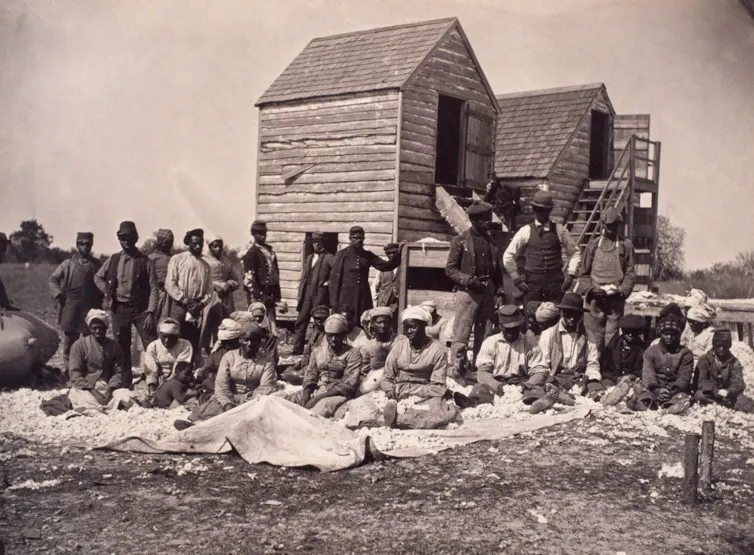
Underlying the recent unrest sweeping U.S. cities over police brutality is a fundamental inequity in wealth, land and power that has circumscribed black lives since the end of slavery in the U.S.
The “40 acres and a mule” promised to formerly enslaved Africans never came to pass. There was no redistribution of land, no reparations for the wealth extracted from stolen land by stolen labor.
June 19 is celebrated by black Americans as Juneteenth, marking the date in 1865 that former slaves were informed of their freedom, albeit two years after the Emancipation Proclamation. Coming this year at a time of protest over the continued police killing of black people, it provides an opportunity to look back at how black Americans were deprived of land ownership and the economic power that it brings. An expanded concept of the “black commons” – based on shared economic, cultural and digital resources as well as land – could act as one means of redress. As professors in urban planning and landscape architecture, our research suggests that such a concept could be a part of undoing the racist legacy of chattel slavery by encouraging economic development and creating communal wealth.
Land grab
The proportion of the United States under black ownership has actually shrunk over the last 100 years or so.
At their peak in 1910, African American farmers made up around 14% of all U.S. farmers, owning 16 to 19 million acres of land. By 2012, black Americans represented just 1.6% of the farming community, owning 3.6 million acres of land. Another study shows a 98% decline in black farmers between 1920, and 1997. This contrasts sharply with an increase in acres owned by white farmers over the same period.
In a 1998 report, the U.S. Department of Agriculture ascribed this decline to a long and “well-documented” history of discrimination against black farmers, ranging from New Deal and USDA discriminatory practices dating from the 1930s to 1950s-era exclusion from legal, title and loan resources.
Discriminatory practices have also affected who owns property as well as land. In 2017, the racial homeownership gap was at its highest level for 50 years, with 79.1% of white Americans owning a home compared to 41.8% of black Americans. This gap is even larger than it was when racist housing practices such as redlining, which denied black residents mortgages to buy, or loans to renovate, property were legal.
The lack of ownership is crucial to understanding the crippling economic disparity that has hollowed out the black middle class and continues to plague black America – making it harder to accrue wealth and pass it on to future generations.
A 2017 report found that the median net worth for non-immigrant black American households in the greater Boston region was just US$8, but for whites it was $247,500. This was due to “general housing and lending discrimination through restrictive covenants, redlining and other lending practices.”
Nationally, between 1983 and 2013, median black household wealth decreased by 75% to $1,700 while median white household wealth increased 14% to $116,800.
Freedom farms
Land ownership today could look very different. The idea of collective ownership has a long history in the United States. Even during slavery, a piece of ground was granted by slave masters for enslaved African subsistence farming. The Jamaican social theorist Sylvia Wynter called this land “the plot.”
Wynter has explained how that these parcels of land were transformed into communal areas where slaves could establish their own social order, sustain traditional African folklore and foodways – growing yams, cassava and sweet potatoes. Plots were often called “yam grounds,” so important was this staple food.
The connection between food, land, power and cultural survival was subversive in its nature. By appropriating physical space to support collective growing practices within the brutal constraints of slavery, black people also demonstrated the need for common, shared mental space to enable their survival and resistance. Herbalism, medicine and midwifery, and other African American healing practices were seen as acts of resistance that were “intimately tied to religion and community,” according to historian Sharla M. Fett.
With the end of slavery, these plots disappeared.
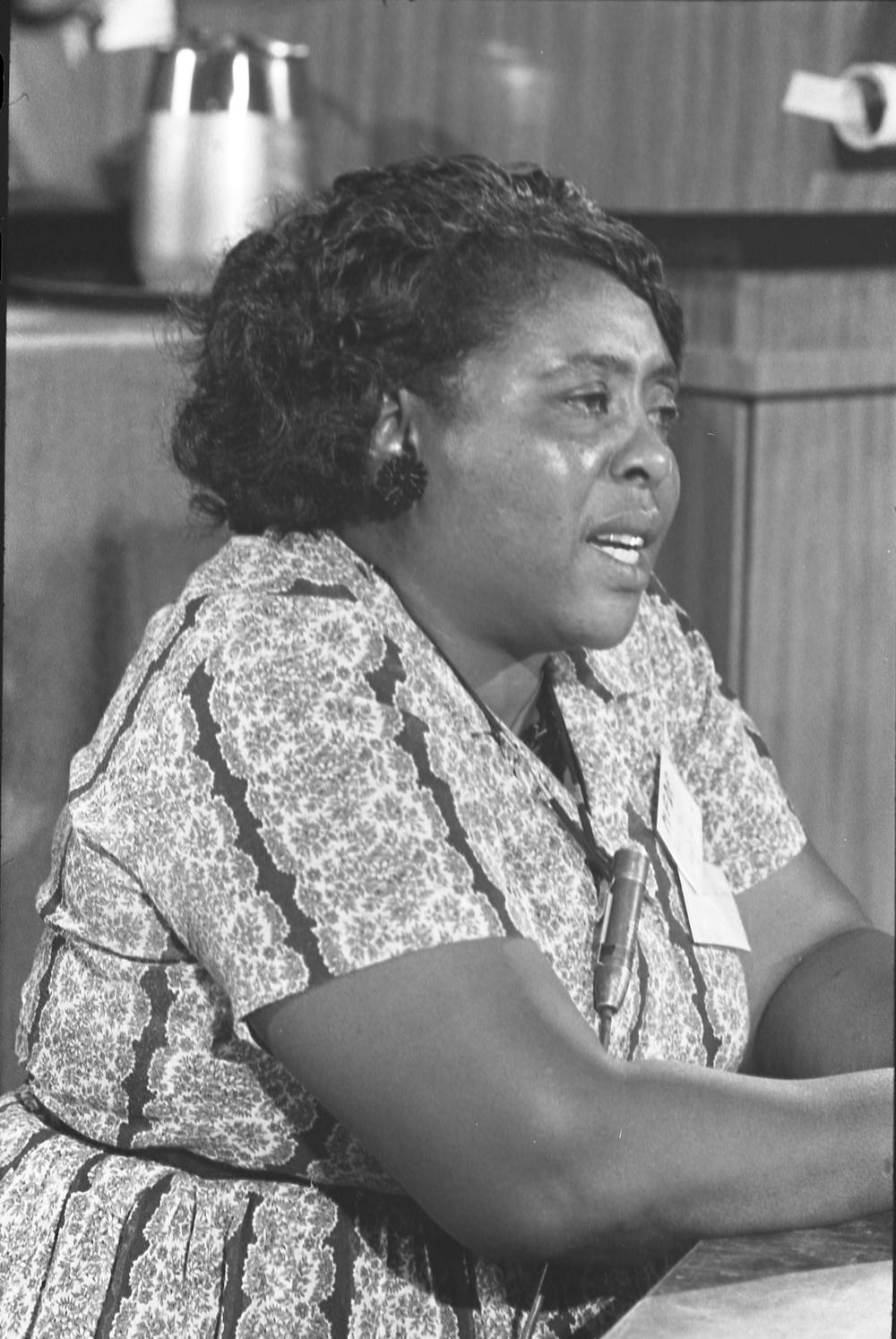
The principles of collective land ownership evolved in post-slavery black America. It was central to civil rights organizer Fannie Lou Hamer’s Freedom Farms, a cooperative model designed to deliver economic justice to the poorest black farmers in the American South.
In Hamer’s view, the fight for justice in the face of oppression required a measure of independence that could be achieved through owning land and providing resources for the community.
This idea of a black commons as a means of economic empowerment formed a focus of W.E.B. DuBois’ 1907 “Economic Co-operation Among Negro Americans.” DuBois believed that the extreme segregation of the Jim Crow era made it necessary to ground economic empowerment in the cultural bonds between black people and that this could be achieved through cooperative ownership.
Credit unions and co-ops
The accumulation of wealth was not the only desired consequence of a black commons.
In 1967, social critic Harold Cruse argued for a “new institutionalism” that would create a “new dynamic synthesis of politics, economics, and culture.” In his view, economic ventures needed to be grounded in the greater aspirations of black communities – politically, culturally and economically. This could be achieved through a black commons.
As the political economist Jessica Gordon Nembhard has noted in reference to black credit unions and mutual aid funds, “African Americans, as well as other people of color and low-income people, have benefited greatly from cooperative ownership and democratic economic participation throughout the nation’s history.”
The nonprofit Schumacher Center for a New Economics is working to rejuvenate the idea of black commons. In a 2018 statement, the center proposed to adopt a community land trust structure “to serve as a national vehicle to amass purchased and gifted lands in a black commons with the specific purpose of facilitating low-cost access for black Americans hitherto without such access.”
Meanwhile, shared equity housing schemes and community land trusts continue to grow, helping black families own property, advance racial and economic justice and mitigate displacement resulting from gentrification.
Digital commons
The disproportionate effects of the coronavirus pandemic and unrest over police brutality have highlighted deeply embedded structural racism. Organizations such as Black Lives Matter and the Movement for Black Lives are demonstrating a renewed vigor around collective action and a blueprint for how this can be achieved in a digital age. At the same time, black Americans are also forging a cultural commons through events such as DJ D-Nice’s Club Quarantine – a hugely popular online dance party. Club Quarantine’s success indicates the potential for using online platforms to facilitate community building, pointing toward future economic cooperation.
That’s what organizations like Urban Patch are trying to do. The nonprofit group uses crowdsourced funding to build community spaces in inner city areas of Indianapolis and encourage collective economic development that echoes the black commons of years past.
The long history of racism in the United States has held back black Americans for generations. But the current soul searching over this legacy is also an unrivaled opportunity to look again at the idea of collective black action and ownership, using it to create a community and economy that goes beyond just ownership of land for wealth’s sake.
[Deep knowledge, daily. Sign up for The Conversation’s newsletter.]
Julian Agyeman, Professor of Urban and Environmental Policy and Planning, Tufts University and Kofi Boone, Professor of Landscape Architecture, College of Design, North Carolina State University
This article is republished from The Conversation under a Creative Commons license. Read the original article.
- Details
- Written by: Elizabeth Larson
While the agency issued an excessive heat watch for much of the neighboring Sacramento Valley – where temperatures will be well over the century mark – conditions will be slightly cooler in Lake County.
The detailed Lake County forecast calls for daytime temperatures in the 90s over the weekend, with the south county’s forecast being closer to the century mark. Nighttime temperatures will rise into the lost 60s for the weekend.
Winds of up to 10 miles per hour also are in the weekend forecast, with calm winds expected on Monday.
On Monday and Tuesday, the forecast calls for temperatures at or close to the 100-degree mark. The Middletown area is expected to have a daytime high of about 101 degrees.
From Wednesday through Friday, daytime temperatures will hover in the high 90s while nighttime temperatures will continue to be in the low 60s, based on the forecast.
Email Elizabeth Larson at