 How to resolve AdBlock issue?
News
- Details
- Written by: Elizabeth Larson
The following cats at the shelter have been cleared for adoption.
Call Lake County Animal Care and Control at 707-263-0278 or visit the shelter online at http://www.co.lake.ca.us/Government/Directory/Animal_Care_And_Control.htm for information on visiting or adopting.

Domestic short hair cat
This young female domestic short hair cat has gold eyes and a black coat.
She is in cat room kennel No. 15c, ID No. 13733.

‘Foozy Ball’
“Foozy Ball” is a female domestic long hair cat with a calico coat and gold eyes.
She has been spayed.
She is in cat room kennel No. 108, ID No. 13729.

‘Buffy’
“Buffy” is a female domestic short hair with gold eyes and a black coat.
She is in cat room kennel No. 111, ID No. 13730.
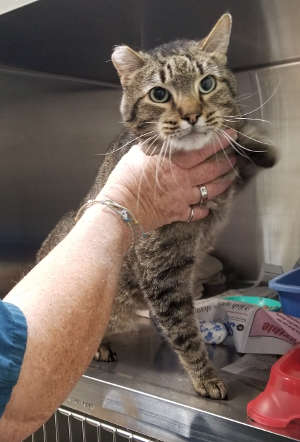
Domestic short hair cat
This male domestic short hair cat has a brown tabby coat.
He has been neutered.
He is in kennel No. 138, ID No. 13701.
Email Elizabeth Larson at
- Details
- Written by: Lake County News reports
The primary purpose of CALEA is to improve the delivery of public safety services by maintaining a comprehensive body of law enforcement standards, establishing and administering an accreditation process, and recognizing professional excellence.
The CHP, which has been accredited since 2010, is the largest state law enforcement agency in the United States to be accredited.
The CHP Academy and Communications Centers also are accredited.
As a part of this assessment, members of the public are invited to comment by calling 916-843-4398 on Tuesday, June 30, from 9 a.m. to 11 a.m.
Additionally, the public is invited to participate in a virtual public hearing on Tuesday, June 30, beginning at 1 p.m.
The virtual public hearing, which will be conducted via Webex, will give members of the public an opportunity to interact with CALEA assessors, to provide commentary about the CHP, or ask questions about the accreditation process.
To participate in the virtual public hearing, please e-mail
The public’s input is one component of a three-day virtual visit in June by a team of assessors from CALEA.
During their visit, the CALEA assessors will verify the CHP’s overall compliance with a set of standards designed to ensure the Department’s policies and procedures are consistent with law enforcement industry best practices.
The assessors will remotely examine CHP Headquarters, the CHP Academy in West Sacramento, and various administrative and field commands to examine all aspects of the department’s policies, procedures, administration, operations and support services.
“We welcome the accreditation process,” said CHP Commissioner Warren Stanley, who has led the Department since 2017. “The input we receive from the public and the assessment team gives the CHP direction and helps us continuously improve. The CALEA assessment is a valuable resource for the department.”
The CALEA accreditation process is an additional avenue in which the CHP ensures it is upholding its mission of providing the highest level of safety, service and security to the people of California.
- Details
- Written by: Elizabeth Larson
The latest case brings Lake County’s case total to 35. Of those, two are active and 33 are recovered, and there are no current hospitalizations, according to the county’s COVID-19 dashboard.
There were no details made available on Saturday about the case.
This is the third positive case reported over the past week.
Public Health Officer Dr. Gary Pace reported that the 33rd and 34th cases, identified last Sunday and Monday, respectively, were not related but were tied to out-of-county cases.
The 34th case had recently attended some social gatherings, and investigations and contact tracing are ongoing, but there are presently no signs of concern regarding community transmission, Pace said.
The 31st and 32nd cases, identified week before last, were members of the same household, Pace reported.
As of Saturday, Public Health said 3,898 of Lake County’s more than 64,000 residents have been tested, with 211 test results still pending.
Public Health departments statewide reported more than 174,000 COVID-19 cases and nearly 5,500 deaths as of Saturday night.
Case totals for neighboring counties are Colusa, seven; Glenn, 42; Mendocino, 54; Napa, 224; Sonoma, 835; and Yolo, 321.
For information on how to get tested, visit the Lake County Public Health testing page.
Email Elizabeth Larson at
- Details
- Written by: Derek M. Griffith, Vanderbilt University and Elizabeth C. Stewart, Vanderbilt University
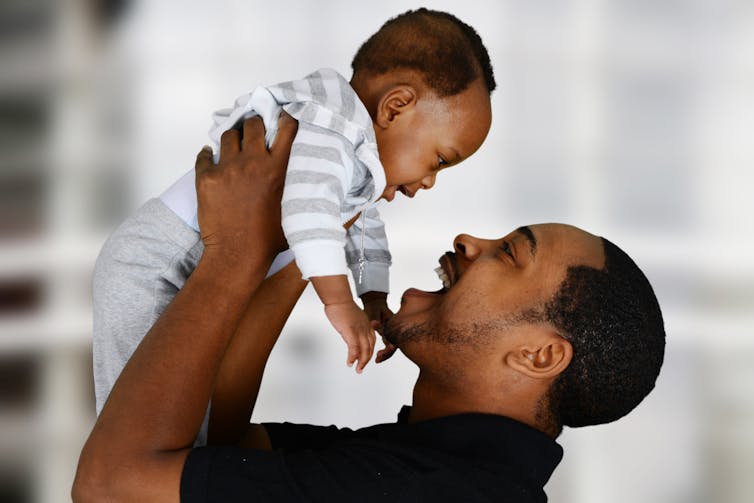
If you had to choose, which would you rather have: a healthy father or a good father?
Studies suggest men often choose being a good father over being healthy.
Becoming a father is a major milestone in the life of a man, often shifting the way he thinks from being “me focused” to “we focused.” But fatherhood can also shift how men perceive their health. Our research has found that fathers can view health not in terms of going to the doctor or eating vegetables but how they hold a job, provide for their family, protect and teach their children, and belong to a community or social network.
As founder and director of the Center for Research on Men’s Health at Vanderbilt University and as a postdoctoral fellow from Meharry Medical College, we study why men live shorter lives than women, male attitudes about fatherhood, how to help men engage in healthier behavior – as well as what can be done to reduce men’s risk of Type 2 diabetes and heart disease.
Work, sex and health
Working with men to try to get them to be more physically active, eat healthier and maintain a healthy weight, we found that for many, their own physical and mental health is not high on their list of priorities. Men, we found, treat their bodies as tools to do a job. Health is not always important or something they pay much attention to until poor health gets in the way of their ability to go to work, have sex or do something else important to them. These roles and responsibilities are often the ways they define themselves as men and how others in their lives define their worth.
While many aspects of gender roles have changed, we have found that many men still recognize they are often defined as good or successful if they have paid employment that is enough to take care of their children and other responsibilities. Fathers generally aspire to be able to look after their children, spouse, partner or other loved ones. That may mean less sleep, longer hours at work and less free time for hobbies and exercise.
Wanting to be a great dad can motivate men to push themselves to work longer and harder than they may have thought possible, but these choices can come at a cost, particularly if they also are not making time to take care of themselves.
We have seen evidence of despair, such as depressive symptoms, having thoughts of suicide, heavy drinking and marijuana use, among adults in their 20s and 30s. These behaviors tend to be higher in men during the time when they tend to become fathers for the first time. Consistent with this pattern, unintentional injuries and suicide are leading causes of death for men across racial and ethnic groups in their 20s and 30s. This is not the case for women.
By age 45, heart disease and cancer are the leading causes of death for all groups of men. These chronic diseases can be prevented, to some degree, by not smoking, eating healthier foods and drinking less alcohol. Also, improving sleep, sitting less and moving more are important behaviors for good health.
Rather than trying to restart these behaviors after taking a break from them for a number of years, studies have found that it is important to help men keep healthy behaviors a part of their lives as they age.

As men age, they may not make deliberate choices to engage in less healthy behavior, but they may just do so because their lives and environments make unhealthy choices easier than healthy ones. Policymakers have to think about how to make it easier to make healthy choices in men’s daily lives and to incorporate health into the time fathers spend with children and family or at work. Men don’t have equal access to healthy foods or the same opportunities to go to the doctor, be physically active or earn a living wage, and yet, if asked, they all want to be healthy and have a positive influence on their children and families.
Where does making time for their own mental and physical health fit into dads’ busy, stressful lives? We have found that it will be different for every father, but loved ones have to help them find a way. Based on our research, we believe that families, particularly women in men’s lives, can play an important role in encouraging fathers to eat healthier and take better care of their health.
Wives in particular often provide emotional support, offer advice, facilitate men going to the doctor and promote healthy behavior. Wives, daughters and other women in fathers’ lives are important sources of information about men’s health, and they often play a key role in helping fathers and other men better understand and cope with stress.
As we celebrate fathers, it is important to recognize that fathers, generally speaking, may not place health at the top of their priorities. Many fathers gladly sacrifice to see their children happy, safe and successful. The problem is that if fathers think only about these goals, their own health can often suffer.

Derek M. Griffith, Professor of Medicine, Health & Society and Founder and Director of the Center for Research on Men's Health, Vanderbilt University and Elizabeth C. Stewart, Postdoctoral Fellow, Vanderbilt University
This article is republished from The Conversation under a Creative Commons license. Read the original article.