 How to resolve AdBlock issue?
News
- Details
- Written by: Elizabeth Larson
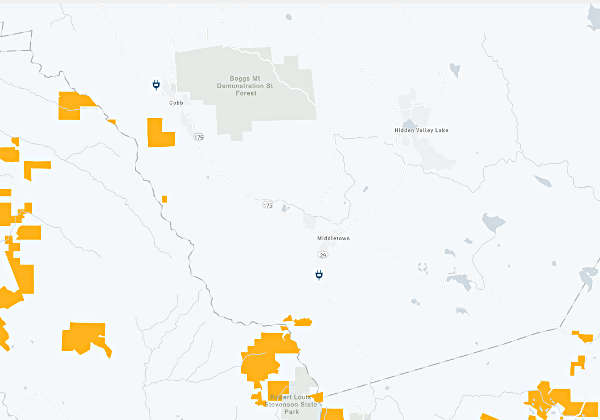
LAKE COUNTY, Calif. – Pacific Gas and Electric is continuing to anticipate a public safety power shutoff early Monday, but on Saturday the company reduced the scope of the shutoff by about 40,000 customers across the region.
The company said the shutoff is forecasted to affect approximately 92,000 customers in targeted portions of 16 counties: Alpine, Amador, Butte, Calaveras, El Dorado, Fresno, Kern, Lake, Napa, Nevada, Placer, Plumas, Sonoma, Tulare, Tuolumne, and Yuba, as well as two tribal communities.
On Saturday PG&E reduced the number of Lake County customers in the shutoff area from 1,223 to 24. None of those customers are in the Medical Baseline program.
PG&E reported that those customers still expected to have their power turned off are near Cobb and west of Middletown. The impacted customers are expected to be out of power starting at between 4 and 6 a.m. Monday, with power to be back on by 10 p.m. Tuesday.
The decrease in customers expected to be impacted is due to changing weather conditions, PG&E said.
It also removed Monterey and Sierra counties but added less than 100 customers in Butte, Kern and Plumas counties.
PG&E said high fire-risk conditions are expected to arrive late Sunday evening with high winds forecast to continue early Monday morning, peaking in strength during the day Monday, and possibly lingering in some regions through early Tuesday.
Once the strong winds subside, PG&E said its crews will patrol the deenergized lines to ensure they were not damaged during the severe weather before restoring power. The company’s goal is to have the power back on within 12 daylight hours of the all-clear, pending weather conditions.
Customers can look up their address online to find out if their location is being monitored for the potential safety shutoff, and find the full list of affected counties, cities and communities, at www.pge.com/pspsupdates.
Email Elizabeth Larson at
- Details
- Written by: Ernest Freeberg, University of Tennessee
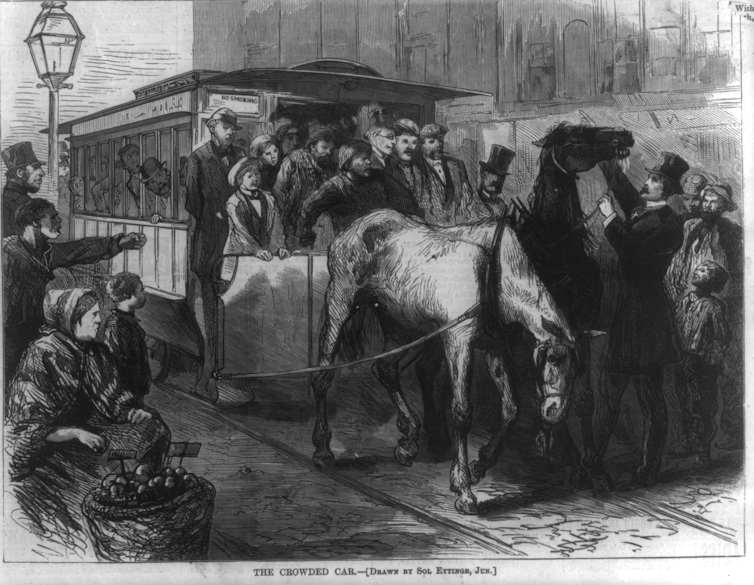
In 1872 the U.S. economy was growing as the young nation industrialized and expanded westward. Then in the autumn, a sudden shock paralyzed social and economic life. It was an energy crisis of sorts, but not a shortage of fossil fuels. Rather, the cause was a virus that spread among horses and mules from Canada to Central America.
For centuries horses had provided essential energy to build and operate cities. Now the equine flu made clear just how important that partnership was. When infected horses stopped working, nothing worked without them. The pandemic triggered a social and economic paralysis comparable to what would happen today if gas pumps ran dry or the electric grid went down.
In an era when many looked forward to replacing the horse with the promising new technologies of steam and electricity, the horse flu reminded Americans of their debt to these animals. As I show in my new book, “A Traitor to His Species: Henry Bergh and the Birth of the Animal Rights Movement,” this reckoning fueled a nascent but fragile reform movement: the crusade to end animal cruelty.
This animation shows how the equine flu spread across the U.S. in 1872-1873, aided by rail shipment of horses. Lines show rail networks and diamonds mark reports of outbreaks. Credit: Sean Kheraj, 2018.
A world suddenly ‘unhorsed’
The equine influenza first appeared in late September in horses pastured outside of Toronto. Within days most animals in the city’s crowded stables caught the virus. The U.S. government tried to ban Canadian horses, but acted too late. Within a month border towns were infected, and the “Canadian horse disease” became a North American epidemic. By December the virus reached the U.S. Gulf Coast, and in early 1873 outbreaks occurred in West Coast cities.
The flu’s symptoms were unmistakable. Horses developed a rasping cough and fever; ears drooping, they staggered and sometimes dropped from exhaustion. By one estimate, it killed 2% of an estimated 8 million horses in North America. Many more animals suffered symptoms that took weeks to clear.
At this time the germ theory of disease was still controversial, and scientists were 20 years away from identifying viruses. Horse owners had few good options for staving off infection. They disinfected their stables, improved the animals’ feed and covered them in new blankets. One wag wrote in the Chicago Tribune that the nation’s many abused and overworked horses were bound to die of shock from this sudden outpouring of kindness. At a time when veterinary care was still primitive, others promoted more dubious remedies: gin and ginger, tinctures of arsenic and even a bit of faith healing.
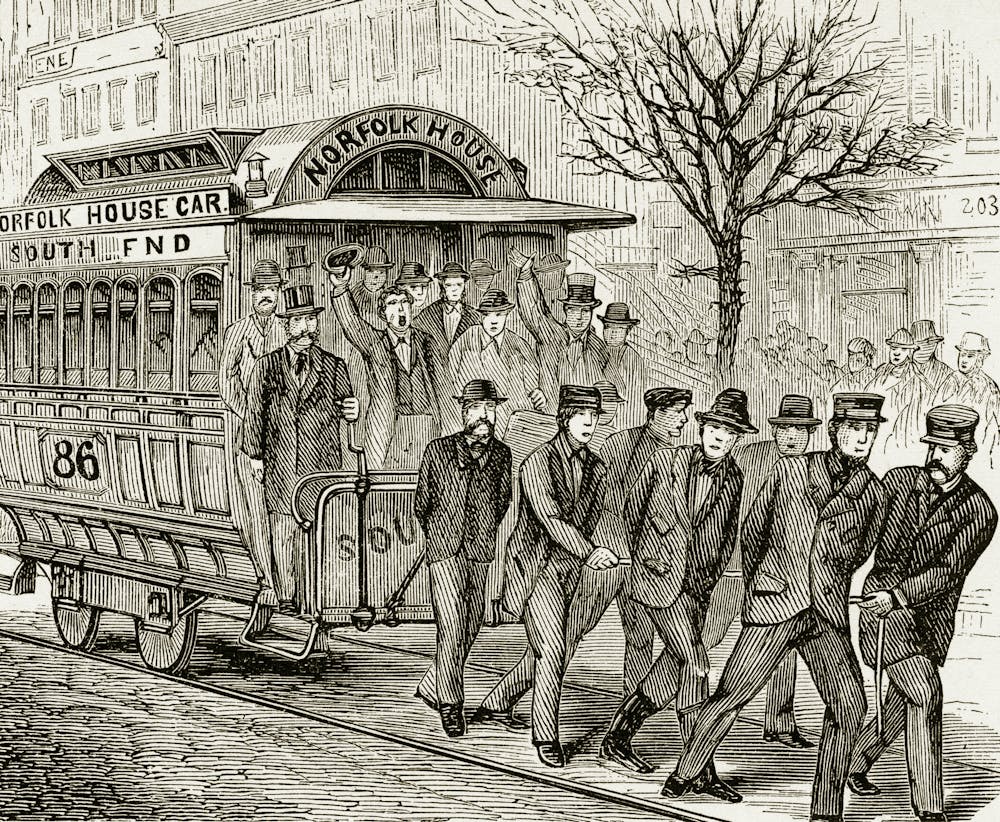
Throughout the 19th century America’s crowded cities suffered frequent epidemics of deadly diseases such as cholera, dysentery and yellow fever. Many people feared that the horse flu would jump to humans. While that never happened, removing millions of horses from the economy posed a different threat: It cut off cities from crucial supplies of food and fuel just as winter was approaching.
Horses were too sick to bring coal out of mines, drag crops to market or carry raw materials to industrial centers. Fears of a “coal famine” sent fuel prices skyrocketing. Produce rotted at the docks. Trains refused to stop at some cities where depots overflowed with undelivered goods. The economy plunged into a steep recession.
Every aspect of life was disrupted. Saloons ran dry without beer deliveries, and postmen relied on “wheelbarrow express” to carry the mail. Forced to travel on foot, fewer people attended weddings and funerals. Desperate companies hired human crews to pull their wagons to market.
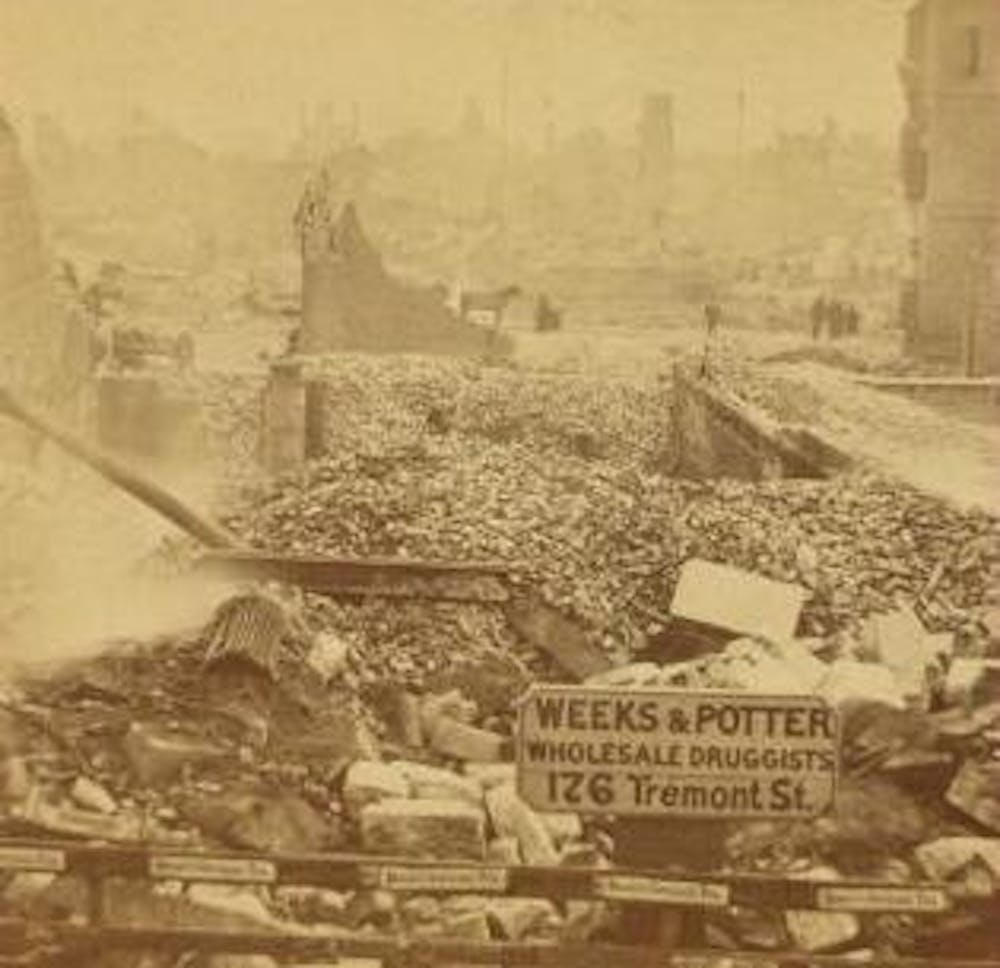
Worst of all, firemen could no longer rely on horses to pull their heavy pump wagons. On Nov. 9, 1872, a catastrophic blaze gutted much of downtown Boston when firefighters were slow to reach the scene on foot. As one editor put it, the virus revealed to all that horses were not just private property, but “wheels in our great social machine, the stoppage of which means widespread injury to all classes and conditions of persons.”
Henry Bergh’s kindness crusade
Of course, the flu injured horses most of all – especially when desperate or callous owners forced them to work through their illness, which quite often killed the animals. As coughing, feverish horses staggered through the streets, it was evident that these tireless servants lived short, brutal lives. E.L. Godkin, the editor of The Nation, called their treatment “a disgrace to civilization … worthy of the dark ages.”
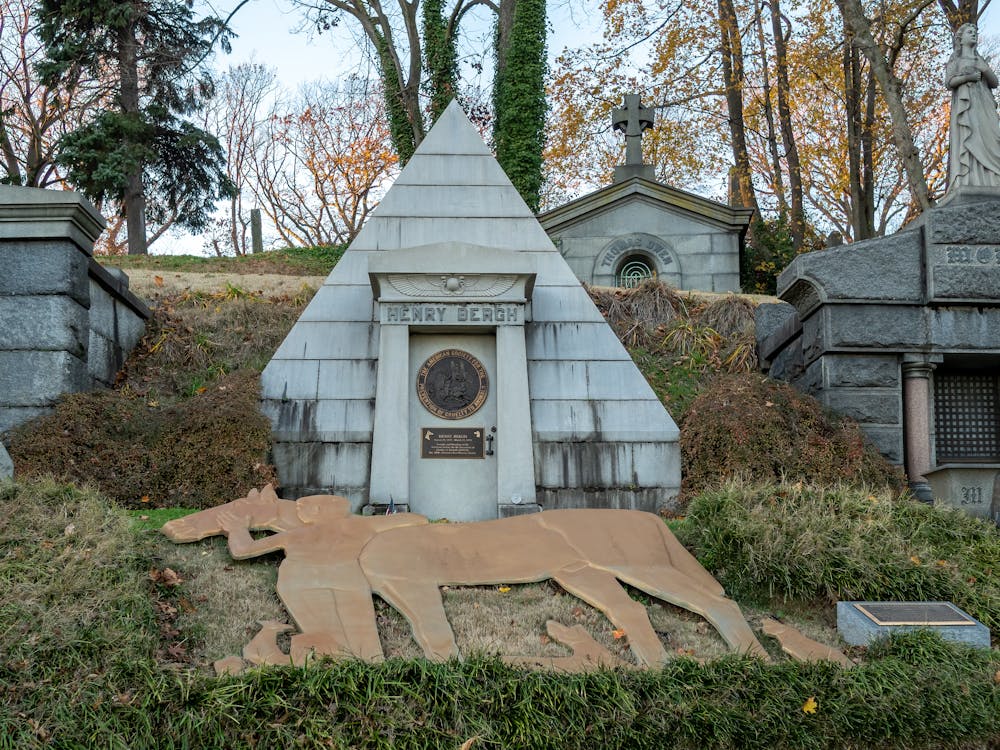
Henry Bergh had been making this argument since 1866, when he founded the American Society for the Prevention of Cruelty to Animals – the nation’s first organization devoted to this cause. Bergh had spent most of his adult life pursuing a failed career as a playwright, supported by a large inheritance. He found his true calling at age 53.
Motivated less by the love of animals than by a hatred of human cruelty, he used his wealth, connections and literary talents to lobby New York’s Legislature to pass the nation’s first modern anti-cruelty statute. Granted police powers by this law, Bergh and his fellow badge-wearing agents roamed the streets of New York City to defend animals from avoidable suffering.
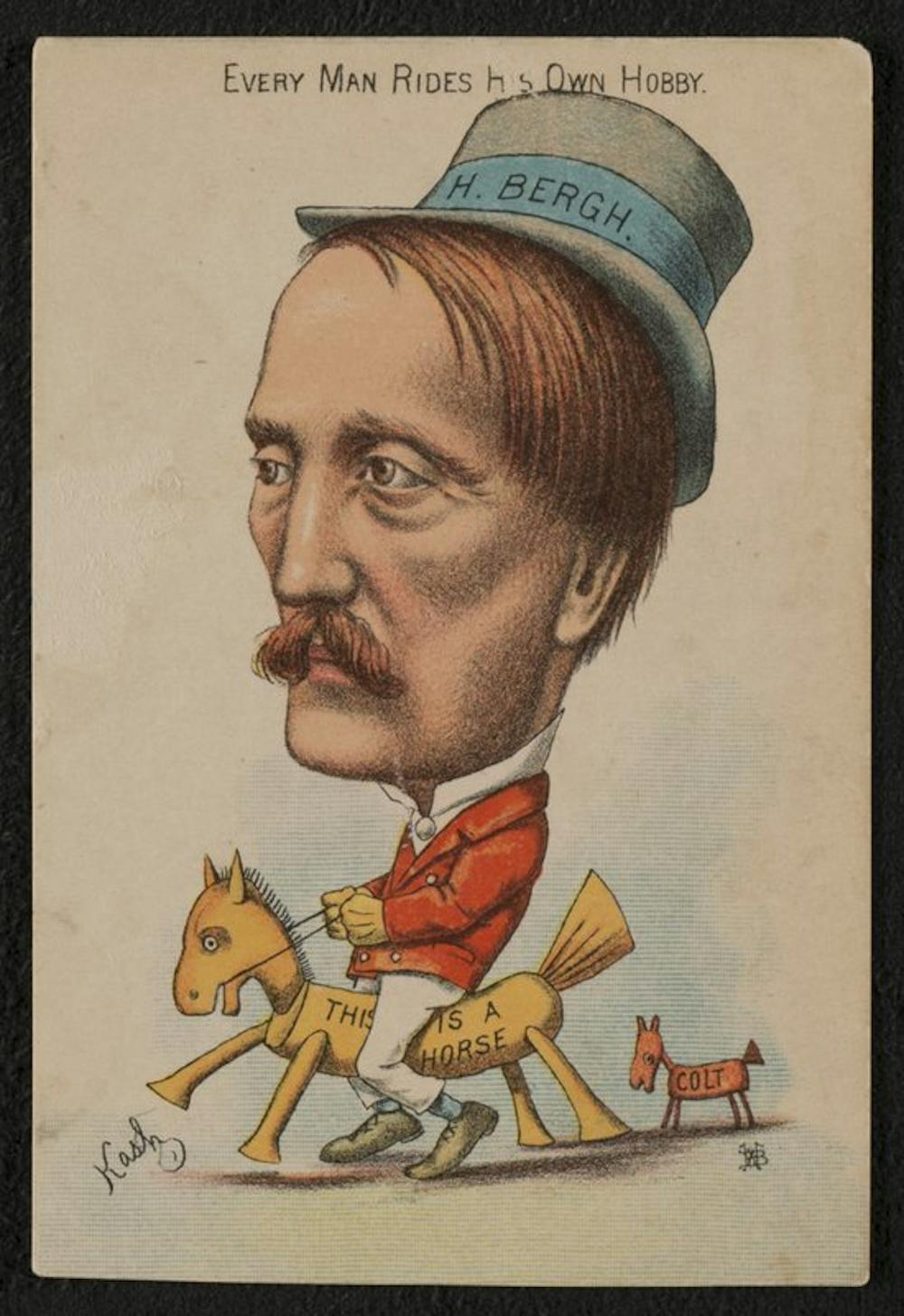

Many observers scoffed at the suggestion that animals should enjoy legal protection, but Bergh and his allies insisted that every creature had the right not to be abused. Thousands of women and men across the country followed Bergh’s lead, passing similar laws and founding branches of the SPCA. This crusade provoked wide public debate about what humans owed to their fellow species.
As the equine flu raged, Bergh planted himself at major intersections in New York City, stopping wagons and horse-drawn trolleys to inspect the animals pulling them for signs of the disease. Tall and aristocratic, Bergh dressed impeccably, often sporting a top hat and silver cane, his long face framed by a drooping mustache. Asserting that working sick horses was dangerous and cruel, he ordered many teams back to their stables and sometimes sent their drivers to court.
Traffic piled up as grumbling passengers were forced to walk. Transit companies threatened to sue Bergh. Critics ridiculed him as a misguided animal lover who cared more about horses than humans, but many more people applauded his work. Amid the ravages of the horse flu, Bergh’s cause matched the moment.
.jpg)
The rights of horses
At its darkest hour the epidemic left many Americans wondering whether the world they knew would ever recover, or if the ancient bond between horses and humans might be forever sundered by a mysterious illness. But as the disease ran its course, cities silenced by the epidemic gradually recovered. Markets reopened, freight depots whittled away delivery backlogs and horses returned to work.
[Deep knowledge, daily. Sign up for The Conversation’s newsletter.]
Still, the impact of this shocking episode lingered, forcing many Americans to consider radical new arguments about the problem of animal cruelty. Ultimately the invention of electric trolleys and the internal combustion engine resolved the moral challenges of horse-powered cities.
Meanwhile, Bergh’s movement reminded Americans that horses were not unfeeling machines but partners in building and running the modern city – vulnerable creatures capable of suffering and deserving of the law’s protection.
Ernest Freeberg, Professor of History, University of Tennessee
This article is republished from The Conversation under a Creative Commons license. Read the original article.
- Details
- Written by: Elizabeth Larson
Dogs available for adoption this week include mixes of Australian Cattle Dog, border Chihuahua, collie, husky, Labrador Retriever, pit bull, German Shepherd and heeler.
Dogs that are adopted from Lake County Animal Care and Control are either neutered or spayed, microchipped and, if old enough, given a rabies shot and county license before being released to their new owner. License fees do not apply to residents of the cities of Lakeport or Clearlake.
The following dogs at the Lake County Animal Care and Control shelter have been cleared for adoption (additional dogs on the animal control Web site not listed are still “on hold”).
Call Lake County Animal Care and Control at 707-263-0278 or visit the shelter online at http://www.co.lake.ca.us/Government/Directory/Animal_Care_And_Control.htm for information on visiting or adopting.

Female Chihuahua
This female Chihuahua has a short black coat.
She is in kennel No. 11, ID No. 14199.
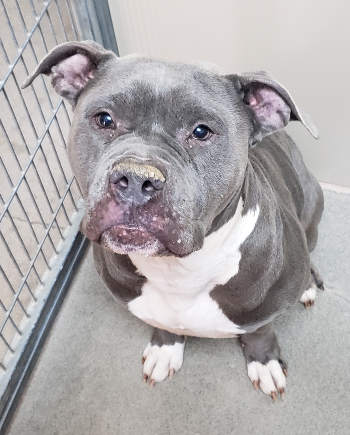
Male pit bull mix
This male pit bull mix has a short gray and white coat.
He is in kennel No. 15, ID No. 14196.

Pit bull-Australian Cattle Dog
This male pit bull-Australian Cattle Dog mix has a short tricolor coat.
He is in kennel No. 16, ID No. 14197.
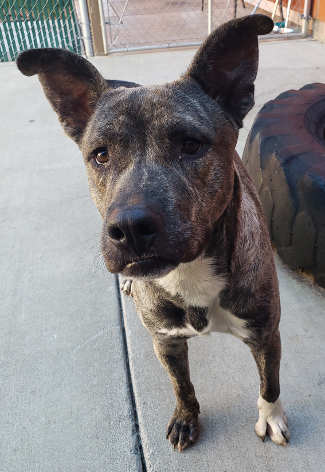
Male pit bull mix
This male pit bull terrier mix has a short gray and brindle coat.
He is in kennel No. 18, ID No. 14138.

Male husky
This male husky has a medium-length black and white coat and blue eyes.
He’s in kennel No. 22, ID No. 14194.

‘Mable’
“Mable” is a young female Labrador Retriever-border collie mix with a short black and white coat.
She is in kennel No. 26, ID No. 14206.

Male pit bull terrier
This male pit bull terrier has a short tan and white coat.
He has been neutered.
He’s in kennel No. 27, ID No. 14216.
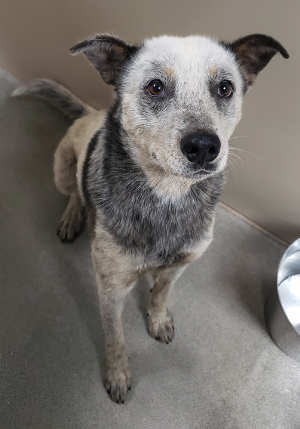
Male heeler-Labrador Retriever
This male heeler-Labrador Retriever mix has a short black and white coat.
He is in kennel No. 29, ID No. 14178.

Female German Shepherd
This female German Shepherd has a long black and tan coat.
She is in kennel No. 31, ID No. 14210.

Male pit bull terrier
This male pit bull terrier has a short brindle and brown coat.
He is in kennel No. 33, ID No. 14218.
Email Elizabeth Larson at
- Details
- Written by: Lara Streiff
Since the COVID-19 pandemic began, space- and ground-based observations have shown that Earth’s atmosphere has seen significant reductions in some air pollutants.
However, scientists wanted to know how much of that decline can be attributed to changes in human activity during pandemic-related shutdowns, versus how much would have occurred in a pandemic-free 2020.
Using computer models to generate a COVID-free 2020 for comparison, NASA researchers found that since February, pandemic restrictions have reduced global nitrogen dioxide concentrations by nearly 20 percent. The results were presented at the 2020 International Conference for High Performance Computing, Networking, Storage, and Analysis.
Download this video in HD formats from NASA Goddard's Scientific Visualization Studio
Nitrogen dioxide is an air pollutant that is primarily produced by the combustion of fossil fuels used by industry and transportation – both of which were significantly reduced during the height of the pandemic to prevent the novel coronavirus from spreading.
“We all knew the lockdowns were going to have an impact on air quality,” said lead author Christoph Keller with Universities Space Research Association at NASA’s Goddard Space Flight Center in Greenbelt, Maryland. Keller works in Goddard’s Global Modeling and Assimilation Office, which uses high-tech computer models to help track the chemistry of the ocean and the atmosphere, and forecast future climate scenarios.
He says, “it was also soon clear that it was going to be difficult to quantify how much of that change is related to the lockdown measures, versus general seasonality or variability in pollution.”
No two years are exactly alike. Normal variations in weather and atmospheric circulation change the make-up and chemistry of Earth’s atmosphere. Comparing 2020 nitrogen dioxide concentrations with data from 2019 or 2018 alone would not account for year-to-year differences.
But, because the NASA model projections account for these natural variations, scientists can use them to parse how much of the 2020 atmospheric composition change was caused by the COVID-19 containment measures.
Even with models, there was no predicting the sudden, drastic shifts in human behavior as the novel coronavirus – and the regulations attempting to control it – spread rapidly. Instead of trying to re-program their model with this unexpected event, Keller and his colleagues accounted for COVID-19 by having the model ignore the pandemic altogether.
The model simulation and machine learning analysis took place at the NASA Center for Climate Simulation. Its “business as usual” scenario showed an alternate reality version of 2020 – one that did not experience any unexpected changes in human behavior brought on by the pandemic.
From there it is simple subtraction. The difference between the model simulated values and the measured ground observations represents the change in emissions due to the pandemic response.
The researchers received data from 46 countries – a total of 5,756 observation sites on the ground – relaying hourly atmospheric composition measurements in near-real time. On a city-level, 50 of the 61 analyzed cities show nitrogen dioxide reductions between 20-50%.
“In some ways I was surprised by how much it dropped,” said Keller. “Many countries have already done a very good job in lowering their nitrogen dioxide concentrations over the last decades due to clean air regulations, but what our results clearly show is that there is still a significant human behavior-driven contribution.”
Wuhan, China was the first municipality reporting an outbreak of COVID-19. It was also the first to show reduced nitrogen dioxide emissions – 60 percent lower than simulated values expected. A 60 percent decrease in Milan and a 45 percent decrease in New York followed shortly, as their local restrictions went into effect.
“You could, at times, even see the decrease in nitrogen dioxide before the official policies went into place,” said co-author Emma Knowland with USRA at Goddard’s GMAO. “People were probably reducing their transit because the talk of the COVID-19 threat was already happening before we were actually told to shut down.” Once restrictions were eased, the decreases in nitrogen dioxide lessened, but remained below expected “business as usual” values.
Keller compared his estimates of the nitrogen dioxide decreases to reported economic numbers, namely, the gross domestic products, of the nations included in the study. According to Keller, they lined up shockingly well. “We would expect them to be somewhat related because nitrogen dioxide is so closely linked to economic activities, like people who travel and factories running,” he said. “It looks like our data captures this very well.”
The research is ongoing, and the GEOS model data used in this study are publicly available.
More information about GEOS can be found at https://gmao.gsfc.nasa.gov/GEOS/.
Lara Streiff is a member of NASA's Earth Science News Team.