 How to resolve AdBlock issue?
News
- Details
- Written by: Lake County News reports
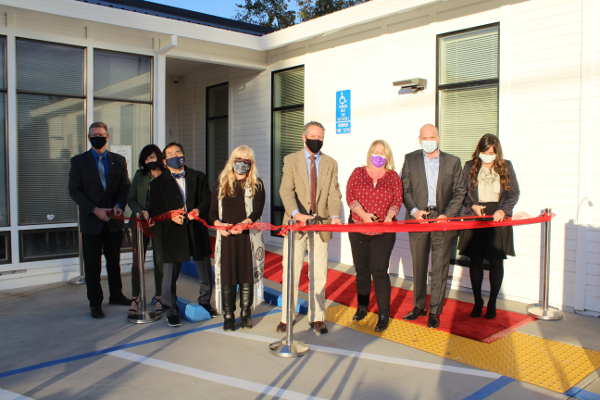
CLEARLAKE, Calif. – Homeless community members in Clearlake now have a transitional housing hub along with increased community support, thanks to the opening of Hope Center, a joint project of Adventist Health Clear Lake and Hope Rising and funded through $4.6 million in state and local grants.
The center, a project years in the making, is located at 3400 Emerson St. in Clearlake.
It’s the first permanent facility dedicated to finding solutions for Lake County’s homeless residents.
Hope Center was celebrated in a ribbon-cutting held on Nov. 12, as Lake County News has reported.
Adventist Health reported that the first patient arrived last week.
Hope Rising Lake County will operate Hope Center, which will house 14 men and six women enrolled in services that lead to sustainable permanent housing.
The facility involves local health systems, county support services, nonprofit organizations, and other organizations in a united effort to serve individuals in the community experiencing homelessness.
Eight employees will staff Hope Center, including a program director, case manager, program assistants, licensed social worker, and drivers. There will be on-site management 24 hours a day.
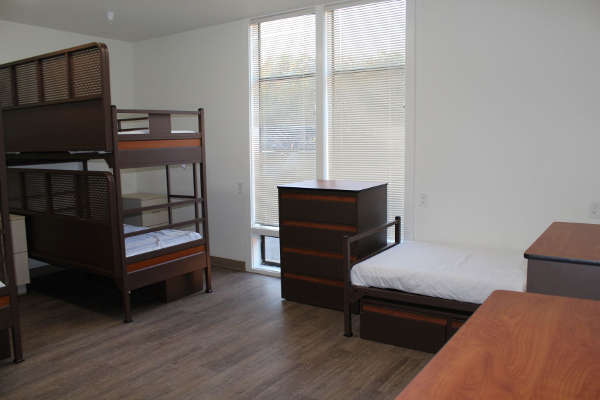
In addition to dorm-style rooms provided on opposite ends of the building, the center includes a commercial demonstration kitchen with a dining area, communal living room, one-on-one support services rooms, a group meeting/conference room, and shared offices for service providers.
"Hope Center is committed to helping, sheltering, and taking care of our neighbors experiencing homelessness," said Allison Panella, executive director of Hope Rising, at the ribbon-cutting celebration on Nov. 12. "We are opening our doors to endeavor what we set out nearly three years ago to do; to restore a sense of hope to a community that has been battered by floods, fires, power outages, and now a pandemic."
Adventist Health Clear Lake is thrilled to help lead this transformational project, David Santos, president of Adventist Health Clear Lake, said at the socially distanced event.
"Hope Center allows us to live into the reality that we can lift ourselves from something that haunted our city, community and county,” Santos said. “Today, we reached a tipping point. With our combined forces and support, Hope Rising is changing Lake County and creating a model to impact and change the health outcomes for rural counties across our country. What we are doing today can have a monumental impact on generations to come."
The facility is the first low-barrier transitional housing hub in Lake County, offering comprehensive services for vulnerable members of the community experiencing homelessness. The center’s wraparound services are provided through a team approach that focuses on building individual strengths to help them achieve goals and improve well-being.
A $2.4 million Homekey grant for the center was provided by the California Business, Consumer Services and Housing Agency, working hand in hand with the California Department of Housing and Community Development. The grant will fund staff and services at Hope Center for two years.
"I am thrilled to see leaders of Lake County receive this significant grant to house 20 homeless clients as they prepare for permanent housing," Assemblymember Cecilia Aguiar-Curry said at the celebration. "This facility is the result of all of us coming together, building and maintaining strong partnerships and working to improve our community one step at a time."
Adventist Health Clear Lake's Project Restoration House served as a pilot program for Hope Center.
Established in 2017 by Adventist Health Clear Lake’s Community Wellness director, Project Restoration House provides intense case management and services to support clients who are homeless.
It has substantially reduced the high utilization of emergency medical services, police encounters, 911 calls, and incarceration days resulting in $1.2 million savings in the first year.
"As we look at the work that is going to happen at Hope Center, a love ethic is at the center of it," said Shelly Trumbo, Well Being executive for Adventist Health. "There is nothing soft about standing alongside a human being and supporting them in their transformation. That is the work that will be happening here, and it is strong, and it is solid. It leads to trust where organizations lock arms together for justice and equity."
Hope Center received an initial $1.3 million grant from Partnership HealthPlan of California to begin building the facility. Additional funding by the City of Clearlake, Lake County Continuum of Care, Lake County Behavioral Health, and Adventist Health Clear Lake helped complete the building's construction.
Adventist Health Clear Lake owns the property and will continue to maintain it in compliance with the 15-year grant agreement regarding the property's use. "Adventist Health truly wants to lead the way in convening this concept of transforming the health and wealth status of Lake County," Santos said.
Following the ribbon-cutting, attendees planted a garden at the front of the building, then were invited inside for tours. "Consider the roots you are planting here today," said Panella, "the seeds of hope and a continued connection to our community."
More information about Hope Center is available at Hope Rising at www.HopeRisingLC.org.
- Details
- Written by: Lake County News reports
The City of Lakeport Municipal Sewer District wastewater treatment plant is located on Linda Lane in south Lakeport.
Police said there has been an increase in the hunting activity as reported by neighbors, who have heard gunshots, and facility workers, who have found evidence of this activity, especially during weekends.
“This crime is very serious and poses a significant danger to nearby residents,” the police department said.
Anyone with information about current or previous illegal hunting activities at that location is encouraged to report it to the Lakeport Police Department at 707-263-5491, option 1.
- Details
- Written by: Lake County News reports
The public can play a critical role in shaping the plan by participating in a map-based survey.
The survey allows people to tell Caltrans where they have bicycling and walking concerns along or near the state highway system.
Survey responses will provide Caltrans with specific data about the type and location of improvements needed.
When combined with the technical analysis and input from agency and organizational partners, Caltrans will be able to evaluate these locations for developing future projects.
Working with local and regional stakeholders, the Caltrans Active Transportation Plans are a critical step on the path toward a robust and reliable bicycle and pedestrian network.
To take the survey, visit https://survey.catplan.org/.
The survey closes on Dec. 31.
For more information about the Caltrans Active Transportation Plans, visit www.catplan.org/district-plans.
- Details
- Written by: Elizabeth Larson
The order, issued by Presiding Judge Michael Lunas, cited Lake County moving into the purple tier – the most restrictive on the state’s Blueprint for a Safer Economy – as well as the “imminent regional stay-at-home order,” which is expected in the coming weeks should regional intensive care capacity drop below 15 percent.
Late last week, a similar action was taken in Mendocino County, where Presiding Superior Court Judge Ann Moorman issued an order on Dec. 4 saying that the court had received emergency relief from the California Supreme Court chief justice and was vacating all trials from Dec. 7 to Jan. 8. Moorman also cited the rise in cases and the governor’s stay-home order.
On Monday, Lake County’s COVID-19 cases had risen to 1,092, an increase of 70 cases since Lake County Public Health last updated the statistics on Friday.
“The court is in constant contact with Public Health Officer, Dr. Gary Pace in an effort to continue to provide necessary and essential services to court users while protecting the health of all who come before or work within the court. In response to public health orders the court has limited the number of cases on calendar, requires social distancing in court facilities, requires face coverings and will continue to handle matters via remote means whenever possible,” the Lake County Superior Court order explained.
The order instituted changes beginning immediately, including that no jury trials will take place before Dec. 30. Those who have received a jury summons for any date prior to Dec. 30 do not need to appear.
Since trials were reinstituted earlier this year, the courts had shifted jury selection and trials to the Phil Lewis Hall at the Lake County Fairgrounds in Lakeport and away from the cramped quarters on the fourth floor of the Lake County Courthouse, as Lake County News has reported.
Under the new order, transportation of in-custody defendants from the jail to the Lake County Courthouse in downtown Lakeport also is being limited whenever possible. Court officials said they are taking that action in consultation with the Public Health officer, the Lake County Jail, the District Attorney’s Office and the public defender contract administrators.
Lunas’ order also shifts court calendars that were being handled in-person to remote appearance only, until further notice.
As of Dec. 7, the following court calendars are moving online:
– In-custody daily criminal arraignment calendar.
– Felony law and motion, Department 3, Tuesdays.
– Felony settlements, Department 4, Tuesdays.
– Misdemeanor arraignments, Department 1, Tuesdays.
– Misdemeanor disposition/setting and motions, Department 1, Mondays.
– Misdemeanor settlement conferences, Department 1, Tuesdays.
– Trial assignment, Department 4, Fridays.
Beginning on Dec. 14, the court will move all civil and family law court trials and evidentiary hearings to remote appearance only until further notice.
On Dec. 21, the court will shift the following calendars to remote appearance until further notice:
– Unlawful detainer hearings and trials, Mondays at 8:30 a.m.
– Small claims trials, Mondays at 9 a.m.
– Unlawful detainer and small claims status conferences, Mondays at 11 a.m.
– Traffic arraignments, Mondays at 1:30 p.m.
– Traffic trials, Mondays at 3 p.m.
For all of the impacted calendars, attorneys and parties are to appear by phone or video, the court said.
All other calendars currently being conducted by remote means will continue to be held remotely, court officials said.
Public counters and telephone assistance at the Court Clerk’s Office will continue to be provided between 8 a.m. and 4 p.m. daily. The court said no changes are planned yet due to the low volume of individuals seeking in-person assistance, the relatively short interactions and the ability to maintain social distancing. The court encourages the use of drop boxes, which remain available at both courthouses.
The court will continue to post updates and more information on its website, www.lake.courts.ca.gov.
Email Elizabeth Larson at
- Tribal Health presents check to support sheriff’s defibrillator purchases
- Lakeport Planning Commission to discuss new city park, biochar project, home kitchens
- Aguiar-Curry introduces Internet for All Act of 2021, announces partnership with Sen. Gonzalez to deliver 21st-century connectivity to all Californians