 How to resolve AdBlock issue?
News
- Details
- Written by: Elizabeth Larson
Dogs available for adoption this week include mixes of Australian Cattle Dog, heeler, husky, Labrador Retriever, mastiff and pit bull.
Dogs that are adopted from Lake County Animal Care and Control are either neutered or spayed, microchipped and, if old enough, given a rabies shot and county license before being released to their new owner. License fees do not apply to residents of the cities of Lakeport or Clearlake.
The following dogs at the Lake County Animal Care and Control shelter have been cleared for adoption (additional dogs on the animal control Web site not listed are still “on hold”).
Call Lake County Animal Care and Control at 707-263-0278 or visit the shelter online at http://www.co.lake.ca.us/Government/Directory/Animal_Care_And_Control.htm for information on visiting or adopting.
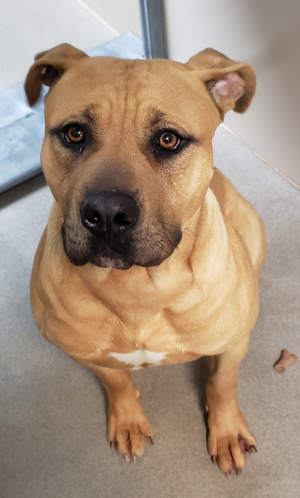
Male mastiff
This young male mastiff has a short tan coat.
He is in kennel No. 18, ID No. 14240.

Male pit bull
This male pit bull has a short brindle and brown coat.
He is in kennel No. 20, ID No. 14218.

Male husky
This male husky has a medium-length black and white blue eyes.
He has been spayed.
He’s in kennel No. 22, ID No. 14194.
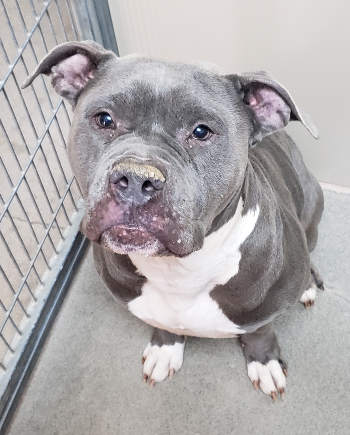
Male pit bull terrier
This male pit bull terrier has a short gray and white coat.
He’s in kennel No. 23, ID No. 14196.

Pit bull terrier-Australian Cattle Dog mix
This male pit bull terrier-Australian Cattle Dog mix has a short tricolor coat.
He is in kennel No. 24, ID No. 14197.
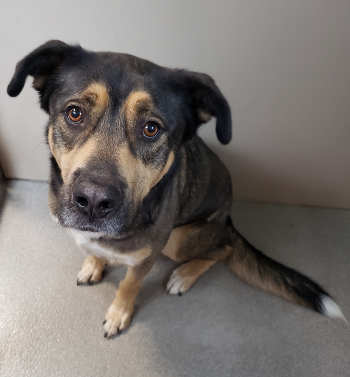
Male shepherd mix
This male shepherd mix has a medium-length tricolor coat.
He has been altered.
He’s in kennel No. 28, ID No. 14241.
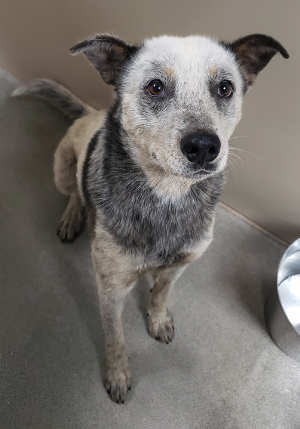
Male heeler-Labrador Retriever
This male heeler-Labrador Retriever mix has a short black and white coat.
He is in kennel No. 29, ID No. 14178.
Email Elizabeth Larson at
- Details
- Written by: NATIONAL AERONAUTICS AND SPACE ADMINISTRATION
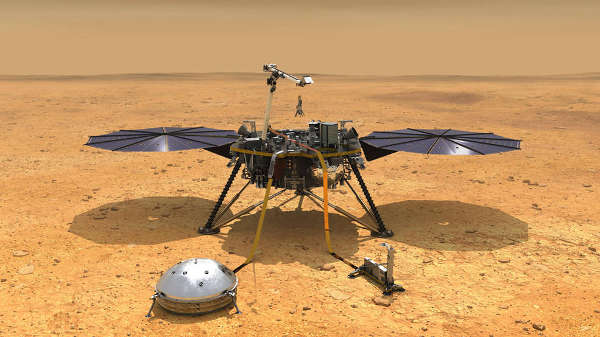
Scientists are finding new mysteries since the geophysics mission landed two years ago.
NASA's InSight spacecraft touched down Nov. 26, 2018, on Mars to study the planet's deep interior.
A little more than one Martian year later, the stationary lander has detected more than 480 quakes and collected the most comprehensive weather data of any surface mission sent to Mars.
InSight's probe, which has struggled to dig underground to take the planet's temperature, has made progress, too.
There was a time when the surfaces of Mars and Earth were very similar. Both were warm, wet, and shrouded in thick atmospheres. But 3 or 4 billion years ago, these two worlds took different paths.
The mission of InSight (short for Interior Exploration using Seismic Investigations, Geodesy and Heat Transport) has been to help scientists to compare Earth to its rusty sibling. Studying what the depths of Mars is made of, how that material is layered, and how quickly heat seeps out of it could help scientists better understand how a planet's starting materials make it more or less likely to support life.
While there's more science to come from InSight, here are three findings about our red neighbor in the sky.
NASA's InSight used its Instrument Context Camera (ICC) beneath the lander's deck to image these drifting clouds at sunset.
Faint rumblings are the norm
InSight's seismometer, which was provided by the French space agency, Centre National d'Études Spatiales, or CNES, is sensitive enough to detect slight rumblings from great distances. But it wasn't until April 2019 that seismologists with the Marsquake Service, coordinated by ETH Zurich, detected their first marsquake. Since then, Mars has more than made up for lost time by shaking frequently, albeit gently, with no quakes larger than magnitude 3.7.
The lack of quakes larger than magnitude 4 poses something of a mystery, considering how frequently the Red Planet shakes due to smaller quakes.
"It's a little surprising we haven't seen a bigger event," said seismologist Mark Panning of NASA's Jet Propulsion Laboratory in Southern California, which leads the InSight mission. "That may be telling us something about Mars, or it may be telling us something about luck."
Put another way: It could be that Mars is just more static than anticipated – or that InSight landed in an especially quiet period.
Seismologists will have to keep waiting patiently for those larger quakes in order to study layers deep below the crust. "Sometimes you get big flashes of amazing information, but most of the time you're teasing out what nature has to tell you," said InSight Principal Investigator Bruce Banerdt of JPL. "It's more like trying to follow a trail of tricky clues than having the answers presented to us in a nicely wrapped-up package."
The wind may hide quakes
Once InSight started detecting quakes, they became so regular that, at one point, they were happening every day. Then, in late June of this year, the detections essentially stopped. Only five quakes have been detected since then, all of them since September.
Scientists believe Mars' wind is responsible for these seismically blank periods: The planet entered the windiest season of the Martian year around June. The mission knew that winds could affect InSight's sensitive seismometer, which is equipped with a domed wind and heat shield.
But the wind still shakes the ground itself and creates literal noise that covers up quakes. This could also have contributed to what seems like the long seismic silence before InSight's first quake, since the spacecraft landed while a regional dust storm was settling down.
"Before landing, we had to guess at how the wind would affect surface vibrations," Banerdt said. "Since we're working with events that are much smaller than what we'd pay attention to on Earth, we find that we have to pay much closer attention to the wind."
Surface waves are missing
All quakes have two sets of body waves, which are waves that travel through the planet's interior: primary waves (P-waves) and secondary waves (S-waves). They also ripple along the top of the crust as part of a third category, called surface waves.
On Earth, seismologists use surface waves to learn more about the planet's internal structure. Before getting to Mars, InSight's seismologists expected these waves to offer glimpses as deep as 250 miles (about 400 kilometers) below the surface, into a sub-crustal layer called the mantle. But Mars continues to offer mysteries: Despite hundreds of quakes, none has included surface waves.
"It's not totally unheard of to have quakes without surface waves, but it has been a surprise," Panning said. "For instance, you can't see surface waves on the Moon. But that's because the Moon has far more scattering than Mars."
The dry lunar crust is more fractured than Earth and Mars, causing seismic waves to bounce around in a more diffuse pattern that can last for over an hour. The lack of surface waves on Mars may be linked to extensive fracturing in the top 6 miles (10 kilometers) below InSight. It could also mean that the quakes InSight detected are coming from deep within the planet, since those wouldn't produce strong surface waves.
Of course, untangling such mysteries is what science is all about, and there's more to come with InSight.
More about the mission
JPL manages InSight for NASA's Science Mission Directorate. InSight is part of NASA's Discovery Program, managed by the agency's Marshall Space Flight Center in Huntsville, Alabama. Lockheed Martin Space in Denver built the InSight spacecraft, including its cruise stage and lander, and supports spacecraft operations for the mission.
A number of European partners, including France's Centre National d'Études Spatiales, or CNES, and the German Aerospace Center, are supporting the InSight mission.
CNES provided the Seismic Experiment for Interior Structure, or SEIS, instrument to NASA, with the principal investigator at Institut de Physique du Globe de Paris, or IPGP. Significant contributions for SEIS came from IPGP; the Max Planck Institute for Solar System Research in Germany; the Swiss Federal Institute of Technology in Switzerland; Imperial College London and Oxford University in the United Kingdom; and JPL.
DLR provided the Heat Flow and Physical Properties Package instrument, with significant contributions from the Space Research Center of the Polish Academy of Sciences and Astronika in Poland. Spain's Centro de Astrobiología supplied the temperature and wind sensors.
- Details
- Written by: Elizabeth Larson
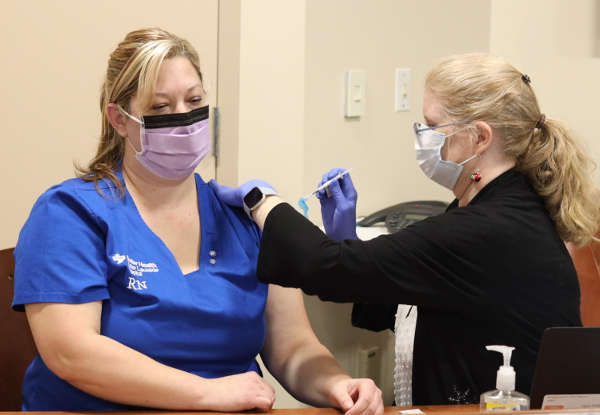
LAKEPORT, Calif. – A week after the Food and Drug Administration approved the Pfizer COVID-19 vaccine, the first doses were administered to health care workers in Lake County.
The first local vaccinations on Friday also coincided with the FDA’s approval of a second vaccine, this one produced by Moderna Inc., doses of which already have been ordered by the Lake County Public Health Department.
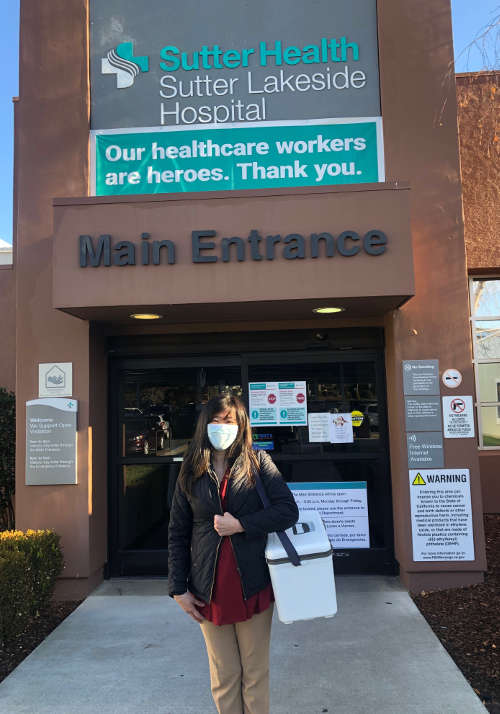
On Friday, nurses, doctors, respiratory therapists and other health care workers at Sutter Lakeside Hospital in Lakeport received the first, small batches of the Pfizer vaccine, which officials said marked a critical moment in the fight against the pandemic and offered a “shot of hope.”
Nurse Diane Derenia became the first person in Lake County to be immunized against the coronavirus, receiving the first of two doses of the Pfizer-BioNTech COVID-19 vaccine.
In 21 days, Derenia will receive the second dose, at which point she will have 95 percent protection against developing COVID infection and symptoms, should she be exposed to the virus, Sutter Health reported.
“As more people receive the vaccine we’ll see a decrease in the number of new infections, which in turn will lower the number of hospitalizations and deaths,” said Tammy Carter, LVN, Sutter Lakeside’s infection control and employee health coordinator.
Sutter Lakeside’s staff celebrated the arrival of the vaccine, calling it a glimmer of hope in what has been a difficult year.
“I can’t tell you how happy I am to be the first person in our community to receive this lifesaving vaccine,” said Derenia. “Today wouldn’t have been possible for a rural hospital like ours without the support of Sutter Health, we are stronger together and the speed and organization with which we’ve received the vaccine are a testament to that.”
"These heroes have poured everything they have into this fight," said Scott Knight, chief administrative officer for Sutter Lakeside. "To all of our health care workers, we say thank you. Thank you for your courage. Thank you for your commitment in serving your community over the past ten months."
Lake County received its first shipment of 975 vaccine doses on Thursday, as Lake County News has reported.
Public Health Officer Dr. Gary Pace told Lake County News that Public Health will be placing weekly orders for new doses, with 100 doses of the newly approved Moderna vaccine already ordered earlier this week.
He said the county doesn’t yet have enough vaccine to cover all hospital staff, “but it depends on how many decide to take it.”
Pace added, “This is very much a moving target.”
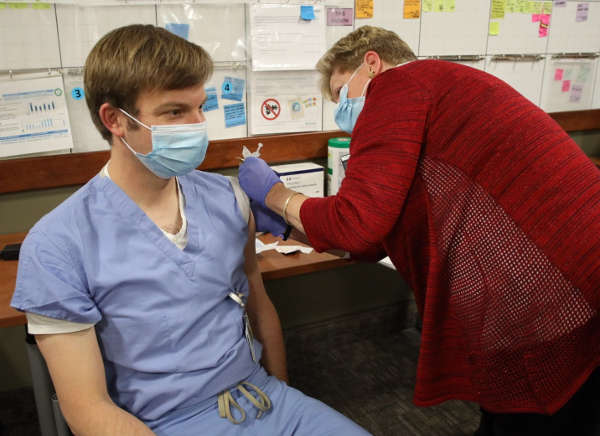
Based on state and federal guidelines, the first tier of vaccinations is limited to frontline health care workers, first responders and nursing home residents and staffers can receive a dose of the vaccine.
The California Department of Public Health’s allocation guidelines categorizes those groups as Phase 1a.
Once those groups are vaccinated, those next in line to receive the vaccine are essential workers and members of the general public with underlying health conditions that make them more likely to have severe illness and die from COVID-19 if they contract the virus.
As for when teachers might have access to the vaccine, “We began preliminary conversations two weeks ago,” Lake County Superintendent of Schools Brock Falkenberg said.
Falkenberg said the focus right now is really on Phase 1a of the vaccination plan.
“School staff are Phase 1b, so we anticipate February before we get to that phase. Once Phase 1a starts rolling smoothly, I think there will be ample time to build out preliminary plans for phase 1b,” Falkenberg said.
Pace said it’s “reasonable to assume” that teachers and seniors will be able to receive the vaccine within the next few months. “They are both a priority.”
Vaccines for the general public may be available by early summer, officials said.
“Widespread vaccination is the final piece of the puzzle,” said Pace. “The distribution of rigorously tested, effective vaccines just one year after this virus first emerged is a testament to science, our guide throughout this pandemic.”
While Pace told local leaders in updates earlier this week that the vaccine is the path to eventually being able to return to some level of normalcy, he also has warned that the winter could be particularly tough as COVID-19 cases continue to surge nationwide and statewide.
He and other health officials both locally and across the state remind the public to continue wearing face coverings, avoid gathering, stay home whenever possible, avoid travel for the holidays and participate in contact tracing and quarantining as needed.
Email Elizabeth Larson at
- Details
- Written by: Elizabeth Larson
Lt. Corey Paulich of the Lake County Sheriff’s Office identified the man who died as 41-year-old Michael Brandon Jaco.
The California Highway Patrol’s Clear Lake Area office said the crash that claimed Jaco’s life occurred at 5:52 p.m. Thursday on Highway 29 at C Street in Lower Lake.
The CHP said Jaco was driving a 1999 Toyota Corolla northbound on Highway 29, approaching the intersection of C Street.
Brian Case, 48, of Clearlake was driving a 2001 Peterbilt 300 series truck, towing a Trailermax flatbed trailer northbound on Highway 29, preparing to make a left turn onto C Street, in front of Jaco, the CHP said.
For reasons still under investigation, Jaco’s Toyota Corolla collided with the rear of Case's Trailermax flatbed trailer, according to the report.
The CHP said Jaco succumbed to his injuries and was pronounced dead at the scene.
Neither Case nor an 11-year-old boy from Clearlake riding with him in his truck were injured, the CHP said.
The CHP said that neither alcohol nor drugs are believed to be factors in the collision.
Email Elizabeth Larson at