 How to resolve AdBlock issue?
News
- Details
- Written by: DENNIS FORDHAM
Married clients in second marriages with prior children often have to balance the future wellbeing of their spouse with that of their own children.
In California, a community property state, a resident can bequeath (leave) one-hundred percent of their separate property assets and one-half of their community property assets.
A resident may only bequeath the entirety of a community property asset to someone other than their spouse with their spouse’s consent or acquiescence.
Let’s discuss.
First, does the client’s spouse even need support? Sometimes not. If not, then the client usually leaves his or separate property assets directly to his or her own children.
Nonetheless, as the surviving spouse remains an heir of the client, the client’s will and/or trust must acknowledge the marriage and say that that the spouse is not inheriting.
Otherwise, the surviving spouse as heir may be entitled either to a one-half or one-third share in the decedent’s separate property and all of the couple’s community property assets.
The surviving spouse would inherit if the client died intestate (with no will or trust) or the client died with an old trust or will she signed prior to the marriage that omitted her spouse.
If the spouse needs support then then consider the assets and family relationships involved. Are the client’s assets her separate property either from prior to marriage or from inheritance while married? Do the client’s spouse and children get along? Are the spouse and client’s children close in age? Is it possible for the beneficiaries to inherit separate assets?
If the client's spouse and children often disagree and/or are close in age, and separate assets can go to each party, then perhaps they should inherit separate assets outright and part ways.
Otherwise entanglement occurs when the spouse is the lifetime beneficiary and children are death beneficiaries of a trust. Perhaps the client’s house goes to her children and her retirement plan goes to her spouse (who takes required minimum distributions over his lifetime).
If it is neither possible nor necessary to disentangle the spouse and children then consider making the spouse a lifetime beneficiary of a trust that owns some or all of the client’s assets. Such a trust requires careful drafting.
When and to what extent is the spouse allowed to invade the trust principal (in addition to receiving the income)? Is the spouse only allowed if the spouse’s own income and resources are first exhausted? Who will be the trustee that balances the competing interests of the spouse and children?
Next, do the children need support? If so, what support? Do the children receive SSI or Medi-Cal? Are the children able to manage an outright inheritance? Perhaps either a special needs or a support trust is needed and appropriate. Alternatively, consider delayed gifting using an annuity to prolong the benefits.
Next, what if the client wants to leave her home to her children but the community property estate has an interest in the residence? That is, perhaps community property money was used to pay down the mortgage.
For example, the client owned a home prior to marriage and continued paying off the mortgage with her own earnings while married. If so, the community property estate receives an ownership interest in the home to the extent either spouse’s earnings while married paid off the mortgage or improved the home.
Nevertheless, the client’s estate plan may still leave the home to her children but offsetting assets (like brokerage accounts) to compensate the spouse for his interest in the home. This is a “forced election”: Either the surviving spouse enforces their community property rights (in the home) or the spouse receives other assets (brokerage accounts) left him or her by the deceased spouse.
The foregoing is a brief and limited foray into a much broader and more complex subject. It is no substitute for consulting a competent estate planning attorney.
Dennis A. Fordham, attorney, is a State Bar-Certified Specialist in estate planning, probate and trust law. His office is at 870 S. Main St., Lakeport, Calif. He can be reached at
- Details
- Written by: Jim Bell, Arizona State University
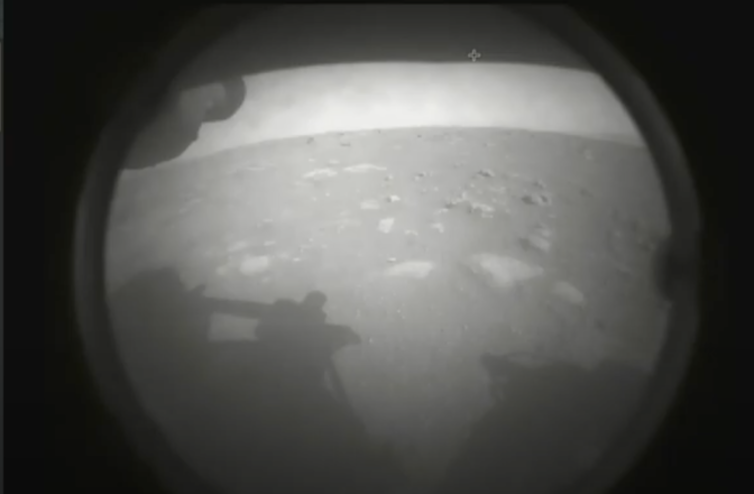
Editor’s note: On Feb. 18, NASA’s Mars 2020 mission arrived at the red planet and successfully landed the Perseverance Rover on the surface. Jim Bell is a professor in the School of Earth and Space Exploration at Arizona State University and has worked on a number of Mars missions. He is the primary investigator leading a team in charge of one of the camera systems on Perseverance. We spoke with him in late January for The Conversation’s new podcast, The Conversation Weekly.
Below are excerpts from our conversation that have been edited for length and clarity.
What’s the goal of this mission?
What we’re looking for is evidence of past life, either direct chemical or organic signs in the composition and the chemistry of rocks, or textural evidence in the rock record. The environment of Mars is extremely harsh compared to the Earth, so we’re not really looking for evidence of current life. Unless something actually gets up and walks in front of the cameras, we’re really not going to find that.

Where is the Perseverance Rover landing to look for ancient life?
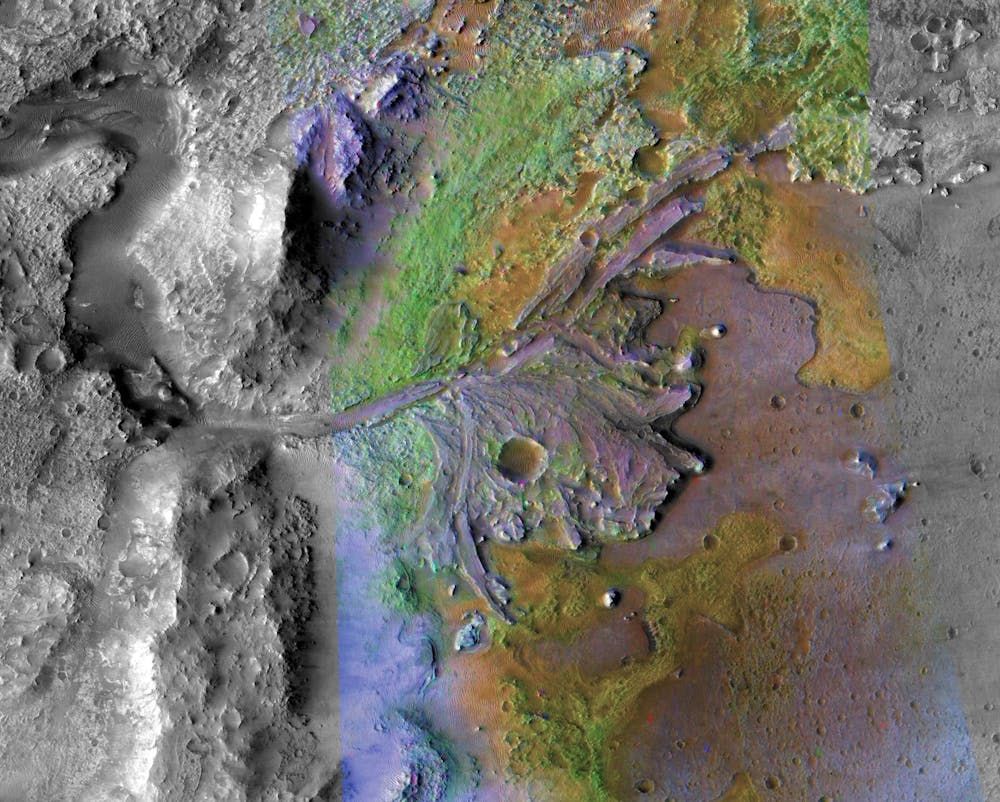
There was a three- or four-year process that involved the entire global community of Mars and planetary science researchers to figure out where to send this rover. We chose a crater called Jezero. Jezero has a beautiful river delta in it, preserved from an ancient river that flowed down into that crater and deposited sediments. This is kind of like the delta at the end of the Mississippi River in Louisiana which is depositing sediments very gently into the Gulf of Mexico.
On Earth, this shallow water is a very gentle environment where organic molecules and fossils can actually be gently buried and preserved in very fine-grained mudstones. If a Martian delta operates the same way, then it’s a great environment for preserving evidence of things that were flowing in that water that came from the ancient highlands above the crater.
There’s lots of things we don’t know, but there was liquid water there. There were heat sources – there were active volcanoes 2, 3, 4 billion years ago on Mars – and there are impact craters from asteroids and comets dumping lots of heat into the ground as well as organic molecules. It’s a very short list of places in the solar system that meet those constraints, and Jezero is one of those places. It’s one of the best places that we think to go to do this search for life.

#/media/File:PIA23499-Mars2020Rover-FirstTestDrive-20191217a.jpg)
What scientific tools is Perseverance carrying?
The Perseverance Rover looks a lot like Curiosity on the outside because it’s made from something like 90% spare parts from Curiosity – that’s how NASA could afford this mission. Curiosity has a pair of cameras – one wide angle, one telephoto.

In Perseverance, we’re sending similar cameras, but with zoom technology so we can zoom from wide angle to telephoto with both cameras – the “Z” in Mastcam-Z stands for zoom. This allows us to get great stereo images. Just like our left eye and our right eye build a three-dimensional image in our brain, the zoom cameras on Perserverance are a left eye and a right eye. With this, we can build a three-dimensional image back on Earth when we get those images.
3D images allow us to do a whole range of things scientifically. We want to understand the topography of Mars in much more detail than we’ve been able to in the past. We want to put the pieces of the delta geology story together not just with two-dimensional, spatial information, but with height as well as texture. And we want to make 3D maps of the landing site.
Our engineering and driving colleagues really need that information too. These 3D images will help them decide where to drive by helping to identify obstacles and slopes and trenches and rocks and stuff like that, allowing them to drive the rover much deeper into places than they would have been able to otherwise.
And finally, we’re going to make really cool 3D views of our landing site to share with the public, including movies and flyovers.

What else is different about this mission?
Perseverance is intended to be the first part of a robotic sample return mission from Mars. So instead of just drilling into the surface like the Curiosity Rover does, Perseverance will drill and core into the surface and cache those little cores into tubes about the size of a dry-erase marker. It will then put those tubes onto the surface for a future mission later this decade to pick up and then bring back to the Earth.
Perseverance won’t come back to the Earth, but the plan is to bring the samples that we collect back.
In the meantime, we’ll be doing all of the science that any great rover mission would do. We are going to characterize the site, explore the geology and measure the atmospheric and weather properties.
[Deep knowledge, daily. Sign up for The Conversation’s newsletter.]
How will you get those samples back to Earth?
This is where it gets a little less certain, because these are all ideas and missions in the works. NASA and the European Space Agency are collaborating on a concept to build and launch a lander that will send a little fetch rover that goes and gets the little tubes, picks them up and brings them back to the lander. Waiting on the lander would be a small rocket called a Mars Ascent Vehicle, or MAV. Once the samples are loaded into the MAV, it launches them into Mars orbit.
Then you’ve got this grapefruit- to soccer-ball-sized canister up there, and NASA and the Europeans are collaborating on an orbiter that will search for that canister, capture it and then rocket it back to the Earth, where it will land in the Utah desert. What could possibly go wrong?
If successful, that’ll be the first time we’ve done that from Mars. The scientific tools on the rovers are good, but nothing like the labs back on Earth. Bringing those samples back is going to be absolutely critical to getting the most out of the samples.
This is an updated version of an article originally published on Feb. 4. The editor’s note was updated to reflect the successful landing of the Perseverance Rover on Mars.
Jim Bell, Professor of Earth and Space Exploration, Arizona State University
This article is republished from The Conversation under a Creative Commons license. Read the original article.
- Details
- Written by: Elizabeth Larson
Clearlake City Manager Alan Flora had reported Pace’s plans to resign to the Clearlake City Council during its Thursday night meeting. Flora had been in a meeting earlier in the day in which Pace had announced his intentions to leave his post, as Lake County News has reported.
On Friday, the county of Lake released a statement from Pace, who has served as Lake County’s Public Health officer for the past 16 months.
He said the decision to resign was “a very difficult one” and his official last day in the role will likely be in mid-April, but he expects to provide support over a longer period if he’s needed.
Pace, who worked for more than 20 years in family medicine, said he’s returning to clinical practice in the coming months.
“Serving Lake County during the COVID-19 pandemic has been one of the most rewarding experiences and greatest challenges of my career. Particularly over these past 11 months, I have given all I had the capacity to give. I sought to listen to the needs of local residents, and provide safety measures and other health recommendations that best reflected the available science, knowing they would often be widely criticized,” Pace said.
Board of Supervisors Chair Bruno Sabatier said he found out early this week that Pace was planning to leave.
“Dr. Pace feels the pandemic has reached a new chapter where his skill sets aren't as necessary or needed as they were early on. Logistics and organization is what is needed currently to ensure appropriate and efficient deployment of the vaccine,” Sabatier told Lake County News.
Sabatier said that the board would discuss its next steps with regard to Pace’s resignation during its Tuesday meeting.
On Friday, Pace reported the same, noting that at that time the board will discuss its strategy to select his successor.
Under state law, California counties are required to have Public Health officers.
The news comes as Lake County this week reached 40 COVID-19 related deaths, with more than 3,000 confirmed cases, based on Lake County Public Health statistics.
Pace said his greatest sadness is leaving the relationships he’s developed in the Public Health officer role, he expressed his gratitude to the supervisors, and county administration, department heads and staff, and thanked the many people who have supported his work in Lake County.
“The team at the Health Services Department, under Denise Pomeroy’s capable leadership, is truly remarkable. I have seen people at all levels of the organization do incredible things, and that lends great hope for the future,” he said.
“While my primary responsibility has been to protect the health of Lake County’s communities, it has been truly heartbreaking to see the many types of consequences that have come for individuals and businesses in the past year,” he continued.
He said the nearly 48,000 deaths from COVD-19 in California alone, “have shook every one of us; no one can be unaffected.”
Pace also noted the other impacts of the pandemic, including children missing a full year of in-person instruction and the social barriers to educational attainment being greatly exacerbated, and the “still-mounting consequences to businesses of all sizes.”
“We also continue to count the costs associated with mental health effects of the rapid social changes of the past year, and the social isolation that has too often stemmed from “social distancing” mandates,” he said.
“Now, we stand at an inflection point in our pandemic response. The high boil of the initial crisis has transitioned toward a sustained, long-term-focused response that will require intensive partnership with the state and other organizations in our communities. Our COVID-19 vaccination effort, so key to a return to some kind of ‘normal,’ is still in the early phases, but there is hope supply and distribution will continue to ramp up in the coming months,” Pace said.
“I truly believe better days are ahead for Lake County,” Pace concluded.
Email Elizabeth Larson at
- Details
- Written by: Elizabeth Larson
Dr. Gary Pace made the announcement in a Thursday morning meeting with local leaders, Clearlake City Manager Alan Flora told Lake County News.
Flora, who was present at the Thursday meeting where Pace stated his resignation plans, reported the situation to the Clearlake City Council on Thursday night.
Flora, who called the situation “a little disappointing,” said the county will be recruiting for a new Public Health officer over the next few months, and that Pace had indicated he would be around until some point in April.
Pace, who has been Lake County’s Public Health officer for 16 months, did not respond to a Thursday evening email from Lake County News regarding his plans to leave the county’s employ.
Separately, Board of Supervisors Chair Bruno Sabatier confirmed to Lake County News on Thursday night that Pace is resigning.
Sabatier said a discussion about how the board will move forward regarding the Public Health officer position will be on the supervisors’ Tuesday agenda.
California state law requires counties to have Public Health officers to enforce local health orders and ordinances, and state regulations and statutes.
Tuesday also is the day that Pace is scheduled to give the board another COVID-19 update and discuss the work of his recently convened COVID-19 Ethics Ad Hoc Committee, which is to address vaccine equity and prioritization.
The Board of Supervisors appointed Pace, a Sonoma County resident, Public Health officer on a permanent basis in October 2019, after he had filled the position for two months on an interim basis.
Previous to his interim service in 2019, he also had been Lake County’s interim Public Health officer from late 2017 to spring of 2018 and from the summer of 2018 until fall of 2018, as well as Mendocino County’s Public Health officer, as Lake County News has reported.
At the time of his permanent appointment, Supervisor Tina Scott, then chair of the board, lauded Pace as “a truly thoughtful individual and excellent medical mind” who she said “will help us progress toward a healthier Lake County.”
Five months later, Pace was in charge of Lake County’s COVID-19 response, taking a wide variety of actions including issuing a shelter in place order for county residents and a followup order that, for a time, closed Clear Lake and other local waterways to avoid drawing visitors, and also closed lodging facilities to anyone who wasn’t in health care worker or other essential fields.
In his report to the council on Thursday night, Flora said of Pace, “Overall he’s been a good partner with the city and we’ve enjoyed working with him, and he’s always been responsive to the concerns that we’ve had. So we wish him the best.”
In related news, on Wednesday the county of Mendocino announced the appointment of Mary Alice Willeford as that county’s interim Public Health director.
Email Elizabeth Larson at