 How to resolve AdBlock issue?
News
- Details
- Written by: Lake County News reports
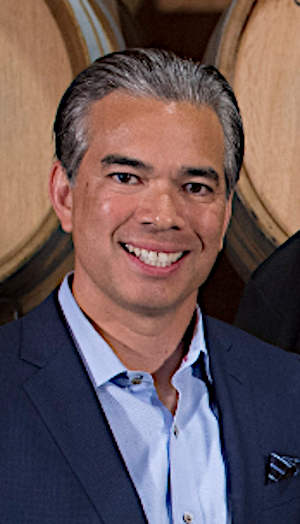
Gov. Gavin Newsom said he will submit to the State Legislature the nomination of Alameda Assemblymember Rob Bonta as the next California attorney general, filling the seat vacated by Xavier Becerra, who was recently sworn in as Secretary of the U.S. Department of Health and Human Services.
The nomination is subject to confirmation by the California State Assembly and Senate within 90 days.
Bonta will become the first Filipino American to serve as California attorney general.
The Latino Caucus of California Counties welcomed Bonta’s nomination, calling him “incredibly intelligent, tenacious and determined.
Caucus Vice President Debra Lucero said the group “could not be more excited” for Bonta’s nomination. “At a time where divide and hate are perpetuated daily in this country, California continues to be the nation’s gold standard of inclusion and diversity. As the first Filipino Attorney General, Rob Bonta will undoubtedly work to protect all Californians and ensure that there is no community left behind.”
Throughout his career in public service, Assemblymember Bonta has taken on big fights to reverse historic injustice – many affecting communities of color. He has been a leader in the fight to reform our justice system and stand up to the forces of hate.
“Rob represents what makes California great – our desire to take on righteous fights and reverse systematic injustices,” said Gov. Newsom. “Growing up with parents steeped in social justice movements, Rob has become a national leader in the fight to repair our justice system and defend the rights of every Californian. And most importantly, at this moment when so many communities are under attack for who they are and who they love, Rob has fought to strengthen hate crime laws and protect our communities from the forces of hate. He will be a phenomenal attorney general, and I can’t wait to see him get to work.”
Bonta was elected to the California State Assembly's 18th District in 2012, where he represents the cities of Oakland, Alameda and San Leandro.
He became the first Filipino American state legislator in California’s then 160-plus-year history.
Bonta thanked the governor for nominating him.
“I am humbled by the confidence you have placed in me,” said Bonta. “I became a lawyer because I saw the law as the best way to make a positive difference for the most people, and it would be an honor of a lifetime to serve as the attorney for the people of this great state. As California’s attorney general, I will work tirelessly every day to ensure that every Californian who has been wronged can find justice and that every person is treated fairly under the law.”
Gov. Newsom made the announcement at the historic International Hotel in San Francisco, a site where Asian and Pacific Islander Californians famously rallied in 1977 to save homes of elderly residents and preserve their community. The protests helped fuel a rise in AAPI political activism.
Bonta’s mother, who helped organize the protest at the International Hotel, was on hand today to witness the governor making his selection.
A child of social justice movements, Bonta’s fight for justice is hardwired in his DNA.
Bonta grew up the son of activists. His mother, Cynthia, a proud Filipina, immigrated to California in the 1960s by a three-week boat ride.
His father, Warren, who grew up in Ventura County, was committed to service and social justice from a young age. As a student, Warren Bonta joined Martin Luther King Jr.’s civil rights organizing in Alabama to pass the Voting Rights Act.
Warren and Cynthia Bonta were working as missionaries in the Philippines when their son was born, training young people to serve the needs of rural Philippine villages through service, community organizing and ministry.
Shortly after leaving the Philippines, the Bontas moved to a trailer in La Paz, in the Tehachapi Mountains outside Bakersfield and served in the headquarters for the United Farm Workers movement.
Rob Bonta’s parents worked alongside Cesar Chavez, Dolores Huerta and Philip Veracruz, organizing Latino and Filipino farmworkers for racial, economic and civil rights. His dad worked in the front office and helped set up health clinics for the farmworkers, while his mother worked at the daycare, Casa de Nana, to support farmworker organizer families.
Rob Bonta’s padrino, or godfather, Jose Gomez, was the executive assistant to Cesar Chavez.
It was in La Paz, surrounded by other UFW families, that Rob Bonta’s parents gave him his first lessons in right and wrong and taught him that everyone had an obligation to speak out when another person is treated unfairly.
Growing up, Bonta had been inspired by characters like Atticus Finch in “To Kill A Mockingbird” to pursue justice through the law, and reflecting on the stories of the farmworkers his family had known only strengthened that resolve. Throughout college and in his community work, he saw injustice and the power to right wrongs through the law, and after college, he was accepted to Yale Law School. It was also at Yale that he met his wife Mia, who he calls “his partner in life and in service.”
After law school, Bonta moved back to California and went into private practice, working pro-bono to protect Californians from exploitation and racial profiling. A few years later, Bonta decided to pursue his passion for public service and put his legal experience to work to help his community full-time.
Bonta served nine years as a deputy city attorney in the San Francisco City Attorney’s Office, representing the city and its employees, before running for local office in Alameda County.
At the State Capitol, Bonta passed major reforms that reversed long-standing injustices.
In 2012, Bonta became the first Filipino American in California history to win election to the Legislature, representing Assembly District 18 in the cities of Oakland, Alameda and San Leandro. He quickly became a statewide leader in the fights for racial, economic and environmental justice, advancing reforms that put California on the cutting edge.
In the Legislature, Bonta authored legislation that made California the first in the nation to ban for-profit prisons and immigration detention centers and, following statewide marijuana legalization, he authored the California law to automatically expunge and modify criminal records for people convicted of minor marijuana charges.
He authored major environmental justice legislation and has been a leader in the fight against climate change and to ensure every community equitably benefits from our green economy.
Bonta also led the fight to pass statewide protections for renters, ultimately resulting in the nation’s strongest protections against wrongful evictions.
He introduced a number of bills to improve hate crime statutes, support victims of hate violence, and build bridges between law enforcement and targeted communities, authored first-of-its-kind legislation requiring immigrants to be informed of their rights before speaking to ICE agents, sought to end predatory bail laws and co-authored the law that required an independent investigation when there is a death of an unarmed civilian by law enforcement.
The Bontas live in the East Bay with their three children and dog Lego.
- Details
- Written by: Lake County News reports
The documents come from government litigation against pharmaceutical companies, including opioid manufacturers and distributors related to their contributions to the deadly epidemic, as well as litigation taking place in federal court on behalf of thousands of cities and counties in the United States.
The documents in the archive include emails, memos, presentations, sales reports, budgets, audit reports, Drug Enforcement Administration briefings, meeting agendas and minutes, expert witness reports, and depositions of drug company executives.
The Opioid Industry Documents Archive leverages extraordinary expertise within UCSF and Johns Hopkins University in library science, information technology, and digital archiving. It also relies on scholarship focused on many dimensions of the opioid epidemic, ranging from the history of medicine to pharmaceutical policy to clinical care.
Key organizations at UCSF involved include the Philip R. Lee Institute for Health Policy Studies; Department of Clinical Pharmacy; Department of Humanities and Social Sciences; Department of Family and Community Medicine; and Library. From Johns Hopkins University, the project involves the Bloomberg School of Public Health’s Center for Drug Safety and Effectiveness; Welch Medical Library; Institute of the History of Medicine; and Sheridan Libraries’ Digital Research and Curation Center.
The new archive will provide free public access to anyone who is interested in investigating the activities that have led to the devastating epidemic, which has now contributed to the deaths of nearly 500,000 people.
The archive will promptly include new documents as they become available through resolution of legal action against companies that contributed to the deadly opioid crisis.
The launch coincides with the universities’ efforts to house more than 250,000 documents produced by opioid manufacturer Insys in the course of its bankruptcy proceedings following opioid litigation.
Provide information to experts, policymakers
The archive is similar to the groundbreaking Truth Tobacco Industry Documents archive at UCSF, which has fostered scientific and public health discoveries shaping tobacco policy in the U.S. and around the world. This new archive from two top research universities will deliver a wealth of information that experts can analyze to help policymakers prevent another disaster like this from happening again.
“This archive serves a vital public health purpose. Thanks to the efforts of the many parties involved, including the leaders of our communities and states nationwide, private lawyers working on their behalf, state attorneys general, and the Multidistrict Litigation Plaintiffs’ Executive Committee, the archive will shine the bright light of day on previously private documents that help explain the background of how the epidemic arose,” said G. Caleb Alexander, MD, MS, professor of Epidemiology and Medicine at the Johns Hopkins Bloomberg School of Public Health and founding director of its Center for Drug Safety and Effectiveness.
Alexander, who has provided expert testimony on behalf of plaintiffs in opioid-related litigation, added, “Johns Hopkins University and its Bloomberg School of Public Health bring remarkable expertise and scholarship directly related to the opioid crisis that are vital to this project’s success.”
Michael Steinman, MD, professor of medicine at UCSF, said, “UCSF’s ongoing work, through its Industry Documents Library, to provide public access to millions of documents about the tobacco industry has supported significant scientific and investigative research that have facilitated efforts to reduce smoking and related diseases, saving millions of lives worldwide. This new archive will similarly reflect on the opioid industry, whose actions have led to an extraordinary level of suffering and death across the country.”
The archive will be guided by an external advisory committee that will include individuals who have lost loved ones to the opioid epidemic and others who have been directly affected by it.
Transparency into opioid epidemic
According to the U.S. Centers for Disease Control and Prevention, the first wave of the rise in opioid overdose deaths in the U.S. began with increased opioid prescriptions in the 1990s, with overdose deaths involving prescription opioids increasing since at least 1999.
From 1999 to 2018, nearly 500,000 people in the U.S. died from an overdose involving opioids, including prescription and illicit opioids.
According to the White House Council of Economic Advisors’ most recent analysis, the opioid epidemic cost $696 billion in 2018 and more than $2.5 trillion between 2015 and 2018.
“This project will provide much-needed transparency into some of the origins of our recent opioid epidemic, informing policies and practices to prevent another such catastrophe,” said Joshua Sharfstein, MD, the Bloomberg School’s vice dean for Public Health Practice and Community Engagement and director of the Bloomberg American Health Initiative.
In response to the crisis across the U.S., counties, cities, states, and thousands of municipalities have filed lawsuits against various opioid manufacturers, distributors and pharmacies, and consulting firms.
The lawsuits and document discovery from the litigation – such as the recent settlement by states attorneys general with McKinsey & Co. – have exposed how opioid defendants pursued strategies to increase sales of addictive and deadly products, including producing manipulative and misleading marketing, casting doubt on the addictiveness of these products, ignoring or downplaying health risks, or otherwise overlooking signals of opioid oversupply and unsafe use.
“Public archives promote transparency and accountability,” said Kate Tasker, MLIS, UCSF Industry Documents Library Managing Archivist. “With the creation of the Opioid Industry Documents Archive, UCSF and Johns Hopkins University commit to preserving these materials – and future documents – in a centralized and full-text searchable database, to make this information freely and openly available to the public.”
The archive currently contains 3,300 documents (more than 131,000 pages) in six collections:
– Washington Post Opioid Collection;
– KHN OxyContin Collection;
– Oklahoma Opioid Litigation Documents;
– Kentucky Opioid Litigation Documents;
– National Prescription Opiate Litigation Documents;
– Insys Litigation Documents.
- Details
- Written by: Elizabeth Larson
Tuesday’s meeting saw the board once again allowing for in-person participation by the public. At the board’s first meeting in January, it had voted to move back to virtual meetings only due to a COVID-19 case surge.
But with Lake County moving out of the purple tier – the most restrictive on the state’s Blueprint for a Safer Economy – as of last week, it triggered the board’s return to its hybrid meeting format.
Supervisor Jessica Pyska participated via Zoom while the rest of the supervisors were present in the board chambers and seated on the dais, with masks and partitions in place.
Public Health Officer Dr. Gary Pace told the board that the county is continuing to see dropping case rates.
“We are doing well with the vaccine rollout,” he said, explaining that 30 percent of county residents aged 16 and older have gotten at least one dose of COVID-19 vaccine.
Sarah Marikos, Lake County’s epidemiologist, said the state’s test positivity rate has fallen to 1.7 percent, the lowest it’s been since the beginning of the pandemic. She said it’s dropped rapidly over the last few months but that change is beginning to slow.
Similarly, the rate of change in Lake County is slowing after having seen a rapid drop in recent months, Marikos said.
On Tuesday, Lake County remained in the red tier on the Blueprint for a Safer Economy, which Marikos said its case numbers indicated it would.
Giving further explanation to the vaccination numbers, as of March 21, Marikos said that 6,500 county residents over age 16, or 12 percent of the population, are partially vaccinated, while 18 percent, or 9,200, are fully vaccinated and 70 percent are not vaccinated.
That information from the California Immunization Registry doesn’t include the vaccinations conducted by the Lake County Tribal Health Consortium. With Tribal Health’s number included, Marikos said it brings Lake County’s vaccination coverage closer to 33 percent.
As for progress by age group, she said 62 percent of those aged 75 and older are vaccinated; age 65 to 74, 57 percent; age 55 to 64, 24 percent; age 45 to 54, 24 percent; age 35 to 44, 18 percent; and age 20 to 34, 16 percent.
By ethnicity, 69 percent of those vaccinated identify as white; Latino/Hispanic, 22 percent; Native American, 3 percent; multiracial, 3 percent; Black, 2 percent; Asian, 1 percent; Native Hawaiian or other Pacific Islander, less than 1 percent; and other, 3 percent. Marikos said those numbers don’t include Tribal Health’s contributions to the vaccination effort.
Regarding progress for vaccinating the lowest-performing quartiles on the Healthy Places Index, a priority for the state, Marikos said 5,149 people, or 44 percent of the population in six local zip codes – Clearlake, Clearlake Oaks, Finley, Lucerne, Nice and Upper Lake – that make up the lowest-performing quartile have been partially vaccinated.
In the next-highest quartile – which includes zip codes for Cobb, Kelseyville, Lakeport, Lower Lake, Middletown and Hidden Valley Lake – Marikos said 10,219 people, or 56 percent of the population, are partially vaccinated.
Pace told the board that vaccine inventory in the county is now quite good and that they’re seeing a decrease in demand; he was not sure if that was a function of more vaccine availability.
On Monday, Lake County returned to the use of the MyTurn vaccination scheduling app, which the state had required it to do, but still had some issues. Pace said the state has indicated that the county can open up vaccinations to residents age 50 and above but the app wasn’t allowing that.
He said both Adventist Health and Sutter Health are planning to restart vaccinating again and Public Health is sharing vaccines with them.
Pace also reported that on Tuesday Public Health was expecting the arrival of 40 people the state was sending to help staff vaccination sites.
Those staffers are supposed to help the county for up to two months, and Pace said receiving the help was “a big deal.”
“We need about that many to staff the site every day,” he said, adding that Public Health had been struggling to keep the clinics going with volunteers and other county staff.
Email Elizabeth Larson at
- Details
- Written by: Elizabeth Larson
Sen. Mike McGuire and his wife, Erika, welcomed their first child over the weekend.
Connor Michael McGuire was born at 5:16 a.m. Sunday. He weighed 8 pounds, 10 ounces.
“He’s healthy, happy and nursing like a champ,” his proud dad reported on Facebook.
McGuire said his wife was doing well, too, although they were, understandably, “a bit sleep deprived.”
In addition to the new baby, the McGuire family also includes Gertrude the pug.
McGuire, 41, has represented the Second Senate District – which includes Lake, Del Norte, Humboldt, Marin, Mendocino, Sonoma and Trinity counties – since 2014.
During that time, he’s championed Lake County through multiple disasters, in particular, fires and floods, and most recently the COVID-19 pandemic.
Email Elizabeth Larson at