 How to resolve AdBlock issue?
News
- Details
- Written by: Elizabeth Larson
The following dogs are ready for adoption or foster.

‘Bear’
“Bear” is a male American Pit Bull Terrier mix with a short brown coat.
He is dog No. 3476.
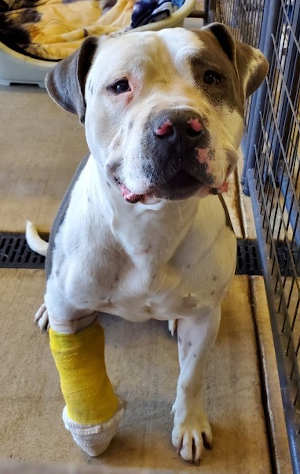
‘Dorito’
“Dorito” is a male American Staffordshire Terrier mix with a short white and gray coat.
He has been neutered.
He is dog No. 4576.

‘Dusty’
“Dusty” is a male American Pit Bull Terrier with a tan and white coat.
He is dog No. 4750.
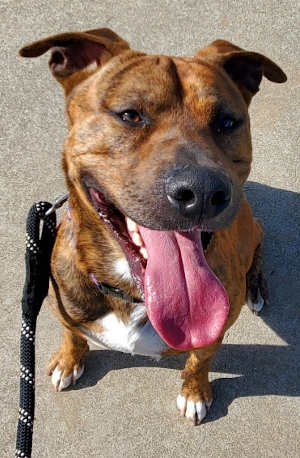
‘Hector’
“Hector” is a male American Pit Bull Terrier mix with a short brindle coat.
He is dog No. 4697.
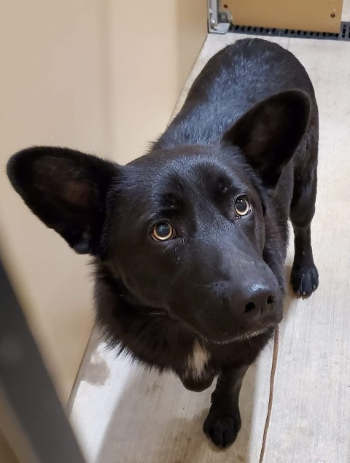
‘Inky’
“Inky” is a male German Shepherd mix with a long black coat.
He has been neutered.
He is dog No. 4324.
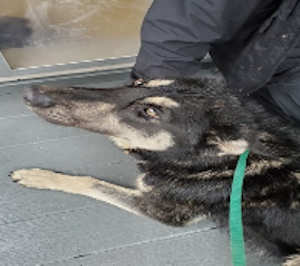
‘Juno’
“Juno” is a female German Shepherd mix with a brown and black coat.
She is dog No. 4742.
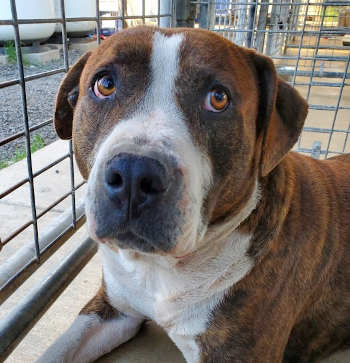
‘Lumpy’
“Lumpy” is a male American Bulldog with a white and brindle coat.
He has been neutered.
He is dog No. 4715.

‘Nandor’
“Nandor” is a male American Bulldog mix with a short gray and white coat.
He is dog No. 4725.
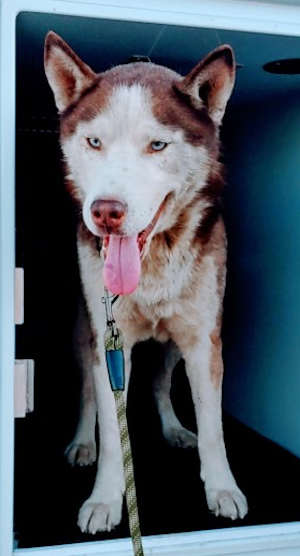
‘Ranger’
“Ranger” is a 5-year-old male husky mix with a long red and white coat.
He has been neutered.
Ranger is dog No. 4443.

‘Tia’
“Tia” is a female American Bully with a short black with white markings.
She is dog No. 4602.
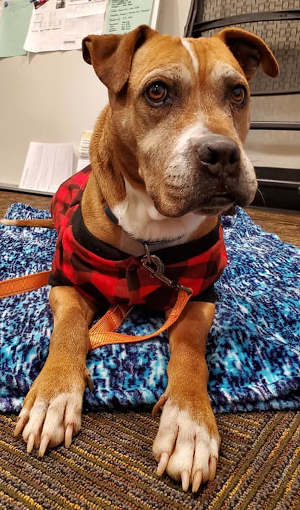
‘Toby’
“Toby” is a friendly senior male boxer mix.
He has a short tan and white coat.
He is dog No. 4389.
Call the Clearlake Animal Control shelter at 707-273-9440, or email
Visit Clearlake Animal Control on Facebook or on the city’s website.
Email Elizabeth Larson at
- Details
- Written by: James B. Wood, Indiana University School of Medicine
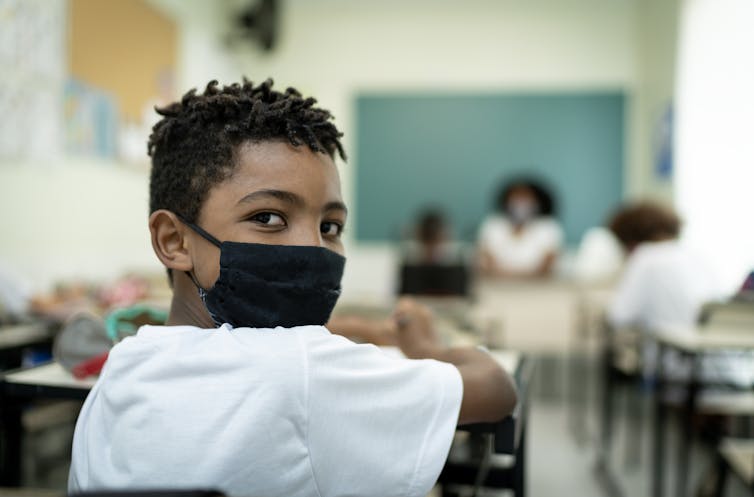
A big question among parents and teachers as more schools reopen is when their kids will be vaccinated against COVID-19. Some have wondered whether the vaccine is even necessary for children. Dr. James Wood, a pediatrician and assistant professor of pediatric infectious diseases, explains what doctors know today about the risk children face of getting and spreading the coronavirus and when vaccines might be available.
Do kids really need to get the COVID-19 vaccine?
The short answer is yes. A lot of studies have shown that COVID-19 isn’t as severe in children, particularly younger kids – but that doesn’t mean kids aren’t at risk of getting infected and potentially spreading the virus.
Children under 12 who get COVID-19 do tend to have mild illnesses or no symptoms, while teenagers seem to have responses somewhere between what adults and younger kids have experienced. The Centers for Disease Control and Prevention found that teens were about twice as likely to be diagnosed with COVID-19 as children ages 5-11.
Researchers are still trying to understand why we’re seeing these differences between older and younger kids. Behavior probably plays a part. Teenagers are more likely to engage in social or group activities, and they may or may not be wearing masks. Immune differences and biologic factors may also play a role. Non-SARS-CoV-2 coronaviruses are common in children, often resulting in upper respiratory infection. Is their frequent exposure to other coronaviruses helping protect them from severe COVID-19? That is one hypothesis. We know younger kids’ immune responses in general are different from adults, and likely play a role in protection.
It’s important to remember that while most children get only mild symptoms, they still face risks. At least 226 U.S. children with COVID-19 have died, and thousands have been hospitalized.
The key to minimizing the risk is to make sure kids eventually get vaccinated, follow social distancing recommendations and wear masks.
Are kids spreading the virus?
In a setting like a school where mask-wearing and social distancing are enforced, young kids seem to not spread the virus very much when the rules and guidelines are being followed. One CDC review found little difference in community cases in counties with elementary schools open and those with remote learning.
If precautions aren’t being taken, children infected with the coronavirus very well could spread it to adults. What isn’t clear yet is how great that risk is.
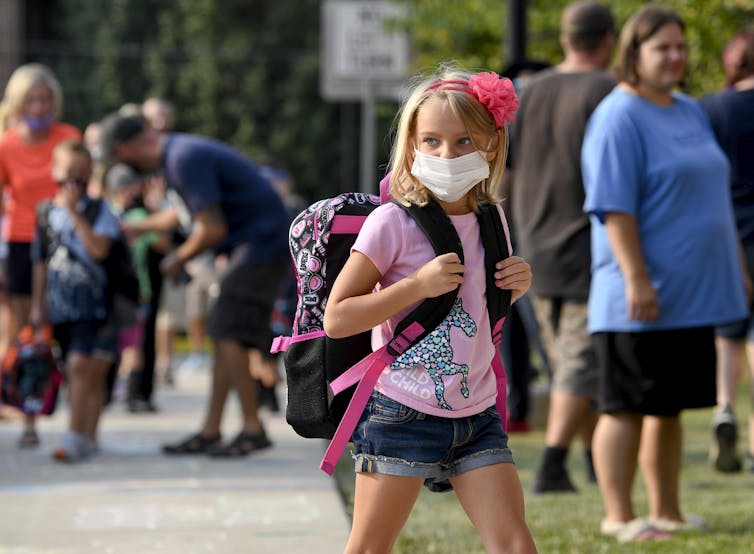
To keep schools as safe as possible, continuing schoolwide mask and social distancing policies will be important. With teenagers in particular, mask rules can’t hinge on whether the person has been vaccinated or not. Until herd immunity within the whole community is at a good level, social distancing and masking is still going to be the recommendation.
So, when can kids get vaccinated?
Right now, the Pfizer vaccine is the only one in the U.S. authorized for teenagers as young as 16. Before kids under 16 can be vaccinated, clinical trials need to be completed in thousands of young volunteers to assess the vaccines’ safety and efficacy.
Vaccine manufacturers Moderna and Pfizer both have trials underway with adolescents and expect to have data by late spring or early summer. If their vaccines are shown to be safe and effective, kids 12 and up could be vaccinated before school starts in the fall.
Realistically, young children probably won’t be eligible for the vaccine until late fall or winter at the earliest. Moderna just announced on March 16 that it has started testing the vaccine in children ages 6 months to 11 years. Pfizer hasn’t reached that stage yet, and these trials take time.
What’s different about the vaccines kids will get?
The composition of the COVID-19 vaccines for children is the same as used in adults – the difference is that children may require a different dose.
The first step in vaccine trials is to figure out the right dose. The companies want to find the lowest possible dose that is both safe and produces a target level of antibodies. For example, Moderna uses a 100-microgram dose in adults. It is testing three different doses for children under age 2 – 25, 50 and 100 micrograms – and two doses for children over age 2, at 50 and 100 micrograms.
Once the company determines the optimal dose, it will launch a placebo-controlled trial to test its effectiveness, in which some children will get a placebo and some will get the vaccine.
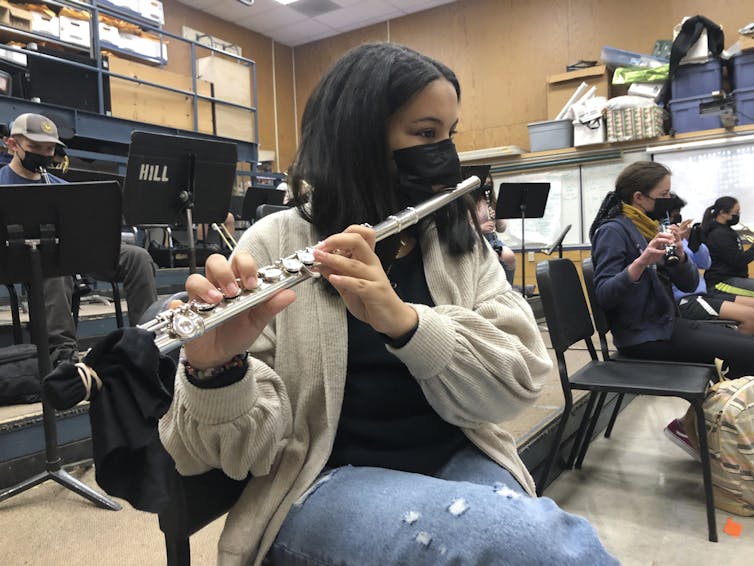
A rigorous system for pediatric vaccine trials is well established in the U.S. These trials are key to assessing the safety and efficacy of vaccines in children, which can differ from adults.
I am optimistic that a safe and effective vaccine will be available for children. Thus far, there have not been any safety signals from either the adult or adolescent studies that have been worrying to me as a pediatrician, but the studies still need to be done in children.
How can parents create safe playdates for kids?
When I talk to parents, I explain that it’s a risk-versus-benefit question. Each family has a different tolerance.
From a medical standpoint, the mental health of kids and having them play with other kids is an important part of childhood.
[Over 100,000 readers rely on The Conversation’s newsletter to understand the world. Sign up today.]
I would say that unvaccinated kids playing indoors without masks on is still not a great idea. The risk is just too high at this point. As weather warms up, I would encourage kids to play outside. Ride bikes, play and socialize – just do it in a safe manner.
We all have pandemic fatigue, including medical professionals. As the weather gets warmer, I think everyone just wants to get back to normal. The worst thing we can do, right as we start to see a light at the end, is fall backward again – because that would just make it that much longer for everyone.
James B. Wood, Assistant Professor of Clinical Pediatrics, Indiana University School of Medicine
This article is republished from The Conversation under a Creative Commons license. Read the original article.
- Details
- Written by: Tama Prokopowich
Across Lake County for the month of February, inventory was at record lows and prices were up.
This results in lower days on the market and sales prices being closer to the list price.
The active listings throughout the county for the month of February totaled 120, which is down 57.6 percent from last year.
Active listings totaled 18 in Lakeport, which is down 40 percent from last year; Kelseyville, 21, down 67.7 percent; Clearlake, 20, down 63.6 percent; and Hidden Valley Lake at low of nine listings, which is down 79.5 percent in a year-over comparison.
Prices up over last year
The median price for single family dwellings for the county is $327,000, which is up 38.9 percent from last year.
Median prices around the lake are as follows:
– Lakeport: $375,000, up 49.1 percent from last year;
– Kelseyville: $320,000, up 8.5 percent;
– Clearlake: $212,000, up 3.2 percent; and
– Hidden Valley Lake: $352,000, up 18.4 percent.
The median days on market for the county is 36 days.
In Lakeport, homes are staying on the market for a median 31 days; Kelseyville, 55; Clearlake, 14; and Hidden Valley Lake, 25.
Throughout the county the sales to list price was 99 percent. This means homes are selling very close to list price.
Lakeport homes are selling on average for 98.4 percent of list price; Kelseyville, 98.6 percent; Clearlake, 100 percent; and Hidden Valley Lake at 99.5 percent.
The bottom line is, if you are thinking of selling based on these stats, it couldn’t be a better time.
Tama Prokopowich of Century 21 North Bay Alliance is president-elect of the Lake County Association of Realtors.
- Details
- Written by: Lake County News reports
The event will take place from 10 a.m. to 2 p.m. Saturday, April 24, as a drive-thru dropoff on the west side of the police station at 2025 S. Main St.
Physical distancing and face masks will be required. Persons arriving at the event will be directed to remain in their vehicles until receiving instructions by police staff.
During the event, the police department will accept all over-the-counter or prescription medication in pill, tablet or capsule form including schedule II-V controlled and non-controlled substances.
Pills need to be emptied out of their containers and placed in a plastic bag – not paper, so they can easily see the contents to make sure there is nothing in the bag they can't take.
The police department said it will collect vape pens or other e-cigarette devices from individual consumers only after the batteries are removed from the devices. The agency stressed that it will not be responsible for removing the batteries from the devices.
Items that will not be accepted are illegal drugs, needles, inhalers and aerosol cans.
Since the Lakeport Police Department started participating with the prescription Take Back Program in January of 2019, it has collected 634 pounds of prescription drugs, many of which were dangerous narcotics including opioids.
“This protects our community by keeping these drugs from being diverted to illegal use and keeps it out of our environment and water,” the department reported.