How to resolve AdBlock issue?
News
- Details
- Written by: Elizabeth Larson
Dogs available for adoption this week include mixes of Belgian Malinois, boxer, German Shepherd and pit bull.
Dogs that are adopted from Lake County Animal Care and Control are either neutered or spayed, microchipped and, if old enough, given a rabies shot and county license before being released to their new owner. License fees do not apply to residents of the cities of Lakeport or Clearlake.
The following dogs at the Lake County Animal Care and Control shelter have been cleared for adoption (additional dogs on the animal control Web site not listed are still “on hold”).
Call Lake County Animal Care and Control at 707-263-0278 or visit the shelter online at http://www.co.lake.ca.us/Government/Directory/Animal_Care_And_Control.htm for information on visiting or adopting.
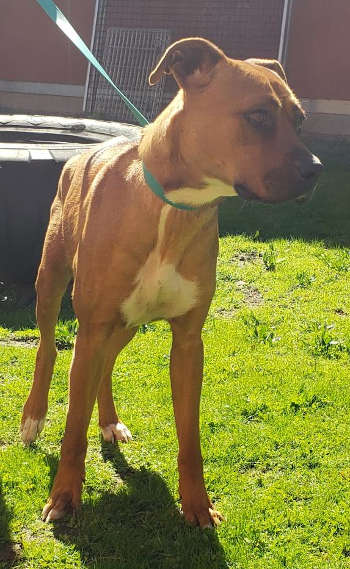
‘Sophie’
“Sophie” is a female boxer-pit bull mix with a short red coat.
She is in kennel No. 18, ID No. 14356.
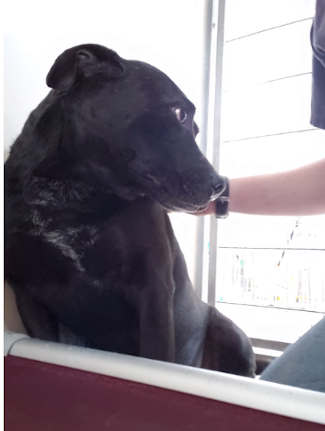
‘Rocky’
“Rocky” is a male pit bull terrier with a short black coat.
He has been neutered.
He’s in kennel No. 19, ID No. 14506.

Male Belgian Malinois
This young male Belgian Malinois has a short black and tan coat.
He is in kennel No. 20, ID No. 14521.
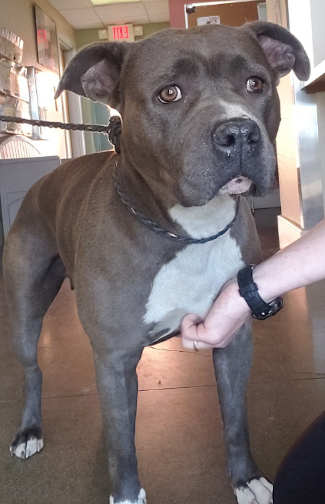
Female pit bull terrier
This female pit bull terrier has a short blue and white coat.
She is in kennel No. 22, ID No. 14486.

‘Ella’
“Ella” is a female German Shepherd with a medium-length tan coat.
She is in kennel No. 25, ID No. 14510.

‘Brutus’
“Brutus” is a male pit bull terrier with a short gray and white coat.
He is in kennel No. 28, ID No. 14507.

Male pit bull terrier
This male pit bull terrier has a short brown and tan coat.
He is in kennel No. 32, ID No. 14509.
Email Elizabeth Larson at
- Details
- Written by: Lake County News reports
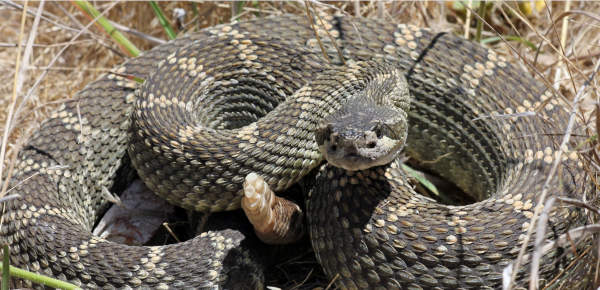
Spring is here, and with it comes warm weather and hot, dry conditions in many areas of California that create an ideal atmosphere for rattlesnakes.
Human encounters with snakes are more likely as these elusive animals become more active this time of year. Most native snakes are harmless.
The California Department of Fish and Wildlife recommends avoiding the rattlesnake, a venomous species, and knowing what to do in the rare event of a bite.
Rattlesnakes may be found in diverse habitats, from coastal to desert, and are widespread in California. They can be attracted to areas around homes with heavy brush or vegetation, under woodpiles where rodents may hide, as well as well-manicured landscapes to bask in the sun.
Rattlesnakes are not generally aggressive, unless provoked or threatened, and will likely retreat if given space.
“Snakes are often misunderstood. They provide significant ecosystem benefits, such as rodent control, and are an important part of California’s unique biodiversity,” said CDFW’s Conflict Programs Coordinator Vicky Monroe. “Snakes prefer to avoid people or pets and are not naturally aggressive. We encourage people to be rattlesnake safe, take time to learn about their local wildlife and take appropriate safety precautions when enjoying the outdoors.”
Most bites occur when a rattlesnake is handled or accidentally brushed against by someone walking or climbing.
Most bites occur between the months of April and October when snakes and humans are most active outdoors.
On occasion, rattlesnake bites have caused severe injury – even death.
The California Poison Control System notes that the chances of being bitten are small compared to the risk of other environmental injuries. The potential of encountering a rattlesnake should not deter anyone from venturing outdoors.
CDFW provides tips on its website to “Be Rattlesnake Safe,” how to safely coexist with native snakes and what to do (or not do) in the event of a snake bite. Other resources can be found on the California Herps Living with Rattlesnakes webpage.
In 2019, CDFW confirmed the state’s first case of Snake Fungal Disease, or SFD, a newly emerging disease in snakes. SFD can cause significant mortalities in species of conservation concern. There is no evidence that SFD is transmittable from snakes to humans.
You may assist CDFW’s efforts by reporting sightings of snakes with skin sores or unusual behavior. Do not attempt to touch or handle.
This supermoon has a twist – expect flooding, but a lunar cycle is masking effects of sea level rise
- Details
- Written by: Brian McNoldy, University of Miami
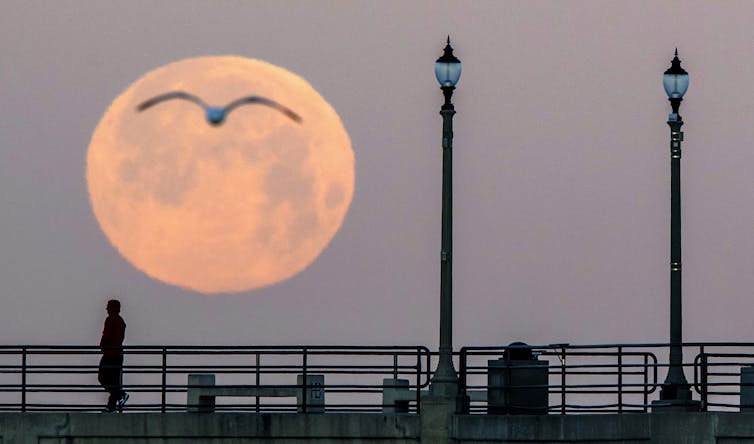
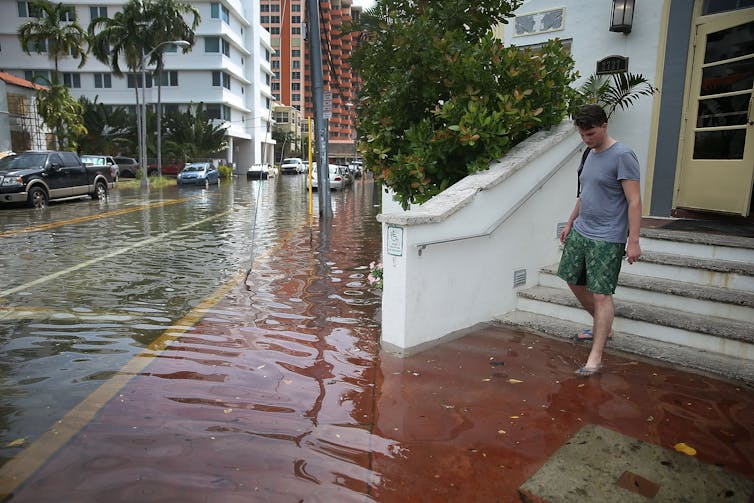
Another “super full moon” is coming May 26, 2021, and coastal cities like Miami know that means one thing: a heightened risk of tidal flooding.
Exceptionally high tides are common when the moon is closest to the Earth, known as perigee, and when it’s either full or new. In the case of what’s informally known as a super full moon, it’s both full and at perigee.
But something else is going on with the way the moon orbits the Earth that people should be aware of. It’s called the lunar nodal cycle, and it’s presently hiding a looming risk that can’t be ignored.
Right now, we’re in the phase of an 18.6-year lunar cycle that lessens the moon’s influence on the oceans. The result can make it seem like the coastal flooding risk has leveled off, and that can make sea level rise less obvious.
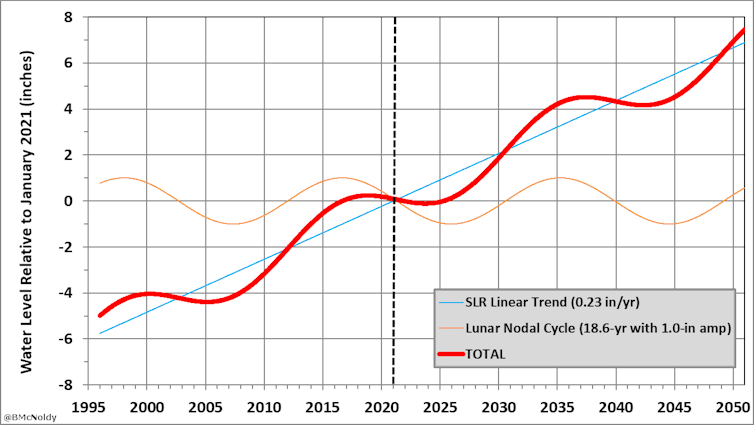
But communities shouldn’t get complacent. Global sea level is still rising with the warming planet, and that 18.6-year cycle will soon be working against us.
I am an atmospheric scientist at the University of Miami’s Rosenstiel School of Marine and Atmospheric Science who keeps a close eye on sea level rise in Miami. Here’s what you need to know.
What the moon has to do with coastal flooding
The moon’s gravitational pull is the dominant reason we have tides on Earth. More specifically, Earth rotating beneath the moon once per day and the moon orbiting around Earth once per month are the big reasons that the ocean is constantly sloshing around.
In the simplest terms, the moon’s gravitational pull creates a bulge in the ocean water that is closest to it. There’s a similar bulge on the opposite side of the planet due to inertia of the water. As Earth rotates through these bulges, high tides appear in each coastal area every 12 hours and 25 minutes. Some tides are higher than others, depending on geography.
The sun plays a role too: Earth’s rotation, as well as its elliptic orbit around the sun, generates tides that vary throughout the day and the year. But that impact is less than half of what the moon contributes.
This gravitational tug-of-war on our water was discovered nearly 450 years ago, though it’s been happening for nearly four billion years. In short, the moon has very strong control over how we experience sea level. It doesn’t affect sea level rise, but it can hide or exaggerate it.
So, what is the lunar nodal cycle?
To begin, we need to think about orbits.
Earth orbits the sun in a certain plane – it’s called the ecliptic plane. Let’s imagine that plane being level for simplicity. Now picture the moon orbiting Earth. That orbit also lies on a plane, but it’s slightly tilted, about 5 degrees relative to the ecliptic plane.
That means that the moon’s orbital plane intersects Earth’s orbital plane at two points, called nodes.
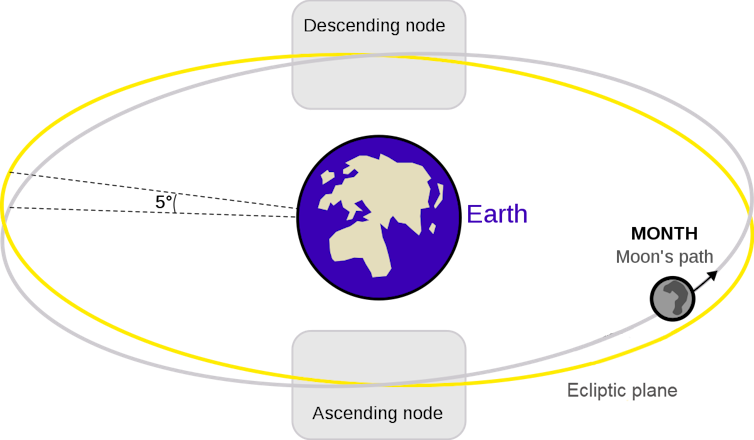

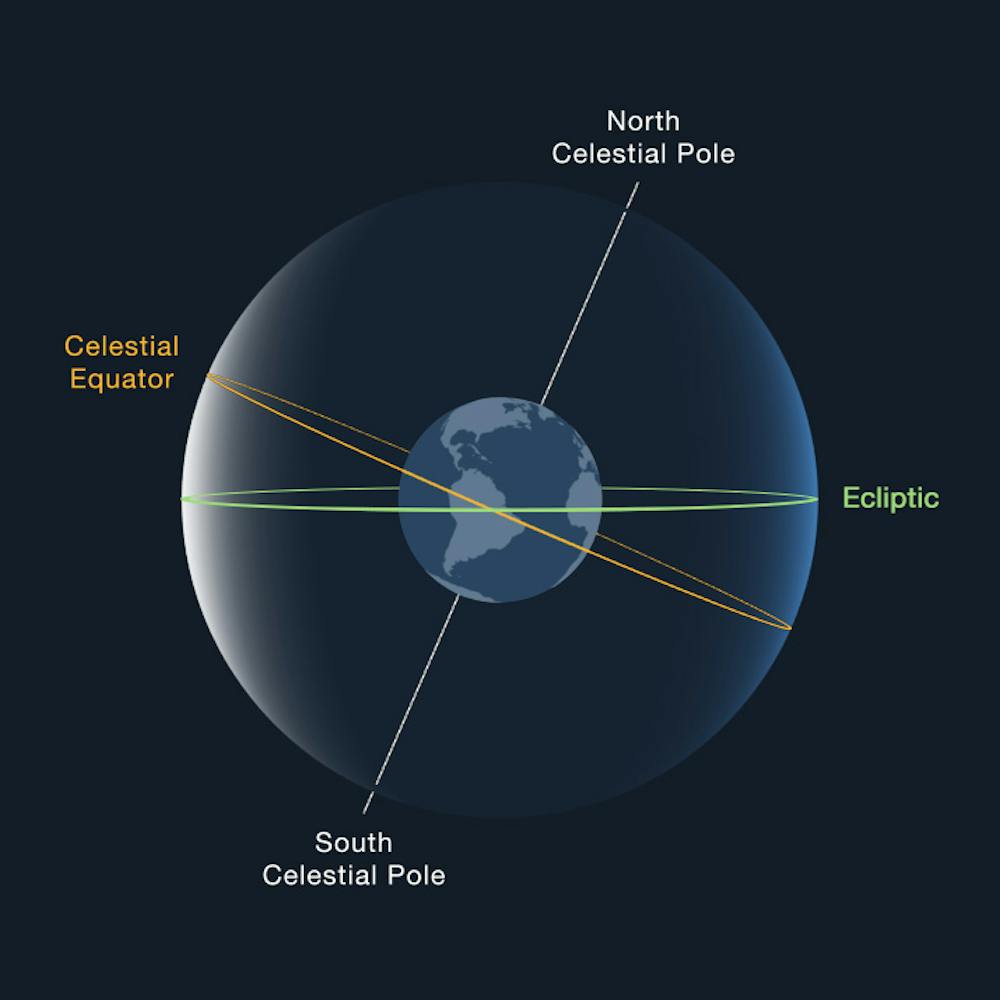

The moon’s orbital plane precesses, or wobbles, to a maximum and minimum of +/- 5 degrees over a period of about 18.6 years. This natural cycle of orbits is called the lunar nodal cycle. When the lunar plane is more closely aligned with the plane of Earth’s equator, tides on Earth are exaggerated. Conversely, when the lunar plane tilts further away from the equatorial plane, tides on Earth are muted, relatively.
The lunar nodal cycle was first formally documented in 1728 but has been known to keen astronomical observers for thousands of years.
What effect does that have on sea level?
The effect of the nodal cycle is gradual – it’s not anything that people would notice unless they pay ridiculously close attention to the precise movement of the moon and the tides for decades.
But when it comes to predictions of tides, dozens of astronomical factors are accounted for, including the lunar nodal cycle.
It’s worth being aware of this influence, and even taking advantage of it. During the most rapid downward phase of the lunar nodal cycle – like we’re in right now – we have a bit of a reprieve in the observed rate of sea level rise, all other things being equal.
[You need to understand the coronavirus pandemic, and we can help. Read The Conversation’s newsletter.]
These are the years to implement infrastructure plans to protect coastal areas against sea level rise.
Once we reach the bottom of the cycle around 2025 and start the upward phase, the lunar nodal cycle begins to contribute more and more to the perceived rate of sea level rise. During those years, the rate of sea level rise is effectively doubled in places like Miami. The impact varies from place to place since the rate of sea level rise and the details of the lunar nodal cycle’s contribution vary.
Like the “supermoon” in late April, the one on May 26 is a perigean full moon. Even with the lunar nodal cycle in its current phase, cities like Miami should expect some coastal flooding.

This story is part of Oceans 21
Our series on the global ocean opened with five in depth profiles. Look out for new articles on the state of our oceans in the lead up to the UN’s next climate conference, COP26. The series is brought to you by The Conversation’s international network.
Brian McNoldy, Senior Research Associate, University of Miami
This article is republished from The Conversation under a Creative Commons license. Read the original article.
- Details
- Written by: Lake County News reports
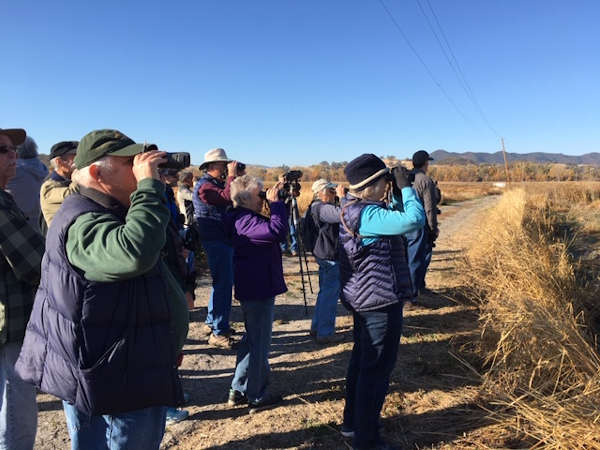
LAKE COUNTY, Calif. – Redbud Audubon Society is celebrating 47 years of conservation work in Lake County.
The month of April was declared Bird Appreciation Month in Lake County by the Board of Supervisors.
The Redbud Audubon Society requested the proclamation to celebrate Earth Day on April 22 and to recognize the value of birds to the residents, visitors and businesses in Lake County.
The Redbud Audubon Society is the oldest conservation organization in the county. It was founded in 1974 by Evelyn Thompson of Kelseyville and a group of friends who recognized the need for an active environmental group here.
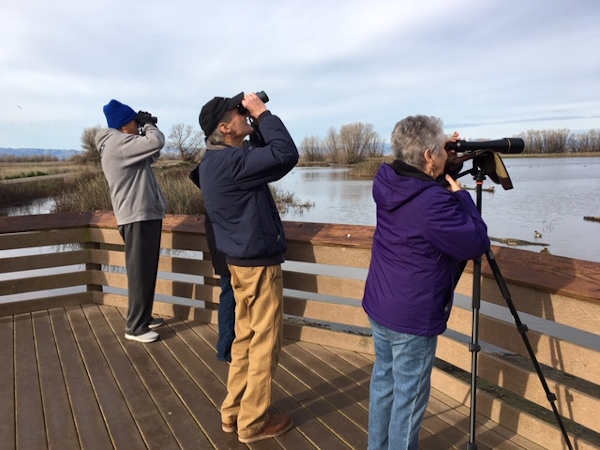
Redbud Audubon is a chapter of the National Audubon Society and functions under its umbrella which includes filing activities and fiscal reports every year, shared memberships and following the lead of the national organization’s bird conservation recommendations.
As a nationally recognized Audubon chapter, Redbud must conduct activities each year, provide educational birding field trips, and follow the standards and best practices for a nonprofit organization. Redbud is a charitable 501c(3) nonprofit and all donations are tax-deductible.
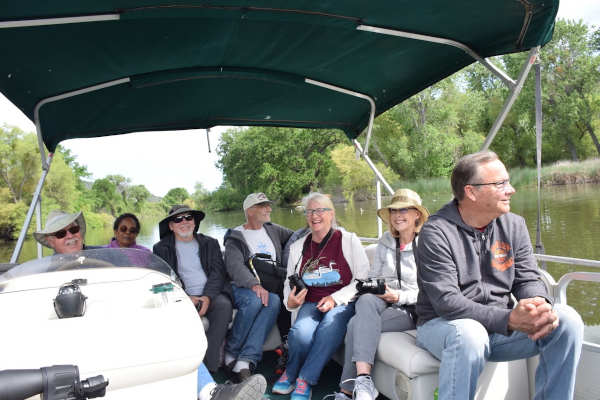
As part of its obligations to the community and as part of its mission, Redbud holds monthly speaker meetings from September through April, and conducts field trips, both in and out of the county, concluding with its annual Heron Days boat tours on Clear Lake at the end of April and beginning of May.
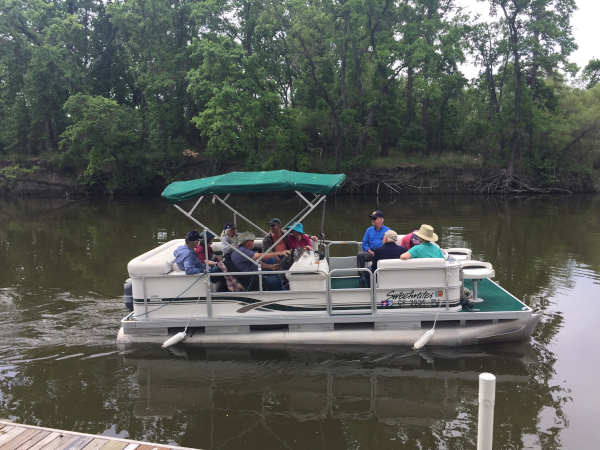
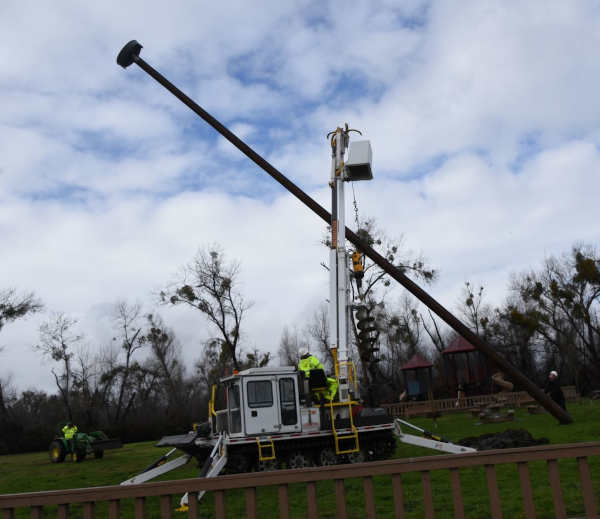
The chapter holds a yearly Christmas Bird Count and reports the data collected from that event to the National organization. Redbud also facilitates the placement of Osprey nesting poles.
Over the last year, Redbud programs and field trips have been curtailed because of COVID-19.
The chapter was able to conduct its annual Christmas Bird Count and offered five Zoom speaker programs and is hoping to start in-person meetings in the fall, along with resuming monthly field trips and Heron Days in the spring of 2022.
Other activities carried out by Redbud Audubon include commenting on proposed development projects that require California Environmental Quality Act review, providing educational materials to local schools and creating and monitoring a Blue Bird Trail of nest boxes.
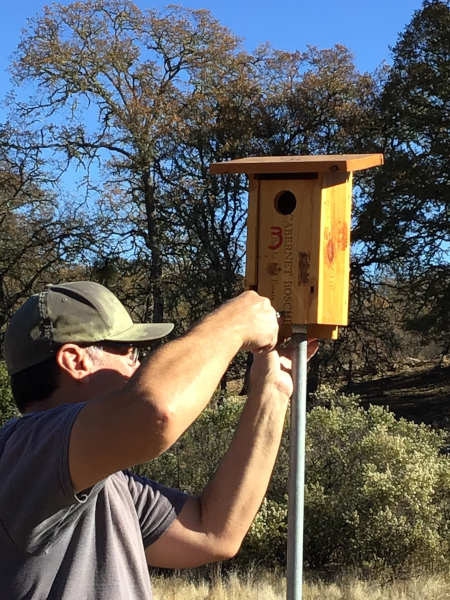
The chapter is also available to answer questions about birds and wildlife, maintains a website, and is active on Facebook.
If you would like to join in the efforts of Redbud Audubon Society you can either volunteer, become a member, or do both.
For information on how to become a member, go to the chapter’s website at www.redbudaudubon.org.
For other inquiries email the chapter at