 How to resolve AdBlock issue?
News
- Details
- Written by: Esther Oertel

Who would’ve thought that chili — that blessed concoction that warms the tummy and the heart — would be controversial? But it is.
To bean or not to bean? Are tomatoes acceptable or anathema? Just when and how did it originate? These questions cause consternation and disagreement among many chili aficionados.
But why in the world am I even talking about chili in the middle of a heat wave? Well, because — dads!
Since today is Father’s Day, let’s dig into a figurative bowl of what is, at least to me, one of the most quintessential dad foods on the planet.
I also happen to be one of those people who thinks a good bowl of chili is comforting, soulful and delicious whatever the season.
Some people are chili purists, while others like to experiment. Purists believe chili shouldn’t include much beyond meat, hot chili peppers and spices. (Certainly not beans!)
Those who experiment add all kinds of things to their chili, including some that don’t sound too unusual (molasses, beer or coffee, for example), and some that I find truly unexpected (like peanuts, artichoke hearts or bamboo shoots).
A sharp divide exists in the chili world related to beans, specifically whether or not adding them prevents it from being true chili.
Texas journalist and chili cook Wick Fowler said (rather strongly), “If you know beans about chili, you know that chili has no beans!”
This isn’t surprising coming from a Texan, where in 1977 the legislature voted to make beanless chili, known there as a “bowl of red,” its official state dish. The proclamation states that “the only real ‘bowl of red’ is that prepared by Texans.”
The International Chili Society, which oversees roughly 150 chili cook-offs each year, allows the use of beans and other nontraditional ingredients in one of the four categories of chili in its contests. Hopefully, that settles it: chili can be called chili even with beans.
Personally, I like beans in my chili. In fact, if not for beans, I couldn’t make chili at all since I favor vegetarian versions over meat-laden ones.
Kassie Koontz, who along with husband Reuben own and operate the Koontz Mercantile in Middletown, agrees that beans belong in chili, at least in her version.
Koontz is the current champion of the annual Middletown Senior Center chili cook-off. She also won second- and third-place ribbons in the two contests before that.
She favors a mixture of three types of beans: black, red and white. The white beans cook down and dissolve like a thickening agent, while the other two, both heartier, remain intact, adding texture.
Koontz recommends using the freshest meat possible as it makes a big difference in flavor. She grinds her own from the steer they buy each year through the high school’s FFA chapter.
Koontz shared another secret: a surprise ingredient in her chili is brown sugar. Its sweetness balances the heat that comes from chili peppers and it also serves to thicken the chili. Between the white beans and brown sugar, there’s no need to use a thickener like masa flour.
Though they grow chili peppers in their home garden, they’re not ready by the time the cook-off rolls around in May, so she uses a combination of whatever chili peppers look good at the local market, Hardester’s.
The pandemic prevented the senior center from holding its annual contest this year and in 2020. We all hope it will be back in 2022.
Beef is the meat of choice for most chilis, but as you might expect, chili has been made with almost everything — venison, buffalo, pork, chicken, spicy sausage, goat, and even skunk, jack rabbit and rattlesnake.
Outback chili in Australia is made with kangaroo, in Norway chili is made with reindeer and in Alaska, moose is a favorite.
As to the history of chili, no one is entirely sure exactly how and in what form it originated. There are almost a dozen theories that attempt to answer that question. I’ll throw out a few just for fun and you can determine what you think is most plausible.
Some say the dish hails from Mexico. In a 1568 publication, “The True History of the Conquest of New Spain,” author Bernal Diaz del Castillo describes an Aztec stew made from the remains of sacrificed conquistadors, hot peppers, wild tomatoes and oregano.
Personally, I really hope chili didn’t originate that way.
Another tale tells of a 17th century Spanish nun, Sister Mary of Agreda, whose spirit, the story goes, was transported from Spain to Texas by angels while her body was in a trance. While there, she preached to the Jumano Indians and in exchange was given a recipe for a chili-like stew made from venison or antelope, onions, tomatoes and chili peppers. The recipe, which Sister Mary recorded, was the first written version of chili con carne.
Others cite the lavenderas, or washerwomen, who served the Mexican Army in the 1830s and 40s, as the first chili makers.
Chuckwagon cooks on the cattle trails of the American West are also credited. These “cooks on the go” pounded dried beef, fat and chili peppers into easily transportable bricks which were reconstituted in boiling water over campfires for hardworking cowboys.
Or, as another story goes, was chili brought to Texas in the early 18th century by transplants from the Canary Islands?
In this scenario, King Philip V of Spain hoped to thwart French settlers from expanding westward from Louisiana by sending Canary Islanders to settle in San Antonio. Apparently, Canarians added copious amounts of cumin, a key ingredient in today’s chilis, to their slow-simmered stews which also included meat, chili peppers, garlic and wild onions.
It’s possible that the spicy stews of the Canary Islanders influenced the 19th century “Chili Queens,” who famously sold chili in San Antonio’s Military Square to passersby for decades, eventually leading to the wide popularity of the dish.
To complicate the question of chili’s origin even more, Rudy Valdez, a member of Colorado’s Ute Indian tribe, won the world chili championship in 1976 with a native recipe he claimed dated back 2,000 years.
Perhaps versions of chili developed in a variety of places at different times.
However it happened, one thing’s for certain — chili continues to evolve and grow thanks to cooks who experiment with techniques and ingredients. At the same time, purists ensure that their time-honored version of chili remains the same.
I’m pleased to offer a recipe today from the Six Sigma Ranch and Winery of Lower Lake, which, in addition to wine, sells ranch-raised meats at their tasting room.
Ranch manager Christian Ahlmann tells me they currently have grass-fed ground beef available for making this chili.
The recipe was developed by their tasting room manager, Mr. T, who also happens to be a great chef.
Six Sigma Chili from Mr. T’s Kitchen
Ingredients
1 pound Six Sigma ground beef
1 pound Six Sigma bacon ends
5 cloves garlic, finely chopped
1 large onion, diced, and divided in half
2 ounces tomato paste
1 can crushed tomatoes
2 cans red kidney beans
2 cans cannellini beans
Salt and pepper to taste
Cumin, chili powder, cayenne pepper and paprika to taste
Optional toppings: cheese, jalapeño and sour cream
Directions
Brown chopped bacon ends in a large pot. Remove when crispy.
Remove half of the bacon fat and cook ground beef in the remaining fat.
Move the browned beef to one side of the pan and add garlic and half of the onion to the other side. (Reserve the other half of the onion for topping.) Cook until the onion is translucent.
Add browned bacon, tomato paste and crushed tomatoes to the pot. Stir until incorporated.
Drain beans and add to pot. Bring to a boil and reduce heat.
Season to taste. (Don’t be shy with spices — remember, salt is your best friend until it’s your worst enemy.)
Cook for one hour.
Spoon into bowls, add toppings and enjoy!
Recipe by Tameron Detrinidad (Mr. T).
Esther Oertel is a writer and passionate home cook from a family of chefs. She grew up in a restaurant, where she began creating recipes from a young age. She’s taught culinary classes in a variety of venues in Lake County and previously wrote “The Veggie Girl” column for Lake County News. Most recently she’s taught culinary classes at Sur La Table in Santa Rosa. She lives in Middletown, California.
- Details
- Written by: Kevin Shafer, Brigham Young University
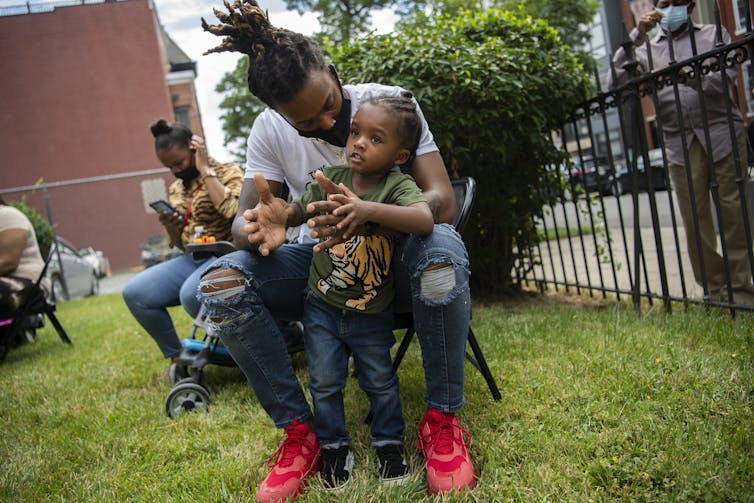
When my oldest son, now nearly 13, was born in July of 2008, I thought I could easily balance my career and my desire to be far more engaged at home than my father and his generation were. I was wrong.
Almost immediately, I noticed how social policies, schools and health care systems all make it difficult for dads to be highly involved and engaged at home. Contradictory expectations about work and family life abound.
As a fatherhood researcher with four kids of my own, I am convinced that fathers are transformative figures for children, families and communities.
But a man’s mere presence, paycheck and willingness to punish misbehaving children is not nearly enough. Many of the benefits of fathering for children come from dads being nurturing, loving and engaged in all aspects of parenting.
When fathers are caregivers – when they provide emotional support and act affectionately toward their kids – the effects go well beyond growth, development, good health and solid grades. My research shows the benefits also include having children who value emotional intelligence, gender equality and healthy competition.
Nurturing versus stoic dads
Thinking about the broad impact fathers have, I analyzed how fathering affects different social values – such as a belief in gender equality – in May 2021.
Surveying more than 2,500 American fathers 18 and older, I found that involved fathering has a long-lasting impact on the personal principles and cultural perspectives of children.
In my survey, the differences between the least nurturing and the most nurturing fathers are stark.
Surveyed fathers who reported that their own fathers were highly withdrawn tended to be hypercompetitive, emotionally stoic and unappreciative of women’s contributions outside the home.
In contrast, surveyed fathers who said they had highly nurturing dads were much more likely to achieve their goals in a healthy manner, be more emotionally open and believe in equitable partnership.
How dads instill values
Several decades ago, many fathers were unwilling or unable to provide their children with emotional support or physical care. Instead, they focused on bread-winning, children’s discipline and simply being present in the home.
These traditional norms left many contemporary fathers ill-equipped for modern parenthood. Contemporary social norms set broad expectations for fathers: rule enforcement and economically supporting the family while also providing for children’s physical and emotional needs.
Broad paternal involvement with kids is important because dads have unique effects on kids. Children’s values, beliefs, emotional expression and social development are strongly associated with fathering. Kids are better regulated emotionally, more resilient and more open-minded when their fathers are involved in their education and socialization.
Boys, for better and worse, often mirror the habits, interests and values of their own fathers.
My colleague Scott Easton and I found that how one’s father behaves is especially powerful given that cultural, social and institutional norms about fatherhood are much weaker than they are for motherhood.
For example, mothers have traditionally been known for showing children affection and providing emotional support. Social expectations for these behaviors are not well defined among fathers. As a result, dads have a much larger impact on their sons’ fathering behaviors than moms have on their daughters’ mothering behaviors.
Positively, this means that a sizable portion of men replicate the best attributes of their own fathers – such as being loving and affectionate. Negatively, this means bad behaviors – such as extremely harsh discipline – are sometimes repeated across generations.
However, some men compensate for their own fathers’ poor or nonexistent parenting by forming their own ideas and values about parenting.
Benefits for all
The findings from my survey build on decades of research on the benefits of positive fathering. And these advantages aren’t just for children.
Mothers and other parenting partners are healthier and happier when fathers are highly engaged with their kids. Men who care for and support their kids benefit too – with improved self-image, life purpose and relationships. And communities gain increased trust and safety from the relationships built when fathers positively participate in their kids’ activities, schooling and social networks.
Valuing supportive fathers
How can American society ensure that healthy competition, emotional openness and respect for women are widespread among future generations of men and fathers? Part of the answer is by valuing loving, supportive fathering.
That means more support for fathers in workplaces, public policy and institutions. Paid family leave, flexible work arrangements and integration of fathers into prenatal and postnatal care are all effective ways to encourage fathers to be more involved.
Many fathers increased their share of child care tasks during the COVID-19 pandemic. These shifts may become permanent, ultimately changing cultural values around parenting and gender roles.
Society also needs to provide clearer messaging to fathers about what does and does not work in parenting. For example, my colleagues and I have shown that men who believe they should be nurturing parents are more involved in their children’s lives. Fathers who demonstrate healthy masculine traits like assertiveness and strong goal orientation also tend to be sensitive, engaged parents.
Thus, there are many routes to transformative fathering. And this is not simply behavior for biological fathers. Fatherhood is broadly defined, and people often look to nonbiological father figures like relatives, stepfathers, foster fathers and unrelated mentors.
All men who support and care for children have a critical role to play in instilling positive social values in future generations.
[Over 106,000 readers rely on The Conversation’s newsletter to understand the world. Sign up today.]
Kevin Shafer, Associate Professor of Sociology and Director of Canadian Studies, Brigham Young University
This article is republished from The Conversation under a Creative Commons license. Read the original article.
- Details
- Written by: Lake County News reports
The Census information shows that children living without fathers is down to 18.3 million. Or 25.1% of U.S. children, the lowest number of children in father-absent homes since 1993.
National Fatherhood Initiative, or NFI, a nonprofit organization working to end father absence, credits this significant reduction to the tireless work of individuals and organizations at the local, state, and federal level to proactively engage fathers in their children’s lives.
According to the U.S. Census Bureau, when children are raised with a father or father-figure in the home, they are:
— Four times less likely to live in poverty;
— Two times less likely to drop out of high school;
— Seven times less likely to become pregnant before the age of 18;
— Less likely to commit crime and be sentenced to prison.
Based on the data reported in the 2020 CPS, there are 2.3 million fewer children in father-absent homes since that figure peaked at 20.6 million in 2012.
The proportion of U.S. children living without a father in the home has also reached its lowest point since 1990.
This positive data comes as fathers across the U.S. have seen improvements in their relationships with their children during the COVID-19 pandemic.
According to a study conducted by the Making Caring Common Project at the Harvard Graduate School of Education, 68% of dads report that the pandemic has brought them closer to their children — with large numbers of fathers reporting having more meaningful conversations with their children, getting to know their children better and sharing more with their children about their own lives.
Involved dads have a positive impact on their children’s overall emotional and social well-being.
Over the past 27 years, NFI has worked to equip human services agencies to serve fathers through the delivery of nearly 10 million skill-building resources and the development of responsible fatherhood programs used by thousands of human services agencies across the country.
These agencies have pivoted dramatically during the pandemic to offer services and peer-to-peer engagement on virtual platforms, reaching fathers they wouldn’t have been able to with in-person facilitation and helping them be the best dads they can be.
“Our nation’s children depend on us to give them the best environment in which to grow into healthy adults,” said Christopher Brown, president, National Fatherhood Initiative. “The latest data from CPS, coupled with new trends toward stronger father-child relationships during the pandemic, are cause for celebration. Despite these shifts, the number of children living in father-absent homes is still unacceptably high. We will continue to build capacity in communities to address father absence through evidence-based programming, training, and resources.”
The annual CPS gathers data from a sample of U.S. households to identify estimates of America’s families and their living arrangements.
Data are categorized by how many children under the age of 18 live in different households: two-parent (married and not married), mother-only, father-only, or neither-parent (i.e. other relatives or no relatives).
NFI uses this data to track father absence in the intervening years between the decennial census.
The 2020 U.S. Census, with data to be released throughout 2021, will reveal greater trends related to father absence through data gathered from all U.S. households.
In 2019, NFI released the eighth edition of Father Facts. This publication is the most comprehensive source of data on father absence at the national and state levels and on the consequences of father absence and benefits of father involvement for children.
- Details
- Written by: Elizabeth Larson
Dogs available for adoption this week include mixes of American bulldog, Chihuahua, German shepherd, hound, husky, Labrador retriever, McNab, pit bull, Rottweiler and shepherd.
Dogs that are adopted from Lake County Animal Care and Control are either neutered or spayed, microchipped and, if old enough, given a rabies shot and county license before being released to their new owner. License fees do not apply to residents of the cities of Lakeport or Clearlake.
The following dogs at the Lake County Animal Care and Control shelter have been cleared for adoption (additional dogs on the animal control website not listed are still “on hold”).
Call Lake County Animal Care and Control at 707-263-0278 or visit the shelter online at http://www.co.lake.ca.us/Government/Directory/Animal_Care_And_Control.htm for information on visiting or adopting.

‘Marshmallow’
“Marshmallow” is a 4-year-old female Havanese.
She is in kennel No. 7, ID No. LCAC-A-1042.

Male American bulldog
This 8-year-old male American bulldog has a short black and white coat.
He is in kennel No. 8, ID No. LCAC-A-958.

Female Rottweiler-shepherd
This 2-year-old female Rottweiler-shepherd mix has a medium-length black and red coat.
She is in kennel No. 12, ID No. LCAC-A-791.

‘Ren’
“Ren” is a 2-year-old male McNab-sheepdog mix with a short brindle and white coat.
He has been neutered.
He is in kennel No. 15, ID No. LCAC-A-785.

Male pit bull
This young male American pit bull has a short brown coat.
He is in kennel No. 18, ID No. LCAC-A-1028.

‘Boo’
“Boo” is a 10-year-old male Chihuahua-dachshund mix.
He is in kennel No. 19, ID No. LCAC-A-1039.

Female German shepherd
This 1-year-old female German shepherd has a medium-length black and tan coat.
She is in kennel No. 23, ID No. LCAC-A-975.

‘Koko’
“Koko” is a 10-year-old male Chihuahua mix with a short tan coat.
He is in kennel No. 24, ID No. LCAC-A-897.

Rottweiler-pit bull mix
This 1-year-old female Rottweiler-pit bull mix has a short black coat.
She has been spayed.
She is in kennel No. 27, ID No. LCAC-A-731.

‘Brutus’
“Brutus” is a 5-year-old male pit bull terrier with a short gray and white coat.
He is in kennel No. 28, ID No. LCAC-A-670.

‘Seager’
“Seager” is a young male pit bull-hound mix.
He is in kennel No. 30, ID No. LCAC-A-1011.

“Apollo” is a 2-year-old male husky mix with a medium-length red and white coat and blue eyes.
He is in kennel No. 31, ID No. LCAC-A-783.

Male husky
This 2-year-old male husky has a medium-length red and white coat.
He is in kennel No. 32, ID No. LCAC-A-1024.

Female pit bull terrier puppy
This female pit bull terrier puppy has a short black coat with white markings.
She is in kennel No. 33b, ID No. LCAC-A-853.

Male pit bull terrier puppy
This male pit bull terrier puppy has a short black coat with white markings.
He is in kennel No. 33d, ID No. LCAC-A-855.
Email Elizabeth Larson at