 How to resolve AdBlock issue?
News
- Details
- Written by: Elizabeth Larson
The following cats at the shelter have been cleared for adoption.
Call Lake County Animal Care and Control at 707-263-0278 or visit the shelter online at http://www.co.lake.ca.us/Government/Directory/Animal_Care_And_Control.htm for information on visiting or adopting.

‘Taz’
“Taz” is a male domestic shorthair kitten with a yellow tabby coat.
He is in cat room kennel No. 66, ID No. a798.

Male Siamese mix
This young male Siamese mix has a short white coat.
He is in cat room kennel No. 15, ID No. LCAC-A-960.

Female Siamese mix
This female Siamese mix has a short coat and blue eyes.
She is 2 years old.
She is in cat room kennel No. 68, ID No. LCAC-A-963.

Male domestic shorthair kitten
This male yellow tabby kitten has a short coat.
He is in cat room kennel No. 70b, ID No. LCAC-A-987.

Male domestic shorthair kitten
This male yellow tabby kitten has a short coat.
He is in cat room kennel No. 70d, ID No. LCAC-A-989.

Male domestic shorthair
This male domestic shorthair has a gray and white coat.
He is 1-year-old and weighs nearly 6 pounds.
He is in cat room kennel No. 120, ID No. LCAC-A-874.
Email Elizabeth Larson at
- Details
- Written by: ESTHER OERTEL
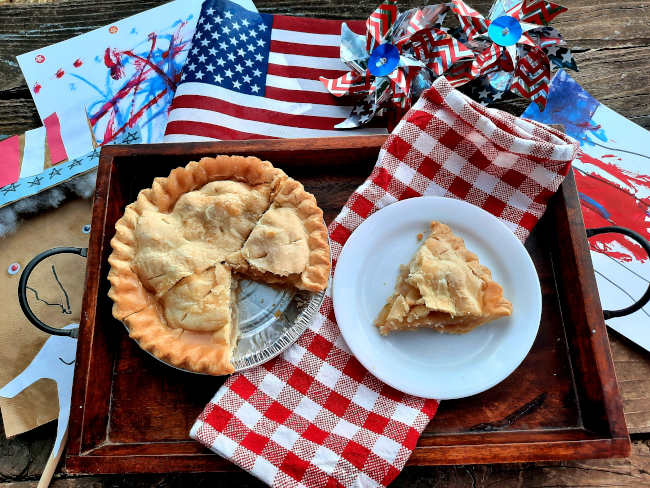
By the time the Declaration of Independence was signed on July 4, 1776, we’d been working on our independence from Great Britain for at least three years. This began with dumping tea into Boston Harbor as a protest against steep taxation of the beloved brew.
The following year, in 1774, the newly formed Continental Congress began meeting to discuss what to do about British imposition of inequitable laws. The result, the birth of a new nation, was made official when the Declaration of Independence was signed two years later.
A war had to be fought to make this a reality. For eight long years, the sheer grit and determination of an untrained Continental Army – with some help from the French — eventually overcame the elite fighting force that was the British military.
Two hundred and 45 years later, we still celebrate this victory — and the pre-victory declaration — with aplomb. As we should.
To enhance your festivities, however the Fourth is observed by you, I offer a bit of trivia about the holiday, including some obscure tidbits with which you can impress your friends and family if you so desire.
In addition, some Fourth of July food history is presented. We may think that barbecuing on this holiday is relatively new but think again — it’s been happening on the Fourth longer than we may imagine.
Today’s recipes are variations on refreshing and thirst-quenching lemonade, a must for summer and any Fourth of July celebration. A traditional version is included –— among the best I’ve tasted — as well as some revved up fancy ones just for fun. Enjoy!
Fourth of July trivia
July 2, 1776 could just have easily been designated our nation’s birthday. It was then that the Continental Congress voted to declare independence from British rule; however, the Declaration of Independence wasn’t finalized until two days later, making July 4, 1776 the official date on the document.
John Adams, who later became our second President, favored July 2 as our designated Independence Day. He so vehemently opposed July 4 that he refused to attend future Independence Day celebrations.
Or Independence Day could’ve been Aug. 2, the date that the document was finally signed.
The “pursuit of happiness” as famously recorded in the preamble, wasn’t the wording in the original draft. Thomas Jefferson initially wrote “pursuit of property,” but Benjamin Franklin convinced him to make the change since he considered property too narrow a definition.
While Thomas Jefferson is considered the Declaration’s author, the document was written by a five-man committee also consisting of Franklin, Adams, Roger Sherman and Robert Livingston. To be fair, Jefferson was the one officially responsible for drafting the formal statement, however, he wasn’t recognized as its principal author until the 1790s.
One of Jefferson’s early drafts condemned the slave trade. Though he owned more than 200 slaves in 1776, he called it a “cruel war against human nature” and condemned King George III for “creating and sustaining” it.
The first official Independence Day celebration was held the following year, July 4, 1777.
The tradition of Fourth of July fireworks began in 1777 at this first celebration. In addition to the fireworks, bells were rung and thirteen cannons were fired, one round for each state of the union.
Massachusetts was the first to declare the Fourth of July a state holiday, which it did in 1781, several months before the key American victory in Yorktown.
Button Gwinnett is considered the most obscure signer of the document. He passed away a year later, making his signature the rarest and therefore the most valuable, despite his relative lack of future accomplishment.
And finally, a woman’s signature appears on some copies of the Declaration of Independence. Though she’s not an official signer, Mary Katharine Goddard, a well-known patriot and one of the nation’s first woman publishers and postmasters, was commissioned by Congress to print copies of the document. For an unknown reason, she added her name below the original signers.
Fourth of July food history
If you want to get really authentic with your Fourth of July celebration, you could dine on what those in George Washington’s era ate. Things like turtle soup, pickled eel, boiled pigeon or Indian pudding could grace your plate.
Or you could eat your way through the original thirteen colonies by serving a dish that represents each one. Modern choices could include Virginia ham, Philly cheese steak or Massachusetts lobster rolls (you get the idea) or, with a bit of research, historical dishes can be presented.
As to beverages, it’s said that colonists on average consumed the equivalent of seven shots of alcohol each day (in forms such as beer, hard cider, rum or brandy).
It’s no wonder that Ben Franklin collected more than 200 euphemisms for drunkenness, from “addled” to “out of the way.” (My favorite is “halfway to Concord.”)
Drinks had interesting names like Rattle-Skull (a concoction of porter, rum or brandy, lime juice, and brown sugar syrup) and Stonewall (rum with just enough cider to take the edge off).
Other amusing monikers for colonial quaffs include Bogus, Blackstrap, Bombo, Mimbo, Whistle Belly, Syllabub, Sling, Toddy and Flip.
Since upwards of 74 million Americans will break out their backyard grills on Independence Day, chances are many of us will indulge in something from the barbecue. This tradition took hold in the U. S. in the early 1800s and has been part of Fourth of July celebrations since.
Virginia colonists had long been pit roasting the pigs abundant in the American south, a tradition most likely imported from the West Indies; however, grilled meat gained widespread popularity as a Fourth of July staple when political leaders staged Independence Day rallies and used massive barbecues to draw large crowds.
July has been declared National Hot Dog Month, and for good reason — it’s estimated that 150 million hot dogs will be consumed on Fourth of July alone.
Sausages have been around for a long time — they were mentioned in Homer’s Odyssey, after all — but the hot dog as we know it likely evolved from the German frankfurter brought to America by immigrants. In 1893 the hot dog became standard fare at many baseball parks across the country, leading to its prominent place in American food culture.
Lemonade, the star of today’s recipes and a popular potable on the Fourth of July, has origins deep in Medieval Egypt. There a sweet and tangy lemon drink, qatarmizat, was a common offering. A related beverage, Kashkab, was a frothy mixture of fermented barley, mint, a meadow flower called rue, black pepper and citron leaf, which provided lemony tang.
True lemonade, at least as we know it to be, made its debut in Paris in the summer of 1630 as an effervescent medley of sparkling water, lemon juice and honey. Vendors sold it on the streets from tanks strapped to their backs.
Limonade, as it was known in France, became popular throughout Europe, but especially so in Paris. Some say this beverage, which was full of immune-boosting vitamin C, helped Parisians stave off the second bubonic plague pandemic. Perhaps this gives us good reason to indulge in it these days.
Happy Fourth!
Sparkling Lemonade
This is a delightfully refreshing twist on a traditional summer favorite!
8 ounce bottle lemon juice concentrate
1 cup sugar
Club soda
Mix lemon juice concentrate and sugar together. Heat until sugar is dissolved but mixture is not thickened. Cool and store the mixture in the fridge. Mix with club soda just before serving, either in individual glasses or in a pitcher. The ratio is one-third lemon syrup to two-thirds club soda. (This can be adjusted to your liking).
Raspberry Lemonade Slushie
Juice of two lemons
2 cups raspberries, fresh or frozen
½ cup sugar
2 cups ice cubes
Puree all ingredients in a blender until smooth and icy.
Minty Lemonade with Kiwi
Juice of two large lemons
½ cup sugar
5 or 6 kiwis, peeled and pulverized in blender or food processor
4 quarts water
3 or 4 sprigs fresh mint, muddled (i.e., smashed into small pieces)
Kiwi slices and mint to garnish
Blend all ingredients in an extra large pitcher or punch bowl. Garnish as desired.
Red, White and Blue Sparkling Lemonade
2 tablespoons strawberry syrup*
1 tablespoon blue raspberry syrup*
½ cup sparkling water
1 cup lemonade
Ice
Fill a tall glass with ice.
Pour strawberry syrup into glass to form a red layer.
Pour lemonade very gently into the glass over the back of a spoon for the white layer.
Mix the blue raspberry syrup with the sparkling water in a separate container with a pour spout, like a measuring cup, and cascade very gently into the glass over the back of a spoon to make the blue layer.
*Recipe adapted from the Torani syrup website.
Esther Oertel is a writer and passionate home cook from a family of chefs. She grew up in a restaurant, where she began creating recipes from a young age. She’s taught culinary classes in a variety of venues in Lake County and previously wrote “The Veggie Girl” column for Lake County News. Most recently she’s taught culinary classes at Sur La Table in Santa Rosa. She lives in Middletown, California.
- Details
- Written by: Woody Holton, University of South Carolina
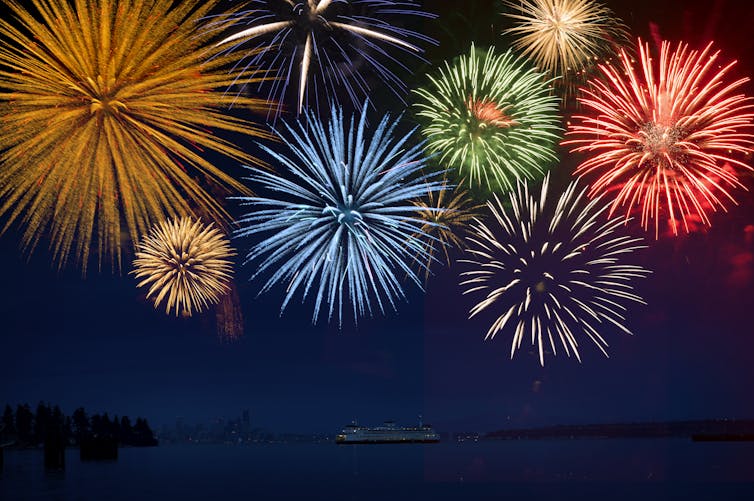
Editor’s note: Americans may think they know a lot about the Declaration of Independence, but many of those ideas are elitist and wrong, as historian Woody Holton explains.
His forthcoming book “Liberty is Sweet: The Hidden History of the American Revolution” shows how independence and the Revolutionary War were influenced by women, Indigenous and enslaved people, religious dissenters and other once-overlooked Americans.
In celebration of the United States’ 245th birthday, Holton offers six surprising facts about the nation’s founding document – including that it failed to achieve its most immediate goal and that its meaning has changed from the founding to today.
Ordinary Americans played a big role
The Declaration of Independence was written by wealthy white men, but the impetus for independence came from ordinary Americans. Historian Pauline Maier discovered that by July 2, 1776, when the Continental Congress voted to separate from Britain, 90 provincial and local bodies – conventions, town meetings and even grand juries – had already issued their own declarations or instructed Congress to.
In Maryland, county conventions demanded that the provincial convention tell Maryland’s congressmen to support independence. Pennsylvania assemblymen required their congressional delegates to oppose independence – until Philadelphians gathered outside the State House, later named Independence Hall, and threatened to overthrow the legislature, which then dropped this instruction.

American independence is due in part to African Americans
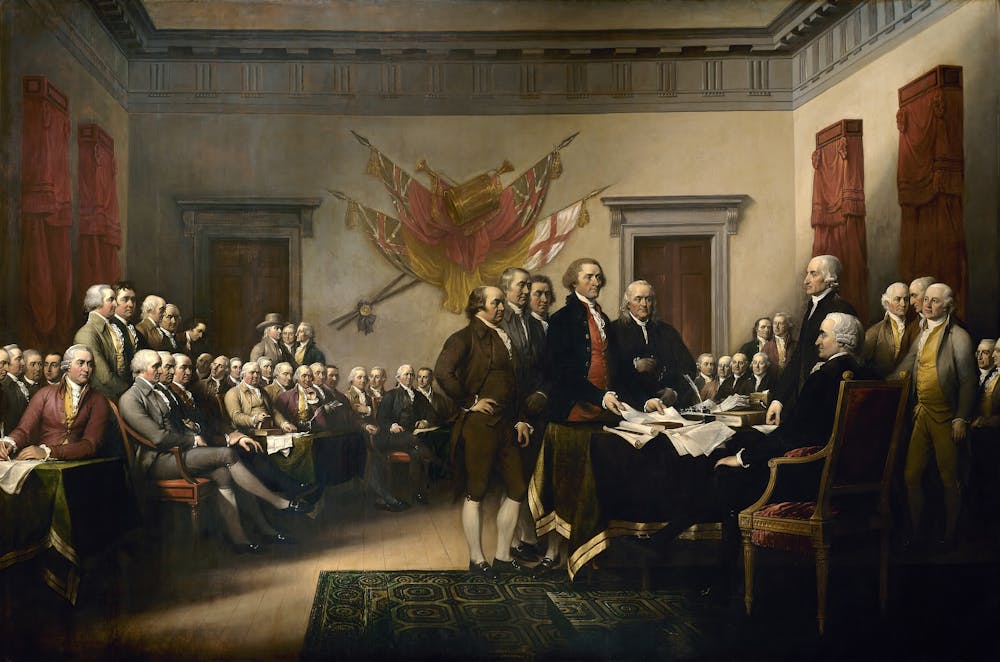
Like the U.S. Constitution, the final version of the Declaration never uses the word “slave.” But African Americans loomed large in the first draft, written by Thomas Jefferson.
In that early draft, Jefferson’s single biggest grievance was that the mother country had first foisted enslaved Africans on white Americans and then attempted to incite them against their patriot owners. In an objection to which he gave 168 words – three times as many as any other complaint – Jefferson said George III had encouraged enslaved Americans “to purchase that liberty of which he has deprived them, by murdering the people upon whom he also obtruded them.”
Numerous other white Southerners joined Jefferson in venting their rage at the mother country for, as one put it, “pointing a dagger to their Throats, thru the hands of their Slaves.”
Britain really had forged an informal alliance with African Americans – but it was the slaves who initiated it. In November 1774, James Madison became the first white American to report that slaves were plotting to take advantage of divisions between the colonies and the mother country to rebel and obtain their own freedom. Initially the British turned down African Americans’ offer to fight for their king, but the slaves kept coming, and on November 15, 1775, Lord Dunmore, the last British governor of Virginia, finally published an emancipation proclamation. It freed all rebel- (patriot-) owned slaves who could reach his lines and would fight to suppress the patriot rebellion.
The Second Continental Congress was talking about Dunmore and other British officials when it claimed, in the final draft of the Declaration, that George III had “excited domestic insurrection amongst us.” That brief euphemism was all that remained of Jefferson’s 168-word diatribe against the British for sending Africans to America and then inciting them to kill their owners. But no one missed its meaning.
,_by_John_Trumbull.jpg)
The complaints weren’t actually about the king
Britain’s king is the subject of 33 verbs in a declaration that never once says “Parliament.” But nine of Congress’ most pressing grievances actually were about parliamentary statutes. And even British officials like those who cracked down on Colonial smuggling worked not for George III but for his Cabinet, which was in effect a creature of Parliament.
By targeting only the king – who played a purely symbolic role in the Declaration of Independence, akin to modern America’s Uncle Sam – Congress reinforced its novel argument that Americans did not need to cut ties to Parliament, since they had never had any.
The Declaration of Independence does not actually denounce monarchy
As Julian P. Boyd, the founding editor of “The Papers of Thomas Jefferson,” pointed out, the Declaration of Independence “bore no necessary antagonism to the idea of kingship in general.”
Indeed, several members of Congress, including John Dickinson of Pennsylvania, openly admired limited monarchy. Their beef was not with all kings and queens but with King George III – and him only as the front man for Parliament.
The Declaration of Independence fell short of its most pressing purpose
In June 1776, delegates who supported independence suggested that if Congress declared it soon, France might immediately accept its invitation to an alliance. Then the French Navy could start intercepting British supply ships bound for America that very summer.
But in reality it took French King Louis XVI a long 18 months to agree to a formal alliance, and the first French ships and soldiers did not enter the war until June 1778.
Abolitionists and feminists shifted the Declaration of Independence’s focus to human rights

In keeping with the Declaration of Independence’s largely diplomatic purpose, hardly any of its white contemporaries quoted its now-famous phrases about equality and rights. Instead, as the literary scholar Eric Slauter discovered, they spotlighted its clauses justifying one nation or state in breaking up with another.
But before the year 1776 was out, as Slauter also notes, Lemuel Haynes, a free African American soldier serving in the Continental Army, had drafted an essay called “Liberty Further Extended.” He opened by quoting Jefferson’s truisms “that all men are created equal” and “endowed by their Creator with certain unalienable Rights.”
By highlighting these claims, Haynes began the process of shifting the focus and meaning of the Declaration of Independence from Congress’ ordinance of secession to a universal declaration of human rights. That effort was later carried forward by other abolitionists, Black and white, by women’s rights activists and by other seekers of social justice, including Abraham Lincoln.
In time, abolitionists and feminists transformed Congress’ failed bid for an immediate French alliance into arguably the most consequential freedom document ever composed.
[The Conversation’s Politics + Society editors pick need-to-know stories. Sign up for Politics Weekly.]
Woody Holton, Professor of History, University of South Carolina
This article is republished from The Conversation under a Creative Commons license. Read the original article.
- Details
- Written by: Philip Higuera, The University of Montana; Alexander L. Metcalf, The University of Montana; Dave McWethy, Montana State University, and Jennifer Balch, University of Colorado Boulder
The heat wave hitting the northwestern U.S. and Canada has been shattering records, with temperatures 30 degrees Fahrenheit or more above normal. With drought already gripping the West, the intense heat has helped suck even more moisture from millions of acres of forests and grasslands, bringing dead vegetation in many regions to record-dry levels and elevating the fire danger to its highest categories.
With this combination of extreme drought, heat and dry vegetation, all it takes is a spark to ignite a wildfire.
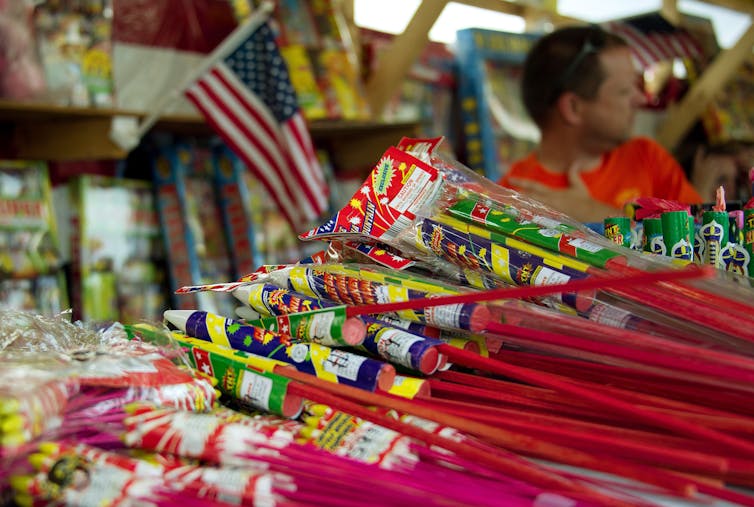
That’s why over 150 fire scientists, including us, along with fire officials across the West, are urging people to skip the fireworks this Fourth of July and to avoid other activities that could start a blaze.
Humans start the most wildfires on July Fourth
For decades, one of the most striking and predictable patterns of human behavior in the western U.S. has been people accidentally starting fires on the Fourth of July. From 1992 to 2015, more than 7,000 wildfires started in the U.S. on July 4 – the most wildfires ignited on any day during the year. And most of these are near homes.
With this year’s tinder-dry grasslands and parched forests, sparks from anything – a cigarette, a campfire, a power line, even a mower blade hitting a rock – could ignite a wildfire, with deadly consequences.
Year-round, humans extend the fire season by igniting fires when and where lightning is rare. And it is these very fires that pose the greatest threat to lives and homes: Over 95% of the wildfires that threatened homes in recent decades were started by people. Farther from human development – beyond the “wildland-urban interface” – the majority of area burned by wildfires in the West is still due to lightning.
Whether ignited by people or lightning, human-caused climate change is making fires easier to start and grow larger due to increasingly warm, dry conditions. The western U.S. saw these consequences during 2020’s record fire season – and the 2021 fire season has the ingredients to be just as devastating.
Here’s how to stay safe
We’ve spent years studying the causes and impacts of wildfires across North America and around the globe, and working with managers and citizens to envision how best to adapt to our increasingly flammable world. We’ve outlined strategies to manage flammable landscapes and thought carefully about how communities can become more resilient to wildfires.
When asked “What can we do?” many of our suggestions require long-term investments and political will. But there are things you can do right now to make a difference and potentially save lives.
Around your home, move flammable materials like dried leaves and needles, gas and propane containers and firewood away from all structures. Clean out your gutters. If you tow a trailer, make sure the chains don’t hang so low that they could hit the pavement and cause a spark. If you have to mow a lawn, do it in the cooler, wetter morning hours to prevent accidental sparks from igniting fires in dry grass. Don’t drop cigarette butts on the ground.
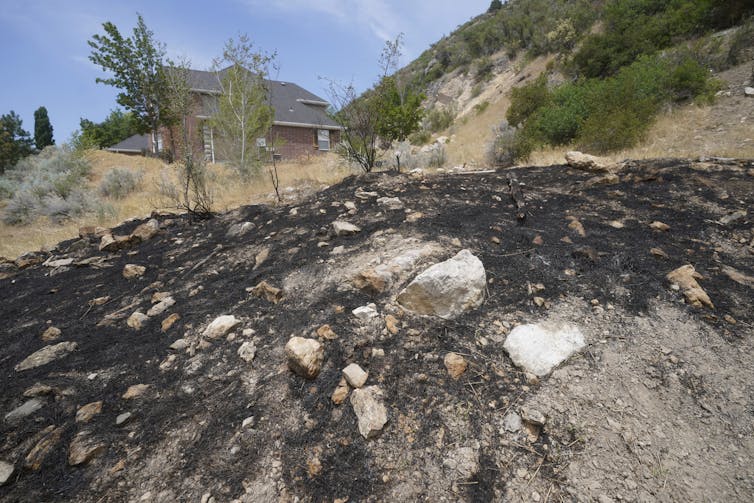
This Fourth of July, skip the fireworks and campfires – instead, catch a laser light show, make s’mores in the microwave and celebrate by keeping summer skies smoke-free for as long as possible.
Many communities are banning personal and public fireworks and voluntarily canceling fireworks displays because of wildfire concerns.
Adapting to increasingly uncharted territory
The fingerprints of human-caused climate change are all over the current drought, the recent heat waves, and what could become another record-setting fire season. Research highlights how human-caused climate change increases the frequency and magnitude of extreme events, including drought, wildfire activity and even individual extreme fire seasons.
Adapting to longer, more intense fire seasons will require reconsidering some traditions and activities. As you celebrate this Fourth of July, stay safe and help out the firefighters, your neighbors and yourself by preventing accidental wildfires.
This article was updated July 1, 2021, with more scientists joining.
[Understand new developments in science, health and technology, each week. Subscribe to The Conversation’s science newsletter.]
Philip Higuera, Professor of Fire Ecology and Paleoecology, The University of Montana; Alexander L. Metcalf, Associate Professor of Human Dimensions of Natural Resources, The University of Montana; Dave McWethy, Associate professor of Earth Sciences, Montana State University, and Jennifer Balch, Associate Professor of Geography and Director, Earth Lab, University of Colorado Boulder
This article is republished from The Conversation under a Creative Commons license. Read the original article.