 How to resolve AdBlock issue?
News
- Details
- Written by: Lake County News reports
SB 98 has been one of the most critical bills focused on First Amendment protections moving forward in any state legislature.
The new law’s provisions will extend crucial protections to members of the press as they enter and report on events protected by the First Amendment.
Freedom of the press is foundational to the United States. It strengthens the nation’s democracy by providing transparency, keeping a check on government and informing citizens’ everyday decisions.
But McGuire — whose district includes Lake County — said this freedom is under assault here in the United States.
“There’s no doubt about it, California now has some of the toughest protections in place for journalists compared to any other state in America. We have seen a surge in egregious acts of violence and obstruction made against members of the press across the country and right here at home in the Golden State,” McGuire said. “This law will provide critical protections for the press as they attend and report on First Amendment events like protests, marches, rallies, and demonstrations.”
He added, “California is leading the way to ensure the freedom of the press and the First Amendment are protected and held to the highest standard. I’m grateful to Gov. Newsom for his signature and to the hundreds of journalists and Guild Members who mobilized across the state along with the California News Publishers Association and the California Broadcasters Association, to ensure SB 98’s success.”
In 2020, over 600 reported acts of aggression against reporters took place. Rubber bullets, tear gas, and even detainment cannot become the new norm for journalists.
McGuire said California must lead the way to protect and uphold the right of the press and the First Amendment.
Currently, California law allows reporters and other members of the press to enter natural disaster emergency areas behind closed law enforcement lines — such as areas impacted by fires, floods, and earthquakes — in order to gather information to relay to the public. They can also go out during curfews at times of natural disasters.
Until now, these critical protections, however, did not expressly extend to First Amendment events such as protests and marches.
SB 98 prohibits law enforcement officers from obstructing, detaining, assaulting, or otherwise preventing the press from fulfilling their constitutional mandate in reporting on these events.
Additionally, the bill mandates that reporters can challenge their detainment or lack of access by working with law enforcement management on scene. This provides a necessary safety net to reporters who are not granted access or intentionally detained or mistakenly detained.
Recent police action demonstrates that these statutory protections are critical to ensure our democratic system has access to newsworthy information to inform the discussion on the crucial issues that California and the nation face.
- Details
- Written by: Susan C. Faircloth, Colorado State University
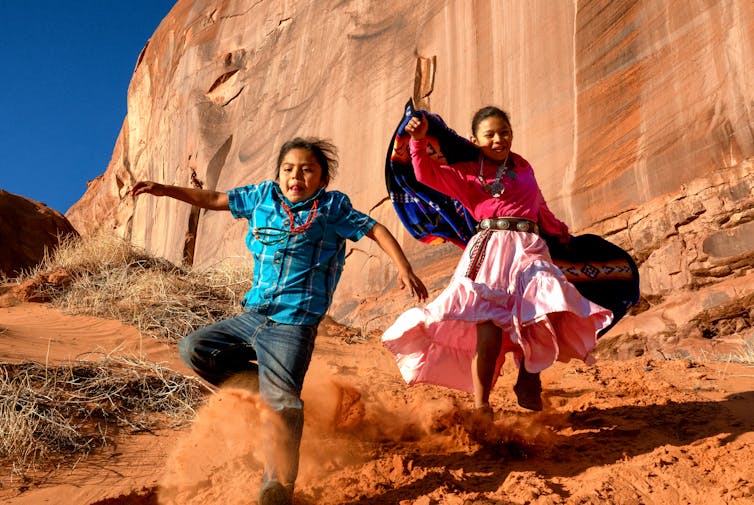
Columbus Day celebrations in the United States – meant to honor the legacy of the man credited with “discovering” the New World – are almost as old as the nation itself. The earliest known Columbus Day celebration took place on Oct. 12, 1792, on the 300th anniversary of his landing. But since the 1990s, a growing number of states have begun to replace Columbus Day with Indigenous Peoples Day – a holiday meant to honor the culture and history of the people living in the Americas both before and after Columbus’ arrival.
In the following Q&A, Susan C. Faircloth, an enrolled member of the Coharie Tribe of North Carolina and professor of education at Colorado State University, explains the history of Indigenous Peoples Day and what it means to American education.
First, why is Columbus Day a problem?

For many Indigenous peoples, Columbus Day is a controversial holiday. This is because Columbus is viewed not as a discoverer, but rather as a colonizer. His arrival led to the forceful taking of land and set the stage for widespread death and loss of Indigenous ways of life.
When did Indigenous Peoples Day come about?
In 1990, South Dakota – currently the state with the third-largest population of Native Americans in the U.S. – became the first state to officially recognize Native Americans’ Day, commonly referred to as Indigenous Peoples Day in other parts of the country.
More than a dozen states and the District of Columbia now recognize Indigenous Peoples Day. Those states include Alabama, Alaska, Hawaii, Idaho, Iowa, Louisiana, Maine, Michigan, Minnesota, New Mexico, North Carolina, Oklahoma, Oregon, South Dakota, Vermont, Virginia and Wisconsin.
How does Indigenous Peoples Day change things?
Indigenous Peoples Day offers an opportunity for educators to rethink how they teach what some have characterized as a “sanitized” story of the arrival of Columbus. This version omits or downplays the devastating impact of Columbus’ arrival on Indigenous peoples. Indigenous Peoples Day is an opportunity to reconcile tensions between these two perspectives.
Research has shown that many schools do not accurately represent Indigenous peoples when they teach history. I think this is true not only on Indigenous Peoples Day, but throughout the school year. Researchers have found that K-12 schools tend to teach about Native Americans as if they existed only in the past. By revising the curriculum to better reflect both past and current histories and stories of Native peoples, educators can more accurately teach students about their cultures, histories and traditions.
Has there been any pushback?
Yes, the shift from Columbus Day to Indigenous Peoples Day has met resistance from communities across the country. In 2021, parents in Parsippany, New Jersey, protested the local school board’s decision to celebrate Indigenous Peoples Day in place of Columbus Day. Among other things, they cited lack of community input, failure to honor the legacy of Italian immigrants and the need for a “more balanced picture of Columbus.” In response, the school board removed the names of all holidays from its calendar. Now the holidays are just referred to as “days off.”
What resources do you recommend for Indigenous Peoples Day?
I would recommend “Lies My Teacher Told Me About Christopher Columbus” by sociologist and educator James Loewen. I would also recommend “An Indigenous Peoples’ History of the United States for Young People” by historian Roxanne Dunbar-Ortiz. These books help illustrate both the impact of the arrival of Columbus on the Indigenous peoples of the Americas and the role of Indigenous peoples in the founding of the United States. This is information that is typically absent in K-12 schools.
Other resources are available from organizations such as the National Museum of the American Indian, Learning for Justice and IllumiNative. These resources include sample lesson plans, books and videos that reflect the diversity of Native American peoples and tribes. For example, one lesson plan from IllumiNative provides opportunities for students to learn about Indigenous Peoples Day and at the same time explore ways to honor and protect the land, air and water. Such lessons are important, as they address the ways in which conservation of natural resources is essential to the economic self-determination and self-sufficiency of Native nations.
[Get the best of The Conversation, every weekend. Sign up for our weekly newsletter.]
Susan C. Faircloth, Professor & Director of the School of Education, Colorado State University
This article is republished from The Conversation under a Creative Commons license. Read the original article.
- Details
- Written by: Elizabeth Larson
Dogs available for adoption this week include mixes of American bulldog, beagle, Belgian malinois, Doberman, German shepherd, husky, pit bull, pug, Rottweiler, shepherd and terrier.
Dogs that are adopted from Lake County Animal Care and Control are either neutered or spayed, microchipped and, if old enough, given a rabies shot and county license before being released to their new owner. License fees do not apply to residents of the cities of Lakeport or Clearlake.
The following dogs at the Lake County Animal Care and Control shelter have been cleared for adoption (additional dogs on the animal control website not listed are still “on hold”).
Call Lake County Animal Care and Control at 707-263-0278 or visit the shelter online at http://www.co.lake.ca.us/Government/Directory/Animal_Care_And_Control.htm for information on visiting or adopting.
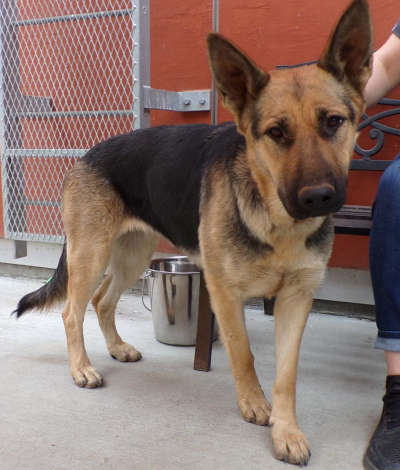
Female German shepherd
This 1-year-old female German shepherd has a short tan and black coat.
She is in kennel No. 4, ID No. LCAC-A-1767.
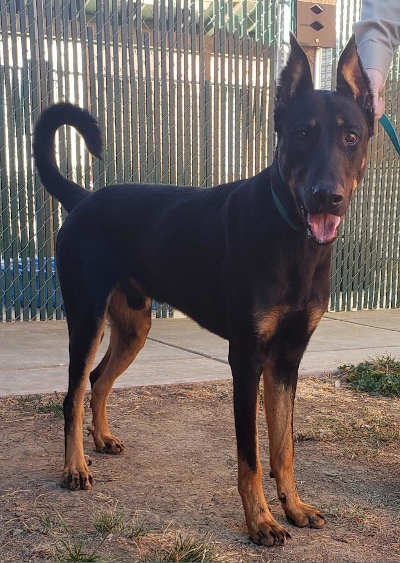
‘Ace’
“Ace” is a 1-year-old male shepherd and Doberman mix with a short black and tan coat.
He is in kennel No. 6, ID No. LCAC-A-1731.
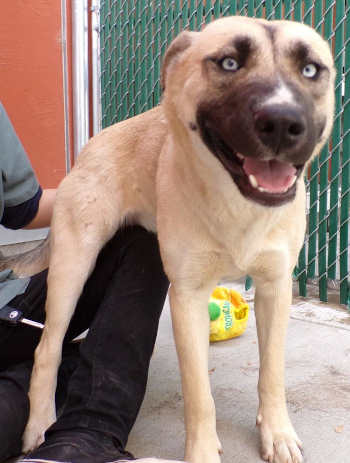
Female shepherd-husky
This female shepherd-husky has a short tan coat with black markings and blue eyes.
She is in kennel No. 9, ID No. LCAC-A-1745.

Female shepherd-husky
This 1-year-old female shepherd-husky mix has a short tricolor coat and blue eyes.
She’s in kennel No. 10, ID No. LCAC-A-1746.

Belgian malinois puppy
This 6-month-old male Belgian malinois puppy has a short tan coat.
He is in kennel No. 15, ID No. LCAC-A-1710.

Belgian malinois puppy
This 6-month-old male Belgian malinois puppy has a short tan coat.
He is in kennel No. 16, ID No. LCAC-A-1711.

‘Rocky’
“Rocky” is a 1-year-old female German shepherd mix with a short black coat and tan markings.
She is in kennel No. 19, ID No. LCAC-A-1719.

Female German shepherd mix
This 2-year-old female German shepherd mix has a short black and tan coat.
She’s in kennel No. 20, ID No. LCAC-A-1660.

‘Oscar’
“Oscar” is a 6-year-old pug-beagle mix — or a puggle — with a short tan coat.
He is in kennel No. 21, ID No. LCAC-A-1709.

‘LuLu’
“LuLu” is a 1-year-old female Rottweiler with a short black and tan coat.
She is in kennel No. 27, ID No. LCAC-A-1658.
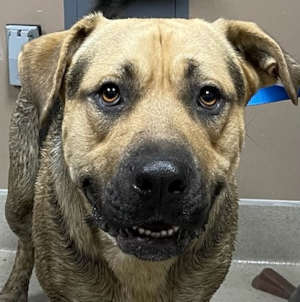
Male shepherd mix
This 2-year-old male shepherd mix has a short black and tan coat.
He is in kennel No. 28, ID No. LCAC-A-1743.
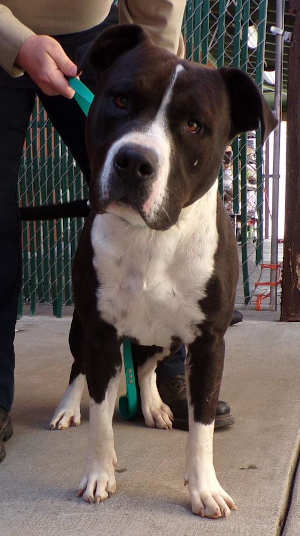
Male pit bull
This young male pit bull has a short black and white coat.
He is in kennel No. 29, ID No. LCAC-A-1699.

Female terrier mix
This 2-year-old female terrier mix has a short tan coat.
She is in kennel No. 30, ID No. LCAC-A-1739.
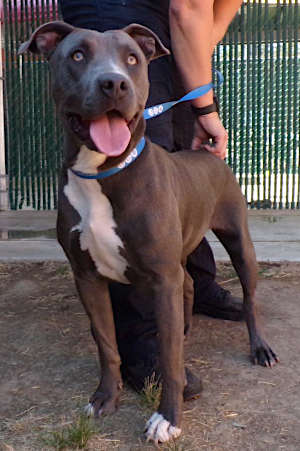
Female pit bull
This 1-year-old female pit bull mix has a short gray coat with white markings.
She is in kennel No. 31, ID No. LCAC-A-1683.

‘Dozer’
‘Dozer’ is a 5-year-old American pit bull terrier mix with a short brindle coat.
He is in kennel No. 33, ID No. LCAC-A-1483.
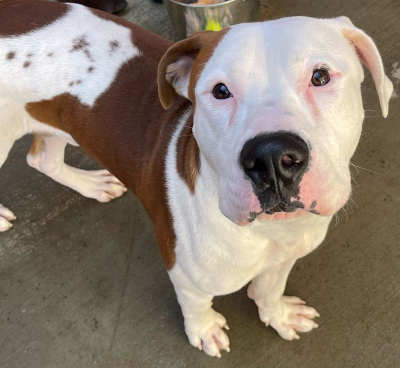
‘Milo’
“Milo” is a 3-year-old male American bulldog-pit bull mix with a short white coat.
He is in kennel No. 34, ID No. LCAC-A-1657.
Email Elizabeth Larson at
- Details
- Written by: Julie Freijat

Exoplanet hunters have found thousands of planets, most orbiting close to their host stars, but relatively few alien worlds have been detected that float freely through the galaxy as so-called rogue planets, not bound to any star.
Many astronomers believe that these planets are more common than we know, but that our planet-finding techniques haven’t been up to the task of locating them.
Most exoplanets discovered to date were found because they produce slight dips in the observed light of their host stars as they pass across the star’s disk from our viewpoint. These events are called transits.
NASA’s Nancy Grace Roman Space Telescope will conduct a survey to discover many more exoplanets using powerful techniques available to a wide-field telescope. The stars in our Milky Way galaxy move, and chance alignments can help us find rogue planets. When a free-floating planet aligns precisely with a distant star, this can cause the star to brighten. During such events, the planet’s gravity acts as a lens that briefly magnifies the background star’s light. While Roman may find rogue planets through this technique, called gravitational microlensing, there’s one drawback – the distance to the lensing planet is poorly known.
Goddard scientist Dr. Richard K. Barry is developing a mission concept called the Contemporaneous LEnsing Parallax and Autonomous TRansient Assay, or CLEoPATRA, to exploit parallax effects to calculate these distances.
Parallax is the apparent shift in the position of a foreground object as seen by observers in slightly different locations. Our brains exploit the slightly different views of our eyes so we can see depth as well.
Astronomers in the 19th century first established the distances to nearby stars using the same effect, measuring how their positions shifted relative to background stars in photographs taken when Earth was on opposite sides of its orbit.
It works a little differently with microlensing, where the apparent alignment of the planet and distant background star greatly depends on the observer’s position. In this case, two well-separated observers, each equipped with a precise clock, would witness the same microlensing event at slightly different times. The time delay between the two detections allows scientists to determine the planet’s distance.
To maximize the parallax effect, CLEoPATRA would hitch a ride on a Mars-bound mission that launches around the same time as Roman, currently scheduled for late 2025. That would place it in its own orbit around the Sun that would achieve a sufficient distance from Earth to effectively measure the microlensing parallax signal and fill in this missing information.
The CLEoPATRA concept would also support the PRime-focus Infrared Microlensing Experiment (PRIME), a ground-based telescope currently being outfitted with a camera using four detectors developed by the Roman mission. Mass estimates for microlensing planets detected by both Roman and PRIME will be significantly improved by simultaneous parallax observations provided by CLEoPATRA.
“CLEoPATRA would be at a great distance from the principal observatory, either Roman or a telescope on Earth,” Barry said. “The parallax signal should then permit us to calculate quite precise masses for these objects, thereby increasing scientific return.”
Stela Ishitani Silva, a research assistant at Goddard and Ph.D. student at the Catholic University of America in Washington, said understanding these free-floating planets will help fill in some of the gaps in our knowledge of how planets form.
“We want to find multiple free-floating planets and try to obtain information about their masses, so we can understand what is common or not common at all,” Ishitani Silva said. “Obtaining the mass is important to understanding their planetary development.”
In order to efficiently find these planets, CLEoPATRA, which completed a Mission Planning Laboratory study at Wallops Flight Facility in early August, will use artificial intelligence. Dr. Greg Olmschenk, a postdoctoral researcher working with Barry, has developed an AI called RApid Machine learnEd Triage, or RAMjET, for the mission.
“I work with certain kinds of artificial intelligence called neural networks,” Olmschenk said. “It's a type of artificial intelligence that will learn through examples. So, you give it a bunch of examples of the thing you want to find, and the thing you want it to filter out, and then it will learn how to recognize patterns in that data to try to find the things that you want to keep and the things you want to throw away.”
Eventually, the AI learns what it needs to identify and will only send back important information. In filtering this information, RAMjET will help CLEoPATRA overcome an extremely limited data transmission rate.
CLEoPATRA will have to watch millions of stars every hour or so, and there’s no way to send all that data to Earth. Therefore, the spacecraft will have to analyze the data on-board and send back only the measurements for sources it detects to be microlensing events.
“CLEoPATRA will permit us to estimate many high-precision masses for new planets detected by Roman and PRIME,” Barry said. “And it may allow us to capture or estimate the actual mass of a free-floating planet for the first time — never been done before. So cool, and so exciting. Really, it's a new golden age for astronomy right now, and I'm just very excited about it.”
Julie Freijat works for NASA’s Goddard Space Flight Center in Greenbelt, Maryland.