 How to resolve AdBlock issue?
News
- Details
- Written by: Lake County News reports
In 2020 only one on-campus offense was reported, a burglary on the Lake County campus. One additional offense was reported off-campus on adjacent public property of the Woodland campus.
The 2020 statistics were lower than the 2019 report that indicated a total of four on-campus offenses and two off-campus offenses, officials said.
Looking back over the past eight Clery Act filings, the campuses of Woodland Community College have historically provided a safe environment for students, averaging just over one
reportable offense per year on both the Woodland and Lake County campuses since 2013, and only one single offense on the Colusa County campus during that time period.
“It is reassuring to know that we are providing safe campus environments. The safety and welfare of students, faculty and staff is a top priority for the college, and while the 2020 statistics were impacted by COVID, looking back at the two previous years we have had few crime reports, almost exclusively nonviolent in nature,” said Woodland Community College President Art Pimentel.
The Jeanne Clery Disclosure of Campus Security Policy and Campus Crime Statistics Act or Clery Act, was signed into law in 1990.
It is a federal statute requiring colleges and universities to maintain and disclose Campus Crime Statistics along with disclosure of campus safety policies and timely warning requirements.
Annually, the Yuba Community College District Police Department gathers statistics on reportable crimes and reports the statistics to the Department of Education, the FBI and to the public.
The Jeanne Clery Act requires statistics to be reported from a geographic area that includes the campus as well as adjacent public property, and also requires reports of student disciplinary referrals in addition to arrests for drug, alcohol and weapon offenses.
Copies of the most recent Yuba Community College District Clery Act Reports are available online here.
Crime statistics and campus safety information is compiled based upon crime reports received by the Yuba Community College District Police Department, from crime statistics received from outside agencies and from incident reports received from other campus security authorities.
- Details
- Written by: Lake County News reports
It will take place from 9 a.m. to 2 p.m. in the public parking lot north of the Fifth Street boat ramp in downtown Lakeport.
This event is limited to city of Lakeport residents and those dropping off trash and waste will be required to provide photo identification and a copy of a city utility bill.
Participants are required to follow the following COVID-19 safety protocols:
• Cloth face masks must be worn.
• One person per vehicle.
• Stay in vehicle while Lakeport Disposal staff unloads materials
• Two visits maximum per each address.
Household trash, televisions, specified appliances, electronic waste, mattresses, household furniture, unusable clothes/blankets/towels and similar materials will be accepted.
Items that will not be accepted are refrigerators, hot tubs/spas, construction debris, used tires and household hazardous waste.
For more details, please see the city’s website, its Facebook page or contact Lakeport Disposal at 707-263-6080.
- Details
- Written by: Mark S Roberts, University of Pittsburgh and Richard K Zimmerman, University of Pittsburgh

As winter looms and hospitals across the U.S. continue to be deluged with severe cases of COVID-19, flu season presents a particularly ominous threat this year.
We are researchers with expertise in vaccination policy and mathematical modeling of infectious disease. Our group, the Public Health Dynamics Laboratory at the University of Pittsburgh, has been modeling influenza for over a decade. One of us has been a member of the Centers for Disease Control and Prevention’s Advisory Committee on Immunization Practices and the CDC’s Flu Vaccine Effectiveness Network.
Our recent modeling work suggests that last year’s tamped-down influenza season could lead to a surge in flu cases this coming season.
Anti-COVID-19 strategies reduced flu too
As a result of the numerous measures put in place in 2020 to curb transmission of COVID-19 – including limiting travel, wearing masks, social distancing, closing schools and other strategies – the U.S. saw a dramatic decrease in influenza and other infectious diseases during the last flu season.
Flu-related deaths in kids dropped from nearly 200 in the 2019-2020 season to one in the 2020-2021 season. Overall, the 2020-2021 flu season had one of the lowest recorded number of cases in recent U.S. history.
While flu reduction is a good thing, it could mean that the flu will hit harder than normal this winter. This is because much of the natural immunity that people develop to disease comes from the spread of that disease through a population. Many other respiratory viruses demonstrated a similar drop during the pandemic, and some of those, including interseasonal respiratory syncytial virus, or RSV, have increased dramatically as schools have reopened and social distancing, masking and other measures have declined.
Deciphering viral transmission
Immunity to influenza involves multiple factors. Influenza is caused by several strains of an RNA virus that mutate at various rates each year, in a manner not unlike the mutations that are occurring in SARS-CoV-2, the virus that causes COVID-19.
The level of a person’s existing immunity to the current year’s strain of flu depends on several variables. They include how similar the current strain is to the one that a child was first exposed to, whether circulating strains are similar to previously experienced strains and how recent those influenza infections were, if they occurred.
And of course human interactions, such as children crowding together in classrooms or people attending large gatherings – as well as the use of protective measures like wearing a mask – all affect whether a virus is transmitted between people.
There are also variables due to vaccination. Population immunity from vaccination depends on the proportion of people who get the flu vaccine in a given season and how effective - or well matched - that vaccine is against the circulating influenza strains.

No precedent exists for a ‘twindemic’
Given the limited spread of influenza in the general U.S. population last year, our research suggests that the U.S. could see a large epidemic of flu this season. Paired with the existing threat of the highly infectious delta variant, this could result in a dangerous combination of infectious diseases, or a “twindemic.”
Models of COVID-19 and other infectious diseases have been at the forefront of predictions about the COVID-19 pandemic, and have often proved to be predictive of cases, hospitalizations and death.
But there are no historical examples of this type of dual and simultaneous epidemics. As a result, traditional epidemiological and statistical methods are not well suited to project what may occur this season. Therefore, models that incorporate the mechanisms of how a virus spreads are better able to make predictions.
We used two separate methods to forecast the potential impact from last year’s decrease in influenza cases on the current 2021-2022 flu season.
In recent research of ours that has not yet been peer-reviewed, we applied a modeling system that simulates an actual population’s interactions at home and work, and in school and neighborhood settings. This model predicts that the U.S. could see a big spike in flu cases this season.
In another preliminary study, we used a traditional infectious disease modeling tool that divides the population into people who are susceptible to infection, those infected, those recovered and those who have been hospitalized or have died. Based on our mathematical model, we predict that the U.S. could see as many as 102,000 additional hospitalizations above the hundreds of thousands that typically occur during flu season. Those numbers assume that there is no change from the usual flu vaccine uptake and effectiveness starting this fall and lasting through the flu season.
Individual behaviors and vaccination matter
A typical flu season usually produces 30 million to 40 million cases of symptomatic disease, between 400,000 and 800,000 hospitalizations and from 20,000 to 50,000 deaths.
This prospect, paired with the ongoing battle against COVID-19, raises the possibility of a twindemic overwhelming the health care system as hospitals and ICUs in some parts of the country overflow with critically ill COVID-19 patients.
Our research also highlighted how young children could be particularly at risk since they have lower exposure to previous seasons of influenza and thus haven’t yet developed broad immunity, compared with adults. In addition to the burden on children, childhood influenza is an important driver of influenza in the elderly as kids pass it on to grandparents and other elderly people.
However, there is reason for optimism, since people’s behaviors can change these outcomes considerably.
For instance, our simulation study incorporated people of all ages and found that increasing vaccination among children has the potential to cut infections in children by half. And we found that if only 25% more people than usual are vaccinated against influenza this year, that would be sufficient to reduce the infection rate to normal seasonal influenza levels.
Across the U.S., there is a lot of variability in vaccination rates, adherence to social distancing recommendations and mask-wearing. So it is likely that the flu season will experience substantial variation state to state, just as we have seen with patterns of COVID-19 infection.
All of this data suggests that although vaccination against influenza is important every year, it is of utmost importance this year to prevent a dramatic rise in influenza cases and to keep U.S. hospitals from becoming overwhelmed.
[Get the best of The Conversation, every weekend. Sign up for our weekly newsletter.]
Mark S Roberts, Distinguished Professor of Health Policy and Management, University of Pittsburgh and Richard K Zimmerman, Professor of Family Medicine, University of Pittsburgh
This article is republished from The Conversation under a Creative Commons license. Read the original article.
- Details
- Written by: ESTHER OERTEL
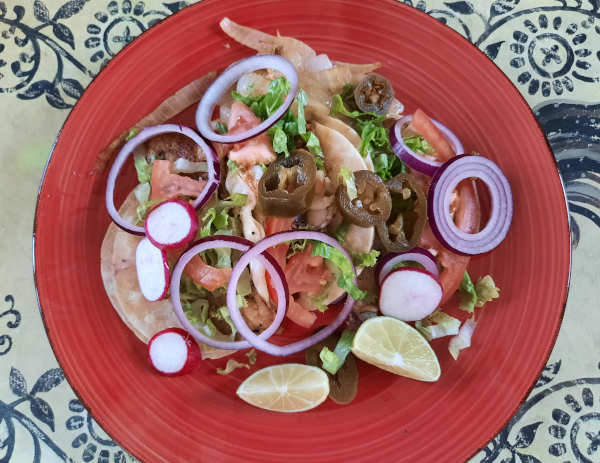
National Taco Day was celebrated on Oct. 4 and may be in our rearview mirror, but it’s never a bad day to have tacos, even if it’s not Tuesday.
I think most Americans agree with me, since we consume billions of them each year.
But how has such a seemingly simple food become so beloved, not just in Mexico, where it originated, or the U.S., where it was first imported, but around the world?
Perhaps it’s because these scrumptious packets of goodness can be filled with so many things — all kinds of meat, beans of all types, or even with vegetables like mushrooms or sweet potatoes as the star.
Aaron Sanchez, chef and television personality, has said, “Tacos are one of those dishes that are so iconic yet have such a large range of techniques and ingredients from region to region. Even just the difference between flour and corn tortillas is important. The main components to any taco are a tortilla, a filling, and a salsa. The varieties are virtually endless.”
You might say the secret to a good taco lies in getting those three components right. Perhaps tacos aren’t so simple after all.
It’s hard to pinpoint the exact origin of the taco, and conflicting theories as to their provenance exist.
History professor and author Jeffrey Pilcher has spent 20 years investigating the origins of Mexican food. His theory is that tacos originated with 18th century silver miners in Mexico.
The explosive charges used by these miners to excavate ore — small pieces of paper wrapped around gunpowder and tucked in holes to explode in the rock wall — were called tacos.
His theory gains traction when we learn that tacos were described as “tacos de minero,” or miner’s tacos, in the first reference to tacos as a food in an archive or dictionary a century later.
If this origin story is true, then culinarily speaking, tacos are a relatively recent addition to the food spectrum.
In contrast to Pilcher’s theory, others say tacos are much older than that, going back to when the Aztecs used corn tortillas as a sort of spoon to scoop up fillings like fish or offal (organ meats). This would put their origin somewhere between 500 to 1,000 B.C.
In addition, it’s possible that the word taco is not derived from explosive mine charges, but rather a Nahuatl, or Aztec language, word. “Tlahco” in that tongue means “half” or “in the middle,” and is perhaps a reference to the way tacos were formed.
According to Gustavo Arellano, who wrote “Taco USA: How Mexican Food Conquered America,” tacos have existed since there was a tortilla, even if they didn’t exist by that name.
“The earliest mention of taco as a food dates only to the late 19th century,” he says. “Previously, the word stood for anything from a pool cue to a hammer to getting drunk.”
Or, apparently, an explosive in a silver mine.
Thankfully, this paradox of the taco’s origin doesn’t diminish their deliciousness.
The first mention of the taco in the U.S. was in a 1905 newspaper. This was a time when immigrants from Mexico were beginning to come to the U.S. for work in mines, railroads and other similar jobs, and they brought their food traditions with them.
Mexican food in those days was often sold in pushcarts on the street, and since tacos were highly portable and cheap, they were a popular option.
Tacos started to become a more mainstream food when the children of immigrants rose in economic status. Mexican American tacos often were adapted to what was available in the American market — ground beef or chicken instead of offal, cheddar cheese, iceberg lettuce, tomatoes, and the like.
The first taco truck in the U.S. (and quite possibly the first food truck of any type) is believed to have been opened by Raul Martinez, a Mexican immigrant, who repurposed an old ice cream truck in 1974.
He parked his mobile taco eatery outside an East Los Angeles bar and was so successful that within six months he was able to leave the truck behind and open a restaurant. The restaurant, King Taco, now has 22 locations in California.
At the same time that Mexican immigrants were arriving in the U.S. early in the last century, Mexico was having an influx of immigrants, and their food traditions had an influence on what fills a taco.
For example, Lebanese migrants brought shawarma or gyro with them — lamb cooked on vertical spits served in pita bread. When they began to put the meat into tortillas, “tacos arabes,” or Arab tacos, were born.
Second-generation Lebanese immigrants changed the recipe a bit, using pork instead of lamb and serving it with pineapple. Tacos al pastor, which is pork sliced thin and served in a taco with pineapple, onion, and cilantro, is an adaptation of this Lebanese fare and is now considered a standard Mexican taco.
Glen Bell, the founder of Taco Bell, capitalized on the popularity of the taco. He originally owned a few hamburger joints but noticed how popular Mexican food was with non-Mexicans. He opened the first Taco Bell in 1962.
In his autobiography, Bell claimed he invented the hard-shell taco in the 1950s, which allowed for selling tacos in a fast-food style.
The “taco shell” could be made ahead of time in large quantities to store until they were needed, streamlining operations, in contrast to tacos that were made to order in Mexican restaurants with tortillas made fresh.
Despite Bell’s claims, the U.S. patent office shows records of patents for hard-shell tacos granted to Mexican restaurants in the 1940s, not to Bell. Also, Mexican cookbooks from the 1940s offered recipes for making them.
Tacos made with hard shells are known as “tacos dorado” in Mexican cooking. It’s unclear when the hard shells were first used, but it was at least a decade before Bell claimed to have invented them.
Tacos have become quite popular throughout the world. In Norway, for example, a communal make-your-own-taco night is celebrated each week. Instead of Taco Tuesday, Norwegians celebrate “Fredagstaco,” which takes place on Fridays.
Nearly 10% of the population of Norway participates in this food ritual.
There are endless variations on the taco. Middletown Pomo elder Millie Simon recalls eating fry bread filled with beans or meat while growing up. These are now known as Indian tacos.
I fell in love with fish tacos when introduced to them by my brother-in-law, a chef. Though I rarely eat meat, I’m still a huge fish taco fan and I enjoy sampling them in various locations.
Fish tacos also have dueling origin stories.
The city of Ensenada, Mexico is situated on the Pacific coastline in Baja California about 78 miles south of San Diego. In addition to being known for Mexican wine and American tourism, the city claims that it was the birthplace of the fish taco. They point to the sale of fish tacos in Ensenada’s fish market, the Mercado Negro, as early as 1958. Many Ensenada restaurants advertise that they were the first to create the fish taco.
Perhaps fish tacos were first commercialized there, but their origin likely goes back thousands of years, at least as long as the Indigenous peoples of coastal Mexico have wrapped their ocean catch in a tortilla.
It was Ralph Rubio who popularized fish tacos in the U.S. He tasted them on a spring break trip to Baja California, where, as the story goes, he coaxed a Baja vendor into giving him his recipe for the tacos.
Rubio later established a restaurant in San Diego known as Rubios — Home of the Fish Taco, which later became the Rubio’s Coastal Grill chain.
It’s interesting to note that tacos are typically a morning treat or a nighttime snack in their country of origin. They’re less available between noon and 6 p.m. in Mexico, likely because the main meal there is eaten in the afternoon.
Aren’t we lucky that we can eat tacos here all day long?
Today’s recipe is for mushroom tacos, an option that’s gaining in popularity. Rest assured that these tacos aren’t just for vegetarians, especially if you’re a fungi fan.
While there are many variations on mushroom tacos, the portobellos in this recipe provide a meaty texture and a wonderful burst of umami flavor.
Marinated mushroom tacos with pineapple salsa and lime guacamole
For tacos:
6 portobello mushroom caps, halved
¼ cup extra-virgin olive oil
½ cup orange juice
4 garlic cloves, crushed
2 teaspoons chili powder
1 teaspoon smoked paprika
Juice of two limes
½ cup fresh cilantro leaves, roughly chopped
Salt to taste
Warmed corn tortillas
For pineapple salsa:
½ small pineapple, diced
1 small jalapeño with seeds and pith removed, chopped
Juice of one lime
¼ cup fresh cilantro leaves, chopped
Salt to taste
For guacamole:
2 avocados, peeled, seeded, and mashed
Juice and zest of one lime
Salt to taste
Procedure:
Marinate mushrooms with olive oil, orange juice, garlic, chili powder, paprika, lime juice, cilantro and a pinch of salt to taste. A zipper-sealed bag works well for this. Marinate 10 minutes or as long as overnight in the fridge.
In a bowl, stir together the mashed avocado, lime juice and zest, and salt to taste.
Mix all salsa ingredients together in a separate bowl.
Preheat a grill or grill pan to high. Remove the mushrooms from the marinade and sear for five minutes on each side, or until slightly charred on both sides. Remove from heat and slice into strips.
Spread the guacamole on the warmed tortillas and top with the grilled mushrooms and pineapple salsa.
Enjoy!
Recipe adapted by Esther Oertel.
Esther Oertel is a writer and passionate home cook from a family of chefs. She grew up in a restaurant, where she began creating recipes from a young age. She’s taught culinary classes in a variety of venues in Lake County and previously wrote “The Veggie Girl” column for Lake County News. Most recently she’s taught culinary classes at Sur La Table in Santa Rosa. She lives in Middletown, California.