 How to resolve AdBlock issue?
News
- Details
- Written by: LAKE COUNTY NEWS REPORTS
On Friday, Lake County’s two members of the House of Representatives voted to pass the Build Back Better Act, which invests in families, workers, the economy and tackling climate change.
Congressman John Garamendi (D-CA-03), who represents the northern half of Lake County, and Congressman Mike Thompson (D-CA-05), who represents the county’s southern portion, were among the House members who voted to pass the legislation.
The bill passed the house in a vote of 220 to 213. It now heads to the Senate for consideration.
Thompson, chairman of the House Ways and Means Select Revenue Measures Subcommittee, said the legislation also includes his GREEN Act, which tackles climate change by providing tax incentives to reduce greenhouse gas emissions.
“This bill makes a historic investment in American workers, families and communities and includes the most ambitious climate policies ever passed by Congress, my GREEN Act. The bill is paid for,” Thompson emphasized.
He said the GREEN Act uses the tax code to increase the use of renewable energy, reducing greenhouse gas emissions enough to meet President Biden’s long-term emissions goals. “I’m deeply humbled that my legislation will play a key role in our nation’s effort to address the threat of climate change.”
“The ‘Build Back Better Act’ is the result of months of negotiations and compromise,” said Garamendi, who called it the largest relief package for the middle class in a generation.
“America has reached a positive turning point,” Garamendi said. “Right now, we have an opportunity to create the largest expansion of the middle class in a generation and show the American people that their government works for them — not just those at the top.”
For workers and families, the bill provides paid family leave, universal pre-K education for 3- and 4-year-olds and another year of expanded Child Tax Credit, a tax cut for working families.
“These programs invest in our children. In fact, the Child Tax Credit has already helped to cut child poverty in half,” Thompson said.
The Build Back Better Act also helps families get back into the workforce. It makes health insurance more affordable, supports local cities and towns, cuts taxes for homeowners, reduces the cost of medications and includes parts of Thompson’s Disaster Tax Relief Act to incentivize investments in disaster resiliency.
Garamendi said the bill is paid for by requiring the very largest corporations and wealthiest Americans — who often avoid paying any taxes at all — to finally pay their fair share. No one making under $400,000 will pay a penny more in taxes under this legislation, he added.
“All of this is supported without costing the middle class a single penny. No public school teacher, nurse or first responder should pay a higher tax rate than a billionaire. Yet that has been the case in America for far too long. The ‘Build Back Better Act’ rights this wrong and uses the revenue it generates to provide tax cuts, jobs, lower health care costs, and affordable housing for the middle class,” Garamendi continued.
He added, “The ‘Build Back Better Act’ is also our best shot to attack climate change and protect the air, water and land we all rely on for our children and grandchildren’s generations. With the ‘Build Back Better Act,’ we will finally unlock the green energy economy of the future we so desperately need.”
Benefits of the bill include the following.
Children, families and caregiving:
• Universal preschool for all 3- and 4-year-olds;
• Four weeks of paid family leave;
• Affordable high-quality child care;
• Affordable, high-quality care for hundreds of thousands of older Americans and people with disabilities in their homes and communities; and
• An expanded Child Tax Credit.
Clean energy and combating climate change:
• $320 billion in clean energy tax credits;
• $105 billion in resilience investments;
• $110 billion in investments and incentives for clean energy technology, manufacturing, and supply chains; and
• $20 billion in clean energy procurement.
Affordable care for millions of hardworking Americans through:
• Affordable Care Act premium tax credits;
• New tools to negotiate lower prices of medications;
• Ensuring Americans with diabetes don’t pay more than $35 per month for their insulin;
• Creating a new, out-of-pocket cap of $2,000 on what seniors pay for their drugs in Medicare Part D;
• Allowing Medicare to cover the cost of hearing.
Bringing down costs, reducing inflationary pressures, and strengthening the middle class through:
• $150 billion investment in housing affordability and reducing price pressures, including in rural areas;
• Education beyond high school and workforce;
• Earned Income Tax Credit for 17 million low-wage workers;
• Raising the State and Local Tax deduction cap to $80,000 through 2030.
There also are protections and work permits for millions of immigrants consistent with the Senate’s reconciliation rules.
- Details
- Written by: Elizabeth Larson
The City of Clearlake Animal Association also is seeking fosters for the animals waiting to be adopted.
Call the Clearlake Animal Control shelter at 707-273-9440, or email
Visit Clearlake Animal Control on Facebook or on the city’s website.
The newest dogs are listed at the top of the following list.

‘Bella’
“Bella” is a female American pit bull mix with a short gray brindle coat.
She has been spayed.
She is dog No. 48448381.

‘Fiona’
“Fiona” is a female pit bull terrier mix with a short gray coat.
She is dog No. 48750483.

‘Levi’
“Levi” is a male golden retriever-Labrador retriever mix.
He has a short golden coat.
He is dog No. 48975687.

‘Luscious’
“Luscious” is a male pit bull terrier mix with a short gray coat.
He has been neutered.
He is dog No. 48757611.

‘Mitzi’
“Mitzi” is a female Australian cattle dog mix with a medium-length black and white coat.
She has been spayed.
She is dog No. 48443306.

‘Nala’
“Nala” is an 11-month-old female German shepherd mix.
She has a medium-length black and tan coat.
She is dog No. 48289638.

‘Turk’
“Turk” is a male chocolate Labrador retriever mix.
He is dog No. 48911836.
Email Elizabeth Larson at
- Details
- Written by: DENNIS FORDHAM

Health care decisions include whether to approve or to disapprove diagnostic tests, surgical procedures and medication, and other forms of health care.
Patients make their own health care decisions if they both can understand the nature and consequences of a health care decision — including understanding the significant benefits, risks and alternatives — and can communicate a decision.
However, if a patient loses their “capacity” to make health care decisions then decisions are made by the patient’s agent, conservator or a designated surrogate, as relevant.
A person with capacity can appoint an agent to make health care decisions. An Advance Health Care Directive, or AHCD, is used to appoint an agent, to designate a primary physician (optional), and to give specific health care instructions.
There are various different AHCD forms, such as, the California Medical Association AHCD, the Hospice AHCD, and the California Statutory AHCD.
The California Medical Association and Hospice AHCD invite the owner of the AHCD to consider their personal values and what activities and abilities allow for life to be enjoyable.
Providing such personal insights to one’s agent better enables the agent to evaluate the benefits, risks and alternatives to proposed health care treatment, including surgeries and artificial life support.
Agents are required to make health care decisions, “in accordance with the principal’s individual health care instructions, if any, and other wishes to the extent known to the agent.”
Otherwise, lacking patient instructions and wishes, such decisions are to be made in the “principal’s best interest,” taking into consideration the “principal’s personal values to the extent known to the agent.”
Therefore, a candid and thorough conservation between a person and their possible agents improves the likelihood of a favorable outcome. People should select agents whom they expect to comply with their wishes.
As an immediate safeguard, a patient with capacity may designate a temporary health care surrogate to make health care decisions while the patient is in hospital, ill or being treated.
To designate a surrogate, a patient must either do so in writing or personally inform their primary physician (or the person acting as such) of the designation; the designation then becomes part of the patient’s medical chart.
A surrogate’s designation ends once the patient is discharged from hospital, recovers from illness or completes their medical treatment, as relevant. However, a surrogate designation may not exceed 60 days.
What happens if someone has an Agent under an AHCD and also has either a designated surrogate or a court appointed conservator? The surrogate has first priority to make decisions during the period of the surrogate’s temporary authority. Thereafter, the authority of the agent resumes unless the AHCD was revoked.
With that exception, the authority of an agent under an AHCD has priority over the authority of any other person, including a conservator or a spouse.
The primary care provider should receive a copy of the AHCD, and a Health Insurance Portability & Accountability Act, or HIPAA, release regarding confidential medical information, to keep them on file so that such documents are available if and when needed.
A patient can revoke the authority of their agent or their surrogate for health care decisions so long as the patient has capacity. Such revocation can either be in writing signed by the patient or by the patient personally telling their primary physician.
People may wish to reconsider their health care instructions and wishes if and when significant changes in their health, life circumstances and wishes occur.
Such reconsiderations should involve additional conversations with agents and perhaps a new AHCD with revised instructions.
The foregoing is not legal advice. If needing legal guidance regarding health care decision planning consult an estate planning attorney.
Dennis A. Fordham, attorney, is a State Bar-Certified Specialist in estate planning, probate and trust law. His office is at 870 S. Main St., Lakeport, Calif. He can be reached at
- Details
- Written by: Thomas S. Bateman, University of Virginia
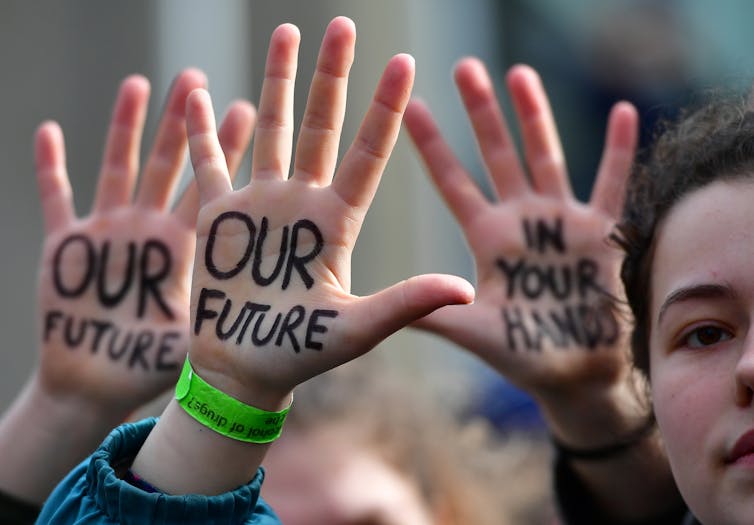
Humans do not capitalize nearly enough on our most significant evolutionary advantage: a unique ability to take forward-looking actions that influence the future for the better.
Exhibit A: Climate change is here, and things are changing quickly for the worse. However, even as dangerous and costly weather events grow more frequent and severe, we still don’t do what we need to do.
Ideally, everyone would ratchet up their efforts to protect the climate as smartly as possible. But how can each person help in the most valuable ways? As a professor of organizational behavior, I study leadership and proactive problem solving. Research in these fields offers some helpful advice.
Untapped human potential
“I’d love to change the world, but I don’t know what to do, so I leave it up to you.” - Alvin Lee, Ten Years After, 1971
When too many people think like those lyrics, problems don’t get solved.
The only way societies will do enough to keep climate change in check is if they reject passivity, experiment with new strategies and tactics, and wisely strengthen their coping repertoire.
People avoid doing much about climate change for many reasons: 1) They worry about time and cost; 2) they believe it’s difficult to change; 3) they have faulty assumptions, like feeling unable to help or that other people or new technologies will save the planet; 4) they have psychological biases, like caring more about the present than the future; and 5) they’re uncertain about the best ways to participate.
Laying a foundation for higher-impact action begins with changing common mindsets. Most essential, and a tough task, is to behave far more proactively than most people have up until now.
How to become more proactive
Based on psychological and organizational behavior research, here are some starting points:
1) View yourself as someone who cares about the planet and the future.
Your self-identity is how you view and describe yourself, and this generates corresponding behaviors. How you self-identify can help you think about your future, choose your preferred actions and provide a motivating standard or model to strive for. Take “caring” a step further by viewing yourself as a proactive person who thinks ahead and helps to make the future better than it would be without your contributions.

2) Assess, honestly, your efforts to reduce the harmful effects of climate change.
In the same way people tend to overestimate their driving, athletic and leadership skills, they also tend to believe they are more environmentally friendly than most other people. This misleading bias can breed complacency and hinder action.
If people assess themselves accurately compared to what they could and should be doing, most will see great untapped potential to make a difference. To unleash that potential, consider applying time management strategies found in business management that can free you from countless unpleasant and unproductive tasks and allow you to devote attention and time to impactful activities that take most advantage of your skills.
3) Assume responsibility for engaging more usefully in solving the problems of climate change.
Feeling responsible motivates action. A key question is how you define responsibility.
This is different from pinning all responsibility for fixing things on the guiltiest transgressors. In the blame game, fossil fuel companies have worked hard to shift responsibility for the world’s climate change predicament to consumers and not themselves. Remember this from George Bernard Shaw: “We are made wise not by the recollection of our past, but by the responsibility for our future.” What the future holds really is up to us.

4) Resolve to actively navigate the changing future.
In general, thinking more about the future – rather than just the present and past – yields more positive life and work outcomes. Regarding climate change, it is imperative to look ahead and act accordingly so you’re helping to forge the best possible outcomes rather than leaving them to chance.
Today’s leading psychologists strongly advise more mental prospecting – actively envisioning likely and possible futures, exploring for opportunities like old-time gold prospectors and salespeople searching for new leads – and continually seeking the best pathways forward.
5) Learn more about humanity’s biggest challenges.
Climate change affects everything, so it shouldn’t be hard to find an arena that’s personally interesting. Learn enough from accurate sources to discuss with others, consider how your skill sets can help and figure out where you can contribute best.
Here are a few places to start: Project Drawdown offers big-picture solutions for lowering greenhouse gas emissions. NOAA provides advice for what individuals can do and where to learn more. The BBC had a good list of 10 simple ways to take action on climate change a few years ago. Climate scientist Michael Mann’s new book discusses what individuals can do politically and collectively for the highest impact.
6) Help solve problems and seek constructive opportunities.
A common refrain in MBA and executive development programs is to turn problems into opportunities, and climate change offers many opportunities, from cleaner energy sources to better construction techniques and food production. This approach opens conversations about long-term change rather than just short-term damage control. It also uncovers diverse views, addresses underlying problems rather than just their visible symptoms and encourages more ideas – thus enhancing problem-solving.
7) Address the root causes and embrace “multisolving.”
In solving business problems, it’s important to not simply treat the most visible symptoms but to identify and address root causes. “Multisolving” identifies solutions that address a root cause of multiple problems.
Climate change is one root of many current problems, from disasters and species extinctions to food and water shortages to social injustice and wars. Military officials often refer to it as a “threat multiplier.” Stopping climate change could help alleviate pressures elsewhere. Backing up further in the cause-and-effect chain, carbon emissions cause global warming and climate change.
So, personal efforts to reduce your “carbon footprint,” like using less fossil fuel, help. So does pushing politicians and businesses to reduce carbon and methane emissions by limiting fossil fuel extraction and investing in zero-carbon energy.
The best climate solutions will reduce harm and spread all kinds of benefits. Stabilizing the climate will require help from every direction. It isn’t just an “all hands on deck” moment – the planet needs all heads and hands being proactive.
Thomas S. Bateman, Professor Emeritus of Organizational Behavior, University of Virginia
This article is republished from The Conversation under a Creative Commons license. Read the original article.