 How to resolve AdBlock issue?
News
- Details
- Written by: LAKE COUNTY NEWS REPORTS
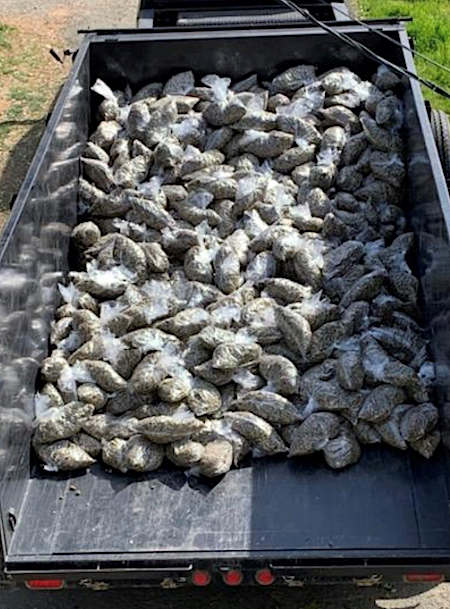
LAKE COUNTY, Calif. — The investigation of a water theft in the Clearlake Oaks area led this week to an arrest and the Lake County Sheriff’s Office’s largest seizure of illegal marijuana, estimated to be worth several million dollars.
On Tuesday, the Lake County Sheriff’s Office Roadmap Task force and the Sheriff’s Office Marijuana Enforcement Unit, conducted an investigation regarding water theft in the area of Henderson Drive.
During their investigation, detectives located three residences used to dry and process marijuana, the sheriff’s office reported.
Authorities said the investigation revealed all three residences were being used to illegally process marijuana for sales and were connected with the reported theft of water.
The sheriff’s office said the residences were secured by detectives and a search warrant for all three residences was obtained and executed late on Tuesday afternoon.
Detectives located and seized a 12 gauge shotgun, 2,326 marijuana plants and approximately 7,600 pounds of processed marijuana, a large majority of which was packaged and ready for sale.
The marijuana is estimated to have an approximate value of $7 million, the sheriff’s office said.
Detectives contacted and detained Salvador Diaz Maciel, 52, at one of the residences. Maciel was subsequently arrested and initially booked at the Lake County Correctional Facility for illegal cultivation and processing of marijuana.
The seizure of 7,600 pounds is the single largest seizure of processed marijuana by the Lake County Sheriff’s Office, to date, the agency reported.
“While licensed cannabis growers struggle to remain compliant with the regulations required of this industry, and further struggle to remain financially viable while dealing with the associated costs, such as fees, permits, and taxes, there continues to be a black market for this product,” said Sheriff Brian Martin.
“Operations such as this one pump large amounts of unregulated and untaxed cannabis into the market,” Martin said. “They avoid the costs that legitimate growers have to encumber by stealing water, avoiding taxes, and not complying with any regulations. These operations adversely impact the legal industry, have negative impacts on the environment, and are frequently the cause of other criminal activity. We will continue our efforts against large scale illegal operations such as this one.”
Anyone with information related to this investigation is asked to contact the Lake County Roadmap Task Force or Lake County Sheriff’s Office Marijuana Enforcement Unit at 707-262-4200.

- Details
- Written by: LAKE COUNTY NEWS REPORTS
Congressman Thompson said he worked to secure these investments to create good-paying jobs, improve charger access for California drivers, help protect California’s environment and support American car manufacturers’ rapidly growing EV production.
“Electric vehicles play a vital role in combating climate change and providing a cleaner environment by reducing carbon pollution across the country,” said Thompson. “The EV investments from the Infrastructure Investment and Jobs Act will create good-paying jobs by incentivizing the production of electric vehicles and investing in the expansion of EV charging stations across the country. As more money comes to California from this law, I look forward to ensuring that it is distributed equitably to all of our communities.”
The United States’ network of 100,000 chargers is currently insufficient to service the growing number of EV owners — and also struggles with inconsistent plug types, payment options and data availability.
The Infrastructure Investment and Jobs Act is investing in good-paying union jobs to address these shortcomings, advancing our goal to expand the U.S. network to 500,000 chargers and grow electric vehicle sales to 50 percent of the automobile market by 2030.
Thompson represents California’s Fifth Congressional District, which includes all or part of Contra Costa, Lake, Napa, Solano and Sonoma counties.
- Details
- Written by: Shannon Van Zandt, Texas A&M University
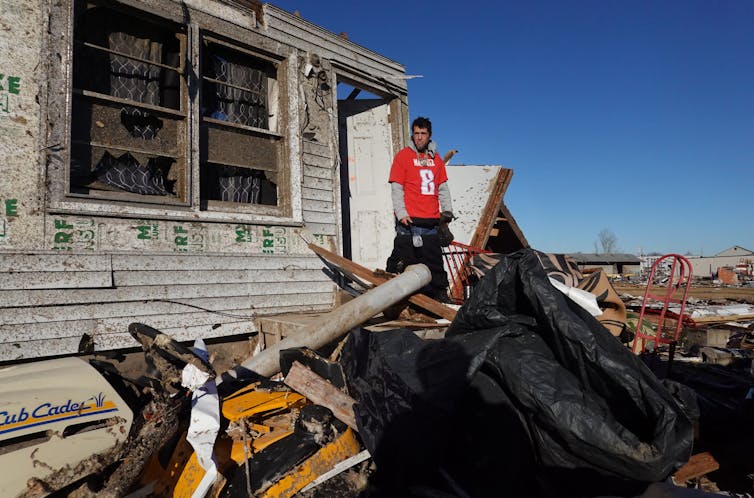
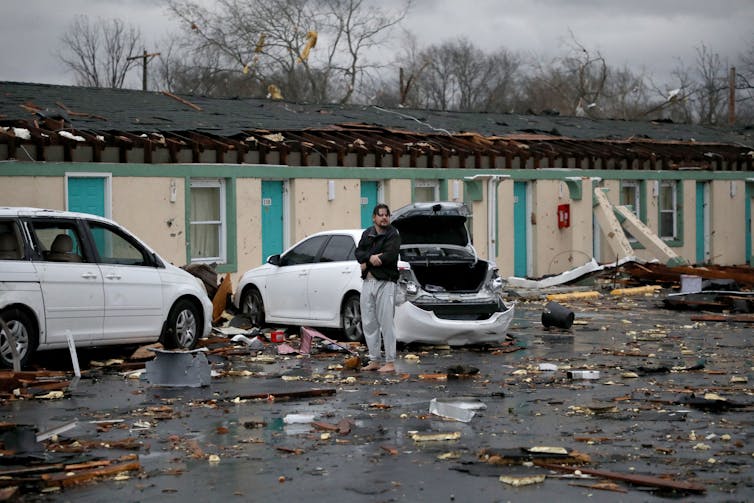
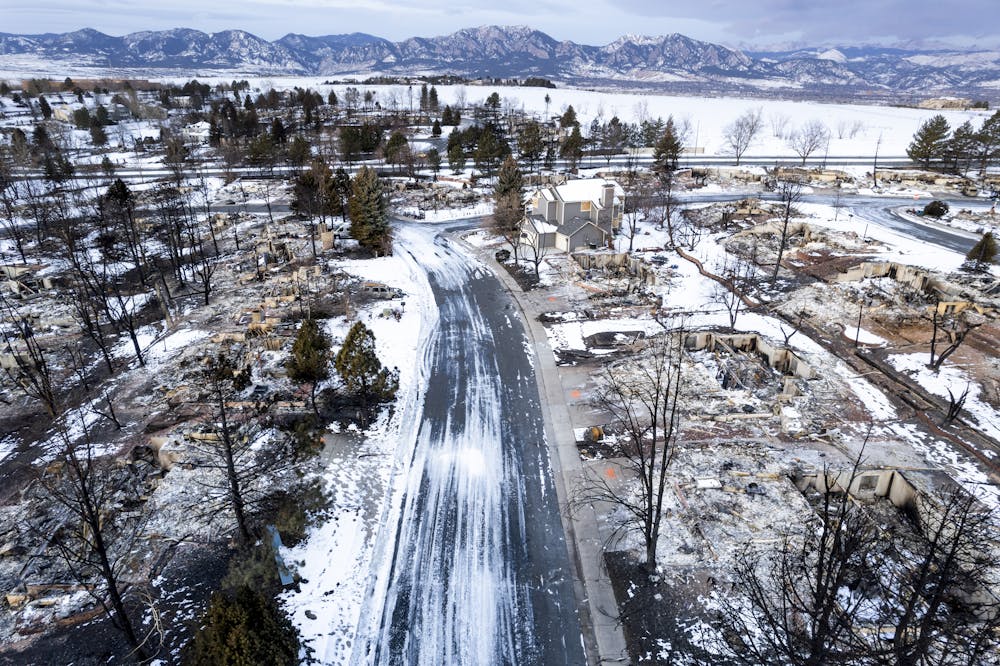
The tornadoes and wildfires that devastated communities from Kentucky to Colorado in the final weeks of 2021 left thousands of people displaced or homeless. For many of them, it will be months if not years before their homes are rebuilt.
That’s especially hard on low-income residents.
As a professor of urban planning, I study the impact of disasters on affordable housing, resilience and recovery. The losses of hundreds of homes in towns across the Midwest and in Boulder County, Colorado, show two sides of that impact and illustrate why communities need to plan now to protect their most vulnerable residents as their towns recover. In doing so, they also protect their economies.
Why low-income households face higher risks
Middle- and low-income households tend to occupy the riskiest homes in communities for a few key reasons.
First, land values tend to be lower in areas that are risky or otherwise less desirable, such as low-lying areas that are known to flood, near toxic facilities or in outlying areas that fail to enforce codes designed to protect homes. The housing that gets built there tends to be more affordable.
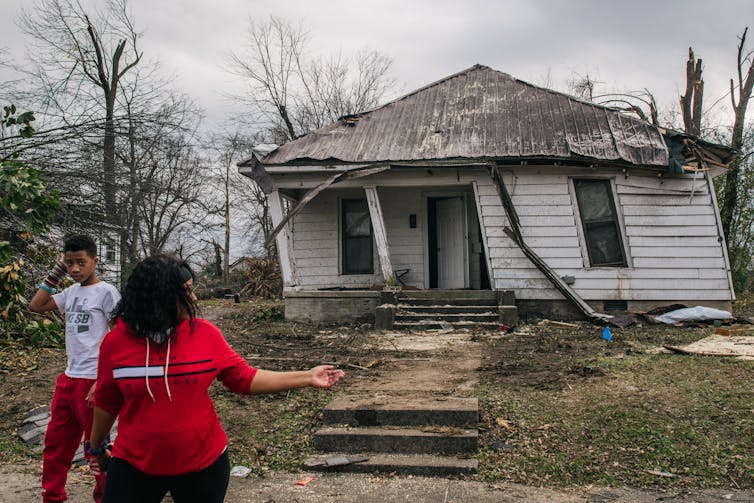
Second, as communities grow, older homes become more affordable through a process called “filtering,” where wealthier households move into newer housing, leaving older, more dilapidated homes available for lower-income households. Older homes were often built under less stringent building codes and typically are less-well maintained, which can make them more physically vulnerable.
Third, durable patterns of historical segregation and ongoing discrimination in real estate and lending can compound these problems by limiting Black and Hispanic families’ ability to afford lower-risk neighborhoods.
Research has shown consistently that lower-income households are not only more likely to suffer damage in a natural disaster, but they are more likely to take much longer – two to three times longer – to recover.
Poverty and other household characteristics, such as being headed by a single mother, having racial or ethnic minority status, low levels of education, a disability, or renting rather than owning one’s home, define what researchers call “social vulnerability.”
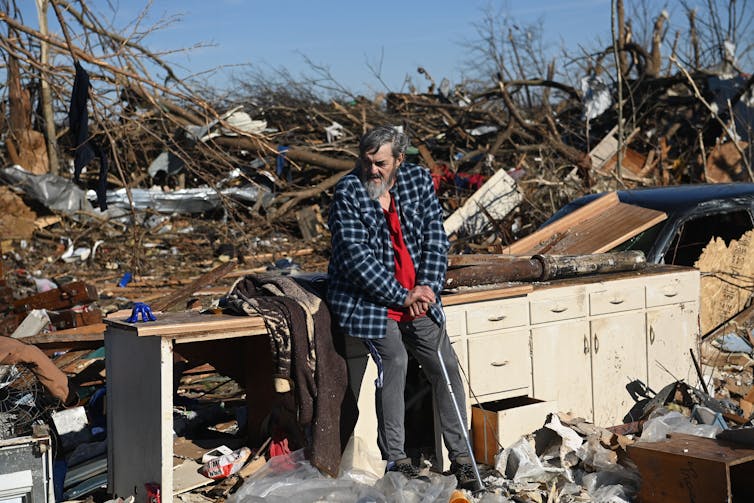
The location and quality of housing, combined with the vulnerability of residents, means that those most affected by disasters are often those least able to recover from them.
Slow recovery affects the entire community
Communities need to understand that slow recovery for vulnerable households can slow the recovery of the overall community.
Researchers have found that housing recovery is strongly linked to business recovery. Workers need housing so they can return to work, and businesses need workers so they can resume operations.
Rockport, Texas, where Hurricane Harvey made landfall in 2017, offers a cautionary tale. A year after the hurricane, hotels and restaurants – even those that were part of national chains – struggled to reopen for Rockport’s critical tourist season due to the loss of affordable housing for workers. Many of those workers had relocated to San Antonio, two and a half hours away.
Many homes can’t be replaced for the same price
Housing recovery typically gets left to the market. For homeowning households with good insurance, the market works reasonably well. But for lower-income households, including renters, it can be difficult to return to their homes or even their original neighborhoods.
In depressed markets with low-value homes, like many of those impacted by the December tornadoes in Kentucky and the Midwest, replacement values are not enough to rebuild equivalent housing. Home values in these areas may average under US$100,000. It is nearly impossible to build a home for that today.
Hot markets like Boulder County, Colorado, face a different challenge. Rebuilding in those markets allows developers and speculators to take advantage of redevelopment opportunities. Research suggests that affordable housing will almost always be replaced by more expensive housing targeted to a wealthier demographic. And for low-income residents who rent and lose their homes to disasters, there is little chance that they will be able to return to their original development. Little is known about where they end up.
Safety nets exist but are inadequate.
Short-term assistance from FEMA’s Individual Assistance Program helps displaced households find temporary housing and make repairs to homes that qualify. Assistance can also come from Community Development Block Grants from the Department of Housing and Urban Development, but these funds take months and even years to arrive, and spending plans submitted by states often misdirect funds and have almost no oversight.
What can be done?
What then, can be done to ensure vulnerable residents can rebuild and return? A few communities have tried new ideas.
La Grange, Texas, which flooded during Hurricane Harvey in 2017, is experimenting with community land trusts. These involve cooperative ownership of land coupled with individual ownership of units. Residents must occupy the unit for a prescribed period of time and gain only a small percentage of increases in land value, with the rest going to the co-op. This approach allows residents to pool resources for land purchases and maintains affordability over time.
Boulder County relaxed its rental rules to help displaced residents find temporary homes after the fire.
Monitoring recovery funds closely is also important to ensure they help those most in need. Following the 2008 Hurricanes Ike and Dolly, the Texas Low Income Housing Information Service, now called Texas Housers, sued the State of Texas, claiming the state recovery plan failed to address the needs of the most vulnerable Texans. The resulting agreement brought an additional $3 billion in aid, and ongoing monitoring of funding has ensured it helped rebuild hundreds of homes for low-income families.
Nearly every community in the United States is increasingly vulnerable to some kind of natural disaster due to climate change. A Washington Post analysis of federal disaster declarations found that 40% of Americans lived in counties that were hit with extreme climate-related weather in 2021 alone.
Planning disaster recovery to ensure that the most vulnerable members of communities can return will result in greater resilience and community vitality.
[Learn more about disaster recovery and resilience in The Conversation’s climate change webinar with Shannon Van Zandt on Feb. 23, 2022. Register here.]
Shannon Van Zandt, Professor of Architecture and Urban Planning, Texas A&M University
This article is republished from The Conversation under a Creative Commons license. Read the original article.
- Details
- Written by: Lake County Office of Education
The Office of Education’s new program, Communities for School Success, was implemented in partnership with Lake County school districts to address the high chronic absenteeism rates in Lake County schools. Chronic absenteeism is defined as missing two or more days of school, excused or unexcused, a month.
Angie DeMaria, a former Teacher at Terrace Middle School in Lakeport, is responsible for the implementation of this program and overseeing a staff of seven attendance liaisons.
An attendance liaison is an individual who works directly with students to find solutions to improve their attendance rates. Each liaison is assigned to a single school district.
Since the start of the 2021-22 school year, the attendance liaisons have reached out to 675 K-12 Lake County students. Of those students contacted, 65% of them showed improvement in their attendance.
“When students improve their attendance rates, they improve their academic prospects and chances for graduating,” said Lake County Superintendent of Schools Brock Falkenberg.
Students who are chronically absent are more likely to be behind in core subjects and drop out of school.
"I had a student that had an attendance rate of 53% in September. I worked with the school to enroll them in an alternate education program. Since enrollment in November, their attendance rate has been 100 percent,” said Attendance Liaison Brianna Kauble.
Barriers that are preventing regular school attendance include trauma, transportation, cultural differences or even students not finding school engaging or fun.
“Upon our first site visit, it was clear that the student had a major disconnect from school,” said another attendance liaison, Reyna Looney. “With incentives in place, the student has not missed a day of school for any reason since the 15th of November.”
Attendance Liaison Natahsa McKenny said COVID-19 has created anxiety and depression for students due to distance learning. Coming back to campus was not an easy transition for them.
“There are two students that stand out the most. Both were having anxiety about being back on campus. They made the decision to transfer to the continuation school. Since the students have made the transfer, they have gone to school every day and seem much happier,” McKenny said.
This Learning Communities for School Success program is a partnership between the Lake County Office of Education and the Lake County school districts and is grant funded through the California Department of Education.
For more information on attendance, visit www.lakecoe.org/Attendance.