 How to resolve AdBlock issue?
News
- Details
- Written by: John Rennie Short, University of Maryland, Baltimore County

The COVID-19 pandemic has generated mind-numbing statistics over the past two years: half a billion cases, 6 million deaths, 1 million in the U.S. alone. But another, less-publicized global scourge preceded it and is likely to outlast it: traffic deaths and injuries.
Around 1.35 million people die each year on the world’s roads, and another 20 million to 50 million are seriously injured. Half of these deaths and many of the injuries involve pedestrians, cyclists and motorcyclists – the most vulnerable users of roads and streets.
Around the world, someone dies from a road accident every 25 seconds. The head of the United Nations Road Safety Fund has called road deaths and injuries a “silent epidemic on wheels”.
I have studied cities and urban policy for many years, including transportation and road safety. In my view, making transportation systems safer is feasible and isn’t rocket science. The key is for governments to prioritize safer roads, speeds and vehicles, and to promote policies such as traffic calming that are known to reduce the risk of crashes.
The costs
It may seem like hyperbole to talk about road deaths as equivalent to pandemic diseases, but the numbers make the case. Road fatalities are now the top cause of death for children and young adults worldwide between the ages of 5 and 29, and the seventh-leading cause of death overall in low-income countries.
Crashes cause serious economic harm to victims and their families, as well as to the broader society. A 2019 study estimated that between 2015 and 2030, road injuries will cost the global economy almost $1.8 trillion.
Because death and injury rates are highest in low- and middle-income countries, dangerous roads add to the costs of being poor and are a major inhibitor of economic growth. That is why one of the U.N.‘s Sustainable Development Goals is to halve the number of global deaths and injuries from traffic incidents by 2030.
More deaths in lower-income countries
There is considerable variation in traffic fatality rates worldwide. Road traffic death rates range from 27 per 100,000 population in Africa to only 7 per 100,000 in Europe.
Richer nations have had mass automobile traffic longer than lower-income countries, so they have had more time to develop strategies and tactics to reduce accidents and fatalities. For example, in 1937 – in an era when traffic death in the streets of cities like New York was considered a routine part of metropolitan life – the U.S. road death rate was 31 per 100,000. That’s about the same as today’s rate in the Democratic Republic of the Congo.
Lower-income countries tend to have vehicles that are less safe; poorer roads; more vulnerable road users, such as pedestrians and cyclists, sharing urban space with vehicles; and poorer medical care, which means injury can more easily lead to death. These nations also have less ability to introduce or enforce traffic laws.

Traffic incidents in higher-income counties often only involve one or two people. In lower-income countries, incidents tend to involve multiple passengers.
For example, in 2021 in the Democratic Republic of the Congo, a fuel truck collided with a crowded bus 110 miles outside the capital of Kinshasa, killing 33 people. Deadly road incidents are frequent in the DRC, where the roads are poor, there are many unsafe older vehicles, many drivers are not properly trained and drinking and driving is common.
For many middle-income countries, the challenge is a very rapid increase in vehicular traffic as the population becomes more urban and more people earn enough money to buy motorcycles and cars. This quick rise can overwhelm the carrying capacity of urban roads.
In the US, less regulation and more deaths
There also are differences among richer countries. In 1994, Europe and the United States had the same traffic death rates, but by 2020 Americans were over three times more likely to die on the road than Europeans.
Today, 12 people are killed in traffic per 100,000 annually in the U.S., compared to 4 per 100,000 in the Netherlands and Germany, and only 2 per 100,000 in Norway. The difference reflects more aggressive programs across Europe to reduce speeds, greater investment in mass transit and stricter drunk driving enforcement.
The U.S. doesn’t just lag behind other rich countries in promoting road safety. In recent years, traffic deaths in the U.S. have increased. After a gradual reduction over 50 years, fatalities soared to a 16-year high in 2021 when almost 43,000 people died. Pedestrian deaths hit a 40-year high at 7,500.
What caused this surge in deaths? Roads were less busy during COVID-19 lockdowns, but proportionately more people engaged in riskier behaviors, including speeding, drinking and driving, distracted driving and not using seat belts.
Cyclist and pedestrian traffic deaths were rising even before the pandemic, as cities encouraged walking and biking without providing adequate infrastructure. Painting a white line on a busy street is not a substitute for providing a fully protected, designated bicycle lane.
Two harmful narratives about traffic safety
Two narratives often cloud discussions of traffic fatalities. First, calling these events “accidents” normalizes what I view as a slaughter of innocents. It is part of the cult of automobility and the primacy that the U.S. affords to fast-moving vehicular traffic.
Automobility has created a special form of space – roads and highways – where deaths and injuries are considered “accidents.” In my view, this is an extreme form of environmental injustice. Historically disadvantaged groups and poorer communities are overrepresented in traffic deaths and injuries.
The second misleading narrative holds that nearly all road deaths and injuries are caused by human error. Public officials regularly blame poor drivers, distracted pedestrians and aggressive bicyclists for street deaths.
People do take too many risks. In recent years, AAA’s annual traffic safety culture survey has found that a majority of drivers view unsafe driving behaviors, such as texting while driving or speeding on highways, as extremely or very dangerous. But significant numbers of drivers report engaging in those behaviors anyway.
But as urban studies expert David Zipper has pointed out, a persistent myth often cited by government agencies and the media asserts that 94% of accidents in the U.S. are caused by individual drivers. This bloated figure has successfully shifted responsibility away from other factors such as car design, traffic infrastructure and the need for more effective public policies.
Governments have the tools
As I see it, road traffic deaths and injuries are not accidents. They are incidents that can be prevented and reduced. Doing that will require governments and urban planners to reimagine transportation systems not just for speed and efficiency, but also for safety and livability.
That will mean protecting motorcyclists, bicyclists and pedestrians from vehicular traffic and reducing traffic speed on urban roads. It also will require better road design, enforcement of traffic laws that make the roads safer, and more effective and enforceable measures that promote safety devices like seat belts, child restraints, and helmets for bikers and motorcyclists.
Unlike the COVID-19 pandemic, making streets safer doesn’t require designing new solutions in laboratories. What’s needed is the will to apply tools that have been shown to work.
John Rennie Short, Professor, School of Public Policy, University of Maryland, Baltimore County
This article is republished from The Conversation under a Creative Commons license. Read the original article.
- Details
- Written by: LAKE COUNTY OFFICE OF EDUCATION
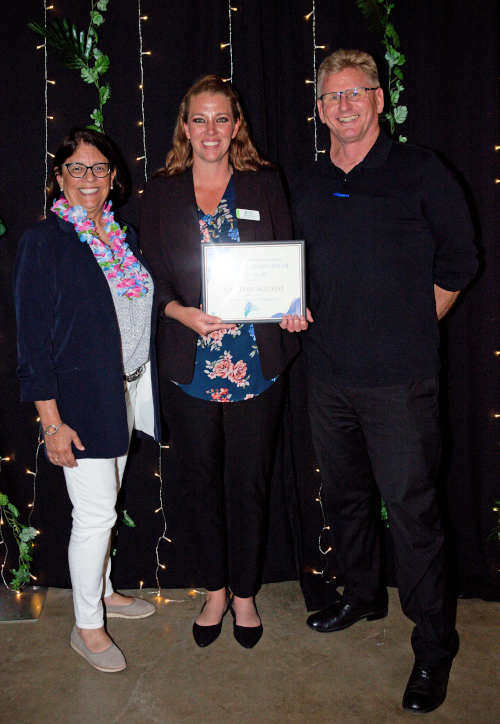
LAKE COUNTY, Calif. — The Lake County Office of Education’s Lake County Quality Counts held its 14th annual Early Educator Awards Dinner on May 13 at the Lake County Fairgrounds.
It was a night of celebration, highlighting the hard work and dedication of the early educators in Lake County.
This includes family child care providers, preschool teachers, Head Start, Early Head Start, Migrant Head Start teachers, North Coast Opportunities Rural Communities Child Care and First 5 Lake County.
Assemblymember Cecilia Aguiar-Curry and Lake County Superintendent of Schools Brock Falkenberg were on hand to acknowledge the good work of all 39 nominees.
“Research shows that quality early childhood education is associated with higher measures of early language and math development,” Falkenberg said. “Congratulations to all of the nominees who work so hard to provide that quality experience to the youngest members of Lake County.”
The Early Educator Award recipients for 2022 are:
• Preschool Teacher Award: Denise Villalobos, NCO Head Start.
• Infant/Toddler Teacher Award: Audrey Edlow, Early Head Start.
• Outstanding Program Support Award: Paige Braun, Early Head Start.
• Home Visitor Award: Brook Diggs, Early Head Start.
• Inclusion Award: Aldo Rodriguez, NCO Head Start.
• Leading the Field Award: Jamie Castaldo, NCO Rural Communities Child Care.
• Advocate Award: Soledad Aguayo, Easter Seals.
• Lifetime Achievement Award: Joy Swartz, NCO Head Start.
Angela Cuellar-Marroquin, Lake County Child Care Planning Council director, explained the importance of these awards. “Early education is the foundation of a successful academic career. It’s a time that we recognize the hard work that the early educators do each and every day.”
This event was made possible through the sponsorship of Redwood Credit Union, Lake County Tribal Health Consortium, First 5 Lake County, NCO Rural Communities Child Care, Assemblymember Cecilia Aguiar-Curry, Middletown Rancheria Twin Pine Casino, Lake County Department of Social Services, Mary Prather, Learning Genie and That Ranch.
To learn more about the LCOE LCQC program, visit our website at www.lakecoe.org/LCQC.
- Details
- Written by: CONGRESSMAN MIKE THOMPSON’S OFFICE
The authors said this legislation includes common sense measures supported by the American people that will help end gun violence and save lives.
“We are all heartbroken by the senseless shooting at Robb Elementary School in Uvalde, Texas, the hate inspired grocery store shooting in Buffalo, as well as the countless lives lost every day to gun violence that are not covered by the media,” said Thompson. “I am proud to join Chairman Nadler and Chairwoman Jackson Lee in introducing the Protect our Kids Act. This live-saving legislation offers families more than thoughts and prayers. It provides common sense measures to help us end gun violence by raising the age to purchase certain firearms, cracking down on gun trafficking, ghost guns and bump stocks, supporting safer storage of firearms, and banning large capacity magazines often used in mass shootings.
“As a lifelong hunter and gun owner, I believe in a law-abiding individual’s right to own a firearm. We also have a responsibility to help keep our schools, streets and communities safe. The Protect our Kids Act respects the Second Amendment while also taking steps necessary to help combat gun violence and help save lives.
“The House, under the leadership of Speaker Pelosi, has taken action to pass multiple common sense gun violence prevention measures that would save lives including my bipartisan legislation, H.R. 8, the Bipartisan Background Checks Act. And we will take further action to pass red flag legislation and the Protect our Kids Act upon our return to Washington next week.
“Despite the overwhelming support of the American people, Senate Republicans have failed to show the courage needed to face the gun lobby and help save lives. The time to act is now.”
The House Judiciary Committee Democrats will markup H.R. 7910, the Protecting Our Kids Act, on Thursday.
H.R. 7910 would:
• Raise the lawful age to purchase a semiautomatic centerfire rifle from 18 to 21 years old.
• Establish a new federal offense for the import, sale, manufacture, transfer or possession of a large capacity magazine, with exceptions for certain law enforcement uses and the possession (but not sale) of grandfathered magazines; allow state and local governments to use the Edward Byrne Memorial Justice Assistance Grant Program to compensate individuals who surrender large capacity magazines through a buyback program.
• Establish new federal offenses for gun trafficking and straw purchasers and authorize seizure of the property and proceeds of the offense.
• Establish voluntary best practices for safe firearm storage and award grants for Safe Firearm Storage Assistance Programs.
• Establish requirements to regulate the storage of firearms on residential premises; create criminal penalties for violation of the requirements.
• Build on ATF’s regulatory bump stock ban by listing bump stocks under the National Firearms Act and statutorily banning the manufacture, sale, or possession of bump stocks for civilian use.
• Build on ATF’s regulatory ban of ghost guns by ensuring that ghost guns are subject to existing federal firearm regulation by amending the definition of “firearm” to include gun kits and partial receivers and changing the definition of “manufacturing firearms” to include assembling firearms using 3D printing.
Following the tragedy at Sandy Hook Elementary School, then-Democratic Leader Nancy Pelosi appointed Rep. Mike Thompson Chairman of the House Gun Violence Prevention Task Force.
This group, consisting of more than 185 Members of Congress, said it is devoted to finding common sense solutions to our nation’s ongoing gun violence epidemic.
- Details
- Written by: Janine Smith-Citron
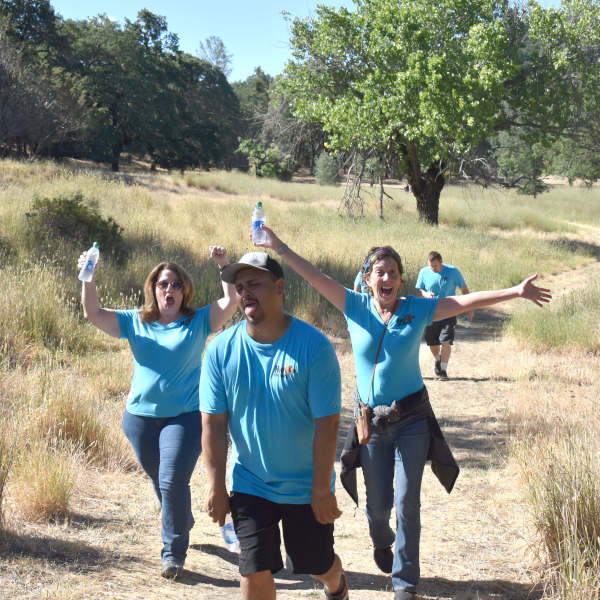
LAKEPORT, Calif. — Hospice Services of Lake County will present the seventh annual Hike for Hospice, a fundraising and friend-raising event, on Saturday, June 11, starting at 9 a.m., at Highland Springs Park.
Hikers and walkers who want to participate in the hike are encouraged to pre-register at https://secure.qgiv.com/event/hsolcp2p, call 707-263.6222, or register on the day of the hike.
Each hiker 12 years and older is asked to donate $10 for registration, and a $25 donation qualifies hikers for an event T-shirt.
Hikers or teams of hikers are encouraged to have family and friends sponsor their hikes by donating to Hospice Services of Lake County.
Participants may invite their supporters to go online and donate on their behalf, or they may collect donations and bring them to the event as they check in to hike.
Hikers will start their trek after checking in by 9 a.m. at Highland Springs Park, 3600 E. Highland Springs Road, with an anticipated end time of 10:30 a.m.
Check-in begins at 8 a.m. at the picnic area near the reservoir. Hikers may choose one of four expertly marked hiking trails by trailblazer Kim Riley. Trails are one, two, three or 4.5 miles long. Hikes range from very gentle to a bit more challenging.
As hikers return, the fun continues with refreshments, lively music and awards given in categories such as “most money raised by an individual and team” and “most creatively dressed individual/team.” Creative apparel is highly encouraged.
This event is supported by many generous sponsors committed to the compassionate care provided by Hospice Services including Calpine, Sutter Lakeside Hospital, Lake County Tribal Health, VanDerWall Engineering, Strong Financial Network, Jonas Energy Solutions, Chapel of the Lakes Mortuary and Crematory, California Exterminators Alliance, Shelly Reed/Century 21 Epic, Adventist Health Clear Lake, Lincoln Leavitt Insurance Agency Inc, Michaels Insurance Services, Sterling Mortgage, The UPS Store, Carlton Tire, Twin Pine Casino and Hotel, Lucerne Roofing Corp., Community First Credit Union, Lake Parts Inc. and Aponte Barrel Works.
Highland Springs Park is off Highway 29 past the Lampson Field Airport. Donations from this event will support the Wings of Hope children’s programs and serve the special needs of Hospice patients.
For more information, to register to hike or to sponsor a hiker, go to www.lakecountyhospice.org, or email
Janine Smith-Citron is director of development for Hospice Services of Lake County.