 How to resolve AdBlock issue?
News
- Details
- Written by: NATIONAL AERONAUTICS AND SPACE ADMINISTRATION

NASA’s James Webb Space Telescope, a partnership with the European Space Agency and the Canadian Space Agency, will release its first full-color images and spectroscopic data on July 12.
As the largest and most complex observatory ever launched into space, Webb has been going through a six-month period of preparation before it can begin science work, calibrating its instruments to its space environment and aligning its mirrors.
This careful process, not to mention years of new technology development and mission planning, has built up to the first images and data: a demonstration of Webb at its full power, ready to begin its science mission and unfold the infrared universe.
“As we near the end of preparing the observatory for science, we are on the precipice of an incredibly exciting period of discovery about our universe. The release of Webb’s first full-color images will offer a unique moment for us all to stop and marvel at a view humanity has never seen before,” said Eric Smith, Webb program scientist at NASA Headquarters in Washington. “These images will be the culmination of decades of dedication, talent, and dreams — but they will also be just the beginning.”
Behind the scenes: Creating Webb’s first images
Deciding what Webb should look at first has been a project more than five years in the making, undertaken by an international partnership between NASA, ESA, CSA, and the Space Telescope Science Institute, or STScI, in Baltimore, home to Webb’s science and mission operations.
“Our goals for Webb’s first images and data are both to showcase the telescope’s powerful instruments and to preview the science mission to come,” said astronomer Klaus Pontoppidan, Webb project scientist at STScI. “They are sure to deliver a long-awaited ‘wow’ for astronomers and the public.”
Once each of Webb’s instruments has been calibrated, tested, and given the green light by its science and engineering teams, the first images and spectroscopic observations will be made.
The team will proceed through a list of targets that have been preselected and prioritized by an international committee to exercise Webb’s powerful capabilities.
Then the production team will receive the data from Webb’s instrument scientists and process it into images for astronomers and the public.
“I feel very privileged to be a part of it,” said Alyssa Pagan, a science visuals developer at STScI. “Typically, the process from raw telescope data to final, clean image that communicates scientific information about the universe can take anywhere from weeks to a month,” Pagan said.
What will we see?
While careful planning for Webb’s first full-color images has been underway for a long time, the new telescope is so powerful that it is difficult to predict exactly how the first images will look.
“Of course, there are things we are expecting and hoping to see, but with a new telescope and this new high-resolution infrared data, we just won’t know until we see it,” said STScI’s lead science visuals developer Joseph DePasquale.
Early alignment imagery has already demonstrated the unprecedented sharpness of Webb’s infrared view. However, these new images will be the first in full color and the first to showcase Webb’s full science capabilities.
In addition to imagery, Webb will be capturing spectroscopic data — detailed information astronomers can read in light.
The first images package of materials will highlight the science themes that inspired the mission and will be the focus of its work: the early universe, the evolution of galaxies through time, the life cycle of stars, and other worlds.
All of Webb’s commissioning data — the data taken while aligning the telescope and preparing the instruments — will also be made publicly available.
What’s next?
Science! After capturing its first images, Webb’s scientific observations will begin, continuing to explore the mission’s key science themes. Teams have already applied through a competitive process for time to use the telescope, in what astronomers call its first “cycle,” or first year of observations. Observations are carefully scheduled to make the most efficient use of the telescope’s time.
These observations mark the official beginning of Webb’s general science operations — the work it was designed to do. Astronomers will use Webb to observe the infrared universe, analyze the data collected, and publish scientific papers on their discoveries.
Beyond what is already planned for Webb, there are the unexpected discoveries astronomers can’t anticipate. One example: In 1990 when the Hubble Space Telescope launched, dark energy was completely unknown. Now it is one of the most exciting areas of astrophysics. What will Webb discover?
The James Webb Space Telescope is the world's premier space science observatory. Webb will solve mysteries in our solar system, look beyond to distant worlds around other stars, and probe the mysterious structures and origins of our universe and our place in it. Webb is an international program led by NASA with its partners, the European Space Agency and the Canadian Space Agency.
- Details
- Written by: Elizabeth Larson
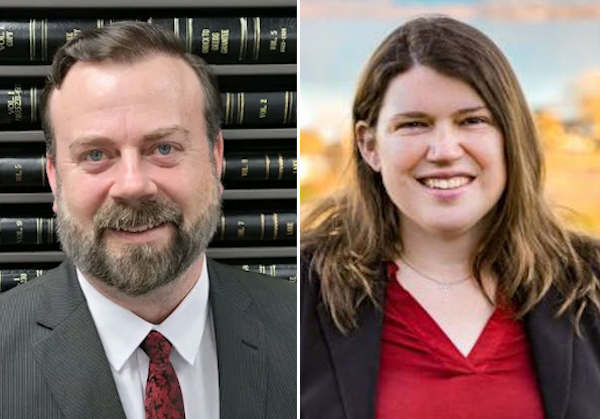
LAKE COUNTY, Calif. — The Assessor-Recorder’s Office is an agency that plays an important role in county government finances, and it’s not often one that many people think about unless they’re getting a property tax bill late in the year.
The elected position that runs the office is not often contested in elections unless there is a retirement.
However, 2022 is different, and this year the assessor-recorder’s race is one of the strongly contested races on the June 7 primary ballot.
Incumbent Richard Ford is seeking a third term, and he’s being challenged by Hannah Faith Lee, a local businesswoman and deputy county public guardian.
The Assessor-Recorder’s Office is a key fiscal office for the county of Lake, and one that oversees a main source of general fund money — the property tax roll.
Ford said the property tax roll supplies between 50 and 55% of the general fund — the county receives approximately 25 cents of every property tax dollar — and in so doing is a key revenue source for local schools, cities and the county itself. He calls it a tiny office with a “big bang” financially.
This is only the third time in 20 years that the assessor-recorder’s job has been contested.
The last time was in 2014, when Ford won election over Sorhna Li Jordan, both of whom were seeking to succeed longtime Assessor-Recorder Doug Wacker. In 2002 Wacker won a contested race over Michael Wochna, a year after the Board of Supervisors appointed Wacker to succeed Dan Irwin.
This year, key issues in the race revolve around increased property tax bills that 1,000 county residents received last year due to restored base year values under Proposition 8, which had given property tax relief as a result of the recession, and recording times for documents, which local real estate professionals in particular have complained about since the county allowed a temporary Friday closure of offices two years ago. Those closures have since been lifted.
Ford and Lee said in interviews with Lake County News that neither had originally intended to run for political office.
Ford said he first ran for the office eight years ago in response to a retirement and Lee is challenging Ford because she said she’s responding to how he’s handled issues like adjusting values under Proposition 8 due to an improved market.
Lee’s background, experience and accomplishments
Lee, 34, grew up in Sonoma County and moved to Lake County with her family in 2005, at age 18.
Her father is a contractor who at that time built spec homes but switched to general construction after the housing crash. Her parents and a sister still live in Lake County. Lee and her fiance, Matt Sesser, live in Kelseyville.
She has a bachelor’s degree in psychology and business management from Marymount California University, associates degrees in business and income tax preparation, and multiple certifications in accounting and income tax preparation from Yuba Community College, now Woodland Community College.
Lee said she worked in fast food — specifically, at Pizza Hut — and then started a career as a veterinary technician, before moving on to social work.
She participated in committees with other counties for Adult Protective Services and In-Home Supportive Services and was part of a successful effort to provide emergency housing for elders in abusive situations.
She and Sesser purchased Main Street Bicycles on Jan. 1, 2021, changing its name to Konocti Bicycles.
The business has had significant negative publicity due to its previous owner’s prosecution for child pornography, but Lee said they were able to get through that challenge to relaunch and rebrand the business successfully.
Lee currently works as a deputy public guardian for the county of Lake, taking care of more than 80 individuals and their estates, with totals ranging from $5,000 to $1.5 million.
In that capacity, she’s held accountable by the courts, and she follows the probate code to the letter. She said she oversees all aspects of the lives of the people in her care.
“I’m not just a social worker,” she said. “I bring the numbers side as well as the human side.”
Ford’s background, experience and accomplishments
Ford, 52, grew up in Southern California. He is married with two sons and has been a longtime scoutmaster and assistant scoutmaster.
He holds a Bachelor of Science degree in accounting and a Master’s in Business Administration degree, as well as state of California appraisal, auditor-appraisal and advanced appraiser licenses.
He held various accounting jobs and worked for a Fortune 500 company. After going through two large mergers, he decided to seek work in the government.
About 10 years ago Lake County Auditor-Controller/County Cathy Saderlund hired him as her assistant-auditor controller. Two years later, Doug Wacker announced he planned to retire from the assessor-recorder’s job.
While Ford had never planned to run for office, he believed he had the financial background and skills to hold the office, so he ran and won.
During his first two terms, Ford said he has built up a staff after longtime challenges with hiring, which is a countywide problem.
When he started nearly eight years ago, there were four full-time appraisers in his office; now there are seven. He also had no auditor-appraisers when he began and now there are three, with one scheduled to be certified next year. There was one advanced appraiser and now there are four; next year, one more will be certified.
He said that during his tenure, the property tax roll has increased from $6.6 billion to $8.2 billion.
Overall, Ford said his office monitors in its system about 100,000 Items; that includes approximately 80,000 properties and 20,000 recordings of documents.
Ford said he and his staff had a large work backlog when he began as assessor-recorder; he estimates they have gotten through 75% of it.
That backlog and what it means has been a frequent talking point during the campaign.
In response to a question about the backlog’s specifics, Ford said the backlog originally included 10,800 properties that needed to have a Proposition 8 review, with that number now down to 4,000; 350 assessments appeals, which have been reduced to 23; and 7,000 newly permitted properties that have to be entered into the system, which is now down to 4,000.
He said he’s turned his office into a learning environment, with daily training and an approach that emphasizes learning from mistakes, not getting in trouble for them. As a result, he said things are getting done faster and more efficiently. “Our accuracy has increased substantially.”
They’ve also reduced the number of assessment appeals. Previously, there were 300 to 400 a year. Now, Ford said it’s down to about two dozen. They’re willing to take additional information from property owners and look at ways to make their assessments more accurate in making final determinations.
When Ford first arrived in office, the Lake County Assessor-Recorder's Office was not self-funded by fees, as is the case for most other assessor-recorder’s offices statewide.
Instead, the office needed to draw $160,000 a year from the general fund because its fees were too low by about half, and were the lowest in the state, Ford said.
By raising the fees, Ford said his department became self-funded and is now about to give back $20,000 to the general fund.
Reasons for running
Incumbents bring with them a record of performance and experience, which can also lead to criticism. This campaign season, Ford has been criticized for how he’s handled certain issues, from updating property values under Proposition 8, to recording documents for real estate transactions, to questions about why fire survivors’ property values haven’t been adjusted.
He said he’s tried to answer that criticism and clean up misunderstandings, but he added, “I’m probably the worst politician you've ever seen, to be honest.”
Asked why he is running again, he called it “a very good question,” noting that it’s a tough job and during his tenure there have been no “normal years” with so many fires, floods and now the pandemic.
During the Ranch and River fires in 2018, when all of Lakeport was evacuated, his staff had to grab laptops and set up a separate office at the Social Services Department in Lower Lake.
“We’ve become a lot more nimble technology-wise,” he said.
He added, “I’ve got the best staff in the world.”
He points to the work he’s done so far as a reason for continuing in office. Along with that, Ford said seeking a third term is a matter of “wanting to finish the job, really,” to finish the work he started nearly eight years ago, including whittling down a backlog of thousands of properties needing Proposition 8 value adjustments and getting the office on a stronger technological footing.
For challengers, like Lee, the biggest criticism is usually lack of experience. She said she believes she can learn the job and get up to speed in order to make improvements.
Lee said she wasn’t looking to run for a political position at all; however, there were two prompts that led her to putting her name on the ballot.
One of those issues arose last fall, when new property tax bills went out two weeks before the due date.
For approximately 1,000 property owners, that’s when they found out that property tax relief that they had received through Proposition 8 had ended and that their bills had gone up significantly.
Lake County News spoke to several property owners who got big bills last fall and who didn’t remember having asked the county for the temporary reduction in the first place.
Under Proposition 8, properties that qualify are given a temporary reduction in their taxable value as a result of their properties’ market value being less than the assessed value.
He said that during the Great Recession of 2008 and 2009, before he took office, there were many applications for relief through Proposition 8, and that the reductions had ended due to the improved market.
Ford explained it this way: Someone bought a house in 2008 for $500,000 and in 2010 the house was only worth $200,000. As a result, the property tax value was reduced to $200K at that time.
When the market recovered and their house value was worth $400,000, “We are obligated by law to restore their value” up to the correct amount, Ford said.
Lee said she’s not contesting that restoring those property tax values were necessary. “It had to be done.”
What she does take issue with is that there should have been communication months in advance between the Assessor-Recorder’s Office and the affected property owners, some of whom she said are on fixed incomes. Finding out at the last minute didn’t give them a chance to rework their budgets before the holidays, she said.
Many people went on social media to discuss the matter. “Communication would have been key in helping those individuals,” Lee said.
She said many of those impacted didn’t remember asking for such a temporary reduction. “I don’t remember what I did 12 years ago.”
People familiar with Lee’s work as a deputy public guardian asked her to consider running for assessor-recorder. Lee said she then sat down and spoke to Sesser about it and the potential impact on their life together.
Ultimately, she made the decision to run because she believes change needs to occur. It’s something she said she feels strongly about, because she believes that communication, service and accountability need to be brought back to the office.
“It needs to be addressed immediately,” she said.
Lee said she’s not just a social worker, she has the ability to translate the numbers in ways people can understand.
Ford responds to criticisms
One of the recurring complaints against Ford that he said he has worked to dispel revolves around Friday closures that had involved all county offices in the courthouse in an effort to let departments catch up because of the county government’s job vacancy rate, which has remained above 20%, as well as workloads exacerbated by the wildland fires and economic challenges.
Ford told Lake County News that the Friday closures did benefit the office greatly by allowing staff to catch up.
The office closures began in August 2018, after the Board of Supervisors voted to support a request by then-County Administrative Officer Carol Huchingson to start a pilot program to close county offices — particularly those in and around the Lake County Courthouse in Lakeport — to the public on Fridays.
During a November 2020 meeting, the supervisors voted unanimously to phase out the Friday closures by the end of March 2021. During that discussion, several real estate professionals spoke to the board about the challenges the closures had created for their profession. At the same time, neither Ford nor any members of his staff were present for the discussion or could be reached to take part in it.
Numerous letters to the editor from some of those same business owners this campaign season have pointed to those issues and have continued to criticize Ford for the office closures — which ended more than a year ago.
Ford said he’s tried to counter the belief that the closures are continuing, along with complaints by real estate agents and brokers that his office only records documents at certain times of the day. He said he’s sent out a white paper to real estate agents in an attempt to dispel that idea.
As explanation, Ford said title company recording appointments were reduced from two times per day to one per day based on the COVID-19 protocols implemented by the Board of Supervisors. As soon as the protocols were lifted, the title company recording appointments were restored to two times per day, he said.
“The only reason we have appointments is to accommodate the public and the title companies at the same time,” Ford said. “The public traditionally comes during lunch hours. We schedule the title companies an appointment before and after the lunch hours. This allows both the public and title companies to get processed quickly and reduce wait times for both.”
In response to criticisms about the length of time it takes to turn around documents for recording, Ford said his office has to follow state rules and internal controls and make sure to properly follow the process to protect documents.
Ford said he believed he’d had a good relationship with real estate agents and has tried to keep them “as abreast of the information as possible,” and so he’s been puzzled by their criticism of his performance.
Lee said the issues with the real estate community boiled down, again, to a breakdown in communication that Ford could have explained to the community.
She said she’s also spoken to fire survivors who have told her that they continue to pay property tax for homes that have burned. She said she’s reached out to Sonoma County, which did significant outreach to property owners impacted by the Kincaid and Tubbs fires, to find out how they handled the matter.
She said the county needs to make sure it's not adding to the suffering of fire survivors by taxing them as if their property hadn’t been destroyed.
Ford responded that fire/calamity reduction of valuation is based on Section 170 of the Revenue and Taxation Code, which calls for removing the valuation of damaged properties where the damage is above $10,000. The value of the land and a small valuation is required for utilities to remain.
“To the best of our knowledge all fire victims from all fires have had their valuation removed,” said Ford. He added that if there are any properties that residents feel have not had their valuation removed, he asked them to contact his office and they will apply section 170 reduction as soon as possible if it applies.
Lee said she’s been criticized for accepting endorsements. “In my mind endorsements do not mean quid pro quo.”
She said she also wants to institute electronic recording, as is used in other counties.
Ford said that process is well underway but that the company that handles county property tax systems announced that it’s leaving California. His office is now working on a new sealed bid process to select a new vendor. Electronic recording is processed through a module of the recording system and the module will be purchased with the new recording system.
Goals and priorities
For Lee, most of whose management experience came from her earlier career when she worked in fast food, the very first thing she would do is meet with every employee individually to get their input on what works and what doesn’t, what needs to change and what should remain. She plans to acknowledge their concerns and set meaningful goals for them.
While she likes the idea of regular training, she said she thinks Ford’s practice of daily training may be a bit much and that it can be done less frequently. There also are opportunities she’s aware of to send staff to continuing education training with the State Board of Equalization.
She said she wants to see a memorandum of understanding reached between the treasurer-tax collector, assessor-recorder and auditor-controller so that each knows how it works with the other key finance departments.
“The people of Lake County cannot continue to have a government that is not speaking to each other,” she said, explaining departments have to put aside differences. “We need to move forward now and take care of the citizens of Lake County.”
Lee will need to get a temporary appraiser’s certificate if she’s elected, but she said it’s “not a difficult thing to do.”
She said she has a college degree and school comes easily for her, so she doesn’t anticipate any problems doing that.
Among his priorities, Ford wants to continue getting through the backlog.
His initial estimate was that it would take 10 years to work through it, and that he’s close to being on schedule. “I’m naturally a fixer.”
Ford estimated that he needs another two to three years to complete the backlog, explaining that the work likely would have been completed had it not been for the county’s fires and the COVID-19 pandemic.
He said he doesn’t want to leave the work undone, and it feels a little bit like Don Quixote.
Ford also wants to complete the succession planning he’s started, which he says is important due to the assessor-recorder being a key financial office.
Ultimately, Ford said he wants to see the community succeed.
Email Elizabeth Larson at
- Details
- Written by: Elizabeth Larson
The council held a special hour-and-a-half-long meeting Thursday afternoon to consider Roopa Shekar’s appeal after the city hearing officer — City Manager Alan Flora — denied her appeal of the city’s order to abate the building, located at 14525 Lakeshore Drive.
Once upon a time the building was known as the Lakeshore Inn, one of the busy lakeside resorts that in its heyday was “the place to be,” longtime city resident Bob Mingori told the council in an email this spring.
The building most recently housed the Sunflower Chinese restaurant, which operated there until it was closed in 2018. The city deemed it a health and safety hazard and a public nuisance in December 2018 and issued an abatement order on April 29, 2021.
The city had no luck getting the owner at that time to abate the building, and in July was set to approve a demolition contract when Shekar, who purchased it the previous month but said she did not know it was under an abatement order, came forward to ask for more time to renovate it.
However, with city officials reporting little progress had been made, in April the council voted to approve a contract with Chernoh Excavating to demolish and abate the structures, and since then Shekar has appealed to the city to let her continue her work.
City leadership has faulted Shekar for not getting the needed work done while Shekar said during Thursday’s hearing that the city hasn’t set realistic deadlines based on the work that needs to be accomplished.
Assistant City Attorney Dean Pucci of the Jones & Mayer law firm walked the council through the public hearing, explaining that it was not meant to get into the project’s merits but to consider whether or not to overturn Flora’s denial of Shekar’s appeal based on the information Flora had available to him during the April appeal hearing.
Shekar asked for a continuance to give her more time to bring in her team to discuss the matter, stating she only had eight days’ notice. The council denied that request and moved forward with hearing the appeal.
Councilman Russ Cremer asked Shekar how much time she needed to get the required reports to the city in order to receive permits to move forward. Shekar said six weeks.
Councilwoman Joyce Overton asked if the council could give Shekar a certain amount of time to try to meet the requirements and avoid abatement. Pucci said that once the council made a decision on the appeal, it could tack on whatever parameters that it wished for how staff should handle the abatement.
Greg Palmer, another lawyer with Jones & Mayer who works on code enforcement matters, assisted Code Enforcement Manager Lee Lambert with his presentation to the council.
Lambert reviewed the nearly four years of effort by the city to see the property cleaned up and improved, ending in the April council vote on the abatement contract and Flora’s subsequent denial of Shekar’s abatement appeal.
Shekar said the hearing wasn’t fair because none of her latest pictures showing the work she has done on the building were included in the evidence offered.
The pictures Lambert presented to the council showed the building’s deteriorating interior, with damaged walls and the ceiling, holes in the Sheetrock, missing and damaged flooring, and mold in the bathrooms.
In response to questioning from Palmer, Lambert said it was his opinion that the building needed to be demolished. While he said it was possible that it could be renovated, it may not be viable due to cost.
Shekar told the council that she has continued her efforts to complete plans in order to do the work. She brought out what appeared to be architectural plans on large sheets of paper and showed them to the council.
She said she has cleaned the building, secured it and put up cameras.
Asked by Lake County News during the meeting’s public comment portion about what Shekar needed to do in order to get permits and start work, Flora said the way to cure the violations is to acquire a building permit.
From the very beginning, Flora said, Shekar needed to submit engineered plans in order to get that permit.
Flora said he had agreed to hold off on making a decision in Shekar’s first appeal hearing for two weeks in order to allow her to contract with an engineer and a general contractor.
Shekar said she had submitted a letter from a general contractor but Mayor Dirk Slooten said that letter did not constitute a contract, as the city required.
Pucci told Shekar the hearing was her opportunity to present to the council what she felt was flawed in the April appeal hearing before Flora. “We’re bleeding over into more of a request for more time and continuance and evidence of what Ms. Shekar has or has not done” and not whether Flora made the proper decision with the information he had at the time.
Cremer said he had been hoping Shekar would succeed. “It can only go so far and it’s been nearly a year now,” he said.
Shekar said the project has been extremely challenging, with finding people to do the work one of the key problems. It took almost three months to complete an as-is build plan.
“Your credibility is becoming a little thinner to me, to be honest,” said Cremer, pointing out that she had tried to get a roofing permit before she had looked at the soundness of the walls or foundation.
In looking at the photos presented as evidence, Overton said she saw a lot of Sheetrock damage which is repairable, but no evidence of structure problems.
“Why is it that we consider this structurally unsound? Where is the proof from our side that this is structurally unsound?” she asked.
Slooten pointed to a letter from an engineer that said there were structural issues, but Overton replied that none of the evidence said the building was unsafe to repair.
The council voted unanimously to uphold Flora’s decision to deny Shekar’s appeal of the abatement order against her property.
However, council members also directed staff to give Shekar the opportunity to submit the engineered plans in order to get the building permit.
Her new deadline to complete those tasks is Aug. 1. If the building permit is issued before then, Flora won’t sign the contract for Chernoh Excavating to demolish the building.
“You’ve got to follow through with this because we're being lenient here,” said Overton.
Police Chief Andrew White also noted that the property has high weeds that need to be mowed. Shekar said she would take care of it.
Email Elizabeth Larson at
- Details
- Written by: Elizabeth Larson
The City of Clearlake Animal Association also is seeking fosters for the animals waiting to be adopted.
Call the Clearlake Animal Control shelter at 707-273-9440, or email
Visit Clearlake Animal Control on Facebook or on the city’s website.
The following dogs are available for adoption.

‘Colt’
“Colt” is a male Rhodesian Ridgeback mix with a short rust and black coat.
He has been neutered.
He is dog No. 49812106.

‘Bear’
“Bear” is a male Labrador retriever-American pit bull mix with a short charcoal and fawn coat.
He has been neutered.

‘Andy’
“Andy” is a male American pit bull mix with a short gray and white coat.
He is dog No. 48995415.

‘Big Phil’
“Big Phil” is a 13-year-old male American pit bull terrier mix with a blue coat.
He is dog No. 49951647.

‘Chai’
“Chai” is a female Alaskan husky mix with a gray and white coat.
She has been spayed.
She is dog No. 49279552.

‘Snowball’
“Snowball” is a male American Staffordshire mix terrier with a white coat.
He has been neutered.
He is dog No. 49159168.

‘Terry’
“Terry” is a handsome male shepherd mix with a short brindle coat.
He gets along with other dogs, including small ones, and is discovering that he enjoys toys. He also likes water, playing fetch and keep away.
Staff said he is now getting some training to help him build confidence.
He is dog No. 48443693.
Email Elizabeth Larson at