 How to resolve AdBlock issue?
News
- Details
- Written by: Angela De Palma-Dow
Dear Lady of the Lake,
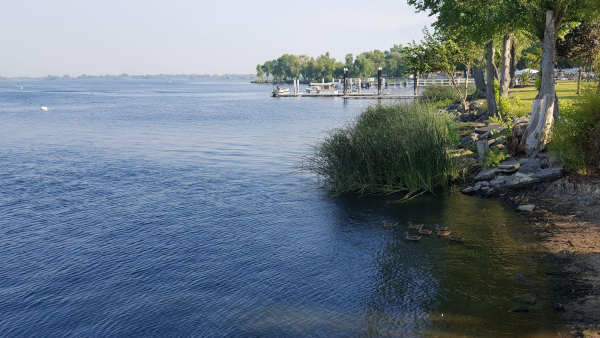
Due to the drought our shoreline has increased into the lake where the water level once was. We want to do some work on the plants and weeds that have grown where the water has receded. What do we need to be aware of when working on our shoreline?
-Stanley Family & their Shoreline
Dear Stanley family,
Thanks for this question! This is a great topic to discuss right now in my column. The good news is that I have a great informational video I will provide on this topic, which is provided below my column today.
Some other good news for you is that shorelines are oh so very special, and it seems like you have gathered that sentiment by reaching out and asking about what needs to be considered when working on your shoreline.
Shorelines are the backbone of any lake, pond, stream, or coastal zone. They provide the structure around the water and act as a zone of transition between the land and the water. Shorelines are very unique in that they are not always dry or aquatic, but some variable combination of the two at any time.
This variability applies to the flora and fauna that live and thrive in shoreline zones. We discussed some of this in my “Wondering about Wetlands” column from Feb. 3, 2022.
Shorelines, much like wetlands, are vulnerable to events that can have negative impacts for both terrestrial and aquatic environments. Flooding can bring in water, but also excess nutrients, sediments, contaminants and even sometimes invasive species. Wave energy and flood pulses can uproot plants and flush out needed nutrients or smaller, sensitive organisms, seeds, and propagules.
The variability of shorelines makes it difficult for most organisms to live among a shoreline, or a wetland. The constant change in conditions, from inundation and flooding, to prolonged dry periods, can pose challenges and unique environments to organisms. However, like the case on Clear Lake, some plants and animals have adapted to not just survive, but thrive in shoreline environments.
This adaptability makes these organisms very special so that when shoreline habitat declines, or is reduced, they have trouble surviving in other ecosystem types like open water or terrestrial zones.
Examples of plants that have adapted to shoreline life, like Tules, known as Hard Stem Bulrush (Schoenoplectus acutus), native aquatic smart weed (Polygonum amphibium) and a variety of native willows (Salix sp.), create a special shoreline habitat around Clear Lake, and many of the connecting streams and tributaries.
Like wetlands, shorelines provide habitat and breeding grounds for a wide variety of wildlife, from fish, to birds, amphibians, reptiles, and mammals. Shorelines provide vital food sources, such as plants, seeds, algae, zooplankton and invertebrates — not just within the shoreline zone itself, but these resources “leak” out into the adjacent open water, wetlands, connecting streams, and into the terrestrial zone.
Some valuable native species are declining as a direct result of shoreline degradation and loss. For example, one species is the Clear Lake Hitch, an endemic minnow species found only in Clear Lake. Hitch are rather small fish, and as juveniles, after they swim down from the streams, they live their first year of life within the shallow, shoreline zone. The shoreline zone provides safe refuge from large predatory game fish, cool water habitat vegetated with tules, and plentiful food provided by plants, insects, and green algae. You can learn more about the Hitch in my previous column from January 16, 2021, “How about the Hitch.”
Hitch numbers are declining, significantly, in the Clear Lake ecosystem. Based on conversations with biologists from California Department of Fish and Wildlife and United States Geological Survey, lack of available and suitable habitat and food sources in the shorelines and wetlands around Clear Lake, combined with decreased stream flows, are the most likely significant contributors.
Declining shoreline factors
The introduction of invasive species, shoreline development, boat wake activity, and removal of vegetative shorelines have taken a significant negative toll on Clear Lake. A large contributor to the declining water quality in Clear Lake since the last quarter of the 1900’s is contributed to the reduction in wetland shorelines around the lake, heavy land moving and excavation (i.e. mining, levee development, wetland removal, and land conversion), and shoreline development.
When I refer to shoreline development, I am specifically acknowledging the removal of native, beneficial wetland shoreline vegetation and ecosystems with the replacement of fill (i.e. sand and dirt) and shoreline hardening. Shoreline hardening can include large rocks called rip rap or hardened vertical walls, like sea walls, or a combination of both. Usually these constructed materials are installed to protect the private or commercial property from erosion from wave action of boat waves.
Any of us who have been out or around the lake on a windy day know that sometimes wave action is strong on Clear Lake. Especially if a home or property is west or north west facing; the most common direction for wind events to occur on the lake. Clear Lake is also huge, meaning that some parts of the lake, even during a minimally breezy day, are constantly being bombarded by large, powerful waves that would destroy beaches and any property foundations without the structural integrity provided by shoreline hardening.
However, hardened shorelines don’t last forever, especially under fluctuating water levels like floods and droughts. Hardened shorelines also don’t provide any ecological benefit to the ecosystem or lake water quality. In fact, once a sea wall starts to degrade, it leaches sediments, contributes to lakebed scour, and actually causes damage to the shoreline habitat and contributes to poor water quality.
Not only do hardened shorelines contribute to poor water quality, but they basically eliminate the ability for native wildlife to interact with the shoreline or access the terrestrial zone. Species like turtles, muskrats, otters, shoreline nesting birds and waterfowl, that rely on terrestrial or shoreline habitats for food, shelter, or reproduction, are unable to use shoreline spaces that have been hardened.
Before people lived along the shoreline of the lake, there were large, wide, buffer areas of wetlands and shorelines. Of course, some of these areas are naturally protected by rockbed, but many areas around the lake, even when experiencing heavy wave action, were protected by a large “natural” shoreline.
Natural shorelines protect terrestrial property from waves and erosion, prevent sediment scour, therefore improving water quality by limiting the sediments and nutrients that are pushed, or scoured, back into the lake. Recreating natural shorelines is not easy, but the goal of natural shoreline restoration is to protect the property from damaging waves and erosion while improving the ecological features and biotic integrity of the shoreline. While different methods exist to recreate, or enhance, natural shorelines, the natural shoreline can act as a living buffer that changes throughout the seasons and years, but remains resilient in all water levels and conditions.
Did you know that according to the US EPA National Lakes Assessment, about 36% of lakes nationwide have been graded as having “poor” lakeshore habitat. Lakes with poor surrounding vegetation are about three times more likely to also have poor biological conditions, or poor water quality and compromised biodiversity. (National Lakes Assessment 2012)
What can I do during a drought to improve my shoreline?
This is a great question that is getting asked by many folks. This question really depends on the perspective you have for the term “shoreline improvement”. Let’s remember that Clear Lake is a very old, natural lake. Clear Lake, and her shorelines, are not conducive to a traditional beachy, resort, palm-tree paradise.
The lake and shoreline contains great biomasses of natural vegetation, high fish-food production (lots of green algae), and warm, shallow nutrient-rich waters. Clear Lake will never be like Lake Tahoe or large reservoirs - and she never was similar to those ecosystems as they are deep, cold, lack nutrients, and are limited in the wildlife they can and do support.
Therefore, the best thing you can do for your shoreline or to best encourage it to be a natural shoreline, is to let it be. Let native tules and willows grow and expand on your shoreline. If it’s in front of a current sea wall, that vegetation will actually help protect your sea wall from scour and improve the integrity of that structure, while providing benefits to water quality and wildlife. They will help “soften” your hardened shoreline.
Sometimes woodier or older willows or other tree or shrub species can block docks, boat access, or lake access. On some properties it's clear that the vegetation will cause navigation hazards when the water level returns. The folks at County of Lake Water Resources understand this concern and have adapted a streamlined permit for providing consultation and guidance on how to manage these type of situations to prevent future navigation hazards and difficult, submerged tree removal during higher water levels.
Low water levels are allowing terrestrial weeds and aggressive invasive wetland or aquatic species to fill in dry areas once covered in water. These areas can look very messy, weedy and some woodier species will eventually become navigation hazards when the water levels return to normal.
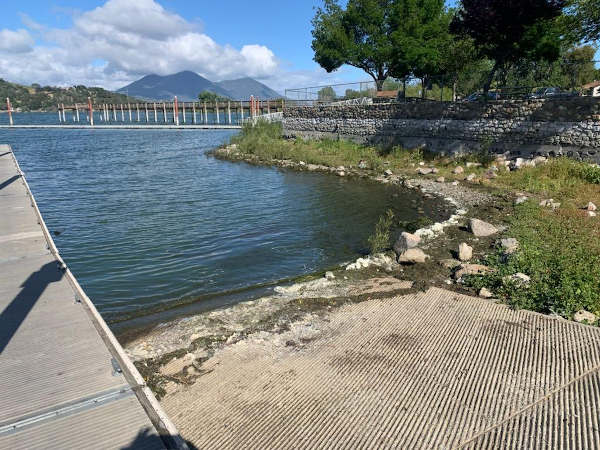
If you think you have vegetation growing along your now-dry and expanded shoreline area, and you think it may cause a navigation hazard when the lake water levels return, you can contact the County Water Resources Department at (707)263-2344 and learn about potential solutions. Photos of the site are encouraged to speed up the process and those can be sent directly through email, along with the address and description, to
Shoreline vegetation provides habitat to birds and other species, so part of being a responsible lake shore property owner is not cutting or trimming any willows or tules that are providing nesting habitat, in fact this is protected by both County Ordinance Ch. 23 and State California Department of Fish and Wildlife Code.
Tules will never be allowed to be removed by the roots, as they are valuable species to Clear Lake and since they don’t become woody, they won’t pose a navigation hazard when the waters return. The benefits of tules in Clear Lake far surpass any mild inconveniences they pose to a water user or property owner.
Sometimes the vegetation within your drought-expanded dry shoreline is just terrestrial weeds that have come in and taken advantage of the now open soil and space. In that case, these plants can be easily removed by weed whacking, push mowing, or cutting. However, consultation with the Water Resource department is needed, as some “weedy” plants are really adaptable and aggressive aquatic species, like the invasive Creeping Water Primrose, that seem to love the drought conditions as much as the normal lake water level.
Lastly, because shoreline areas are part of the Clear Lake Lakebed zone, no chemicals or herbicides can be applied to any weeds unless an Aquatic Plant Management herbicide permit is granted from the County and the applicator is Licensed through the CA Department of Pesticide Regulation and approved by the county Agriculture Department.
In addition, nothing can be sprayed on the lakebed, including vinegar, salt water, and any over the counter hardware store herbicides such as Round-Up, Monterey or Bayer products. This might be surprising and frustrating for some who live on the lake, have rental properties or resorts, but remember that Clear Lake provides drinking water for the majority of the County, and it’s unknown the fate or impact of chemicals that are applied to the landscape (dry and wet) unless they are regulated closely by state and local agencies and deemed safe in content and process of application.
Current state of Clear Lake shorelines and management
So far we have discussed what benefit shorelines provide to the lake ecosystem and how natural shorelines can actually benefit lakeshore properties, wildlife, and water quality. I have also touched on a small part of shoreline management, mostly for vegetation management during drought conditions.
There is some remaining information regarding the current state of shorelines on Clear Lake and the way they are being managed by local and state agencies. These items are included in an informational video provided below.
This video is part of the County of Lake Water Resources Department Water Quality Wednesdays Public Learning Forum Webinar Series. This video discussed results of a current project to inventory and quantify the shorelines around the lake, and also discusses the management programs that are currently in progress, and planned, to improve shorelines and water quality, on Clear Lake.
Caption: WQ Wednesday July 6, 2022 6pm Shoreline Science and Management
Evaluation and feedback survey link here: https://forms.gle/xKWmLYgFV2mbJc3U8
Sincerely,
Lady of the Lake
Angela De Palma-Dow is a limnologist (limnology = study of fresh inland waters) who lives and works in Lake County. Born in Northern California, she has a Master of Science from Michigan State University. She is a Certified Lake Manager from the North American Lake Management Society, or NALMS, and she is the current president/chair of the California chapter of the Society for Freshwater Science. She can be reached at
- Details
- Written by: Suzanne Leigh
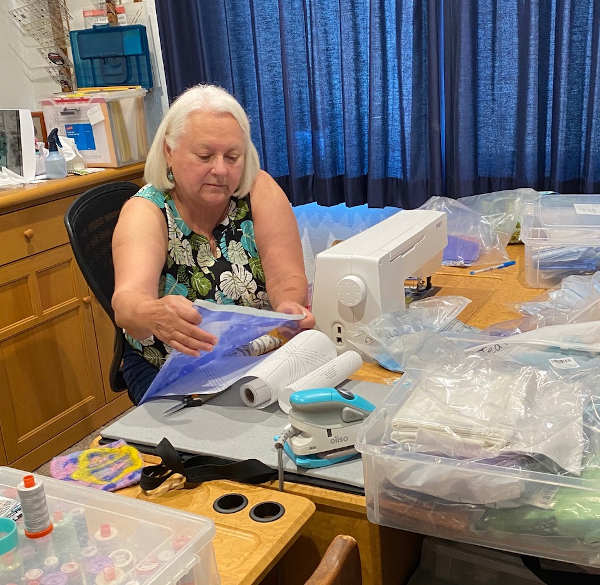
LAKEPORT, Calif. — The Ladies of the Lake Quilt Guild is now accepting entries for the Falling Leaves Quilt Show.
If you would like to enter your quilt, an entry form must be submitted by Aug. 13. There is no limit on the number of quilts you may enter, but each quilt must have its own entry form.
The judges will award ribbons in many categories, but you can also enter your quilt non-judged.
Entry forms can be downloaded from the guild’s website, or call or email Quilt Show Chair Betty Fessler at 707-771-0641 or
The Falling Leaves Quilt Show will take place at the Lake County Fairgrounds at 401 Martin St. Lakeport.
Show hours are Saturday, Oct.1, 10 a.m. to 5 p.m. and Sunday, Oct. 2, 10 a.m. to 4 p.m.
For more information about the Falling Leaves Quilt Show, contact Betty Fessler at 707-771-0641 or
Suzanne Lee is vice president of the Ladies of the Lake Quilt Guild.
- Details
- Written by: W. Larry Kenney, Penn State; Daniel Vecellio, Penn State; Rachel Cottle, Penn State, and S. Tony Wolf, Penn State

Heat waves are becoming supercharged as the climate changes – lasting longer, becoming more frequent and getting just plain hotter. One question a lot of people are asking is: “When will it get too hot for normal daily activity as we know it, even for young, healthy adults?”
The answer goes beyond the temperature you see on the thermometer. It’s also about humidity. Our research shows the combination of the two can get dangerous faster than scientists previously believed.
Scientists and other observers have become alarmed about the increasing frequency of extreme heat paired with high humidity, measured as “wet-bulb temperature.” During the heat waves that overtook South Asia in May and June 2022, Jacobabad, Pakistan, recorded a maximum wet-bulb temperature of 33.6 C (92.5 F) and Delhi topped that – close to the theorized upper limit of human adaptability to humid heat.
People often point to a study published in 2010 that estimated that a wet-bulb temperature of 35 C – equal to 95 F at 100% humidity, or 115 F at 50% humidity – would be the upper limit of safety, beyond which the human body can no longer cool itself by evaporating sweat from the surface of the body to maintain a stable body core temperature.
It was not until recently that this limit was tested on humans in laboratory settings. The results of these tests show an even greater cause for concern.
The PSU H.E.A.T. Project
To answer the question of “how hot is too hot?” we brought young, healthy men and women into the Noll Laboratory at Penn State University to experience heat stress in a controlled environment.
These experiments provide insight into which combinations of temperature and humidity begin to become harmful for even the healthiest humans.

Each participant swallowed a small telemetry pill, which monitored their deep body or core temperature. They then sat in an environmental chamber, moving just enough to simulate the minimal activities of daily living, such as cooking and eating. Researchers slowly increased either the temperature in the chamber or the humidity and monitored when the subject’s core temperature started to rise.
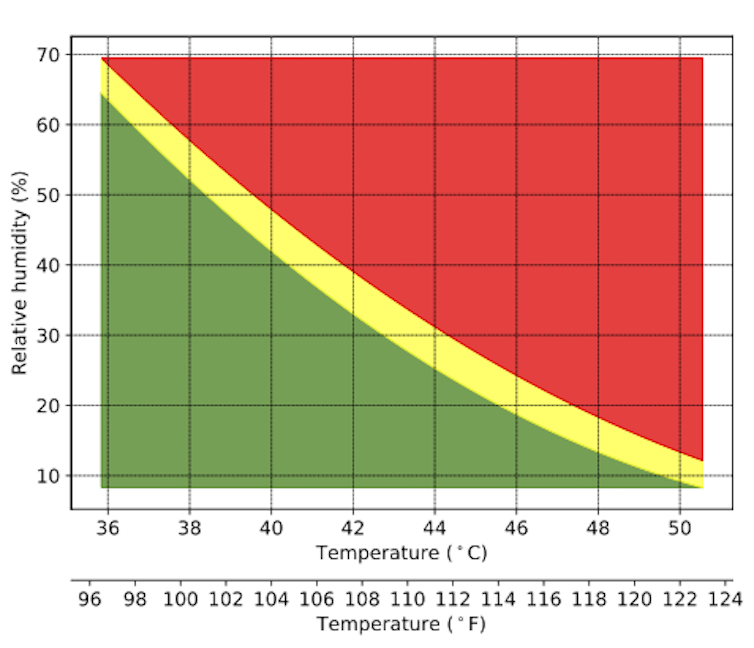
That combination of temperature and humidity whereby the person’s core temperature starts to rise is called the “critical environmental limit.” Below those limits, the body is able to maintain a relatively stable core temperature over time. Above those limits, core temperature rises continuously and risk of heat-related illnesses with prolonged exposures is increased.
When the body overheats, the heart has to work harder to pump blood flow to the skin to dissipate the heat, and when you’re also sweating, that decreases body fluids. In the direst case, prolonged exposure can result in heat stroke, a life-threatening problem that requires immediate and rapid cooling and medical treatment.
Our studies on young healthy men and women show that this upper environmental limit is even lower than the theorized 35 C. It’s more like a wet-bulb temperature of 31 C (88 F). That would equal 31 C at 100% humidity or 38 C (100 F) at 60% humidity.
Dry vs. humid environments
Current heat waves around the globe are approaching, if not exceeding, these limits.
In hot, dry environments the critical environmental limits aren’t defined by wet-bulb temperatures, because almost all the sweat the body produces evaporates, which cools the body. However, the amount humans can sweat is limited, and we also gain more heat from the higher air temperatures.
Keep in mind that these cutoffs are based solely on keeping your body temperature from rising excessively. Even lower temperatures and humidity can place stress on the heart and other body systems. And while eclipsing these limits does not necessarily present a worst-case scenario, prolonged exposure may become dire for vulnerable populations such as the elderly and those with chronic diseases.
Our experimental focus has now turned to testing older men and women, since even healthy aging makes people less heat tolerant. Adding on the increased prevalence of heart disease, respiratory problems and other health problems, as well as certain medications, can put them at even higher risk of harm. People over the age of 65 comprise some 80%-90% of heat wave casualties.
How to stay safe
Staying well hydrated and seeking areas in which to cool down – even for short periods – are important in high heat.
While more cities in the United States are expanding cooling centers to help people escape the heat, there will still be many people who will experience these dangerous conditions with no way to cool themselves.
Even those with access to air conditioning might not turn it on because of the high cost of energy – a common occurrence in Phoenix, Arizona – or because of large-scale power outages during heat waves or wildfires, as is becoming more common in the western U.S.
A recent study focusing on heat stress in Africa found that future climates will not be conducive to the use of even low-cost cooling systems such as “swamp coolers” as the tropical and coastal parts of Africa become more humid. These devices, which require far less energy than air conditioners, use a fan to recirculate the air across a cool, wet pad to lower the air temperature, but they become ineffective at high wet-bulb temperatures above 21 C (70 F).
All told, the evidence continues to mount that climate change is not just a problem for the future. It is one that humanity is currently facing and must tackle head-on.
W. Larry Kenney, Professor of Physiology, Kinesiology and Human Performance, Penn State; Daniel Vecellio, Geographer-climatologist and Postdoctoral Fellow, Penn State; Rachel Cottle, Ph.D. Student in Exercise Physiology, Penn State, and S. Tony Wolf, Postdoctoral Researcher in Kinesiology, Penn State
This article is republished from The Conversation under a Creative Commons license. Read the original article.
- Details
- Written by: Elizabeth Larson
Dogs available for adoption this week include mixes of border collie, boxer, bulldog, bull terrier, German shepherd, Great Pyrenees, Labrador retriever, pit bull, poodle, shar pei, shepherd, terrier and treeing walker coonhound.
Dogs that are adopted from Lake County Animal Care and Control are either neutered or spayed, microchipped and, if old enough, given a rabies shot and county license before being released to their new owner. License fees do not apply to residents of the cities of Lakeport or Clearlake.
The following dogs at the Lake County Animal Care and Control shelter have been cleared for adoption.
Call Lake County Animal Care and Control at 707-263-0278 or visit the shelter online for information on visiting or adopting.

Female boxer
This 5-year-old female boxer has a short brown coat.
She is in kennel No. 11, ID No. LCAC-A-3672.
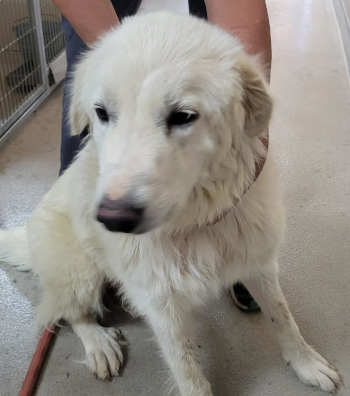
Female Great Pyrenees
This 3-year-old female Great Pyrenees has a white coat.
She is in kennel No. 13, ID No. LCAC-A-3669.

‘Misty’
“Misty” is a 4-year-old female bulldog with a short white coat.
She is in kennel No. 14, ID No. LCAC-A-3667.
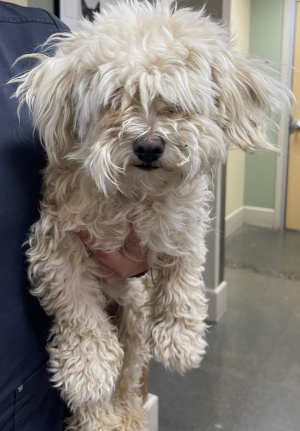
‘BonBon’
“BonBon” is a 2-year-old male poodle with a long curly coat.
He is in kennel No. 15, ID No. LCAC-A-3668.

‘Autumn’
“Autumn” is a 6-year-old female treeing walker coonhound with a tricolor coat.
She is in kennel No. 16, ID No. LCAC-A-1776.

‘Cali’
“Cali” is a female pit bull terrier with a short black and white coat.
She is in kennel No. 17, ID No. LCAC-A-3571.

Shar Pei-pit bull mix
This 9-year-old female shar pei-pit bull mix has a short black and white coat.
She is in kennel No. 19, ID No. LCAC-A-3622.

‘Missy’
“Missy” is a 3-year-old female pit bull terrier with a black and white coat.
She is in kennel No. 20, ID No. LCAC-A-3524.

Male pit bull terrier mix
This 3-year-old male pit bull terrier mix has a short black and white coat.
He is in kennel No. 22, ID No. LCAC-A-3627.

Female pit bull
This young female pit bull has a short black and white coat.
She is in kennel No. 24, ID No. LCAC-A-3630.

Male pit bull terrier
This 2-year-old male pit bull terrier has a short brown coat with white markings.
He is in kennel No. 25, ID No. LCAC-A-3640.

Male German shepherd
This 1-year-old male German shepherd has a short black and tan coat.
He is in kennel No. 26, ID No. LCAC-A-3642.

Female shepherd
This 2-year-old female shepherd mix has a short white coat.
She is in kennel No. 27, ID No. LCAC-A-3643.

Pit bull-bull terrier mix
This 1-year-old male pit bull-bull terrier has a short white coat.
He is in kennel No. 28, ID No. LCAC-A-3644.

Male American bulldog mix
This 2-year-old male American bulldog mix has a short tan coat.
He is in kennel No. 29, ID No. LCAC-A-3645.

Border collie-Labrador retriever mix
This young male border collie-Labrador retriever mix has a short black and white coat.
He is in kennel No. 30, ID No. LCAC-A-3646.

Female bulldog
This 2-year-old female bulldog has a short white coat with brown markings.
She is in kennel No. 31, ID No. LCAC-A-3658.
Email Elizabeth Larson at