 How to resolve AdBlock issue?
News
- Details
- Written by: Elizabeth Larson
Richard Riley, 52, was flown out of the county for treatment of his injuries following the wreck, which occurred at 12:20 a.m. Sunday, according to the California Highway Patrol’s Clear Lake Area office.
The CHP said Riley was driving eastbound on Highway 175 east of Diamond Dust Trail in a 2019 Land Rover Discovery.
For reasons the CHP said are still under investigation, Riley’s Land Rover went off the roadway and hit a parked vehicle.
The CHP said Riley’s vehicle continued out of control, hitting trees and brush in a creek bed.
The crash was first dispatched about 10 minutes after it occurred, with firefighters arriving at the scene several minutes later, according to CHP and radio reports.
The first units on the scene said the vehicle was 40 feet off the roadway and down a cliff, with the driver trapped and unconscious.
After firefighters extricated him, Riley was transported by ground ambulance to a landing zone at Riviera Elementary School, where a Cal Star air ambulance picked him up and transported him to a regional trauma center for treatment of major injuries, leaving just after 2 a.m., according to radio reports.
Riley was transported to Vacaville Kaiser Hospital, the CHP said.
The CHP said Riley was using his seat belt when the crash occurred.
Email Elizabeth Larson at
- Details
- Written by: Elizabeth Larson
The board will meet beginning at 9 a.m. Tuesday, Oct. 4, in the board chambers on the first floor of the Lake County Courthouse, 255 N. Forbes St., Lakeport.
The meeting can be watched live on Channel 8, online at https://countyoflake.legistar.com/Calendar.aspx and on the county’s Facebook page. Accompanying board documents, the agenda and archived board meeting videos also are available at that link.
To participate in real-time, join the Zoom meeting by clicking this link.
The meeting ID is 995 9693 7647, pass code 474608. The meeting also can be accessed via one tap mobile at +16699006833,,99596937647#,,,,*474608#.
All interested members of the public that do not have internet access or a Mediacom cable subscription are encouraged to call 669-900-6833, and enter the Zoom meeting ID and pass code information above.
To submit a written comment on any agenda item visit https://countyoflake.legistar.com/Calendar.aspx and click on the eComment feature linked to the meeting date. If a comment is submitted after the meeting begins, it may not be read during the meeting but will become a part of the record.
In an untimed item, sitting as the Lake County Watershed Protection District Board of Directors, the supervisors will consider approving an agreement with Peterson Brustad Inc. for engineering design services for the Clover Creek Bypass Gravel Removal Project for an amount of $44,820.
Peterson Brustad Inc. is currently in the process of completing an extensive feasibility study on the Upper Lake levees, as Lake County News has reported.
Water Resources Director Scott De Leon’s report to the board explains that through the work the company has done on the feasibility study, “the identification of a gravel removal project for Clover Creek Bypass was identified as a high-priority project.”
His report explains that in order to conduct such a gravel removal project, “preliminary engineering design services are necessary to prepare plans adequate to develop quantity take offs for the gravel removal efforts, cost estimates, and make determinations for the scope of environmental clearances and permits.”
Based on the unique nature of the services, and the fact that the formal bidding process “will also increase the timeline for a high-priority project,” De Leon is asking for the board to waive the competitive bidding process and award the project to Peterson Brustad.
In timed items, at 9:15 a.m. the board will consider a resolution authorizing application for grant funding under the Regional Climate Collaboratives Program, as administered by the Strategic Growth Council as well as a draft partnership agreement for the Climate Safe Lake Project.
At 10 a.m., the board will hold a public hearing to consider granting a one-year proposed subdivision extension for the Valley Oaks project at 18196 and 18426 South State Highway 29 in Middletown.
The full agenda follows.
CONSENT AGENDA
5.1: Adopt proclamation designating the month of October 2022 as Pregnancy and Infant Loss Awareness Month in Lake County.
5.2: (a) Acknowledge Sept. 23, 2022 as Native American Day in Lake County; and (b) adopt a proclamation declaring the second Monday in October as Indigenous Peoples Day in Lake County.
5.3: a) Waive the formal bidding process, pursuant to Lake County Code Section 2-38.4, as the County is piggybacking on a cooperative purchasing consortium contract; b) approve agreement with Canon Solutions America providing terms and conditions for acquisition, operation and maintenance of digital copy machines and supporting products, services and supplies for a monthly lease amount of $8,998.41 and a per copy amount of $0.0055 (B&W) and $0.0450 (color); and authorize the chair to sign; and c) authorize the purchasing agent to execute the resulting purchase orders and/or lease agreements.
5.4: Adopt resolution approving Agreement No.22-1102-000-SA with California Department of Food and Agriculture for compliance with the Nursery Inspection Program for the period of July 1, 2022, through June 30, 2023, in the amount of $500.
5.5: Adopt resolution approving Agreement No. 22-1366-000-SG with California Department of Food and Agriculture for compliance with the High Risk Pest Exclusion Program for the period of July 1, 2022, through June 30, 2023, in the amount of $9,974.09.
5.6: (a) Approve participation agreement between the county of Lake and the California Mental Health Services Authority for the State Hospitals Program in the amount of $2,804.00 for fiscal year 2022-23 and authorize the chair to sign; and (b) approve memorandum of understanding between the California Mental Health Services Authority on behalf of participating California Counties with the Department of State Hospitals for state hospital beds effective July 1, 2022, through Dec. 31, 2022, and authorize the department head to sign both the participation agreement and MOU.
5.7: (a) Waive the formal bidding process, pursuant to Lake County Code Section 38.2, as it is not in the public interest due to the unique nature of goods or services; and (b) approve the agreement between county of Lake and Kings View Professional Services for MIS Support Services for FY 2022-23 in the amount of $158,469 and authorize the board chair to sign.
5.8: Approve agreement between the county of Lake and 4Leaf Inc. for structural plan reviews of large residential projects for an amount not to exceed $50,000.00, and authorize the chair to sign.
5.9: Adopt resolution setting rate of pay for election officers for the Nov. 8, 2022, General Election.
5.10: Adopt resolution approving right of way certification for Bartlett Springs Road over Bartlett Creek Bridge Replacement Project, Federal Project No. BRLO-5914(111).
5.11: Adopt resolution approving right of way certification for Chalk Mountain Road over Cache Creek Bridge Replacement Project, Federal Project No. BRLO-5914(094).
TIMED ITEMS
6.2, 9:07 a.m.: Presentation of proclamation designating the month of October 2022 as Pregnancy and Infant Loss Awareness Month in Lake County.
6.3, 9:08 a.m.: Acknowledge Sept. 23, 2022 as Native American Day in Lake County; and (b) presentation of proclamation declaring the second Monday in October as Indigenous Peoples Day in Lake County.
6.4, 9:15 a.m.: (a) Consideration of a resolution authorizing application for grant funding under the Regional Climate Collaboratives Program, as administered by the Strategic Growth Council; (b) consideration of a draft partnership agreement for the Climate Safe Lake Project, and authorization of a designee to sign.
6.5, 10 a.m.: Public hearing, consideration of proposed subdivision extension (SDX 22-01), for Valley Oaks; Location: 18196 and 18426 South State Highway 29, Middletown (lots 51 and 36) ( APNs 014-260-51, 014-260-36).
UNTIMED ITEMS
7.2: Consideration of the following advisory board appointments: Lower Lake WaterWorks District One Board of Directors.
7.3: Sitting as the Lake County Watershed Protection District Board of Directors, (a) waive the formal bidding process, pursuant to Lake County Code Section 38.2, as it is not in the public interest due to the unique nature of the goods or services, and (b) authorize the chair of the board of directors, of the Lake County Watershed Protection District to sign and enter into agreement with Peterson Brustad Inc., for engineering design services for the Clover Creek Bypass Gravel Removal Project for an amount of $44,820 and authorize the chair to sign.
CLOSED SESSION
8.1: Conference with legal counsel: Significant exposure to litigation pursuant to Gov. Code sec. 54956.9 (d)(2) (e)(1) — One potential case.
Email Elizabeth Larson at
- Details
- Written by: LAKE COUNTY NEWS REPORTS
KELSEYVILLE, Calif. — Allison Panella announced that she is running for reelection to the Kelseyville Unified School Board of Trustees.
Panella, a Lake County Hispanic native, local business owner, wife and mother of three, has served on the Kelseyville Unified School District for the last four years, and currently serves as the vice president.
She holds a bachelor’s degree in early childhood education and has been working with or for the youth population of Lake County for the last 18 years.
Panella seeks to continue to bring transparency, accountability and increased communication to the Kelseyville Unified School District.
When asked why she decided to run again, she stated, “After serving the last four years I feel as though I have just fully gotten familiar with all the roles and responsibilities of a board member. I have so much more of myself to give to the district and I look forward to working to improve what KVUSD has to offer for our students and families. Being a local, I am keenly aware of our community’s strengths and what makes our rural community so unique. I enjoy working to build on our strengths.”
Panella hopes to continue the success during her previous term in office where she worked with faculty, teachers, administration and other board members to improve the district’s financial reserve to a healthier place; provided oversight to the KVUSD multimillion dollar Measure U Facility Improvement Bond to ensure it was on-time and under-budget; worked to increase staff and employee wages across the board; wrote mini grants for teachers and improved learning opportunities for the students of Kelseyville Unified.
She serves on the Kelseyville Unified Wellness and Safety Committee to increase parent participation and community input via Parents Night Out events held monthly, which has been a success with Kelseyville residents.
Panella also is a member of the Kelseyville Elementary’s Parent Teacher Organization.
Before Panella’s role on the school board, she and her husband, Greg Panella, have served the Kelseyville Unified school district in many ways.
Through coaching youth sports, having school garden fences built, introducing funders to teachers and schools, heavily supporting the Stokes Basketball Tournament, paying for bus fares for out-of-town field trips, volunteering their time in classrooms or offering resources and time to career technical education.
Panella said her 18 years of hands-on local experience, her commitment to the district and her perspective as a working parent make her an ideal school board member.
To learn more about Panella’s reelection campaign please visit her Facebook page @ Re-Elect Allison Panella for Kelseyville Unified School Board or email
- Details
- Written by: Rosalyn R. LaPier, University of Illinois at Urbana-Champaign
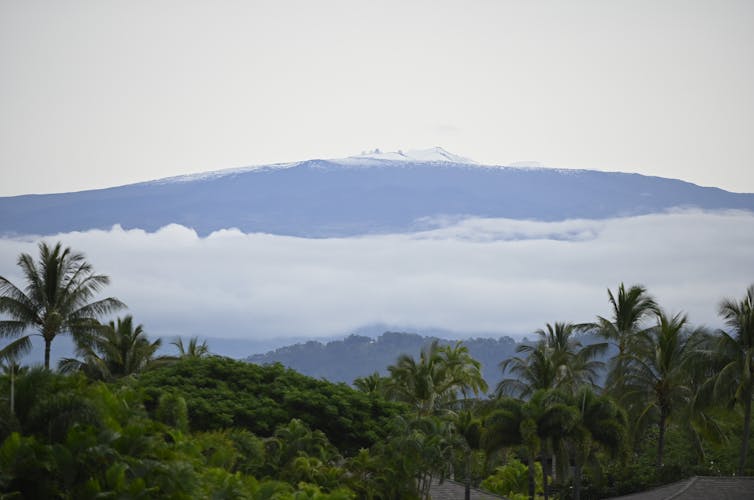
Who should manage public land that is sacred to Native Americans?
That is the question that the United States government and some states hope recent policy changes will address by giving Indigenous people greater input into managing such land. Co-management, as the policy is called, might alleviate the friction that emerges when sacred landscapes are managed without Native American input.
Mauna Kea, a 13,802-foot dormant volcano on the island of Hawaii, is one example. The mountain is managed as public land by the state of Hawaii. Native Hawaiians have protested the state’s management of Mauna Kea for decades, saying Hawaii has allowed too many research buildings on their sacred mountain, which disrupts their ability to practice their religion.
This kind of conflict is not unique to Hawaii. Indigenous peoples have lived in what is now the United States for thousands of years and developed intimate relationships with the lands they call home. For years, Native people across the country have demanded more input into how the government manages areas they consider sacred.
Now, the government may finally be listening.
‘We worship there’
As a Native American scholar of religion and the environment, I am interested in Indigenous peoples’ relationship to the natural world and their struggle to protect their sacred landscapes.
Native Hawaiians believe that Mauna Kea is the first creation of the Earth Mother, Papahānaumoku, and the Sky Father, Wākea. The mountain is an important part of their origin narrative.
For astronomers, the mountain has another significance. They believe the summit of Mauna Kea has the clearest skies for conducting research. For the past 50 years, the state of Hawaii has leased the summit of the mountain to dozens of research institutions. Together, they have built 13 telescopes and numerous buildings on Mauna Kea.
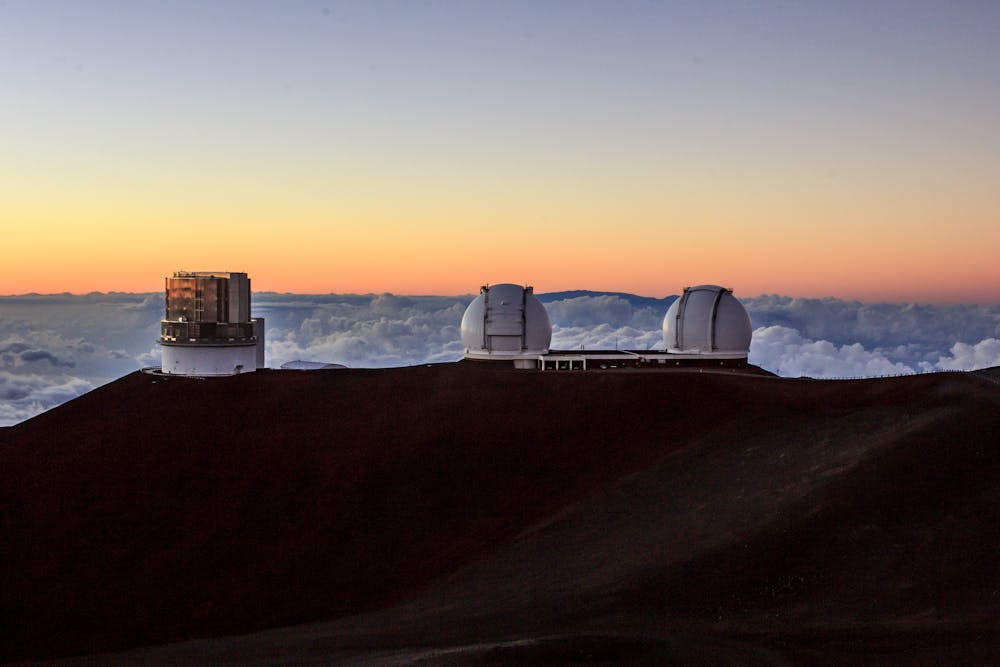
For years Native Hawaiian leaders have argued that the state ignored their concerns over such construction. When Mauna Kea was selected in 2009 as the preferred site for the Thirty Meter Telescope, a new class of extremely large telescope, Native Hawaiians protested to stop the project.
Native Hawaiians, like those from other Indigenous religious traditions, believe that sacred areas should be left alone without roads or buildings because they are the homes of the divine.
“We worship there, the iwis of our kupuna [bones of our elders] are buried there,” Mililani Trask, the Hawaii island’s trustee for the Office of Hawaiian Affairs, said at a public meeting regarding an environmental impact statement of Mauna Kea with the National Science Foundation on Aug. 9, 2022. “No,” she continued, “you will not build here.”
The state of Hawaii is hoping to address this ongoing conflict with the creation of a new eight-person commission that includes three Native Hawaiian leaders to manage Mauna Kea.
“I believe we can find a way for science and culture to coexist on Mauna Kea in a mutually beneficial way,” Hawaiian Gov. David Ige said on Sept. 12, 2022, when he announced the new commission.
What makes land sacred?
Native American religions, similar to other religions, view areas as sacred because they are the homes of gods or places that are sanctified by a god. Sacred places may be physically small or large areas, they may be built or natural areas, such as churches and shrines, or mountains and rivers.
Religious studies scholars such as Tisa Wenger have argued that religious freedom for Native Americans has been difficult because “the U.S. government has often acted as if Indian traditions were somehow not truly religious and therefore not eligible for the constitutional protections of the First Amendment.”
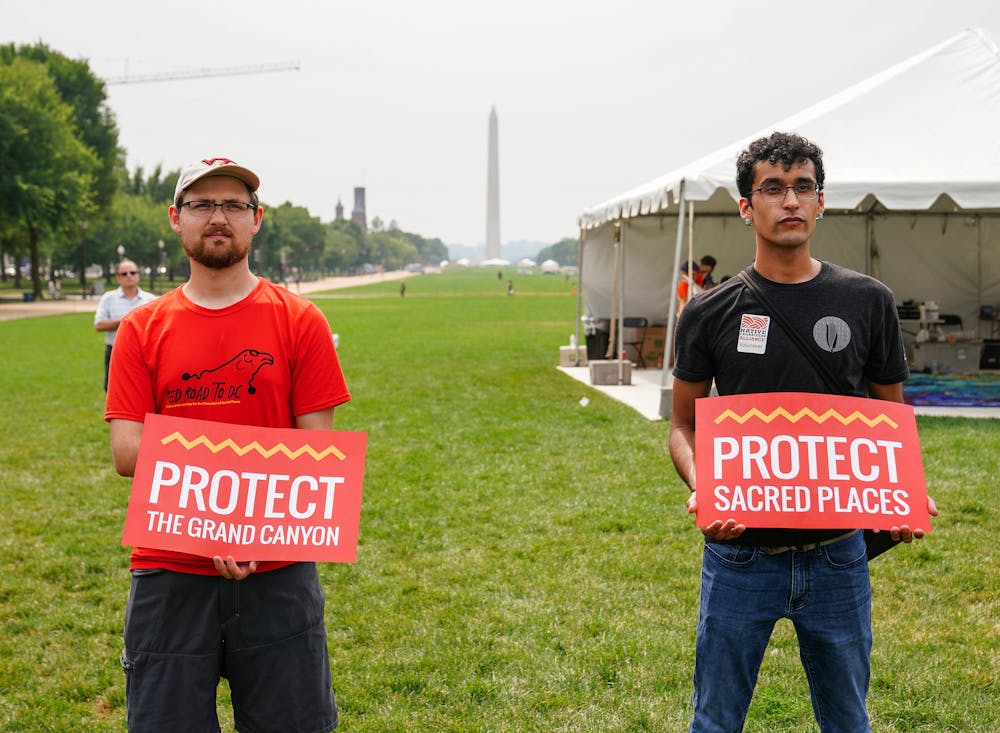
In one dispute in the 1980s, the U.S. Forest Service wanted to construct a road across a sacred mountain in Northern California. A consortium of tribes fought back, and the case ended in the Supreme Court; the tribes lost.
Following that decision, in 1996, President Bill Clinton created a definition of Native American sacred land as a “specific, discrete, narrowly delineated location on Federal land.”
This language intentionally excludes large areas such as mountains or open landscapes in favor of smaller sites. That does not fully represent the variety of places that Native peoples consider sacred, say religious studies scholars, leading to inevitable clashes over the meaning and uses of such lands.
Co-management is one small step
On Sept. 13, 2022, Secretary of Interior Deb Haaland released new federal guidelines to help address these long-standing conflicts.
This new policy, which focuses on publicly managed areas that Native Americans view as sacred or culturally important, will allow some tribes to share management responsibilities with federal agencies.
“By acknowledging and empowering Tribes as partners in co-stewardship of our country’s lands and waters, every American will benefit from strengthened management of our federal land and resources,” Haaland said.
In a related effort, Congress on Sept. 14 held hearings on two new bills to address this same issue. If they pass, their backers hope they will facilitate the inclusion of “tribal management of public lands” and strengthen the “protection of sacred and cultural sites.”
Such changes are “a small step, but an important one, in giving Tribal nations the respect and authority they deserve,” said Rep. Raúl M. Grijalva, a Democrat from Arizona.
But, he added of the federal government’s new desire to share land management with tribes, “There is no deed that can undo or fully compensate for this country’s historical neglect and desecration of Indigenous Peoples’ culture and places that are sacred to them.”
Rosalyn R. LaPier, Professor of HIstory, University of Illinois at Urbana-Champaign
This article is republished from The Conversation under a Creative Commons license. Read the original article.