 How to resolve AdBlock issue?
News
- Details
- Written by: Linus Owens, Middlebury

Curious Kids is a series for children of all ages. If you have a question you’d like an expert to answer, send it to
How was Halloween invented? – Tillman, age 9, Asheville, North Carolina
“It’s alive!” Dr. Frankenstein cried as his creation stirred to life. But the creature had a life of its own, eventually escaping its creator’s control.
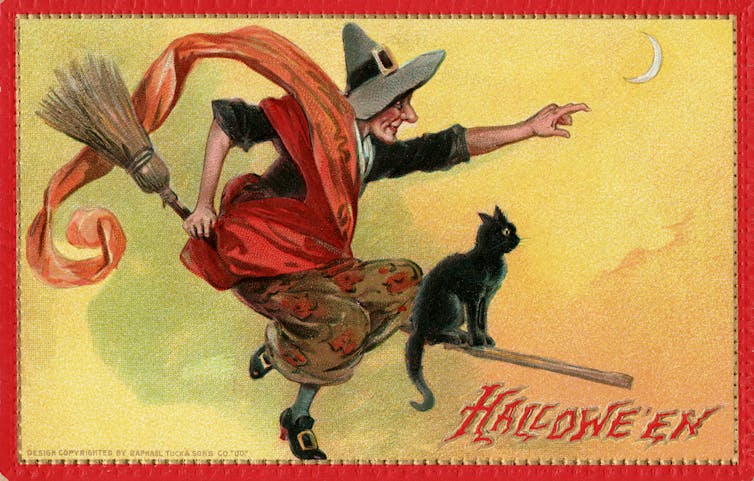
Much like Frankenstein’s monster, traditions are also alive, which means they can change over time or get reinvented. Built from a hodgepodge of diverse parts, Halloween is one such tradition that has been continually reinvented since its ancient origins as a Celtic pagan ceremony. Yet beneath the superhero costumes and bags of candy still beats the heart of the original.
The Celts lived in what’s now Ireland as far back as 500 B.C. They celebrated New Year’s Day on Nov. 1, which they called Samhain. They believed that leading up to the transition to the new year, the door between the worlds of the living and the dead swung open. The souls of the recently dead, previously trapped on Earth, could now pass to the underworld. Since they thought spirits came out after dark, this supernatural activity reached its peak the night before, on Oct. 31.
The Celts invented rituals to protect themselves during this turbulent time. They put on costumes and disguises to fool the spirits. They lit bonfires and stuck candles inside carved turnips – the first jack-o’-lanterns – to scare away any spirits looking for mischief. If all else failed, they carried a pocketful of treats to pay off wayward spirits and send them back on their way to the underworld.
Sound familiar?
Although focused on the dead, Samhain was ultimately for the living, who needed plenty of help of their own when transitioning to the new year. Winter was cold and dark. Food was scarce. Everyone came together for one last bash to break bread, share stories and stand tall against the dead, strengthening community ties at the time they were needed most.

When Catholics arrived in Ireland around A.D. 300, they opened another door between worlds, unleashing considerable conflict. They sought to convert the Celts by changing their pagan rituals into Christian holidays. They rechristened Nov. 1 “All Saints Day,” which today remains a celebration of Catholic saints.
But the locals held on to their old beliefs. They believed the dead still wandered the Earth. So the living still dressed in costumes. This activity still took place the night before. It just had a new name to fit the Catholic calendar: “All Hallows Eve,” which is where we got the name Halloween.
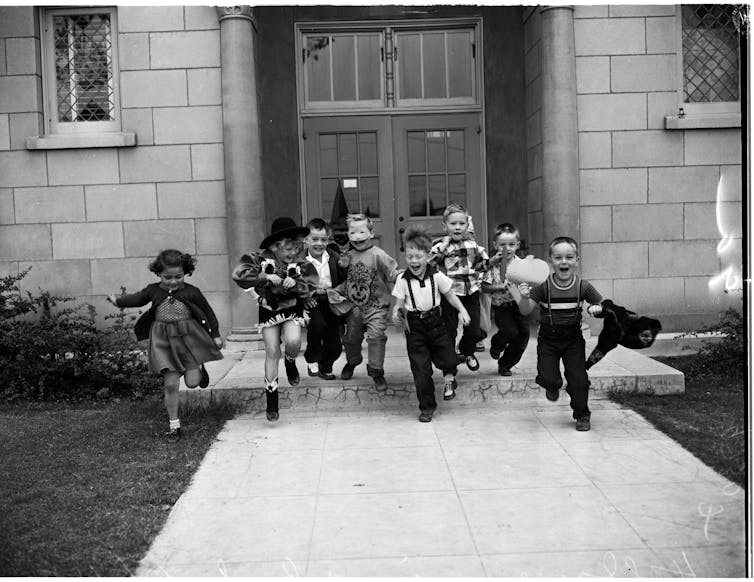
Irish immigrants brought Halloween to America in the 1800s while escaping the Great Potato Famine. At first, Irish Halloween celebrations were an oddity, viewed suspiciously by other Americans. As such, Halloween wasn’t celebrated much in America at the time.
As the Irish integrated into American society, Halloween was reinvented again, this time as an all-American celebration. It became a holiday primarily for kids. Its religious overtones faded, with supernatural saints and sinners being replaced by generic ghosts and goblins. Carved turnips gave way to the pumpkins now emblematic of the holiday. Though trick-or-treating resembles ancient traditions like guising, where costumed children went door to door for gifts, it’s actually an American invention, created to entice kids away from rowdy holiday pranks toward more wholesome activities.
Halloween has become a tradition many new immigrants adopt along their journey toward American-ness and is increasingly being exported around the world, with locals reinventing it in new ways to adapt it to their own culture.
What’s so special about Halloween is that it turns the world upside down. The dead walk the Earth. Rules are meant to be broken. And kids exercise a lot of power. They decide what costume to wear. They make demands on others by asking for candy. “Trick or treat” is their battle cry. They do things they’d never get away with any other time, but on Halloween, they get to act like adults, trying it on to see how it fits.
Because Halloween allows kids more independence, it’s possible to mark significant life stages through holiday firsts. First Halloween. First Halloween without a parent. First Halloween that’s no longer cool. First Halloween as a parent.
Growing up used to mean growing out of Halloween. But today, young adults seem even more committed to Halloween than kids.
What changed: adults or Halloween? Both.
Caught between childhood and adulthood, today’s young adults find Halloween a perfect match to their struggles to find themselves and make their way in the world. Their participation has reinvented Halloween again, now bigger, more elaborate and more expensive. Yet in becoming an adult celebration, it comes full circle to return to its roots as a holiday celebrated mainly by adults.
Halloween is a living tradition. You wear a costume every year, but you’d never wear the same one. You’ve changed since last year, and your costume reflects that. Halloween is no different. Each year, it’s the same celebration, but it’s also something totally new. In what ways are you already reinventing the Halloween of the future today?
Hello, curious kids! Do you have a question you’d like an expert to answer? Ask an adult to send your question to
And since curiosity has no age limit – adults, let us know what you’re wondering, too. We won’t be able to answer every question, but we will do our best.
Linus Owens, Associate Professor of Sociology, Middlebury
This article is republished from The Conversation under a Creative Commons license. Read the original article.
- Details
- Written by: Elizabeth Larson
LAKE COUNTY, Calif. — A longtime Lake County judge is being remembered by friends and colleagues for his care for people, dedication to the county and his championing of the Clearlake community.
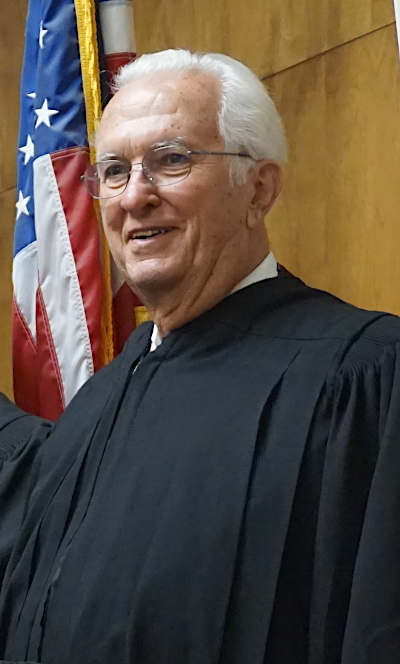
Retired Judge Richard Freeborn died on Friday, Sept. 30, at his Clearlake home, surrounded by family, including wife of 59 years, Kathy, and sons Andrew, Matthew, Jason. He was 84 years old.
“We had a long, wonderful life together,” Kathy Freeborn said.
During a 2013 ceremony to honor his career, Freeborn said he had wanted to go into a profession that would be helpful to his fellow man.
“Service to humanity is the best work of life,” he said.
Since his death, many community members and leaders have honored Freeborn for his success in doing just that.
His accomplishments include nearly four decades of work in the justice system as well as for what he did outside of the courtroom — including the many years of promoting the Clearlake area and creating opportunities for informed discourse among its residents and the county as a whole.
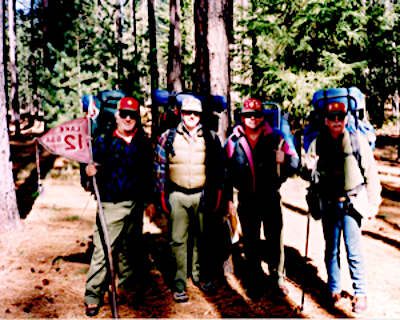
Freeborn was a Renaissance man, with a vast number of interests. He was a careful and voluminous reader, an expert in United States history, a Boy Scout leader, a member of the fire department for 18 years, a dedicated outdoorsman and hiker, a sailor, and a keyboardist who played in a local band at venues such as the Lucerne Hotel and Konocti Harbor.
His curiosity continued throughout his life, and those who knew him recalled not just as a man of incredible intellect, but one who generously used his skills to help others, and who did his work with a dedication that was amplified by a true sense of compassion for those he met, whether inside or outside of the court.
Freeborn was known for his personal touch, his authentic concern about people, a desire to listen and understand, and the goal of seeing people advance, as well as his having performed many weddings.
One aspiration he didn’t accomplish was being a pilot. Although he took some lessons, wife Kathy said it was either fly or have a family. However, since their oldest son had been in the Air Force and had his own plane, Freeborn had a chance to fly with his son. “He’d let his dad take the controls,” Kathy Freeborn said.
Both his wife and his longtime friend Mark Cooper said Freeborn was particularly proud of his work in drug court, which gave many people an opportunity to avoid jail or prison by instead healing their lives through treatment and education. Cooper said he’s met people who have shared how Freeborn’s intervention through drug court saved their lives.
At a 2013 portrait hanging ceremony for Freeborn, retired Judge Arthur Mann acknowledged that he hadn’t initially been in favor of the drug court idea, but credited Freeborn for making it a successful program.
“He loved life and the community,” said Kathy Freeborn, explaining that her husband was a good person who always tried to help people.
“He gave so much to the community,” said Clearlake City Manager Alan Flora.
Flora pointed out one of Freeborn’s many contributions, the creation of the weekly “Judge’s Breakfast” in Clearlake, which has helped educate community members on important issues and collected money for local groups.
“That’s an inspiration,” said Flora. “Beyond that, he’s just a really good guy.”
Supervisor Bruno Sabatier, who called for a moment of silence in honor of Freeborn at the Board of Supervisors’ Oct. 4 meeting, told Lake County News about how Freeborn welcomed him into the community, and that while he was a judge professionally, Freeborn didn’t judge people on a personal level.
“He welcomed me and made a point to speak with me each time we saw each other, because no matter how different we may be, we were both committed to serving our communities together, and I think he respected that without having to know the details of who I am,” Sabatier said. “Luckily, because of humble and welcoming personality, I was fortunate enough to learn from him, speak with him, and be inspired by his love for community.”
The current and retired judges Lake County News spoke to about Freeborn remembered him as principled, kind, curious, thoughtful and intellectual.
One word came up commonly among those who shared their recollections: “Gentleman.”
Judge Andrew Blum said Freeborn was a gentleman in the true sense of the word, genuinely caring about those who appeared before him in court.
“He wasn’t just processing files,” said Blum, who as a senior chief deputy district attorney frequently was in Freeborn’s court from 1989 to 1997.
Blum said Freeborn often would take extra time with people — especially young people who had made mistakes — to talk with them and give them some fatherly advice in an effort to encourage them to get on the right track. “You don’t see judges do that very often.”
Like Blum, Judge Michael Lunas’ first experience with Freeborn was as a young attorney in his court.
Lunas said Judge Freeborn knew everyone and everyone knew him, and there was no real difference in his behavior as an attorney or as a judge. “His persona was the same. He was who he was.”
Stephen Hedstrom, who retired in 2018, was Freeborn’s successor in the Lake County Superior Court Clearlake Division.
“He always gave back to the community. He really did,” Hedstrom said of Freeborn.
Retired Judge Robert Crone said Freeborn had “long roots in the county,” and that he used to talk about working at his father’s business and pumping gas as a youngster.
Cooper said Freeborn has always been his hero. He was a role model to Cooper’s daughter, Jacqueline Snyder, now an attorney, for whom Freeborn administered the bar oath.
Freeborn was an expert in U.S. history. “He was one of the most intelligent men that I’ve been around,” said Cooper, adding he was honored every time he was around him to get his perspective.
As he pointed out to people who joined his well-known breakfast group, the Judges Breakfast, “he was a community junkie,” Kathy Freeborn said.
Growing up in Lake County; going to school in the city
Richard Lawrence Freeborn was born in Oakland on May 3, 1938, to Edna and Walter Freeborn. He claimed his middle name was due to the fact that his mother was enamored of T.E. Lawrence, the inspiration for “Lawrence of Arabia.”
Freeborn had a sister, Joan, who was seven years older than him.
His father, a machinist, later bought a small resort and gas station in Nice and the family moved to Lake County.
Freeborn arrived in Lake County at age 7 and, for the rest of his life — with time out for university in the Bay Area — the county would be his home.
He attended grade school and high school in Upper Lake. “They say he read every book in the Upper Lake Library when he was going to school,” said Cooper, attesting to his friend’s lifelong habit of voracious reading.
His sister attended the University of California, Berkeley. She then studied medicine at the University of California at San Francisco, completing residence in Boston and further training in Washington, D.C. ahead of a 51-year career as a pediatrician. She went on to marry Dr. Thomas C. Merigan, a professor at Stanford University, where they eventually endowed a chair at the School of Medicine.
Like his sister, Richard Freeborn attended UC Berkeley. Originally, he was interested in premedicine, but ultimately he went on to receive his law degree at UC Hastings College of the Law in San Francisco.
He sometimes went to the San Francisco Airport for a cup of coffee after studying. It was on one such evening during his first year of law school that he happened to meet U.S. Supreme Court Chief Justice Earl Warren. Warren invited him to sit down with him and chat.
They discussed law school, the famed Brown vs. Board of Education case and how to decide a case. Warren explained the process of reviewing evidence and law, before asking a final question: “Is it fair?”
It also was in San Francisco that Freeborn met his future wife, Kathy, “by accident,” she said, in an apartment building when he was starting to ask her roommate out for a date.
As he always told the story, he had started out to ask her roommate out for a date, “and ended up asking me instead,” Kathy Freeborn said.
They married on March 16, 1963, during his last year of law school. Kathy Freeborn said he had to take off an unexcused day from school, since getting married wasn’t considered a reason to miss class.
He was admitted to the State Bar of California on Jan. 12, 1965, according to Bar records.
While he had looked at a job in another location, Kathy Freeborn said her husband had a job waiting for him in Lake County. After their arrival, he worked in the District Attorney’s Office as an investigator and as a law clerk in the office of Lovett Fraser. He also later worked as a deputy district attorney.
The couple lived in Lakeport until 1967, when they moved to Kelseyville to a new home in Cole Creek Estates. However, Kathy Freeborn said she didn’t get to stay in her new home for long.
That’s because his friends talked him into moving to Clearlake in order to be appointed to a part-time position as a Clearlake Highlands justice court judge, a job he would get.
After only a week in their new home, they made the decision to sell it and move to Clearlake where they’ve made their home ever since. They’ve lived in the same home for more than 40 years, Kathy Freeborn said.
Decades on the bench
Freeborn worked as a justice court judge beginning in 1967, taking office on May 8, five days after his 28th birthday.
He continued in that role for 15 years in the Clearlake Highlands Judicial District, according to a biography presented by Hedstrom at the 2013 event to celebrate the hanging of Freeborn’s portrait in the Southlake Division courtroom. The video of that event is shown on this page, and includes information about his history and service from Freeborn and his colleagues.
Freeborn then took a break for about six years, during which time Betty Irwin was elected as a write-in candidate and served on the bench as the first elected female judge in Lake County. Crone said Freeborn returned to the justice court bench after Irwin’s departure.
In the late 1980s, legislation led to the justice courts consolidating into municipal courts. Crone said all the little courts on the south end of the lake merged into one municipal court district and then a separate district was formed for the Lakeport end of the county.
When Freeborn returned to the bench, he presided over what was then known as the Southlake Judicial District from 1988 to 1993, Hedstrom said during the 2013 ceremony.
In 1998, Freeborn became Lake County’s fourth Superior Court judge under a new consolidation law, filling that role until his 2001 retirement. Following retirement, he spent more than a decade filing in on assignments around the state.
Crone said when he arrived as a young lawyer in Lake County around 1972, he first met Freeborn when he was the justice court bench.
Freeborn also had a private practice in the Clearlake Highlands, which later became Clearlake. At that time, a justice court judge could do both — sit on the bench and handle cases separately, which Crone said could make for some interesting situations.
For 20 years, wife Kathy worked as Freeborn’s office manager in his private practice. At times she was the only secretary, but at its busiest time there were four secretaries, all of whom Freeborn kept busy with his legal work. Later, Kathy went to work for Yuba College for 13 years.
Crone said the Clearlake Highlands Justice Court was housed in a storefront on Lakeshore Drive, between the Chatterbox and Mario Lucchesi’s restaurant — known as “Mario’s Lounge” — and next to a plumbing supply store. That’s where Crone was introduced to Freeborn.
In that little court, “When jury went out, we all left,” leaving just the bailiff behind, Crone said.
More than one time Crone said he and Freeborn ended up out at Mario’s, relaxing until the jury had reached a verdict.
In January 1984, Crone, then Lake County’s district attorney, was appointed to the Superior Court bench by Gov. George Deukmejian to fill an unexpired term. That appointment had been held up as Crone finished prosecuting the Gerald Stanley murder case.
The seat then went on the ballot in June 1984. “You’re appointed one day, you’re in a contested election the next,” Crone said.
Crone, a Republican, and Freeborn, a Democrat, faced off in a tight race for the seat. Crone said they went on the “rubber chicken circuit” and took part in debates.
“I think it was pretty draining on him and myself,” Crone said.
Lunas, who then was a young attorney, recalled that race as “a heck of a contest.”
Crone added, “It was sort of like the governor’s election,” referring to the tight race between Deukmejian and Los Angeles Mayor Tom Bradley, with Crone and Freeborn having been involved in the campaigns for those respective candidates.
“It caused me to really be concerned and pay attention in that election because he had a lot going for him that I didn't have,” Crone said.
However, in the end, “I won by a whopping 131 votes,” Crone said.
He said Freeborn would later explain that Crone just belonged to one more club than he did. “When I got to thinking about it, he was right.”
Nevertheless, even in the midst of a tight race, “Dick was always a gentleman,” said Crone, explaining that he didn’t think they ever were mad at each other and that Freeborn didn’t hold a grudge.
They were always colleagues, said Crone. “It was a working relationship.”
Crone said Freeborn demanded that people in the courtroom give the court — not necessarily him — respect, and that they respect the court and the process by taking it seriously and abiding by the rules.
Freeborn was very concerned about people, and took time to listen to their circumstances. Crone said Freeborn looked for ways to help people, and favored drug courts and similar diversion programs at a time when those programs were in their infancy.
Cooper emphasized how proud Freeborn was of his work to establish a drug court in Lake County. “He felt so good about that.”
Kathy Freeborn said that her husband, with the help and support of staff, had a lot of success with drug court.
She and Cooper both recounted how Freeborn successfully used drug court as an alternative to time behind bars. Kathy Freeborn said he had a real advantage thanks to the community college’s presence, as he would require people to get further education and go back to school and get a high school diploma if they didn’t have one.
When Freeborn made judgments, he made them, said Cooper, and he could scare the hell out of a person when he banged the gavel. But he preferred a more compassionate way.
Retired Lake County Superior Court Judge Richard Martin called Freeborn “a great guy,” and someone he got to know Freeborn well when Martin was a young attorney appearing in his court. Martin worked first as a public defender before Crone — then the district attorney — called him to work for him. Martin credits both Crone and Freeborn for being mentors to him.
Martin said he liked Freeborn’s helpful and kind personality. “I think he was very fair, somebody that listens to people.”
After Martin came to the bench in 2005, Freeborn was still occasionally taking cases when other local judges were on vacation or traveling to other counties to fill in.
Lunas said Freeborn focused on what mattered in the case. “He was somebody whose work could be trusted.”
In the trials Lunas did with him, Lunas said he was always very thoughtful, concerned about getting things right, very interactive from the bench and a good communicator.
“He had an effective way of thinking out loud during cases which would serve to engage attorneys and litigants in the business at hand,” said Lunas.
Crone said Freeborn was a champion of Clearlake and its residents. He said Freeborn understood Clearlake and its people, and how important it was to that end of the county to maintain the presence of a court there.
There was a time in the mid-1990s there was a push to eliminate the presence of any court function in Clearlake and have everything in Lakeport. “He fought tooth and nail to make sure that didn't happen,” and was a big force in keeping as much judicial action in the Clearlake area as possible, Crone said.
Crone said he and Freeborn would eventually work alongside each other on the Lake County Superior Court bench.
That’s because, in 1998, voters passed Proposition 220, a constitutional amendment consolidating municipal and superior courts.
Crones said that’s how Lake County got four Superior Court judges. It already had two departments: In Department 1, it was Judge John Golden, who had been appointed in 1974, and Crone had been the Department 2 judge since 1984.
The consolidation added to that two more departments. Arthur Mann, the municipal court judge headquartered in Lakeport to service the north end of the county, became the Department 3 judge, while Freeborn, overseeing the south end of the county in the Clearlake Highlands Municipal Court, became the Lake County Superior Court judge for Department 4, serving in that role from 1998 to 2001, when he retired.
The Superior Court doesn’t operate in a vacuum, and Crone said all the judges got together regularly to discuss court matters. “Everybody was always a colleague with everybody else.”
Freeborn remained in the Clearlake courthouse. When Freeborn retired, Stephen Hedstrom, then the district attorney, was elected in 2000 in a race against attorney Steve Tulanian.
Hedstrom said that after his election, he spent two or three weeks in Freeborn’s courtroom, asking questions and observing, and getting ready to take over.
“He spent a significant amount of time helping me take over his position for which I am very grateful and always will be,” said Hedstrom.
“He was a great deal of help,” said Hedstrom. “You can have all that help and all that study, and it comes down, you’ve just to do it.”
Hedstrom said Freeborn was very kind with his time. “That's the way he always was — friendly, outgoing, sociable.”
Following his retirement, Freeborn worked half-time in Lake County and in other parts of the state on assignments, Crone said.
Music and the outdoors
Cooper, who moved to Lake County in 1974, said he met Freeborn through music. Cooper played the drums; Freeborn, like his sister, played piano. The men would play at Konocti Harbor and also participated in the jazz band at Yuba College’s Clearlake campus. Now called Woodland Community College’s Lake County Campus, at its recent 50th anniversary event, Cooper called on them to reinstate that band.
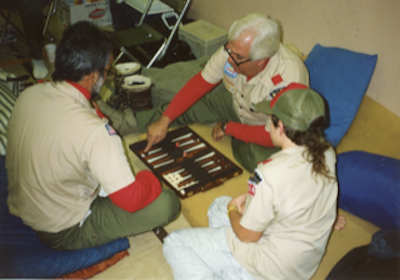
Freeborn started in Boy Scouts before he and Kathy had children and attended the Scout Jamboree in Washington, DC. All three of their sons became Eagle Scouts.
Cooper said Freeborn recruited him as a Scout leader and his own two sons became Scouts as part of Troop 44, which had begun in the 1950s but has since ceased. He, Freeborn and Bill Cornelison, later Lake County’s superintendent of schools, formed the Board of Directors of the Mount Diablo Silverado Scout Council.
The Coopers, the Freeborns and other families would vacation together. One memorable trip was to Hawaii, where Cooper has a very clear memory of a waitress handing Freeborn change which was too much, at which point he immediately gave it back to her rather than pocketing it.
“He was just the most honest man I ever met,” Cooper said.
Cooper, who was born and raised in San Francisco, had never camped outdoors before until he went with Freeborn, an outdoorsman who didn’t hunt but enjoyed hiking.
Hedstrom also recounted going camping with Freeborn and others and having a big abalone feed.
Cooper said Freeborn was a voracious reader who felt the written word was holy. He recounted how Freeborn had once asked him how many newspapers he read. Cooper gave a few local newspapers and Freeborn asked him if he believed them. Since then, Cooper said he has added a number of publications with state, national and international scope.
In addition to Freeborn believing newspapers were important, he also welcomed and supported newer media outlets. Freeborn also was an early and continued supporter of Lake County News, which his wife said he enjoyed reading daily.
Cooper said he, Freeborn and Cornelison would go to Pleasant Hill for Scout meetings and on their drives they would have long conversations in which they would solve all the problems of the world. “Nobody ever listened to us,” he said. “We had such a great time.”
Cornelison died in January 2015. Cooper said he’s missing the guidance and perspective of his two closest friends.
A community junkie
For those who hadn’t met Freeborn in court, they may have come to know him through the weekly Judge’s Breakfast.
Freeborn began the event for the community in 1993 after he read a biography of Benjamin Franklin. As Cooper tells it, Freeborn was struck by how Franklin had started a breakfast club in Philadelphia and, low and behold, there later was a new country.
Intrigued by the networking opportunities, Freeborn decided to start one for Clearlake to see what would happen.
Since then, it’s been an opportunity for residents and leaders to come together and talk about ideas. This reporter also took part on occasion at the Judge’s Breakfast, including as an invited speaker.
Several years ago, Freeborn sat Cooper down and asked him to take it over, which he did.
While Richard Freeborn has always been his hero, Cooper said more recently he’s come to see Kathy Freeborn as a hero in her care of her husband as his health declined.
In addition to wife Kathy and sons, Andrew of Las Vegas, Nevada, Matthew of Mountain House, California, and Jason of Walnut Creek, California, Richard Freeborn is survived by two granddaughters and two grandsons.
Kathy Freeborn said her husband wasn’t particularly religious. His big goal in life, she said, was “to serve the community, but he always enjoyed a good party.”
She said he wanted a party for his friends, which she said should happen after the start of the year. It will be an occasion of fun, with no crying.
In the meantime, donations in his memory are encouraged to the charities or programs of the donor’s choice.
“He’s going to be missed by the courts, the legal community and naturally, of course, his friends and family. I certainly will miss him,” Hedstrom said.
Email Elizabeth Larson at
- Details
- Written by: Museums of Lake County
Included in the exhibit is a range of Bibles dating from 1739 through the 1950s.
These books are objects from Lake County families who came westward, the immigrants that came from other countries, and of family history that was passed down.
This exhibit will be offered at all three locations — the Courthouse Museum, the Lower Lake Historic Schoolhouse, and the Gibson Museum — and will focus on different aspects of the Bible collection through these three perspectives: genealogy found in family bibles, education through schools and preservation through museums.
The Historic Courthouse Museum is open Thursday to Saturday, 10 a.m. to 4 p.m., and on Sunday, noon to 4 p.m.
The Lower Lake Schoolhouse and the Gibson Museum are open Thursday to Saturday, 10 a.m. to 4 p.m.
Entre La Paginas Historia Del Condado De Sus Biblias Familiares
Los Museos De Condado Lago inaugurara una exposicion a principios de Noviembre sobre el papal de la Biblia como herramienta para el mantenimiento de registro familiares, la investigacion historica, las Ceremonias politicas Y como se conservan in los museous para futuros genealogistas. Incluida es una gama de biblias que datan de 1739 a 1950. Estos son objectos de familias del condado de Lago que vinieron hacia y de la historia familiar que se transmitio.
Esta Exhibicion se ofrecera en los tres lugares: La Escuela Historica de Lower Lake El Museo Courthouse Lakeport y El Museo Gibson. Se Centrara en diferentes aspectos de la preservacion familiar a traves de tres perspectivas: la genealogia que se encuentra en las biblias, la educacion atraves de las escuelas y conservaciones a traves de museos.
El Museo Historical Courthhouse esta abierto De Jueves a Sabado 10 a.m. a 4 p.m. y Domingo de 12 p.m. a 4 p.m.
Schoolhouse Museo Y Gibson estan abiertos de Jueves a Sabado 10AM a 4PM.
- Details
- Written by: Elizabeth Larson
Dogs available for adoption this week include mixes of American blue heeler, basset hound, border collie, Cardigan Welsh corgi, Doberman pinscher, German shepherd, hound, husky, Labrador retriever and pit bull.
Dogs that are adopted from Lake County Animal Care and Control are either neutered or spayed, microchipped and, if old enough, given a rabies shot and county license before being released to their new owner. License fees do not apply to residents of the cities of Lakeport or Clearlake.
The following dogs at the Lake County Animal Care and Control shelter have been cleared for adoption.
Call Lake County Animal Care and Control at 707-263-0278 or visit the shelter online for information on visiting or adopting.
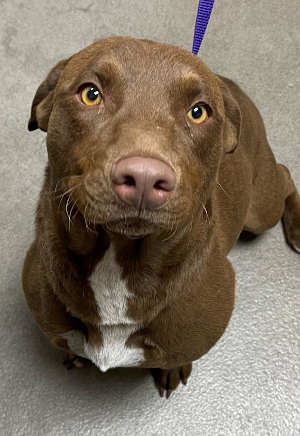
‘Arlo’
“Arlo” is a 3-year-old male basset hound-Labrador retriever mix with a short brown coat.
He is in kennel No. 9, ID No. LCAC-A-4164.
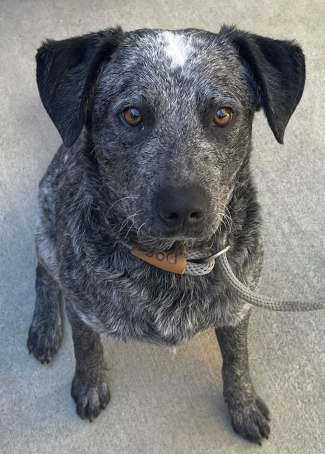
Male American blue heeler
This 1-year-old male American blue heeler has a short coat.
He is in kennel No. 10, ID No. LCAC-A-4128.
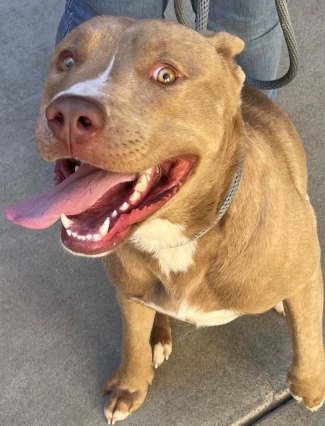
Male pit bull terrier
This 3-year-old male pit bull terrier has a short brown coat.
He is in kennel No. 12, ID No. LCAC-A-4127.
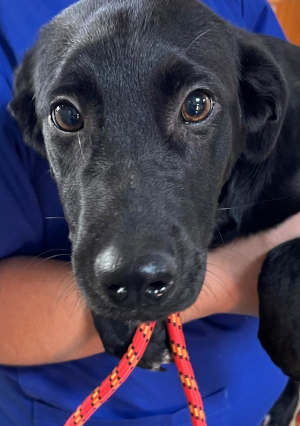
Female Labrador retriever
This 3-month-old female Labrador retriever has a short black coat.
She is in kennel No. 13, ID No. LCAC-A-4162.
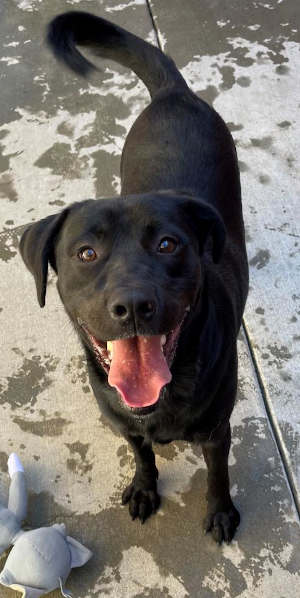
Male Labrador retriever
This 2-year-old male Labrador retriever has a short black coat.
He is in kennel No. 14, ID No. LCAC-A-4112.
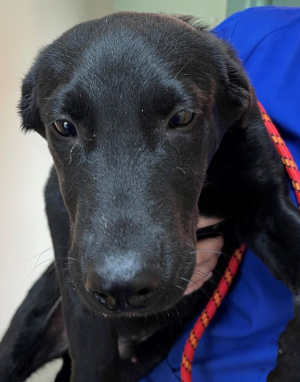
Male Labrador retriever
This 3-month-old male Labrador retriever has a short black coat.
He is in kennel No. 15, ID No. LCAC-A-4163.
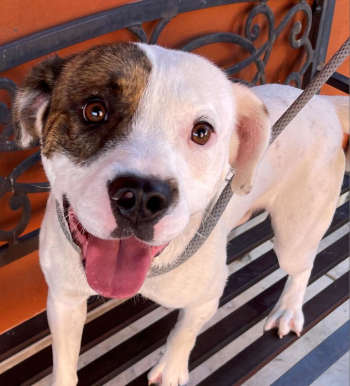
Male pit bull terrier
This 1-year-old male pit bull terrier has a short white coat with brown markings.
He is in kennel No. 16, ID No. LCAC-A-4110.
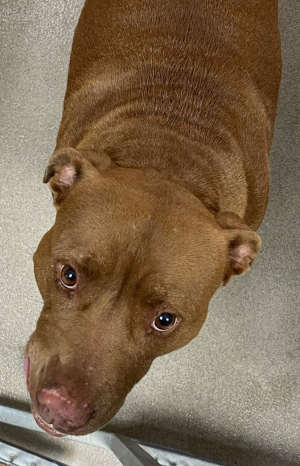
Female pit bull terrier
This 5-year-old female pit bull terrier has a short brown coat.
She is in kennel No. 17, ID No. LCAC-A-4109.
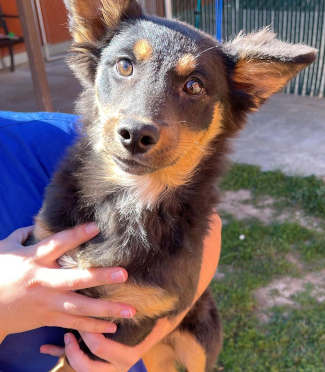
Female corgi
This 3-month-old female Cardigan Welsh corgi has a short black and tan coat.
She is in kennel No. 19, ID No. LCAC-A-4138.
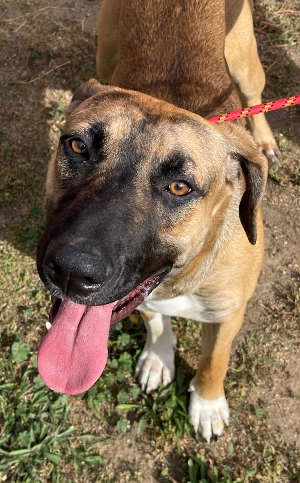
Male hound mix
This 2-year-old male hound mix has a short tan coat.
He is in kennel No. 20, ID No. LCAC-A-4176.
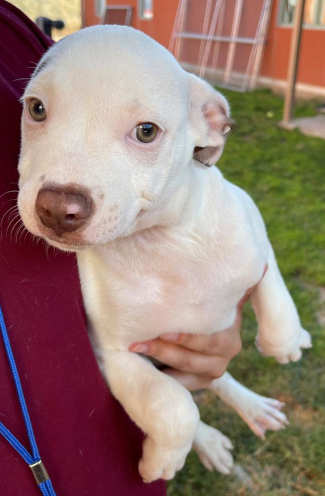
Male pit mix puppy
This 2-month-old male pit bull terrier mix puppy has a short gray and white coat.
He is in kennel No. 23a, ID No. LCAC-A-4116.
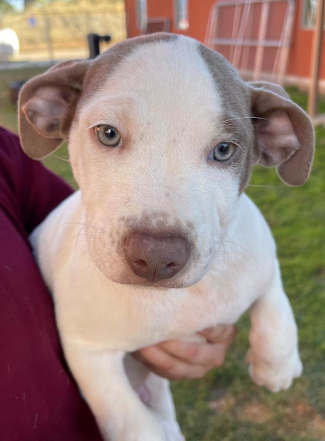
Male pit mix puppy
This 2-month-old male pit bull terrier mix puppy has a short gray and white coat.
He is in kennel No. 23e, ID No. LCAC-A-4120.
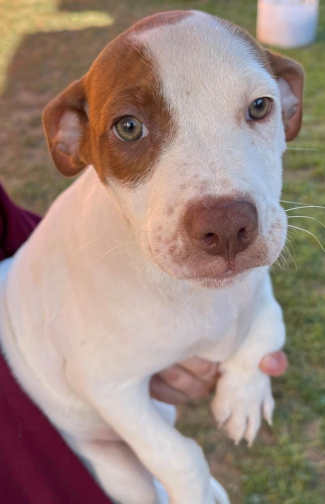
Female pit bull puppy
This 2-month-old female pit bull puppy has a short white and red coat.
She is in kennel No. 24b, ID No. LCAC-A-4121.
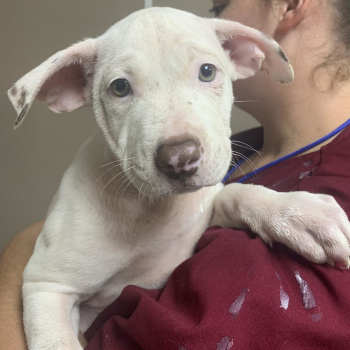
Female pit mix puppy
This 2-month-old female pit bull terrier mix puppy has a short white coat.
He is in kennel No. 24c, ID No. LCAC-A-4122.
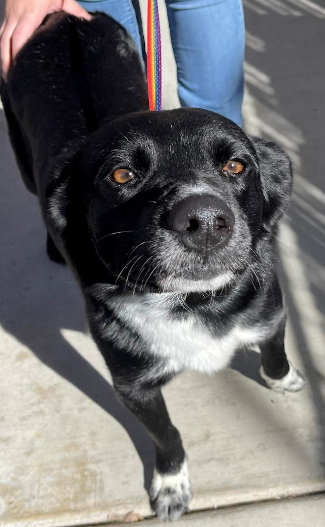
Female border collie
This 1-year-old female border collie has a black and white coat.
She is in kennel No. 30, ID No. LCAC-A-4186.
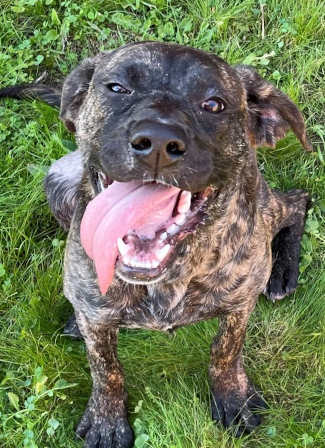
‘Ruby’
“Ruby” is a 6-month-old female hound mix with a brindle coat.
She is in kennel No. 31, ID No. LCAC-A-3753.
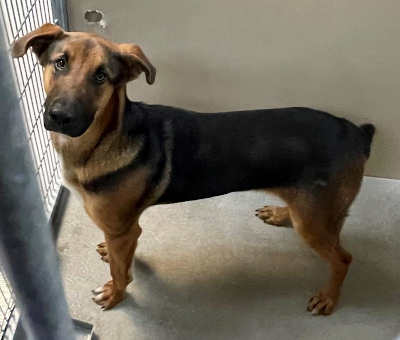
Male German shepherd
This 1-year-old male German shepherd has a short black and tan coat.
He is in kennel No. 33, ID No. LCAC-A-4204.
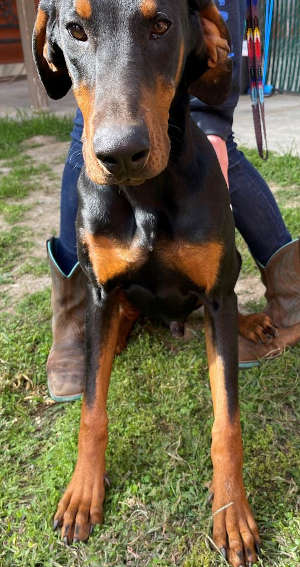
This 6-month-old male Doberman pinscher has a short black and tan coat.
He is in kennel No. 34, ID No. LCAC-A-4207.
Email Elizabeth Larson at
- Anxiety detection and treatment in early childhood can lower risk for long-term mental health issues – an expert panel now recommends screening starting at age 8
- Space News: NASA’s Lunar Flashlight ready to search for the Moon’s water ice
- Why the US House of Representatives has 435 seats – and how that could change