 How to resolve AdBlock issue?
News
- Details
- Written by: Angela De Palma-Dow
We just moved to a house near the Oaks Arm and I have heard there is concern with mercury on Clear Lake. Is it safe to go fishing and swimming? When will the mercury be cleaned up and how do I receive updates?
Thanks!
— Musing about Mercury
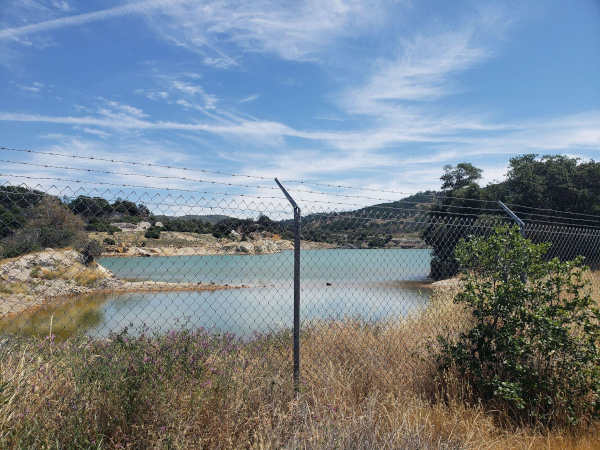
Dear Musing,
Thanks for this question and for your concern. The history of Mercury and Clear Lake is complex. I could probably write several books about the Sulfur Bank Mercury mine (hereinafter referred to as “the mine”).
Today’s column is really a brief introduction to the history of mercury in California, including in lakes and reservoirs, and Clear Lake, and the current efforts for clean-up by the United States Environmental Protection Agency, or U.S. EPA.
I also will not be covering in detail the complex impacts the mine has had, and continues to have, on the adjacent Elem Indian Colony, but I recognize and acknowledge that these impacts are significant and severe, and the Elem people deserve a robust remediation and compensation strategy to continue to live near and on the Superfund site.
Like much of the Golden State’s recent history, post-settlement growth, development, and economy of the state was long built on the exploitation of native peoples and the degradation of natural and cultural resources. While the mine has been credited, at one time, as one of the most profitable in the state for mercury, it can be strongly argued if the cost was worth the price.
For more information on the Elem perspective, experiences, and proposed solutions please visit the Elem Environmental Protection Website here.
What is a Superfund Site?
The basic definition of a superfund site is when a site, due to a previously occuring activity, poses a threat to public health and / or the environment and the responsible party (owner, manager) is no longer able to conduct appropriate clean up or mitigation. Usually, this occurs when a business has been polluting, such as dumping waste illegally, and then the company goes out of business, leaving behind a polluted site with no responsible party to conduct, remove, clean-up the waste, or remediate the pollution.
The waste itself, or it’s residue, can be hazardous or toxic and prevent people and wildlife from safely using the land or water, and so the site becomes a candidate for the federal Comprehensive Environmental Response, Compensation and Liability Act of 1980, or CERCLA, commonly known as Superfund. Sites that pose the greatest potential threat to public health and the environment are put on the National Priorities List, or NPL. The list can be viewed as a map here.
The NPL is the U.S. EPA's list of the most serious uncontrolled or abandoned hazardous waste sites identified for possible long-term remedial response under Superfund. Sites included in the NPL are mostly based on a score the site received under the Hazard Ranking System.
The Sulfur Bank Mercury mine was listed in 1990 and has a score of 44.42. The ranks are based on a scale of 0 to 100, based on the actual or potential release of hazardous substances from a site through air, surface water or groundwater.
Money from Superfund can be used for cleanup only at sites that are on the NPL. However, while the Superfund FUND, used to be mostly supported by oil and chemical taxes, expiration of those taxes occurred in 1995, leaving the taxpayers and general fund to fully support the program.
However, the recently passed Infrastructure Bill includes about $3.5 billion in cleaning up Superfund sites, and other hazardous properties like Brownfield sites, and reinstates the Superfund taxes on oil and chemical companies, making it one of the largest recent investments to address legacy pollution.
This also is probably good news for the Sulfur Bank Mine Superfund Clean-Up site, as funding shortfalls have been referenced as barriers to remediation completion.
Much to know about mercury
Mercury (Hg) is a naturally occurring chemical element. It used to be known commonly as quicksilver and has historically been used in such applications as thermometers, barometers, manometers, float valves, mercury switches and relays, and fluorescent lamps. Mercury was also used in hydraulic mining, to increase gold and silver yields.
These days, many of the above applications have utilized alternative elements or materials to replace mercury, as mercury can lead to significant health concerns if someone becomes exposed. Mercury poisoning results when someone is exposed to mercury in its liquid form through ingestion, mercury vapor inhalation, or through water-soluble forms such as methyl mercury or mercuric chloride.
Mercury poisoning can lead to potential brain damage, and permanent lung and kidney damage. Chronic exposure can lead to death.
In 2014 the US EPA aimed to fully eliminate the use of mercury in dental offices throughout the Country and in 2017 the U.S. EPA approved mercury limits in California waters and fish tissues to protect human health and aquatic wildlife.
Mercury is unique from other elements in that it retains its liquid form under standard, or everyday normal conditions of temperature and pressure, which makes it extremely pliable for common use applications as listed above!
Mercury history in the Golden State
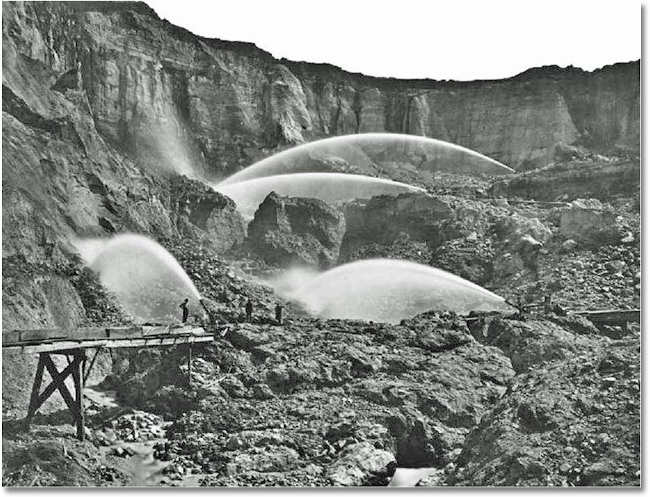
In California, mercury was historically used to improve hydraulic mining efficiency since mercury creates an amalgam with gold and silver. Basically, when miners added mercury to flowing water washed from mine site, in sluices or troughs, the mercury would readily attach to the gold or silver, making the desired elements heavier so they would sink out of the water and separate from other gravel and sands materials.
This process improved the recovery rates of gold and silver mining. After collection, to separate the gold or silver from the mercury, the amalgam was heated, the mercury vaporized leaving behind only the gold or silver. The vaporized mercury then became airborne and both more easily inhaled and released into the atmosphere.
Mercury mining was conducted to harvest enough material to provide for the booming industrial age in California, and other western states, but also to improve gold and silver mining.
In fact, during the California Gold Rush, gold miners used over 26 million pounds of mercury, and research estimates suggest that at least 13 million pounds of that mercury were released into the environment, mostly through waterways.
Mercury in lakes and reservoirs
Mercury contamination in lakes and reservoirs in California is not unique to Clear Lake. Due to the heavy and widespread mining activity across the State that transported mercury to surface sediments and waters, most, if not all of the waterways in California are considered contaminated by mercury.
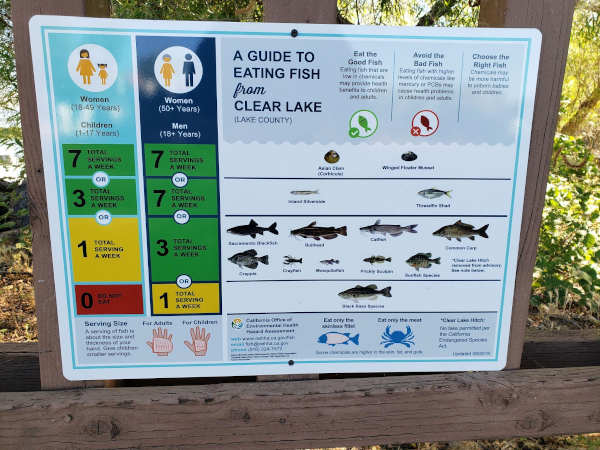
In fact, the Office of Environmental Health Hazard Assessment, or OEHHA, has a blanket fish advisory recommendation for all California lakes and reservoirs for a majority of the most commonly fished species and site specific advisories, such as this one for Clear Lake.
Studies of sediments in river flows during flood events has led researchers to predict that for at least the next 10,000 years, mining legacies in California will continue to release mercury-laden sediments into the environment, including waterways.
Mercury deposition is also a pathway for mercury to enter waterways, through rain and snowmelt. Mercury can become mobilized into the atmosphere during coal-combustion electrical power generation activities. Majority of this deposition occurs in the eastern and mid western United States.
You can track mercury deposition in your area by following the Mercury Deposition Network.
The history of mercury in California Lakes and Reservoirs is complex, and research is still ongoing to understand the full impact mining has had on ecological systems.
For more information I suggest these resources:
“Statewide Mercury Control program for Reservoirs”
Available: https://www.waterboards.ca.gov/water_issues/programs/mercury/reservoirs/docs/factsheet.pdf
“ Mercury Contamination: Toxic Legacy of the Gold Rush Assembly Natural Resources Committee March 24, 2014 Hearing Background Paper” Available: https://antr.assembly.ca.gov/sites/antr.assembly.ca.gov/files/hearings/Background%20paper032414.pdf
“Mercury and methylmercury concentrations and loads in the Cache Creek watershed, California”
Available at: https://digitalcommons.unl.edu/cgi/viewcontent.cgi?article=1497&context=usgsstaffpub
Legacies of the Sulfur Bank Mercury Mine on Clear Lake
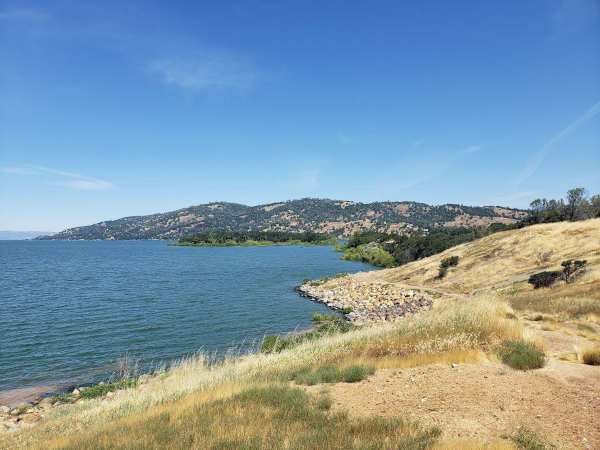
The mine is currently located in Clear Lake Oaks and stretches about 1,300 feet of shoreline on Clear Lake. The mine site contains a 160-are abandoned open-pit mercury mine, which is spring-filled with water and called the Herman Impoundment.
Note that the mine was not a hydraulic mine, but a pit mine. Pit mining, also known as open-cast or open-cut mining, is basically surface mining in descending fashion, down into the earth, as opposed to ascending fashion of surface mining on the side of a mountain or hillside.
The mine was mined for sulfur than mercury, intermittently, between 1865 and 1957. Mercury mined from the mine was transported around the state and used in hydraulic mining processes and in industrial applications.
After removing sediment from the pit, and mercury or sulfur was extracted, piles of removed sediment was dumped around the mine, sometimes into piles, called tailings, along the surrounding hills or into the lake or along the shoreline. The mine site has about 150 acres of mine tailings, which equates to about 200 million cubic yards of mine waste.
In general, the site geology, and surrounding sediment, is rich in mercury, which is why the site was selected as a mine location in the first place. Further human activity and modification of the area has allowed the mobilization of mercury from deep in the sediment to the surface where it can pose more contamination risk to humans and wildlife, and flow into the lake easier.
To complicate the issue, the initial clean-up solution, which created a wall of rock and sediment materials between the pit mine (i.e. Herman Impoundment) and the lake was constructed of waste rock from the site. This is called the Waste Rock Dam.
The Herman Impoundment, which sits higher in elevation than Clear Lake, and is spring fed, facilitates the mercury pathway into the lake. Gravity moves water from the impoundment through the contaminated soils and sediments of the waste rock dam; mercury is still slowly leaching from the mine site into the sediments at the bottom of the lake.
For the most part, mercury will stay adhered to sediments, and won’t be an exposure risk in the water itself. Swimming and boating are not at all hazardous in the Oaks arm area around the mine. Recreating in the sediments or soils at the site, or directly adjacent, should be avoided.
Please refer to this 2022 US EPA factsheet “The Sulphur Bank Mercury Mine Site: Arsenic and Mercury Risks."
Mercury exposure in water can occur when the mercury becomes methylated, under low oxygen concentrations in the water column, and moves into the water column where it can be consumed by fish. Fish and shellfish that live in, feed in, or habitat the sediments, are also more likely to ingest and become part of the mercury pathway.
The process of mercury moving from the sediments into fish, or living tissues, is called biomagnification. Biomagnification is the transfer of mercury in the fatty tissue of organisms up through the food web.
Basically, mercury transports through the tissue of one fish and is absorbed into the tissue of another fish, or human, when that fish is consumed. The larger the organism, the larger the amount of mercury potentially can be consumed.
Due to the contamination sourced from the mine, and the impact on the local tribal and Lake County communities, the site was added to the Superfund cleanup program in 1990. Since this time, the EPA has completed eight clean-ups to protect human health and the environment.
However, mercury is still present in fish in Clear Lake and in sediments near the mine, and continues to seep into the lake from the Herman Impoundment through the waste rock pile dam.
Future clean-up efforts
According to the Sulfur Bank Mine US EPA Superfund Site Team, there is a comprehensive plan to conduct the remaining clean-up on the Sulfur Bank Mine site. This team wants the community around Clear Lake to be involved and participate in this planning, so local concerns and perspectives are considered and included.
The general timeline for the Clean-up is as follows:
• Fall/Winter 2022: Final cleanup plan for the on-land mine part of the site presented to the community.
• 2025-2028 (estimated): Start cleanup of on-land, mine part of the site.
• Ongoing: Continue studying lake and sediment to see how best to control the mercury.
The proposed schedule and approach to the remaining clean-up will include a proposed cleanup plan, released sometime this month (November 2022, called a “Proposed Plan”) for the on-land mine part of the site.
The U.S. EPA communication and outreach team will conduct several open house, town-hall and virtual events where they will explain how the plan will protect human health and the environment.
After the U.S. EPA releases the plan, they will notify the community via newspaper, fliers, radio, website, postcards. They will also post a youtube presentation and open a 90-day public comment period. It’s the intention of the U.S. EPA to host several public engagement opportunities, with events dates, time, locations, and accessibility information being posted on their website and sent out to local media partners.
You can reach out to the U.S. EPA Sulfur Bank Mine team directly by contacting their Community Involvement Coordinator, Gavin Pauley, Region 9, at (415) 535-3725 |
To learn more about the U.S. EPA Sulfur Bank Mercury Mine site clean-up and progress and to be added to the Superfund Site’s mailing list, visit this page.
This year there have been two presentations to the Lake County Board of Supervisors by the Sulfur Bank Mine Sueprfund U.S. EPA team, you can find them here and and the County of Lake You Tube Channel.
April 19, 2022
https://lakecounty.granicus.com/MediaPlayer.php?view_id=1&clip_id=604&meta_id=201804
Sept. 20, 2022
https://lakecounty.granicus.com/MediaPlayer.php?view_id=1&clip_id=573&meta_id=186098
Sincerely,
Lady of the Lake
Angela De Palma-Dow is a limnologist (limnology = study of fresh inland waters) who lives and works in Lake County. Born in Northern California, she has a Master of Science from Michigan State University. She is a Certified Lake Manager from the North American Lake Management Society, or NALMS, and she is the current president/chair of the California chapter of the Society for Freshwater Science. She can be reached at
- Details
- Written by: California Highway Patrol
The CHP has partnered with the California Department of Transportation, or Caltrans, the California Office of Traffic Safety and the National Sleep Foundation in recognizing Nov. 6 to 12 as Drowsy Driving Prevention Week to raise awareness about the importance of a good night’s rest before driving.
Although we “fall back” and gain an extra hour of sleep, it does not necessarily equate to added rest, according to the American Academy of Sleep Medicine.
In the fall, people tend to wake up earlier, which results in less sleep throughout the week. The time change can also impair sleep quality. This disruption in sleep/wake patterns can have dangerous consequences, such as an increased risk of motor vehicle crashes.
“The CHP’s mission is to eliminate roadway deaths through education and enforcement of traffic safety laws designed to keep motorists safe,” said CHP Commissioner Amanda Ray. “Fatigue can impair driving skills similar to being under the influence of alcohol or drugs. Plan ahead before you get on the road to ensure you are well rested.’’
“Being so tired that you’re ‘running on fumes’ and driving are a dangerous combination,” Office of Traffic Safety Director Barbara Rooney said. “Driving safely requires your full and undivided attention — something we are not able to do when tired and sleepy. It is important you get the sleep you need so that when you drive, you are alert and refreshed.”
In California in 2019 and 2020, drowsy drivers caused more than 11,000 crashes, resulting in 6,411 injuries and 73 deaths.
Drivers ages 16 to 25 are at the greatest risk of falling asleep at the wheel, however drowsiness impacts anyone’s ability to drive safely by slowing reaction times and making it harder to pay attention to the road.
“Caltrans is committed to eliminating fatalities and serious injuries on all California roadways by 2050,” said Caltrans Director Tony Tavares. “To achieve this ambitious goal, Caltrans is working to make our transportation system safer and more forgiving. However, safety is a shared responsibility. Every motorist can do their part by ensuring that, when they get behind the wheel, they are well rested and alert.”
Whenever motorists begin to feel tired, the CHP reminds motorists to pull safely off the road and use one of Caltrans’ statewide roadside rest areas for a quick mind-clearing break.
To find a rest area or to check for the latest travel information on state highways, visit the Caltrans QuickMap at http://quickmap.dot.ca.gov/.
Motorists are advised against stopping on the side of the road where they risk getting hit by another car.
- Details
- Written by: Elizabeth Larson
Dogs available for adoption this week include mixes of American blue heeler, basset hound, Cardigan Welsh corgi, Doberman pinscher, German shepherd, hound, Labrador retriever and pit bull.
Dogs that are adopted from Lake County Animal Care and Control are either neutered or spayed, microchipped and, if old enough, given a rabies shot and county license before being released to their new owner. License fees do not apply to residents of the cities of Lakeport or Clearlake.
The following dogs at the Lake County Animal Care and Control shelter have been cleared for adoption.
Call Lake County Animal Care and Control at 707-263-0278 or visit the shelter online for information on visiting or adopting.
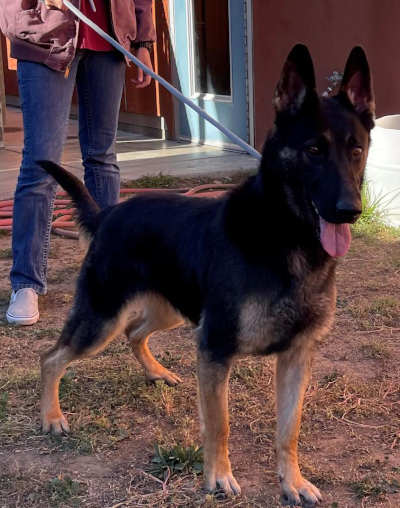
Female German shepherd
This 3-year-old female German shepherd has a black and tan coat.
She is in kennel No. 18, ID No. LCAC-A-4168.

Female pit bull
This 3-year-old female pit bull terrier has a fawn-colored coat.
She is in kennel No. 8, ID No. LCAC-A-4210.

Female Cardigan Welsh corgi
This 2-year-old female Cardigan Welsh corgi has a short tricolor coat.
She is in kennel No. 26, ID No. LCAC-A-4139.

‘Arlo’
“Arlo” is a 3-year-old male basset hound-Labrador retriever mix with a short brown coat.
He is in kennel No. 9, ID No. LCAC-A-4164.
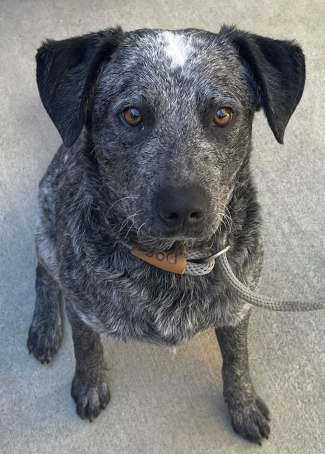
Male American blue heeler
This 1-year-old male American blue heeler has a short coat.
He is in kennel No. 10, ID No. LCAC-A-4128.

Female Labrador retriever
This 3-month-old female Labrador retriever has a short black coat.
She is in kennel No. 13, ID No. LCAC-A-4162.
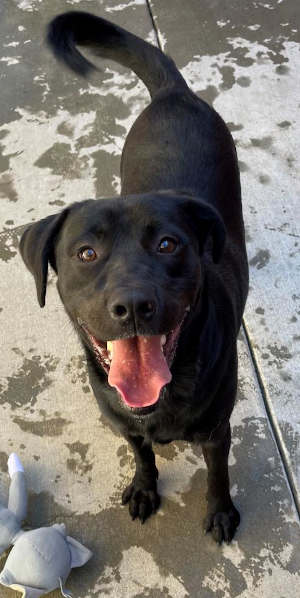
Male Labrador retriever
This 2-year-old male Labrador retriever has a short black coat.
He is in kennel No. 14, ID No. LCAC-A-4112.

Male Labrador retriever
This 3-month-old male Labrador retriever has a short black coat.
He is in kennel No. 15, ID No. LCAC-A-4163.
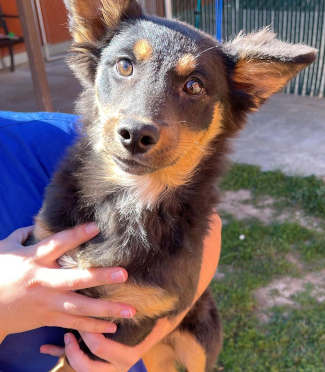
Female corgi
This 3-month-old female Cardigan Welsh corgi has a short black and tan coat.
She is in kennel No. 19, ID No. LCAC-A-4138.

Male hound mix
This 2-year-old male hound mix has a short tan coat.
He is in kennel No. 20, ID No. LCAC-A-4176.

Male pit mix puppy
This 2-month-old male pit bull terrier mix puppy has a short gray and white coat.
He is in kennel No. 23a, ID No. LCAC-A-4116.

Male pit mix puppy
This 2-month-old male pit bull terrier mix puppy has a short gray and white coat.
He is in kennel No. 23e, ID No. LCAC-A-4120.

Female pit bull puppy
This 2-month-old female pit bull puppy has a short white and red coat.
She is in kennel No. 24b, ID No. LCAC-A-4121.

Female pit mix puppy
This 2-month-old female pit bull terrier mix puppy has a short white coat.
He is in kennel No. 24c, ID No. LCAC-A-4122.
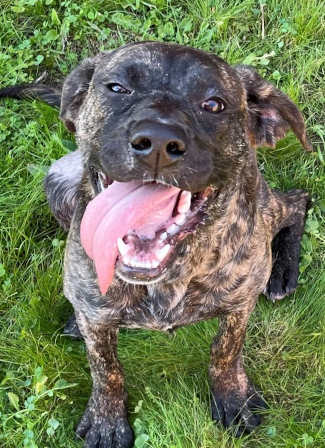
‘Ruby’
“Ruby” is a 6-month-old female hound mix with a brindle coat.
She is in kennel No. 31, ID No. LCAC-A-3753.

Male German shepherd
This 1-year-old male German shepherd has a short black and tan coat.
He is in kennel No. 33, ID No. LCAC-A-4204.
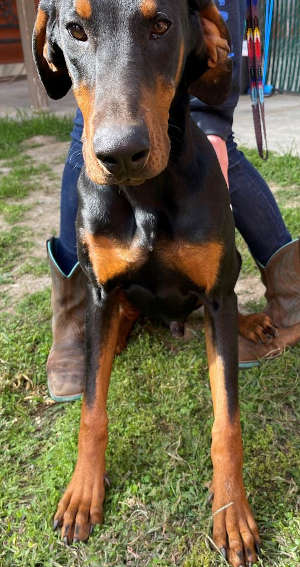
Male Doberman pinscher
This 6-month-old male Doberman pinscher has a short black and tan coat.
He is in kennel No. 34, ID No. LCAC-A-4207.
Email Elizabeth Larson at
- Details
- Written by: Claire Blome

What happens when the densest, most massive stars — that are also super small — collide?
They send out brilliant explosions known as kilonovae. Think of these events as the universe’s natural fireworks.
Theorists suspect they periodically occur all across the cosmos — both near and far. Scientists will soon have an additional observatory to help follow up on and even scout these remarkable events: NASA’s Nancy Grace Roman Space Telescope, which is set to launch by May 2027.
The key actors in kilonovae are neutron stars, the central cores of stars that collapsed under gravity during supernova explosions. They each have a mass similar to the Sun, but are only about 6 miles (10 kilometers) in diameter. And when they collide, they send out debris moving near the speed of light.
These explosions are also thought to forge heavy elements, like gold, platinum, and strontium (which gives actual fireworks their stunning reds). Kilonovae shoot those elements across space, potentially allowing them to end up in rocks forming the crust of terrestrial planets like Earth.
The astronomical community captured one of these remarkable kilonova events in 2017. Scientists at the National Science Foundation’s Laser Interferometer Gravitational-Wave Observatory, or LIGO, detected the collision of two neutron stars first with gravitational waves – ripples in space-time.
Almost simultaneously, NASA’s Fermi Gamma-ray Space Telescope detected high-energy light. NASA quickly pivoted to observe the event with a broader fleet of telescopes, and captured the fading glow of the blast’s expanding debris in a series of images.
But the players in this example collided practically in our “backyard,” at least in astronomical terms. They lie only 130 million light-years away. There must be more kilonovae — and many that are farther flung — dotting our ever-active universe.
“We don’t yet know the rate of these events,” said Daniel M. Scolnic, an assistant professor of physics at Duke University in Durham, North Carolina.
Scolnic led a study that estimates the number of kilonovae that could be discovered by past, present, and future observatories including Roman. “Is the single kilonova we identified typical? How bright are these explosions? What types of galaxies do they occur in?”
Existing telescopes can’t cover wide enough areas or observe deeply enough to find more distant examples, but that will change with Roman.
Spotting more, and more distant, kilonovae
At this stage, LIGO leads the pack in identifying neutron star mergers. It can detect gravitational waves in all areas of the sky, but some of the most distant collisions may be too weak to be identified. Roman is set to join LIGO’s search, offering complementary qualities that help “fill out” the team.
Roman is a survey telescope that will repeatedly scan the same areas of the sky. Plus, Roman's field of view is 200 times larger than the Hubble Space Telescope’s infrared view — not as vast as LIGO’s, but huge for a telescope that takes images. Its cadence will allow researchers to spot when objects on the sky brighten or dim, whether nearby or very far away.
Roman will provide researchers a powerful tool for observing extremely distant kilonovae. This is due to the expansion of space. Light that left stars billions of years ago is stretched into longer, redder wavelengths, known as infrared light, over time.
Since Roman specializes in capturing near-infrared light, it will detect light from very distant objects. How distant? “Roman will be able to see some kilonovae whose light has traveled about 7 billion years to reach Earth,” explained Eve Chase, a postdoctoral researcher at Los Alamos National Laboratory in Los Alamos, New Mexico.
Chase led a more recent study that simulated how differences in kilonovae ejecta can vary what we expect to observe from observatories including Roman.
There’s a second benefit to near-infrared light: It provides more time to observe these short-lived bursts. Shorter wavelengths of light, like ultraviolet and visible, disappear from view in a day or two. Near-infrared light can be gathered for a week or more. Researchers have been simulating the data to see how this will work.
“For a subset of simulated kilonovae, Roman would be able to observe some more than two weeks after the neutron star merger occurred,” Chase added. “It will be an excellent tool for looking at kilonovae that are very far away.”
Soon, researchers will know far more about where kilonovae occur, and how often these explosions occur in the history of the universe. Were those that occurred earlier different in some way? “Roman will allow the astronomy community to begin conducting population studies along with a slew of new analyses on the physics of these explosions,” Scolnic said.
A survey telescope offers enormous possibility – and also a ton of data that will require precise machine learning. Astronomers are meeting this challenge by writing code to automate these searches.
Ultimately, Roman’s massive data sets will help researchers unravel perhaps the greatest mysteries about kilonovae to date: What happens after two neutron stars collide? Does it produce a single neutron star, a black hole, or something else entirely? With Roman, we will gather the statistics researchers need to make substantial breakthroughs.
The Nancy Grace Roman Space Telescope is managed at NASA’s Goddard Space Flight Center in Greenbelt, Maryland, with participation by NASA's Jet Propulsion Laboratory and Caltech/IPAC in Southern California, the Space Telescope Science Institute in Baltimore, and a science team comprising scientists from various research institutions.
The primary industrial partners are Ball Aerospace and Technologies Corporation in Boulder, Colorado; L3Harris Technologies in Melbourne, Florida; and Teledyne Scientific & Imaging in Thousand Oaks, California.
Claire Blome works for the Space Telescope Science Institute.