 How to resolve AdBlock issue?
News
- Details
- Written by: Veronica Frans, Michigan State University and Jianguo "Jack" Liu, Michigan State University
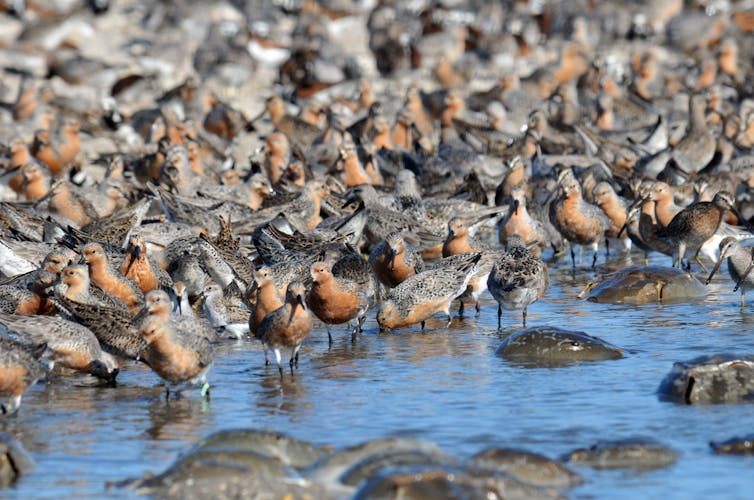
A biodiversity crisis is reducing the variety of life on Earth. Under pressure from land and water pollution, development, overhunting, poaching, climate change and species invasions, approximately 1 million plant and animal species are at risk of extinction.
One ambitious proposal for stemming these losses is the international initiative known as 30x30: conserving and protecting at least 30% of Earth’s surface, on land and at sea, by 2030.
Currently, 112 countries support this initiative, including the United States. More nations may announce their support at the international biodiversity conference that opens Dec. 7, 2022, in Montreal.
Scientists say that protecting 30% of Earth’s surface will help species and ecosystems recover from the stresses that are depleting them. It also will conserve valuable services that nature provides to humans, such as buffering coasts from storms and filtering drinking water. Protecting forests and grasslands can help slow climate change by promoting carbon storage in soil and plants.
As researchers in ecology, conservation and global sustainability, we study biodiversity around the world, from giant pandas deep in the forests of China to sea lions along the shorelines of New Zealand. Saving a wide variety of living things requires striking a balance between the needs of nature and people, and a global, holistic perspective. We believe a metacoupling approach, which looks at human-nature interactions within and across different areas, can help achieve the 30x30 goal.
What is a protected area?
Since 30x30 focuses on protecting space for wild nature, many people assume it means setting swaths of land or ocean aside and keeping people out of them. But that’s not always true.
As of mid-2021, 16.64% of the world’s land and 7.74% of its oceans were in protected areas. The International Union for the Conservation of Nature, a partnership of governments and civil society groups that tracks the health of the natural world, classifies protected areas in six categories:
- Strict nature reserve or wilderness area
- National park
- Natural monument or feature
- Habitat or species management area
- Protected landscape or seascape
- Protected area with sustainable use of natural resources
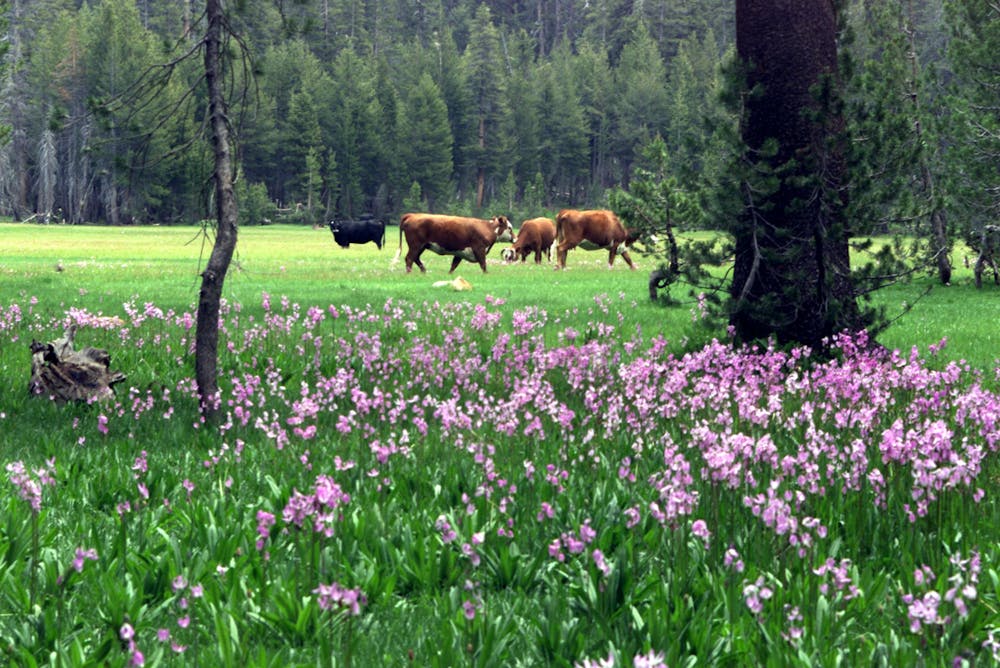
Many countries’ 30x30 conservation pledges are likely to include areas such as forests and grasslands that are open for recreation, logging, livestock grazing and other uses.
Few intact ecosystems remain
Scientists agree that protected areas need to include a large variety of species, ecosystems and habitats that the 30x30 initiative aims to conserve. There are many ways to choose and prioritize new areas for protection. Criteria can include the species, habitats and ecosystems that an area contains; its connections to other protected areas; how large and intact an area is; and the benefits it provides to people who live in, near and far from it.
Some scientists contend that the top priorities should be places that are still ecologically intact and virtually untouched by humans. But only about 3% of the Earth’s land and oceans are still in this state. And even wilderness areas can’t escape the effects of climate change caused by human activities elsewhere.
Over 58% of our planet’s land and 41% of its oceans are already under moderate to intense human pressure. This means that most newly protected areas will effectively be works in progress, with restoration projects to help species recover, improve habitat quality and make ecosystems healthier.
Another 40% of land and 10% of oceans have experienced relatively low impacts from human activities. Terrestrial ecosystems with the lowest human footprints include tundra, boreal forests and deserts. At the other extreme, tropical, subtropical and temperate forests are at the highest risk.
In the oceans, areas with the lowest human pressures are near the poles or in polar regions. Coral ecosystems, which are home to 25% of all marine life, are under the most pressure.
It isn’t always possible to protect large areas. Some scientists argue that small areas can still successfully protect species, but others disagree. In our view, what ultimately matters is how multiple protected areas are connected and how close they are to each other.
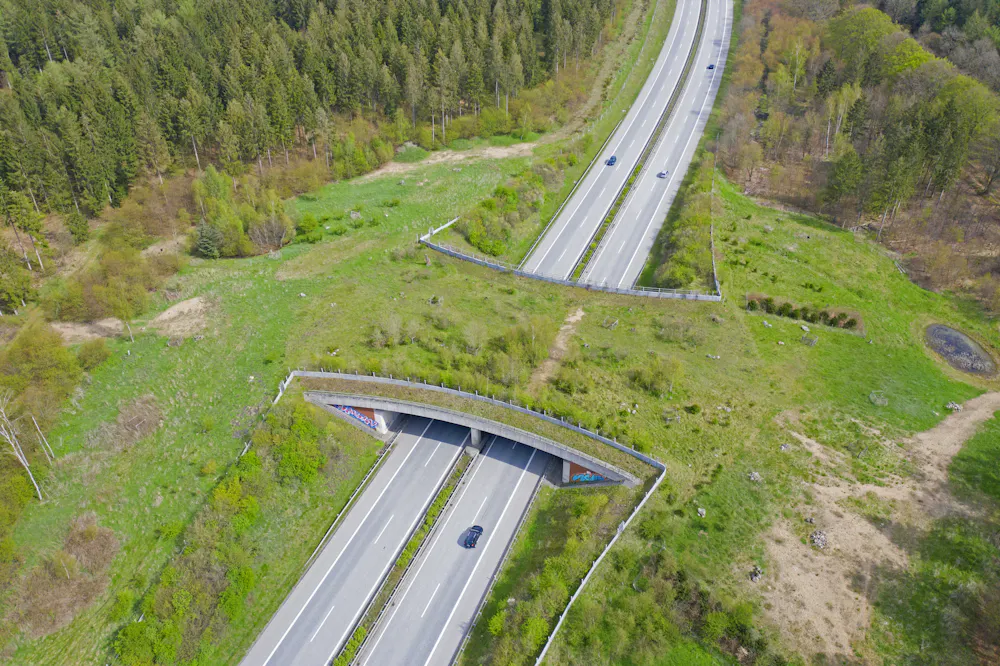
Connections can develop naturally, like the flyways that migrating birds use to travel between continents. Or they can be structures built by humans, such as wildlife bridges over highways. Connecting protected areas is important because it promotes genetic diversity and makes it possible for species to move in response to climate change and other threats.
The metacoupling approach
Given all these factors, selecting protected areas can get complicated. Based on our research, we think that a holistic approach can make 30x30 feasible and effective. It has three parts.
First, protected areas should meet both conservation needs and human needs. Second, in creating newly protected areas, researchers and managers should consider how they will interact with adjacent areas. Third, researchers and officials should assess how newly protected areas will interact with areas far away – including in other countries.
This approach is guided by the metacoupling framework, which is an integrated way to study and manage human-nature interactions within and between different places. It recognizes that human and natural systems in a given place can be affected for better or worse by people, policies and markets both nearby and far away.
At Wolong Nature Reserve in southwestern China, one of us, Jack Liu, has worked with Chinese collaborators to understand and manage human-nature interactions in ways that support the recovery of a global wildlife icon – giant pandas. Wolong, which is now part of China’s Giant Panda National Park, was one of the first and largest panda reserves in China, and also houses numerous other rare animals and plants. It is also home to almost 6,000 people.

Forest is an important part of panda habitat, but over time the human population in Wolong grew and needed more resources, such as wood for cooking and heating or to make goods for visiting tourists. In a 2001 study, our team showed that panda habitat in Wolong declined faster after the reserve was established in 1975 than it had before that time. Increasing demand for wood was degrading and fragmenting the forest and negatively affected panda population numbers.
To reverse this trend, our team worked with the Chinese government to provide more financial support to the local community in the early 2000s. This increased household incomes and reduced the need to harvest wood.
Taking a broad geographic view of the pandas’ situation helped to produce a positive outcome. Recognizing that panda habitat was being affected not just by human-nature interactions inside Wolong but also by interactions between Wolong and adjacent and distant places showed that conservation subsidies from the faraway central government in Beijing could improve protection for Wolong forests.
In 2016 the International Union for Conservation of Nature downlisted and reclassified giant pandas from endangered to vulnerable. Today there are an estimated 1,800 giant pandas in the wild, thanks partly to government subsidies that helped strike a balance between humans’ needs and those of pandas.
All protected areas are influenced by human actions both nearby and far away. We believe that creating and managing protected areas using a holistic metacoupling approach will make it easier to achieve the 30x30 goal and make sound decisions that sustain nature and human well-being around the world.
Veronica Frans, PhD Student in Fisheries & Wildlife and Ecology, Evolutionary Biology & Behavior, Michigan State University and Jianguo "Jack" Liu, Rachel Carson Chair in Sustainability, Michigan State University
This article is republished from The Conversation under a Creative Commons license. Read the original article.
- Details
- Written by: Robert Sanders
BERKELEY, Calif. — The James Webb Space Telescope has turned its infrared cameras on Saturn’s moon Titan, giving astronomers another eye on the largest and one of the most unusual moons in the solar system.
The only satellite with a dense atmosphere, it’s also the only world besides Earth that has standing bodies of liquid on its surface, including rivers, lakes and seas — though the liquid is thought to be methane, ethane and other hydrocarbons that are toxic to humans.
The new observations, combined with those from Earth-bound telescopes, will help astronomers understand the weather patterns on Titan in advance of a NASA mission to the moon, called Dragonfly, that is scheduled for launch in 2027.
A multirotor lander, Dragonfly will assess the habitability of Titan's unique environment, investigate the moon’s unusual chemical stew, and search for signatures of water-based or hydrocarbon-based life.
Astronomers have observed Titan for decades, since before the Voyager encounter in 1980. Over approximately the past 25 years, they focused powerful ground-based and orbital telescopes on the satellite, complementing observations by NASA’s Cassini mission to Saturn, which observed Titan between 2004 and 2017.
University of California, Berkeley, astronomer Imke de Pater led many Titan observations using high-resolution adaptive optics on the Keck Telescopes in Hawai’i.
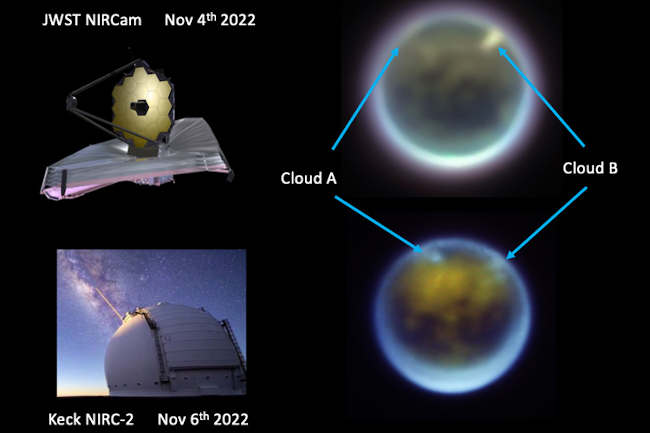
After the James Webb Space Telescope, or JWST, imaged Titan on Nov. 4, the telescope’s Titan team saw what looked like two clouds in the atmosphere.
Titan team lead Conor Nixon quickly emailed de Pater and Katherine de Kleer — a UC Berkeley Ph.D. who is now an assistant professor of planetary science and astronomy at the California Institute of Technology — to help confirm the clouds and track their movement with the Keck Telescope.
A series of Keck images taken about 30 and 54 hours later showed similar clouds — likely the same ones — but slightly displaced because of the moon’s rotation relative to Earth.
“We were concerned that the clouds would be gone when we looked at Titan one and two days later with Keck, but to our delight there were clouds at the same positions, looking like they might have changed in shape,” said de Pater, a UC Berkeley Professor of the Graduate School.
The power of JWST
Though the quality of the JWST and Keck images may look about the same to the untrained eye, de Pater noted that JWST has instruments that can measure aspects of Titan’s atmosphere that Keck cannot, complementing one another. In particular, JWST’s infrared spectroscopic capability allows it to pinpoint the altitudes of clouds and hazes with much better accuracy.
“By using spectrometers on JWST together with the optical image quality with Keck, we get a really complete picture of Titan,” she said, such as the heights of clouds, the atmosphere’s optical thickness, and the elevation of haze in the atmosphere.
In particular, at wavelengths where Earth’s atmosphere is opaque — that is, Titan cannot be seen from any Earth-based telescope — JWST can observe and provide information on the lower atmosphere and surface.
In early September, and again earlier this week, de Pater and de Kleer participated in an international observing campaign to catch the occultation by Titan of a distant star.
Organized by Eliot Young, a senior program manager at the Southwest Research Institute in Boulder, Colorado, the occultation offered an opportunity to probe Titan’s atmospheric structure in more detail using the Keck Telescope and the Very Large Telescope in Chile.
These observations are coordinated with occultations observed from other large telescopes and Doppler wind retrievals on Titan from the Atacama Large Millimeter Array, a radio telescope in Chile.
In conjunction with recent wind modeling results, these observations contribute to a broader understanding of atmospheres on Earth, on planets around other stars, and on our neighboring planets and moons in the solar system.
“This is some of the most exciting data we have seen of Titan since the end of the Cassini-Huygens mission in 2017, and some of the best we will get before NASA’s Dragonfly arrives in 2032,” said Zibi Turtle of Johns Hopkins University, who is Dragonfly’s principal investigator. “The analysis should really help us to learn a lot about Titan’s atmosphere and meteorology.”
Robert Sanders writes for the UC Berkeley News Center.
- Details
- Written by: Elizabeth Larson

KELSEYVILLE, Calif. — Downtown Kelseyville was filled with Christmas cheer and lights on Friday evening for the annual “Christmas in the Country” celebration.
The event, organized by the Kelseyville Business Association, had the feel of pre-pandemic days, with more families filling up the town’s business district, where there were activities at shops beginning in the early afternoon.
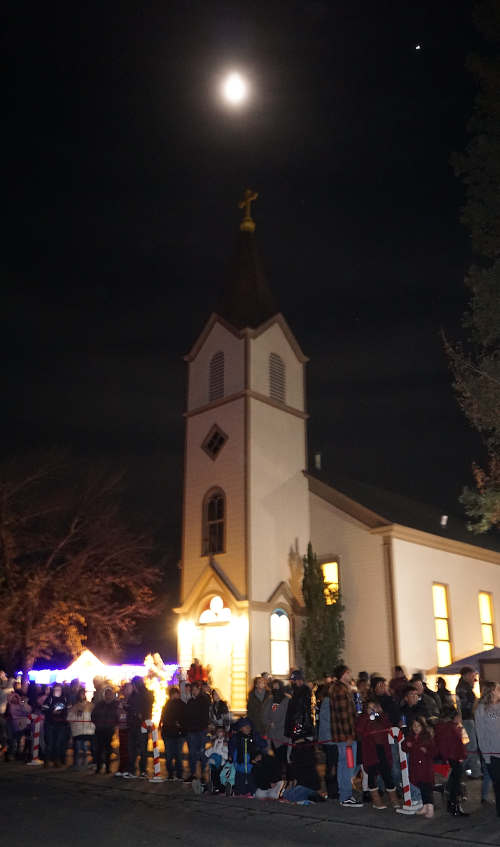
Starting with a merchants open house in the early evening, visitors were able to find a variety of foods, visit businesses and catch up with friends.
The theme was “Christmas in Toyland,” and that was especially visible in the Parade of Lights, which lasted about 40 minutes as it wound its way through town.
The floats included Santa Claus, several Grinches, community groups and businesses, singers and cartoon characters. Interspersed were classic cars and trucks, horses, a Kelseyville Unified School District bus outfitted with a train horn, marching bands and dancing Christmas trees.

Bringing up the rear of the parade once again was the bubble machine, followed by excited children.
After the parade, children were able to visit with Santa Claus at the recently opened Lady Luck Garage.
Email Elizabeth Larson at


- Details
- Written by: LAKE COUNTY NEWS REPORTS
The Lakeport Police Department, Lake County Sheriff’s Office and Lakeport Fire Protection District will provide a code three escort — meaning they will use lights and sirens — to lead the team through the downtown at 1:30 p.m. Saturday, Dec. 3.
The route will begin on Main Street traveling south (coming from the high school).
Community members are invited to line Main Street in downtown and show the team support as it heads to the playoffs.
Clear Lake High School’s Cardinals varsity football team is traveling to Orland for the playoff game in the 2022 CIF State Football Championship Bowl Games Division 5-A.
The game between the Clear Lake Cardinals and the Orland Trojans will take place beginning at 6 p.m. Saturday.
The winner will advance to the state championships Dec. 10.