 How to resolve AdBlock issue?
News
- Details
- Written by: Toria Herd, Penn State and Sarah A. Font, Penn State

More than 44% of teens reported persistent feelings of sadness and hopelessness in the first half of 2021, according to a report from the Centers for Disease Control and Prevention. The early 2022 report, which was based on an online survey, also found that nearly 20% had seriously considered suicide, and 9% attempted suicide.
The COVID-19 pandemic is a likely contributor to these startling figures, but rates of teen mental illness have been rising over the past decade.
One crucial factor that has received little attention in supporting teen mental health is the role that parents can play.
This is surprising, since research has clearly established that participation by a caregiver in their child’s mental health treatment is directly related to a successful outcome. A key reason for this is that parents generally interact with their teen on a daily basis and can model and cultivate coping skills.
Yet, for mental health professionals, it can be challenging to integrate parents into teens’ treatment when there are discrepancies between the perspectives, goals and expectations of teens and parents. In addition, consent and privacy laws sometimes limit providers’ abilities to disclose key details about a teen’s mental health to parents.
As researchers studying childhood trauma and adolescent development, we see parents and caregivers as a critical link in addressing the urgent mental health crisis among teens.
The teenage years can be brutal
Parents often dread the teenage years, anticipating mood swings, risk-taking behaviors and endless arguments. Some of this is developmentally normal: Teens are developing their identities, testing limits and asserting their autonomy. These combined factors can lead to hostility and a lower-quality parent-teen relationship.
Physically, teens are sleep-deprived, in part due to overly early school start times and hormonal changes associated with puberty. As a result, teens can be irritable and sensitive to stressors. They also haven’t developed the self-control to manage their reactions.
And it’s important to note that half of all mental illness emerges by age 14 and 75% by age 24, making adolescence a highly sensitive period for the prevention and treatment of mental health problems.
Signs and symptoms of a mental health concern
Mental health problems in teens can sometimes take unexpected forms. Depression and anxiety can manifest as irritability and noncompliance, which parents may reasonably view as disrespect and laziness. Understanding what is beneath those behaviors is challenging. Teens are quite secretive, so they may not disclose the extent of their struggles.
Traumatic experiences like bullying, dating violence and sexual harassment and assault are unfortunately too common in adolescence and can cause drastic changes in behavior and affect.
Although anxiety is a normal emotional response at any age, about a third of adolescents have some type of anxiety disorder, and about 10% experience severe impairment as a result. Teens struggling with chronic anxiety may experience agitation or irritability, issues with sleep, perfectionist tendencies, or may try to avoid stressful things altogether.
Among teens, 17% struggle with depression. Depression generally involves a loss of interest or pleasure in daily activities, but it is more than feeling blue. For teens, symptoms of depression may look like withdrawing from family or social activities, shutting down during conversations or conflict, lethargy, difficulty concentrating, hopelessness about the future or negative feelings of self-worth.
Depression can also be associated with self-harm and suicide.
In determining whether a teen is experiencing a mental illness, parents should consider how behaviors are affecting their teens’ everyday lives and plans for the future. Those who are falling behind in school, damaging important relationships or engaging in high-risk behaviors may be most likely to be experiencing a mental health issue – as opposed to typical teenage challenges.
A shortage of mental health care
Despite the growing need for mental health care, the U.S. has a dire shortage of professionals to meet the demand. Insurance companies create barriers to accessing mental health care by restricting the numbers of in-network providers and approved sessions. As a result, many providers prioritize patients who will pay out of pocket.
Parents and teens may wait months for an appointment, and the quality and effectiveness of the services they receive are highly variable. All the while, symptoms may worsen, straining the family and compromising teens’ social and academic opportunities.
The powerful role parents can play
This is where parents come in, since they can serve as role models for teens’ coping and emotional development.
While good sleep, consistent exercise and quality meals can often be the first line of defense in preventing and managing symptoms of mental health problems, there are several behavioral strategies for parenting struggling teens. Indeed, foster parents care for children with complex histories of trauma, and many of the behavior management strategies taught to foster parents may be useful for traditional family settings as well.
When teens are unkind or disrespectful, parents may take it personally. But parents who are aware of and able to manage their own triggers can react calmly to challenging behavior, creating opportunities for effective communication with their teen.
Building and maintaining the parent-teen connection, such as by watching a TV show together or other low-pressure opportunities to be together, is key. These experiences create safe spaces and opportunities for teens to communicate about difficult emotions or situations. Parents who assist teens in recognizing, talking about and dealing with difficult thoughts and feelings help them to understand how their thoughts and feelings can affect their behavior.
Parents can also help their teens manage negative emotions by reinforcing their self-esteem and strengths and encouraging self-efficacy. Parents who offer praise to their teens who are working hard to overcome challenges – as opposed to focusing solely on the outcome – can help teens see their worth beyond their accomplishments.
At the same time, teens require boundaries that allow them to build self-reliance, exercise independence and practice compromise in certain situations. Behavior contracts – in which teens and their parents agree to certain conditions in writing – can provide a structured way to establish shared expectations.
When consequences are necessary, natural consequences allow teens to learn without parental intervention. For example, if a teen stays up late the night before a big softball game, their coach may bench them for playing poorly. Parents can help teens to connect the frustration and disappointment they experience to their choices regarding sleep, which can be more helpful for their future decision-making than getting into an argument with a parent about their decision or receiving a parent-imposed consequence, such as removing phone privileges.
When natural consequences are not an option, discipline should be specific, time-limited and focused on a specific outcome, such as not allowing preferred activities until homework and chores are complete.
It is also important that parents avoid power struggles with their teens by modeling respectful communication without trying to manage the teen’s reaction or perspective. Teens are unlikely to admit to being wrong – particularly in a heated moment – and if the point is made, there is rarely a benefit to insisting upon a particular reaction such as a forced apology.
Parents can best support their teens by maintaining connection alongside enforcing structure and discipline. While challenging behaviors can be the status quo of adolescence, parents should be on the lookout for signs that might reflect a pervasive mental health issue, since early detection and treatment is crucial.
Toria Herd, Postdoctoral Researcher in Psychology, Penn State and Sarah A. Font, Associate Professor of Sociology and Public Policy, Penn State
This article is republished from The Conversation under a Creative Commons license. Read the original article.
- Details
- Written by: Elizabeth Larson
Call Lake County Animal Care and Control at 707-263-0278 or visit the shelter online for information on visiting or adopting.
The following cats at the shelter have been cleared for adoption.
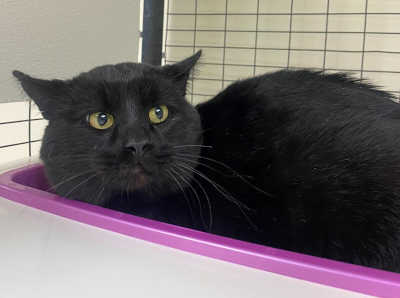
‘Sampson’
“Sampson” is a male domestic shorthair with a black coat.
He is in cat room kennel No. 77, ID No. LCAC-A-4317.

Male domestic shorthair
This 3-year-old male domestic shorthair cat has an orange tabby coat.
“This guy can be shy at first, but once he knows that you are all about the pets, he will roll right over and start his purr machine. He has a unique curly tail which he flicks around when curious,” shelter staff said.
He is in cat room kennel No. 13, ID No. LCAC-A-4021.

Male domestic shorthair
This 8-year-old male domestic shorthair cat has an orange tabby coat.
He is in cat room kennel No. 47, ID No. LCAC-A-4319.
Email Elizabeth Larson at
- Details
- Written by: Konocti Fire Safe Council
“Residents have been very receptive to learn more on how to be ready in the event of wildfire,” said KFSC Community Education and Outreach Committee Chair Cathy Sylar.
KFSC volunteers have visited an estimated 150 residents in the Westwind Mobile Home Park, Walnut Cove Mobile Home Park, and surrounding neighborhoods.
Additionally, KFSC board members were present at the Ely Stage Stop’s Fiddler Jam on Nov. 6 to engage community members and distribute educational materials.
Educational materials handed out to Konocti area residents included Zonehaven magnets, sign up information for wildfire notifications from both Lake County Alerts and Watch Duty, and how to prepare emergency go bags.
Konocti Fire Safe Council considers getting this information out especially critical to residents along the Soda Bay corridor, as they share a single road in and out should an evacuation occur.
The Konocti Fire Safe Council was recently formed to unite residents in the Konocti area and address the challenges of living in a location that is highly vulnerable to wildfire. This includes fire risk reduction and hazardous vegetation mitigation, defensible space, home hardening and evacuation preparedness.
The geographic coverage of the Konocti Fire Safe Council encompasses seven designated Zonehaven evacuation zones that include Gaddy Lane, along Soda Road to the intersection of Kit’s Corner & Hwy 29, Point Lakeview Road and State Highway 281.
The zones are KEL-E103, KEL-E109, KEL-E117, KEL-E120, KEL-E122, KEL-E134, KEL-E146 and KEL-E152.
The KFSC represents such communities as Soda Bay, Kelseyville Riviera, Riviera Estates, Lakeview Estates, Konocti Shores, Riviera West, Buckingham, Riviera Heights and numerous mobile home parks, private homes, and businesses along the Soda Bay Road corridor.
If you would like the KFSC Outreach Committee to visit your neighborhood or would like to request additional information about the Konocti Fire Safe Council, please contact Cindy Jassar at 707-279-2245 or email
- Details
- Written by: Elizabeth Larson
Dogs available for adoption this week include mixes of border collie, Catahoula leopard puppy, Doberman pinscher, German shepherd, husky, Labrador retriever, pit bull, shepherd and wirehaired terrier.
Dogs that are adopted from Lake County Animal Care and Control are either neutered or spayed, microchipped and, if old enough, given a rabies shot and county license before being released to their new owner. License fees do not apply to residents of the cities of Lakeport or Clearlake.
The following dogs at the Lake County Animal Care and Control shelter have been cleared for adoption.
Call Lake County Animal Care and Control at 707-263-0278 or visit the shelter online for information on visiting or adopting.
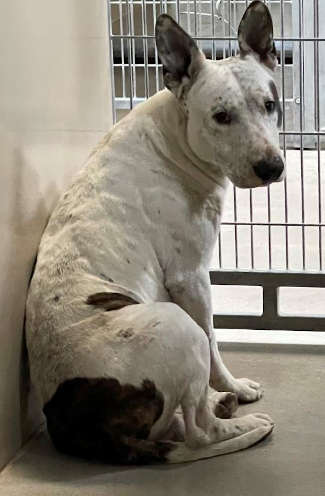
‘Chico’
“Chico” is a 5-year-old male bull terrier with a short white coat and black markings.
He is in kennel No. 6, ID No. LCAC-A-4314.

Male German shepherd
This 1-year-old male German shepherd has a short black and tan coat.
He is in kennel No. 8, ID No. LCAC-A-4310.

Male Labrador retriever
This 1.5 year old male Labrador retriever has a short black coat.
He is in kennel No. 10, ID No. LCAC-A-4273.

Female husky
This 2-year-old female husky has a short brown coat with white markings.
She is in kennel No. 11, ID No. LCAC-A-4269.

Male Catahoula leopard puppy
This 2-month-old male Catahoula leopard puppy has a red, tan and white coat.
He is in kennel No. 12a, ID No. LCAC-A-4263.
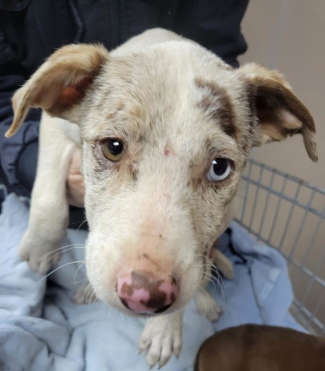
Female Catahoula leopard puppy
This 2-month-old female Catahoula leopard puppy has a red, tan and white coat.
She is in kennel No. 12c, ID No. LCAC-A-4261.

Female Labrador retriever
This 3-month-old female Labrador retriever has a short black coat.
She is in kennel No. 13, ID No. LCAC-A-4162.

Male Labrador retriever
This 2-year-old male Labrador retriever has a short black coat.
He is in kennel No. 14, ID No. LCAC-A-4112.

Male Doberman pinscher
This 1-year-old male Doberman pinscher has a short brown coat.
He is in kennel No. 15, ID No. LCAC-A-4313.
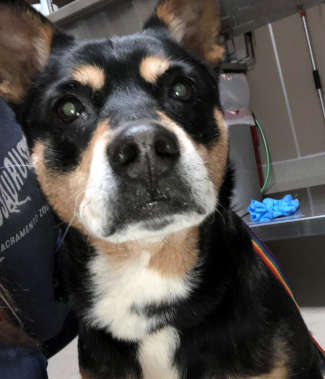
Female border collie mix
This 4-year-old female border collie mix has a short tricolor coat.
She is in kennel No. 18, ID No. LCAC-A-4285.

Female pit bull puppy
This 2-month-old female pit bull puppy has a short white and red coat.
She is in kennel No. 23c, ID No. LCAC-A-4120.
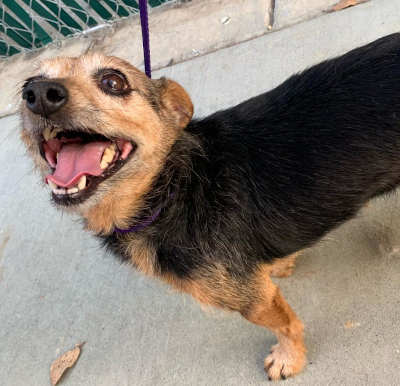
‘Faith’
“Faith” is a 10-year-old female wirehaired terrier with a short black and tan coat.
She is in kennel No. 26, ID No. LCAC-A-4280.
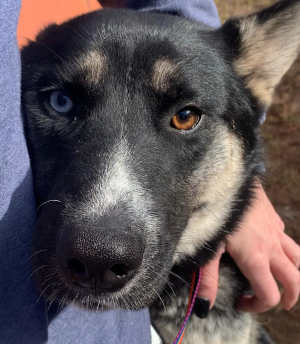
Female husky
This 2-year-old female husky has a short tricolor coat and one blue and one brown eye.
She is in kennel No. 27, ID No. LCAC-A-4257.
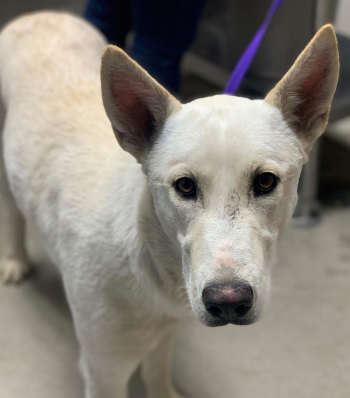
Female German shepherd
This 10-month-old female German Shepherd has a short light-colored coat.
She is in kennel No. 28, ID No. LCAC-A-4297.

Female Doberman pinscher
This 1-year-old female Doberman pinscher has a short black and tan coat.
She is in kennel No. 29, ID No. LCAC-A-4279.
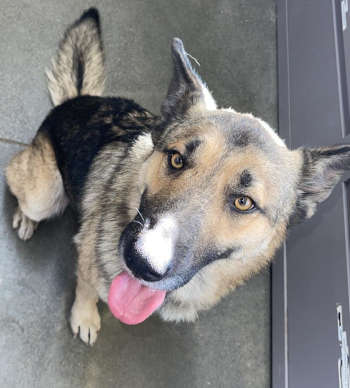
Male shepherd
This 3-year-old male shepherd has a short black and tan coat.
He is in kennel No. 31, ID No. LCAC-A-4312.
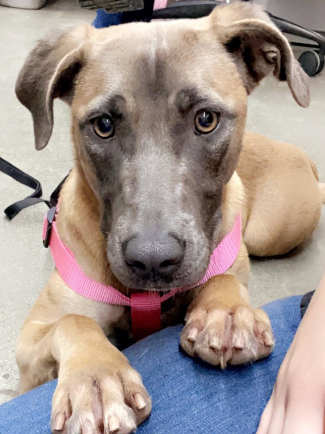
Female pit bull
This 1-year-old female pit bull has a short tan coat.
She is in kennel No. 32, ID No. LCAC-A-4283.
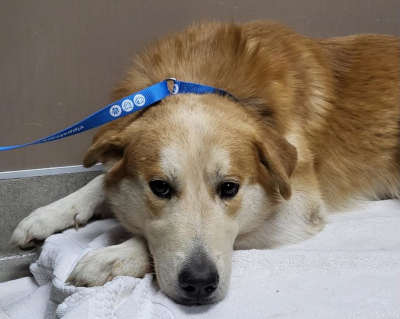
Male shepherd mix
This 2-year-old male shepherd has a red and white coat.
He is in kennel No. 34, ID No. LCAC-A-4337.
Email Elizabeth Larson at