 How to resolve AdBlock issue?
News
- Details
- Written by: LAKE COUNTY NEWS REPORTS
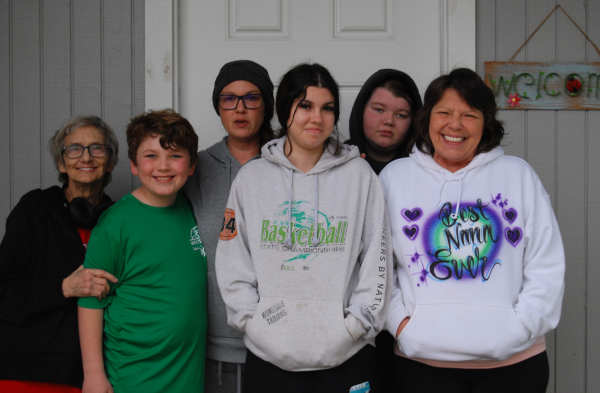
LAKE COUNTY, Calif. — Habitat for Humanity Lake County has helped yet another family achieve homeownership.
As 2022 came to a close, Habitat for Humanity Lake County was excited to celebrate the closing of their 39th home in Clearlake.
The homeowner ceremony with the family and Habitat staff was held on Dec. 28, but the home closing occurred sooner so that, on Christmas Day.
The Smith family opened their Christmas gifts in their old residence, bid farewell to their old life and moved into their new home.
“It was the best Christmas present we could get, spending Christmas night in a home that’s ours,” said Alicia Smith, the mother of three who shares the home with her mother and grandmother.
“We are beyond blessed and grateful,” Smith said. “From the house to the neighborhood and neighbors, we truly have a place of our own to call home. This would not be possible without Habitat and we will forever be paying it forward.”
If you are interested in Habitat’s Homeownership program or know someone you think would qualify, you are encouraged to contact the office at 707-994-1100, Extension 106, or stop by for an application at 15312 Lakeshore Drive in Clearlake, behind Foods, Etc.
- Details
- Written by: Georgina Marie Guardado
Community members are invited to share conversation about the book selection, “Postcolonial Love Poem” by Natalie Diaz.
The book discussions offered in partnership with the Redwood Community Services Harbor Youth Resource Center, New Darlings: Readings on Contemporary Poetry, O’Meara Bros. Brewery and Natalie Diaz.
In addition to hosting the March 1 book discussion, O’Meara Bros. Brewery crafted a new beer to celebrate the NEA Big Read. Stop in to try the new Postcolonial Love Poem raspberry ale while it lasts, and enjoy a wide array of lunch and dinner food options.
New Darlings: Readings on Contemporary Poetry
Friday, Feb. 24, 5 to 6 p.m.
Join local author Jennifer Mills Kerr and Lake County Poet Laureate Georgina Marie Guardado for a virtual reading and discussion of Postcolonial Love Poem. Visit lakecountybigread.com for the link to register.
Location: Zoom
Youth Book Club with The Harbor on Main
Monday, Feb. 27, 4 to 5:30 p.m.
Teens and young adults are invited for a book discussion of Postcolonial Love Poem with The Harbor on Main.
Location: The Harbor Youth Resource Center on Main, 150 S. Main St., Lakeport
Lakeport Evening Book Club discussion
Wednesday, March 1, 5:30 to 7 p.m.
Join the Lakeport Library Evening Book Club in discussing the NEA Big Read book selection, Postcolonial Love Poem, and try the newly crafted Postcolonial Love Poem brew
Location: O'Meara Bros., 901 Bevins St., Lakeport
Youth Book Club with The Harbor on Main — free
Monday, March 6, 4 to 5:30 p.m.
Teens and young adults are invited for a book discussion of Postcolonial Love Poem with The Harbor on Main.
Location: The Harbor Youth Resource Center on Main, 150 S. Main St., Lakeport
The final book discussion, the Big Read 2023 Author Event, will include a poetry reading and Q&A with the Pulitzer Prize winning author of “Postcolonial Love Poem,” Natalie Diaz.
Join the Lake County Library and Lake County Friends of Mendocino College on Saturday, March 18, 1 to 3 p.m.
This event will take place on Zoom and will be live streamed from the Mendocino College Lake Campus Round Room, 2565 Parallel Drive in Lakeport, and all four branches of the Lake County Library.
The public is invited to attend all NEA Big Read events at no cost, and free books are provided at each event and all library branches until supply runs out.
Programming runs from Feb. 9 through March 25.
To view the full schedule of events, go to http://www.lakecountybigread.com/.
Follow the Big Read on Facebook by visiting https://www.facebook.com/LakeCountyBigRead/.
The NEA Big Read is a program of the National Endowment for the Arts in partnership with Arts Midwest, which seeks to broaden our understanding of our world, our communities, and ourselves through the joy of sharing a good book.
The NEA Big Read showcases a diverse range of contemporary titles that reflect many different voices and perspectives, aiming to inspire conversation and discovery.
Visit https://www.arts.gov/initiatives/nea-big-read for more information about the NEA Big Read. Organizations interested in applying for an NEA Big Read grant in the future should visit Arts Midwest’s at https://artsmidwest.org/ for more information.
Georgina Marie Guardado is literacy program coordinator for the Lake County Library.
- Details
- Written by: Elizabeth Larson
Dogs available for adoption this week include mixes of border collie, boxer, German shepherd, German shorthaired pointer, hound, husky, Labrador retriever, Pekingese, pit bull, shepherd, treeing walker coonhound and terrier.
Dogs that are adopted from Lake County Animal Care and Control are either neutered or spayed, microchipped and, if old enough, given a rabies shot and county license before being released to their new owner. License fees do not apply to residents of the cities of Lakeport or Clearlake.
The following dogs at the Lake County Animal Care and Control shelter have been cleared for adoption.
Call Lake County Animal Care and Control at 707-263-0278 or visit the shelter online for information on visiting or adopting.

Male German shepherd puppy
This 3-month-old male German shepherd puppy has a short black and tan coat.
He is in kennel No. 2, ID No. LCAC-A-4748.

‘Teddy’
“Teddy” is a 2-year-old male Pekingese with a long brown and white coat.
He is in kennel No. 7, ID No. LCAC-A-4700.

Male German shepherd
This 9-month-old male German shepherd has a short fawn coat.
He is in kennel No. 8, ID No. LCAC-A-4684.

‘Ricky’
“Ricky” is a 3-year-old male pit bull terrier with a short black coat.
He is in kennel No. 9, ID No. LCAC-A-669.

Male German shepherd
This 6-month-old male German shepherd has a black and tan coat.
He is in kennel No. 10, ID No. LCAC-A-4689.
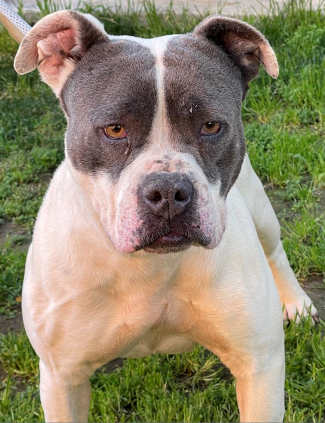
Female pit bull
This 6-year-old female pit bull has a short white coat with gray markings.
She is in kennel No. 11, ID No. LCAC-A-4677.

‘Oreo’
“Oreo” is a 2-year-old male treeing walker coonhound with a short tricolor coat.
He is in kennel No. 13, ID No. LCAC-A-4738.

Male German shorthaired pointer puppy
This 5-month-old male German shorthaired pointer puppy has a short black and white coat.
He is in kennel No. 14a, ID No. LCAC-A-4768.

Male German shorthaired pointer puppy
This 5-month-old male German shorthaired pointer puppy has a short red and white coat.
He is in kennel No. 14b, ID No. LCAC-A-4769.

Male German shorthaired pointer puppy
This 5-month-old male German shorthaired pointer puppy has a short red and white coat.
He is in kennel No. 14c, ID No. LCAC-A-4770.
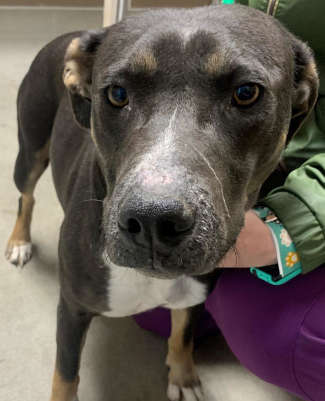
Female pit bull-Labrador retriever mix
This female pit bull-Labrador retriever mix has a short tricolor coat.
She is in kennel No. 17, ID No. LCAC-A-4692.

‘Icy’
“Icy” is a 2-month-old female pit bull terrier puppy with a short black and white coat.
She is in kennel No. 18, ID No. LCAC-A-4757.

Female pit bull
This 4-year-old female pit bull has a short white coat with gray markings.
She is in kennel No. 19, ID No. LCAC-A-4676.
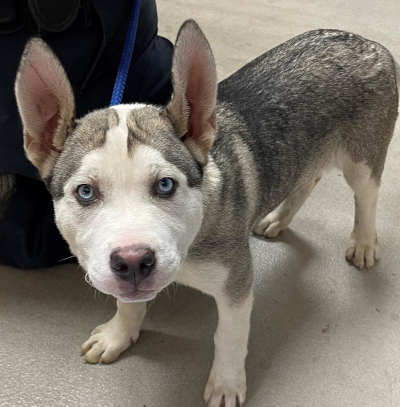
Male husky-pit bull mix puppy
This 3-month-old male husky-pit bull mix puppy has a short gray and white coat.
He is in kennel No. 20, ID No. LCAC-A-4714.

Female German shepherd
This 1-year-old female German shepherd has a black and tan coat.
She is in kennel No. 23, ID No. LCAC-A-4715.

Female shepherd-pit bull mix
This 3-month-old female shepherd-pit bull mix has a short tricolor coat.
She is in kennel No. 24b, ID No. LCAC-A-4694.

Female shepherd-pit bull mix
This 3-month-old female shepherd-pit bull mix has a short tricolor coat.
She is in kennel No. 24c, ID No. LCAC-A-4695.

Female shepherd-pit bull mix
This 3-month-old female shepherd-pit bull mix has a short tricolor coat.
She is in kennel No. 25, ID No. LCAC-A-4697.

Male boxer-pit bull mix
This 8-year-old male boxer-pit bull mix has a short brown brindle coat.
He is in kennel No. 26, ID No. LCAC-A-4678.
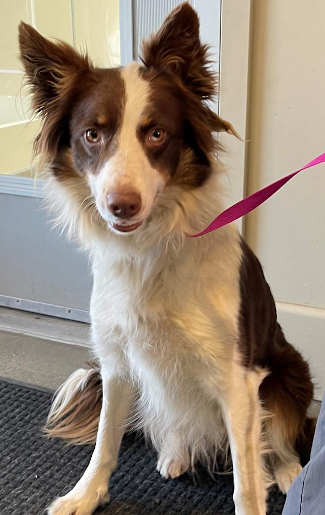
‘Lola’
“Lola” is a 2-year-old female border collie mix with a red and white coat.
She is in kennel No. 27, ID No. LCAC-A-4729.

Male shepherd-pit bull mix
This 3-month-old male shepherd-pit bull mix has a short tricolor coat.
He is in kennel No. 28a, ID No. LCAC-A-4696.

Male shepherd-pit bull mix
This 3-month-old male shepherd-pit bull mix has a short tricolor coat.
He is in kennel No. 28c, ID No. LCAC-A-4698.

Male German shepherd
This 1-year-old male German shepherd has a short black and tan coat.
He is in kennel No. 29, ID No. LCAC-A-4710.

‘Diesel’
“Diesel” is a 2-year-old male pit bull terrier with a short white coat with black markings.
He’s in kennel No. 31, ID No. LCAC-A-4549.

Female German shorthaired pointer puppy
This 5-month-old female German shorthaired pointer puppy has a short black and white coat.
He is in kennel No. 34a, ID No. LCAC-A-4771.

Female German shorthaired pointer puppy
This 5-month-old female German shorthaired pointer puppy has a short black and white coat.
He is in kennel No. 34b, ID No. LCAC-A-4772.
Email Elizabeth Larson at
- Details
- Written by: Michael Addonizio, Wayne State University
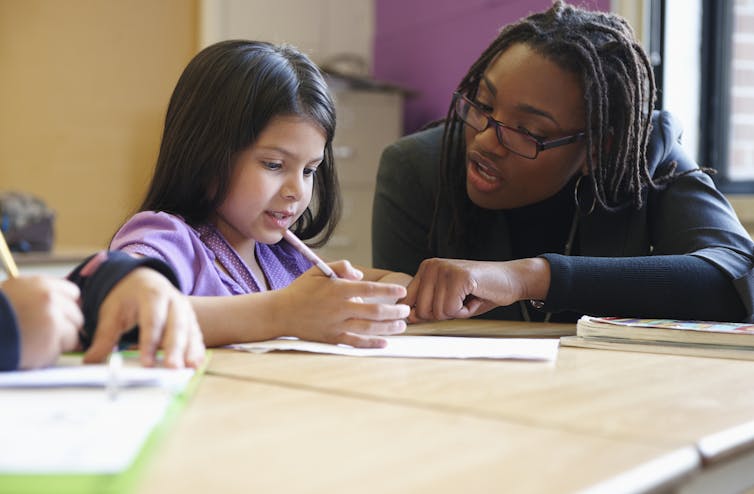
In his 2023 State of the Union address, President Joe Biden called for public school teachers to get a raise but offered no specifics on how that could be done. Here, Michael Addonizio, an education policy expert at Wayne State University, provides insight on the current state of teacher salaries, whether a collective raise is in order and how one might be achieved.
1. Do teachers really need a raise?
In many school districts, the answer is: Yes.
According to a 2022 study from the Economic Policy Institute – a nonprofit, nonpartisan think tank that addresses low- and middle-income workers’ needs – the teacher “wage penalty” - that is, how much less teachers make than comparable workers - grew from 6.1% in 1996 to 23.5% in 2021. Put another way, the average weekly wages of public school teachers – adjusted for inflation – increased just US$29 from 1996 to 2021, from $1,319 to $1,348 in 2021 dollars. Meanwhile, inflation-adjusted weekly wages of other college graduates rose $445, from $1,564 to $2,009, over the same period.
Teacher wage gaps vary widely from state to state, but in no state does teacher pay equal or exceed pay for other college graduates.
Adding benefits to the analysis does not change the picture. Although teachers generally receive a higher share of their compensation as benefits than other professionals do – usually health insurance and retirement plans – this difference does not offset the teachers’ growing wage penalty. Teachers’ “total compensation” penalty reached 14.2% in 2021. This is a 23.5% wage penalty offset by a 9.3% benefits advantage. This total compensation penalty for teachers grew by 11.5 percentage points from 1993 to 2021, according to the Economic Policy Institute analysis.
2. Where do teacher raises typically come from?
Public school teacher salaries are generally set by local school districts. Districts establish salary schedules where teacher base pay is determined by years of teaching experience and education credentials or graduate credit hours. Contracts are negotiated at the district level, so that teachers in different schools within a district are covered by the same salary schedule.
These schedules, sometimes referred to as “step-and-lane” systems, can vary substantially from district to district. District contracts may differ in the annual pay increases for experience or the relative importance given to experience versus credentials. Contracts may give larger annual pay hikes to less experienced teachers than to veteran teachers, or the reverse may be true.
Where does the money come from? Fully 93% of school districts’ operating revenue comes from state and local sources. Nationally, on average, states provide 47% and local districts provide 46%.
Rising concern over low teacher salaries has prompted many states to pass appropriations to boost local salary schedules across the board. In 2021, 25 states enacted or introduced legislation to raise teacher pay. Ten of those states have statewide teacher salary schedules, while eight have minimum teacher salary requirements.
Among the states with statewide salary schedules, state initiatives raised pay and expanded eligibility for bonuses. In states with minimum salary requirements, lawmakers sought to raise these minimums and provide incentives for districts to hike salaries across the board. Elsewhere, state efforts focused on general salary increases for teachers.
However, despite these state efforts, teacher salaries continue to lag well behind other professional salaries in many states.
3. Can federal funds be used?
No, not as a long-term solution to the problem of low teacher pay. Federal funds are too limited in amount and there’s not enough flexibility to finance general pay raises for teachers.
The federal government provides about 7% of K-12 revenue, and the money is designated for specific programs. In general, these funds are intended to supplement funding for schools with at-risk youth, including children with learning disabilities or children from low-income households.
During recent economic downturns – the Great Recession of 2008 and the 2020 COVID-19 lockdown – the federal government provided K-12 schools with emergency aid to supplement diminished state and local revenue. The COVID relief was exceptionally substantial, with the American Rescue Plan providing school districts with $190 billion.
This federal aid, however, while unprecedented in amount, has two key limitations: it is one-time aid and not all districts share in it. Districts that do receive these funds must be careful not to make them part of their annual operating budgets without solid plans for state or local replacement funds.
Many districts have revealed plans to use these federal funds to hire new teachers or to pay teachers bonuses for extra work in an effort to mitigate COVID-related learning loss. Paying bonuses to current teachers would avoid the need to lay off teachers when the emergency aid runs out.
In addition, a revised American Teacher Act has been introduced in Congress. The bill would establish a four-year grant program for states to encourage local districts to raise base teacher salaries. The bulk of these funds would go to districts with teacher salaries below $60,000.
The bill would award grants to states that enact and enforce laws establishing a statewide minimum teacher salary requirement of $60,000. Details continue to be worked out, including refining the definition of a “teacher” to avoid paying unqualified staff with federal funds. The bill would address a pressing problem, but state participation would be voluntary and the program would expire in four years. And passage is uncertain.
To achieve lasting teacher pay hikes, it’s going to have to take place in state capitols and local school boards.
Michael Addonizio, Professor of Educational Leadership and Policy Studies, Wayne State University
This article is republished from The Conversation under a Creative Commons license. Read the original article.