 How to resolve AdBlock issue?
News
- Details
- Written by: Nicholas Dagen Bloom, Hunter College
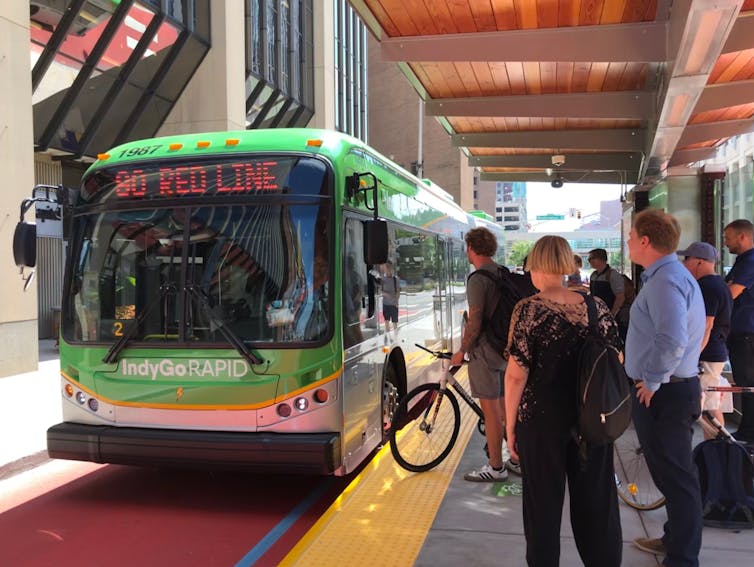
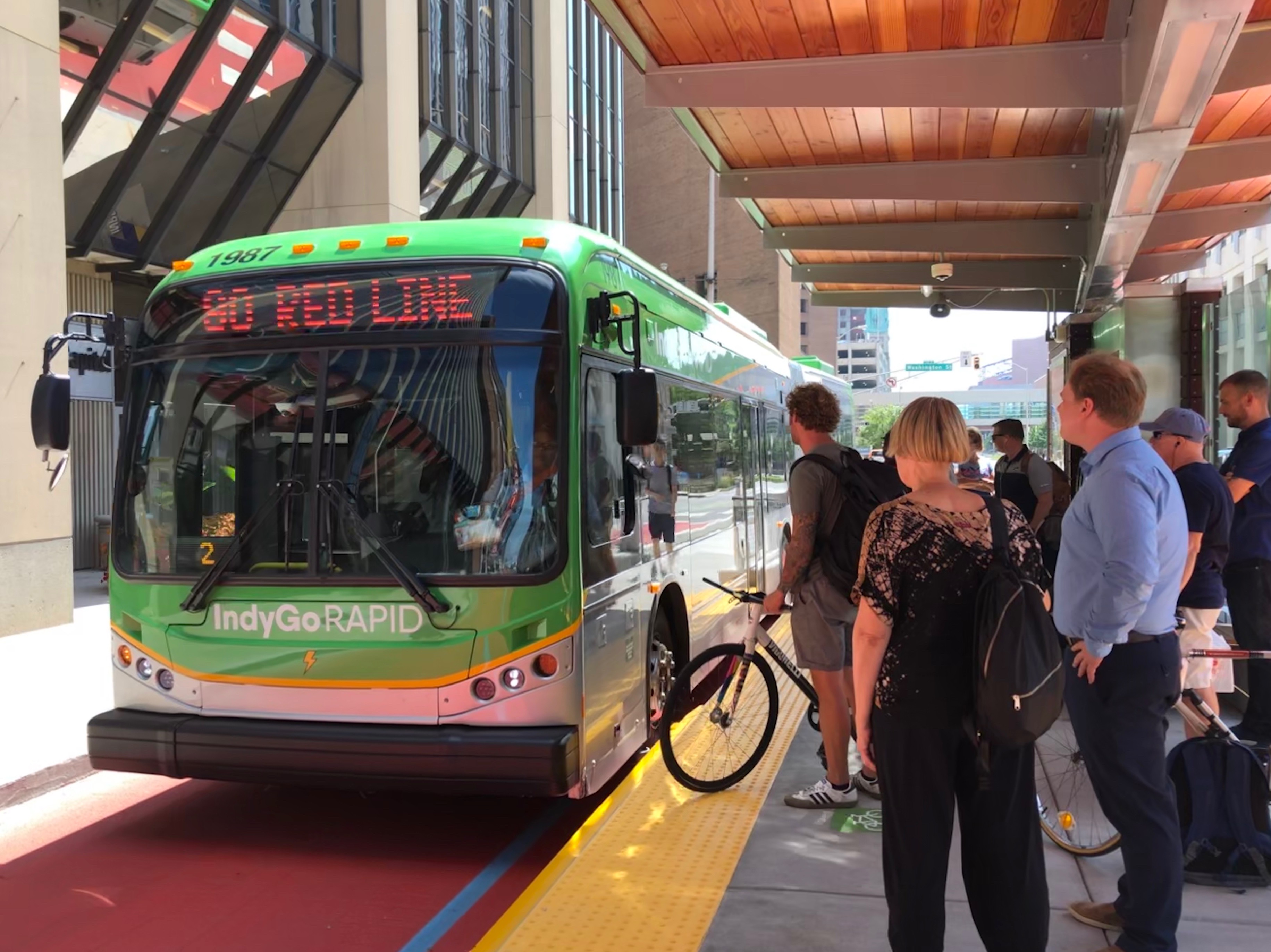
Public transit in the U.S. is in a sorry state – aging, underfunded and losing riders, especially since the COVID-19 pandemic. Many proposed solutions focus on new technologies, like self-driving cars and flying taxis. But as a researcher in urban policy and planning, I see more near-term promise in a mode that’s been around for a century: the city bus.
Today, buses in many parts of the U.S. are old and don’t run often enough or serve all the places where people need to go. But this doesn’t reflect the bus’s true capability. Instead, as I see it, it’s the result of cities, states and federal leaders failing to subsidize a quality public service.
As I show in my new book, “The Great American Transit Disaster: A Century of Austerity, Auto-Centric Planning, and White Flight,” few U.S. politicians have focused on bus riders’ experiences over the past half-century. And many executives have lavished precious federal capital dollars on building new light, rapid and commuter rail lines, in hope of attracting suburban riders back to city centers and mass transit.
This was never a great strategy to begin with, and the pandemic-era flight of knowledge workers to home offices and hybrid schedules has left little to show for decades of rail-centric efforts. Meanwhile, countries in Europe and Latin America have out-innovated the U.S. in providing quality bus service.
But it doesn’t have to be this way. Many U.S. cities are coming around to the idea that buses are the future of public transit and are working to make that vision real. And the Bipartisan Infrastructure Law enacted in 2021 is providing billions of dollars for new buses and related facilities.
Buses as disruptors
A century ago, motorized buses were the technological wonder of their day. Rolling fast on tires over newly paved streets, buses upended urban rail transit by freeing riders from aging, crowded, screeching streetcars. In 1922, American buses carried 404 million passengers; by 1930, they were carrying 2.5 billion yearly.
At that time, transit lines were mostly privately owned. But this model was failing as riders became car drivers, new zoning laws prioritized car-friendly single-family housing and government regulators battled transit companies over fares and taxes.
Transit executives trying to eke out a profit saw buses as a way to reduce spending on track maintenance and labor costs for “two man” operated streetcars. City leaders and planners also embraced buses, which helped them justify removing streetcar tracks to make streets more navigable for cars. From the 1920s through the 1960s, nearly all U.S. streetcar lines were replaced with buses powered by either internal combustion engines or electric overhead wires.
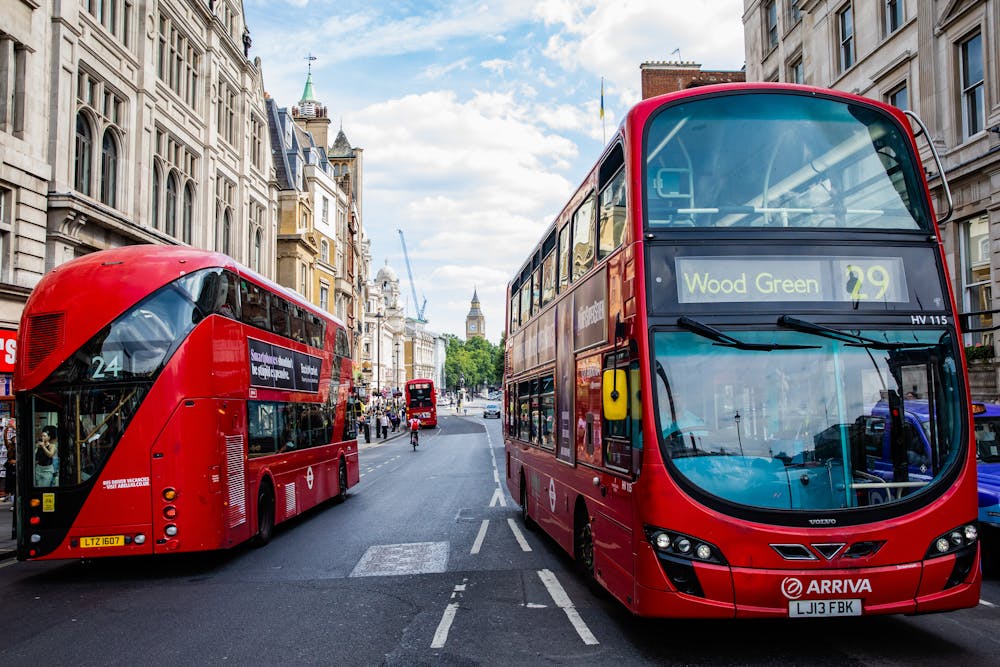
This wasn’t just a U.S. trend. Toronto massively extended bus service across a vast metropolitan area between 1954 and 1974, using buses to feed suburban riders to a new subway system and a few remaining streetcar lines. By 1952, London’s managers had replaced streetcars with the city’s signature fleet of double-decker buses, which complemented its legendary Underground service.


Across Europe, cities relied on buses to support and complement their modernizing tram or subway networks. Political leaders provided deep subsidies to deliver better bus and rail service.
The auto-centric US path
In the U.S., however, federal investments in the same time frame focused on building a national highway system to serve private automobiles. Lacking tax subsidies, bus networks could not compete with cheap cars and government-funded highways. Aging buses and infrequent service became the default postwar reality – and those buses had to travel on local streets crowded with private cars.
Between 1945 and 1960, U.S. transit companies and agencies typically lost half or more of their riders as white Americans moved to urban fringes or suburbs and became car commuters. Bus service remained concentrated in older, central-city neighborhoods, serving a disproportionately nonwhite, low-income ridership.
Many public systems had to cut bus service year after year to balance their books. Only a few cities that were willing to provide significant operating subsidies, including San Francisco and Boston, were able to maintain better bus networks and some trolleybuses.
New, better buses
Today, there’s renewed interest in improving bus service in the U.S., inspired by innovations around the globe. The Brazilian city of Curitiba, which is well known for its innovations in urban planning, set a model in the 1970s when it adopted bus rapid transit – buses that run in dedicated lanes, with streamlined boarding systems and priority at traffic signals.
Curitiba helped popularize bi-articulated buses, which are extra-long with flexible connectors that let the buses bend around corners. These buses, which can carry large numbers of passengers, now are in wide use in Europe, Latin America and Asia.


Cities across the globe, led by London, have also aggressively expanded contactless payment systems, which speed up the boarding process. Advanced bus systems and new technologies like these flourish in regions where politicians strongly support transit as a public service.
In my view, buses are the most likely option for substantially expanding public transit ridership in the U.S. Millions of Americans need affordable public mobility for work, study, recreation and shopping. Car ownership is a financial burden that can be as serious for low-income families as the shortage of affordable housing.
The average yearly cost for U.S. households to own and operate a new car reached US$10,728 in 2022. Nor are used cars the bargain they once were. Used car prices are high, financing is often subprime and older vehicles require expensive maintenance.
Rapidly extending bus networks would be the speediest and most economical way to serve these families and grow transit ridership in the sprawling landscape of American metros. U.S. roads and highways are already maintained by the government, eliminating the need to build and maintain expensive rail lines.
There are promising domestic models even amid the pandemic ridership crisis. In the past two decades, Seattle’s Sound Transit has upgraded its bus network, aligning these improvements with increased residential density, low fares and a carefully considered light rail expansion. San Francisco and New York have developed exclusive bus lanes that move riders along popular routes at higher speeds. Indianapolis is expanding an effective bus rapid transit system. Many cities, including Denver and Boston, are investing in “better bus” upgrades that emphasize frequent service, easy transfers and better geographic coverage.
Innovations like these will only succeed long term with sufficient subsidies to maintain innovative services at reliable levels. The history of bus transit is littered with pilot programs that were abandoned on cost grounds just as they were gaining popularity. As I see it, buses don’t need to be faster or more convenient than cars to attract and retain riders – but they need to be, and can be, much better transit options than they are today.
Nicholas Dagen Bloom, Professor of Urban Policy and Planning, Hunter College
This article is republished from The Conversation under a Creative Commons license. Read the original article.
- Details
- Written by: Angela De Palma-Dow

Dear Readers,
Lady of the Lake would like to invite you to participate in my column by submitting photos to the 2023 Lady of the Lake Photo Contest!
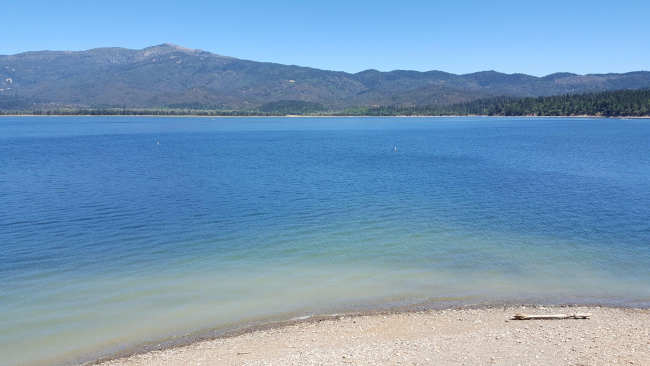
This will be an annual event, with the submission window open all year, starting today. The purpose of the photo contest is to get the readership to think about and appreciate lakes, rivers, creeks, and anything water in Lake County. Water holds a special beauty and now is the opportunity to capture that on camera.
Winners from each category will win a free breakfast / lunch with Lady of the Lake sponsored by Angelina’s in Lakeport, CA. Photo winners will also be highlighted in the Lady of the Lake Column in the Lake County News. Every photo submitted to the contest will be eligible to be used in the Lake of the Lake Column alongside relevant column topics, with proper credit reference.
The rules are simple:
There are two submission groups; Novice and expert / professional.
There are two types of photo categories: Water and Wildlife.
Because this is the Lady of the Lake photos contest, all photos submitted have to include a lake, creek, stream, wetland, marsh, or ponds. Landscapes and scenery will be included into the “water” category, and anything with an animal focus will be grouped into the “wildlife” category.
For example, a landscape shot of Clear Lake with birds flying in the sky will still be considered in the “water” category, but a close up of a grebe mating dance on Clear Lake, will be considered in the “wildlife” category.
This is a nature-centric photo contest. Humans, from a distance, can be included in photos, but their faces can not be close enough to be recognizable. For privacy, any photos with faces will be disqualified.
All photos must be sent as digital JPG / TIFF / PNG attachments or google drive links to my
When submitting photos, in the email subject line include: “Photo Contest _ group type_category” For example, if you are a novice submitting a photo of a river otter sunbathing on a rock, the subject of your photo would be “Photo Contest_novice_wildlife”. Save your photos files using your last name.
There is a limit to 3 photos submitted in each category by a single photographer, so a single photographer can submit a maximum of 6 photos, 3 in each category of water and wildlife.
Photos must not be more than 5 years old and taken within Lake County.
There are no restrictions on the type of camera used to take the photos, so feel free to use those camera phones as well as point and shoots and DSLRs.
Photos will be judged and ranked by a panel of three members of the community, yet to be confirmed. Judges will not be participants in the contest.
Good luck!
Sincerely,
Lady of the Lake
Angela De Palma-Dow is a limnologist (limnology = study of fresh inland waters) who lives and works in Lake County. Born in Northern California, she has a Master of Science from Michigan State University. She is a Certified Lake Manager from the North American Lake Management Society, or NALMS, and she is the current president/chair of the California chapter of the Society for Freshwater Science. She can be reached at
- Details
- Written by: LAKE COUNTY NEWS REPORTS
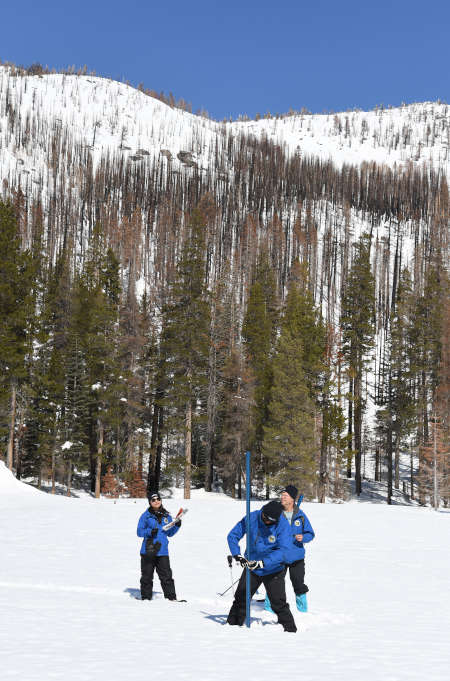
Recent storms have given California a hefty snowpack.
The Department of Water Resources, or DWR, on Friday conducted the third snow survey of the season at Phillips Station.
The manual survey recorded 116.5 inches of snow depth and a snow water equivalent of 41.5 inches, which is 177% of average for this location on March 3.
The snow water equivalent measures the amount of water contained in the snowpack and is a key component of DWR’s water supply forecast.
DWR’s electronic readings from 130 snow sensors placed throughout the state indicate the statewide snowpack’s snow water equivalent is 44.7 inches, or 190% of average for this date.
“Thankfully the recent storms combined with the January atmospheric rivers have contributed to an above-average snowpack that will help fill some of the state’s reservoirs and maximize groundwater recharge efforts. But the benefits vary by region, and the Northern Sierra, home to the state’s largest reservoir Lake Shasta, is lagging behind the rest of the Sierra,” DWR Director Karla Nemeth said. “It will also take more than one good year to begin recovery of the state’s groundwater basins.”
Although the statewide snowpack is currently just behind the record snow year of 1982-83, the snowpack varies considerably by region.
The Southern Sierra snowpack is currently 209% of its April 1 average and the Central Sierra is at 175% of its April 1 average. However, the critical Northern Sierra, where the state’s largest surface water reservoirs are located, is at 136% of its April 1 average.
With one month of the traditional wet season remaining, DWR is providing updated runoff forecasts to water managers and is closely monitoring spring runoff scenarios and river flows to ensure the most water supply benefits from this year’s snowpack while balancing the need for flood control.
“The recent storms over the past week broke a month-long dry spell in a dramatic way,” said DWR’s Snow Surveys and Water Supply Forecasting Unit Manager Sean de Guzman. “We are hopeful that we will see more cold storms to add to our snowpack for the next month and help set up a long, slow melt period into spring.”
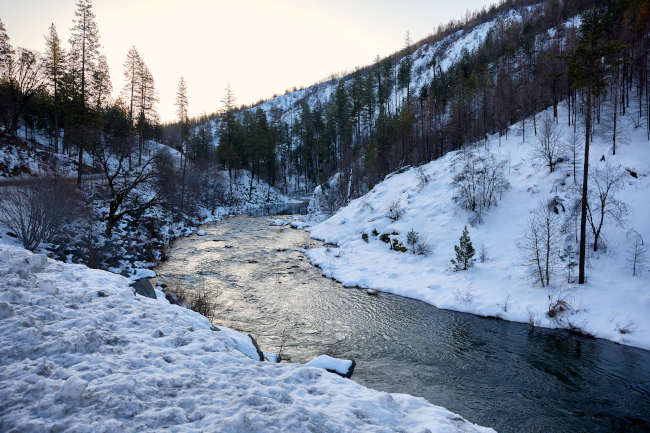
To ensure water supply managers have the most current forecasts of snowpack runoff, DWR is utilizing the best available technology to collect the most accurate snow measurements.
DWR’s Snow Surveys and Water Supply Forecasting Unit is utilizing Airborne Snow Observatory surveys across 12 of California’s major snow-producing watersheds to collect data on the snowpack’s density, depth, reflectiveness, and other factors down to a 3-meter resolution.
These flights, which utilize LiDAR and imaging spectrometer technology, provide DWR with more information on water content than ever before, which is then fed into advanced physically based and spatially explicit models to generate the most accurate water supply runoff forecasts possible.
These forecasts are used to develop the Bulletin 120 for forecasted spring run-off to determine water allocation and stream flows for the benefit of the environment.
While winter storms have helped the snowpack and reservoirs, groundwater basins are much slower to recover. Many rural areas are still experiencing water supply challenges, especially communities that rely on groundwater supplies which have been depleted due to prolonged drought.
It will take more than a single wet year for groundwater levels to substantially improve at a statewide scale. Drought impacts also vary by location and drought recovery will need to be evaluated on a regional scale and will depend on local water supply conditions.
On Feb. 13, Gov. Newsom issued an executive order directing state agencies to review and provide recommendations on the state’s drought response actions by the end of April, including the possibility of terminating specific emergency provisions that are no longer needed, once there is greater clarity about the hydrologic conditions this year.
Californians should still continue to use water wisely to have a thriving economy, community and environment.
DWR encourages Californians to visit SaveOurWater.com for water saving tips and information as more swings between wet and dry conditions will continue in the future.
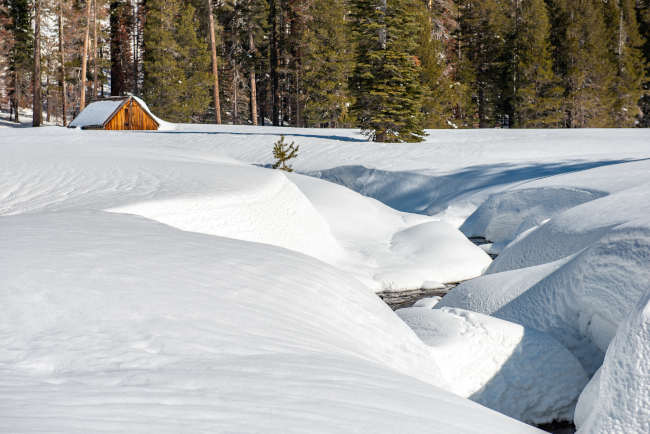
- Details
- Written by: Elizabeth Larson
Dogs available for adoption this week include mixes of border collie, boxer, collie, dachshund, German shepherd, German shorthaired pointer, hound, Labrador retriever, mastiff, pit bull, pug, shepherd, treeing walker coonhound and terrier.
Dogs that are adopted from Lake County Animal Care and Control are either neutered or spayed, microchipped and, if old enough, given a rabies shot and county license before being released to their new owner. License fees do not apply to residents of the cities of Lakeport or Clearlake.
The following dogs at the Lake County Animal Care and Control shelter have been cleared for adoption.
Call Lake County Animal Care and Control at 707-263-0278 or visit the shelter online for information on visiting or adopting.
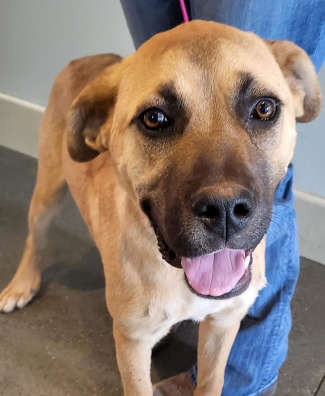
Male mastiff mix
This 7-month-old male mastiff mix has a short fawn coat.
He is in kennel No. 3, ID No. LCAC-A-4778.

Female pit bull terrier puppy
This 3-month-old female American pit bull terrier puppy has a short brindle coat.
She is in kennel No. 4a, ID No. LCAC-A-4787.

Female pit bull terrier puppy
This 3-month-old female American pit bull terrier puppy has a short black and white coat.
She is in kennel No. 4b, ID No. LCAC-A-4788.
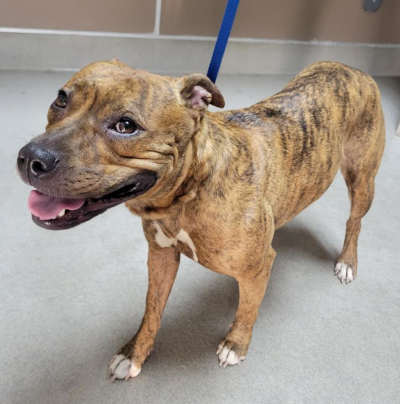
‘Dixie’
“Dixie” is a 2-year-old female pit bull terrier with a short brown brindle coat.
She is in kennel No. 5, ID No. LCAC-A-3944.
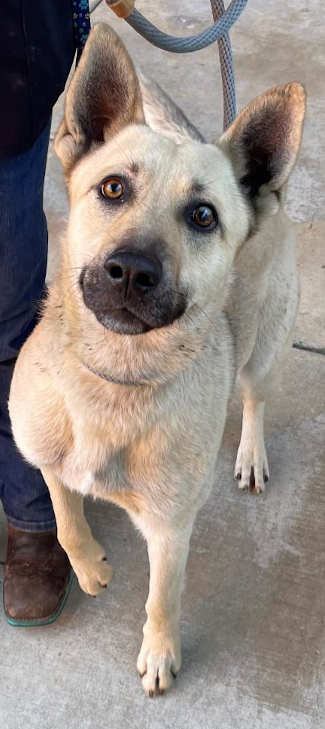
Male German shepherd
This 9-month-old male German shepherd has a short fawn coat.
He is in kennel No. 8, ID No. LCAC-A-4684.

Male German shorthaired pointer puppy
This 5-month-old male German shorthaired pointer puppy has a short red and white coat.
He is in kennel No. 9, ID No. LCAC-A-4769.
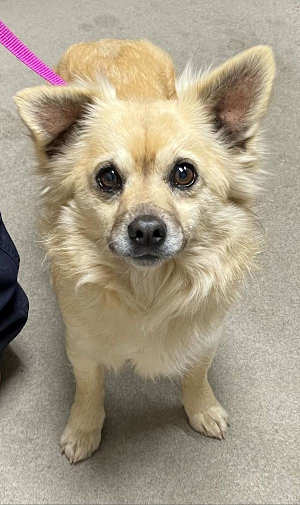
‘AxxelRose’
“AxxelRose” is a 5-year-old male terrier with a long blond coat.
He is in kennel No. 10a, ID No. LCAC-A-4807.

‘ChickenLittle’
“ChickenLittle” is a 15-year-old male miniature long-haired dachshund with a black coat.
He is in kennel No. 10b, ID No. LCAC-A-4808.
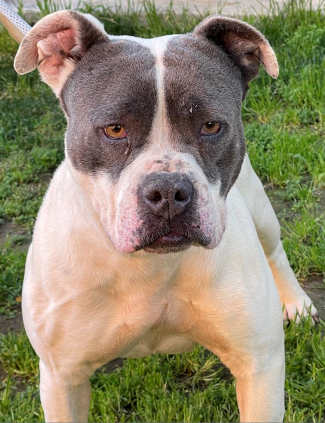
Female pit bull
This 6-year-old female pit bull has a short white coat with gray markings.
She is in kennel No. 11, ID No. LCAC-A-4677.

‘Luigi’
“Luigi” is a 2-year-old male pit bull terrier with a short red and white coat.
He is in kennel No. 12, ID No. LCAC-A-4742.
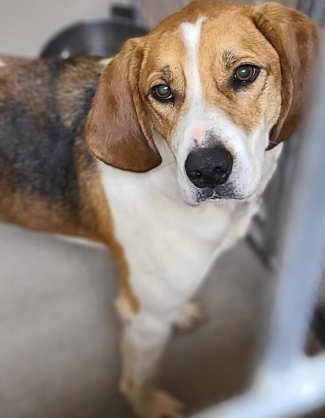
‘Oreo’
“Oreo” is a 2-year-old male treeing walker coonhound with a short tricolor coat.
He is in kennel No. 13, ID No. LCAC-A-4738.
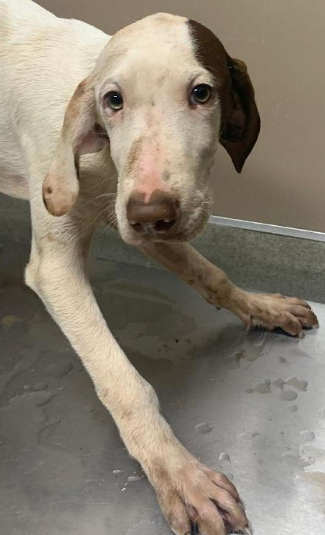
Male German shorthaired pointer puppy
This 5-month-old male German shorthaired pointer puppy has a short black and white coat.
He is in kennel No. 14a, ID No. LCAC-A-4768.
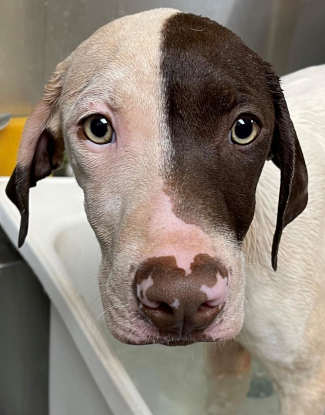
Male German shorthaired pointer puppy
This 5-month-old male German shorthaired pointer puppy has a short red and white coat.
He is in kennel No. 14c, ID No. LCAC-A-4770.
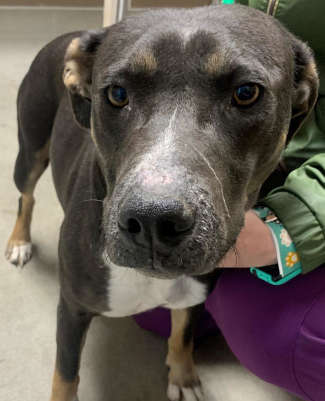
Female pit bull-Labrador retriever mix
This female pit bull-Labrador retriever mix has a short tricolor coat.
She is in kennel No. 17, ID No. LCAC-A-4692.

Female pit bull
This 4-year-old female pit bull has a short white coat with gray markings.
She is in kennel No. 19, ID No. LCAC-A-4676.
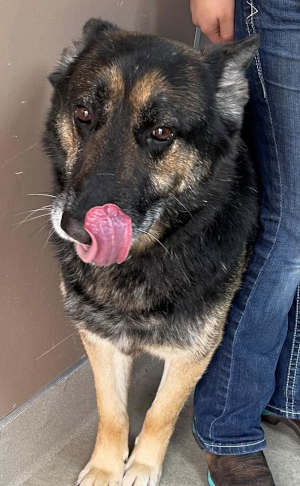
‘Arlo’
“Arlo” is a 9-year-old male German shepherd with a black and tan coat.
He is in kennel No. 22, ID No. LCAC-A-4746.

Male pug
This 1-year-old male pug has a short fawn coat.
He is in kennel No. 23, ID No. LCAC-A-4817.

Male boxer-pit bull mix
This 8-year-old male boxer-pit bull mix has a short brown brindle coat.
He is in kennel No. 26, ID No. LCAC-A-4678.
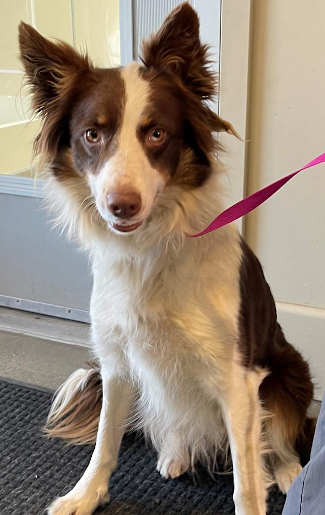
‘Lola’
“Lola” is a 2-year-old female border collie mix with a red and white coat.
She is in kennel No. 27, ID No. LCAC-A-4729.
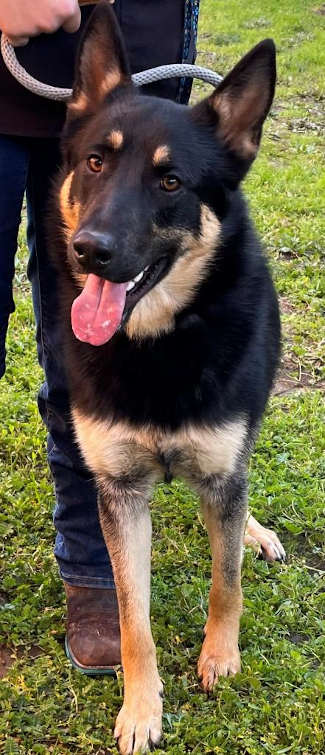
Male German shepherd
This 1-year-old male German shepherd has a short black and tan coat.
He is in kennel No. 29, ID No. LCAC-A-4710.

Border collie-collie mix puppy
This 3-month-old female border collie-collie puppy has a short tricolor coat.
She is in kennel No. 30, ID No. LCAC-A-4782.
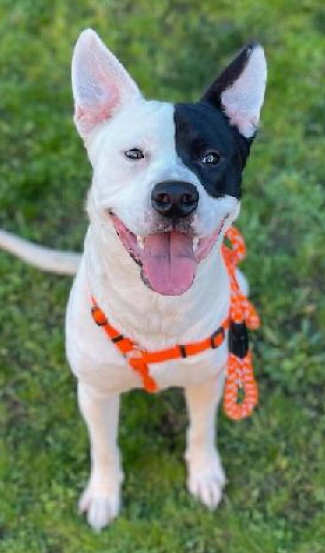
‘Diesel’
“Diesel” is a 2-year-old male pit bull terrier with a short white coat with black markings.
He’s in kennel No. 31, ID No. LCAC-A-4549.

Male border collie puppy
This 3-month-old male border collie puppy has a short black coat with white markings.
He is in kennel No. 32, ID No. LCAC-A-4783.
Email Elizabeth Larson at