 How to resolve AdBlock issue?
News
- Details
- Written by: LAKE COUNTY NEWS REPORTS
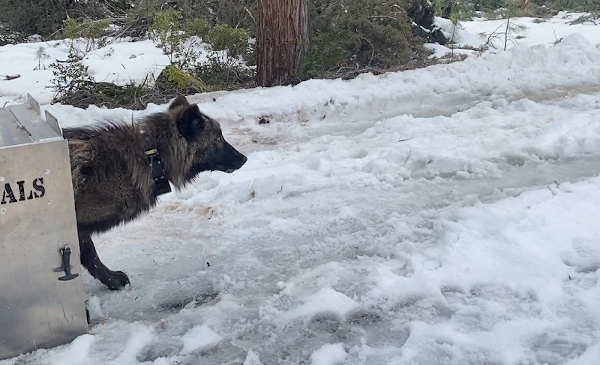
NORTHERN CALIFORNIA — The California Department of Fish and Wildlife, or CDFW, has announced the safe and successful capture and collar of two gray wolves in Siskiyou County.
The two wolves were captured March 17, fitted with satellite collars, measured and sampled for DNA and disease surveillance, and safely released back to the wild.
“The capture of these wolves is fantastic since we lost the only functioning satellite collar last summer, and ground capture efforts since then have been unsuccessful,” said Kent Laudon, a senior environmental scientist and CDFW’s wolf specialist. “A lot of people have worked hard to make this happen and we’re excited about the new collars and data. We’re already seeing interesting movements on agriculture lands and sharing that information with local folks to install fladry and other deterrent measures around cattle pastures.”
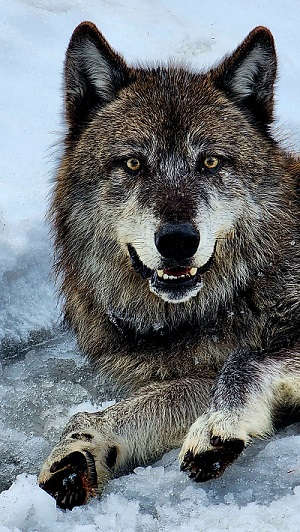
One of the captured wolves was OR85, a four-year-old black, 98-pound male originally collared by the Oregon Department of Fish and Wildlife in February 2020 in northeastern Oregon. OR85 dispersed from his natal pack in 2020, making it to Siskiyou County in November of that year.
OR85 paired with a gray female wolf that had dispersed from a pack in southwestern Oregon to form the Whaleback Pack in Siskiyou County.
The pair produced litters of seven pups in 2021 and eight pups in 2022.
Capture teams, using a contracted helicopter and capture crew and fixed-wing aircraft from CDFW’s Air Services Unit, were able to locate the wolves through intermittent signals coming from OR85’s original collar, which was thought to be non-functioning. CDFW crews removed OR85’s original collar and replaced it with a new unit.
The other wolf captured and collared was a black, 97-pound, yearling male from the 2021 litter.
The capture and collar effort, which began last month, marks the first time CDFW has used helicopters to capture and collar gray wolves.
The capture and collar of gray wolves is an important management and research tool, along with other tools and methods, used throughout the West to help monitor populations, understand landscape use patterns and minimize livestock conflicts.
Each morning, under optimal conditions, the satellite collars will transmit four new locations to CDFW since the previous day’s download. Ground capture attempts to collar additional wolves will resume later this spring.
- Details
- Written by: LAKE COUNTY NEWS REPORTS
DWR now expects to deliver 75% of requested water supplies, up from 35% announced in February.
The increase translates to an additional 1.7 million acre-feet of water for the 29 public water agencies that serve 27 million Californians.
Consistent storms in late February and March have built up the Sierra snowpack to more than double the amount that California typically sees this time of year.
Rainfall has also allowed for robust flows through the system, providing adequate water supply for the environment and endangered fish species while allowing the State Water Project, or SWP, to pump the maximum amount of water allowed under state and federal permits into reservoir storage south of the Sacramento-San Joaquin Delta.
“California continues to experience weather whiplash, going from extreme drought to at least 19 atmospheric rivers since late December. It really demonstrates that in times of plenty, we need to move as much water into storage as is feasible,” said DWR Director Karla Nemeth. “We’ve been able to manage the system to the benefit of communities, agriculture and the environment. It’s certainly been a welcome improvement following the three driest years on record for California.”
Taking advantage of the extreme high flows in the system, the SWP is making additional water available to any contractor that has the ability to store the water in its own system, including through groundwater recharge.
Formally known as Article 21 water, this water does not count toward formal SWP allocation amounts.
The SWP typically evaluates the allocation forecasts monthly using the latest snow survey data, reservoir storage and spring runoff forecasts.
The 75% forecasted allocation announced today takes into account that data from March. Further adjustments to the forecasted allocation are likely following the milestone April snow survey measurements.
April 1 is traditionally when California’s snowpack peaks and starts to melt. DWR is planning to host its April snow survey on Monday, April 3, at Phillips Station, weather conditions permitting.
DWR now expects San Luis Reservoir in Merced County to end the wet season at capacity. Lake Oroville, the State Water Project’s largest reservoir, is at 119 percent of average for this time of year and currently releasing water through the Oroville Spillway to reduce flood risk for downstream communities in anticipation of the spring snowmelt.
The SWP will continue to optimize water storage in Lake Oroville to support environmental needs in the summer and allow for carryover storage for next year if dry conditions return.
Preparing California for extreme weather swings will require the rehabilitation and modernization of SWP infrastructure. As the backbone of water supply delivery, California must address subsidence along the California Aqueduct in the Central Valley and advance the Delta Conveyance Project so that the state can move as much water as possible during high flow events.
While California’s surface water conditions have greatly improved this year following three years of historic drought, several water supply challenges remain in parts of the state.
The Colorado River Basin, which is a critical water supply source for Southern California, is still in the midst of a 23-year drought. Millions of Californians also rely on groundwater supplies as a sole source of water, and the state’s groundwater basins will be slow to recover following the extreme drought. Californians should continue to use water wisely to help the state adapt to a hotter, drier future.
- Details
- Written by: Frank Jotzo, Australian National University and Mark Howden, Australian National University
The world is in deep trouble on climate change, but if we really put our shoulder to the wheel we can turn things around. Loosely, that’s the essence of today’s report by the Intergovernmental Panel on Climate Change (IPCC).
The IPCC is the world’s official body for assessment of climate change. The panel has just released its Synthesis Report, capping off seven years of in-depth assessments on various topics.
The report draws out the key insights from six previous reports, written by hundreds of expert authors. They spanned many thousands of pages and were informed by hundreds of thousands of comments by governments and the scientific community.
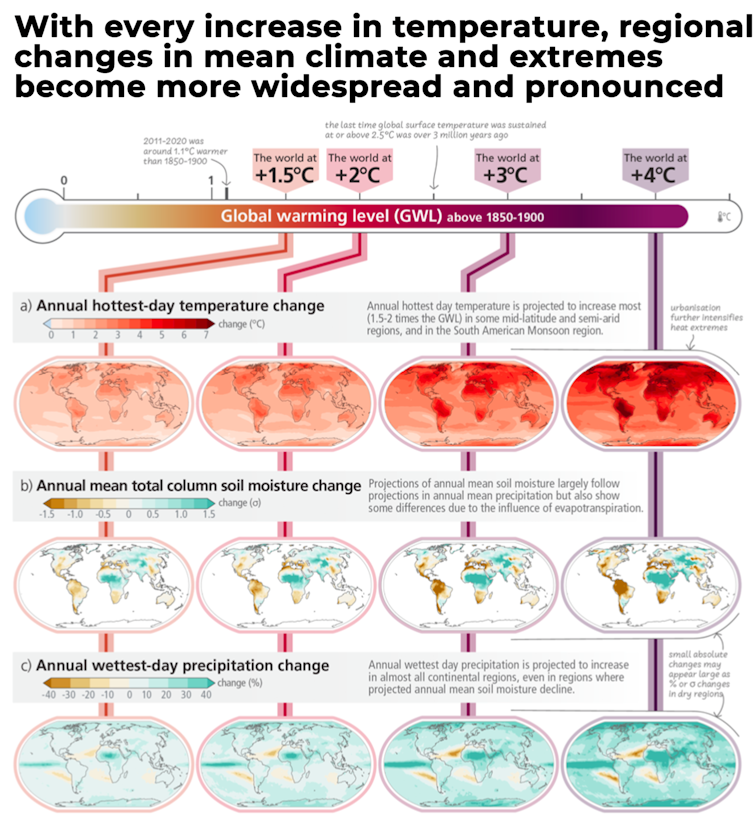
The synthesis report confirms humans are unequivocally increasing greenhouse gas emissions to record levels. Global temperatures are now 1.1℃ above pre-industrial levels. They’re likely to reach 1.5℃ above pre-industrial levels in the early 2030s.
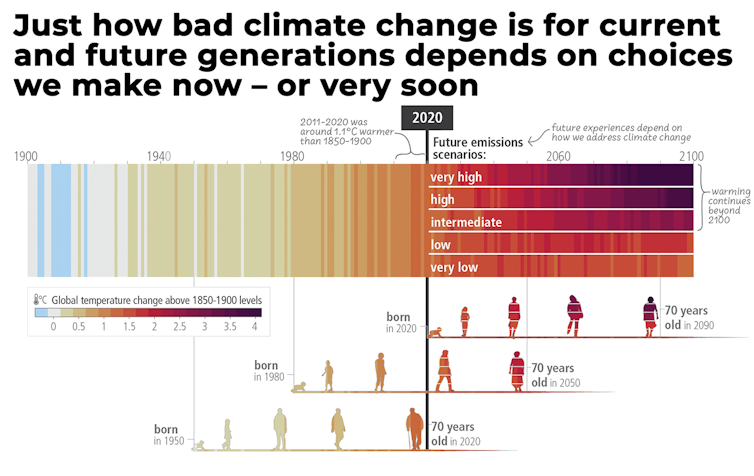
This warming has driven widespread and rapid global changes, including sea level rise and climate extremes – resulting in widespread harm to lives, livelihoods and natural systems.
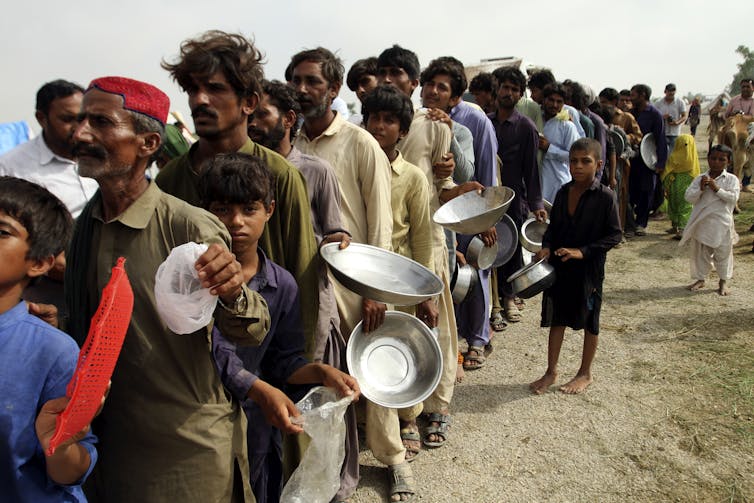
It’s increasingly clear that vulnerable people in developing countries – who have generally contributed little to greenhouse gas emissions – are often disproportionately affected by climate change.
Intergenerational inequities are also likely. A child born now is likely to suffer, on average, several times as many climate extreme events in their lifetime as their grandparents did.
The world is up the proverbial creek - but we still have a paddle. Climate change is worsening, but we have the means to act.
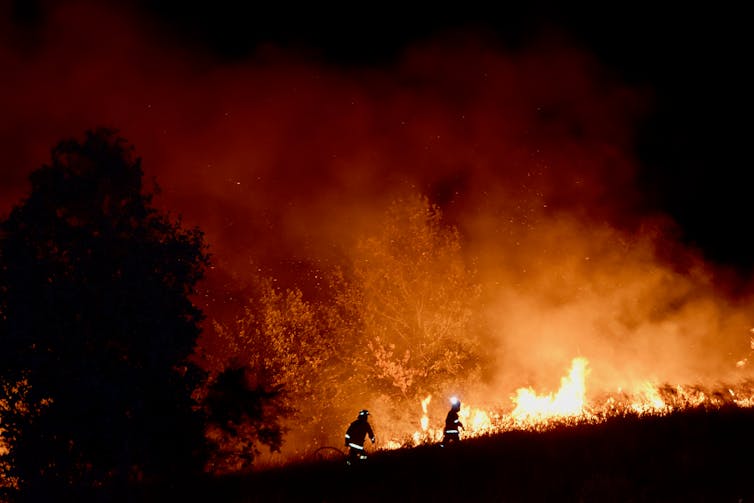
So much at stake
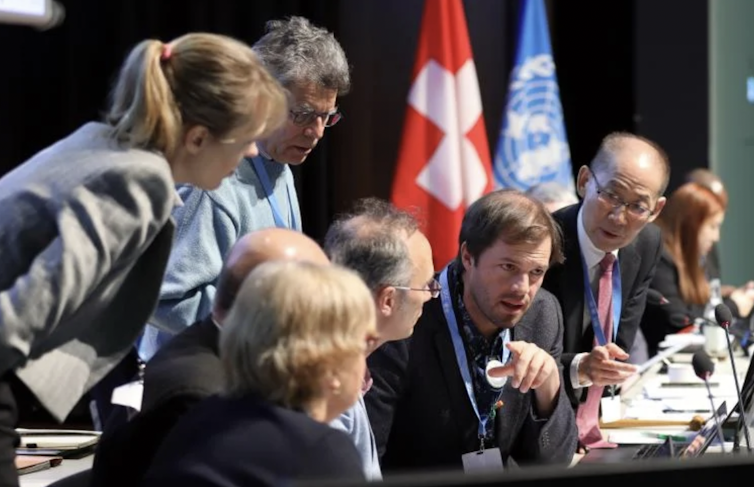
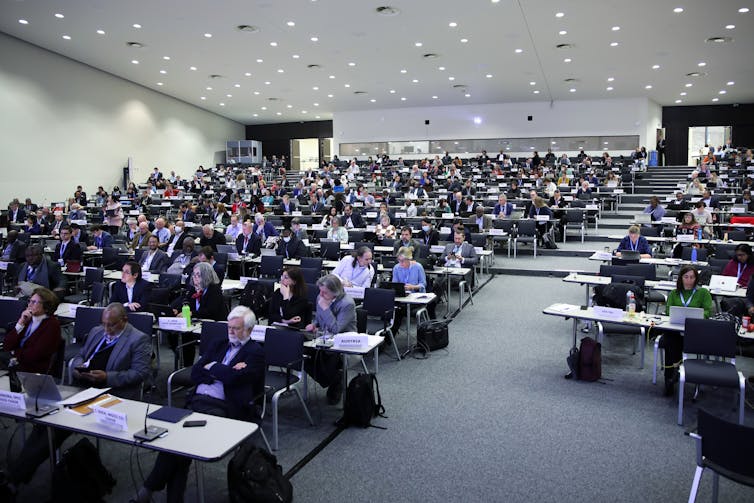
Over the past week in Interlaken, Switzerland, several hundred representatives from most of the world’s governments scrutinised the IPCC report’s 35-page summary. The scrutiny happens sentence by sentence, often word by word, and number by number. Sometimes it’s subject to intense debate.
We were both involved in this process. The role of the reports’ authors and IPCC bureau members is to stay true to the underlying science and chart a way between different governments’ preferences. It is a unique process for scientific documents.
The approval process usually goes right to the wire, in meetings running through the night. This Synthesis Report was no exception. The scheduled time for the meeting was extended by two days and nights, wearing down government representatives and the IPCC teams.
The process reflects how much is at stake. The IPCC’s assessments are formally adopted by all governments of the world. That in turn reverberates in the private sector – for example, in the decisions of boards of major companies and investment funds.
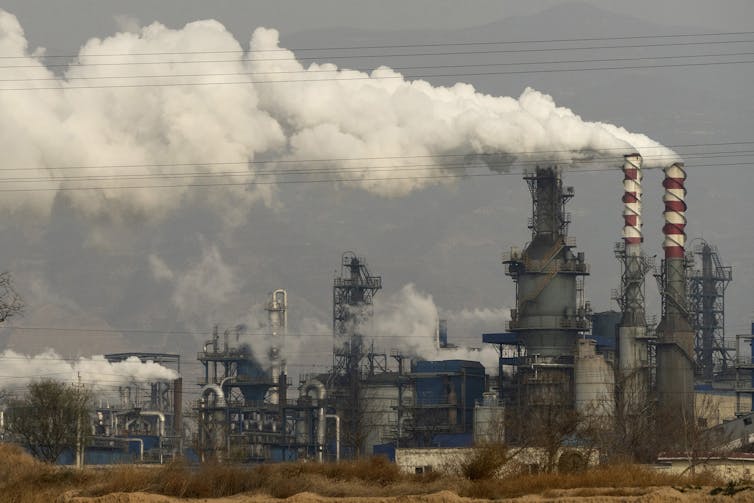
The latest on greenhouse gas emissions
The Synthesis Report confirms both emissions and atmospheric concentrations of greenhouse gases are now at record highs.
To keep warming within 2℃ above pre-industrial levels, global greenhouse gas emissions must decline by around 21% by 2030 and around 35% by 2035. Keeping warming below 1.5℃ requires even stronger emissions reduction.
This is a very tall order in light of emissions trajectories to date. Annual global emissions in 2019 were 12% higher than in 2010, and 54% higher than in 1990.
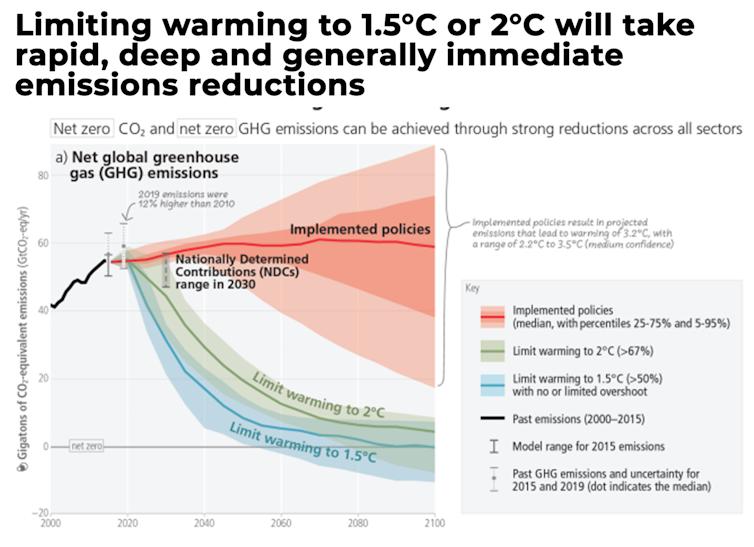
But success in reducing emissions has been demonstrated. The IPCC says existing policies, laws, technologies and measures the world over are already reducing emissions by several billion tonnes of carbon dioxide and other greenhouse gases, compared to what would otherwise be the case.
Most importantly, it’s clear global emissions could be reduced deeply if existing policy instruments were scaled up and applied broadly. The report shows large potential for emissions-reduction options across all parts of the world economy.
Many of these come at low cost. And many bring side benefits, such as reduced air pollution. If all technically available options were used, global emissions could be at least halved by 2030, at manageable costs.
As today’s report states, the global economic benefit of limiting warming to 2℃ exceeds the costs of emissions reduction. That’s without even taking into account the avoided damages of climate change or the side benefits that sensible action could generate.
We have the collective experience to turn the corner. As the report spells out, a great many regulatory and economic policy instruments have been used successfully. And we know how to design climate policies to make sure they’re politically acceptable and do not disadvantage the poorer parts of society.
The report also draws out the importance of good institutions for climate change governance – such as laws and independent bodies – and for all groups in society to be meaningfully involved.
Adaptation falls short
Rapid action on climate change is the economically sensible thing to do. If we fail to rein in emissions, adapting to the damage it causes will be more difficult and expensive in future. What’s more, our existing adaptation options will become less effective.
Every increment of warming will intensify climate-related hazards such as floods, droughts, heatwaves, fires and cyclones. Often, two or more hazards will occur at the same time.
Unfortunately, overall global adaptation has not kept up with the pace and degree of increasing impacts from climate change. Most responses have been fragmented, incremental and confined to a specific sector of the economy. And most are unequally distributed across regions and vary in their effectiveness.
The barriers to more effective adaptation responses are well-known. Chief among them is a widening gap between costs of adaptation and allocated finance. We can, and should, do a lot better.
As today’s IPCC report confirms, there are ways to make adaptation more effective. More investment in research and development is needed. So too is a focus on long-term planning as well as inclusive, equitable approaches that bring together diverse knowledge.
Many adaptation options bring significant side benefits. Better home insulation, for instance, can help us deal with extreme weather as well as reduce heating and cooling costs and related greenhouse gas emissions.
Moving people off flood-prone areas and returning these areas to more natural systems can reduce flood risk, increase biodiversity and store carbon dioxide in plants and soil.
And climate adaptation policies that prioritise social justice, equity and a “just transition” can also help achieve other global ambitions, such as the United Nations Sustainable Development Goals.
We can close the gap
On both climate change mitigation and adaptation, a massive gap remains between what’s needed and what’s being done.
Countries’ current climate commitments do not add up to the shared ambition to keep temperature rise to below 2℃. And for many countries, current trajectories of emissions would also overshoot their targets.
What’s more, current total investments in low-emissions technology and systems is three to six times lower than what would be needed to keep temperatures to 1.5℃ or 2℃, according to modelling.
Likewise, on the whole not nearly enough effort is being made to understand, prepare and implement measures to adapt to climate changes. The gaps are generally biggest in developing countries, which can much less afford to invest in climate change action than rich parts of the world.
Developing countries are calling for large-scale climate finance to be provided by developed countries, and this is not happening to anywhere near the extent needed.
Predictably, issues of international equity and justice were among the thorniest in the approval of the Synthesis Report. The final version of the report frames the issue not as an irresolvable conflict, but as the opportunity for “shifting development pathways towards sustainability”.
The vision of most governments is for all the world to attain high standards of living, but to do so with “climate neutral” technologies, systems and patterns of consumption. And systems must be built so they’re robust to future climate change, including the nasty surprises that may come.
It must be done. It can be done. By and large, we know how to do it – and it makes economic sense to do so. In this report, the governments of the world have acknowledged as much.
Frank Jotzo is a Lead Author of the IPCC’s latest assessment report on climate change mitigation and member of the core writing team for the Synthesis Report. Mark Howden is a Vice Chair of the IPCC Working Group on climate impacts and adaptation and a Review Editor of the synthesis report. Both were involved in the government approval session for the IPCC Synthesis Report.
Fear & Wonder is a new climate podcast, brought to you by The Conversation. It will take you inside the IPCC’s era-defining climate report via the hearts and minds of the scientists who wrote it. The first episode drops on March 23. Learn more here, or subscribe on your favourite podcast app via the icons above.
Frank Jotzo, Professor, Crawford School of Public Policy and Head of Energy, Institute for Climate Energy and Disaster Solutions, Australian National University and Mark Howden, Director, ANU Institute for Climate, Energy and Disaster Solutions, Australian National University
This article is republished from The Conversation under a Creative Commons license. Read the original article.
- Details
- Written by: NATIONAL AERONAUTICS AND SPACE ADMINISTRATION
Ever since its launch in 1990, NASA's Hubble Space Telescope has been an interplanetary weather observer, keeping an eye on the largely gaseous outer planets and their ever-changing atmospheres.
NASA spacecraft missions to the outer planets have given us a close-up look at these atmospheres, but Hubble's sharpness and sensitivity keeps an unblinking eye on a kaleidoscope of complex activities over time.
In this way Hubble complements observations from other spacecraft such as Juno, currently orbiting Jupiter; the retired Cassini mission to Saturn, and the Voyager 1 and 2 probes, which collectively flew by all four giant planets between 1979 and 1989.
Inaugurated in 2014, the telescope's Outer Planet Atmospheres Legacy (OPAL) Program has been providing us with yearly views of the giant planets.
Here are some recent images.
Jupiter
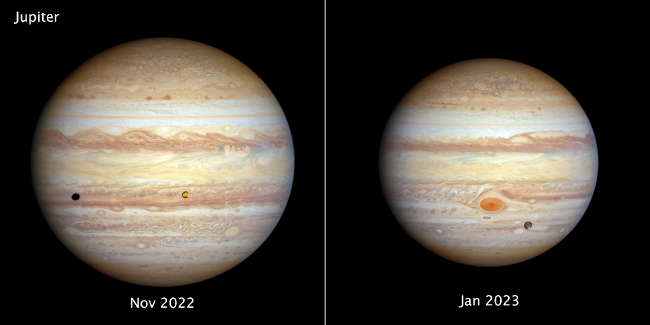
At left, the forecast for Jupiter is stormy weather at low northern latitudes. A prominent string of alternating storms is visible, forming a "vortex street" as some planetary astronomers call it.
This is a wave pattern of nested anticyclones and cyclones, locked together like in a machine with alternating gears moving clockwise and counterclockwise.
If the storms get close enough to each other, in the very unlikely event of a merger, they could build an even larger storm, potentially rivaling the current size of the Great Red Spot. The staggered pattern of anticyclones and cyclones prevents individual storms from merging.
Activity is also seen interior to these storms; in the 1990s Hubble didn't see any cyclones or anticyclones with built-in thunderstorms, but these storms have sprung up in the last decade. Strong color differences indicate that Hubble is seeing different cloud heights and depths as well.
The orange moon Io photobombs this view of Jupiter's multicolored cloud tops, casting a shadow toward the planet's western limb. Hubble's resolution is so sharp that it can see Io's mottled-orange appearance, related to its numerous active volcanoes.
These volcanoes were first discovered when the Voyager 1 spacecraft flew by in 1979. The moon's molten interior is overlaid by a thin crust through which the volcanoes eject material. Sulfur takes on various hues at different temperatures, which is why Io's surface is so colorful. This image was taken on Nov. 12, 2022.
At right, Jupiter's legendary Great Red Spot takes center stage in this view. Though this vortex is big enough to swallow Earth, it has actually shrunken to the smallest size it has ever been over observation records dating back 150 years.
Jupiter's icy moon Ganymede can be seen transiting the giant planet at lower right. Slightly larger than the planet Mercury, Ganymede is the largest moon in the solar system. It is a cratered world with a mainly water-ice surface with apparent glacial flows driven by internal heat. (This image is smaller in size because Jupiter was 81,000 miles farther from Earth when the photo was taken). This image was taken on Jan. 6, 2023.
Uranus
Planetary oddball Uranus rolls on its side around the Sun as it follows an 84-year orbit, rather than spinning in a more-vertical position as Earth does. Uranus has a weirdly tipped "horizontal" rotation axis angled just eight degrees off the plane of the planet's orbit.
One recent theory proposes that Uranus once had a massive moon that gravitationally destabilized it and then crashed into it. Other possibilities include giant impacts during planetary formation, or even giant planets exerting resonant torques on each other over time.
The consequences of the planet's tilt are that for stretches of time lasting up to 42 years, parts of one hemisphere are completely without sunlight. When the Voyager 2 spacecraft visited during the 1980s, the planet's south pole was pointed almost directly at the Sun. Hubble's latest view shows the northern pole now tipping toward the Sun.
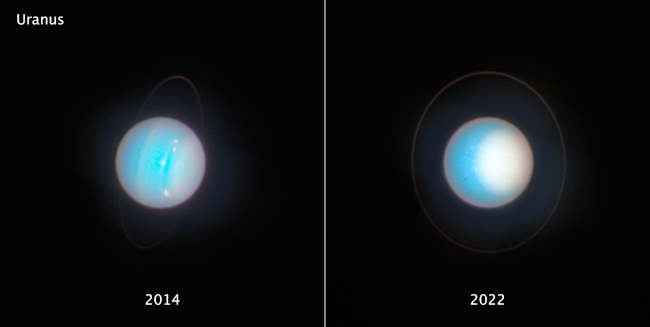
At left, this is a Hubble view of Uranus taken in 2014, seven years after the northern spring equinox when the Sun was shining directly over the planet's equator, and shows one of the first images from the OPAL program.
Multiple storms with methane ice-crystal clouds appear at mid-northern latitudes above the planet's cyan-tinted lower atmosphere. Hubble photographed the ring system edge-on in 2007, but the rings are seen starting to open up seven years later in this view. At this time, the planet had multiple small storms and even some faint cloud bands.
At right, as seen in 2022, Uranus' North Pole shows a thickened photochemical haze that looks similar to the smog over cities. Several little storms can be seen near the edge of the polar haze boundary.
Hubble has been tracking the size and brightness of the north polar cap and it continues to get brighter year after year. Astronomers are disentangling multiple effects – from atmospheric circulation, particle properties, and chemical processes – that control how the atmospheric polar cap changes with the seasons.
At the Uranian equinox in 2007, neither pole was particularly bright. As the northern summer solstice approaches in 2028 the cap may grow brighter still, and will be aimed directly toward Earth, allowing good views of the rings and North Pole; the ring system will then appear face-on. This image was taken on Nov. 10, 2022.
The Hubble Space Telescope is a project of international cooperation between NASA and ESA. NASA's Goddard Space Flight Center in Greenbelt, Maryland, manages the telescope. The Space Telescope Science Institute, or STScI, in Baltimore conducts Hubble science operations. STScI is operated for NASA by the Association of Universities for Research in Astronomy, in Washington, D.C.