 How to resolve AdBlock issue?
News
- Details
- Written by: LAKE COUNTY NEWS REPORTS
The meeting will begin at 4 p.m. at the Moose Lodge, located at 15900 Moose Lodge Lane in Clearlake Oaks.
The meeting will be available via Zoom. The meeting ID is 986 3245 2684, pass code is 666827.
On the agenda will be guest speaker Lt. Richard Ward of the Lake County Sheriff’s Office, who will give an update on the progress of the Roadmap Task Force.
Other ongoing agenda items include the Clearlake Oaks consolidated lighting district, the Lake County Geothermal Project Watchlist, commercial cannabis cultivation projects and a cannabis ordinance task force update, and a report on upcoming proposed commercial and residential project applications requiring use permits within ERTH’s boundaries.
There also will be updates on Spring Valley, the Northshore Fire Protection District, and the Oaks Arm and Keys Restoration projects, a report from Supervisor EJ Crandell and public outreach on the U.S. Environmental Protection Agency’s Sulphur Bank Mine Superfund site.
The group’s next meeting will take place on May 3.
ERTH’s members are Denise Loustalot, Jim Burton, Tony Morris and Pamela Kicenski.
For more information visit the group’s Facebook page.
- Details
- Written by: Julia Kuzovkina, University of Connecticut and John Campanelli, University of Connecticut
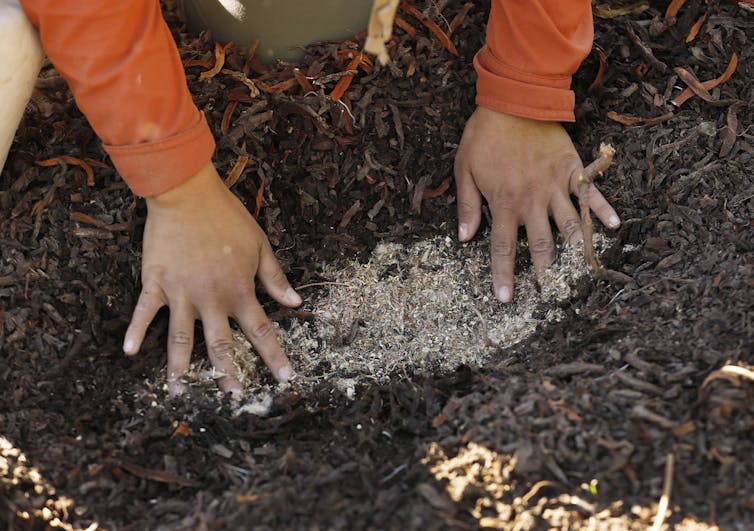
Spring is planting time for home gardeners, landscapers and public works agencies across the U.S. And there’s rising demand for native plants – species that are genetically adapted to the specific regions where they are used.
Native plants have evolved with local climates and soil conditions. As a result, they generally require less maintenance, such as watering and fertilizing, after they become established, and they are hardier than non-native species.
Many federal, state and city agencies rank native plants as a first choice for restoring areas that have been disturbed by natural disasters or human activities like mining and development. Repairing damaged landscapes is a critical strategy for slowing climate change and species loss.
But there’s one big problem: There aren’t enough native seeds. This issue is so serious that it was the subject of a recent report from the National Academies of Sciences, Engineering and Medicine. The study found an urgent need to build a native seed supply.
As plant scientists who have worked on ecological restoration projects, we’re familiar with this challenge. Here’s how we are working to promote the use of native plants for roadside restoration in New England, including by building up a seed supply network.
The need for native plants
Many stressors can damage and degrade land. They include natural disasters, such as wildfires and flooding, and human actions, such as urbanization, energy production, ranching and development.
Invasive plants often move into disturbed areas, causing further harm. They may drift there on the wind, be excreted by birds and animals that consume fruit, or be introduced by humans, unintentionally or deliberately.
Ecological restoration aims to bring back degraded lands’ native biological diversity and the ecological functions that these areas provided, such as sheltering wildlife and soaking up floodwater. In 2021, the United Nations launched the U.N. Decade on Ecosystem Restoration to promote such efforts worldwide.
Native plants have many features that make them an essential part of healthy ecosystems. For example, they provide long-term defense against invasive and noxious weeds; shelter local pollinators and wildlife; and have roots that stabilize soil, which helps reduce erosion.
Restoration projects require vast quantities of native seeds – but commercial supplies fall far short of what’s needed. Developing a batch of seeds for a specific species takes skill and several years of lead time to either collect native seeds in the wild or grow plants to produce them. Suppliers say one of their biggest obstacles is unpredictable demand from large-scale customers, such as government and tribal agencies, that don’t plan far enough ahead for producers to have stocks ready.
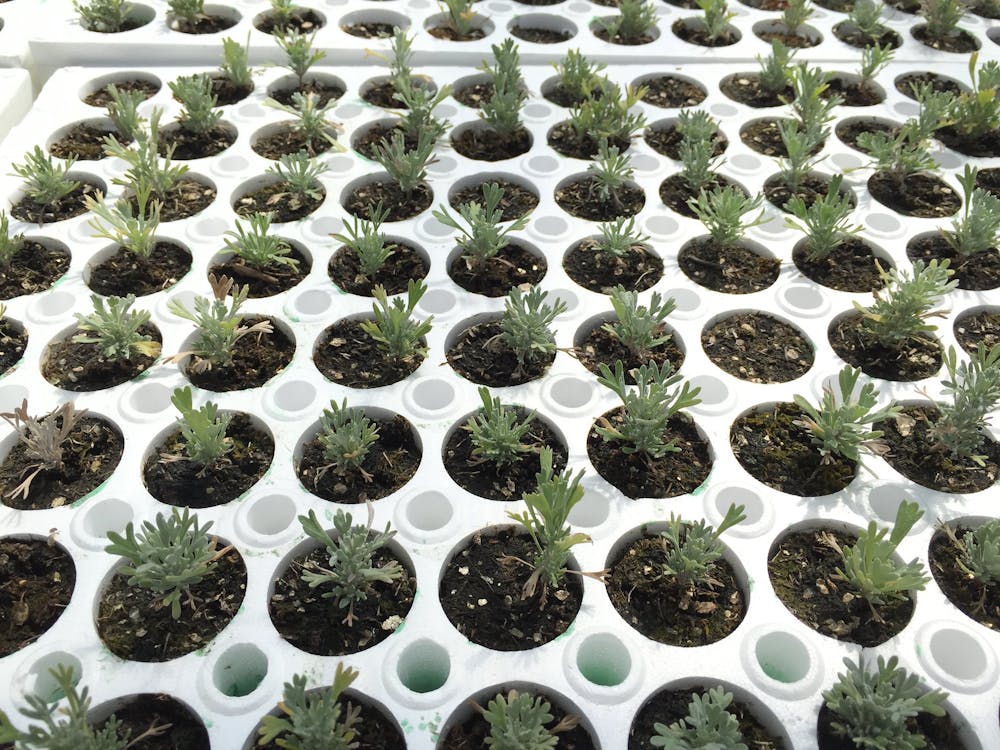
Restoring roadsides in New England
Most drivers give little thought to what grows next to highways, but the wrong plants in these areas can cause serious problems. Roadsides that aren’t replanted using ecological restoration methods may erode and be taken over by invasive weeds. Ecological restoration provides effective erosion control and better habitat habitats for wildlife and pollinators. It’s also more attractive.
For decades, state transportation departments across the U.S. used non-native cool-season turfgrasses, such as fescue and ryegrass, to restore roadsides. The main benefits of using these species, which grow well during the cooler months of spring and fall, were that they grew fast and provided a quick cover.
Then in 2013 the New England Transportation Consortium – a research cooperative funded by state transportation agencies – commissioned our research team to help the states transition to native warm-season grasses instead. These grasses grow well in hot, dry weather and need less moisture than cool-season grasses. One of us, John Campanelli, developed the framework for selecting plant species based on conservation practices and identified methods for establishing native plant communities for the region.
We recommended using warm-season grasses that are native to the region, such as little bluestem, purple lovegrass, switchgrass and purpletop. These species required less long-term maintenance and less-frequent mowing than the cool-season species that agencies had previously used.

To ensure sound conservation practices, we wanted to use seeds produced locally. Seeds sourced from other locations would produce grasses that would interbreed with local ecotypes – grasses adapted to New England – and disrupt the local grasses’ gene complexes.
At that time, however, there was no reliable seed supply for local ecotypes in New England. Only a few sources offered an incomplete selection of small quantities of local seeds, at prices that were too expensive for large-scale restoration projects. Most organizations carrying out ecological restoration projects purchased their bulk seeds mainly from large wholesale producers in the Midwest, which introduced non-local genetic material to the restoration sites.
Improving native seed supply chains
Many agencies are concerned that lack of a local seed supply could limit restoration efforts in New England. To tackle this problem, our team launched a project in 2022 with funding from the New England Transportation Consortium. Our goals are to increase native plantings and pollinator habitats with seeds from local ecotypes, and to make our previous recommendations for roadside restoration with native grasses more feasible.
As we were analyzing ways to obtain affordable native seeds for these roadside projects, we learned about work by Eve Allen, a master’s degree student in city planning at the Massachusetts Institute of Technology. For her thesis, Allen used supply chain management and social network analysis to identify the best methods to strengthen the native seed supply chain network.
Her research showed that developing native seed supplies would require cooperative partnerships that included federal, state and local government agencies and the private and nonprofit sectors. Allen reached out to many of these organizations’ stakeholders and established a broad network. This led to the launch of the regional Northeast Seed Network, which will be hosted by the Massachusetts-based Native Plant Trust, a nonprofit that works to conserve New England’s native plants.
We expect this network will promote all aspects of native seed production in the region, from collecting seeds in the wild to cultivating plants for seed production, developing regional seed markets and carrying out related research. In the meantime, we are developing a road map for new revegetation practices in New England.
We aim to build greater coordination between these agencies and seed producers to promote expanded selections of affordable native seeds and make demand more predictable. Our ultimate goal is to help native plants, bees and butterflies thrive along roads throughout New England.
Julia Kuzovkina, Professor of Horticulture, University of Connecticut and John Campanelli, PhD Student in Plant Science and Landscape Architecture, University of Connecticut
This article is republished from The Conversation under a Creative Commons license. Read the original article.
- Details
- Written by: Elizabeth Larson
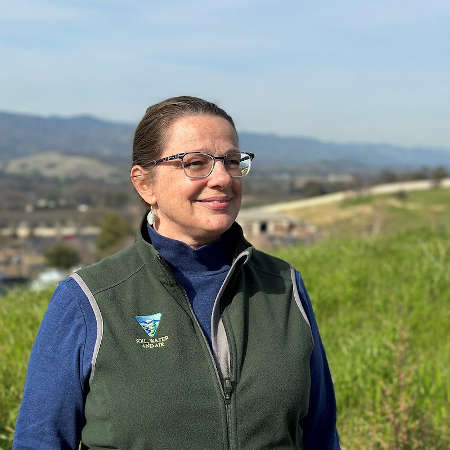
LAKE COUNTY, Calif. — The job of overseeing the Berryessa Snow Mountain National Monument is now in the hands of a natural resource management veteran who has worked across the United States.
The Bureau of Land Management and the Mendocino National Forest named Melissa Hovey as the monument manager, a job she took over on Nov. 6.
Based at the Ukiah Field Office, Hovey now has the challenge of overseeing the 330,780-acre monument, composed of public lands that cross Napa, Yolo, Solano, Lake, Colusa, Glenn and Mendocino counties. Two-thirds of the monument is in Lake County.
President Barack Obama designated the national monument in 2015.
“It’s an amazing monument,” Hovey told Lake County News. “It’s got such a diverse array of interests and values.”
Hovey said the monument encompasses “some of the most spectacular public lands in the country.”
“We are fortunate to have Melissa’s experience, wisdom and collaborative leadership style as part of BLM California,” said BLM Central California District Manager Chris Heppe. “Her extensive knowledge of natural resource management and community partnerships will benefit the monument’s scenic and biologically diverse landscapes.”
“I am extremely pleased to welcome Melissa to the region,” said Mendocino National Forest Supervisor Wade McMaster. “I share her excitement for the opportunities here and gratitude for the monument and the collaboration among our agencies and partners.”
Hovey said she’s excited to take on this new role, which had been vacant for a year before her hire.
She’s looking forward “to working with the communities of Northern California, our partners, and the visitors to ensure this special place is available for the use and enjoyment of current and future generations.”
BLM and the Mendocino National Forest comanage the monument. The Ukiah Field Office has 12 staffers, and Hovey is the only one whose time is devoted 100% to the monument, she said.
Hovey, a native of Boston, has a bachelor’s and master’s of science degrees in civil and environmental engineering.
She’s been in natural resource management for more than 30 years, and has spent the last 25 years living in the western United States, working in Arizona, Colorado, Montana, Oregon and Wyoming.
Before taking the job, Hovey had worked on and off with BLM for more than 10 years, holding positions in the BLM headquarters in Colorado, Wyoming, and Montana, and was the National Air Quality Resources Program manager.
She was instrumental in developing the agency’s first Report on Annual Greenhouse Gas Emissions and Climate Trends and several adaptive management plans for air resources.
Hovey also has experience managing and developing environmental programs for municipal and state governments and assisting industrial clients with environmental permitting.
She said a typical day usually involves meeting with one of the monument’s many constituents — including tribal right holders and user groups — to get their perspectives on what’s important to them and to identify priorities.
“Of course the Indigenous values are very important,” said Hovey.
She said there is an amazing constituent group for the monument that spans a very diverse level of interest: off highway vehicle enthusiasts, hikers, equestrians, native plants protection, and ancestral and historic preservation. Hovey said the monument has it all.
There are some ongoing activities that will eventually support writing a monument management plan. She said the proclamations that create most designated monuments direct the overseeing agency to develop a plan.
President Obama directed that plan to happen within a time frame, which Hovey said hasn’t happened yet. “That’s really due to staffing and funding shortages and changing priorities in administration.”
Hovey said the primary goal is to ensure that the public’s values are both protected and utilized to the best use. Other goals include facilitating science and research within the area.
When she’s not at work on the monument, Hovey enjoys hiking, camping, skiing, and spending time with her family, including two border collie puppies.
Hovey encourages people to enjoy the monument.
“Get out there and see it and use it,” she said. “It’s a beautiful place.”
Email Elizabeth Larson at
- Details
- Written by: Sydney Hartman-Munick, UMass Chan Medical School

The COVID-19 pandemic has been associated with worsening mental health among teens, including increasing numbers of patients with eating disorders. In fact, research indicates that the number of teens with eating disorders at least doubled during the pandemic.
This is particularly concerning given that eating disorders are among the most deadly of all mental health diagnoses, and teens with eating disorders are at higher risk for suicide than the general population.
While experts don’t know exactly why eating disorders develop, studies show that body dissatisfaction and desire for weight loss are key contributors. This can make conversations around weight and healthy behaviors particularly tricky with teens and young adults.
As an adolescent medicine doctor specializing in eating disorders, I have seen firsthand the increases in patients with eating disorders as well as the detrimental effects of eating disorder stereotypes. I regularly work with families to help teens develop positive relationships with body image, eating and exercise.
Understanding the signs of a possible eating disorder is important, as studies suggest that timely diagnosis and treatment leads to better long-term outcomes and to better chances of full recovery.
Eating disorders defined
Eating disorders, which often start in adolescence, include anorexia nervosa, bulimia nervosa, binge eating disorder, other specified feeding and eating disorders and avoidant restrictive food intake disorder. Each eating disorder has specific criteria that must be met in order to receive a diagnosis, which is made by a professional with eating disorder expertise.
Research suggests that up to 10% of people will develop an eating disorder in their lifetime. Medical complications from eating disorders, such as low heart rate and electrolyte abnormalities, can be dangerous and result in hospitalization, and malnutrition can affect growth and development. Many of the patients I see in clinic show signs of paused puberty and stalled growth, which can influence bone health, adult height and other aspects of health if not addressed quickly.
Teens are also at risk for disordered eating behaviors such as intentional vomiting, caloric restriction, binge eating, overexercise, the use of weight loss supplements and misuse of laxatives.
A recent study estimated that 1 in 5 teens may struggle with disordered eating behaviors. While these behaviors alone may not qualify as an eating disorder, they may predict the development of eating disorders later on.
Treatment methods for eating disorders are varied and depend on multiple factors, including a patient’s medical stability, family preference and needs, local resources and insurance coverage.
Treatment can include a team consisting of a medical provider, nutritionist and therapist, or might involve the use of a specialized eating disorder program. Referral to one of these treatment methods may come from a pediatrician or a specialized eating disorder provider.
Unpacking misconceptions and stereotypes
Traditional ideas and stereotypes about eating disorders have left many people with the impression that it is mainly thin, white, affluent females who develop eating disorders. However, research demonstrates that anyone can develop these conditions, regardless of age, race, body size, gender identity, sexual orientation or socioeconomic status.
Unfortunately, stereotypes and assumptions about eating disorders have contributed to health disparities in screening, diagnosis and treatment. Studies have documented negative eating disorder treatment experiences among transgender and gender-diverse individuals, Black and Indigenous people and those with larger body size. Some contributors to these negative experiences include lack of diversity and training among treatment providers, treatment plans without cultural or economic nutritional considerations and differential treatment when a patient is not visibly underweight, among others.
Contrary to popular assumptions, studies show teen boys are at risk for eating disorders as well. These often go undetected and can be disguised as a desire to become more muscular. However, eating disorders are just as dangerous for boys as they are for girls.
Parents and loved ones can play a role in helping to dispel these stereotypes by advocating for their child at the pediatrician’s office if concern arises and by recognizing red flags for eating disorders and disordered eating behaviors.
Warning signs
Given how common disordered eating and eating disorders are among teens, it is important to understand some possible signs of these worrisome behaviors and what to do about them.
Problematic behaviors can include eating alone or in secret and a hyperfocus on “healthy” foods and distress when those foods aren’t readily available. Other warning signs include significantly decreased portion sizes, skipped meals, fights at mealtime, using the bathroom immediately after eating and weight loss.
Because these behaviors often feel secretive and shameful, it may feel difficult to bring them up with teens. Taking a warm but direct approach when the teen is calm can be helpful, while letting them know you have noticed the behavior and are there to support them without judgment or blame. I always make sure to let my patients know that my job is to be on their team, rather than to just tell them what to do.
Teens may not immediately open up about their own concerns, but if behaviors like this are present, don’t hesitate to have them seen at their pediatrician’s office. Following up with patients who have shown signs of having an eating disorder and promptly referring them to a specialist who can further evaluate the patient are crucial for getting teens the help they may need. Resources for families can be helpful to navigate the fear and uncertainty that can come along with the diagnosis of an eating disorder.
Focus on health, not size
Research shows that poor body image and body dissatisfaction can put teens at risk for disordered eating behaviors and eating disorders.
Parents play an important role in the development of teens’ self-esteem, and research demonstrates that negative comments from parents about weight, body size and eating are associated with eating disorder-type thoughts in teens. Therefore, when talking to teens, it can be beneficial to take a weight-neutral approach, which focuses more on overall health rather than weight or size. I unfortunately have had many patients with eating disorders who were scolded or teased about their weight by family members; this can be really harmful in the long run.
One helpful strategy is to incorporate lots of variety into a teen’s diet. If doable, trying new foods as a family can encourage your teen to try something they haven’t before. Try to avoid terms such as “junk” or “guilt” when discussing foods. Teaching teens to appreciate lots of different kinds of foods in their diet allows them to develop a healthy, knowledgeable relationship with food. If you’re feeling stuck, you may want to ask your pediatrician about seeing a dietitian.
It’s important to remember that teens need a lot of nutrition to support growth and development, often more than adults do, and regular eating helps avoid extreme hunger that can lead to overeating. Letting teens listen to their bodies and learn their own hunger and fullness cues will help them eat in a healthy way and create healthy long-term habits.
In my experience, teens are more likely to exercise consistently when they find an activity that they enjoy. Exercise doesn’t need to mean lifting weights at the gym; teens can move their bodies by taking a walk in nature, moving to music in their rooms or playing a pickup game of basketball or soccer with a friend or sibling.
Focusing on the positive things exercise can do for the body such as improvements in mood and energy can help avoid making movement feel compulsive or forced. When teens are able to find movement that they enjoy, it can help them to appreciate their body for all it is able to do.
Sydney Hartman-Munick, Assistant Professor of Pediatrics, UMass Chan Medical School
This article is republished from The Conversation under a Creative Commons license. Read the original article.