 How to resolve AdBlock issue?
News
- Details
- Written by: Elizabeth Larson
The council will meet at 6 p.m. Thursday, July 6, for a budget workshop before the regular meeting begins at 6 p.m. in the council chambers at Clearlake City Hall, 14050 Olympic Drive.
The meeting will be broadcast live on the city's YouTube channel or the Lake County PEGTV YouTube Channel. Community members also can participate via Zoom or can attend in person. The webinar ID is 878 6022 4577.
One tap mobile is available at +16694449171,,87860224577# or join by phone at 669 444 9171 or 720 707 2699.
The agenda can be found here.
Comments and questions can be submitted in writing for City Council consideration by sending them to City Clerk Melissa Swanson at
To give the council adequate time to review your questions and comments, please submit your written comments before 4 p.m. Thursday, July 6.
Under business items, staff will present the annual financial report and single audit report for fiscal year 2021-22.
The council also will consider approving the lease with Peterson/CAT in the amount of $208,814.37.
In other business, the council will consider updates to the management classification and benefits plan and city salary. Those proposed updates include a 3% cost of living increase.
On the meeting's consent agenda — items that are considered routine in nature and usually adopted on a single vote — are warrants; consideration of rejection of proposals for design services of the dam road roundabout; approval of contract amendment with Lucy & Co. for public relations and communication; approval of contribution to Hands Up Lake County for support of the 1 Team 1 Dream Program in the amount of $30,000; approval of additional leave of absence without pay for Maintenance Worker II Johnny Miskill for June 8, 2023 through June 18, 2023; consideration of bid award for the City Hall Remodel Project to Adams Commercial General Contracting Inc. in the amount of $1,281,110 and authorize the city manager to approve change orders up to 10% of the contract price; authorization of purchase of office furniture from National Business Furniture through the GSA Program in an amount not to exceed $70,000; and authorization of a side letter with the Clearlake Police Officer Association and the Clearlake Middle Management Association.
Email Elizabeth Larson at
- Details
- Written by: Mojtaba Sadegh, Boise State University
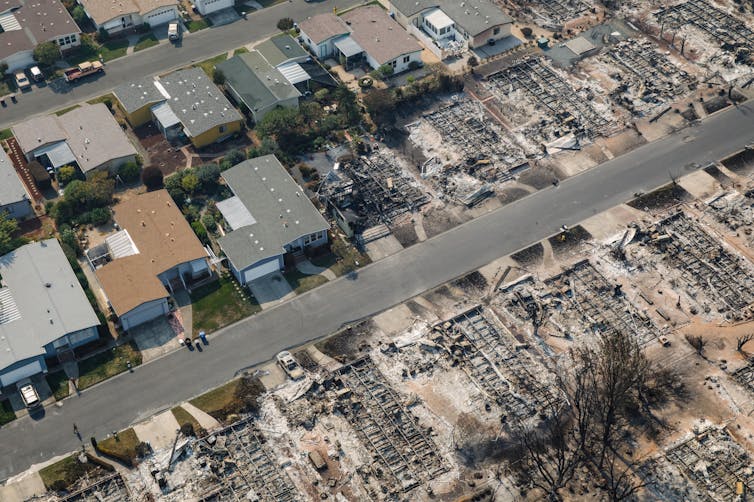
Over the past two decades, a staggering 21.8 million Americans found themselves living within 3 miles (5 kilometers) of a large wildfire. Most of those residents would have had to evacuate, and many would have been exposed to smoke and emotional trauma from the fire.
Nearly 600,000 of them were directly exposed to the fire, with their homes inside the wildfire perimeter.
Those statistics reflect how the number of people directly exposed to wildfires more than doubled from 2000 to 2019, my team’s new research shows.
But while commentators often blame the rising risk on homebuilders pushing deeper into the wildland areas, we found that the population growth in these high-risk areas explained only a small part of the increase in the number of people who were exposed to wildfires.
Instead, three-quarters of this trend was driven by intense fires growing out of control and encroaching on existing communities.
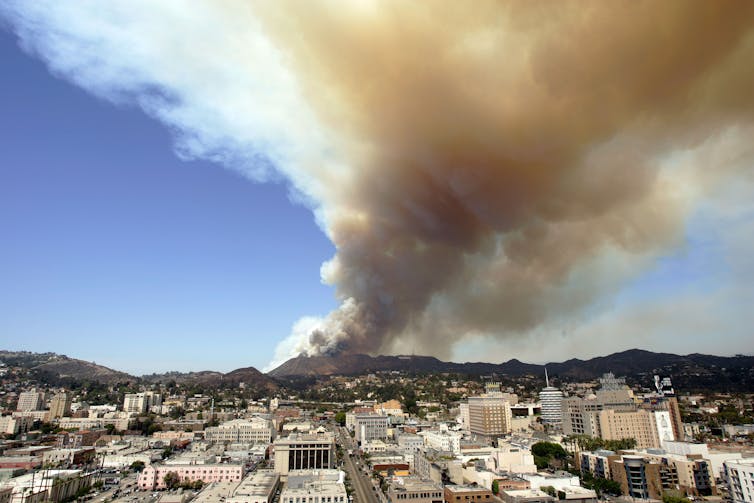
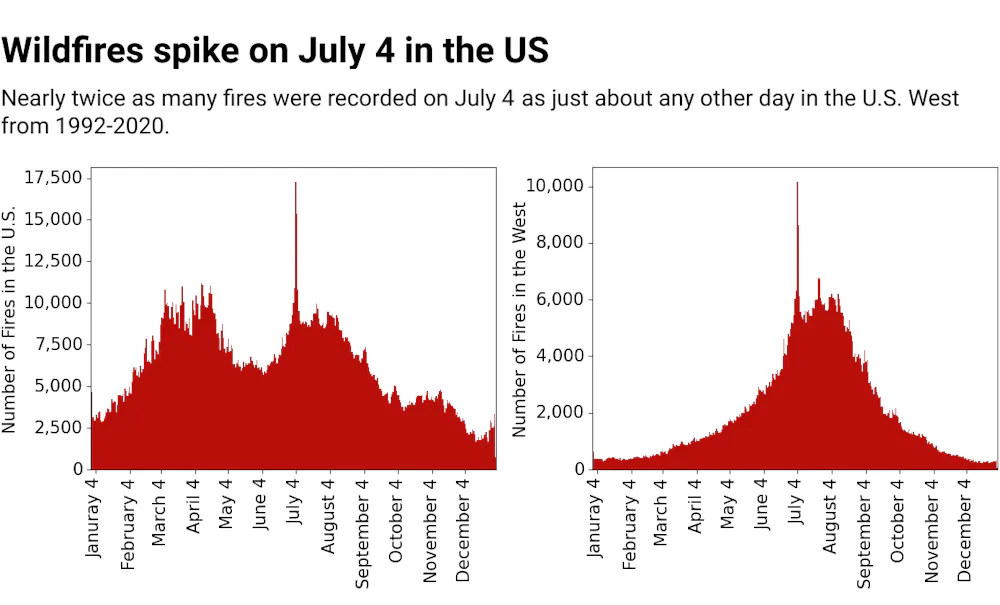
That knowledge has implications for how communities prepare to fight wildfires in the future, how they respond to population growth and whether policy changes such as increasing insurance premiums to reduce losses will be effective. It’s also a reminder of what’s at risk from human activities, such as fireworks on July 4, a day when wildfire ignitions spike.
Where wildfire exposure was highest
I am a climate scientist who studies the wildfire-climate relationship and its socioenvironmental impacts. For the new study, colleagues and I analyzed the annual boundaries of more than 15,000 large wildfires across the Lower 48 states and annual population distribution data to estimate the number of people exposed to those fires.
Not every home within a wildfire boundary burns. If you picture wildfire photos taken from a plane, fires generally burn in patches rather than as a wall of flame, and pockets of homes survive.
We found that 80% of the human exposure to wildfires – involving people living within a wildfire boundary from 2000 to 2019 – was in Western states.
California stood out in our analysis. More than 70% of Americans directly exposed to wildfires were in California, but only 15% of the area burned was there.
What climate change has to do with wildfires
Hot, dry weather pulls moisture from plants and soil, leaving dry fuel that can easily burn. On a windy day – such as California often sees during its hottest, driest months – a spark, for example from a power line, campfire or lightning, can start a wildfire that quickly spreads.
Recent research published in June 2023 shows that almost all of the increase in California’s burned area in recent decades has been due to anthropogenic climate change – meaning climate change caused by humans.
Our new research looked beyond just the area burned and asked: Where were people exposed to wildfires, and why?
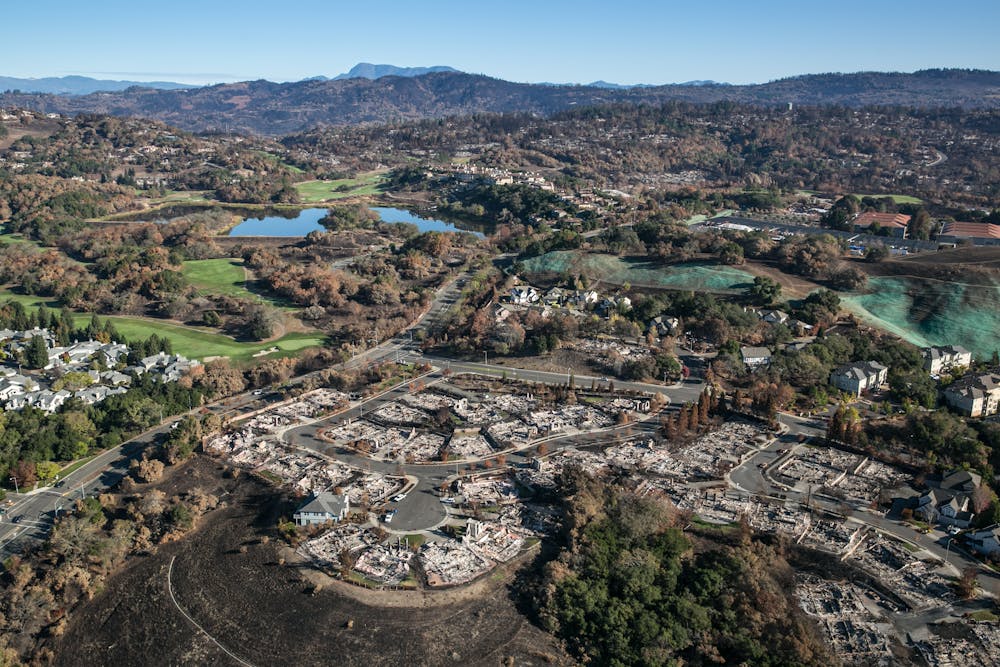
We found that while the population has grown in the wildland-urban interface, where houses intermingle with forests, shrublands or grasslands, that accounted for only about one-quarter of the increase in the number of humans directly exposed to wildfires across the Lower 48 states from 2000 to 2019.
Three-quarters of that 125% increase in exposure was due to fires’ increasingly encroaching on existing communities. The total burned area increased only 38%, but the locations of intense fires near towns and cities put lives at risk.
In California, which was in drought during much of that period, several wildfire catastrophes hit communities that had existed long before 2000. Almost all these catastrophes occurred during dry, hot, windy conditions that have become increasingly frequent because of climate change.
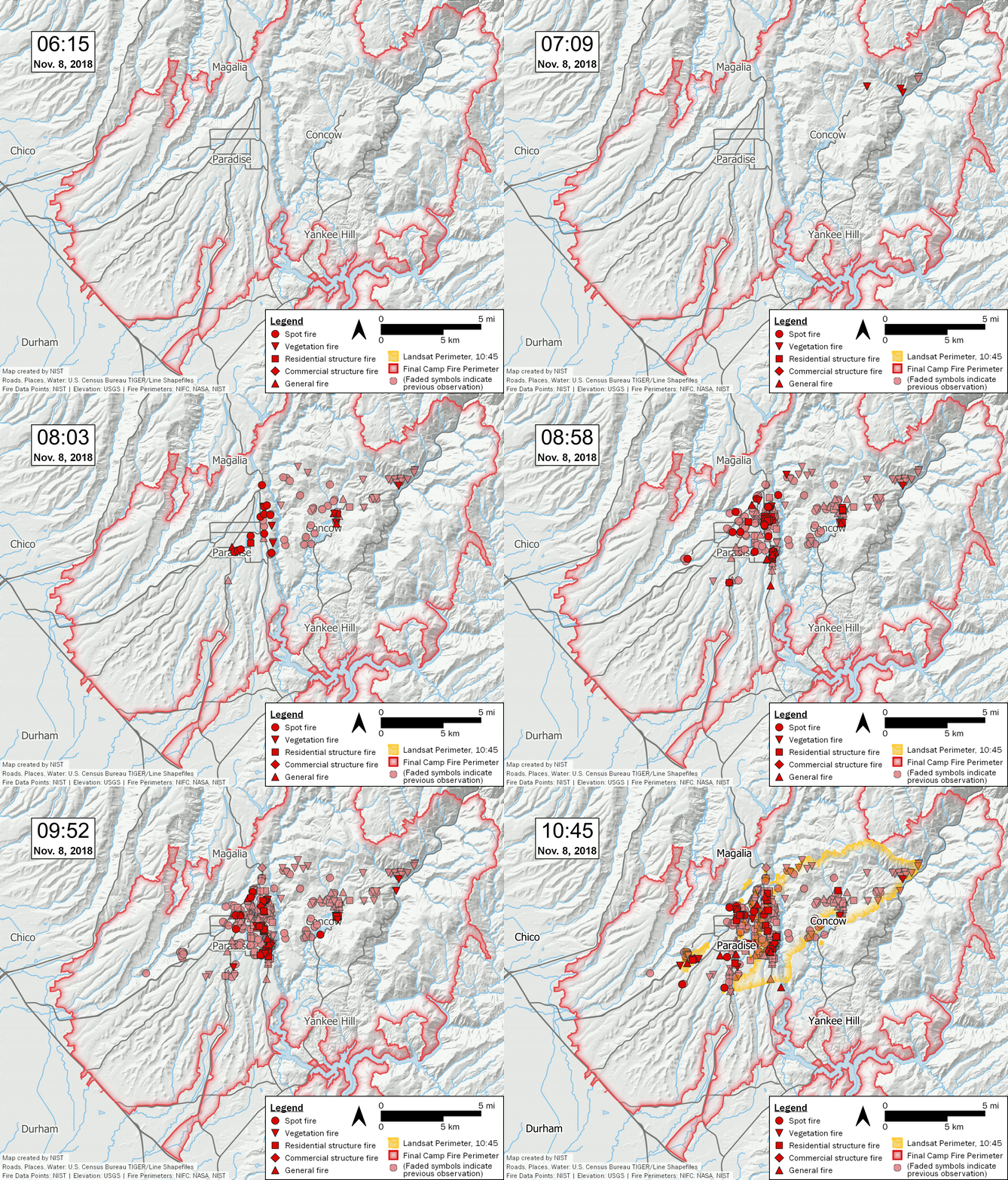
Wildfires in the high mountains in recent decades provide another way to look at the role that rising temperatures play in increasing fire activity.
High mountain forests have few cars, homes and power lines that could spark fires, and humans have historically done little to clear brush there or fight fires that could interfere with natural fire regimes. These regions were long considered too wet and cool to regularly burn. Yet my team’s past research showed fires have been burning there at unprecedented rates in recent years, mainly because of warming and drying trends in the Western U.S.
What can communities do to lower the risk?
Wildfire risk isn’t slowing. Studies have shown that even in conservative scenarios, the amount of area that burns in Western wildfires is projected to grow in the next few decades.
How much these fires grow and how intense they become depends largely on warming trends. Reducing emissions will help slow warming, but the risk is already high. Communities will have to both adapt to more wildfires and take steps to mitigate their impacts.
Developing community-level wildfire response plans, reducing human ignitions of wildfires and improving zoning and building codes can help prevent fires from becoming destructive. Building wildfire shelters in remote communities and ensuring resources are available to the most vulnerable people are also necessary to lessen the adverse societal impacts of wildfires.
Mojtaba Sadegh, Associate Professor of Civil Engineering, Boise State University
This article is republished from The Conversation under a Creative Commons license. Read the original article.
- Details
- Written by: LAKE COUNTY NEWS REPORTS
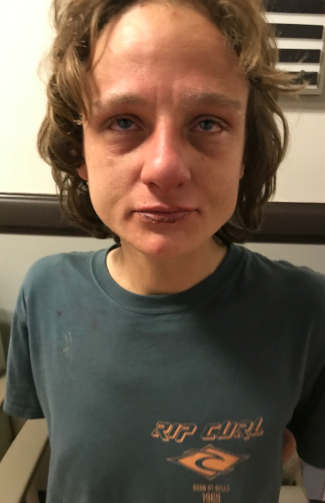
CLEARLAKE, Calif. — The Clearlake Police Department is asking for the community’s help in finding a missing woman.
Brittany Spurling, 29, was last seen on June 20 in Lakeport.
She is described as a 29-year-old white female who is 5 feet 4 inches tall and 130 pounds.
Spurling has blonde hair and blue eyes.
If you have any information regarding Spurling’s whereabouts, please contact the Clearlake Police Department at 707-994-8251, Extension 1.
- Details
- Written by: Joseph Jones, West Virginia University
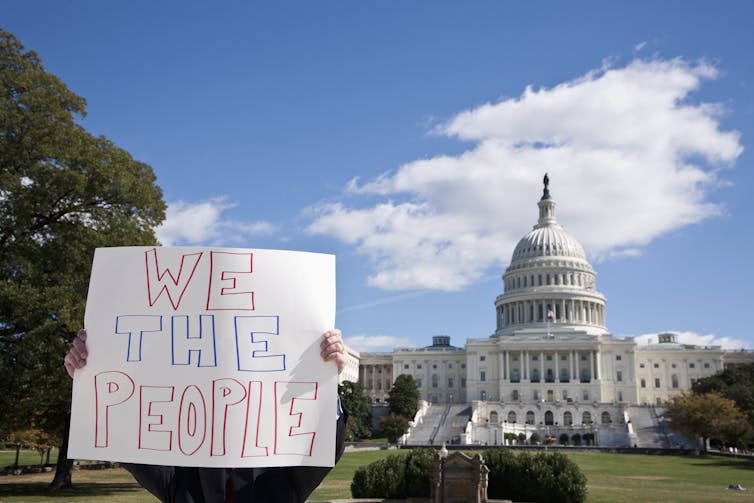
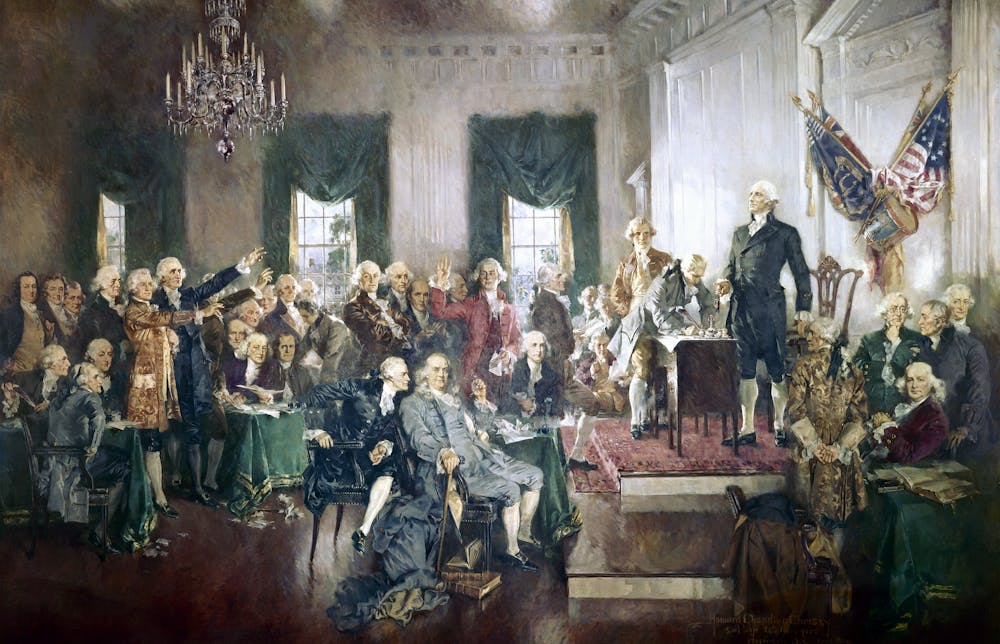
The United States’ founders firmly rejected King George III and the entire idea of monarchy 247 years ago, on July 4, 1776.
Political power does not come from some absolute authority of a king over people, the founders argued. Rather, political power comes from the people themselves. And these people must agree to any authority governing their society.
This is why the U.S. Constitution starts with the words “We the People,” and not “I, the ruler.”
I am a historian, ethicist and media scholar and have studied how people build communities.
America’s founders did not trust everyone’s ability to equally participate in the new democracy, as laws at the time showed.
But, because of policy changes on issues like voting, the idea of who actually is represented in the phrase “We the People” has changed over time.

First steps
In 1776, only white men who owned property had the right to vote.
“Few men, who have no property, have any judgment of their own,” as former President John Adams wrote in 1776.
As activists – including some women and Black Americans – proclaimed their equality, public education spread, and social thinking shifted.
By about 1860, all state legislatures had lifted property requirement for voting. Allowing only wealthy property owners to vote did not align with the democratic notion that “all men are created equal.”
While some states, like Vermont, eliminated the property voting requirement in the 18th century, this shift became more popular in the 1820s and the 1830s.
Congress passed the 15th Amendment in 1870, giving Black men and others the right to vote, regardless of race.
But that amendment still excluded some people, chiefly Native Americans and women.
An unfinished history
Despite the 15th Amendment, violence and intimidation in some states still prevented Black men from voting.
State lawmakers also used bureaucratic measures, such as a poll tax, renewed attempts at a property requirement and literacy tests, to prevent African Americans from voting.
The fight over African American suffrage continued for decades, and many courageous Americans protested and were arrested or killed in the struggle to exercise their voting rights.
Thanks to the work of civil rights activists – including John Lewis, Fannie Lou Hamer and Marting Luther King Jr. – public opinion shifted.
In the 1960s, Congress passed additional legal measures to protect the voting rights of Black Americans. This included the 24th Amendment, which outlawed the use of poll taxes, and the 1965 Voting Rights Act, which prohibited any racial discrimination in voting.
Women’s turn
In 1920, women gained the right to vote with the addition of the 19th Amendment, following another decadeslong struggle.
Women’s rights activists made the first organized call for female suffrage at the Seneca Falls Convention in 1848.
In the following years, suffragists pushed for constitutional amendments, state laws and a change in public thinking to include women in “We the People.”
Native American rights
Having self-governed for centuries, Native Americans were not legally recognized with voting rights until Congress approved the Indian Citizenship Act in 1924.
While that supposedly gave Native Americans the same rights as other Americans, Native Americans faced the same tactics, like violence, that white racists used to prevent Black Americans from voting.
Like other people excluded from “We the People,” Native Americans have continued to push for voting rights and other ways to ensure they are included in American self-government.
Making democracy more democratic
In 1971 “We the People” again expanded, to include younger people, with the lowering of the voting age from 21 to 18. The ongoing Vietnam War shifted public opinion, and there was popular support for the idea that someone old enough to die fighting for their country should also be able to vote.
A government once described by Abraham Lincoln as “of the people, by the people, and for the people” was now going to technically include all of the people.
But equality for women, young people and racially marginalized groups did not change overnight.
Social equality remains far off for many people, including undocumented immigrants, for example, and LGBTQ+ individuals.

Current limitations to ‘We the People’
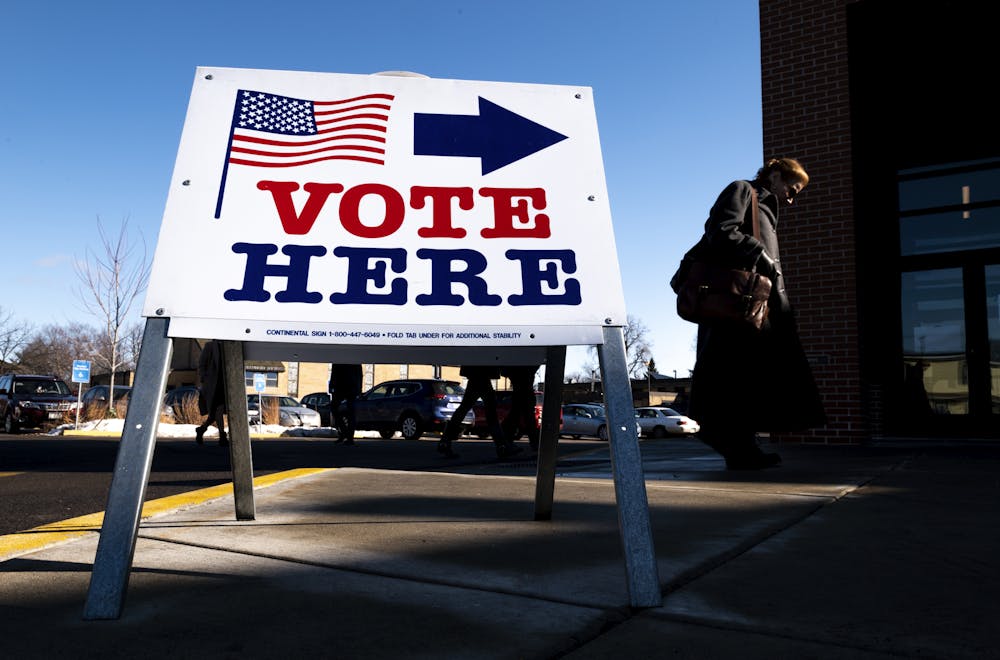
The government has recognized that citizens over the age of 18 have a right to participate in self-government. But there are still political and legal attempts to restrict people’s ability to vote.
While some states have passed new laws that make it harder to vote in recent years, other states have made it easier.
North Carolina passed new ID requirements in April 2023 that make it difficult for those without current state identification to vote.
Texas, Georgia, Oklahoma and Idaho are also among the states that are deleting some voters from their rolls – if people do not regularly vote, for example.
Arizona has closed multiple polling sites, making it more difficult for some people to vote.
Twenty-five states, meanwhile, including Hawaii and Delaware, have passed laws over the last few years that make it easier to vote. One of these measures automatically registers people to vote when they turn 18.
There are more examples. The bottom line is, voters have fewer protections when it becomes harder to vote, and American democracy is not as democratic as it could be.
The big picture
Voting is not the only form of recognition and participation in a democracy. People can be respected at work, paid what they are worth and treated with dignity. Community members can be treated fairly by police, school officials and other authorities, given an equal opportunity for justice and education to improve their lives.
People can also contribute to the social and economic well-being of a democracy in ways other than voting, doing everything from planting a tree in a public park to attending a political rally.
But the overall expansion of voting rights and a historical understanding of “We the People” shows that everyone belongs in a democratic society, regardless of wealth, achievement or other differences.
Joseph Jones, Assistant Professor of media ethics and law at Reed College of Media, West Virginia University
This article is republished from The Conversation under a Creative Commons license. Read the original article.