 How to resolve AdBlock issue?
News
- Details
- Written by: LAKE COUNTY NEWS REPORTS
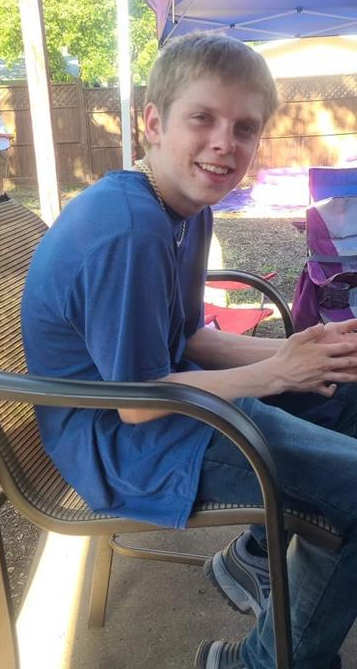
UPDATE: The Clearlake Police Department reported on Friday afternoon that Anthony Hopper has been located.
CLEARLAKE, Calif. — The Clearlake Police Department is working to locate a missing boy.
Anthony Hopper, 16, was last seen leaving his home on 30th Avenue in Clearlake at around 4:50 p.m. Thursday, the Clearlake Police Department said.
Hopper is described as a white male, 5 feet 4 inches tall, between 120 and 140 pounds, with blond hair and blue eyes. He was last seen wearing a gray shirt and blue jeans.
If you have any information about Hopper’s whereabouts please contact the Clearlake Police Department at 707-994-8251. Extension 1.
- Details
- Written by: LAKE COUNTY NEWS REPORTS
Under the CalRx Naloxone Access Initiative — unveiled by Gov. Gavin Newsom earlier this year — the state will allocate $30 million to support a partner, or partners, in developing, manufacturing, procuring and/or distributing a naloxone nasal product under the CalRx label.
“One more fatal overdose is one too many. California is tackling the opioid epidemic from all sides," said Gov. Newsom. "Naloxone is, quite literally, a lifesaver — so we are making it more accessible and affordable for anyone who needs it."
Naloxone is an essential medication used to reverse opioid overdoses and save lives. Access to this medication is expected to improve with the recent approval by the U.S. Food & Drug Administration of Narcan, 4 milligram naloxone hydrochloride nasal spray product for over-the-counter use.
However, California recognizes that this development may not sufficiently address the needs of those who are most vulnerable, such as low-income, uninsured, or underinsured individuals and their families.
A more affordable version of this medication is critical to making naloxone more accessible in communities across California.
“California is committed to leveraging its purchasing power by fostering partnerships that can address the affordability and availability of naloxone nasal products,” said California Health and Human Services Agency Secretary Dr. Mark Ghaly. “By reducing barriers and increasing accessibility, this initiative will play a significant role in combating the devastating impact of the opioid epidemic in California. To put it simply, this will help save lives.”
The Department of Health Care Services created the Naloxone Distribution Project, or NDP, in 2018 to combat opioid overdose-related deaths in California through the provision of free naloxone.
As of June 25, 2023, the NDP has distributed more than 2.6 million naloxone kits, resulting in more than 181,665 reported overdose reversals.
CalRx represents a groundbreaking solution for addressing drug affordability. Originally announced in January 2019 in Gov. Newsom’s first Executive Order and later signed into law in the California Affordable Drug Manufacturing Act of 2020 (Pan, Senate Bill 852, Chapter 207, Statutes of 2020),
CalRx empowers California to contract for the development, production, and distribution of generic drugs at low cost and to make them available across the country. The state will target prescription drugs where the pharmaceutical market has failed to lower drug costs, even when a generic or biosimilar medication is available.
Compared to traditional procurement of prescription drugs, CalRx seeks deep, mutually beneficial partnerships with companies and non-profit organizations that share the state’s goals.
Earlier this year, Gov. Newsom announced CalRx was in the process of bringing to market affordable and accessible insulin generics under the CalRx label that will be available to Californians and people across the country.
The funds provided by the state can support research and development, including clinical studies, manufacturing process development, regulatory submissions, FDA approval, and distribution of naloxone nasal products.
For further information and to participate in the RFI, interested parties can visit this site or contact CalRx at
- Details
- Written by: Sanya Carley, University of Pennsylvania and David Konisky, Indiana University
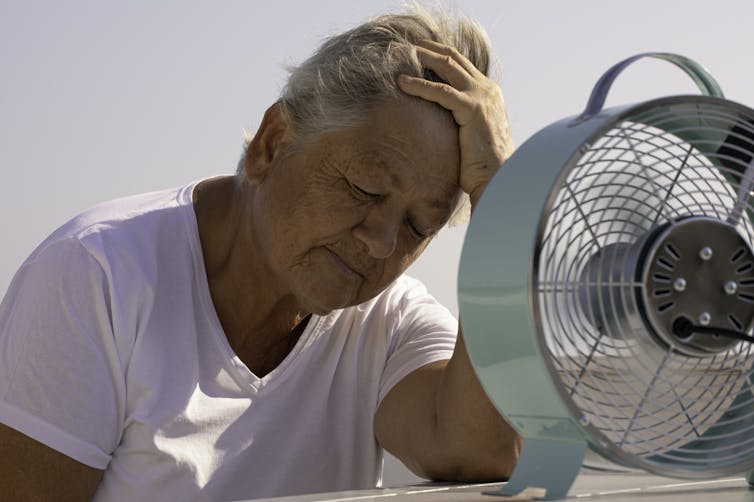
Millions of Americans have already been sweltering through heat waves this summer, and forecasters warn of hot months ahead. July 3 and 4, 2023, were two of the hottest days, and possibly the hottest, on satellite record globally.
For people who struggle to afford air conditioning, the rising need for cooling is a growing crisis.
An alarming number of Americans risk losing access to utility service altogether because they can’t pay their bills. Energy utility providers shut off electricity to at least 3 million customers in 2022 who had missed a bill payment. Over 30% of these disconnections happened in the three summer months, during a year that was the fifth hottest on record.
In some cases, the loss of service lasted for just a few hours. But in others, people went without electricity for days or weeks while scrambling to find enough money to restore service, often only to face disconnection again.
As researchers who study energy justice and energy insecurity, we believe the United States is in the midst of a disconnection crisis. We started tracking these disconnections utility by utility around the country, and we believe that the crisis will only get worse as the impacts of climate change become more widespread and more severe. In our view, it is time government agencies and utilities start treating household energy security as a national priority.
1 in 4 households face energy insecurity
Americans tend to think about the loss of electricity as something infrequent and temporary. For most, it is a rare inconvenience stemming from a heat wave or storm.
But for millions of U.S. households, the risk of losing power is a constant concern. According to the most recent data from the U.S. Energy Information Administration, 1 in 4 American households experience some form of energy insecurity each year, with no appreciable improvement over the past decade.
For many low-income households, the risk of a power shut-off reoccurs month after month. In a recent study, we found that over the course of a single year, half of all households whose power was disconnected dealt with disconnections multiple times as they struggled to pay their bills.
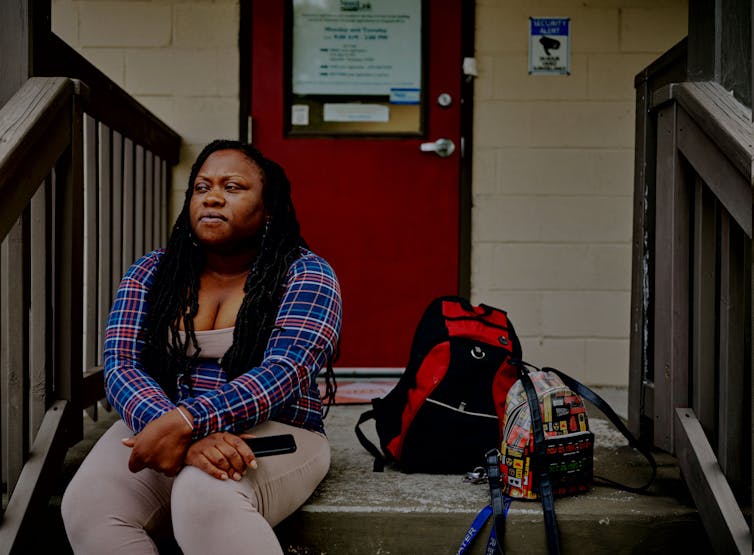
Energy insecurity like this is especially common among low-income Americans, people of color, families with young children, individuals who rely on electronic medical devices or those living in poor housing conditions. During the first year of the COVID-19 pandemic, we found that Black and Hispanic households were three and four times, respectively, more likely to lose service than white households.
Along with existing financial constraints, people are facing rising electricity rates in many areas, rising inflation and higher temperatures that require cooling. Some also face a history of redlining and poor city planning that has concentrated certain populations in less efficient homes. Taken together, the crisis is apparent.
Coping strategies can put health at risk
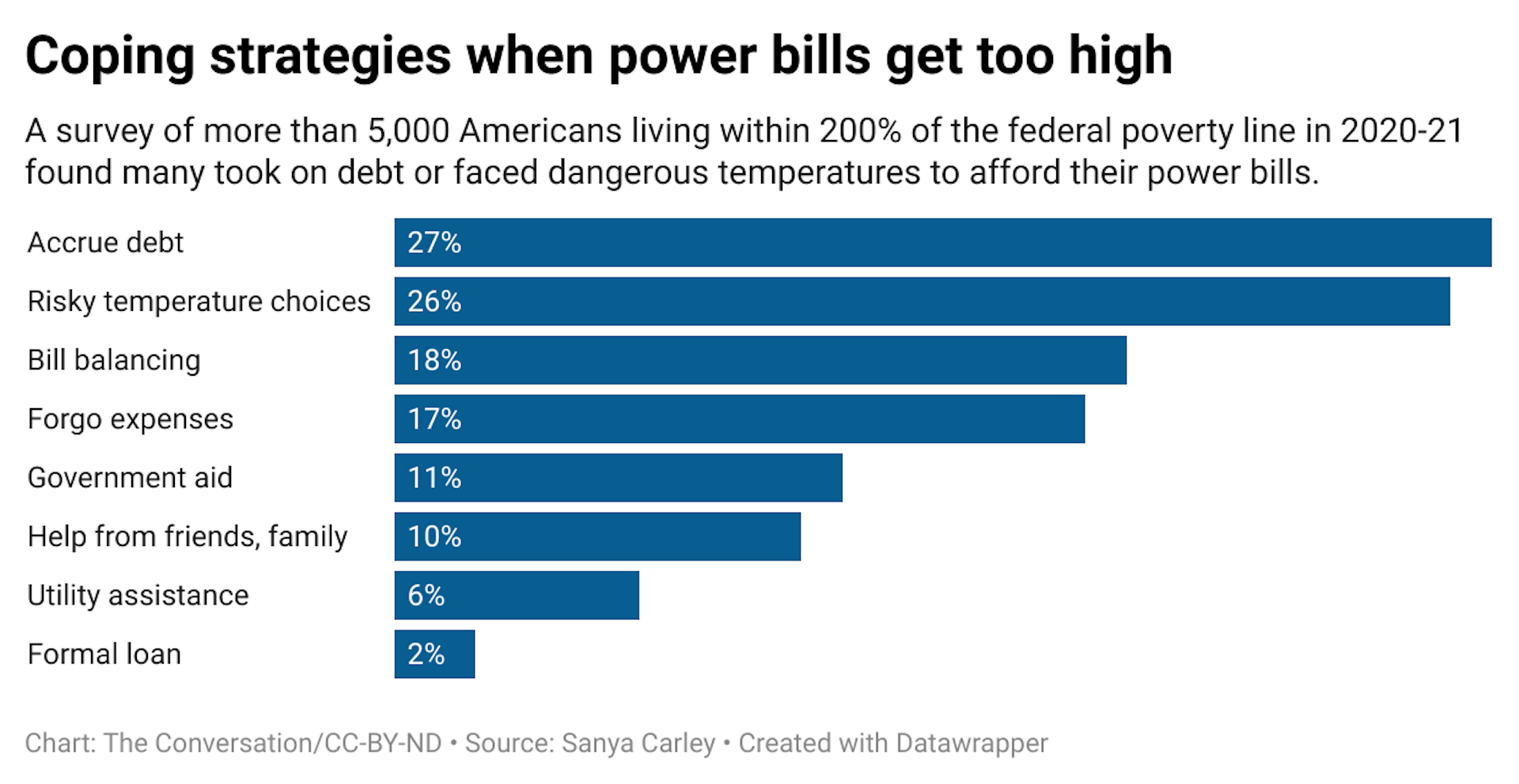
We have found that over half of all low-income households engage in some coping strategies, and most of them find they need multiple strategies at once.
They might leave the air conditioner off in summer, allowing the heat to reach uncomfortable and potentially unsafe temperatures to reduce costs. Or they might forgo food or medicine to pay their energy bills, or strategically pay down one bill rather than another, known as “bill balancing.” Others turn to payday loans that might help temporarily but ultimately put them in deeper debt. In our research, we have found that the most common coping strategies are also the most risky.
Once people fall behind on their bills, they are at risk of being disconnected by their utility providers.
The loss of critical energy services may mean that affected people cannot keep their homes cool – or warm during the winter months – or food refrigerated during any season. Shut-offs may mean that people with illnesses or disabilities cannot keep medicines refrigerated or medical devices charged. And during times of extreme cold or heat, the loss of energy utility services can have deadly consequences.
Where disconnection rates are highest
Our research team recently launched the Utility Disconnections Dashboard in which we track utility disconnections in all places where data is available.
In recent years, more states have required regulated utilities across the country to disclose the number of customers they disconnect. However, state regulations only apply to the utilities that they regulate. Public utilities and cooperatives, which serve over 20% of U.S. electricity customers, often aren’t covered. That leaves massive gaps in understanding of the full magnitude of the problem.
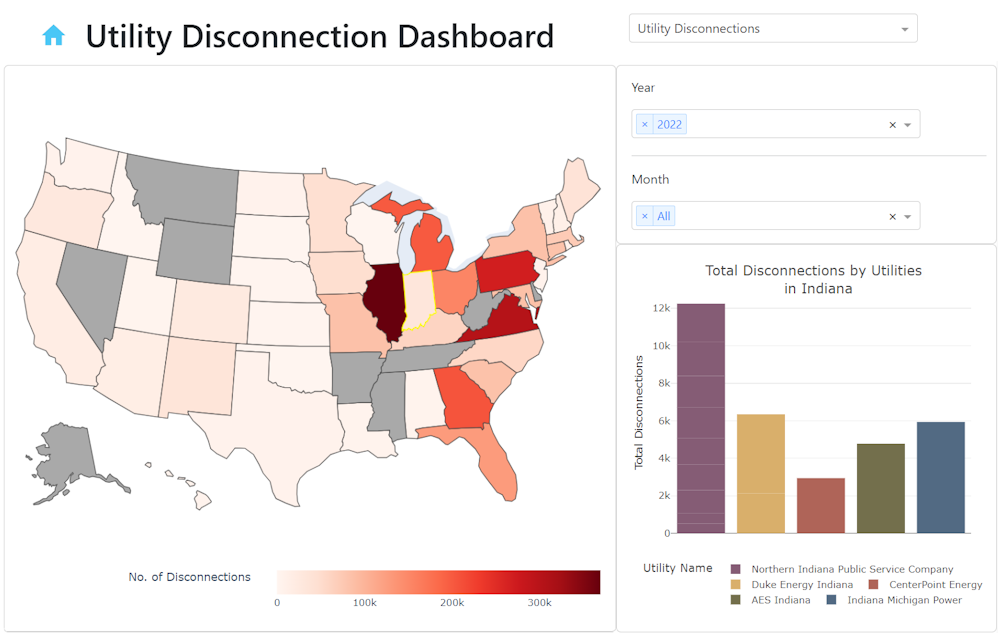
The data we do have reveals that disconnection rates soar during the summer months and are typically highest in the Southeast – the same states that were baking under a heat dome in June and July 2023.
Places with particularly high disconnection rates include Alabama, where the city of Dothan’s municipal utility has disconnected an average of 5% of its customers, and Florida, where the city of Tallahassee has a disconnection rate of over 4%.
Large investor-owned utilities in Florida, Georgia, South Carolina and Indiana also top the charts in disconnections, with average rates near 1%.
Only 19 states restrict summer shut-offs
State public utility commissions place certain restrictions on the circumstances when utilities can disconnect customers, but summer heat is often overlooked.
All but a handful of states limit utilities from shutting off customers during winter months or on extremely cold days. Most have at least some medical exemptions.
Yet, the majority of states do not place any limits on utility disconnections during summer months or on very hot days. Only 19 states have such summer protections, which typically take the form of designating time periods or temperatures when customers cannot be disconnected from their service. We believe this is untenable in an era of climate change, as more parts of the country will increasingly experience excessive-heat days.
These state-level policies provide a baseline of protection. We learned during the COVID-19 pandemic that moratoriums that prohibit utility disconnections can alleviate energy insecurity by establishing a strong mandate against disconnections.
But these policies are highly variable across the country and particularly insufficient during hot summer months. Moreover, customer protections can be difficult for people to find and understand, since the language can be overly convoluted and confusing, placing additional an burden on already vulnerable Americans to discover for themselves how they can avoid losing service.
Better rules and a new mindset on right to energy
As we see it, the U.S. needs more robust customer protections, with states, if not the federal government, mandating better disclosure of when and where disconnections occur to identify any systemic biases.
Most of all, we believe Americans need a collective change in mindset about energy access. That should start with a principle that all people should have access to critical energy services and that utilities should only shut off service to customers as a last resort, especially during health-compromising weather events. The country cannot wait for deadly heat waves to prove how important it is to protect American households.
Sanya Carley, Presidential Distinguished Professor of Energy Policy and City Planning, University of Pennsylvania and David Konisky, Lynton K. Caldwell Professor, Indiana University
This article is republished from The Conversation under a Creative Commons license. Read the original article.
- Details
- Written by: LAKE COUNTY NEWS REPORTS
The California Department of Fish and Wildlife’s Snake Fungal Disease project is conducting a three-year study of SFD in California.
In the first year of statewide surveillance, scientists discovered new cases of the fungal pathogen.
“Early results of our study are in, and they paint a different picture than what we understood before. Prior to this project, we had only two instances of the pathogen in California,” said CDFW Scientific Aid Raquel Elander.
CDFW’s Snake Fungal Disease project is funded by a State Wildlife Grant from the U.S. Fish and Wildlife Service and undertaken in collaboration with the Wildlife Epidemiology Lab at the University of Illinois College of Veterinary Medicine and partners in the wildlife rehabilitation and herpetological communities.
The study was initiated after CDFW confirmed the first two detections of SFD in California in 2019.
Those detections were found in a California kingsnake (Lampropeltis californiae) and an invasive Florida banded watersnake (Nerodia fasciata pictiventris).
To date, the fungal pathogen that causes SFD, Ophidiomyces ophidiicola, has been detected in seven additional species from two families, Viperidae and Colubridae.
The detections were found in common, threatened, endangered and non-native species.
Positive cases were detected from skin swab samples collected between July 2021 and October 2022 from 10 counties throughout the Sacramento Valley, San Francisco Bay Area and the San Diego area.
Skin swabs collected from the following species tested positive for presence of the pathogen: Northern Pacific rattlesnake (Crotalus oreganus oreganus), Western yellow-bellied racer (Coluber constrictor mormon), Pacific gophersnake (Pituophis catenifer catenifer), Valley gartersnake (Thamnophis sirtalis fitchi), giant gartersnake (T. gigas), San Francisco gartersnake (T. sirtalis tetrataenia) and a non-native milksnake (L. triangulatum). Ophidiomyces ophidiicola was also detected on additional California kingsnakes.
Detections and prevention
Since 2008, SFD has been detected in free-ranging and captive snakes from more than 30 species worldwide.
Signs of SFD infections may appear as scabs, crusty or flaking scales, open wounds or severe facial swelling and may result in death.
Snakes may carry the fungus without showing signs of infection. In California, not all individuals infected with the fungus had visible signs of SFD, suggesting some snakes may have been asymptomatic carriers or were detected with mild or early-stage infections due to the comprehensive surveillance plan as part of this project.
Ophidiomyces ophidiicola can be transmitted via snake-to-snake contact or from a contaminated environment to a snake.
There is no evidence that SFD can be transmitted to humans. However, it is possible for humans to transmit the fungus to snakes while handling them or from moving fungal contaminated soil and organic debris with footwear.
To reduce the risk of transmission:
• Do not handle free-ranging snakes.
• Individuals possessing a fishing license for the capture of snakes are encouraged to disinfect their hands using an alcohol-based hand sanitizer or wear disposable nitrile gloves which should be changed between animals.
• Footwear and any object that contacts the snake or its environment should also be disinfected between snakes or sites using a 10 percent bleach solution with a minimum exposure time of five minutes to effectively kill the fungus.
• Ophidiomyces ophidiicola has also been detected on captive snakes. If a pet snake escapes or is intentionally released into the wild, the fungus and SFD can be introduced and can cause harm to native snakes.
For more information visit CDFW’s Don’t Let It Loose campaign web page.
CDFW encourages the public to report sick or dead snakes through its Mortality Reporting web page.
For further information and resources on Snake Fungal Disease visit CDFW’s Snake Fungal Disease web page.