 How to resolve AdBlock issue?
News
- Details
- Written by: Immo A. Hansen, New Mexico State University and Hailey A. Luker, New Mexico State University
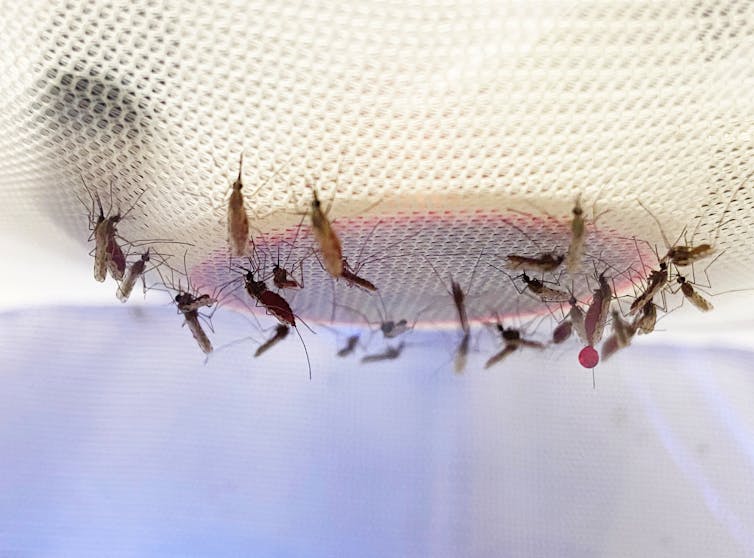
Now that summer is in full swing, mosquitoes have come out across the United States. The use of mosquito repellents can protect both your health and sanity this summer.
While mosquitoes leave bothersome, itchy bites on your skin, they can also pose a serious and sometimes deadly risk to your health. When a mosquito bites you, it may transmit harmful pathogens that cause dangerous diseases like malaria, Dengue fever, Zika and West Nile.
Avoiding mosquito bites
Mosquito females bite people to get vital nutrients from our blood. They then use these nutrients to make their eggs. One single blood meal can give rise to about 100 mosquito eggs that hatch into wiggling larvae.
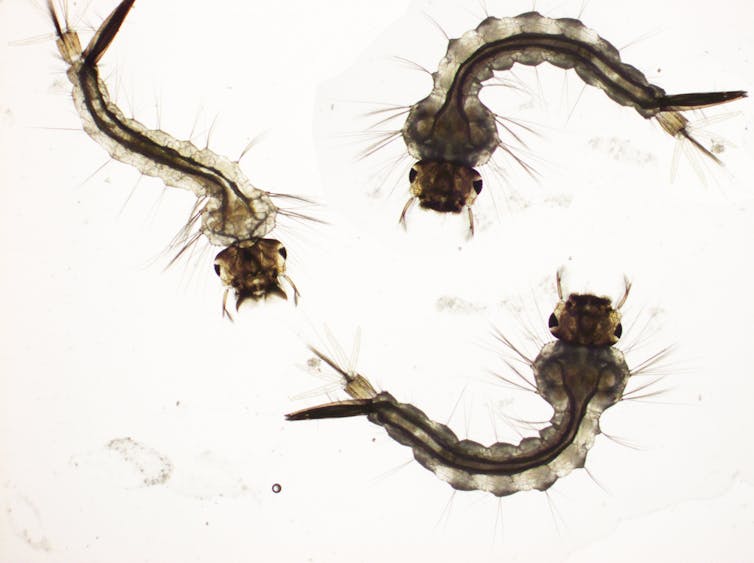
There are several ways to avoid getting bitten by mosquitoes, from wearing long, loose clothing and limiting time outside to placing screens over your windows and getting rid of standing water that mosquitoes might use to breed.
However, one of the best ways to protect yourself when you’re going to a place where hungry mosquitoes will be buzzing around is by using mosquito repellents.
Our team at the New Mexico State University Molecular Vector Physiology Laboratory has studied different types of mosquito repellents and their efficacy for over a decade. Here’s what you need to know to protect yourself this summer:
All about repellents
The use of mosquito repellents goes far back in history, certainly predating written historical accounts. Some of the oldest records of the use of mosquito repellents date back to early Egyptian and Roman history. During this period, smoke from smudge fires was often used to repel mosquitoes.
Today, we have more options than our ancestors when it comes to choosing what type of mosquito repellent to use – sprays and lotions, candles, coils and vaporizers, to name some.
These repellents interfere with a mosquito’s sense of smell, taste or both. The repellent either blocks or overstimulates these senses. Scientists understand how certain repellents like DEET work at the molecular level, but for many of them, it is still unknown why exactly they repel mosquitoes.
Testing repellents
We used a variety of scientific laboratory experiments and field tests to find out what works. For some products, testing was as simple as putting a volunteer’s treated arm into a cage with 25 mosquitoes and waiting for the first mosquito bite.
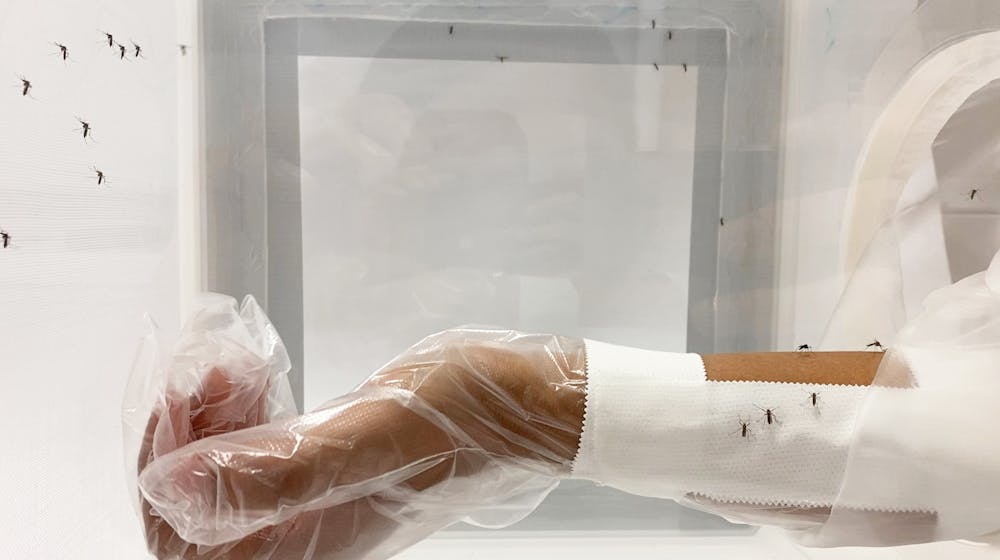
For others, like citronella candles, we used a slow-speed wind tunnel and put a candle or device between a person and a cage of mosquitoes. Depending on the repellent efficacy of the device, mosquitoes either flew toward the person or away. Another experiment we conducted was the Y-tube choice assay where mosquitoes chose to fly toward someone’s hand or, if repelled, fly toward the blank or empty option.
Mosquito repellents that don’t work
Bracelets don’t work. Department stores and pharmacy chains sell hundreds of different varieties of bracelets. They are marketed as “mosquito repellent” bands, wristbands and watches, and their materials can vary from plastic to leather. Even if they are loaded with repellents, they can’t protect your whole body from mosquito bites.
Ultrasonic repellent devices don’t work. These come as electrical plug-ins, free-standing varieties or watchlike accessories that claim to emit a high-frequency sound that deters mosquitoes by mimicking bats. However, in scientific studies, ultrasonic repellent devices fail to repel mosquitoes. In fact, when our lab tested one of these devices, we found a slight increase in mosquito attraction to the wearer.
Dietary supplements – vitamin B, garlic and so on – don’t work. No scientific evidence shows these supplements protect people from mosquito bites.
Light-based repellents don’t work. These devices come as colored light bulbs, and they don’t attract insects that fly toward white light. This approach works well on moths, beetles and stinkbugs, but not on mosquitoes.
Mosquito repellents that work
And here is our ranking of what does work, starting with the best repellent/active ingredient.
-
DEET works. DEET, chemical name, N,N-diethyl-meta-toluamide, was developed in the 1950s by the U.S. Army and is a well-established mosquito repellent with a long history of use. The higher the percentage, the longer the protection time is – up to six hours.
-
Picaridin works. This synthetic repellent can protect for up to six hours at a 20% concentration. This repellent is a promising alternative for DEET.
-
Oil of lemon eucalyptus, or OLE, works. OLE, with the active ingredient PMD, is a plant-based alternative to DEET and picaridin. Its repellent properties can last for up to six hours.
-
Other essential oils – some work, some not so much. We applied 20 different essential oils in a 10% essential oil lotion mixture to volunteers’ skin. Here’s what we found:
Clove oil works. This oil, with the active ingredient eugenol, can protect from mosquito bites for over 90 minutes at a 10% concentration in lotion. Cinnamon oil works. This oil, with the active ingredients cinnamaldehyde and eugenol, can protect from mosquitoes for over 60 minutes at a 10% concentration in lotion. Geraniol and 2-PEP, or 2-phenylethyl propionate, work for about 60 minutes at a 10% concentration in lotion. Citronella oil works, just not so great. We found citronella oil at a 10% concentration only protected from mosquito bites for about 30 minutes.
If you are planning to mix your own plant-based mosquito repellent this summer, remember that essential oils are complex mixtures of plant-made chemicals that can cause skin irritations at high concentrations.
Based on our study, we recommend using repellents with the active ingredient DEET if you live in or are traveling to regions with a high risk of vector-borne disease transmission. However, plant-based repellents will work just fine to prevent nuisance mosquito bites in low-risk areas, as long as you reapply them as needed.
Immo A. Hansen, Associate Professor of Biology, New Mexico State University and Hailey A. Luker, Ph.D. Student in Biology, New Mexico State University
This article is republished from The Conversation under a Creative Commons license. Read the original article.
- Details
- Written by: Elizabeth Larson
At its meeting on Thursday, the Clearlake City Council unanimously approved the renovation of the building, located at 14085 Olympic Drive, as part of its consent agenda.
The City Hall Remodel Project was released on May 31, with the six bids the city received opened on June 26.
Adams Commercial General Contracting Inc. submitted a $1,281,110 bid and won the contract. The high bidder, coming in at $1,615,000, was GCCI Inc.
As part of its approval, the City Council authorized City Manager Alan Flora to approve change orders up to 10% of the contract price, a common practice on city projects.
With the project set to start, officials said the City Hall administration offices — which include The Building and Planning, Public Works, Administrative Services and Finance Departments — will move operations temporarily to the Lake County Campus of Woodland Community College, located at 15880 Dam Road in Clearlake.
Administration operations will be closed for staff transition on Thursday, July 13, and will reopen at the Woodland Community College site on Monday, July 17.
The Police Department operations, including Code Enforcement, will not be impacted by the renovations and will continue normal operations at 14050 Olympic Drive in Clearlake.
Additionally, City Council and Planning Commission meetings will continue to be held in the City Council chambers, the city reported.
Due to the renovations, there may be times when the public restrooms will be temporarily unavailable.
The funding for the project comes from the American Rescue Plan Act of 2021, or ARPA.
The $350 million that ARPA distributed to state and local governments was meant to mitigate the fiscal effects of the COVID-19 emergency, Administrative Services Director/City Clerk Melissa Swanson explained to the council in her written report for the meeting.
“ARPA also established the Coronavirus Local Fiscal Recovery Fund (“CLFRF”) for local government allocations and provide flexibility for each government to meet local needs to respond to the COVID-19 public health emergency and to support various activities to decrease the spread of the virus. The funds must be encumbered by Dec. 31, 2024 and spent by Dec. 31, 2026,” Swanson explained.
The city of Clearlake’s ARPA allocation totaled $2.87 million, Swanson reported.
The city reported that the funding will be used, in part, “to fund capital improvements to City Hall geared toward mitigating the spread of COVID-19 and other infectious diseases.”
Those measures include updating the public and employee restrooms to touchless fixtures, improved privacy stalls and shower facilities, improving the security at the administration front counter with electronic entry points for employees that’s identical to the system at the Clearlake Police Department entrances, transitioning the administration workplace from open and shared cubicle spaces to individual offices to prevent the spread of COVID-19 or other infectious disease, improving public lobby areas, and creating more open space and an improved customer service window for the police lobby and window area.
“City operations have existed at the Olympic Drive location since the mid-1990s,” said Flora in a Tuesday statement from the city. “In the last few years, we have renovated the police department, police dispatch center and City Council chambers. The ARPA funds will allow us to complete the renovations and improve our ability to serve the community in a cleaner and safer City Hall.”
Swanson reported that during its existence, the City Hall building has had several different uses, including a Safeway grocery store in the late 1970s and early 1980s, and a clothing store in the late 1980s and early 1990s before finally becoming City Hall in 1996.
“Since then, there have been little improvements or changes to the office spaces or restrooms, including flooring, shelving, cubicles and furniture,” Swanson wrote in her report to the council.
Email Elizabeth Larson at
- Details
- Written by: LAKE COUNTY NEWS REPORTS
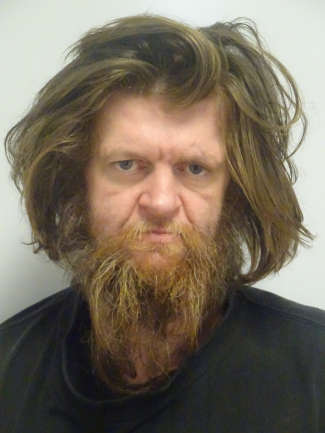
LAKE COUNTY, Calif. — Lake County Sheriff’s deputies arrested a Clearlake man Monday night following a high-speed chase in which he attempted to flee from law enforcement in a stolen vehicle.
Samuel William Rhea, 49, was arrested following the chase that led deputies into Lower Lake.
The sheriff’s office reported that on Monday at approximately 8:06 p.m., the Lakeport Police Department responded to the Power Market in Lakeport for a reported vehicle theft.
The Lakeport Police Department was told by the victim of the theft they had picked up a white male adult walking on Highway 29 and gave him a ride to the Power Market.
The male had asked for a ride to Clearlake, which the victim refused as it was out of their way.
The victim entered the store and when they returned their vehicle was missing. A review of the store surveillance video by the victim and store staff showed the male taking the victim’s vehicle.
At approximately 8:13 p.m., Lake County Sheriff’s Deputy Joe Lyons observed the stolen vehicle traveling southbound on Highway 29 at Highway 175, at a high rate of speed.
Deputy Lyons activated his emergency lights and attempted to stop the vehicle. The driver of the vehicle refused to stop, and a pursuit was initiated.
Deputy Lyons pursued the vehicle at speeds exceeding 100 miles per hour and observed the vehicle passing other vehicles in opposing lanes of traffic.
As the vehicle neared the intersection of Highway 29 and Lee Bar Road in Lower Lake, Deputy Avina deployed his department issued spike strips, which the vehicle struck deflating all four tires.
The vehicle continued through the red light at Highway 29 and Highway 53 onto Main Street in Lower Lake.
While on Main Street, the vehicle attempted to pass a South Lake County Fire Protection District rescue utility truck, striking the utility truck and further disabling the vehicle. The vehicle traveled a short distance and came to a stop in the westbound lane.
The driver exited the vehicle and began to flee on foot. Deputy Lyons and his K9 partner Rex, began to chase the suspect.
Deputy Lyons advised the suspect to stop running or he would be bit by his K9. The suspect continued to flee from Deputy Lyons into the creek located behind the Foster Freeze in Lower Lake.
Deputy Lyons deployed Rex and he quickly apprehended the suspect in the creek bed. Deputy Lyons was able to handcuff the suspect without further incident. The suspect sustained minor injuries from the apprehension.
Deputy Lyons identified the suspect as Rhea who, after medical clearance, was booked into the Lake County Correctional Facility for felonies including vehicle theft, evading with wanton disregard and evading as a wrong way driver, and a misdemeanor violation for obstructive, delaying or resisting a peace officer.
It was later determined Rhea was previously booked into the Lake County Correctional Facility on June 18 on several bench warrants.
Rhea was released from custody after credit for time served on July 10 at 7:15 p.m., less than an hour before the incident involving the stolen vehicle.
Rhea remained in custody on Wednesday with bail set at $35,000.
Jail records show he is scheduled to be arraigned on Wednesday.
Proposal to grant tribal governments and courts new public safety tool moves forward in State Senate
- Details
- Written by: LAKE COUNTY NEWS REPORTS
On Tuesday, the Senate Public Safety Committee gave unanimous approval to AB 44 — introduced earlier this year by Assemblymember James C. Ramos (D-San Bernardino) — which would give tribal entities that access.
“Passage of AB 44 is critical to assisting tribes keep their communities safe and investigate crimes, especially crimes involving missing and murdered Native Americans. It will also help protect neighboring communities and create stronger communication and partnerships between the tribes and other law enforcement agencies,” said Ramos.
AB 44 grants tribal governments and tribal courts access to the California Law Enforcement Telecommunications System — known as CLETS — which contains databases with information about an individual’s criminal history and criminal record.
Through CLETS, tribal governments and tribal courts also gain access to the International Justice and Public Safety Network, the Criminal Justice Information Services and the National Crime Information Center and Department of Motor Vehicles records such as driver’s license and vehicle registration information.
Ramos said California has the fifth largest caseload of missing and murdered Indigenous women and people.
He added that nearly one-half of all Indigenous women have been sexually assaulted, beaten or stalked by an intimate partner.
“Without CLETS access, tribal courts and tribal law enforcement cannot enter domestic violence protective orders or share and update criminal and missing record information. Lack of CLETS access puts tribal communities at a disadvantage and allows criminal perpetrators to escape justice,” Ramos said.
Current entities with CLETS access include sheriffs, city police departments, district attorneys, courts, probation departments, the California Highway Patrol, the Department of Justice, the Department of Insurance, the Employment Development Department, university, college and school district police departments, fire department arson investigation units and the Federal Bureau of Investigation.
Tribal governments and courts will be granted CLETS access by the Attorney General under AB 44.
The governing body of a tribe will need to adopt a law or resolution to declare the tribe will comply with procedural laws, inspections, audits and other measures with CLETS operating policies.
The Department of General Services will determine setup and access charges to the tribes for CLETS access.
AB 44 is sponsored by the Yurok Tribe. A partial list of supporters includes the Augustine Band of Cahuilla Indians, California Consortium for Urban Indian Health, Habematolel Pomo of Upper Lake, Hoopa Valley Tribe, Picayune Rancheria of the Chukchansi Indians, Resighini Rancheria Tribal Council, California Indian Legal Services, California Partnership to End Domestic Violence, California Tribal Police Chiefs Association, Northern California Tribal Chairmen’s Association, California Tribal Families Coalition and Friendship House Association of American Indians.
Ramos is the first and only California Native American serving in the state’s legislature, and he chairs the Assembly Committees on Rules.