 How to resolve AdBlock issue?
News
- Details
- Written by: Elizabeth Larson
Greg Restani, 74, was found at around 2 p.m. Friday.
Restani, who has dementia, had last been seen at around 3 p.m. Thursday driving his white 1999 two-door Honda Accord on Highway 29 in the area of Butts Canyon Road near Middletown.
His disappearance led to a Friday search by the Napa County Sheriff’s Office along Highway 29.
Family and friends reported early Friday afternoon that a California Highway Patrol plane spotted the Honda on the Old Lawley Toll Road, which splits off Highway 29 near the Calistoga Grade.
Restani’s vehicle was found crashed about a fourth of a mile off the highway.
A search and rescue team found Restani huddled in a barn.
Family members posted a picture of him safe and on the way home on Facebook a short time later.
Email Elizabeth Larson at
- Details
- Written by: LAKE COUNTY NEWS REPORTS
Rep. Mike Thompson (CA-04) honored Feinstein, who died at age 90. She was the longest serving woman in the U.S. Senate.
“Sen. Dianne Feinstein was a legendary and iconic public servant and a champion for California and our nation. She put her heart and soul completely into serving her beloved San Francisco, California, and our nation, and we owe her a debt a gratitude for the incredible work that she has done throughout her career. Dianne broke many glass ceilings, from serving as the first female president of the San Francisco Board of Supervisors, the first female mayor of San Francisco, to the first female senator from our state. She was a trailblazer in every meaning of the word,” Thompson said.
“Dianne earned and held the love and trust of both her constituents and her colleagues because of her tremendous work ethic, deep knowledge of issues, and her willingness to work across the aisle to get things done. She would study the issues to make sure she was making the most informed decision possible for her constituents. As chair of the Senate Judiciary Committee and Intelligence Committee, she tirelessly fought for our country, no matter how difficult the challenge or complex the issue.
“Dianne and I worked closely together on projects that have improved the lives of the people of in our state, particularly on the Northern California Coastal Wild Heritage Wilderness Act that protected hundreds of thousands of acres and will ensure these pristine lands and opportunities for outdoor recreation will be enjoyed for generations to come. She was a champion for gun violence prevention issues and was a tireless advocate for keeping our communities safe. Her legacy will never be forgotten.
“Dianne Feinstein was an outstanding public servant, and her voice and advocacy will be sorely missed. Jan and I send our thoughts and prayers to her friends, family, and staff during this sad time,” Thompson said.
Gov. Gavin Newsom is now tasked with naming a successor to temporarily fill Feinstein’s seat until a special election can be held to fill the remainder of her term, which continues until January 2025.
- Details
- Written by: Bob Buresh, Kennesaw State University

Over the last decade, smartphones have become ubiquitous not just for sending texts and staying abreast of news, but also for monitoring daily activity levels.
Among the most common, and arguably the most meaningful, tracking method for daily physical activity is step counting.
Counting steps is far more than a fad: The U.S. Department of Health and Human Services dedicated a sizable portion of its most recent physical activity guidelines to documenting the relationship between daily step counts and several chronic diseases.
Unfortunately, the guidelines have little to say about how step counts might be used to aid in weight management, an outcome of critical importance given the high rates of overweight and obesity in the U.S.
In the early 1980s, fewer than 14% of adults in the U.S. were classified as having obesity. Today, just over 40 years later, the prevalence of obesity is greater than 40% in the adult population, and current trends suggest that almost half of adults in the U.S. will be obese by 2030.
I am a professor of exercise science at Kennesaw State University, and our lab has been conducting studies examining relationships among step counts and a number of health outcomes.
While the evidence is clear that increasing numbers of adults are living in a chronic energy surplus that leads to weight gain, a key question is – why? What has changed so dramatically since 1980 that could explain why obesity rates have tripled?
Although the American diet is likely a key contributor, a wealth of research points to a reduction in physical activity as a major culprit behind the expanding waist lines – and step counts are an excellent indicator of physical activity.
Step counts may – or may not – lead to weight loss
A number of recent studies have looked at whether increasing step counts can lead to weight loss over a certain period of time. One large-scale study called a meta-analysis concluded that increasing physical activity by way of step counts was effective for attaining modest weight loss. However, many if not most studies examining the effect of exercise on weight loss report modest outcomes, with results that are variable and often disappointing.
That may be in part because the step count targets used in many weight management studies are most often set in an arbitrary manner, such as targeting 10,000 steps per day. Or, if they’re individualized at all, they’re based on initial behavioral characteristics, like adding a given number of steps to what a person is already accumulating in a typical day. Rarely, if ever, are the step targets in research studies based on any physical attributes of the participants.
My team’s research has compiled weight, body fat percentages and average step counts for large numbers of adults between 19 and 40 years of age. From that data, we have identified a way to determine specific step count goals based on key physical attributes – namely, baseline body weight and composition, and the desired body composition.
When it comes to health, it is important to remember that body weight does not tell the whole story. In fact, body composition is much more predictive of health status than body weight. Someone who weighs more than another person may be in better health if they have more muscle mass and a lower percentage of body fat than the other person who weighs less but has a higher proportion of body fat.
Parsing the numbers
We have used our data to develop a model that predicts average daily step counts per unit of fat mass from body fat percentage. We believe that this model can be used to determine how much people would need to walk to achieve a specific amount of weight and body fat reduction.
Take, for instance, a man who weighs 175 pounds (80 kilograms), of which 25% is fat. Our model suggests that he walks an average of 10,900 steps a day. Then consider another man who weighs 220 pounds (100 kilograms), of which 20% is fat. Although they have different amounts of lean mass, both men have about 44 pounds (20 kilograms) of fat. So our model predicts that the heavier man walks an average of 15,300 steps a day. In other words, the heavier person has a lower percentage of body fat and walks more to maintain that leaner body composition.
A person’s body fat percentage is every bit as important as their weight. That’s because how much muscle you have affects how hungry you get, as well as how many calories you burn. Muscle mass requires energy to maintain, and this requirement leads to increased appetite, which means taking in more calories. In this example, the heavier man probably eats more than the lighter man in order to maintain his lean muscle mass, and he must walk more to maintain his lower body fat percentage.
If you want to lose body fat, and therefore weight, you basically have two choices: You can eat less, or you can move more. Eating less means you’ll be hungry a lot, and that’s uncomfortable, unpleasant and, for most people, not sustainable. Moving more, on the other hand, can allow you to eat until you’re full and keep body fat off – or even lose it.
Therefore, we wanted to know how much a person who eats until they’re full might have to move to offset the calories they’re eating.
Step counts for weight loss
Currently, our model applies to young adults, but we are now collecting data for middle-aged and older adults too. To use this model, you need to first have your body composition determined, a service that is being offered by increasing numbers of fitness centers and medical practices. With our model, you must determine your body weight and fat weight in kilograms – to do this, simply divide your weight in pounds by 2.2.
With this information in hand, our model can provide a step count target that is specific to a person’s current body weight and body fat percentage, and their goal for fat loss and weight reduction.
For example, our model predicts that a woman weighing 155 pounds (70 kilograms) with 30% body fat currently accumulates an average of about 8,700 steps per day. If she wants to lose about 10 pounds and reach a body fat percentage around 25%, she could consult the model and discover that people who maintain that body composition accumulate an average of about 545 steps per kilogram of fat per day. Since she currently has about 46 pounds (21 kilograms) of fat, her goal would be to accumulate a total of 11,450 steps per day.
While that may seem at first glance to be a sizable increase in daily steps, most people can accumulate 1,000 steps in 10 minutes or less. So even with a comfortable pace, this additional daily dose of walking would take fewer than 30 minutes. Furthermore, steps can be accumulated throughout the day, with longer or more frequent trips, or both, to restrooms, vending machines and the like.
While steps certainly can be accumulated in dedicated walking sessions, such as a 15-minute walk during lunch hour and another 15-minute walk in the evening, they can also be accumulated in shorter, more frequent bouts of activity.
Researchers have learned a great deal in the past 70 years about appetite and energy expenditure: Appetite imposes a drive for food based largely on our fat-free mass, no matter how active or inactive we are, and we must accumulate enough physical activity to counter the calories that we take in through our diet if we want to maintain an energy balance – or exceed our intake to lose weight.
Bob Buresh, Professor of Exercise Science, and Director of the Exercise Physiology Lab, Kennesaw State University
This article is republished from The Conversation under a Creative Commons license. Read the original article.
- Details
- Written by: Janet Vertesi, Princeton University

Since ChatGPT’s release in late 2022, many news outlets have reported on the ethical threats posed by artificial intelligence. Tech pundits have issued warnings of killer robots bent on human extinction, while the World Economic Forum predicted that machines will take away jobs.
The tech sector is slashing its workforce even as it invests in AI-enhanced productivity tools. Writers and actors in Hollywood are on strike to protect their jobs and their likenesses. And scholars continue to show how these systems heighten existing biases or create meaningless jobs – amid myriad other problems.
There is a better way to bring artificial intelligence into workplaces. I know, because I’ve seen it, as a sociologist who works with NASA’s robotic spacecraft teams.
The scientists and engineers I study are busy exploring the surface of Mars with the help of AI-equipped rovers. But their job is no science fiction fantasy. It’s an example of the power of weaving machine and human intelligence together, in service of a common goal.
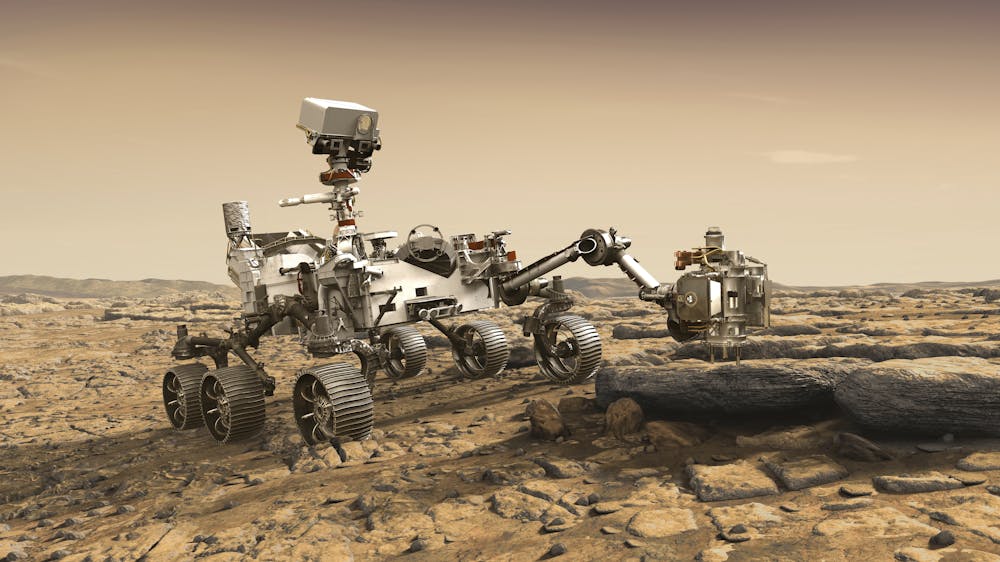
Instead of replacing humans, these robots partner with us to extend and complement human qualities. Along the way, they avoid common ethical pitfalls and chart a humane path for working with AI.
The replacement myth in AI
Stories of killer robots and job losses illustrate how a “replacement myth” dominates the way people think about AI. In this view, humans can and will be replaced by automated machines.
Amid the existential threat is the promise of business boons like greater efficiency, improved profit margins and more leisure time.
Empirical evidence shows that automation does not cut costs. Instead, it increases inequality by cutting out low-status workers and increasing the salary cost for high-status workers who remain. Meanwhile, today’s productivity tools inspire employees to work more for their employers, not less.
Alternatives to straight-out replacement are “mixed autonomy” systems, where people and robots work together. For example, self-driving cars must be programmed to operate in traffic alongside human drivers. Autonomy is “mixed” because both humans and robots operate in the same system, and their actions influence each other.

However, mixed autonomy is often seen as a step along the way to replacement. And it can lead to systems where humans merely feed, curate or teach AI tools. This saddles humans with “ghost work” – mindless, piecemeal tasks that programmers hope machine learning will soon render obsolete.
Replacement raises red flags for AI ethics. Work like tagging content to train AI or scrubbing Facebook posts typically features traumatic tasks and a poorly paid workforce spread across the Global South. And legions of autonomous vehicle designers are obsessed with “the trolley problem” – determining when or whether it is ethical to run over pedestrians.
But my research with robotic spacecraft teams at NASA shows that when companies reject the replacement myth and opt for building human-robot teams instead, many of the ethical issues with AI vanish.
Extending rather than replacing
Strong human-robot teams work best when they extend and augment human capabilities instead of replacing them. Engineers craft machines that can do work that humans cannot. Then, they weave machine and human labor together intelligently, working toward a shared goal.
Often, this teamwork means sending robots to do jobs that are physically dangerous for humans. Minesweeping, search-and-rescue, spacewalks and deep-sea robots are all real-world examples.
Teamwork also means leveraging the combined strengths of both robotic and human senses or intelligences. After all, there are many capabilities that robots have that humans do not – and vice versa.
For instance, human eyes on Mars can only see dimly lit, dusty red terrain stretching to the horizon. So engineers outfit Mars rovers with camera filters to “see” wavelengths of light that humans can’t see in the infrared, returning pictures in brilliant false colors.

Meanwhile, the rovers’ onboard AI cannot generate scientific findings. It is only by combining colorful sensor results with expert discussion that scientists can use these robotic eyes to uncover new truths about Mars.
Respectful data
Another ethical challenge to AI is how data is harvested and used. Generative AI is trained on artists’ and writers’ work without their consent, commercial datasets are rife with bias, and ChatGPT “hallucinates” answers to questions.
The real-world consequences of this data use in AI range from lawsuits to racial profiling.
Robots on Mars also rely on data, processing power and machine learning techniques to do their jobs. But the data they need is visual and distance information to generate driveable pathways or suggest cool new images.
By focusing on the world around them instead of our social worlds, these robotic systems avoid the questions around surveillance, bias and exploitation that plague today’s AI.
The ethics of care
Robots can unite the groups that work with them by eliciting human emotions when integrated seamlessly. For example, seasoned soldiers mourn broken drones on the battlefield, and families give names and personalities to their Roombas.
I saw NASA engineers break down in anxious tears when the rovers Spirit and Opportunity were threatened by Martian dust storms.
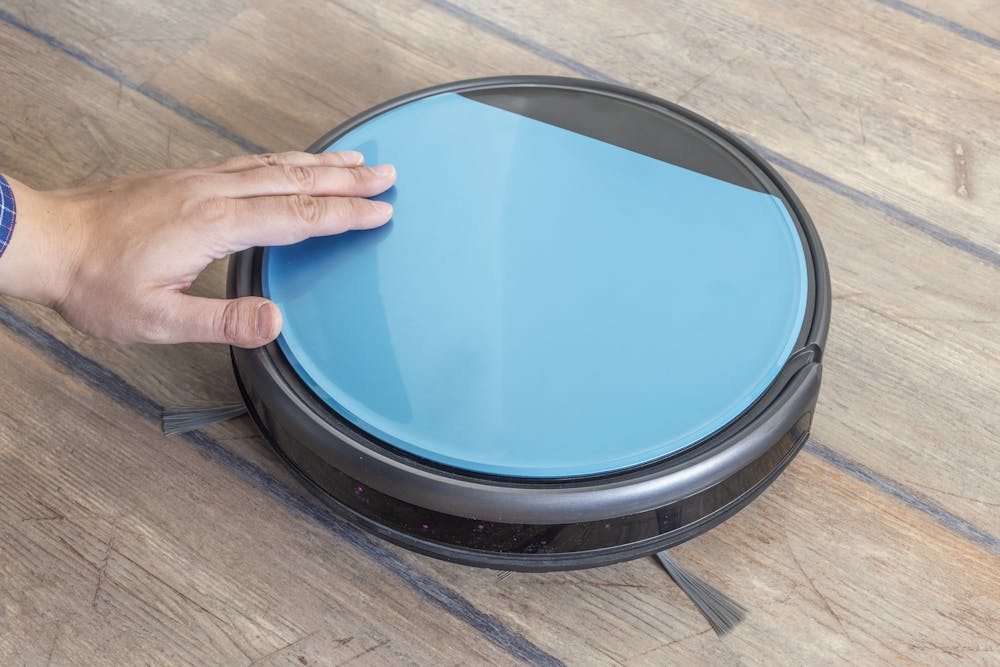
Unlike anthropomorphism – projecting human characteristics onto a machine – this feeling is born from a sense of care for the machine. It is developed through daily interactions, mutual accomplishments and shared responsibility.
When machines inspire a sense of care, they can underline – not undermine – the qualities that make people human.
A better AI is possible
In industries where AI could be used to replace workers, technology experts might consider how clever human-machine partnerships could enhance human capabilities instead of detracting from them.
Script-writing teams may appreciate an artificial agent that can look up dialog or cross-reference on the fly. Artists could write or curate their own algorithms to fuel creativity and retain credit for their work. Bots to support software teams might improve meeting communication and find errors that emerge from compiling code.
Of course, rejecting replacement does not eliminate all ethical concerns with AI. But many problems associated with human livelihood, agency and bias shift when replacement is no longer the goal.
The replacement fantasy is just one of many possible futures for AI and society. After all, no one would watch “Star Wars” if the ‘droids replaced all the protagonists. For a more ethical vision of humans’ future with AI, you can look to the human-machine teams that are already alive and well, in space and on Earth.
Janet Vertesi, Associate Professor of Sociology, Princeton University
This article is republished from The Conversation under a Creative Commons license. Read the original article.