 How to resolve AdBlock issue?
News
- Details
- Written by: Lake County News reports
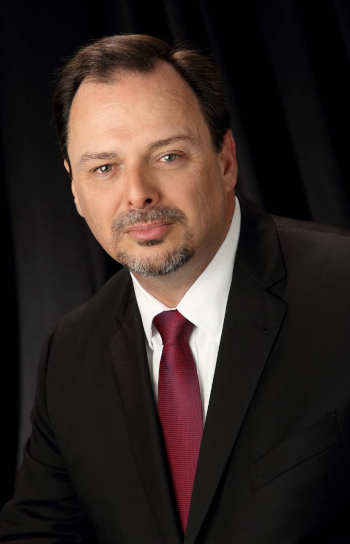
NORTHERN CALIFORNIA — An attorney who has served in several Northern California counties, including Lake, has been appointed as a judge by Gov. Gavin Newsom.
John Hinely, of Colusa County, has been appointed to serve as a judge in the Sutter County Superior Court, Newsom’s office said Thursday.
Hinely has served as a commissioner for the Superior Courts of Colusa, Glenn, Plumas and Tehama counties since 2022.
He also has served as a defense attorney in Lake County.
He was an adjunct professor at Cal Northern School of Law from 2021 to 2023 and an attorney at the California Department of Housing and Community Development from 2020 to 2022.
Hinely served as a judge pro tem at the Colusa County Superior Court from 2019 to 2022 and was a sole practitioner from 2008 to 2020.
He earned a Juris Doctor degree from Cal Northern School of Law.
Hinely fills the vacancy of a new position created on July 1, 2022.
He is registered without party preference.
- Details
- Written by: Elizabeth Larson

CLEARLAKE, Calif. — Clearlake Animal Control has more than a dozen new dogs in need of new homes.
The Clearlake Animal Control website lists 52 adoptable dogs.
This week’s new dogs include “Smiley,” a male pit bull mix with a gray coat.

There also is “Doggie,” a male German shepherd mix with a tan coat.
The shelter is located at 6820 Old Highway 53. It’s open from 9 a.m. to 6 p.m. Tuesday through Saturday.
For more information, call the shelter at 707-762-6227, email
This week’s adoptable dogs are featured below.
Email Elizabeth Larson at
- Details
- Written by: Morgan R. Frank, University of Pittsburgh and Junghyun Lim, University of North Carolina at Chapel Hill

As the U.S. shifts away from fossil fuels to cleaner energy sources, thousands of coal, oil and gas workers will be looking for new jobs.
Many will have the skills to step into new jobs in the emerging clean energy industries, but the transition may not be as simple as it seems. New research published in the journal Nature Communications identifies a major barrier that is often overlooked in discussions of how to create a just transition for these workers: location.
We analyzed 14 years of fossil fuel employment and skills data and found that, while many fossil fuel workers could transfer their skills to green jobs, they historically have not relocated far when they changed jobs.
That suggests that it’s not enough to create green industry jobs. The jobs will have to be where the workers are, and most fossil fuel extraction workers are not in regions where green jobs are expected to grow.
Without careful planning and targeted policies, we estimate that only about 2% of fossil fuel workers involved in extraction are likely to transition to green jobs this decade. Fortunately, there are ways to help smooth the transition.
Many fossil fuel and green skills overlap
As of 2019, about 1.7 million people worked in jobs across the fossil fuels industry in the U.S., many of them in the regions from Texas and New Mexico to Montana and from Kentucky to Pennsylvania. As the country transitions from fossil fuel use to clean energy to protect the climate, many of those jobs will disappear.
Policymakers tend to focus on skills training when they talk about the importance of a just transition for these workers and their communities.
To see how fossil fuel workers’ skills might transfer to green jobs, we used occupation and skills data from the U.S. Bureau of Labor Statistics to compare them. These profiles provide information about the required workplace skills for over 750 occupations, including earth drillers, underground mining machine operators and other extraction occupations.

Overall, we found that many fossil fuel workers involved in extraction already have similar skills to those required in green occupations, as previous studies also found. In fact, their skills tend to be more closely matched to green industries than most other industries.
Job-to-job flow data from the U.S. Census Bureau showed that these workers historically tend to transition to other sectors with similar skills requirements. Thus, fossil fuel workers should be able to fill emerging green jobs with only minimal reskilling.
However, the data also shows that these fossil fuel workers typically do not travel far to fill employment opportunities.

The location problem
When we mapped the current locations of wind, solar, hydro and geothermal power plants using data from the U.S. Energy Information Administration, we found that these sites had little overlap with fossil fuel workers.
The U.S. Bureau of Labor Statistics’ projections for where green jobs are likely to emerge by 2029 also showed little overlap with the locations of today’s fossil fuel workers.

These results were consistent across several green employment projections and different definitions of “fossil fuel” occupations. That’s alarming for the prospects of a just transition.
How policymakers can intervene
Broadly, our findings point to two potential strategies for policymakers.
First, policymakers can explore incentives and programs that help fossil fuel workers relocate. However, as our analysis reveals, these populations have not historically exhibited geographic mobility.
Alternatively, policymakers could design incentives for green industry employers to build in fossil fuel communities. This might not be so simple. Green energy production often depends on where the wind blows strongest, solar power production is most effective and geothermal power or hydropower is available.
We simulated the creation of new green industry employment in two different ways, one targeting fossil fuel communities and the other spread uniformly across the U.S. according to population. The targeted efforts led to significantly more transitions from fossil fuel to green jobs. For example, we found that creating 1 million location-targeted jobs produced more transitions than the creation of 5 million jobs that don’t take workers’ locations into account.
Another solution doesn’t involve green jobs at all. A similar analysis in our study of other existing U.S. sectors revealed that construction and manufacturing employment are already co-located with fossil fuel workers and would require only limited reskilling. Supporting manufacturing expansion in these areas could be a simpler solution that could limit the number of new employers needed to support a just transition.
There are other questions that worry fossil fuel workers, such as whether new jobs will pay as well and last beyond construction. More research is needed to assess effective policy interventions, but overall our study highlights the need for a comprehensive approach to a just transition that takes into account the unique challenges faced by fossil fuel workers in different regions.
By responding to these barriers, the U.S. can help ensure that the transition to a green economy is not only environmentally sustainable but also socially just.
Morgan R. Frank, Assistant Professor of Informatics, University of Pittsburgh and Junghyun Lim, Assistant Professor of Political Science, University of North Carolina at Chapel Hill
This article is republished from The Conversation under a Creative Commons license. Read the original article.
- Details
- Written by: Elizabeth Larson
The Sonoma County Sheriff’s Office arrested Alfredo Carretero Jr., 65 — an original person of interest in the case — for the June 1983 killing of Noelle Kinzie Russo.
Officials took Carretero into custody and booked him into the Sonoma County Main Adult Detention Facility for murder on Monday afternoon. He’s being held with no bail.
By Tuesday, the Sonoma County District Attorney’s Office had filed a murder charge against Carretero.
He was arraigned before Judge Laura Passaglia on Wednesday morning and is scheduled to return to court for the entry of plea on Oct. 18.
A report issued by Sonoma County Sheriff’s Deputy Rob Dillon, the agency’s public information officer, explained that on June 27, 1983, deputies were dispatched to a report of a deceased, naked woman in the unincorporated area of Rohnert Park.
The woman, later identified as Russo, had been beaten to death, Dillon said.
Dillon said detectives with the Violent Crime Investigations, or VCI, Unit began an investigation into the circumstances surrounding Russo’s murder.
Deputies and detectives collected a significant amount of evidence during this investigation, and numerous interviews were conducted. Detectives developed certain persons of interest over the years, but no arrests were made, Dillon said.
However, Dillon said that, through the years, VCI detectives continued to work on Russo’s case.
Between 2010 and 2023 they submitted several items of evidence for DNA analysis to the Santa Clara County Crime Lab and the Serological Research Institute, Dillon reported.
Dillon said Carretero, who had been an original person of interest in Russo’s murder, was positively identified as a suspect based on DNA and other evidence.
As a result, VCI detectives obtained a warrant to arrest Carretero Jr. for Russo’s murder.
Dillon said Russo’s family has been notified of the arrest and would appreciate privacy.
Throughout this investigation, detectives worked closely with the Sonoma County District Attorney’s Office, Dillon said.
“The Sonoma County Sheriff’s Office and Sonoma County District Attorney’s Office are both dedicated to justice for murder victims, whether the case is new or old. The VCI Unit continues to investigate many cold cases and relentlessly pursue justice for the victims of violent crime,” Dillon’s report noted.
Over the years, Lake County law enforcement officials have had numerous contacts with Carretero.
Lauren Berlinn, public information office for the Lake County Sheriff’s Office, told Lake County News that the agency had previous contacts with Carretero, the last of them being in 2009.
“He was arrested several times, primarily for drug-related charges,” Berlinn said.
Lake County Superior Court records show an Alfredo Carretero Jr. being convicted in 2003 of a felony assault case that resulted in prison time as well as a felony drug conviction in 2004, but Lake County News was unable to confirm by press time whether it was the same individual.
An Alfredo Carretero Jr. shown in Sonoma County Superior Court records going back to 1995 shows a conviction for receiving stolen property and possession of a controlled substance that resulted in a three-year state prison term and a February 2001 conviction for possession of a controlled substance that led to a nine-month sentence.
Email Elizabeth Larson at