 How to resolve AdBlock issue?
News
- Details
- Written by: David R. Buys, Mississippi State University; John J. Green, Mississippi State University, and Mary Nelson Robertson, Mississippi State University
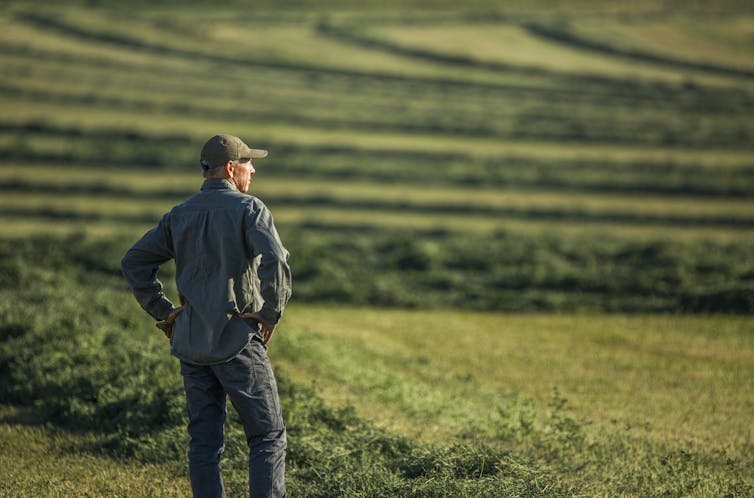

On Oct. 12, National Farmers’ Day, Americans honor the hardworking people who keep the world fed and clothed.
But the farming labor force has a problem: It’s aging rapidly.
The average American farmer is 57 and a half years old, according to the most recent data from the U.S. Department of Agriculture. That’s up sharply from 1978, when the figure was just a smidge over 50.
As researchers who study well-being in rural areas, we wanted to understand this trend and its implications. So we dug into the data.
Amber waves of graying
We found that the average age of farmers was fairly consistent across the country, even though the general population’s age varies quite a bit from place to place.
For example, the average Maine farmer is just a few months older than the average farmer in Utah, even though the average Maine resident is more than a decade older than the average Utahn.
To be fair, we did find some local differences. For example, in New York County – better known as Manhattan – the average farmer is just north of 31. Next door in Hudson County, New Jersey, the average farmer is more than 72.
On the whole, though, America’s farming workforce is getting older. If the country doesn’t recruit new farmers or adapt to having fewer, older ones, it could put the nation’s food supply at risk. Before panicking, though, it’s worth asking: Why is this happening?
A tough field to break into
To start, there are real barriers to entry for young people – at least those who weren’t born into multigenerational farming families. It takes money to buy the land, equipment and other stuff you need to run a farm, and younger people have less wealth than older ones.
Young people born into family farms may have fewer opportunities to take them over due to consolidation in agriculture. And those who do have the chance may not seize it, since they often report that rural life is more challenging than living in a city or suburb.
The overall stress of the agriculture industry is also a concern: Farmers are often at the mercy of weather, supply shortages, volatile markets and other factors entirely out of their control.
In addition to understanding why fewer younger people want to go into agriculture, it’s important to consider aging farmers’ needs. Without younger people to leave the work to, farmers are left with intense labor — physically and mentally – to accomplish, on top of the ordinary challenges of aging.
In other words, the U.S. needs to increase opportunities for younger farmers while also supporting farmers as they age.
Opportunities to help
The USDA already has programs to aid new farmers, as well as farmers of color and female farmers, and those who operate small farms. Expanding these programs’ reach and impact could help bring new talent into the field.
Congress could do just that when it reauthorizes the farm bill – a package of laws covering a wide range of food – and agriculture-related programs that get passed roughly every five years.
The farm bill also includes nutrition aid and funds telehealth and training and educational outreach for farmers, all of which could help meet the needs of young and aging farmers alike. Notably, the Cooperative Extension Service offers programs that range from 4-H and youth development, including introduction to agriculture, to providing on-site technical help.
Congress was supposed to reauthorize the farm bill by Sept. 30, 2023, but it missed that deadline. It now faces a new deadline of Dec. 31, but due to dysfunction in the House of Representatives, many expect the process to drag on into 2024.
Also in 2024, the USDA will release its next Census of Agriculture, giving researchers new insight into America’s farming workforce. We expect it will show that the average age of U.S. farmers has reached a new all-time high.
If you believe otherwise – well, we wouldn’t bet the farm.
David R. Buys, Associate Professor of Health, Mississippi State University; John J. Green, Director of the Southern Rural Development Center & Professor of Agricultural Economics, Mississippi State University, and Mary Nelson Robertson, Assistant Professor of Human Development and Family Science, Mississippi State University
This article is republished from The Conversation under a Creative Commons license. Read the original article.
- Details
- Written by: Elizabeth Larson
Special Districts Administrator Scott Harter and members of the Lake County Rodeo Association Board took the proposal to the Board of Supervisors at its Oct. 3 meeting.
Harter said his staff and rodeo board members have been discussing the idea for six to eight months.
Specifically, the rodeo board is interested in making its long-term home on an 86-acre portion of an 1,186-acre Special Districts property in north Lakeport, northwest of Highway 29 and Whalen Way.
Harter said Public Services Director Lars Ewing supports using the property in conjunction with county parks. There is also the possibility of using it as a public access trail head for equestrian trails.
He said the supervisors have talked with Animal Care and Control Director Jonathan Armas about using the site to facilitate large animal sheltering during emergencies and evacuations.
Harter said he has met three to four times with the rodeo board to talk through the concept and explore the potential impact on Special Districts operations, “and we finally reached a point now where it makes sense to come to the board,” before they start negotiating a lease.
He said he wanted to know if the board is supportive before moving on to the next steps.
Board Chair Jessica Pyska thanked Harter for bringing the matter to the board. “This is a very exciting opportunity.”
Lake County Rodeo Association Board member Aaron Hiatt was on hand to speak to the board about the proposal.
He said he had contacted Harter eight months ago about the property, which at that time was leased from the county by a cattle rancher.
Hiatt said it had been brought to his attention that the county was no longer interested in continuing the lease with the rancher, and that the rodeo could possibly lease it.
“We as a rodeo organization have been around for 93 years,” said Hiatt.
When he first joined the board years ago, he said he couldn’t understand why they kept doing things over and over again without a permanent home.
Every year, they go through the labor intensive process of putting up panels and then taking them down again in a short period of time, Hiatt said.
“We were looking for a place that we could call our own,” he said.
That’s when Hiatt said he called Harter.
Ultimately if it’s possible, Hiatt said the rodeo association would like to purchase the property so it could be a permanent home.
In the meantime, they would like to move forward with leasing the property and putting in place the infrastructure needed to do an event.
“You’re right, you need a permanent home,” said Supervisor Michael Green, whose district includes the property in question. “I think kicking the tires on this property is appropriate.”
Green said he loved the proposed interim use of the property, thinks it could lead to even greater things and he supported moving forward.
Supervisor Bruno Sabatier said it’s an “absolutely appropriate” use for the property. Sabatier said the county owns about 7,000 acres of land and he doesn’t want the county to own what it doesn’t need. He suggested there are opportunities for private enterprise and development.
Vice Chair Moke Simon said Lake County has young people who compete and qualify for competitions. “The rodeo is a big part of what we are in Lake County,” he said.
Simon said it would not only support youth but also be an economic driver.
Pyska said all of her nieces and nephews compete in rodeo, with her nieces having gone to rodeo national competitions. She said having a facility where a big rodeo event can be hosted would instill some pride in Lake County.
Supervisor EJ Crandell said a lot of people also ride horses on Hogback Ridge and that would be a good area to connect to the proposed rodeo site.
The board reached consensus to have staff move forward with discussions on next steps with the rodeo association.
Email Elizabeth Larson at
- Details
- Written by: LAKE COUNTY NEWS REPORTS
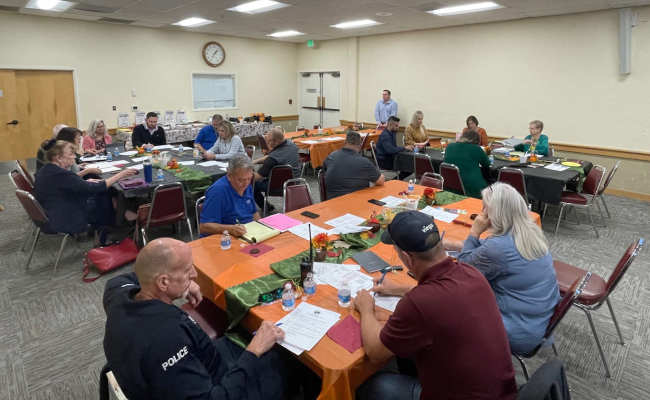
LAKEPORT, Calif. — The city of Lakeport is set to launch its latest outreach effort to engage and support businesses.
Lakeport’s Business Walk Program is designed to familiarize the business community with resources available to them.
City staff, members of the Lakeport Economic Development Advisory Committee, or LEDAC, and community volunteers gathered on Tuesday to form teams that will contact local business owners and managers during October and November.
The program’s purpose is to demonstrate the city’s commitment to supporting businesses while gaining information about challenges and barriers to their success.
Findings from the visits will be compiled by LEDAC and presented to the City Council in early 2024.
The City’s Economic Development Strategic Plan identified annual in-person visits as an important element in the support and retention of existing local businesses.
LEDAC is an advocate for a strong and positive Lakeport business community, and serves as a conduit between the City and the community for communicating the goals, activities and progress of Lakeport’s economic and business programs.
The committee meets bi-monthly at City Hall on the second Wednesday, 7:30 to 9 a.m.
The next meeting is on Nov. 8; all meetings are open to the public.
Contact City Manager Kevin Ingram for more information at telephone 707-263-5615, Extension 104.
- Details
- Written by: LAKE COUNTY NEWS REPORTS
Large-capacity magazines are firearm magazines capable of holding more than 10 rounds of ammunition.
The en banc court’s order, which was issued Tuesday, concludes that the state is likely to succeed on the merits in defending the large-capacity restrictions and that maintaining the restrictions pending appeal is in the best interest of the public safety of Californians.
“We are relieved that the court considered the public safety of Californians in its decision to grant our motion and maintain the restrictions on large-capacity magazines pending a decision on appeal,” said Bonta. “With the stay, California’s restrictions on large capacity magazines — a key component in our efforts to fight gun violence — remain in effect.”
Bonta added, “Californians should know that the purchase, manufacture, or transfer of large-capacity magazines is against the law. We will continue to fight for California’s authority to keep our communities safe from weapon enhancements that cause mass casualties. The Supreme Court was clear that New York State Rifle & Pistol Association v. Bruen does not create a regulatory straitjacket for states and that cases should be evaluated on the text of the Second Amendment and its history and tradition of regulation.”
On Sept. 26, Bonta filed the motion in the Ninth Circuit Court of Appeals to stay a district-court decision striking down California’s restrictions on large-capacity magazines.
In it, he urged the Ninth Circuit to issue a stay of the decision pending appeal to ensure that the protections remained in place to prevent gun-related deaths and injuries in California communities while the Ninth Circuit addresses the merits of the case.
The Ninth Circuit granted Attorney General Bonta’s motion, which argued that the district court’s application of the U.S. Supreme Court’s decision in Bruen is deeply flawed and ignores relevant historical laws.
In fact, since Bruen,10 other federal district court decisions have considered Second Amendment challenges to similar restrictions on large-capacity magazines. All but one of those decisions have rejected the challenge.
These courts have repeatedly recognized that large-capacity magazines are not protected by the Second Amendment or that restrictions on such magazines are consistent with a historical tradition of regulating particularly dangerous weapons technologies as they spread and cause harm.
The district court reached its decision by focusing on the supposed popularity of the technology and by ignoring relevant historical laws, despite the guidance laid out by Bruen.
A copy of the court’s order can be read below.
[10] Duncan Stay Order[1][1] by LakeCoNews on Scribd