 How to resolve AdBlock issue?
News
- Details
- Written by: Elizabeth Larson
Forecasters said mild showers were expected overnight and into Saturday morning, giving way to patchy fog in areas on the Northshore throughout the day on Saturday.
Because of the potential for cloud cover, forecasters said that the chances are not good for clear skies to see Saturday’s solar eclipse.
Conditions are forecast to be partly cloudy on Sunday, with chances of rain returning on Monday thanks to the arrival of a cold front.
Higher rainfall amounts are expected in the northern part of the region, with lesser amounts in Lake County.
The weather is predicted to be clear and sunny from Tuesday through Friday.
Temperatures from Saturday through Friday are forecast to range from the low 70s to high 80s during the day, and from the mid to high 50s at night.
Email Elizabeth Larson at
Vaccines against COVID-19, the seasonal flu and RSV are our best chance of preventing a winter surge
- Details
- Written by: Libby Richards, Purdue University

As cold and flu season ramps up, health care experts are once again on high alert for the possibility of a tripledemic, or a surge brought on by the respiratory viruses that cause COVID-19, the flu and respiratory syncytial virus, or RSV. The good news is that this year, health officials have more tools at their disposal to combat them.
Americans ages 6 months and older are eligible to receive the newest COVID-19 vaccine and the annual flu vaccine. In addition, this year the Food and Drug Administration approved the first vaccine against RSV for use in late pregnancy and adults 60 years of age and older.
RSV, COVID-19 and the flu are all contagious respiratory illnesses that have similar symptoms, making it difficult to distinguish between the three viral infections without a lab test. Testing is the only way to know which virus is causing your symptoms. In fact, researchers are working to create one test that can detect COVID-19, RSV and the flu.
As a nursing professor with experience in public health promotion, I am often asked about the differences between these respiratory viruses. This year, I am fielding many questions about the timing of getting the new COVID-19 and RSV vaccines along with the flu shot, and whether they can be given together.
What to know about the symptoms
Symptoms of COVID-19, RSV and the flu can range from mild – or even no noticeable symptoms at all – to severe. Flu symptoms typically come on suddenly, while RSV and COVID-19 often start out mild but can become severe over time. In addition, while a flu infection does not typically affect one’s ability to taste or smell, the loss of taste or smell can be a common COVID-19 symptom.
All three infections can cause fevers and fatigue, while chills and body aches are more common with COVID-19 and the flu. More severe symptoms of these infections include difficulty breathing and subsequent infections like pneumonia.
Timing the shots
With the new RSV vaccine and updated COVID-19 vaccine now available and flu season just around the corner, a natural question is whether there is an optimal schedule for the three shots.
The answer to that question is, if you are eligible, to get these vaccines as soon as possible. It is important to consider that it takes approximately two weeks after vaccination for your body to develop antibodies from both the COVID-19 vaccines and the flu vaccine.
The Centers for Disease Control and Prevention recommends that anyone who is either unvaccinated or has previously received a COVID-19 vaccine before Sept. 12, 2023, to get the updated vaccine. This means now is the time to get the updated COVID-19 vaccine that targets a previously dominant variant of the omicron family.
The original COVID-19 vaccines and booster series have dramatically reduced the number of COVID-19 infections, hospitalizations and death rates from the virus.
While everyone 6 months of age and older is advised to receive both the COVID-19 and flu vaccines, certain populations have a higher risk for severe infection, such as pregnant women, and should be extra vigilant about getting vaccinated.
In addition, among those vaccinated against COVID-19, symptoms during an infection tend to be milder. However, due in part to the quickly evolving nature of the virus, it has become clear that immune protection from COVID-19 vaccination or infection diminishes over time. While studies show that the primary COVID-19 series maintains efficacy against severe disease and death six months after vaccination, protection after vaccination decreases over time. Viruses, such as those that cause COVID-19 and influenza, also continuously mutate and evolve.
The fact that COVID-19 vaccine immunity decreases over time and that viruses evolve are exactly why updated vaccines are so critical. Without a large uptake of updated vaccines in the population, COVID-19 infection rates could surge again.
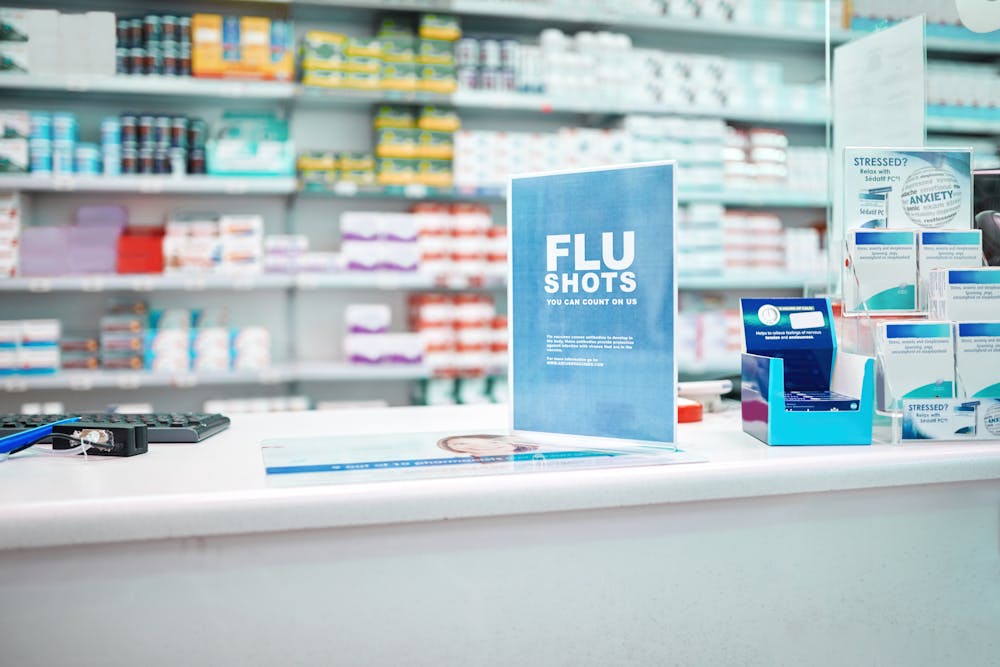
Timing is also important with the flu vaccine. Flu cases typically begin to rise in October and peak between December and February, but can last through May. Ideally, people should get vaccinated before flu begins to spread, making the month of October the ideal flu vaccination time.
But if you miss that deadline, it is absolutely better to get vaccinated later in the season than not at all. Flu, COVID-19 and RSV vaccines are available at your health care provider’s office, your local health department and most retail pharmacies, although access to the newly updated COVID-19 vaccine is still limited in some areas of the country.
A difficult respiratory virus season ahead
While infections and hospitalizations from COVID-19 declined dramatically in 2023, experts are remaining vigilant against the possibility of new, more-infectious variants causing another fall and winter surge. Adults 65 and older continue to be the highest-risk group for severe infection.
Flu seasons are inherently difficult to predict. Since the emergence of the COVID-19 pandemic, flu cases have been lower than prior to the pandemic. However, the 2022-2023 flu season still caused over 300,000 hospitalizations and up to 98,000 flu-releated deaths, making vaccination an important prevention tool.
To further compound this, flu vaccine rates have been lower during the pandemic, suggesting that Americans may be out of the habit of getting their annual flu shot.
Shots can be given together
Many are also wondering whether they can or should get the updated COVID-19 booster, the new RSV vaccine and the flu shot at the same time. The good news is, the CDC clearly indicates that it is safe for both adults and children who are eligible for the updated COVID-19 vaccine to get this vaccine simultaneously with the annual flu shot.
A 2022 study found that common vaccine side effects, such as pain at the injection site, occurred at slightly higher rates when someone received the flu vaccine and a COVID-19 vaccine at the same time, as opposed to receiving only a COVID-19 booster. However, those reactions, including fatigue and headache, were mild and resolved within a day or two. In addition, a recent study found that the immune response was the same when both vaccines were given together compared to when given separately.
Since the RSV vaccine is new, there is no data yet on receiving all three vaccines at the same time. Instead, those at the highest risk of RSV infection should get this vaccine as soon as they are able.
Community matters too
Getting the COVID-19, RSV and flu vaccines isn’t just about your own health – it’s about family and community health too. Communities with higher vaccination rates have fewer opportunities to spread the virus.
Keep in mind that many people cannot be vaccinated, because they have weakened immune systems or are undergoing treatments. They depend on those around them for protection. While one person may experience mild symptoms if they contract RSV, COVID-19 or the flu, they could spread the virus to others who could become severely ill.
Because it’s impossible to predict how people will react if they get sick, getting the flu and COVID-19 vaccines – and the RSV vaccine if you are eligible – is the best prevention strategy.
This is an updated version of an article that was originally published on Sept. 22, 2022.
Libby Richards, Associate Professor of Nursing, Purdue University
This article is republished from The Conversation under a Creative Commons license. Read the original article.
- Details
- Written by: Elizabeth Larson
CLEARLAKE, Calif. — Dozens of dogs are waiting at Clearlake Animal Control for their new families.
The Clearlake Animal Control website lists 50 adoptable dogs.
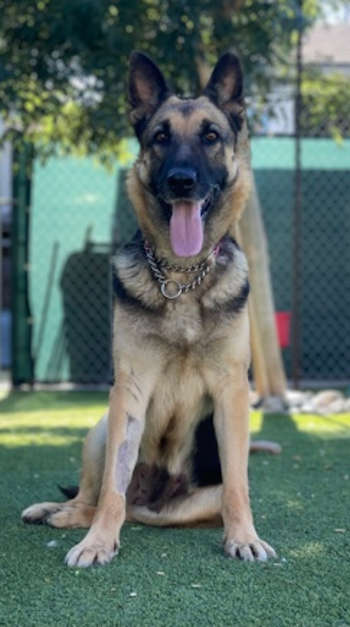
This week’s new dogs include “Alice,” a handsome female German shepherd with a black and tan coat.
There also is “Clover,” a 7-month-old male Labrador retriever mix with a short black coat.

The shelter is located at 6820 Old Highway 53. It’s open from 9 a.m. to 6 p.m. Tuesday through Saturday.
For more information, call the shelter at 707-762-6227, email
This week’s adoptable dogs are featured below.
Email Elizabeth Larson at
- Details
- Written by: DENNIS FORDHAM

Some probates are foreseeable well before they occur.
Consider an elderly individual who owns assets in her own name with a total gross value that exceeds the threshold for probate (presently $184,500).
Unless such assets are held in a living trust and/or death beneficiary accounts then a probate will be required when she dies. Probate becomes increasingly foreseeable, in such cases, the closer a person is to death.
Less foreseeable probates, however, can catch people off guard. Let us discuss.
First, consider a married couple that owns all assets jointly with right of survivorship. Unless they are both senior citizens, it is likely that they may reasonably expect that the surviving spouse will have ample opportunity and ability, after the death of the first spouse, either to get all real property assets into a living trust and/or to sell real property assets and place the proceeds into accounts with death beneficiaries.
However, sometimes the foregoing gamble does not work out. For example, it is possible for a common accident or illness to take the lives of both spouses together. Typically, one spouse will survive longer than the other spouse and be declared the surviving spouse. If so, the estate of the second to die spouse is more likely than to have a gross value in excess of the then existing threshold for a probate.
Otherwise, if it is unclear which spouse survived then each spouse may be deemed to have survived the other spouse for purposes of succession to the couple’s assets. In such case, all assets titled as joint tenancy assets are divided equally between the two estates.
Sometimes, this halving of the joint tenancy assets may be sufficient such that neither deceased spouse’s estate exceeds the probate threshold. Otherwise, two probates may each be required to transfer each spouse’s own estate to their beneficiaries under each spouse’s will, if any, or to each spouse’s surviving heirs (e.g., children).
Second, consider an individual who has a small estate, i.e., under the probate threshold, but then inherits sufficient assets to have an estate that exceeds the probate threshold. That individual may never have considered the need for estate planning.
However, if the individual does not transfer the inherited assets into a living trust and/or into designated death beneficiary accounts, after receiving such assets, then that individual’s own death may trigger an unexpected probate.
Sometimes probate is unavoidable, such as when the individual has not yet received the full distribution of their inheritance and so could not possibly have done anything to place such assets outside probate. However, having one’s existing assets outside one’s probate estate reduces the risk and the magnitude of any probate.
Third, consider an individual who names primary death beneficiaries to Pay on Death bank accounts, life insurance policies, and/or Transfer on Death brokerage accounts. If the named primary death beneficiaries do not survive the account holder then does the account designate alternative (backup) death beneficiaries?
If not, or if the alternative death beneficiaries are also deceased, then the gift of such assets by way of the death beneficiary designation form will lapse (fail). The lapsed gift is then usually kicked into the deceased owner’s estate; the enlarged estate may exceed the probate threshold.
People do not plan to fail, but people do fail to plan. By not getting one’s affairs in order at one’s leisure, when there is no compelling reason to do so, a person is taking an unnecessary risk which may lead to an unexpected probate that catches their surviving family members off guard and leads to unintended results.
The foregoing discussion is not legal advice. Consult a qualified estate planning attorney for fact specific legal guidance.
Dennis A. Fordham, Attorney, is a State Bar-Certified Specialist in estate planning, probate and trust law. His office is at 870 S. Main St., Lakeport, Calif. He can be reached at