 How to resolve AdBlock issue?
News
- Details
- Written by: Paul Winters, University of Notre Dame
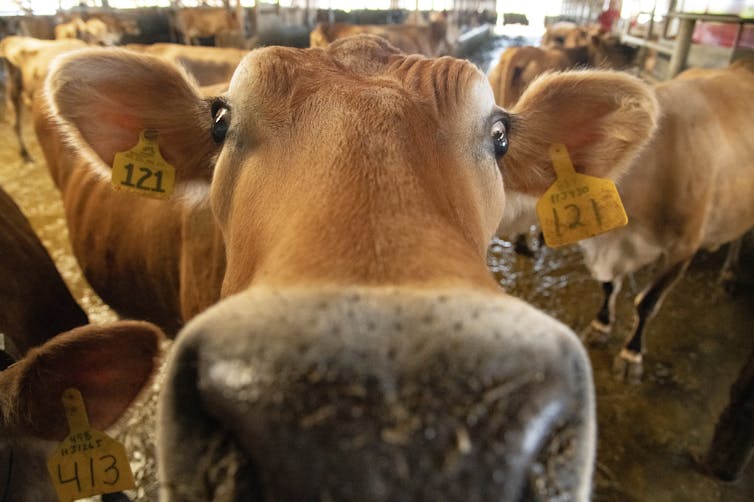
For the first time ever, food and agriculture took center stage at the annual United Nations climate conference in 2023.
More than 130 countries signed a declaration on Dec. 1, committing to make their food systems – everything from production to consumption – a focal point in national strategies to address climate change.
The declaration is thin on concrete actions to adapt to climate change and reduce emissions, but it draws attention to a crucial issue.
The global food supply is increasingly facing disruptions from extreme heat and storms. It is also a major contributor to climate change, responsible for one-third of all greenhouse gas emissions from human activities. This tension is why agriculture innovation is increasingly being elevated in international climate discussions.

At present, agriculture provides enough food for the world’s 8 billion people, although many do not have adequate access. But to feed a global population of 10 billion in 2050, croplands would need to expand by 660,000 to 1.2 million square miles (171 million to 301 million hectare) relative to 2010. That would lead to more deforestation, which contributes to climate change. Further, some practices widely relied on to produce sufficient food, such as using synthetic fertilizers, also contribute to climate change.
Simply eliminating deforestation and these practices without alternative solutions would decrease the world’s food supply and farmers’ incomes. Fortunately, innovations are emerging that can help.
In a new report, the Innovation Commission for Climate Change, Food Security and Agriculture, founded by Nobel-winning economist Michael Kremer, identifies seven priority areas for innovation that can help ensure sufficient food production, minimize greenhouse gas emissions and be scaled up to reach hundreds of millions of people.
I’m an agriculture economist and executive director for the commission. Three innovations in particular stand out for their ability to scale up quickly and pay off economically.
Accurate, accessible weather forecasts
With extreme weather leaving crops increasingly vulnerable and farmers struggling to adapt, accurate weather forecasts are crucial. Farmers need to know what to expect, both in the days ahead and farther out, to make strategic decisions about planting, irrigating, fertilizing and harvesting.
Yet access to accurate, detailed forecasts is rare for farmers in many low- and middle-income countries.
Our assessment shows that investing in technology to collect data and make forecasts widely available – such as by radio, text message or WhatsApp – can pay off many times over for economies.
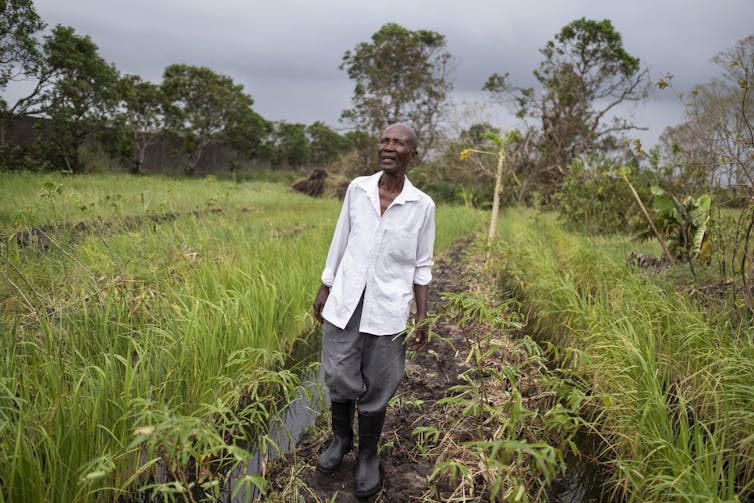
For example, accurate state-level forecasts of seasonal monsoon rainfall totals would help Indian farmers optimize sowing and planting times, providing an estimated US$3 billion in benefits over five years – at a cost of around $5 million.
If farmers in Benin received accurate forecasts by text message, we estimate that they could save each farmer $110 to $356 per year, a large amount in that country.
More sharing of information among neighboring countries, using platforms like the World Meteorological Organization’s Climate Services Information System, could also improve forecasts.
Microbial fertilizers
Another innovation priority involves expanding the use of microbial fertilizers.
Nitrogen fertilizer is widely used to increase crop yields, but it is typically made from natural gas and is a major source of greenhouse gas emissions. Microbial fertilizers use bacteria to help plants and soil absorb the nutrients they need, thereby reducing the amount of nitrogen fertilizer needed.
Studies have found that microbial fertilizers could increase legume yields by 10% to 30% in healthy soil and generate billions of dollars in benefits. Other microbial fertilizers work with corn, and scientists are working on more advancements.
Soybean farmers in Brazil have been using a rhizobia-based microbial fertilizer for decades to improve their yields and cut synthetic fertilizer costs. But this technique is not as widely known elsewhere. Scaling it up will require funding to expand testing to more countries, but it has great potential payoff for farmers, soil health and the climate.
Reducing methane from livestock
A third innovation priority is livestock, the source of roughly two-thirds of agriculture’s greenhouse gas emissions. With demand for beef projected to rise 80% by 2050 as low- and middle-income countries grow wealthier, reducing those emissions is essential.
Several innovative methods for reducing livestock methane emissions target enteric fermentation, which leads to methane belches.
Adding algae, seaweed, lipids, tannins or certain synthetic compounds to cattle feed can change the chemical reactions that generate methane during digestion. Studies have found some techniques have the potential to reduce methane emissions by a quarter to nearly 100 percent. When cattle produce less methane, they also waste less energy, which can go into growth and milk production, providing a boost for farmers.
The method is still expensive, but further development and private investment could help scale it up and lower the cost.
Gene editing, either of livestock or the microorganisms in their stomachs, could also someday hold potential.
Scaling up agriculture innovation
The Innovation Commission also identified four other priorities for innovation:
-
Helping farmers and communities implement better rainwater harvesting.
-
Lowering the cost of digital agriculture that can help farmers use irrigation, fertilizer and pesticides most efficiently.
-
Encouraging production of alternative proteins to reduce demand for livestock.
-
Providing insurance and other social protections to help farmers recover from extreme weather events.
While promising agricultural innovations exist, commercial incentives to develop and scale them up have fallen short, leading to underinvestment, particularly in low- and middle-income countries.
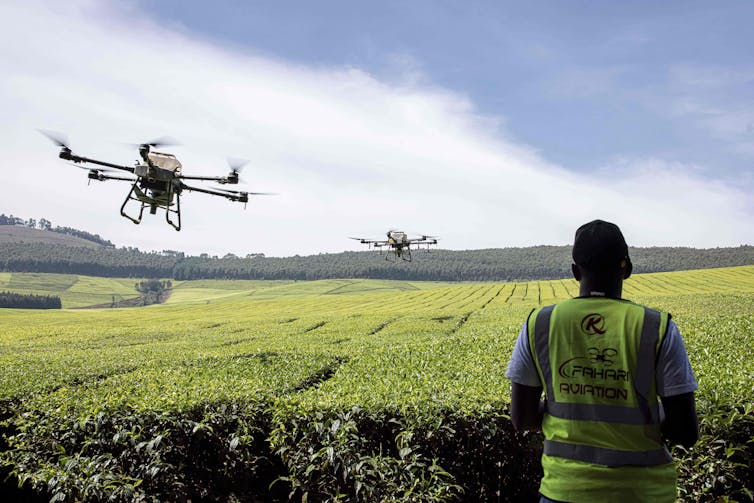
However, innovation funding has a track record of generating very high social rates of return. This creates an opportunity for public and philanthropic investment in developing and deploying innovations at a scale to reach hundreds of millions of people. Of course, to be effective, any potential innovation must be consistent with – and driven by – national strategies and planned in conjunction with the government, the private sector and civil society.
Two decades ago, global leaders, frustrated that lifesaving vaccines were not reaching hundreds of millions of people who needed them, created Gavi, The Vaccine Alliance. They invested billions of dollars to scale up these innovations, helped to immunize over 1 billion children and halved child mortality in 78 lower-income countries.
This year, officials at COP28 are aiming for a similar global response to climate change, food security and agriculture.
Paul Winters, Professor of Global Affairs, University of Notre Dame
This article is republished from The Conversation under a Creative Commons license. Read the original article.
- Details
- Written by: Elizabeth Larson
As a new storm front moves in, Lake County is coming off of several days of mild rainfall.
Based on National Weather Service observation stations, rainfall totals in inches for the 72-hour period ending at 11:30 p.m. Saturday are as follows:
— High Glade Lookout (Upper Lake): 1.02.
— Indian Valley Reservoir: 0.10.
— Kelseyville: 0.22.
— Lake Pillsbury: 0.80.
— Lower Lake: 0.07.
— Lyons Valley: 0.54.
— Middletown: 0.05.
— Nice: 0.36.
— Whispering Pines: 0.48.
The forecast for the new week expects rain every day, with temperatures ranging from the mid-50s during the day to the high 30s at night.
In Lake County, rainfall totals are expected to reach as much as an inch for Saturday and Sunday combined.
The storm front bringing the rain to Lake County is bringing far heavier amounts to Humboldt and Del Norte counties, where urban and small stream flooding advisories were issued for Saturday evening.
Email Elizabeth Larson at
- Details
- Written by: Elizabeth Larson
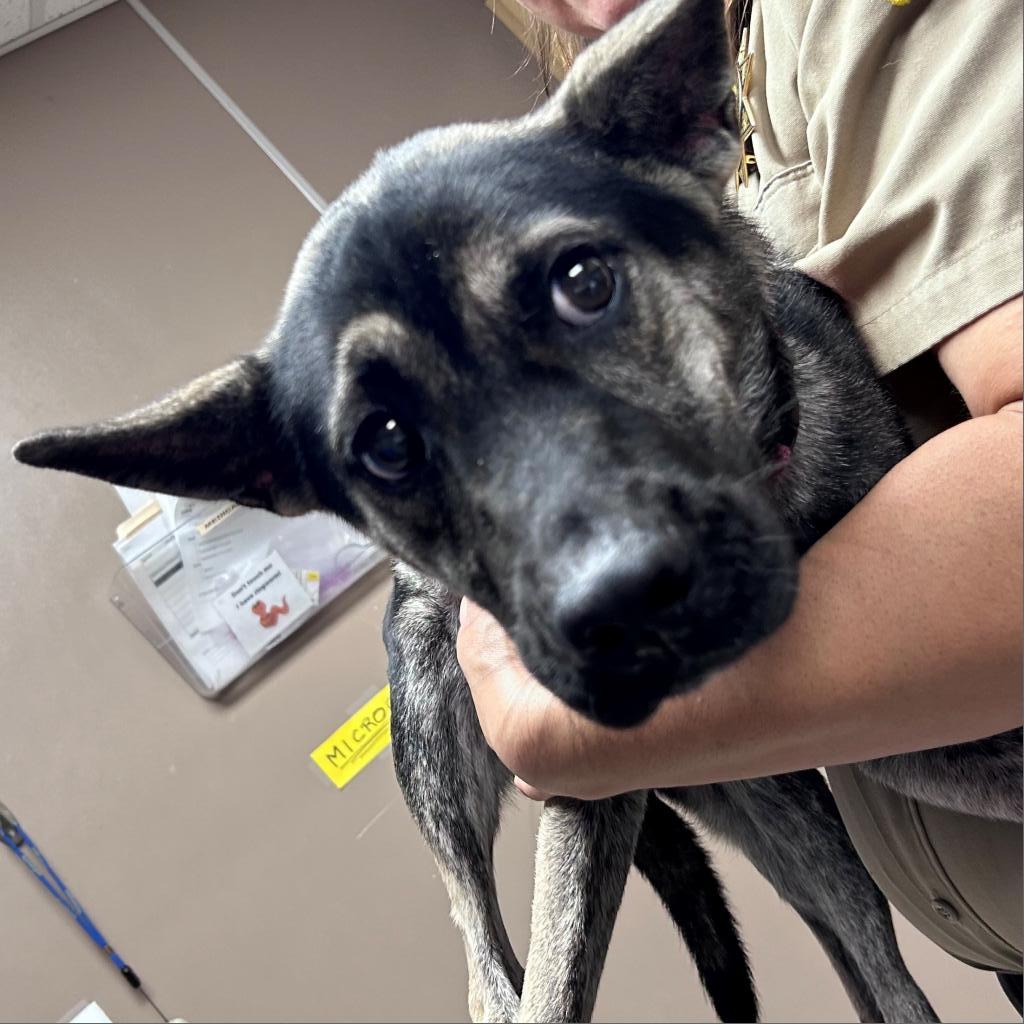
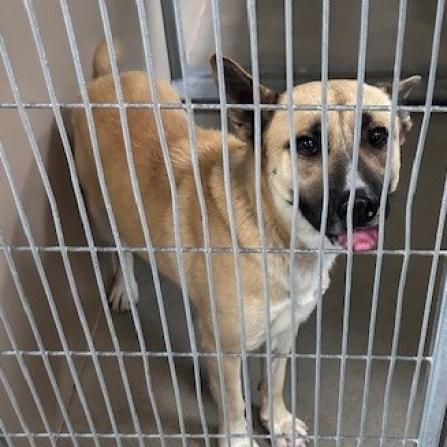
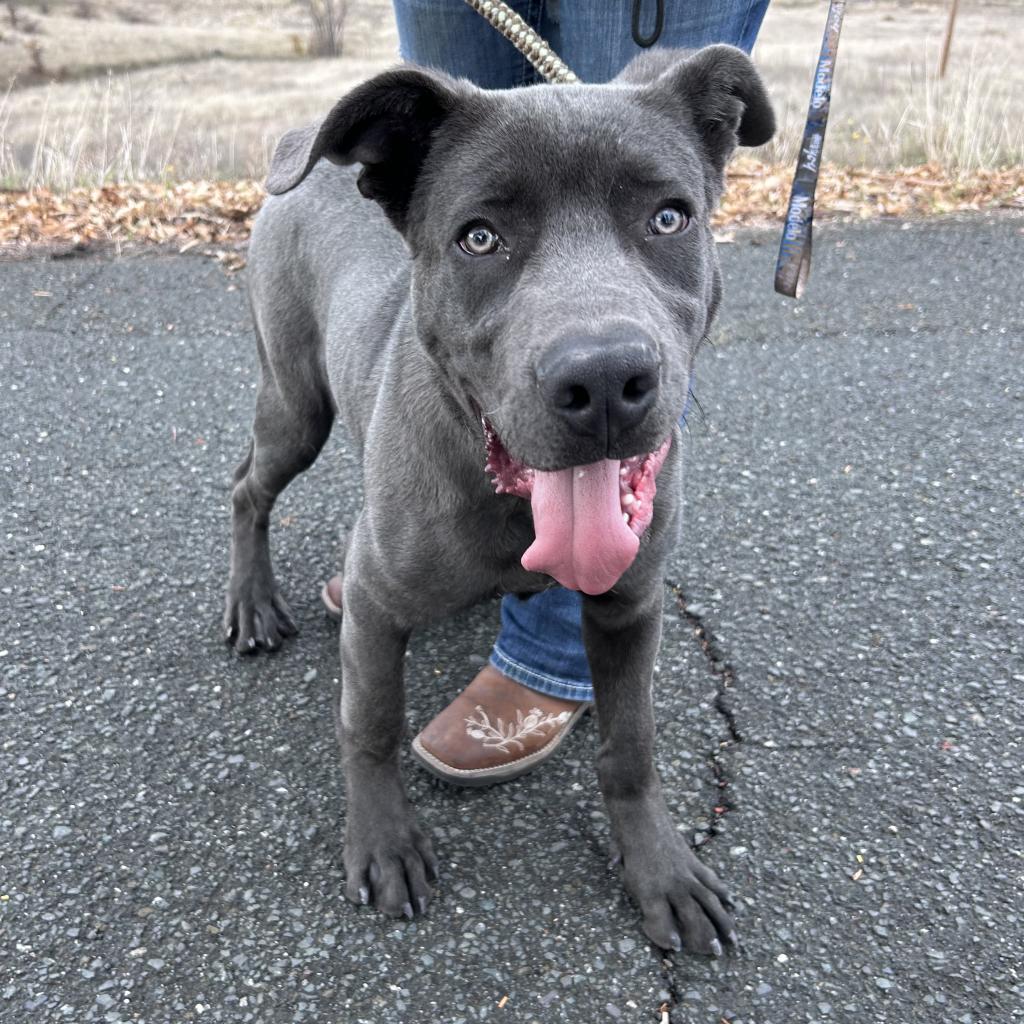
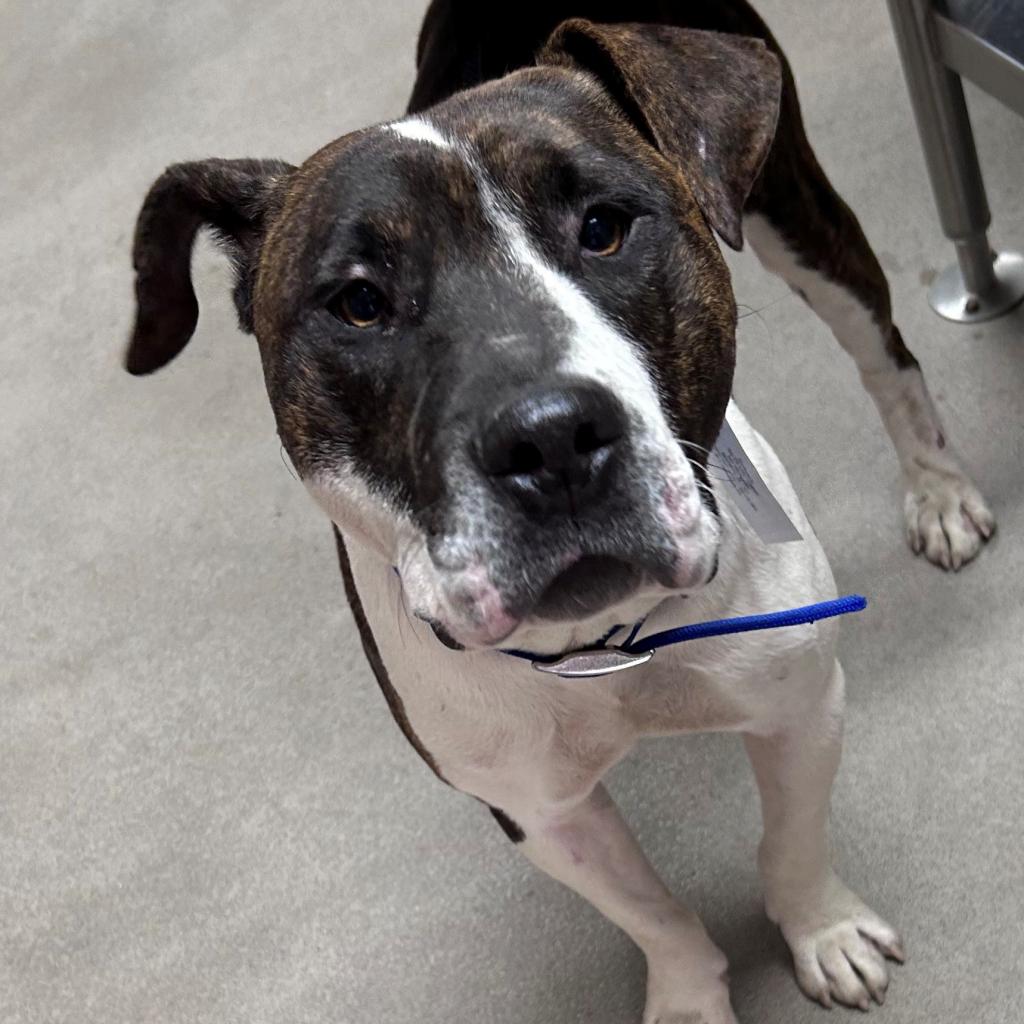
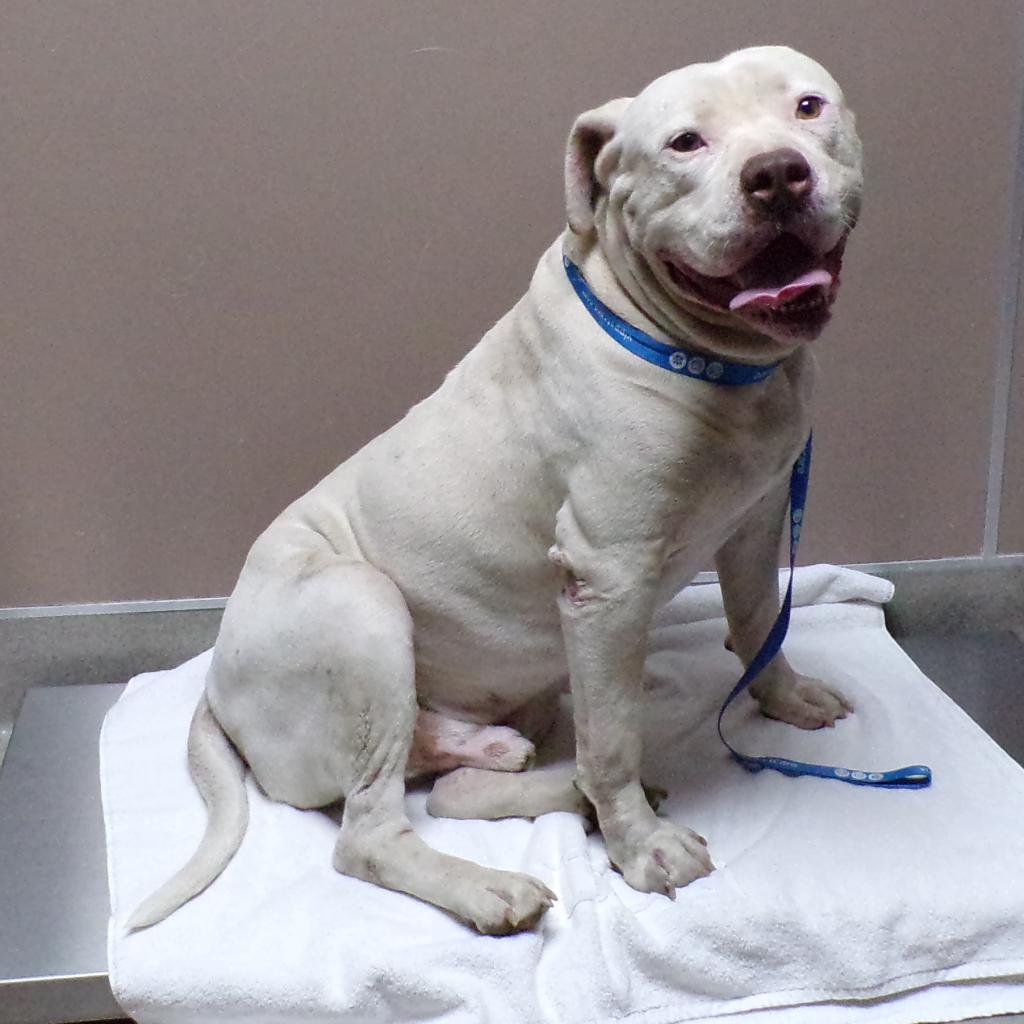
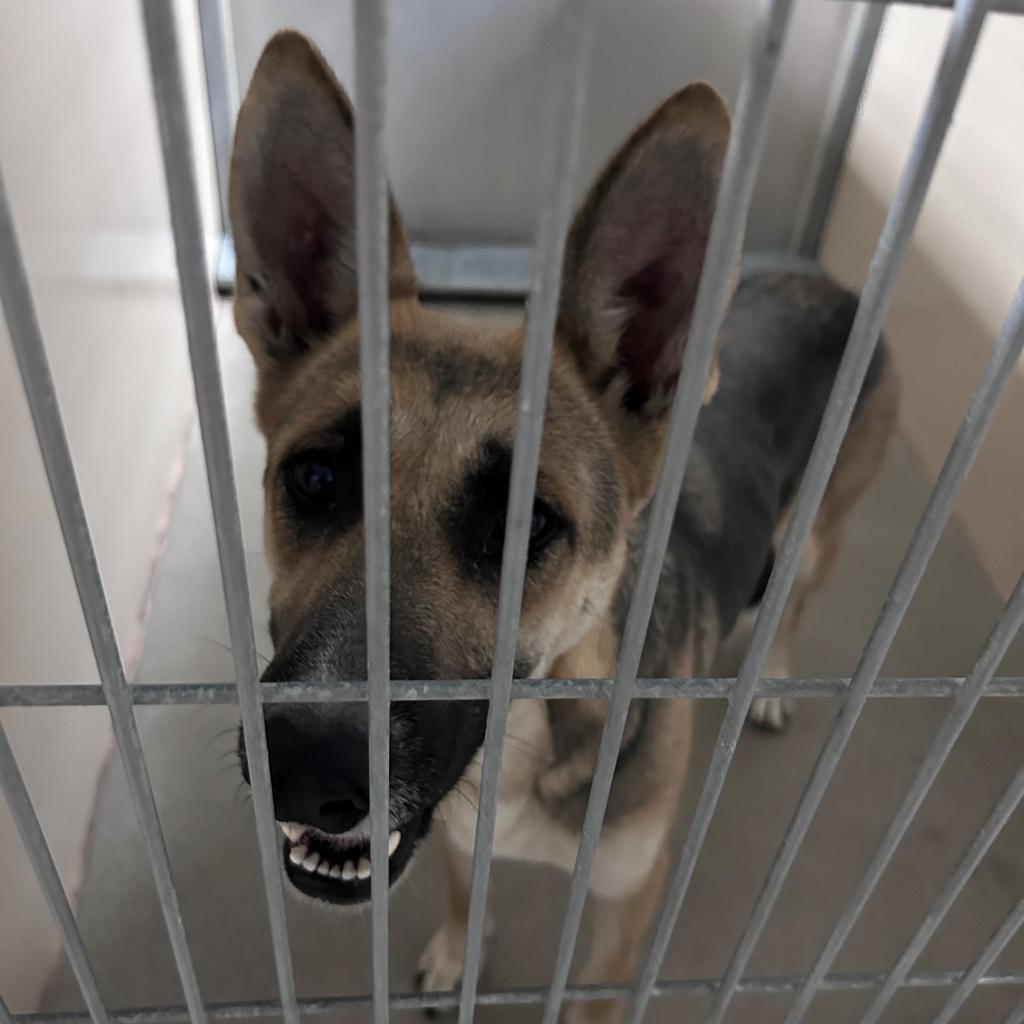
Dogs available for adoption this week include mixes of Akita, Chihuahua, German shepherd, hound, Labrador retriever, pit bull and shepherd.
Dogs that are adopted from Lake County Animal Care and Control are either neutered or spayed, microchipped and, if old enough, given a rabies shot and county license before being released to their new owner. License fees do not apply to residents of the cities of Lakeport or Clearlake.
Those dogs and the others shown on this page at the Lake County Animal Care and Control shelter have been cleared for adoption.
Call Lake County Animal Care and Control at 707-263-0278 or visit the shelter online for information on visiting or adopting.
The shelter is located at 4949 Helbush in Lakeport.
Email Elizabeth Larson at














- Details
- Written by: Robert Sanders
Most birds that flit through dense, leafy forests have a strategy for maneuvering through tight windows in the vegetation — they bend their wings at the wrist or elbow and barrel through.
But hummingbirds can't bend their wing bones during flight, so how do they transit the gaps between leaves and tangled branches?
A study published today in the Journal of Experimental Biology shows that hummingbirds have evolved their own unique strategies — two of them, in fact. These strategies have not been reported before, likely because hummers maneuver too quickly for the human eye to see.
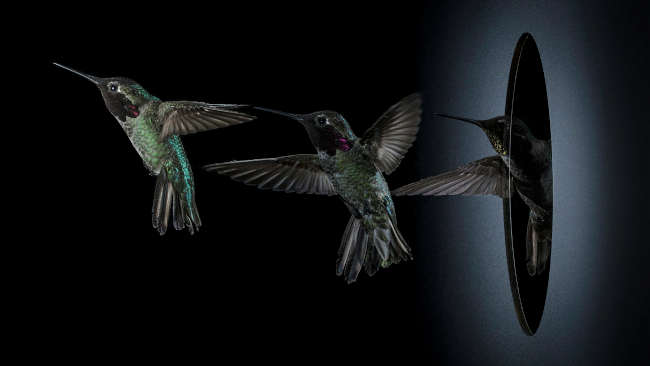
For slit-like gaps too narrow to accommodate their wingspan, they scooch sideways through the slit, flapping their wings continually so as not to lose height.
For smaller holes — or if the birds are already familiar with what awaits them on the other side — they tuck their wings and coast through, resuming flapping once clear.
"For us, going into the experiments, the tuck and glide would have been the default. How else could they get through?" said Robert Dudley, a professor of integrative biology at the University of California, Berkeley, and senior author of the paper. "This concept of sideways motion with a total mix-up of the wing kinematics is quite amazing — it's a novel and unexpected method of aperture transit. They're changing the amplitude of the wing beats so that they're not dropping vertically when they do the sideways scooch."
Using the slower sideways scooch technique may allow birds to better assess upcoming obstacles and voids, thereby reducing the likelihood of collisions.
"Learning more about how animals negotiate obstacles and other 'building-blocks' of the environment, such as wind gusts or turbulent regions, can improve our overall understanding of animal locomotion in complex environments," noted first author Marc Badger, who obtained his Ph..D from UC Berkeley in 2016. "We still don't know very much about how flight through clutter might be limited by geometric, aerodynamic, sensory, metabolic or structural processes. Even behavioral limitations could arise from longer-term effects, such as wear and tear on the body, as hinted at by the shift in aperture negotiation technique we observed in our study."
Understanding the strategies that birds use to maneuver through a cluttered environment may eventually help engineers design drones that better navigate complex environments, he noted.
"Current remote control quadrotors can outperform most birds in open space across most metrics of performance. So is there any reason to continue learning from nature?" said Badger. "Yes. I think it's in how animals interact with complex environments. If we put a bird's brain inside a quadrotor, would the cyborg bird or a normal bird be better at flying through a dense forest in the wind? There may be many sensory and physical advantages to flapping wings in turbulent or cluttered environments."
Obstacle course
To discover how hummingbirds — in this case, four local Anna’s hummingbirds (Calypte anna) — slip through tiny openings, despite being unable to fold their wings, Badger and Dudley teamed up with UC Berkeley students Kathryn McClain, Ashley Smiley and Jessica Ye.
"We set up a two-sided flight arena and wondered how to train birds to fly through a 16-square- centimeter gap in the partition separating the two sides," Badger said, noting that the hummingbirds have a wingspan of about 12 centimeters (4 3/4 inches). "Then, Kathryn had the amazing idea to use alternating rewards."
That is, the team placed flower-shaped feeders containing a sip of sugar solution on both sides of the partition, but only remotely refilled the feeders after the bird had visited the opposite feeder. This encouraged the birds to continually flit between the two feeders through the aperture.
The researchers then varied the shape of the aperture, from oval to circular, ranging in height, width and diameter, from 12 cm to 6 cm, and filmed the birds’ maneuvers with high-speed cameras. Badger wrote a computer program to track the position of each bird’s bill and wing tips as it approached and passed through the aperture.
They discovered that as the birds approached the aperture, they often hovered briefly to assess it before traveling through sideways, reaching forward with one wing while sweeping the second wing back, fluttering their wings to support their weight as they passed through the aperture. They then swiveled their wings forward to continue on their way.
"The thing is, they have to still maintain weight support, which is derived from both wings, and then control the horizontal thrust, which is pushing it forward. And they're doing this with the right and left wing doing very peculiar things," Dudley said. "Once again, this is just one more example of how, when pushed in some experimental situation, we can elicit control features that we don't see in just a standard hovering hummingbird."
Alternatively, the birds swept their wings back and pinned them to their bodies, shooting through — beak first, like a bullet — before sweeping the wings forward and resuming flapping once safely through.
"They seem to do the faster method, the ballistic buzz-through, when they get more acquainted with the system," Dudley said.
Only when approaching the smallest apertures, which were half a wingspan wide, would the birds automatically resort to the tuck and glide, even though they were unfamiliar with the setup.
The team pointed out that only about 8% of the birds clipped their wings as they passed through the partition, although one experienced a major collision. Even then, the bird recovered quickly before successfully reattempting the maneuver and going on its way.
"The ability to pick among several obstacle negotiation strategies can allow animals to reliably squeeze through tight gaps and recover from mistakes," Badger noted.
Dudley hopes to conduct further experiments, perhaps with a sequence of different apertures, to determine how birds navigate multiple obstacles.
The work was funded primarily by a CiBER-IGERT grant from the National Science Foundation (DGE-0903711).
Robert Sanders writes for the UC Berkeley News Center.