 How to resolve AdBlock issue?
News
- Details
- Written by: Tammy Brigham

LAKE COUNTY, Calif. — Just in time for Christmas, Habitat for Humanity Lake County is celebrating the completion of its 40th home.
Jessica Hammes had a dream and a goal for herself, to own a home for herself and her sons by the time she reached 30.
However, as the years passed, she began to believe that goal would remain out of reach. Then she discovered Habitat for Humanity Lake County.
Working through the nearly yearlong process, Hammes and her boys learned so much about dedication to a project and community involvement.
Having moved into their home with plenty of time to make it their own for Christmas, they are now learning the joys of homeownership.
“The boys are so happy to finally have a yard to play in and space of their own,” Hammes said. “They are making friends in the neighborhood and talk about how much they love the house almost every day. They now have room to grow. I feel so thankful and blessed; the future is so bright for us now. We will be forever grateful to Habitat for everything they have done and for everything they have helped me accomplish.”
As Habitat for Humanity Lake County celebrates the completion of 40 homes in Lake County and looks ahead toward 2024 and the increasing challenges of assisting low-income families to become homeowners, as well as providing critical home repair services to qualified homeowners, they look to the community for ongoing support.
Habitat for Humanity Lake County is in need of buildable properties, wheelchair ramps and lifts for veterans and seniors, and funding to continue its housing mission.
If you or someone you know is interested in homeownership, requires repairs to your home, or would like to volunteer or donate, please call 707-994-1100, Extension 108, for more information. Your participation and support are immensely appreciated.
Tammy Brigham is administrator for Habitat for Humanity, Lake County.
- Details
- Written by: Lake County News reports
Festive celebrations, flickering lights and winter greens are hallmarks of the holiday season, but they also present fire risks that can quickly turn this joyous time of year into a devastating one.
In the spirit of joy and celebration, it is paramount to ensure that our gatherings are not only enjoyable but also safeguarded, by adopting safety practices to minimize the risk of accidents and injuries.
Across the nation, nearly 47,000 fires occur during the winter holidays claiming more than 500 lives, 2,200 injuries and costing over $500 million in property damage, per the American Red Cross.
“This holiday season is meant to bring joy to family and friends,” said State Fire Marshal Daniel Berlant. “By adhering to some straightforward safety guidelines, you can reduce the likelihood of accidents and enjoy a safe holiday celebration.”
Here are a few safety tips for the holiday season:
• When incorporating candles into your holiday décor, remember to place them in open areas, at least three feet away from any flammable decorations. Extinguish candles before leaving a room and keep them out of reach of children and pets.
• In the kitchen, where the heart of holiday cooking resides, stay vigilant and avoid distractions. Unattended cooking is a leading cause of home fires, so it's crucial to keep potentially flammable items away from cooking surfaces. Additionally, always check the oven before turning it on and be prepared with a fire extinguisher in case of a fire.
• For those decorating this holiday season, prioritize safety by keeping the tree hydrated with daily watering. Check lights for damage, and position the tree away from exits, fireplaces, and other heat sources. Promptly remove decorations after the holiday season to minimize fire risks.
• When dealing with electrical components, repair or replace worn outlets, cords, and appliances immediately. Use surge protectors for lights to prevent overloads and follow safe practices with extension cords. Unplug lights before going to bed or leaving the house.
Visit www.fire.ca.gov for more ways you can keep your holidays merry and bright.
- Details
- Written by: Laura López González
A new COVID-19 variant is now estimated to make up about 20% of COVID-19 cases in the United States.
The World Health Organization (WHO) recently named the strain, JN.1, a variant of concern – meaning that the global body is monitoring the variant closely but hasn’t yet added it to its “watchlist” of high-risk strains. Still, the WHO warns the fast-spreading variant could lead to an uptick in cases during winter months as people spend more time indoors at family and group gatherings.
In California, the proportion of people testing positive for COVID-19 has been on a steady rise since November, coinciding with flu season.
We recently spoke with three UC San Francisco COVID-19 experts, Vivek Jain, MD, MAS; George Rutherford, MD, and Peter Chin-Hong, MD, to get the rundown on this COVID-19 season and the latest variant.
What are the symptoms of the new JN.1 COVID-19 variant?
Chin-Hong: The symptoms of JN.1 are thought to be similar those of other members of the Omicron family of COVID-19 variants: Typically, illness starts with a sore throat, followed by congestion and a dry cough.
People may also experience other symptoms such as a runny nose, fatigue, headache, muscle aches, fever, diarrhea and an altered sense of smell. But probably what is more important than the symptoms is who has it: A patient who is older than 75 or is immunocompromised and who has not been recently vaccinated against COVID-19 may experience more serious symptoms like difficulty breathing. Folks like these can get very ill.
How worried should we be about the new variant?
Chin-Hong: There is no evidence that the new variant causes more serious disease, hospitalizations or a higher fatality rate than other Omicron variants.
Will COVID-19 vaccines work against the new variant?
Chin-Hong: Yes. Although the vaccine was developed against another Omicron strain (XBB.1.5), studies have shown that the new COVID-19 vaccine generates a robust immune response to JN.1. I have full confidence in the new formulation of the COVID-19 vaccine for the variants that are circulating right now.
Will current COVID-19 treatments work against the new JN.1 strain?
Chin-Hong: Yes, the current slate of COVID-19 antivirals such as Paxlovid and – for hospitalized COVID-19 patients, remdesivir – are also very effective against JN.1. Remember, it’s important to take Paxlovid as soon as possible after showing symptoms of COVID-19, ideally within the first five days. You’ll need a prescription for both these medications.
Who should get a COVID-19 vaccine?
Jain: Broadly, everyone 6 months and older should get the new 2023-2024 COVID-19 vaccine. COVID-19 vaccines are very safe and lower peoples’ risk of death and hospitalization, especially those who are older or who have medical conditions.
Can I get my flu and COVID-19 vaccines at the same time?
Jain: Yes, if that’s convenient. It’s also okay to space them slightly apart.
If you’re 60 and over or in weeks 32 to 36 of pregnancy, you may also qualify for the new RSV vaccines.
How often should people be vaccinated against COVID-19?
Jain: Everyone should strongly consider staying up to date with annual COVID-19 vaccines. People should talk with their health care providers and consider factors like age, and medical conditions, including whether they are immunosuppressed, live with other people at high risk for serious COVID-19 and their COVID-19 history.
Do kids really need the COVID-19 vaccine?
Rutherford: Yes. COVID-19 was the eighth leading cause of death in the U.S. between 2021 and 2022. It’s the number one vaccine-preventable cause of death among children in the U.S.
Can I still get a COVID-19 vaccine for free?
Jain: Yes, health insurance and pharmacies will cover the cost of the new COVID-19 vaccines. People without insurance or who might face a difficult co-payment should contact their local health department for places to get free COVID-19 vaccinations. You can also check the federal government’s Bridge Access Program for free COVID-19 vaccines at thousands of locations nationwide.
Laura López González writes for the University of California, San Francisco.
- Details
- Written by: Shuang-Ye Wu, University of Dayton
The year 2023 was marked by extraordinary heat, wildfires and weather disasters.
In the U.S., an unprecedented heat wave gripped much of Texas and the Southwest with highs well over 100 degrees Fahrenheit (37.8 Celsius) for the entire month of July.
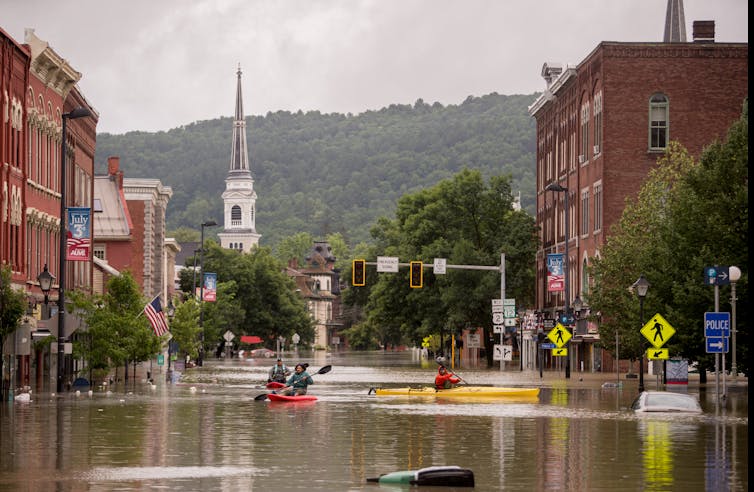
Historic rainfall in April flooded Fort Lauderdale, Florida, with 25 inches of rain in 24 hours. A wave of severe storms in July sent water pouring into cities across Vermont and New York. Another powerful system in December swept up the Atlantic coast with hurricane-like storm surge and heavy rainfall. California faced flooding and mudslides from a series of atmospheric rivers early in the year, then was hit in August by a tropical storm – an extremely rare event there.
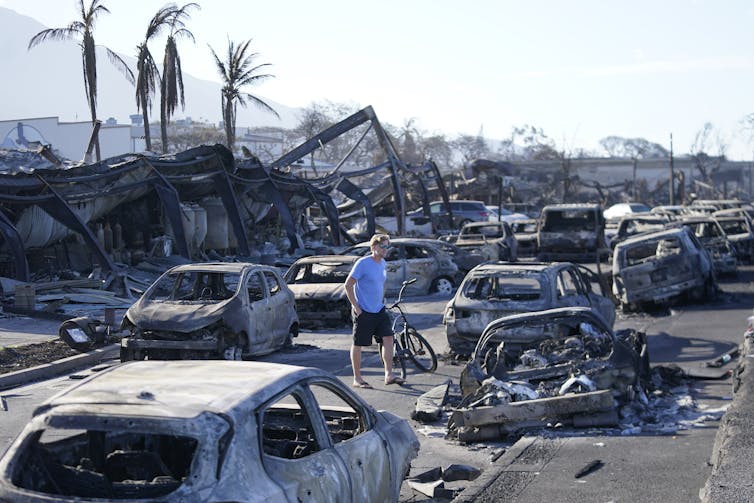
Wildfires ravaged Hawaii, Louisiana and several other states. And Canada’s worst fire season on record sent thick smoke across large parts of North America.
Globally, 2023 was the warmest year on record, and it wreaked havoc around the world. El Niño played a role, but global warming is at the root of the world’s increasing extreme weather.
So, how exactly is global warming linked to fires, storms and other disasters? I am an atmospheric scientist who studies the changing climate. Here’s what you need to know.
Dangerous heat waves and devastating wildfires
When greenhouse gases, such as carbon dioxide from vehicles and power plants, accumulate in the atmosphere, they act like a thermal blanket that warms the planet.
These gases let in high-energy solar radiation while absorbing outgoing low-energy radiation in the form of heat from the Earth. The energy imbalance at the Earth’s surface gradually increases the surface temperature of the land and oceans.
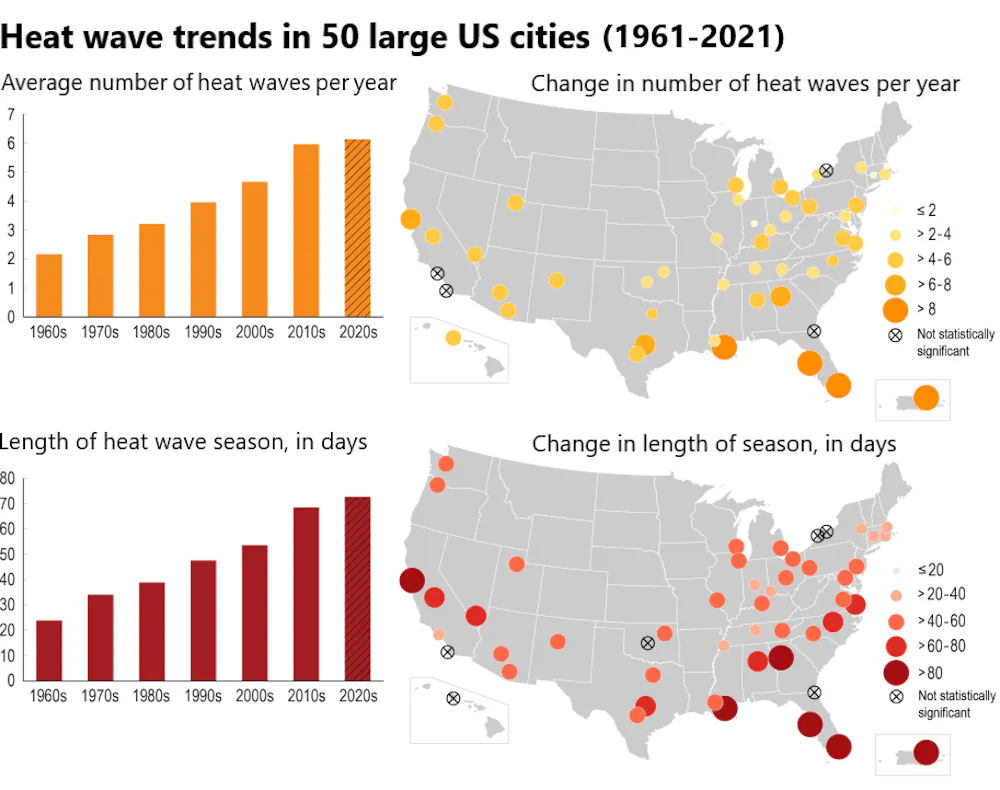
The most direct consequence of this warming is more days with abnormally high temperatures, as many countries saw in 2023.
Extreme heat waves hit large areas of North America, Europe and China, breaking many local high temperature records. Phoenix went 30 days with daily high temperatures at 110 F (43.3 C) or higher and recorded its highest minimum nighttime temperature, with temperatures on July 19 never falling below 97 F (36.1 C).
Although heat waves result from weather fluctuations, global warming has raised the baseline, making heat waves more frequent, more intense and longer-lasting.
That heat also fuels wildfires.
Increased evaporation removes more moisture from the ground, drying out soil, grasses and other organic material, which creates favorable conditions for wildfires. All it takes is a lightning strike or spark from a power line to start a blaze.
Canada lost much of its snow cover early in 2023, which allowed the ground to dry and vast fires to burn through the summer. The ground was also extremely dry in Maui in August when the city of Lahaina, Hawaii, caught fire during a windstorm and burned.
How global warming fuels extreme storms
As more heat is stored as energy in the atmosphere and oceans, it doesn’t just increase the temperature – it can also increase the amount of water vapor in the atmosphere.
When that water vapor condenses to liquid and falls as rain, it releases a large amount of energy. This is called latent heat, and it is the main fuel for all storm systems.

When temperatures are higher and the atmosphere has more moisture, that additional energy can fuel stronger, longer-lasting storms. This is the main reason for 2023’s record-breaking storms. Nineteen of the 25 weather and climate disasters that caused over US$1 billion in damage each through early December 2023 were severe storms, and two more were flooding that resulted from severe storms.
Tropical storms are similarly fueled by latent heat coming from warm ocean water. That is why they only form when the sea surface temperature reaches a critical level of around 80 F (27 C).
With 90% of the excess heat from global warming being absorbed by the ocean, there has been a significant increase in the global sea surface temperature, including record-breaking levels in 2023.
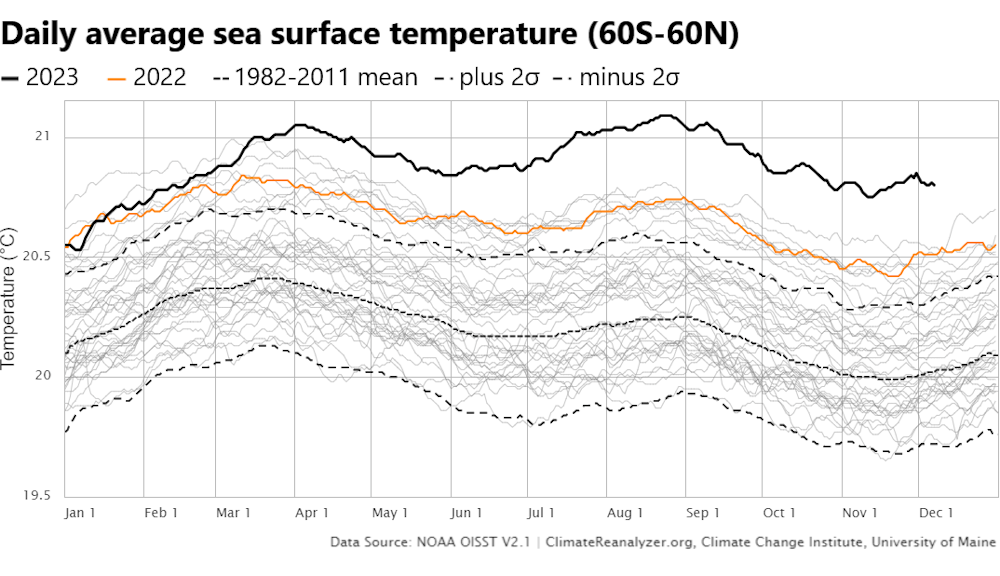
Higher sea surface temperatures can lead to stronger hurricanes and longer hurricane seasons. They can also lead to the faster intensification of hurricanes.
Hurricane Otis, which hit Acapulco, Mexico, in October 2023, was a devastating example. It exploded in strength, rapidly intensifying from a tropical storm to a destructive Category 5 hurricane in less than 24 hours. With little time to evacuate and buildings not designed to withstand a storm that powerful, more than 50 people died. The hurricane’s intensification was the second-fastest ever recorded, exceeded only by Hurricane Patricia in 2015.
A recent study found that North Atlantic tropical cyclones’ maximum intensification rates increased 28.7% between the 1971-1990 average and the 2001-2020 average. The number of storms that spun up from a Category 1 storm or weaker to a major hurricane within 36 hours more than doubled.
The Mediterranean also experienced a rare tropical-like cyclone in September 2023 that offers a warning of the magnitude of the risks ahead – and a reminder that many communities are unprepared. Storm Daniel became one of the deadliest storms of its kind when it hit Libya. Its heavy rainfall overwhelmed two dams, causing them to collapse, killing thousands of people. The heat and increased moisture over the Mediterranean made the storm possible.
Cold snaps have global warming connections, too
It might seem counterintuitive, but global warming can also contribute to cold snaps in the U.S. That’s because it alters the general circulation of Earth’s atmosphere.
The Earth’s atmosphere is constantly moving in large-scale circulation patterns in the forms of near-surface wind belts, such as the trade winds, and upper-level jet streams. These patterns are caused by the temperature difference between the polar and equatorial regions.
As the Earth warms, the polar regions are heating up more than twice as fast as the equator. This can shift weather patterns, leading to extreme events in unexpected places. Anyone who has experienced a “polar vortex event” knows how it feels when the jet stream dips southward, bringing frigid Arctic air and winter storms, despite the generally warmer winters.
In sum, a warmer world is a more violent world, with the additional heat fueling increasingly more extreme weather events.
Shuang-Ye Wu, Professor of Geology and Environmental Geosciences, University of Dayton
This article is republished from The Conversation under a Creative Commons license. Read the original article.