 How to resolve AdBlock issue?
News
- Details
- Written by: Leslie Weeks
Editor's note: This is the last of two articles by Clearlake resident Leslie Weeks on her trip to Uganda in December. Weeks, her husband, John Weeks, MD, and their daughter went to Uganda with Dr. Arthur Bikangaga, who is from Uganda.
Soon after our arrival, the electricity went off (electricity is sold to neighboring countries for a better rate, so the electric often goes off at night) and we were left sitting in a room with one candle.
The staff may have been a bit unsettled because there had been a riot at the university a week before. The teachers had demanded a raise in pay and were demonstrating. The police ended up chasing them through the campus with guns and sticks.
We went to bed and abruptly woke up at 2 a.m. because the time difference between Uganda and California is 11 hours. We had problems with sleep for about one week and during this time we were always so glad to hear the “Call to prayer” sung at the local mosque each morning at 5:45 a.m. The city was fully quiet at that hour, and this beautiful voice floating over the rooftops always seemed to make everything better.
After four days one suitcase with my daughter’s and my clothes arrived. The next day the school supplies were located, but customs would not release them unless we came to the airport in person. The claim was that we were going to sell the supplies on the street so it was necessary to pay a tax. We did not realize that this was all about bribing the customs agent.
We spent three hours counting each pencil, pen and toothbrush, handwriting a list on a piece of paper, and then waiting on a hard wooden bench. We would peer around the piles of opened boxes in front of us to see our self-important agent sitting at his table and occasionally speaking with one of his cohorts. We waited. It was very hot.
He finally signaled for us to approach his table and gave us a piece of paper after dramatically stamping it. He directed us to another fold out table where a scowling woman sat. I fearfully approached, hoping there wasn’t going to be another three-hour delay.
She held my paper in hand, the other hand hovering the stamp directly over it. This lasted about 15 minutes. She finally stamped the paper and handed it to me, told us to go get the luggage and see the lady at the door. She gave me a significant look. However, I had no idea what it meant.
We got our four suitcases and headed toward the door. There was no lady there, so we left, not paying any “taxes” after all. My husband got his suitcase with all of his clothes and our hiking gear, mosquito nets, extra medicine, etc. three days after we arrived back in Lake County. One bag of medications had somehow disappeared in that cluttered room.
After he wore the same outfit for six days, we decided we had to replace John’s clothes, which we had not anticipated financially. We realized the airlines weren’t going to be quick to find the missing clothes after a more empathetic airline representative informed us, “I guess I can understand why an American would be upset if he had to wear the same clothes for six days.”
Ugandans put a lot of importance on dressing well, or “smart,” and consider the “Mzungus” (white people) rude if under-dressed. Whenever we told Ugandans of our suitcase plight, they were always quick to say “Sorry,” which is their way of expressing sympathy.
Cash economy
We quickly learned very few places in Uganda take credit cards, and then they only take Visa. We became familiar with the two malls and various other shopping areas. We then found a Woolworth’s willing to take the credit card. With everyone freshly clothed, we were ready to continue our journey.
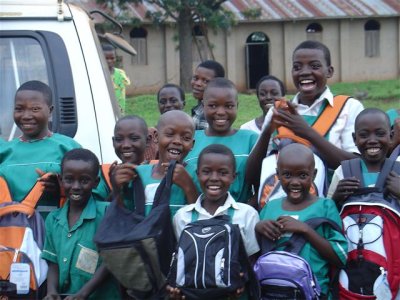
Six hours and one flat tire later, we arrived at the Kiyoima primary school. The reception the children and staff gave us made all the previous difficulty and discomfort insignificant.
Although school is out in December and January, children, teachers, elders from the village, and the assistant headmaster had gathered just to welcome us. The children sang two delightful songs that brought tears to my eyes. These children still only spoke their local dialect and had learned these songs in English. There are approximately 63 dialects in Uganda, but all the schools teach English.
After we shared a surprisingly delicious barbecued goat (meat is a delicacy in Uganda, vegetarians are pitied), the children led us outside where they performed their local dance. They grabbed our hands and we danced with them amidst many giggles.
We had to leave because it was getting late, so we reluctantly said goodbye to these beautiful children and their teachers. We told the teachers that we had mailed clothes for them in the beginning of December, but they hadn’t arrived yet. We told them two boxes of books would hopefully arrive in February. The assistant headmaster jumped with joy. We wished we could give them more.
We continued our safari and saw the wild beauty of Uganda. We were within yards of mountain gorillas that barely gave us a glance. When a huge silverback did look our way, there was no question of who was boss.
We searched for hours for the climbing lions in Ishasha, and eventually found the gorgeous lions languidly hanging out in fig trees. Baboons lined the dirt-rutted roads while several species of monkeys clamored overhead.
The earth was so fertile, local people had gardens on every inch of cleared space. Zebras, hippos, crocodiles and elephants were all equally stunning. Birds were brimming with grace and color. Water buffalo, impalas and wart hogs all had their own personalities.
Even as we were thrilled by the incredible and diverse wildlife, we were also impacted by the strength and individuality of each Ugandan.
Safari lesson
We left Uganda two weeks later, feeling elated, frustrated, tired, hungry, and sad to leave.
On this safari that originated in Lake County, we learned that tolerance and understanding starts with one person, and can spread to many.
Rudyard Kipling says it well in his poem, “We and They”:
Father, Mother and Me
Sister and Aunties say
All the people like us are We,
And everyone else is They.
And They live over the sea
While we live over the way,
But – would you believe it?
They look upon We
As only a sort of They!
We eat pork and beef
With cow-horn-handled knives.
They who gobble Their rice off a leaf
Are horrified out of Their lives;
While They who live up a tree,
Feast on grubs and clay,
(Isn’t is scandalous?) We look upon
As a simply disgusting They!
We eat kitcheny food.
We have doors that latch.
They drink milk or blood
Under an open thatch.
We have Doctors to fee.
They have the Wizards to pay.
And (impudent heathen!)
They look upon We
As a quite impossible They!
All good people agree,
And all good people say,
All nice people, like Us, are We
And everyone else is They:
But if you cross over the sea,
Instead of over the way,
You may end by (think of it!)
Looking on WE
As only a sort of They!
With people like Bill and Kate, Julia, wonderful giving teachers in Uganda, students in elementary schools, and generous people here in Lake County, cultural gaps can be bridged and differences can begin to be overcome on a much grander scale.
Traveling to other countries is not always easy, things we experience there are not always pleasant, or comfortable, but I hope it always brings the “They” into our “We.”
{mos_sb_discuss:2}
- Details
- Written by: Lake County News Reports
KELSEYVILLE – This week, work will continue on a fire prevention project in the Black Forest that began last month.
During the week of April l5-21, crews from Cal Fire – the new name for the California Department of Forestry and Fire Protection – began cutting brush and snags from the forest's edge running along Soda Bay Road in order to create a shaded fuel break.
The Bureau of Land Management project is intended to reduce the likelihood of a wildland fire in the forest, according to Rich Burns of the BLM's Ukiah field office. The project is sponsored and funded by BLM and the US Department of Interior.
On April 21, community volunteers helped drag undergrowth the Cal Fire crews had cut up to Soda Bay Road, where tons of materials was chipped. Taking part in the effort were students from Carle, Kelseyville and Clear Lake high schools; Big Valley Lions Club members; and local volunteers as well as those from as far away as Contra Costa and San Diego counties.
In addition, Bob Braito, used his heavy equipment to grade a staging area near Golf Road and Soda Bay and moved many yards of brush from Soda Bay Road to the staging area. The Buckingham Homes Association, led by manager Julie Berry, provided lunch with help from donations from Bruno's and D&J Pizza.
Volunteers on April 21 weren't able to complete chipping all of the materials, so the rest of the work is slated for completion this week.
On Tuesday and Wednesday, flaggers will be controlling traffic from Madrone to Little Borax Road. One volunteer flagger for Tuesday, quipped, "I feel that I am getting to be on my sixth grade school traffic squad again. You were special if you were trusted to use the whistle and the little stop sign."
The west side of the road will have two chippers working in tandem with 20 Cal Fire members feeding the chippers the rest of the cut undergrowth. This work will complete the first phase of the Black Forest Fire Prevention Project.
Only a portion of the "Prescription Plan" developed by CDF and BLM in 2004 was completed in Phase I. The plan for the Black Forest calls for removing all brush and trees under 3 inches in diameter at a height of 10 feet. The removal would extend 300 feet into the forest, providing a defensible fire control area, Cal Fire officials explained.
Most fires that start along the road smolder for a long time. If the grass fires cannot easily ladder up into the trees, the local fire service has a better chance of extinguishing the fire. Roads to the entrance of Yosemite National Park and other national parks entrances are being treated with the same prescription prepared for the Black Forest.
The prescription was established by BLM when the 250 acres was turned over to the BLM from the Lake County Land Trust. The Land Trust was able to purchase the property from loggers and hold the property in trust until a combination of donations and grants were obtained. All the land, except for seven acres owned by Lake County, was turned over to BLM in September 2004.
Planning will soon start for the project's next phase.
The Black Forest Fire Prevention Project Phase II is scheduled for Saturday, Sept 29, on National Public Lands Day. That effort will be discussed at an information celebration at 4 p.m. Friday, May 11, at the Witherell home, 8100 Soda Bay Road.
The public is invited to see the results of Phase I and discuss a Phase II project. Youth are encourage to attend. All three high school representatives have indicated that they plan to bring their students on Sept. 29 for phase II.
For more information about National Public Lands Day, visit www.publiclandsday.org. For more information about the Black Forest project, e-mail
{mos_sb_discuss:2}
- Details
- Written by: Leslie Weeks

Editor's note: This is the first of two articles by Clearlake resident Leslie Weeks about a trip to Uganda she took in December with her husband, John Weeks, MD, and their daughter.
It takes imagination and understanding to want to help those in a third world country who have been trampled by poverty and disease as well as decades of horrendous dictatorship. It also takes a lot of determination to break the numerous barriers that are blocking the way. Furthermore, it may result in a different outcome than one expects.
My husband, daughter and I were lucky to be able to travel to Uganda this December. We were invited to experience this incredible country by Arthur Bikangaga, who is originally from Kabale, Uganda.
Arthur had left during the height of the Idi Amin years, after too many close calls with this dreadful dictator. His father and mother were still there, amazingly intact despite their political participation. Unfortunately, although Arthur’s father lived a long and productive life, he died an hour before we arrived. He lived long enough to say good-by to his son.
Uganda is a landlocked African country of 27 million people struggling to achieve a stable economy with a more modern, safe reputation. It is surrounded by Sudan, Republic of Congo, Rwanda, Kenya, and Tanzania. The second largest lake in the world, Lake Victoria, sits on its southern border.
Uganda is glaringly impoverished. The average yearly income is about $1,200. Signs requesting aid for orphans are posted everywhere you look because so many parents die before they turn 45. Women and children carry water to their house in five-gallon jugs so the family can clean and drink. Even at an early age children earn money by running to cars with sticks of cooked chicken, fruit, or maize to sell to slowing traffic.
Uganda is also a beautiful, lush place where people commonly greet you with the phrase “you are welcome.” There is no intolerance between races. The people are generally frank and straightforward. The villagers resolve differences in regular community meetings. Entire communities attend and help pay for lavish weddings. It is unthinkable not to pay your respects to a family who has had someone pass away.
Because of Arthur’s invitation, we began a “safari” (which means journey in Swahili), which began in Lake County, continued in Uganda, and, at least for me, hasn’t ended yet.
Our safari was also inspired by Bill Bordisso, who teaches a fourth grade class at Lower Lake Elementary School. He had established a pen pal relationship between his class and a school in Uganda, thus initiating a cultural connection with a Ugandan school, Kiyoima Primary School, and his own class. He became interested in this school because of his sister, Kate.
Lower Lake connection
Kate has been helping the Kiyoima School since she visited Uganda four years ago when she went to the Kibale Forest chimp reserve, which is near the school. She met Julia Lloyd, a young woman completing her PhD on the influence of humans on chimp behavior. They became fast friends.
Julia introduced Kate to Ronald, who works at the chimp reserve as a guide, and had graduated from the primary school as “Best Boy.” Best boy is awarded to the most promising boy in the class. Through Ronald, Kate and Julia both became involved in the school and have been helping it ever since.
This primary school is located about six hours northwest of Kampala, the capital of Uganda. It is in the midst of a swamp, and next to the chimpanzee reserve. The school has a few cinder block buildings, a couple shelves of books, and eight instructors. There are more than 500 students who must walk to school each day. The assistant headmaster walks six kilometers to work each day.
Because of the long treks for children and teachers, the school is trying to become a boarding school. A recent donation allowed the school to purchase mattresses. The children each carried a mattress on their head through the swamp to the school, giggling and laughing the whole way.
Primary schools in Uganda are free and go through grade seven. The parents are required to provide all school supplies, including pens, paper, books, and school uniforms. Girls must all have their hair cut very short, almost shaved. Their skirts fall below their knees, and socks meet the skirt’s hem. They are all the same color, usually green or blue. Black shoes complete the outfit. No jewelry is allowed while they are in school.
After seventh grade, schools are private and testing determines what quality of school the child attends next. The family then pays the full fee for continued education.
When Kate told Bill about the school, he eagerly wanted to involve his students. He taught them about Uganda, and his class began writing pen pal letters. The children in Uganda are getting excellent practice with their English by writing back regularly. Both groups of kids are learning about each other’s cultures, opening up their minds to the beauty of diversity.
Amidst Bill’s animal skeletons and motorcycle models, Ugandan photos and maps are displayed in the classroom. The fourth graders in his classroom have not only become educated about the geography and culture of Uganda, but have become familiar with the entire continent of Africa. They eagerly await letters from their pen pals.
As well as offering to carry the pen pal letters to the school, we videotaped Bill’s class singing and put together a musical postcard. Inspired by Bill’s dedication to this cultural exchange, we also collected donations from the generous staff at Redbud hospital.
We ended up with four large suitcases of school supplies, eye medicines and dental supplies.
With letters, school and medical supplies in hand, we were off to Uganda. We arrived after 36 hours of traveling to find that all of our luggage had been lost. Two more hours of filling out paper work (there is a different sense of time in Uganda, no one was in a hurry to get us on our way) we then left in a taxi at midnight to the Makerere University Guest house where we were to stay.
Note: Tomorrow, Leslie Weeks describes learning about the Ugandan economy and social customs, and experiencing a safari.
{mos_sb_discuss:2}
- Details
- Written by: Editor
RODMAN SLOUGH – The Lake County Land Trust hosted its fifth annual Art & Nature Festival at its Rodman Slough Preserve Saturday.
The free, daylong event featured the work of local nature artists and offered a variety of activities focusing on the county's natural beauty and wildlife. A special theme this year was introducing children to art and nature.
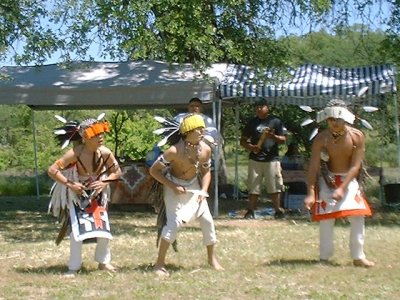
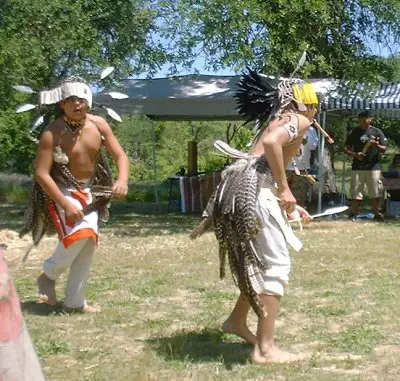
One of the event's highlights was a performance by young dancers from Robinson Rancheria, whose dancing gave visitors a glimpse into their rich culture.
{mos_sb_discuss:2}