 How to resolve AdBlock issue?
News
- Details
- Written by: Victoria Colliver
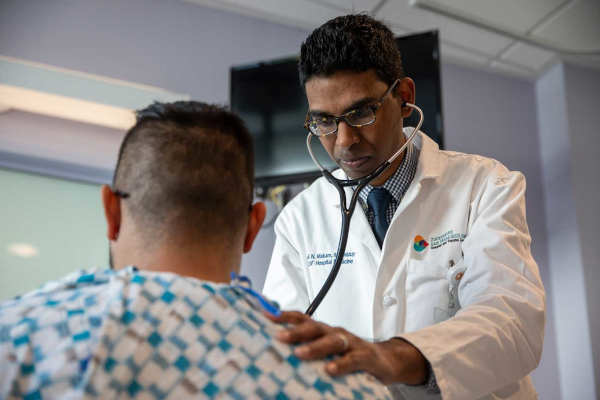
Most of those who were discharged to long-term acute care centers had ailments that lasted for more than a year.
UC San Francisco researchers examined COVID-19 patients across the United States who survived some of the longest and most harrowing battles with the virus and found that about two-thirds still had physical, psychiatric, and cognitive problems for up to a year later.
The study, which appeared April 10 in the journal Critical Care Medicine, reveals the life-altering impact of SARS-CoV-2 on these individuals, the majority of whom had to be placed on mechanical ventilators for an average of one month.
Too sick to be discharged to a skilled nursing home or rehabilitation facility, these patients were transferred instead to special hospitals known as long-term acute care hospitals (LTACHs). These hospitals specialize in weaning patients off ventilators and providing rehabilitation care, and they were a crucial part of the pandemic response.
Among the 156 study participants, 64% reported having a persistent impairment after one year, including physical (57%), respiratory (49%), psychiatric (24%), and cognitive (15%). Nearly half, or 47%, had more than one type of problem. And 19% continued to need supplemental oxygen.
The long-term follow up helps to outline the extent of the medical problems experienced by those who became seriously ill with COVID early in the pandemic.
“We have millions of survivors of the most severe and prolonged COVID illness globally,” said the study’s first author, Anil N. Makam, MD, MAS, an associate professor of medicine at UCSF. “Our study is important to understand their recovery and long-term impairments, and to provide a nuanced understanding of their life-changing experience.”
Disabilities from long-term hospital stays
Researchers recruited 156 people who had been transferred for COVID to one of nine LTACHs in Nebraska, Texas, Georgia, Kentucky, and Connecticut between March 2020 and February 2021. They questioned them by telephone or online a year after their hospitalization.
The average total length of stay in the hospital and the LTACH for the group was about two months. Their average age was 65, and most said they had been healthy before getting COVID.
In addition to their lingering ailments from COVID, the participants also had persistent problems from their long hospital stays, including painful bedsores and nerve damage that limited the use of their arms or legs.
“Many of the participants we interviewed were most bothered by these complications, so preventing these from happening in the first place is key to recovery,” Makam said.
Although 79% said they had not returned to their usual health, 99% had returned home, and 60% of those who had previously been employed said they had gone back to work.
They were overwhelmingly grateful to have survived, often describing their survival as a “miracle.” But their recovery took longer than expected.
The results underscore that it is normal for someone who has survived such severe illness to have persistent health problems.
“The long-lasting impairments we observed are common to survivors of any prolonged critical illness, and not specific to COVID, and are best addressed through multidisciplinary rehabilitation,” Makam said.
Authors: Additional UCSF co-authors include Oanh Kieu Nguyen, MD, MAS, Eddie Espejo, MA, Cinthia Blat, MPH, W. John Boscardin, Ph.D. and Kenneth E. Covinsky, MD, MPH.
Funding: The work was supported by grants from the National Institutes of Health/National Institute on Aging (K23AG052603), the UCSF Research Evaluation and Allocation Committee (Carson and Hampton Research Funds) and the National Association of Long Term Hospitals. The authors had no conflicts of interest to disclose.
- Details
- Written by: DENNIS FORDHAM
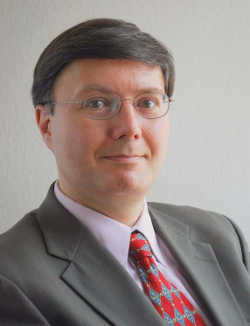
In addition to signing all necessary estate planning documents to put one’s affairs in order, it is necessary to consider what additional information will be needed by the persons carrying out the estate plan when the time comes.
First, it is necessary for the individual named to carry out the estate plan to know that there are estate planning documents in place, where those documents are kept, and how to gain access to them. Without such basic knowledge the family of an incapacitated or deceased person will not even know on what path to proceed.
For example, take the son of an incapacitated mother who did not know that she had transferred her financial assets to a living trust and did not know where her trust document was kept. Thus, he did not know that such planning was in place and proceeded with a court conservatorship proceeding in order to gain control over the mother’s assets to pay for her care.
The conservatorship was unnecessary under the circumstances, but the son did not know this. Eventually, the son contacted an attorney and the mother’s estate planning documents were located. The take-away is to tell the appropriate person(s) that you have estate planning documents and where they are kept.
Second, estate planning may include designating death beneficiaries to bank, brokerage and life insurance assets. This work typically does not involve the estate planning attorney as the beneficiary forms are provided by the financial institution to the customer to complete.
The disconnect between the estate plan prepared by the attorney and the death beneficiary forms prepared by the client/customer means that the estate planning binder oftentime does not disclose the identities of the account(s) and the death beneficiaries.
It is wise, therefore, to keep copies of the designated death beneficiary forms inside the estate planning binder (or other compilation of estate planning documents) so that the person administering the estate knows about such non-trust assets and knows the identities of the death beneficiaries.
These beneficiaries will then be told to contact the financial institution to request the beneficiary claims package.
For example, take the decedent who has his affairs in order except that the successor trustee discovers a retirement plan account and cannot ascertain who is the death beneficiary.
Is the beneficiary the decedent’s trust, an individual beneficiary or is it a charitable beneficiary?
Unfortunately, banks and brokerages will only provide account information about a decedent to a court appointed personal representative; this means opening a probate proceeding.
The successor trustee managing the decedent’s trust may try various hit or miss attempts at guessing who might be the designated beneficiary and having such person(s) contact the bank or brokerage to make a claim as the death beneficiary.
Alternatively, the situation may end up only be resolved by opening a probate that is otherwise unnecessary as death beneficiaries were named and so normally avoids probate.
Third, some valuable or sentimental assets may be stored in undisclosed (hidden) locations. Unless the person administering the estate knows where and how to access such valuables, it is possible that such assets will be lost due to not knowing where they are.
For example, consider the parent who hides valuable gold bars for their protection. The parent dies unexpectedly before telling his child where the gold bars are located.
Such unfortunate results may occur if someone takes it for granted that they will get to disclose such information before death but are not yet ready to do so presently. That approach is risky business.
In sum, consider what is important. Practical information about one’s estate planning and assets needs to be provided in advance to the person who will be administering the estate. This increases the likelihood of a successful administration down the road.
The foregoing brief discussion is not legal advice. Consult a qualified estate planning attorney for guidance.
Dennis A. Fordham, attorney, is a State Bar-Certified Specialist in estate planning, probate and trust law. His office is at 870 S. Main St., Lakeport, Calif. He can be reached at
- Details
- Written by: Elizabeth Larson
The Clearlake Animal Control website lists 34 adoptable dogs.

This week’s dogs include “Romeo,” a male German shepherd mix with a tricolor coat.
And of course there is “Juliet,” a 2-year-old chocolate Labrador retriever mix.

The shelter is located at 6820 Old Highway 53. It’s open from 9 a.m. to 6 p.m. Tuesday through Saturday.
For more information, call the shelter at 707-762-6227, email
This week’s adoptable dogs are featured below.
Email Elizabeth Larson at
- Details
- Written by: Adi Foord, University of Maryland, Baltimore County
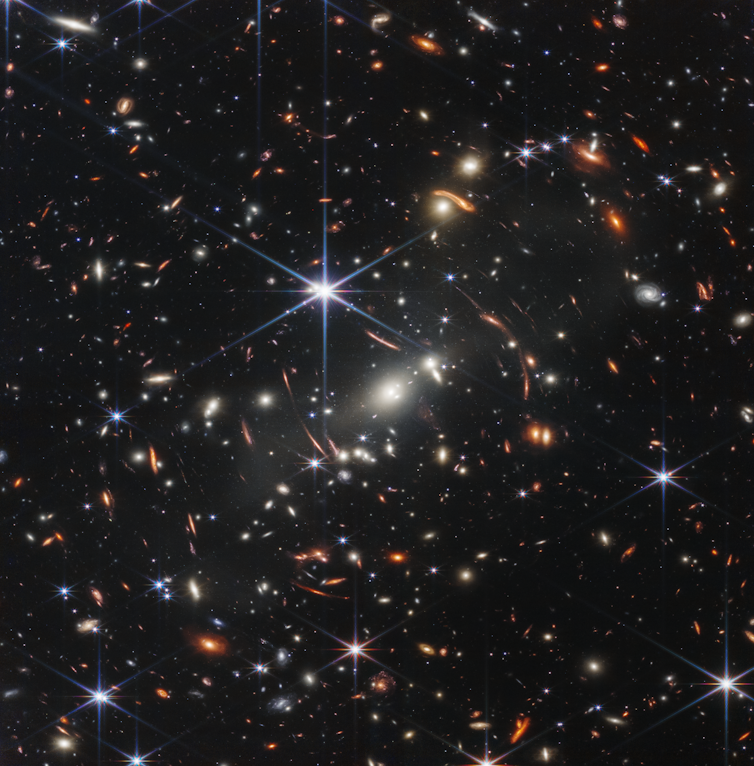

Curious Kids is a series for children of all ages. If you have a question you’d like an expert to answer, send it to
If the James Webb telescope was 10 times more powerful, could we see the beginning of time? - Sam H., age 12, Prosper, Texas
The James Webb Space Telescope, or JWST for short, is one of the most advanced telescopes ever built. Planning for JWST began over 25 years ago, and construction efforts spanned over a decade. It was launched into space on Dec. 25, 2021, and within a month arrived at its final destination: 930,000 miles away from Earth. Its location in space allows it a relatively unobstructed view of the universe.
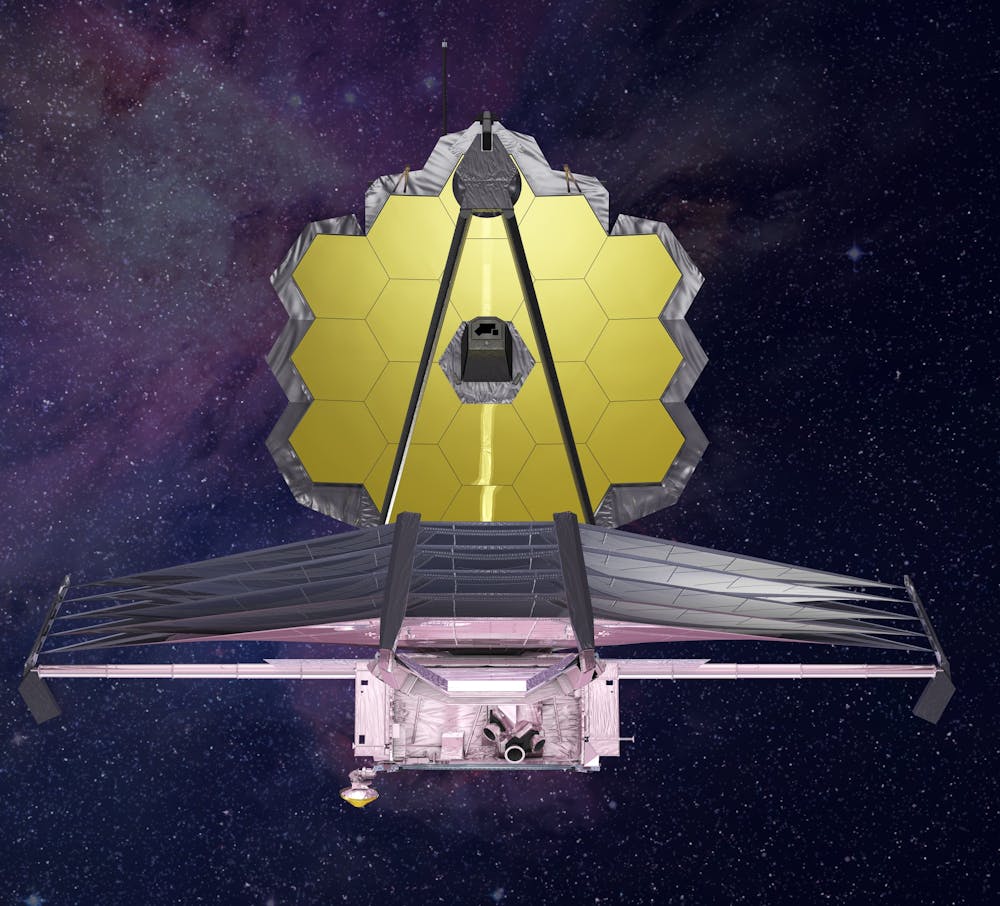
The telescope design was a global effort, led by NASA, and intended to push the boundaries of astronomical observation with revolutionary engineering. Its mirror is massive – about 21 feet (6.5 meters) in diameter. That’s nearly three times the size of the Hubble Space Telescope, which launched in 1990 and is still working today.
It’s a telescope’s mirror that allows it to collect light. JWST’s is so big that it can “see” the faintest and farthest galaxies and stars in the universe. Its state-of-the-art instruments can reveal information about the composition, temperature and motion of these distant cosmic objects.
As an astrophysicist, I’m continually looking back in time to see what stars, galaxies and supermassive black holes looked like when their light began its journey toward Earth, and I’m using that information to better understand their growth and evolution. For me, and for thousands of space scientists, the James Webb Space Telescope is a window to that unknown universe.
Just how far back can JWST peer into the cosmos and into the past? About 13.5 billion years.
Time travel
A telescope does not show stars, galaxies and exoplanets as they are right now. Instead, astronomers are catching a glimpse of how they were in the past. It takes time for light to travel across space and reach our telescopes. In essence, that means a look into space is also a trip back in time.
This is even true for objects that are quite close to us. The light you see from the Sun left it about 8 minutes, 20 seconds earlier. That’s how long it takes for the Sun’s light to travel to Earth.
You can easily do the math on this. All light – whether sunlight, a flashlight or a light bulb in your house – travels at 186,000 miles (almost 300,000 kilometers) per second. That’s just over 11 million miles (about 18 million kilometers) per minute. The Sun is about 93 million miles (150 million kilometers) from Earth. That comes out to about 8 minutes, 20 seconds.
But the farther away something is, the longer its light takes to reach us. That’s why the light we see from Proxima Centauri, the closest star to us aside from our Sun, is 4 years old; that is, it’s about 25 trillion miles (approximately 40 trillion kilometers) away from Earth, so that light takes just over four years to reach us. Or, as scientists like to say, four light years.
Most recently, JWST observed Earendel, one of the farthest stars ever detected. The light that JWST sees from Earendel is about 12.9 billion years old.
The James Webb Space Telescope is looking much farther back in time than previously possible with other telescopes, such as the Hubble Space Telescope. For example, although Hubble can see objects 60,000 times fainter than the human eye is able, the JWST can see objects almost nine times fainter than even Hubble can.
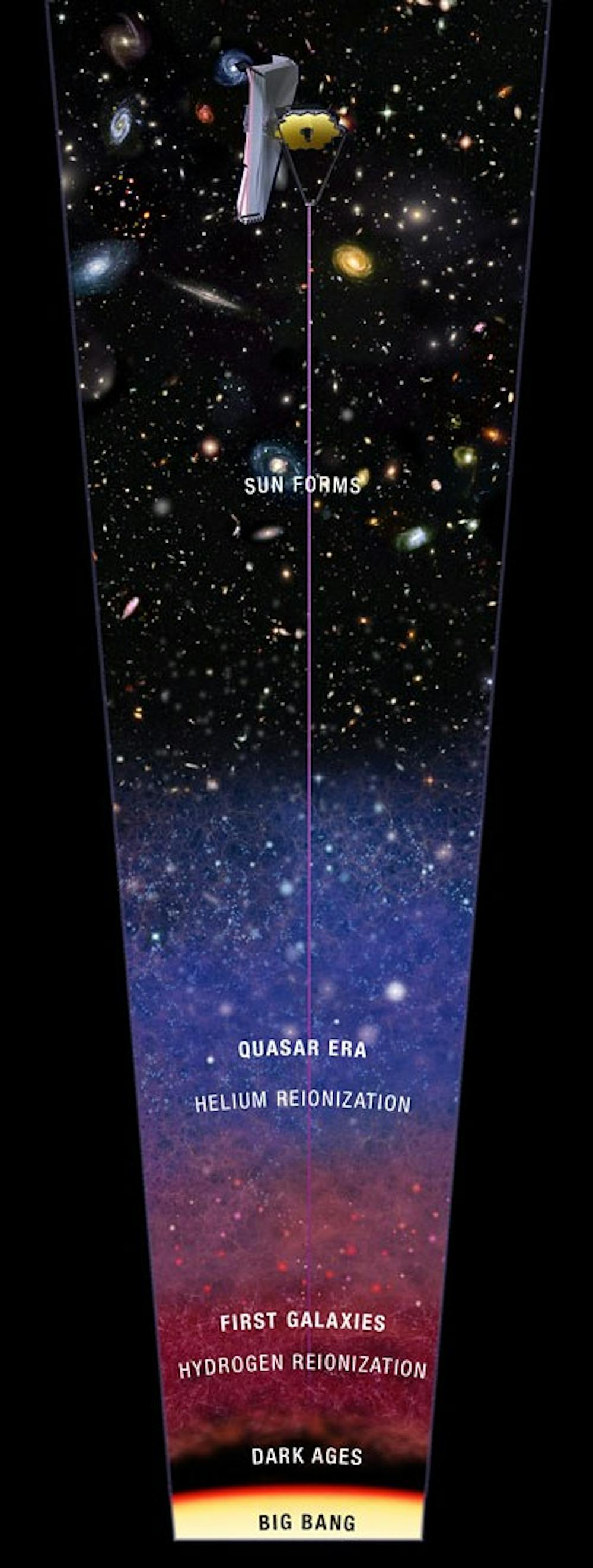
The Big Bang
But is it possible to see back to the beginning of time?
The Big Bang is a term used to define the beginning of our universe as we know it. Scientists believe it occurred about 13.8 billion years ago. It is the most widely accepted theory among physicists to explain the history of our universe.
The name is a bit misleading, however, because it suggests that some sort of explosion, like fireworks, created the universe. The Big Bang more closely represents the appearance of rapidly expanding space everywhere in the universe. The environment immediately after the Big Bang was similar to a cosmic fog that covered the universe, making it hard for light to travel beyond it. Eventually, galaxies, stars and planets started to grow.
That’s why this era in the universe is called the “cosmic dark ages.” As the universe continued to expand, the cosmic fog began to rise, and light was eventually able to travel freely through space. In fact, a few satellites have observed the light left by the Big Bang, about 380,000 years after it occurred. These telescopes were built to detect the splotchy leftover glow from the Big Bang, whose light can be tracked in the microwave band.
However, even 380,000 years after the Big Bang, there were no stars and galaxies. The universe was still a very dark place. The cosmic dark ages wouldn’t end until a few hundred million years later, when the first stars and galaxies began to form.
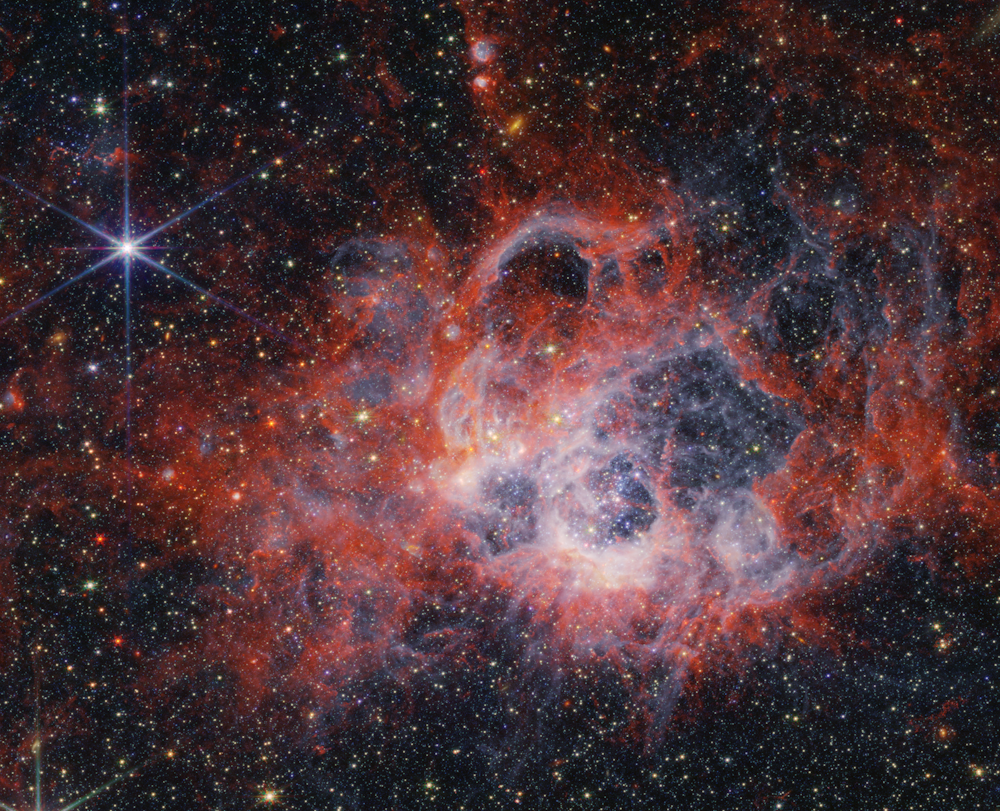
The James Webb Space Telescope was not designed to observe as far back as the Big Bang, but instead to see the period when the first objects in the universe began to form and emit light. Before this time period, there is little light for the James Webb Space Telescope to observe, given the conditions of the early universe and the lack of galaxies and stars.
Peering back to the time period close to the Big Bang is not simply a matter of having a larger mirror – astronomers have already done it using other satellites that observe microwave emission from very soon after the Big Bang. So, the James Webb Space Telescope observing the universe a few hundred million years after the Big Bang isn’t a limitation of the telescope. Rather, that’s actually the telescope’s mission. It’s a reflection of where in the universe we expect the first light from stars and galaxies to emerge.
By studying ancient galaxies, scientists hope to understand the unique conditions of the early universe and gain insight into the processes that helped them flourish. That includes the evolution of supermassive black holes, the life cycle of stars, and what exoplanets – worlds beyond our solar system – are made of.
Hello, curious kids! Do you have a question you’d like an expert to answer? Ask an adult to send your question to
And since curiosity has no age limit – adults, let us know what you’re wondering, too. We won’t be able to answer every question, but we will do our best.
Adi Foord, Assistant Professor of Astronomy and Astrophysics, University of Maryland, Baltimore County
This article is republished from The Conversation under a Creative Commons license. Read the original article.