How to resolve AdBlock issue?
Refresh this page
How to resolve AdBlock issue?
Refresh this page
Lake County News,California
  • Home
    • Registration Form
  • News
    • Education
    • Veterans
    • Community
      • Obituaries
      • Letters
      • Commentary
    • Police Logs
    • Business
    • Recreation
    • Health
    • Religion
    • Legals
    • Arts & Life
    • Regional
  • Calendar
  • Contact us
    • FAQs
    • Phones, E-Mail
    • Subscribe
  • Advertise Here
  • Login
How to resolve AdBlock issue?
Refresh this page

News

CHP urges everyone to 'buckle up' as holiday weekend approaches

Details
Written by: CALIFORNIA HIGHWAY PATROL
Published: 23 May 2024
As Memorial Day weekend approaches and Californians gear up for summer festivities, the California Highway Patrol will implement a statewide traffic enforcement effort to help everyone reach their destination safely.

Last year over the holiday weekend, 46 people were killed in crashes throughout California.

Beginning at 6:01 p.m. on Friday, May 24, the CHP will initiate a statewide maximum enforcement period, or MEP, to address the expected surge in holiday travelers on California roads.

The MEP will continue through 11:59 pm. on Monday, May 27.

“Loss of life on our roads is preventable when drivers make safe and responsible choices behind the wheel,” said CHP Commissioner Sean Duryee. “Always remember to drive sober, avoid distraction, adhere to the speed limit, and ensure adults are buckled up and children are properly secured in an appropriate car seat.”

Throughout the holiday weekend, expect a heightened presence of CHP officers on patrol to enhance public safety by deterring reckless driving behaviors and taking necessary enforcement action when needed.

Last year, CHP recorded more than 1,100 arrests for driving under the influence of drugs or alcohol during the 78-hour Memorial Day MEP, which is an average of an arrest every four minutes.

The CHP urges all drivers to make the right choices and avoid impaired driving. Arrange for a sober driver, use ride-sharing services, taxis, or public transportation if you have been drinking.

If you see or suspect an impaired driver, safely pull over and call 9-1-1 immediately. Be prepared to provide the dispatcher a description of the vehicle, the license plate number, location, and direction of travel. Your phone call may save someone’s life.

The mission of the CHP is to provide the highest level of safety, service and security.

Bipartisan Safer California Plan bills pass Senate

Details
Written by: LAKE COUNTY NEWS REPORTS
Published: 23 May 2024
The California Senate has overwhelmingly passed the bipartisan Safer California Plan, a package of bills aimed at addressing the fentanyl crisis and curbing retail theft and community-based crime.

Senate President pro Tempore Mike McGuire (D-North Coast) is coauthoring all 15 bills — 10 focus on evidence-based prevention and treatment solutions aimed at the fentanyl crisis and substance use disorder, and five are directed at preventing, deterring, and prosecuting retail theft and community-based crimes.

“The Senate’s Safer California Plan is a perfect example of what we can accomplish when we set aside party politics and work together to solve problems,” McGuire said. “These 15 evidenced-based bills will help curb the deadly fentanyl epidemic and the rising rates of retail theft and community-based crimes that are impacting communities up and down the Golden State. We look forward to working with the Assembly and Governor to get this comprehensive legislative package across the finish line, which will make this state safer and our communities healthier.”

The Safer California Plan has been widely acclaimed by law enforcement, firefighters, medical experts and addiction professionals.

Bills included in the Safer California Plan and Senate votes are noted below.

Fentanyl

SB 1319 (Wahab): Expedites approval of projects that expand the continuum of substance use disorder rehab facilities. Final vote: 39-0

SB 1320 (Wahab): Requires health plans to develop a mechanism to reimburse providers who provide primary care and behavioral health integrated services. Final vote: 36-0

SB 1385 (Roth): Supports navigators in hospital emergency departments and in the criminal justice system to ensure patients and justice-involved individuals are connected to evidence-based treatment for opioid use disorder and to ongoing treatment services. *Would include corresponding budget action to ensure navigators receive support training. Final vote: 39-0

SB 1442 (Ochoa Bogh & Skinner): Empowers CalRX to supply California providers with vital United States Food and Drug Administration (USFDA) approved testing and health assessment equipment, which will allow access to affordable rapid response testing strips for diagnostics purposes. Final vote: 38-0

SB 1468 (Ochoa Bogh & Roth): Educates and encourages providers to make use of the new federal Drug Enforcement Agency (DEA) rule to allow practitioners to dispense a three-day supply of narcotic medication to start detoxification treatment or maintenance treatment for people who use opioids. Final vote: 38-0

SB 908 (Cortese): Requires the California Department of Public Health (CDPH) to spread awareness of the increase in opioid overdoses and develop guidelines to protect and prevent fentanyl-related deaths of children zero to five. Final vote: 38-0

SB 909 (Umberg): Addresses physician shortages, including addiction medicine specialists, in underserved areas by eliminating the cap on the Steven M. Thompson loan repayment program for physicians who agree to provide direct patient care in an underserved area for 36 months. Final vote: 39-0

SB 910 (Umberg): Establishes statewide standards used by collaborative courts to improve programming, drug testing, and medication-assisted treatment for individuals moving through the criminal justice system. Final vote: 39-0

SB 950 (Skinner): Expands the number of re-entry hubs to provide more warm hand-offs and treatment options to individuals returning home from the criminal justice system. *Would include corresponding budget action to align state reimbursement models with federal rules to maximize funding potential. Final vote: 39-0

SB 1502 (Ashby): Prevents illicit use and trafficking of Xylazine (aka “tranq”), an animal tranquilizer with no approved human use that is increasingly being found in the illicit drug supply and has been linked to rising overdose deaths across the country. Final vote: 38-0

Retail theft and community-based crime

SB 1144 (Skinner): Disrupts the sale of stolen goods on online marketplaces by requiring that third-party sellers be certified, and bans sellers suspected of criminal activity from operating through online marketplace platforms. Final vote: 33-1

SB 1416 (Newman): Increases penalties on professional organized retail theft in particularly significant large-scale resale schemes. Final vote: 39-0

SB 905 (Wiener): Removes the locked door loophole for automotive property thefts. Final vote: 38-0

SB 982 (Wahab): Cements the work California has done on organized crime by making the law on organized retail theft permanent. Final vote: 39-0

SB 1242 (Min): Requires courts to impose higher penalties on criminals who create fires in order to engage in retail theft. The higher penalties do not impact Proposition 47. Final vote: 36-0
More information about the Safer California Plan can be found here.

McGuire represents the North Coast of California, which stretches from the Golden Gate Bridge to the Oregon border, including Del Norte, Trinity, Humboldt, Lake, Mendocino, Sonoma and Marin counties.

Is hard water bad for you? 2 water quality engineers explain the potential benefits and pitfalls that come with having hard water

Details
Written by: Sarah Blank, Iowa State University and Timothy Ellis, Iowa State University
Published: 23 May 2024


Do you know how hard your water is? Tatiana Maksimova/Moment via Getty Images

When you turn on your faucet to get a glass of water or wash your face, you’re probably not thinking about what’s in your water – besides water. Depending on where you live and whether you have a water-softening system, your water might contain dissolved minerals such as calcium and magnesium. And these minerals can play a role in whether certain pollutants such as lead stay out of your water.

The more dissolved minerals, the “harder” your water. But is hard water actually good or bad for you?

As engineering researchers who study water quality, we have seen the effects – both good and bad – that soft and hard water can have on everything from plumbing systems to the human body.

What is hard water?

Hard water is water that contains dissolved minerals such as calcium, magnesium, iron and manganese. Soft water contains lower concentrations of these minerals.

Hardness is measured in terms of calcium carbonate, CaCO₃, which is used as a reference point for comparing different minerals.

The amount of these minerals in a city’s water supply varies by region. It depends on both where the water is coming from and how the water is treated.

Communities that source their water from wells rather than surface water such as lakes, streams, rivers and reservoirs often start with hard water pretreatment. As groundwater moves through the soil to a well, it picks up minerals. At the same time, areas where the types of rock and sediment are more prone to dissolving in water may have harder water.

A map showing water hardness across the U.S., with the hardest water in the Midwest, West and Southwest.
Streamflow water hardness across the U.S., where purple and blue indicate softer water and white and red indicate harder water. This map was updated in 2005 by the U.S. EPA. U.S. Geological Survey

Effects on water lines and distribution

Water that’s too hard or too soft could damage pipes and lead to health and aesthetic concerns.

Since hard water has a higher mineral concentration, minerals can build up in pipes, which leads to clogged pipes in homes and public water systems. Hardness also creates more deposits at higher temperatures, so hot water heaters are prone to mineral buildup. In areas with hard water, water heaters have a shorter life span.

A pipe with gray material around the inside.
A pipe that has a thick layer of mineral deposits inside of it. Mevedech/Wikimedia Commons

But hard water can help, too. While minerals from hard water can clog pipes, a thin layer of mineral deposition in water lines can protect you from ingesting toxins that could seep in from the pipe itself. Water without any minerals can play a role in pipe corrosion, because without a thin, protective layer of minerals, the water may start to eat away at the pipes, releasing metals from the pipes into the water. Drinking this water might mean ingesting metals such as lead, copper and iron.

While water that is too soft or too hard can have different effects on water lines, there is more chemistry than just hardness that plays a role in pipe corrosion and clogging. So, there’s no specific hardness level that is a cause for concern. Water treatment plants take the appropriate measures to adjust for different hardness levels.

A large tank of water, with fences around the top.
Drinking water normally undergoes treatment at a plant before it makes its way to your home. Florida Water Daily, CC BY

Effects on skin and hair

Whether you use hard or soft water to wash up can also have noticeable effects on your skin and hair.

Hard water is more likely to leave your skin dry. The minerals in hard water strip moisture from skin and create deposits that clog pores.

Hard water can also strip the hair of moisture, leaving it dry and coarse. Dry hair is more prone to frizz, tangles and breakage. Mineral deposits can also build up on the hair and scalp, clogging your hair follicles and leading to dandruff and slowed hair growth.

Many households have their own water-softening systems. A water-softening system may help hair and skin dryness and buildup. But many of these systems trap and replace calcium and magnesium with sodium, a mineral that does not contribute to water hardness, to lower overall hardness. Increasing the water’s sodium content may be a concern for anyone on a low-sodium diet.

Overall health benefits

Other than aesthetic and water heater concerns, drinking hard water is actually good for you and doesn’t come with any serious adverse side effects.

For example, the extra magnesium and calcium you consume in hard water may provide a gentle solution to digestive issues and constipation.

Also, researchers have found positive correlations between the hardness of drinking water and bone health. Since calcium is an essential mineral in bones, individuals in areas with drinking water that has more calcium may have higher bone mineral density and may be less prone to osteoporosis.

Researchers have also found that drinking hard water has been associated with a decrease in cardiovascular disease-related mortality. Magnesium helps regulate your cardiac muscles, while calcium keeps the sodium-potassium balance in your cardiac muscles in check, which they need to function.

Whether you have hard or soft water, don’t worry too much. Water treatment plants take appropriate measures to ensure safe water for the communities they support.

To learn more about the water hardness in your area, you can contact your local water treatment plant about its specific water treatment process. Private well owners can contact their state government to find out the testing recommendations for their area.The Conversation

Sarah Blank, Master's Student in Civil Engineering, Iowa State University and Timothy Ellis, Associate Professor of Civil, Construction and Environmental Engineering, Iowa State University

This article is republished from The Conversation under a Creative Commons license. Read the original article.
Forest Service awards more than $16 million to Lake County to reduce wildfire risk and invest in wood innovations projects

Details
Written by: U.S. FOREST SERVICE
Published: 22 May 2024
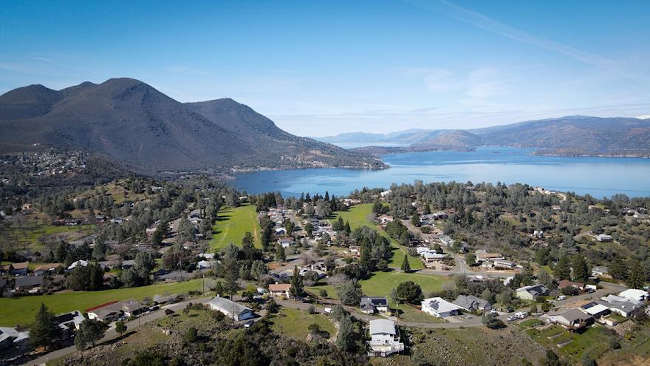
Lake County has lost more than 1,800 homes to wildfire and some estimates indicate more than 60 percent of the county has burned between 2011 and 2021. USDA Forest Service photo by Andrew Avitt.

LAKE COUNTY, Calif. — Lake County communities with limited resources and facing high risk from wildfire are getting over $16 million in support from the USDA Forest Service’s Community Wildfire Defense Grants and Wood Innovations Program.

These awards for communities like Lake County come at a time when wildfires are becoming more destructive across much of California.

“Lake County has been aggressively working to mitigate climate-related risks. Partnering with District Ranger Frank Aebly and local Forest Service staff have been an important facet of those efforts for many years,” said Jessica Pyska, Lake County’s District 5 supervisor and vice chair of the Lake County Community Risk Reduction Authority. “We appreciate the U.S. Department of Agriculture’s recognition that hardening economically vulnerable communities is a matter of national priority.”

Last Tuesday, the Forest Service announced funded proposals for three Lake County projects under the Community Wildfire Defense Grants program:

• Clear Lake Environmental Research Center: Awarded over $8 million to reduce fuels and restore fire-adapted ecosystems on private lands and roadways. This is a follow-up to their $9 million award in 2023, which is providing a blueprint for what a fire resilient community looks like.

• Lake County Resource Conservation District with Tribal EcoRestoration Alliance: Awarded $7.3 million for its “Fire in Hand, Healing Lands” project to use a traditional ecological knowledge-based approach to fuels reduction, including Indigenous-led restoration and beneficial burning. A key component is education and training through Lake County’s Training Exchange Program, also called TREX.

• Seigler Springs Community Redevelopment Association: Received $249,000 to develop a new Community Wildfire Protection Plan to reduce wildfire risk and build resiliency in the Cobb Mountain area which is still recovering from the 2015 Valley Fire.

Last Wednesday, additional awards were announced under the Wood Innovations Program grant. Wood innovations grants are meant to spark innovation, create new markets for wood products and renewable wood energy from sustainably sourced wood, and increase the capacity of wood processing facilities.

Funded proposals include Scotts Valley Energy Corp., a wholly-owned corporation of the Scotts Valley Band of Pomo Indians, which received a $409,000 award for a central wood processing campus and wood-to-energy generation in Upper Lake, the gateway to the southern portion of the Mendocino National Forest.

Local officials and funding recipients expressed excitement for the opportunities coming to Lake County.

“I am ecstatic about the funding that has been awarded to Lake County to bolster the county for community wildfire and also wood innovations,” said Eddie Crandell, Lake County’s District 3 Supervisor covering Northshore communities and Lake Pillsbury.

“Lake County Resource Conservation District is ecstatic to receive this investment and support our partners at TERA, and the community at large, to further integrate traditional ecological knowledge into our collective efforts of land stewardship and wildfire mitigation,” said Harry Lyons, the district’s board president. “Beneficial burning is an essential tool to maintain resilient landscapes, and we are thrilled to re-establish this on our landscapes with TERA’s leadership.”

Both the Community Wildfire Defense Grant and the Wood Innovations Grant are made possible in part by the Bipartisan Infrastructure Law and the Inflation Reduction Act.

More information about the funded proposals, as well as announcements about the grant program, is available on the Community Wildfire Defense Grants website and the Community Wood Grants and a Wood Innovations Grants website.
  1. Lakeport Police Department assigns officer to city’s downtown
  2. Ruddock Borre appointed Special Districts administrator
  3. House of Representatives passes fire victims tax relief bill
  • 672
  • 673
  • 674
  • 675
  • 676
  • 677
  • 678
  • 679
  • 680
  • 681
How to resolve AdBlock issue?
Refresh this page