How to resolve AdBlock issue?
Refresh this page
How to resolve AdBlock issue?
Refresh this page
Lake County News,California
  • Home
    • Registration Form
  • News
    • Education
    • Veterans
    • Community
      • Obituaries
      • Letters
      • Commentary
    • Police Logs
    • Business
    • Recreation
    • Health
    • Religion
    • Legals
    • Arts & Life
    • Regional
  • Calendar
  • Contact us
    • FAQs
    • Phones, E-Mail
    • Subscribe
  • Advertise Here
  • Login
How to resolve AdBlock issue?
Refresh this page

News

City of Clearlake plans Sept. 10 community open house

Details
Written by: Lake County News reports
Published: 07 September 2024
CLEARLAKE, Calif. — The city of Clearlake invites residents to a community open house to discuss current and future projects that affect the city’s residents like water service and growth impacts from inadequate water service, public safety, and priority projects.

The drop-in open house will take place from 3 to 5:30 p.m. Tuesday, Sept. 10, at Clearlake City Hall, 14050 Olympic Drive.

Featured departments will be Public Works, economic development, planning and the police departments.

Discussion topics will include:

• Water service: Three water agencies serving the city including how water service is stifling growth, a lack of transparency and accountability at Highlands Water, the State Water Board’s ranking of water rates as unaffordable, failing infrastructure, lack of grant funding and more.
• Priority projects: Signature projects including Youth Sports Complex in Burns Valley, airport redevelopment and downtown revitalization.
• Road improvements: Roads improved over past five years, current projects, upcoming projects and city versus privately-owned and maintained roads.
• Public safety and code enforcement: Results over the past few years, new initiatives to enhance safety and security, recruiting challenges and more.

“The city of Clearlake is dedicated to serving its residents through transparent governance and proactive community engagement,” officials said in a meeting announcement. “Our mission is to ensure a high quality of life for all residents by providing input opportunities and addressing their needs.”

City officials encourage residents to learn more, ask questions and voice their opinions about topics that directly impact their daily lives.

Sept. 9 meeting planned on Guenoc Valley project

Details
Written by: Lake County News reports
Published: 07 September 2024
MIDDLETOWN, Calif. — A public meeting is planned early next week to discuss the latest on a major resort and residential development near Middletown.

The Lake County Community Development Department’s Planning Division will hold the meeting on the Guenoc Valley Mixed-Use Planned Development Project on Monday, Sept. 9, from 5 to 7 p.m., at the Calpine Geothermal Visitor Center, located at: 15500 Central Park Road, Middletown.

A notice of availability for the draft partially revised environmental impact report was distributed for public review and comment between July 19 and Sept. 3.

This public meeting is intended to provide an overview of the project and environmental impact report, as well as to provide additional opportunities for comment.

Comments will be accepted through 5 p.m. on Sept. 11 due to the timing of this meeting.

The project documents may be found online at https://lakecountyca.gov/Guenoc-Valley or https://ceqanet.opr.ca.gov/2019049134/5.

A hardcopy of the draft partially revised environmental impact report may also be viewed at the Community Development Department, located at 255 N. Forbes St., Lakeport; or at the Middletown Library, located at 21256 Washington St.

Questions and public comments may be submitted at the public hearing or in writing to Senior Planner Laura Hall at 707-263-2221 or This email address is being protected from spambots. You need JavaScript enabled to view it..

Sheriff’s investigation into illegal marijuana cultivation in Cobb leads to three arrests

Details
Written by: Lake County News reports
Published: 07 September 2024
LAKE COUNTY, Calif. — The Lake County Sheriff’s Office said it arrested three men this week following an investigation into illegal marijuana cultivation in the Cobb area that also led to the seizure of weapons, cash and illegal pesticides.

Salvador Martinez, 34, of Cobb, along with Leonardo Martinez-Franco, 18, and Leonardo Martinez-Campos, 48, both of Kelseyville, were arrested on Wednesday, according to a sheriff’s office report.

During August, the sheriff's office conducted aerial surveillance that led to the discovery of an illegal outdoor marijuana cultivation site in the middle of a seasonal stream that drains directly into Kelsey Creek. The site was located in the 15000 block of Bottle Rock Road in Cobb.

Subsequent investigation revealed that the property was owned by Martinez.

On Wednesday, Sept. 4, detectives served a search warrant at the property, where Martinez was immediately located and detained, the sheriff’s office reported.

During the search, the agency said its detectives discovered three firearms, $20,000 in cash and over 100 large marijuana plants growing in the middle of a natural drainage area that feeds into Kelsey Creek.

Authorities said the creek is home to a small population of rainbow trout and serves as a breeding ground for the endangered Clear Lake hitch.

While deputies were executing the search warrant, Martinez-Franco and Martinez-Campos arrived at the property to tend to the marijuana plants, authorities said.

All three individuals were arrested and transported to the Hill Road Correctional Facility on charges related to felony marijuana cultivation with environmental crimes and possession of marijuana for sale, the sheriff’s office reported.

The sheriff’s office said its detectives subsequently obtained a second search warrant for the residence of Martinez-Franco and Martinez-Campos, located in the 5000 block of Cold Creek Drive in Kelseyville.

During the search of the residence, authorities said detectives uncovered an AR-style rifle with no serial number — commonly referred to as a "ghost gun" — along with 35 pounds of processed and packaged marijuana buds, 89 additional marijuana plants, and 13 bottles of pesticides manufactured in Mexico that are banned in the United States due to their toxicity to fish, wildlife and humans.

Additionally, three bottles of highly regulated pesticides were discovered on the property, the sheriff’s office reported.

The sheriff’s office said this is an ongoing investigation.

The Lake County Sheriff's Office urges anyone with information to contact the Narcotics Task Force Tip Line at 707-263-3663.

Long COVID inflicts deep scars on the lungs, but targeting specific immune cells could reverse damage − new research in mice

Details
Written by: Harish Narasimhan, University of Virginia
Published: 07 September 2024


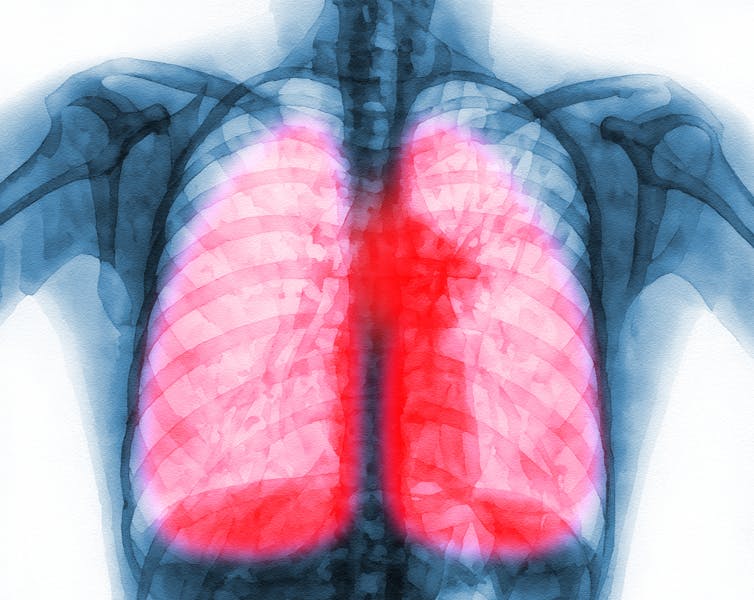
Many respiratory viral infections can cause long-term symptoms. sbk_20d pictures/Moment via Getty Images

The long-term effects of respiratory viral infections such as COVID-19 are a major public health burden. Some estimates suggest over 65 million people around the world suffer from long COVID-19.

Efforts to better understand this condition, however, have been hampered by its ability to affect multiple organ systems, such as those involving the lungs, brain and heart. This is further complicated by the lack of animal models that can sufficiently mimic the disease.

Animal models, such as mice and rats, are a crucial tool that researchers use to study human diseases and develop treatment strategies. Although there are major differences between humans and animal models, the vast majority of our immune and organs systems function similarly. Such similarities in physiology have made significant health care discoveries, including those related to COVID-19, possible.

I am an immunology researcher in the Sun Lab at the University of Virginia. We study the role the immune system plays in respiratory viral infections such as influenza and COVID-19. In our newly published research, we developed a new mouse model to study long COVID-19 and found that blocking certain overactive immune cells can restore lung function.

New models, new targets

Out team wanted to better understand the long-term effects of COVID-19 on the respiratory system. To do this, we worked to identify key features associated with lung scarring following COVID-19.

First, we examined lung samples from patients with long COVID-19. Although these patients were infected several months to years before the samples were taken, we found evidence of an overactive immune system in their lungs, particularly within areas that failed to fully repair themselves after infection.

Next, we aimed to create a mouse model for long COVID-19 by comparing the pathology of mice infected with four different types of respiratory viral infections. Surprisingly, we found that mice infected with influenza virus, rather than the COVID-19 mouse models scientists currently use, best replicated the physical features of severe chronic lung disease. The reasons why infections from different respiratory viruses affect the lungs in different ways are unclear. But preliminary evidence suggests it may be because each virus targets different types of cells “in humans and mice.”

Additionally, since long COVID-19 is about the damage left behind after infection, it seems less important what virus causes the problem in our animal model than that the damage is similar to what we want to address in human patients.

Long COVID-19 can be debilitating.

Using our new mouse model, we were able to identify the presence of an abnormal cluster of cells in mice lungs – made up of the same dysfunctional immune and epithelial, or structural, cells seen in the lungs of long-COVID-19 patients. Additionally, we found that the uncontrolled activity of these immune cells in the lungs impeded structural cells from repairing themselves. It also hindered them from restoring gas exchange, the process of taking in oxygen and releasing carbon dioxide.

Importantly, when we blocked the activity of proteins associated with this overactive immune response, it reduced lung scarring and restored optimal lung function in mice.

Treating respiratory viral infections

Most approaches to addressing long COVID-19 rely on starting treatment early after infection. To the best of our knowledge, our study is the first to identify strategies to treat the respiratory symptoms of long COVID-19 after this chronic disease develops.

The drugs we tested in our study have already been approved by the Food and Drug Administration to treat severe COVID-19 and other inflammatory conditions. We hope our findings can spur further research on using these drugs to treat long COVID-19.

Our work may have applications beyond long COVID-19. Growing evidence suggests that many respiratory viral infections, such as influenza, COVID-19 and respiratory syncytial virus, may result in chronic lung disease. Considering the four pandemics and even more respiratory viral epidemics that have occurred in the past 100 years, studying the cellular and molecular similarities between respiratory viral infections may be critical to how medical practitioners respond to future viral outbreaks.The Conversation

Harish Narasimhan, Ph.D. Candidate in Immunology, University of Virginia

This article is republished from The Conversation under a Creative Commons license. Read the original article.

  1. Space News: What’s up for September 2024
  2. Preliminary hearing delayed for Middletown man accused of break-in, domestic violence assault
  3. Former correctional officer arrested for sexual misconduct
  • 555
  • 556
  • 557
  • 558
  • 559
  • 560
  • 561
  • 562
  • 563
  • 564
How to resolve AdBlock issue?
Refresh this page