How to resolve AdBlock issue?
Refresh this page
How to resolve AdBlock issue?
Refresh this page
Lake County News,California
  • Home
    • Registration Form
  • News
    • Education
    • Veterans
    • Community
      • Obituaries
      • Letters
      • Commentary
    • Police Logs
    • Business
    • Recreation
    • Health
    • Religion
    • Legals
    • Arts & Life
    • Regional
  • Calendar
  • Contact us
    • FAQs
    • Phones, E-Mail
    • Subscribe
  • Advertise Here
  • Login
How to resolve AdBlock issue?
Refresh this page

News

CHP graduation realizes multiyear administration goal of hiring 1,000 new officers

Details
Written by: Lake County News reports
Published: 16 November 2024
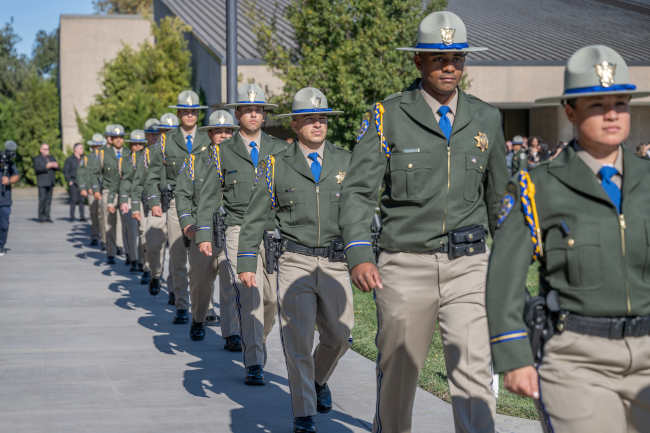
The newest class of California Highway Patrol cadets graduated on Friday, Nov. 15, 2024, in West Sacramento, California. Photo courtesy of the CHP.

On Friday, the California Highway Patrol graduated 121 cadets — the largest graduating class in two years — realizing the administration's multiyear campaign to hire 1,000 new CHP officers to protect and serve communities throughout California.

As part of California’s efforts to improve public safety, California funded a multiyear CHP recruitment campaign to fill 1,000 officer positions by hiring qualified individuals across the state.

In June of 2022, the CHP embarked on a multiyear recruiting campaign and has seen an outpouring of interest in joining the ranks, receiving more than 11,700 cadet applications in the first six months of 2024 alone — a 58% increase from the same period in 2022.

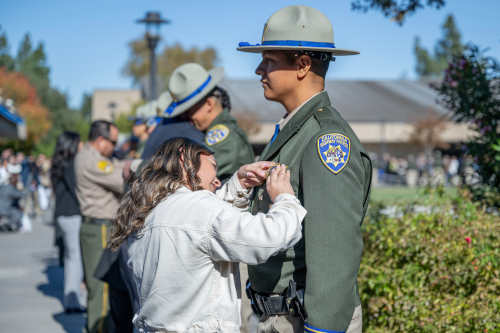
A new CHP officer has his badge pinned on by a family member. Photo courtesy of the CHP.

California has additionally invested more resources and personnel since 2019 to fight crime, help local governments hire more police, and improve public safety.

In 2023, as part of California’s Real Public Safety Plan, the Governor announced the largest-ever investment to combat organized retail crime in state history, an annual 310% increase in proactive operations targeting organized retail crime, and special operations across the state to fight crime and improve public safety.

You can join the CHP officers ready to make a difference. The next CHP officer hiring seminar is Tuesday, Nov. 26. Learn more here.


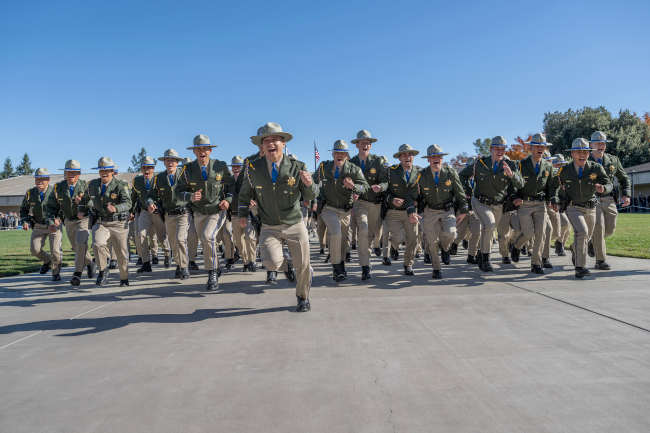
The newest CHP officers are ready to take off on their assignments. Photo courtesy of the CHP.

Strength training early in life can set up kids and adolescents for a lifetime of health and well-being

Details
Written by: Zachary Gillen, Mississippi State University
Published: 16 November 2024


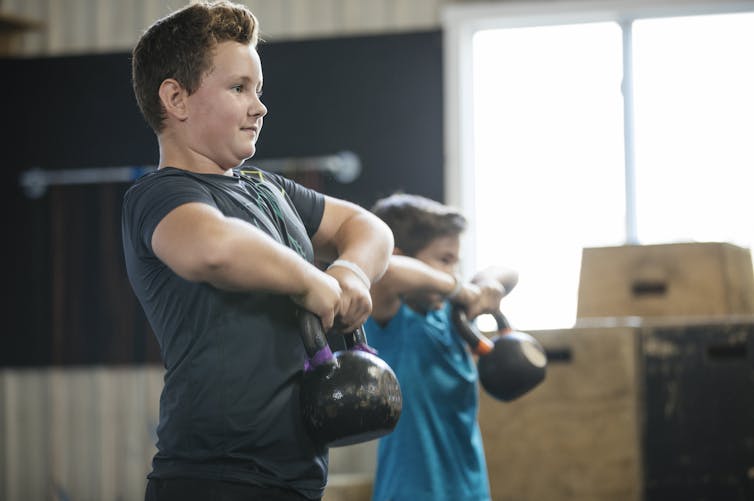
An age-appropriate strength training program can have significant benefits for children and adolescents. The Good Brigade/DigitalVision via Getty Images

“Aren’t they a little young for that?”

This is a question I used to hear regularly from parents when I’d recommend strength training for the kids I worked with, whose ages ranged from 6 to 18 years old, in youth sports. During my four years as a strength and conditioning coach, I often received questions from parents about the pros and cons of strength training – that is, training that involves weight-bearing exercises – for children.

Some of the most common questions: Is strength training safe for children and adolescents? At what age is it appropriate for them to begin strength training? What are the benefits of strength training for this age group? Is strength training beneficial even for kids who are not involved in organized sports?

Simply put, it is safe and appropriate for kids of all ages to perform strength training.

I am an exercise physiologist, certified strength and conditioning specialist and certified performance and sport scientist. My research focuses on how muscle develops from childhood to adolescence, with the goal of understanding how young people can get the most benefit out of exercise training programs, particularly strength training programs.

My experience and research has shown that strength training can help to improve sports performance for youth, and that there are significant health benefits for youth participating in strength training beyond sports performance.

Safety first

The question I receive most often, for good reason, is whether strength training is safe for youth. In a study examining injury rates in numerous sports, researchers found that, when done correctly, strength training had a lower risk of injury than nearly all other sports. This is not only true for adults but also for children.

That being said, it is important to consider a young person’s emotional maturity before handing them a dumbbell. During my career, I have designed and implemented strength training programs for kids of all ages, even as young as 6 years old. But not every child in that age range is ready for strength training. For their own safety, participants need to be emotionally mature enough to listen to and follow instructions so that they don’t hurt themselves. For some kids, that’s as early as age 6, while others may not be ready until they are a few years older.

Because correct technique is key to doing these exercises safely, it is important that strength training programs for children be designed and implemented under the guidance of a qualified trainer or coach. This means someone with valid credentials and who has received higher education in exercise science.

It’s also important to seek out professionals who use scientific evidence to back up their training programs and philosophies.

Group of kids performing side planks on mats in a gym.
Building strength during childhood and adolescence can reduce the risk of injury in various activities and help prevent falls and fractures later in life too. SDI Productions/E+ via Getty Images

The benefits of strength training

Research has shown that stronger muscles in kids reduce the likelihood of injuries during various types of activities.

One study we conducted found that lower muscle strength and size could lead to lower performance during different activities kids typically engage in, such as running and jumping. Not only this, but kids with lower strength tend to have worse neuromuscular efficiency, which means that they are not as proficient at activating their muscles. This translates to using more energy and feeling more worn out when they’re physically active.

While it’s easy to see how strength training is important for youth who play sports, there are also incredible health benefits for kids who may not be into organized sports. Studies have shown the positive effect that strength training can have on healthy bone development in kids, leading to a lower likelihood of fractures. Research has also shown that strength training in kids can have a positive influence on psychological well-being and academic performance.

Strength training can also affect overall health and well-being as it relates to childhood obesity.

Obesity rates in children and adolescents have been rising for decades. Previous research has suggested that youth who are categorized as obese tend to have lower muscle strength than those considered normal weight. Not only this, but other research has found that youth who are obese may have a greater likelihood of sarcopenic obesity, defined as obesity with low muscle mass and function, which can have significant, negative health ramifications.

Resistance training interventions in youth with obesity have shown to have positive impacts on metabolic health, body composition, psychological health and overall quality of life.

Creating an age-appropriate program

An effective strength training program starts with setting age-appropriate expectations.

Children and adolescents are not miniature adults, and not all young people will adapt to a strength training program the same way. For instance, research shows that during puberty, there are unique differences in how muscle develops in boys versus girls.

Specifically, girls may have more neuroplasticity, which is defined as the brain’s ability to recognize new movements and patterns. This means that they may adapt to more complex movements faster than boys, while boys will see more significant changes when their muscle mass starts increasing with puberty. This doesn’t necessarily mean that girls and boys need vastly different strength training programs. It simply means not all kids will have the same rate of progression for certain exercises.

Taking that into consideration, an age-appropriate program should focus on technique over results. How much weight a child can lift is far less important than teaching them good movement patterns. For example, if a child is having difficulty performing normal pushups, a qualified professional could modify the exercise so they start with wall pushups or incline pushups. This will help that child build good movement patterns and be better for their strength in the long run.

Building off this focus on technique, a good strength training program for youth should progress from simple movements to more complex movements and lighter weights to heavier weights, taking into consideration that not all youth will adapt at the same rate.

Focusing on the long term

Obviously, most kids won’t grow up to be professional athletes, but every child can develop athleticism. A good strength training program for kids will set them on a trajectory to a healthy lifestyle from childhood to adolescence to adulthood.

Research shows that beginning exercise in childhood tends to lead to continued exercise habits in adulthood. For this reason, the National Strength and Conditioning Association, a leading organization in the field of strength and conditioning and exercise science, has encouraged a focus on improving training habits in childhood that can then be maintained into adulthood for overall better health and well-being.

Starting young with an age-appropriate strength training program can help kids develop good movement patterns and incorporate exercise into their routine, which can have lasting benefits for their health into adulthood.The Conversation

Zachary Gillen, Assistant Professor of Exercise Physiology, Mississippi State University

This article is republished from The Conversation under a Creative Commons license. Read the original article.


Space News: Mining old data from NASA’s Voyager 2 solves several Uranus mysteries

Details
Written by: NASA Jet Propulsion Laboratory
Published: 16 November 2024
NASA’s Voyager 2 captured this image of Uranus while flying by the ice giant in 1986. New research using data from the mission shows a solar wind event took place during the flyby, leading to a mystery about the planet’s magnetosphere that now may be solved. Photo by NASA/JPL-Caltech.

NASA’s Voyager 2 flyby of Uranus decades ago shaped scientists’ understanding of the planet but also introduced unexplained oddities. A recent data dive has offered answers.

When NASA’s Voyager 2 spacecraft flew by Uranus in 1986, it provided scientists’ first — and, so far, only — close glimpse of this strange, sideways-rotating outer planet.

Alongside the discovery of new moons and rings, baffling new mysteries confronted scientists. The energized particles around the planet defied their understanding of how magnetic fields work to trap particle radiation, and Uranus earned a reputation as an outlier in our solar system.

Now, new research analyzing the data collected during that flyby 38 years ago has found that the source of that particular mystery is a cosmic coincidence: It turns out that in the days just before Voyager 2’s flyby, the planet had been affected by an unusual kind of space weather that squashed the planet’s magnetic field, dramatically compressing Uranus’ magnetosphere.

“If Voyager 2 had arrived just a few days earlier, it would have observed a completely different magnetosphere at Uranus,” said Jamie Jasinski of NASA’s Jet Propulsion Laboratory in Southern California and lead author of the new work published in Nature Astronomy. “The spacecraft saw Uranus in conditions that only occur about 4% of the time.”

Magnetospheres serve as protective bubbles around planets (including Earth) with magnetic cores and magnetic fields, shielding them from jets of ionized gas — or plasma — that stream out from the Sun in the solar wind. Learning more about how magnetospheres work is important for understanding our own planet, as well as those in seldom-visited corners of our solar system and beyond.

That’s why scientists were eager to study Uranus’ magnetosphere, and what they saw in the Voyager 2 data in 1986 flummoxed them. Inside the planet’s magnetosphere were electron radiation belts with an intensity second only to Jupiter’s notoriously brutal radiation belts. But there was apparently no source of energized particles to feed those active belts; in fact, the rest of Uranus’ magnetosphere was almost devoid of plasma.

The missing plasma also puzzled scientists because they knew that the five major Uranian moons in the magnetic bubble should have produced water ions, as icy moons around other outer planets do. They concluded that the moons must be inert with no ongoing activity.

The first panel of this artist’s concept depicts how Uranus’s magnetosphere — its protective bubble — was behaving before the flyby of NASA’s Voyager 2. The second panel shows an unusual kind of solar weather was happening during the 1986 flyby, giving scientists a skewed view of the magnetosphere. Photo by NASA/JPL-Caltech.

Solving the mystery

So why was no plasma observed, and what was happening to beef up the radiation belts? The new data analysis points to the solar wind. When plasma from the Sun pounded and compressed the magnetosphere, it likely drove plasma out of the system.

The solar wind event also would have briefly intensified the dynamics of the magnetosphere, which would have fed the belts by injecting electrons into them.

The findings could be good news for those five major moons of Uranus: Some of them might be geologically active after all. With an explanation for the temporarily missing plasma, researchers say it’s plausible that the moons actually may have been spewing ions into the surrounding bubble all along.

Planetary scientists are focusing on bolstering their knowledge about the mysterious Uranus system, which the National Academies’ 2023 Planetary Science and Astrobiology Decadal Survey prioritized as a target for a future NASA mission.

JPL’s Linda Spilker was among the Voyager 2 mission scientists glued to the images and other data that flowed in during the Uranus flyby in 1986. She remembers the anticipation and excitement of the event, which changed how scientists thought about the Uranian system.

“The flyby was packed with surprises, and we were searching for an explanation of its unusual behavior. The magnetosphere Voyager 2 measured was only a snapshot in time,” said Spilker, who has returned to the iconic mission to lead its science team as project scientist. “This new work explains some of the apparent contradictions, and it will change our view of Uranus once again.”

Voyager 2, now in interstellar space, is almost 13 billion miles (21 billion kilometers) from Earth.

Lake County among communities to receive grants in response to impacts of 2018 wildfires

Details
Written by: Lake County News reports
Published: 15 November 2024
LAKE COUNTY, Calif. — Lake County is among five communities hit hardest by the devastating wildfires in 2018 that will receive $40.7 million in new federal aid to support community development and help communities reach full economic recovery after a disaster.

The funding will not only benefit the hundreds of Californians who participate directly in the workplace training and development programs but creates long-term economic and social benefits for the communities.

“Even after the housing and infrastructure are rebuilt, communities hurt by wildfire can continue to suffer from trauma and economic impacts for years to come,” said Gov. Gavin Newsom. “We are grateful to the Biden Administration for its ongoing support to help Californians rebuild their lives and economies. We will keep advocating for our communities and their access to disaster relief and recovery.”

The funding comes from the federal 2018 Community Development Block Grant—Disaster Recovery Workforce Development, known as the CDBG-DR-WD program.

These awards will go to communities in the counties of Butte, Lake, Los Angeles, Shasta and Ventura.

The federal funding will go to programs that provide free job training and supportive services to low- to moderate-income individuals in the community, with the goal of improving job placement opportunities for residents.

Eligible applicants included local jurisdictions, nonprofit organizations, post-secondary education institutions, and local workforce development boards in areas designated by the U.S. Department of Housing and Urban Development.

In Lake County, the Workforce Alliance of the North Bay will receive more than $4.7 million for the Lake Workforce Program to better equip the region for long-term recovery and rebuilding efforts and enhance resilience to future disasters.

Workforce Alliance of the North Bay did not immediately respond to a request from Lake County News for comment about its program plans on Friday.

“In addition to rebuilding housing and infrastructure, fostering economic recovery is critical after a natural disaster,” said HCD Director Gustavo Velasquez. “Following disasters, many communities face a challenge in finding people locally with the skills to rebuild better and with greater resilience. We are proud to partner with HUD to create these career paths for 2018 wildfire survivors and to help these hard-hit communities grow with an eye toward a strong and sustainable future.”

“CDBG-DR provides communities with important resources to help rebuild in the worst of times. With this investment, young people and others building job skills can focus on their futures. HUD is proud to work with the State of California to ensure resilience across their communities,” said HUD Principal Deputy Assistant Secretary for Community Planning and Development Marion McFadden.

In addition to Lake County’s plans, the projects funded are as follows.

Butte County — The town of Paradise will receive nearly $17.9 million to establish the Paradise Resilient Infrastructure and Sustainable Education Center, or Paradise RISE, on the Paradise High School campus to train 500 local LMI residents in the construction trades — including specialized fields such as plumbing and electrical—or as certified nursing assistants.

Los Angeles County — Two organizations, Tradeswomen and Women in Non-Traditional Employment Roles, have been awarded $2 million to provide training and employment opportunities for underserved populations in the construction trades — particularly focusing on women and other marginalized populations.

Shasta County — The city of Redding will receive more than $8.6 million to launch its Workforce Recovery Training Program, providing online, remote, virtual, and in-person training for 200 LMI residents.

Ventura County — The county received $7.5 million to fund workforce training for 215 LMI county residents in healthcare occupations, restoring healthcare infrastructure, creating job opportunities, promoting community well-being, strengthening disaster preparedness, and ultimately building a more resilient healthcare system and community. The county will also acquire a mobile unit to reach out to communities that may have transportation barriers or difficulty accessing traditional job centers, vital for residents in rural areas of Ventura County.
  1. New state insurance regulation would increase insurance availability in wildfire-distressed areas
  2. Being bullied in high school can make teens less optimistic about the future
  3. Clearlake Animal Control: ‘Oreo’ and the dogs
  • 479
  • 480
  • 481
  • 482
  • 483
  • 484
  • 485
  • 486
  • 487
  • 488
How to resolve AdBlock issue?
Refresh this page