How to resolve AdBlock issue?
Refresh this page
How to resolve AdBlock issue?
Refresh this page
Lake County News,California
  • Home
    • Registration Form
  • News
    • Education
    • Veterans
    • Community
      • Obituaries
      • Letters
      • Commentary
    • Police Logs
    • Business
    • Recreation
    • Health
    • Religion
    • Legals
    • Arts & Life
    • Regional
  • Calendar
  • Contact us
    • FAQs
    • Phones, E-Mail
    • Subscribe
  • Advertise Here
  • Login
How to resolve AdBlock issue?
Refresh this page

News

Storms forecast for Christmas week

Details
Written by: Elizabeth Larson
Published: 22 December 2024
LAKE COUNTY, Calif. — Forecasters said Christmas week will start off with a series of storms that are expected to bring rain through the weekend.

The National Weather Service said a series of three storms are forecast, the first of which arrived on Saturday and brought light precipitation.

A second atmospheric river storm is expected to arrive late Sunday morning, with continuing light showers on Monday.

The third storm will arrive on Monday afternoon and continue through Christmas Eve. That third storm system will be wetter, with moderate to heavy rain in lower elevations, and breezy to gusty southerly winds and isolated thunderstorms.

Sunday’s projected rainfall totals in Lake County are expected to be less than a tenth of an inch, with the same amount expected during the day on Monday.

The third, heavier storm is expected to bring an inch of rain on Monday night and a half an inch on Tuesday morning.

Christmas day, Wednesday, is forecast to be foggy in the morning, with rain in the afternoon.

Rainfall is in the forecast from Thursday through Saturday.

Winds are forecast through Tuesday, with the highest wind speeds predicted for Sunday, when gusts could reach about 20 miles per hour during the day and nearly 25 miles per hour at night.

Daytime temperatures this week are predicted to be in the 50s, with temperatures at night mostly in the 40s, with the exception of Christmas night, when they will drop into the 30s.

Email Elizabeth Larson at This email address is being protected from spambots. You need JavaScript enabled to view it.. Follow her on Twitter, @ERLarson, and on Bluesky, @erlarson.bsky.social. Find Lake County News on the following platforms: Facebook, @LakeCoNews; X, @LakeCoNews; Threads, @lakeconews, and on Bluesky, @lakeconews.bsky.social.

Helping Paws: Dogs for Christmas

Details
Written by: Elizabeth Larson
Published: 22 December 2024
LAKE COUNTY, Calif. — Lake County Animal Care and Control has many dogs that are waiting to find their forever families this holiday season.

If you’re looking for a new friend to join your family during the holidays, consider a shelter dog.

The dogs available for adoption this week include mixes of Anatolian shepherd, Belgian malinois, boxer, bull terrier, cattle dog, Chihuahua, Doberman pinscher, German shepherd, German shorthaired pointer, husky, Labrador Retriever, pit bull terrier and terrier.

Dogs that are adopted from Lake County Animal Care and Control are either neutered or spayed, microchipped and, if old enough, given a rabies shot and county license before being released to their new owner. License fees do not apply to residents of the cities of Lakeport or Clearlake.

Those dogs and the others shown on this page at the Lake County Animal Care and Control shelter have been cleared for adoption.

Call Lake County Animal Care and Control at 707-263-0278 or visit the shelter online for information on visiting or adopting.

The shelter is located at 4949 Helbush in Lakeport.

Email Elizabeth Larson at This email address is being protected from spambots. You need JavaScript enabled to view it.. Follow her on Twitter, @ERLarson, and on Bluesky, @erlarson.bsky.social. Find Lake County News on the following platforms: Facebook, @LakeCoNews; X, @LakeCoNews; Threads, @lakeconews, and on Bluesky, @lakeconews.bsky.social.


Kennel#4a(pink collar)'s preview photo
Kennel#4a(pink collar)

Kennel#4c(Red Collar)'s preview photo
Kennel#4c(Red Collar)

Kennel#4d(Yellow Collar)'s preview photo
Kennel#4d(Yellow Collar)

Kennel#4e(Blue Collar)'s preview photo
Kennel#4e(Blue Collar)

Kennel#4f(Red collar)'s preview photo
Kennel#4f(Red collar)

Kennel#34's preview photo
Kennel#34


Kennel#6's preview photo
Kennel#6

Kennel#28's preview photo
Kennel#28

Kennel#18's preview photo
Kennel#18

Kennel#13a's preview photo
Kennel#13a

Kennel#7(Fonzi)'s preview photo
Kennel#7(Fonzi)

 
Kennel#13b's preview photo
Kennel#13b

Kennel#19's preview photo
Kennel#19

Kennel#20(Griselda)'s preview photo
Kennel#20(Griselda)

Kennel#32b's preview photo
Kennel#32b

Kennel#26's preview photo
Kennel#26

Kennel#31's preview photo
Kennel#31

Kennel#32a's preview photo
Kennel#32a

Kennel#25's preview photo
Kennel#25

Kennel#17's preview photo
Kennel#17

Kennel#14a's preview photo
Kennel#14a

Kennel#14b's preview photo
Kennel#14b

Kennel#5's preview photo
Kennel#5

Kennel#22's preview photo
Kennel#22

Kennel#23's preview photo
Kennel#23

Kennel#27's preview photo
Kennel#27

Kennel#21's preview photo
Kennel#21

Foster#9888's preview photo
Foster#9888

Kennel#24's preview photo
Kennel#24

Kennel#30's preview photo
Kennel#30

Kennel#9's preview photo
Kennel#9

Kennel#15's preview photo
Kennel#15

Kennel#11's preview photo
Kennel#11

C#101(Lucky)'s preview photo
C#101(Lucky)

Kennel#33's preview photo
Kennel#33


Why natural disasters hit harder in rural school districts

Details
Written by: Lee Ann Rawlins Williams, University of North Dakota
Published: 22 December 2024


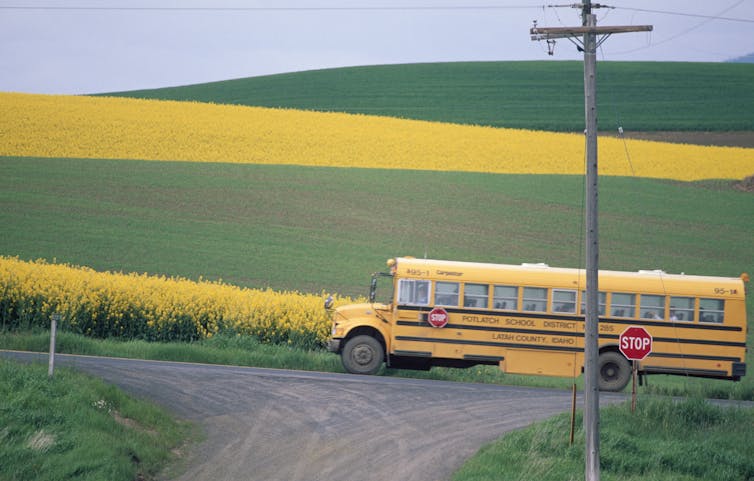
School buses play a pivotal role in rural areas. Grant Faint/The Image Bank via Getty Images

A week after Hurricane Sandy flooded New York City’s streets and subways in 2012, the city’s schools were back in business. But schools in rural North Carolina did not reopen until almost a month after Hurricane Helene roared through in late September 2024.

While natural disasters and health crises may have long-lasting effects on any school system, in rural areas the lack of physical, financial and organizational resources is amplified when disaster strikes.

Fortunately, there are solutions. Based on my professional research on emergency preparedness – and my experience working in educational settings – I’ve identified several strategies that may help.

Rural schools have unique disaster challenges

Unlike urban areas, rural districts often have little access to the recreation centers, cultural institutions, university campuses and other structures that could provide temporary sites for classes after a disaster.

Access to these buildings helped schools in New York City in the response to Hurricane Sandy.

Rural areas also have greater distances between homes, fewer buildings that can be used for temporary schooling, and deteriorating infrastructure. Educational resources are often insufficient, transportation is difficult, and many areas lack access to broadband.

Rural school districts may have weaker local funding streams. As a result, they may struggle to provide students full access to textbooks, technology and other essential materials.

Another major barrier for rural students is transportation.

In many rural communities, students rely on school buses to get to and from school. When natural disasters damage roads or disrupt transportation networks, students may be unable to attend school in person for extended periods.

Even after the immediate effects of a disaster subside, transportation issues can persist. For example, the North Carolina Department of Transportation estimated that it could take a year or more to repair road damage from Hurricane Helene.

‘Digital divide’ contributes to impact

Urban schools, with more reliable power and internet and better access to digital resources, are able to pivot quickly to online or hybrid learning when buildings are suddenly closed.

Students in rural schools, however, may have no access to reliable internet services or little or no access to the internet at all. In addition, teachers in rural areas may have more difficulty shifting classes online, since they are more likely to lack training or experience in digital instruction than teachers in cities.

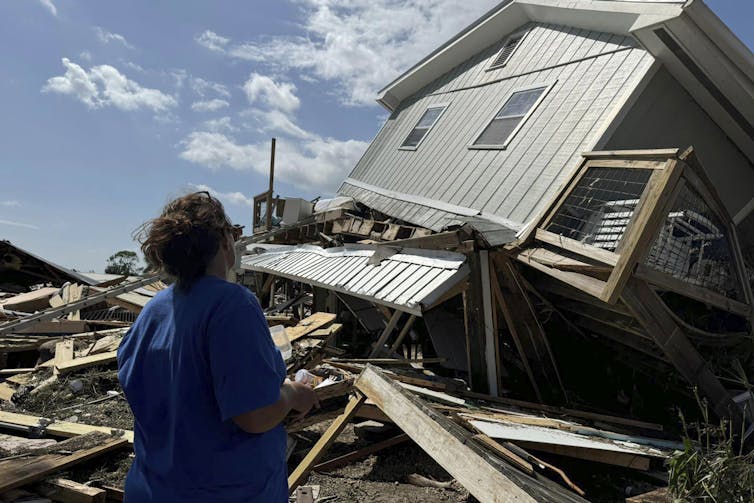
Woman looks on at her house, which was lifted up and on its side at an angle by the storm, with debris everywhere
Rural communities have fewer resources to deal with major disasters, such as Hurricane Helene. AP Photo/Kate Payne

Planning for disaster

The disruptions following a natural disaster have both immediate and long-term consequences. Studies have found that the effects of natural disasters include mental health issues, learning loss, lower graduation rates and diminished opportunities for higher education or career advancement.

Due to the challenges already facing rural schools, I believe preparing for a disaster in a rural area should occur earlier and take into account the specific needs of the community.

Rural schools, even more than their urban counterparts, cannot rely on a one-size-fits-all approach but need to make the best of the resources available and encourage collaboration from the local community and neighboring communities.

Here are a few strategies they could use.

Provide offline learning materials

Although it may seem intuitive, one key solution to school closures is developing learning materials that do not require internet access. I have found that many teachers focus on electronic resources, such as smartphones and Apple watches, and overlook the use of old-fashioned methods.

Instructional materials, such as workbooks and textbooks, should be available and used before a disaster occurs. This is to ensure that students can continue with their studies when they are cut off from school. These materials, which can be supplemented after a disaster, can include projects that students can work on independently or with their families.

Use mobile technology

Another approach incorporates mobile technology, such as smartphones. If service is available, students and teachers can communicate by phone.

When internet access is unavailable, schools can use mobile learning hubs. These are vehicles equipped with Wi-Fi, computers and other educational tools. These mobile hubs can travel to rural areas to provide students with access to digital resources. They serve as temporary classrooms or internet access points, bringing education directly to students.

During the COVID-19 pandemic, for example, I worked with a community college in Tennessee that provided mobile hubs at public libraries, school parking lots and on campus. Students were able to use these resources at all hours, day and night.

Create a flexible learning environment

Schools can give students more flexibility in when and how they learn during the academic year. For example, schools can allow students to make up missed work at their own pace. Or schools can provide alternative learning hours to students who may need to help their families with recovery efforts.

After Hurricane Helene downed power lines and closed roads in Beaufort County, South Carolina, students who were without power or internet were given five days to complete their work and other considerations.

This flexibility helps ensure students do not fall too far behind. It may even help students better manage stress and maintain their mental well-being.

Strengthen rural schools

Making rural school systems more resilient when disasters occur is essential to ensuring that students can continue learning.

Advance planning, flexible learning options and partnerships with families, community support services and local and federal government programs can help. But I believe the underlying issues of the lack of resources, transportation challenges and the digital divide should also be addressed to reduce the long-term impact of crises on rural education.The Conversation

Lee Ann Rawlins Williams, Clinical Assistant Professor of Education, Health and Behavior Studies, University of North Dakota

This article is republished from The Conversation under a Creative Commons license. Read the original article.

Space News: How does the International Space Station orbit Earth without burning up?

Details
Written by: Kelly Griendling, Georgia Institute of Technology
Published: 22 December 2024


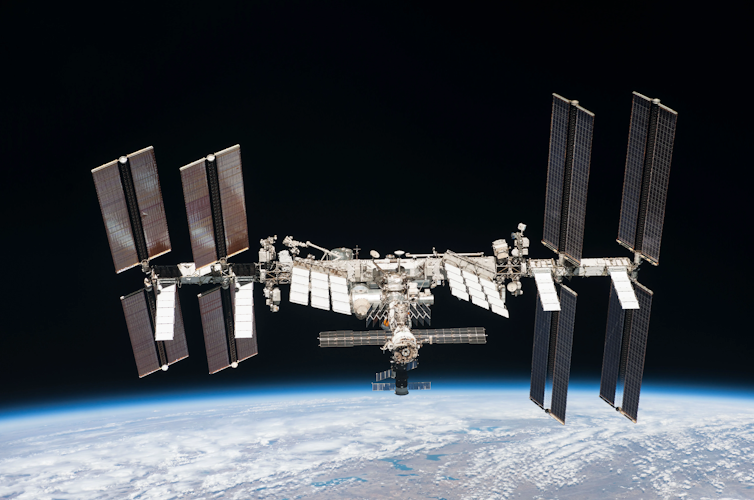
The International Space Station orbits Earth. NASA/Roscosmos

Curious Kids is a series for children of all ages. If you have a question you’d like an expert to answer, send it to This email address is being protected from spambots. You need JavaScript enabled to view it..


How is the International Space Station able to orbit without burning up? – Mateo, age 8, New York, New York


Flying through Earth’s orbit are thousands of satellites and two operational space stations, including the International Space Station, which weighs as much as 77 elephants. The International Space Station, or ISS, hosts scientists and researchers from around the world as they contribute to discoveries in medicine, microbiology, Earth and space science, and more.

One of my first jobs in aerospace engineering was working on the ISS, and the ISS remains one of my favorite aerospace systems. I now work at Georgia Tech, where I teach aerospace engineering.

The ISS travels very quickly around the Earth at 5 miles per second (8 kilometers per second), which means it could fly from Atlanta to London in 14 minutes. But at the same time, small chunks of rock called meteoroids shoot through space and burn up when they hit Earth’s atmosphere. How is it that some objects – such as the International Space Station – orbit the Earth unscathed, while others, such as asteroids, burn up?

The ISS moves quickly while it orbits the Earth.

To answer why the ISS can stay in orbit for decades unscathed, you first need to understand why some things, such as meteoroids, do burn up when they enter our planet’s atmosphere.

Why do meteoroids burn up in the atmosphere?

Meteoroids are small chunks of rock and metal that orbit the Sun. These space rocks can travel between 7 and 25 miles per second (12 to 40 km per second). That’s fast enough to cross the entire United States in about 5 minutes.

Sometimes, the orbit of a meteoroid overlaps with Earth, and the meteoroid enters Earth’s atmosphere – where it burns up and disintegrates.

Even though you can’t see them, the atmosphere is full of a combination of particles, primarily nitrogen and oxygen, which make up the air you breathe. The farther you are from the surface of the Earth, the lower the density of particles in the atmosphere.

The atmosphere has several layers. When something from space enters the Earth’s atmosphere, it must pass through each of these layers before it reaches the ground.

Meteoroids burn up in a part of Earth’s atmosphere called the mesosphere, which is 30 to 50 miles (48 to 80 kilometers) above the ground. Even though the air is thin up there, meteoroids still bump into air particles as they fly through.

When meteoroids zoom through the atmosphere at these very high speeds, they are destroyed by a process that causes them to heat up and break apart. The meteoroid pushes the air particles together, kind of like how a bulldozer pushes dirt. This process creates a lot of pressure and heat. The air particles hit the meteoroid at hypersonic speeds – much faster than the speed of sound – causing atoms to break away and form cracks in the meteroid.

The high pressure and hot air get into the cracks, making the meteoroid break apart and burn up as it falls through the sky. This process is called meteoroid ablation and is what you are actually seeing when you witness a “shooting star.”

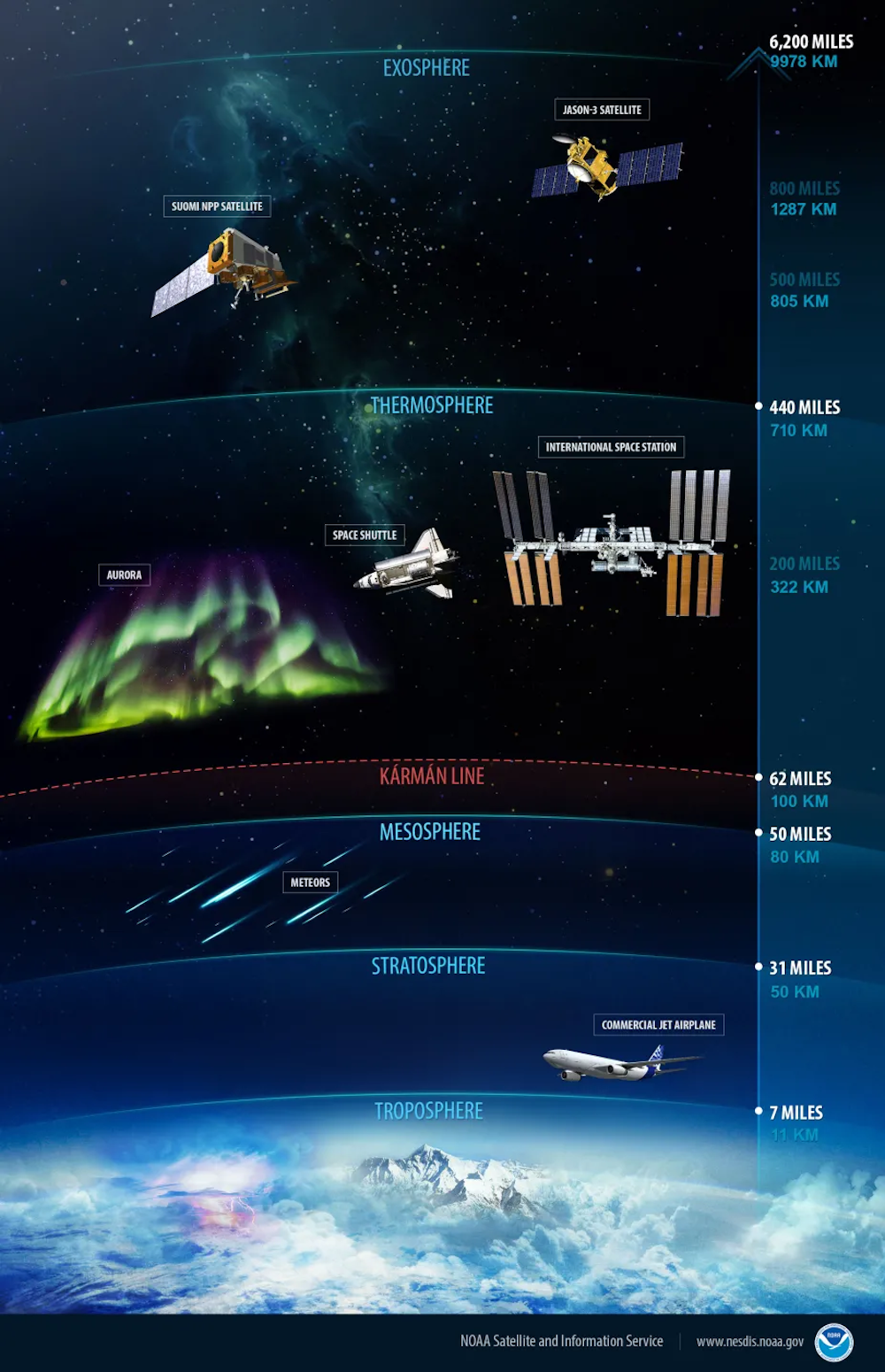
An infographic showing the layers of the atmosphere, starting with the troposphere closest to Earth, then the stratosphere, mesosphere, thermosphere and exosphere, farthest from Earth.
The ISS orbits in the thermosphere, about 200 miles (322 km) from Earth. NOAA, CC BY-ND

Why doesn’t the ISS burn up?

So why doesn’t this happen to the International Space Station?

The ISS does not fly in the mesosphere. Instead, the ISS flies in a higher and much less dense layer of the atmosphere called the thermosphere, which extends from 50 miles (80 km) to 440 miles (708 km) above Earth.

The Kármán line, which is considered the boundary of space, is in the thermosphere, 62 miles (100 kilometers) above the surface of the Earth. The space station flies even higher, at about 250 miles (402 km) above the surface.

The thermosphere has too few particles to transmit heat. At the height of the space station, the atmosphere is so thin that to collect enough particles to equal the mass of just one apple, you would need a box the size of Lake Superior!

As a result, the ISS doesn’t experience the same kind of interactions with atmospheric particles, nor the high pressure and heat that meteoroids traveling closer to Earth do, so it doesn’t burn up.

A high-flying research hub

Although the ISS doesn’t burn up, it does experience large temperature swings. As it orbits Earth, it is alternately exposed to direct sunlight and darkness. Temperatures can reach 250 degrees Fahrenheit (121 degrees Celsius) when it’s exposed to the Sun, and then they can drop to as low as -250 degrees F (-156 degrees Celsius) when it’s in the dark – a swing of 500 degrees F (277 degrees C) as it moves through orbit.

The engineers who designed the station carefully selected materials that can handle these temperature swings. The inside of the space station is kept at comfortable temperatures for the astronauts, the same way people on Earth heat and cool our homes to stay comfortable indoors.

Research on the ISS has led to advancements such as improved water filtration technologies, a better understanding of Earth’s water and energy cycles, techniques to grow food in space, insights into black holes, a better understanding of how the human body changes during long-duration space travel, and new studies on a variety of diseases and treatments.

NASA plans to keep the ISS active until 2030, when all of the astronauts will return to Earth and the ISS will be deorbited, or brought down from orbit by a specially designed spacecraft.

As it comes down through Earth’s atmosphere in the deorbiting process, it will enter the mesosphere, where many parts of it will heat up and disintegrate.

Some spacecraft, such as the crew capsules that bring astronauts to and from the ISS, can survive reentry into the atmosphere using their heat shield. That’s a special layer made up of materials that are able to withstand very high temperatures. The ISS wasn’t designed for that, so it doesn’t have a heat shield.

If you’d like to see the space station as it passes over your area, you can check out NASA’s website to find out when it might be visible near you.


Hello, curious kids! Do you have a question you’d like an expert to answer? Ask an adult to send your question to This email address is being protected from spambots. You need JavaScript enabled to view it.. Please tell us your name, age and the city where you live.

And since curiosity has no age limit – adults, let us know what you’re wondering, too. We won’t be able to answer every question, but we will do our best.The Conversation

Kelly Griendling, Lecturer of Aerospace Engineering, Georgia Institute of Technology

This article is republished from The Conversation under a Creative Commons license. Read the original article.

  1. DUI crash sends two to trauma centers, results in arrest
  2. Thompson supports legislation to prevent government shutdown
  3. Tribal housing program expansion benefits Lake County tribe
  • 441
  • 442
  • 443
  • 444
  • 445
  • 446
  • 447
  • 448
  • 449
  • 450
How to resolve AdBlock issue?
Refresh this page